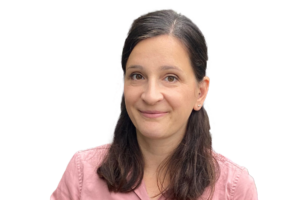
Dr. Olga Fotakopoulou is an Associate Professor in Developmental Psychology at Birmingham City University (BCU), serving as Academic Lead for Equality, Diversity, and Inclusion, and Athena Swan Lead. Her research focuses on human development from infancy to adolescence, with a particular emphasis on socio-cognitive, emotional, and prosocial development. She has over 15 years of experience in developmental psychology research and counseling across clinical and educational settings. Olga teaches modules such as Lifespan Development (online MSc program) and supervises MSc Psychology Dissertations. Her work explores the impact of technology on children, including touchscreen use and digital media's role in education and childhood development. Research interests include technology's influence on early learning, cross-cultural studies in early childhood education, and interdisciplinary approaches to youth mental health. She has contributed to projects analyzing pandemic effects on children’s routines and the digital divide in mathematics education. Olga’s publications span topics like creative arts therapy for adolescent health and rhythmanalysis in cultural contexts. She actively addresses equity in education through her teaching roles and institutional leadership. Advising and grants: While no specific grants are listed, she leads courses and collaborates on projects focusing on inclusive education and technology integration. Her work emphasizes student-centered learning and preparing students for critical thinking and collaboration in diverse settings.
Dr. Kevin Gee is a Professor in the School of Education at the University of California, Davis, specializing in the School Organization & Educational Policy emphasis area. He serves as Director of the School Policy, Research, and Action (SPARC) Center and is a Faculty Research Affiliate with the Center for Poverty & Inequality Research. As a 2020-25 Chancellor's Fellow, Dr. Gee leads research initiatives focused on vulnerable youth populations and educational policy impacts. His work bridges education, public health, and social welfare systems to address structural inequities affecting children's development and academic success. Dr. Gee's educational background includes: Ed.D., Harvard Graduate School of Education, Quantitative Policy Analysis in Education (2010) Ed.M., Harvard Graduate School of Education, International Education Policy (2006) M.P.I.A., University of California, San Diego, Pacific & International Affairs (cum laude, 2004) B.A., University of California, Berkeley, City & Regional Planning (magna cum laude, 1994) Dr. Gee's research centers on the critical intersection between health and education systems, examining how schooling can influence children's well-being. He investigates policies addressing adverse childhood experiences including bullying, food insecurity, abuse, and neglect. His work employs rigorous quantitative methods including Hierarchical Linear Modeling, longitudinal analysis, and experimental/quasi-experimental designs. Dr. Gee focuses particularly on vulnerable populations such as children with disabilities, Asian American and Pacific Islander youth, and those involved in the child welfare system, seeking data-driven solutions to educational inequities. Analysis of Dr. Gee's recent publications reveals a strong focus on educational equity, with particular attention to vulnerable student populations. His work spans school absenteeism patterns, bullying and hate speech against AAPI youth, food insecurity impacts, and health-related educational outcomes. The research demonstrates increasing interdisciplinary collaboration, particularly with public health researchers, and shows a growing emphasis on pandemic-related educational disruptions and their disproportionate impacts on marginalized communities. Dr. Gee's notable scientific awards include: National Academy of Education (NAEd)/Spencer Postdoctoral Fellowship (2015) Foundation for Child Development (FCD) Young Scholars Program Award (2014-2017) UC Davis Hellman Fellowship (2015-2016) Chancellor's Fellowship (2020-2021) Outstanding Faculty Award, Asian Pacific American UC-Systemwide Alliance (2023) Distinguished Visiting Scholar, Advanced Research Collaborative, CUNY (2022) Dr. Gee serves as Principal Investigator for multiple significant grants, including the Heising-Simons Foundation project on districtwide family engagement strategies and chronic absenteeism (2024-2026), and the UC Davis SEED funding for research on how Asian American and Pacific Islander youth confront bullying. He also serves as Co-Investigator on the AAPI Data Grant examining school climate influences on bullying experiences. His grant portfolio demonstrates strong interdisciplinary collaboration, particularly between education and public health researchers, with a consistent focus on generating actionable insights for educational policymakers and practitioners. As Director of the School Policy, Research, and Action (SPARC) Center at UC Davis, Dr. Gee leads a research team focused on generating data-informed insights about underserved and overlooked youth in educational policy. The center's work specifically supports Asian American and Pacific Islander youth who have experienced bullying, children with chronic absenteeism, and child welfare-involved youth who have experienced maltreatment. The SPARC Center collaborates with various California school districts and state agencies to translate research into practical policy recommendations and implementation strategies.
Professor Mark Conner is a distinguished faculty member at the University of Leeds, holding the position of Professor of Applied Social Psychology within the School of Psychology, part of the Faculty of Medicine and Health. He has been with the university since 1990 and was promoted to full professor in 2005. His work is central to advancing the understanding of health-related behaviours and psychological determinants. Education: BSc in Psychology, University of Lancaster PhD in Psychology, University of Birmingham Mark Conner's research focuses on the psychological mechanisms underlying health behaviour. His work explores the interplay between cognitive and affective attitudes, the attitude-behaviour relationship, and the impact of measuring attitudes on subsequent actions (question-behaviour effect). He investigates attitudinal ambivalence and applies models such as the Theory of Planned Behaviour to predict and modify health behaviours. His research has significant implications for public health interventions. His recent publications reflect a strong commitment to addressing pressing health issues, including improving bowel cancer screening uptake among minority populations and preventing adolescent smoking. These works span health psychology, behavioural science, and intervention design, demonstrating both theoretical and applied contributions. Scientific Awards and Recognition: Elected Academician, Academy of Social Sciences (AcSS) British Psychological Society Division of Health Psychology Award for Outstanding Contribution to Research (2010) Mark Conner is actively involved in academic leadership as joint Editor-in-Chief of Psychology & Health . He supervises postgraduate researchers, contributing to the development of future scholars. His research includes funded projects such as a randomized controlled trial on cancer screening and initiatives to reduce youth smoking. These efforts highlight his engagement with real-world health challenges and evidence-based solutions. He is affiliated with the Health and Social Psychology research group at the School of Psychology, where he contributes to collaborative research, mentoring, and knowledge dissemination aimed at improving population health through psychological science.
Dr. Erik Linstead is an Associate Professor and Senior Associate Dean at Chapman University, affiliated with the Fowler School of Engineering, School of Pharmacy, and George L. Argyros College of Business and Economics. His expertise spans Machine Learning, GPU Programming, Autism Spectrum Disorder, Assistive Technologies, Predictive Analytics, and Virtual Reality. Education: Bachelor of Science, Chapman University Master of Science, Stanford University Ph.D., University of California, Irvine Dr. Linstead's research integrates machine learning with diverse domains, including autism treatment, environmental monitoring, and software engineering. His recent publications focus on coral reef health, land surface temperature trends, and embedded machine learning systems. His scholarly work includes collaborations in remote sensing, medical informatics, and neurodiversity support. Articles highlight his interdisciplinary approach, applying AI to ecological challenges (e.g., Red Sea coral reefs, Nile Basin droughts) and human-centered technologies (e.g., VR therapy for autism, medication adherence analysis).
Catherine Bagwell is the Virginia Lasater Irvin Professor of Psychology at Davidson College. She holds a Ph.D. and M.A. from Duke University and a B.S. from the University of Richmond. Her research focuses on the developmental significance of friendship in children and adolescents, exploring questions about how peer relationships influence social and emotional adjustment, whether friends can have both positive and negative impacts, and their role as buffers for vulnerable youth. Education: Ph.D., M.A. in Clinical Psychology, Duke University B.S. in Psychology, University of Richmond Bagwell’s career spans roles as Assistant and Associate Professor at the University of Richmond, MacEldin Trawick Professor of Psychology there, and Professor of Psychology at Colgate University before joining Davidson in 2023. Her work bridges developmental psychology and psychopathology, emphasizing peer relations and prevention strategies for at-risk youth.
Jared Izumi, Ph.D., is an Assistant Professor in the School Psychology program at the Attallah College of Educational Studies, Chapman University. He is also appointed to the faculty of the Ph.D. in Education program and serves as an associate researcher with FastBridge Learning. His professional credentials include being a licensed psychologist and a Nationally Certified School Psychologist, with prior practice experience in Missouri and California. University: Chapman University School: Attallah College of Educational Studies Department: School Psychology Academic Rank: Assistant Professor Dr. Izumi's research centers on school mental health, with a focus on universal screening for social-emotional and behavioral (SEB) risks. He investigates the psychometric properties of screening tools like the SAEBRS, particularly examining differential item functioning by race, gender, and grade level. His work also explores the effectiveness of dialectical behavioral therapy (DBT)-based social-emotional learning curricula in high schools and the use of virtual reality to assess SEL skills in youth. These efforts aim to improve early identification and equitable support for students at risk. His recent publications reveal a strong trend in educational assessment, particularly in SEB screening and reading interventions. He examines both behavioral and academic domains, emphasizing data-driven decision-making, equity in assessment, and personalized intervention strategies. His work often involves large-scale datasets and collaborative research with experts in school psychology and special education. Dr. Izumi has not been mentioned with specific scientific awards in the provided texts. However, his active research collaborations and publications in high-impact journals indicate scholarly recognition. He advises students within the School Psychology and Ph.D. in Education programs, though specific advisee names are not listed. His research has been supported through academic and research partnerships, including FastBridge Learning. His current projects include implementing universal screening systems and evaluating innovative SEL curricula. Dr. Izumi is involved in research teams focused on school-based mental health and academic interventions. His collaboration with FastBridge Learning suggests engagement with a larger research and assessment development team aimed at improving educational outcomes through evidence-based tools.
Nader Amir, Ph.D. , is a Professor in the Department of Psychology at San Diego State University (SDTSU), College of Sciences. He is a leading researcher in experimental psychopathology, specializing in anxiety disorders, obsessive-compulsive disorder (OCD), and cognitive bias modification (CBM) interventions. His research focuses on understanding and modifying cognitive processes such as attentional and interpretation biases, with a strong emphasis on translating laboratory findings into scalable, computerized, and home-based clinical interventions. His work has demonstrated that attention bias modification (ABM) can be as effective as medication or CBT for social anxiety and has explored neural mechanisms like error-related negativity (ERN) and reward processing in anxiety and OCD. Dr. Amir's recent publications highlight his focus on adolescent mental health, neural biomarkers, and the development of novel neurocognitive therapeutics. His studies frequently employ electrophysiological (ERP) methods and are published in high-impact journals including Clinical Psychological Science , Psychophysiology , and Behaviour Research and Therapy . His research program reflects a clear trajectory toward identifying and targeting core mechanisms of anxiety and OCD using innovative, technology-driven approaches. He is actively funded by major agencies including the National Institute of Mental Health (NIMH) and private institutions, with grants supporting mechanistic studies of exposure therapy, neurofeedback, and large-scale effectiveness trials of remotely delivered interventions for anxiety and OCD. Dr. Amir mentors numerous graduate students and serves on multiple thesis committees, advising on topics such as anxiety, OCD, ecological momentary assessment, and neurocognitive mechanisms. He is also an active presenter at national conferences including the Association for Behavioral and Cognitive Therapies (ABCT) and the Association for Psychological Science (APS).
Kelsey Canada is an incoming Assistant Professor in the Department of Psychological and Brain Sciences at the University of Massachusetts Amherst, starting Fall 2025. She is based in Tobin Hall and will lead a research program focused on developmental cognitive neuroscience. Her research centers on understanding how memory and brain development, particularly in the hippocampus, evolve during childhood and adolescence. She examines how socioeconomic factors influence neurodevelopment, using interdisciplinary methods including MRI , EEG , behavioral testing , and structural equation modeling . Her work emphasizes representative sampling and data integration to uncover modifiable risk and protective factors. Dr. Canada's recent publications highlight her leadership in hippocampal subfield research, quality control in neuroimaging, and collaborative data practices. Her work spans developmental trajectories, methodological innovation, and social determinants of brain health. She earned her PhD from the University of Maryland, College Park, and is establishing her lab at UMass Amherst. Prospective students are encouraged to contact her directly. Research Areas: Developmental Science, Neuroimaging, Cognitive Development Affiliation: Department of Psychological and Brain Sciences, UMass Amherst Dr. Canada has been involved in major collaborative initiatives, including the Hippocampal Subfields Group, and her research is supported by recent publications in top journals such as Human Brain Mapping , Hippocampus , and Developmental Cognitive Neuroscience . While no formal grants or advising roles are listed yet, her active publication record and lab formation indicate a growing research program.
Jordan Bate is an Associate Professor in the Department of Psychology at the Gordon F. Derner School of Psychology, Adelphi University. He is a licensed clinical psychologist in New York and maintains active research and clinical affiliations, including with Lenox Hill Hospital and Northwell Health. His work integrates psychodynamic, attachment, and mentalization-based approaches across child, adolescent, and family therapy contexts. Education: PhD, The New School for Social Research (2017) MA, The New School for Social Research (2012) BA, Williams College (2006) His research focuses on the psychotherapy process, particularly how attachment and mentalization shape therapeutic outcomes. Key areas include parent involvement in child treatment, therapist facilitative interpersonal skills (FIS), mentalization-based interventions for youth and families in the child welfare system, and adolescent personality development. He leads the Attachment and Psychotherapy Process Lab and employs mixed-methods designs, including observational coding and self-report measures. His recent publications explore therapist training, teletherapy efficacy, epistemic trust, and the psychological impact of the pandemic on families. The work spans journals in clinical psychology, psychotherapy research, and child mental health, reflecting a strong interdisciplinary and translational focus. Scientific Awards and Honors: President, Section II (Children and Adolescents), APA Division 39 (2021–2023) Chair, Child, Adolescent and Family Therapy Research (CAFTR) SIG, Society for Psychotherapy Research (2023–Present) Steering Committee, Psychodynamic Research Mentorship Program (PRMP), Austen Riggs Center & Yale Child Study Center (2024–Present) Committee Member, Mentorship and Progression Committee, Academics for the Advancement of Psychodynamic Psychology (A2P2) (2024–Present) Voluntary Faculty, Department of Psychiatry, Lenox Hill Hospital, Northwell Health (2018–Present) Bate has been instrumental in advancing training models such as Facilitative Interpersonal Skills Training (FIRST) and has contributed to major publications on deliberate practice and mentalization-based parent work. He has received no explicitly listed awards, but his leadership roles and publication record reflect significant professional recognition. He is deeply involved in mentoring students and supporting research in attachment and psychotherapy science. He is also engaged with multiple collaborative research teams, particularly around mentalization-based treatment implementation and therapist responsiveness. His lab collaborates with institutions including Lenox Hill Hospital, The New School, and international partners, supporting a broad network of clinical and academic inquiry.
Melissa Hauber-Özer is an Assistant Professor of Qualitative Inquiry in the Department of Learning, Teaching, and Curriculum at the University of Missouri, College of Education & Human Development. She plays a leadership role in the Action Research Network of the Americas Knowledge Democracy Initiative and holds elected positions in TESOL International, including chair-elect of the Adult Education interest section and secretary of the Refugee Concerns interest section. PhD in International Education, George Mason University M.Ed. in World Language Education, Temple University Her research centers on critical participatory, ethnographic, and narrative methodologies to explore educational access and equity for linguistically and culturally diverse learners, particularly refugees and immigrants. She is deeply engaged in advancing qualitative research methods and promoting democratic knowledge production in transnational contexts. Her expertise includes adult language and literacy learning, critical inquiry, and community-based research. Her publications, including co-authored books with SAGE and Routledge and articles in leading journals, demonstrate a strong focus on participatory and critical methodologies in educational research. These works emphasize decolonizing practices, transnational collaboration, and equity-centered inquiry across diverse educational settings. Critical Participatory Inquiry: An Interdisciplinary Guide (SAGE) The Routledge International Handbook of Critical Participatory Inquiry in Transnational Research Contexts Publications in International Journal of Qualitative Studies in Education Publications in Journal of Adolescent & Adult Literacy Publications in Action Research Publications in International Journal of Research and Method in Education Melissa Hauber-Özer advises graduate students in qualitative research and teaches core courses such as Qualitative Research Methods in Education I & II, Philosophical Perspectives on Educational Research, and Critical Participatory Inquiry. She is affiliated with the Qualitative Research Consortium (QuaRC) and the Certificate in Qualitative Research (CQR) program, contributing to institutional capacity in qualitative methodology. While specific grants are not listed, her leadership roles and publications suggest active involvement in funded or collaborative research initiatives focused on equity and access. She is actively involved in research networks such as the Action Research Network of the Americas and contributes to professional communities through TESOL International. Her work promotes knowledge democracy and participatory research models that empower marginalized voices in educational research.
Michelle Sunkel is an Associate Professor of Social Work and Director of the Master of Social Work Program at Colorado Mesa University. She holds a Doctor of Social Work (DSW) from Capella University and is a licensed clinical social worker and licensed addiction counselor in Colorado, as well as a licensed independent clinical social worker in Minnesota. Her academic and clinical work is centered in the Department of Social Work, where she leads graduate education and curriculum development. DSW, Doctor of Social Work – Capella University MSW, Master of Social Work – San Diego State University MBE, Master of Bioethics – Consortium of European Universities (KU Leuven, Radboud University, University of Padua) BS, Psychology – Lincoln University Dr. Sunkel’s research and practice focus on forensic social work, human trafficking, ethical decision-making, anti-oppressive pedagogy, and international social work. She has extensive clinical experience working with the severely and persistently mentally ill in emergency departments, psychiatric hospitals, correctional facilities, and outpatient settings. Her international work includes service in Uganda, where she provided crisis intervention, psychoeducation, and school-based support for vulnerable populations. Her recent publications reflect a strong commitment to social justice, ethics, and inclusive education. Themes across her work include trauma-informed care for marginalized populations, integration of anti-oppressive frameworks in social work training, ethical considerations in digital learning, and the intersection of law, ethics, and human rights in social work practice. Her scholarship spans peer-reviewed articles, book chapters, book reviews, and invited conference presentations. Dr. Sunkel actively contributes to the academic community as a journal reviewer for Advances in Social Work and Critical Social Work . She has presented at national and international conferences, including the Council on Social Work Education and the International Social Work Association. Her leadership in curriculum development and ethical practice underscores her role as an educator and advocate. Journal Reviewer, Advances in Social Work (2020–present) Journal Reviewer, Critical Social Work (2019–present) She mentors students through her role as MSW Program Director and integrates experiential learning, including international service-learning trips. Though no specific advisees are named, her leadership in graduate education implies significant advising responsibilities. She has not received any named scientific awards, but her sustained scholarly and clinical contributions reflect professional excellence. Dr. Sunkel is involved in interdisciplinary collaborations, particularly in forensic ethics and emergency mental health. Her work bridges clinical practice, policy advocacy, and academic training, positioning her as a key figure in advancing ethical, equitable social work practice.
Sameer Deshpande is an Assistant Professor in the Department of Statistics at the University of Wisconsin–Madison. His research bridges Bayesian methodology development with applications in public health and sports analytics. Prior to joining UW–Madison, he completed a postdoctoral fellowship with Professor Tamara Broderick at MIT and earned his Ph.D. in Statistics from the Wharton School under Professors Ed George and Veronika Rockova. His educational background includes undergraduate studies in mathematics at MIT and a year at Jesus College, Cambridge through the Cambridge-MIT Exchange program. His research focuses on advancing Bayesian hierarchical modeling, treed regression, and causal inference techniques, with particular emphasis on flexible tree-based methods like BART variants for complex data structures. Deshpande's recent publications reveal a strong trend toward developing scalable Bayesian methods for high-dimensional data while maintaining rigorous uncertainty quantification. His work frequently applies these techniques to sports analytics (particularly baseball and football) and public health studies examining long-term effects of adolescent sports participation. The consistent focus on methodological innovation paired with substantive applications demonstrates his dual commitment to statistical theory and real-world impact. He actively mentors graduate students at UW–Madison, requiring STAT 775 as preparation for research collaboration. His Deshpande Lab focuses on Bayesian computation and causal inference, though specific grant details are not publicly listed. Notable projects include the NFL Big Data Bowl submission analyzing quarterback decision-making using Expected Hypothetical Completion Probability. Outside academia, Deshpande maintains interests in cooking, cocktail making, and photography, while remaining a devoted fan of Dallas sports teams – often seen wearing a Texas belt buckle.
PD Dr. habil. Anna Schnauber-Stockmann is a prominent researcher in media and communication science at Johannes Gutenberg University Mainz, where she has been a member of the Media Structure and Media Effects research group since 2010. She completed her habilitation in October 2024 with the thesis 'The Importance of the Situation in Media Use and Media Effects Research' and was awarded Venia Legendi in Communication Science. Previously, she served as an interim professor at IJK (HMTM Hannover) from April to September 2021. Her academic journey includes earning a Dr. phil. in Communication Research in May 2016 with a dissertation on 'Day-to-day Media Selection. The Role of Habits in the Selection Process' and completing her Master's degree at the University of Mainz in 2007. Dr. Schnauber-Stockmann's research focuses on media use and effects, particularly examining how situational factors influence media selection and consumption patterns. Her work explores media habits, mobile communication behaviors, self- and feedback-effects in media contexts, and the application of quantitative research methods, especially in situ methodologies. She investigates how daily routines shape media platform usage and how these patterns affect individual behavior and social interactions. Her research bridges theoretical frameworks with practical applications in digital media environments, with particular attention to how time, context, and personal characteristics interact in media consumption. Her recent publications reveal a strong emphasis on situational media research, with significant contributions to understanding phubbing behavior, mobile media habit formation, and the distinction between person-specific and situation-specific variations in media use. Through meta-analyses and longitudinal studies, she has advanced methodological approaches for measuring media habits and examining real-time media effects. Her work consistently applies sophisticated quantitative methods to capture the dynamic nature of contemporary media consumption. Top Faculty Paper 2023 of ICA's Mobile Communication Division Top Student-led Paper 2023 of ICA's Mobile Communication Division Best Proposal Award 2017 of the DGPuK division Methods Research grant from the 'Friends of the University of Mainz' for outstanding dissertation (2017) Award for best dissertation on media convergence, University of Mainz (2016) As an active member of the academic community, Dr. Schnauber-Stockmann serves as treasurer of the German Communication Association (DGPuK) since May 2020 and previously served as spokesperson for the Media Reception and Effects division (2019-2021). She is an editorial board member for 'Media Psychology' and 'Mobile Media & Communication' and regularly reviews for leading communication journals. Her work demonstrates significant influence through numerous invited presentations and collaborations with international researchers across multiple institutions.
Ulrich Schroeders is a Professor of Psychological Diagnostics at the University of Kassel, where he has been employed since October 2017. His work focuses on developing and validating psychological assessment tools, with particular expertise in cognitive diagnostics and educational measurement. He teaches various programs for approximately 500 students annually and serves as a supervisor for teacher training students preparing for their oral state examinations in Pedagogy/Psychology. Dr. Schroeders earned his PhD from Humboldt University of Berlin in 2010 with a dissertation titled "Measurement of Cognitive Abilities Using Modern Technologies: Artifacts, Equivalence, and New Constructs." Prior to that, he completed his Diploma in Psychology at Julius-Maximilians-University Würzburg in 2004 with a thesis on diagnosing dyscalculia in first-grade students. His research spans several key areas in psychological assessment. He specializes in technology-based competency diagnostics, developing innovative methods for measuring cognitive abilities and school competencies. A significant portion of his work involves applying Machine Learning and metaheuristics to psychometric problems, particularly in structural equation modeling. His methodological expertise includes advancing techniques in Local Structural Equation Modeling (LSEM) and Meta-Analytic Structural Equation Modeling (MASEM), with applications across educational and clinical psychology contexts. Analysis of Dr. Schroeders' recent publications reveals a strong focus on computational approaches to psychological assessment. His work frequently employs optimization algorithms like Ant Colony Optimization and Bee Swarm Optimization to address challenges in test construction and validation. There's a clear trajectory toward game-based and technology-enhanced assessment methods, as seen in studies using Mastermind and Wordle as assessment tools. His research also demonstrates growing interest in applying machine learning to predict behavioral outcomes, including juvenile delinquency, suicide risk, and psychotherapy outcomes. Dr. Schroeders has secured significant research funding, including projects funded by the German Research Foundation (DFG) and the Hector Foundation. His current projects include "Facing the Replication Crisis in Machine Learning Modeling" (2025-2027) and "PINGUIN: Potenzialidentifikation IN der GrUndschule" (2024-2027), which focuses on identifying elementary students' initial competencies. He leads the development of the BEFKI assessment system (Berliner Test zur Erfassung fluider und kristalliner Intelligenz), which includes versions for different age groups (5-7, 8-10, and 11+). His methodological toolbox includes specialized approaches for test construction and validation, particularly focusing on optimization algorithms applied to psychological measurement problems.
Scott A. Huettel is a Professor in the Department of Psychology and Neuroscience at Duke University, where he also serves as Senior Associate Dean for Research in Trinity College of Arts & Sciences. He holds additional appointments as Professor of Neurobiology and Professor in Psychiatry and Behavioral Sciences. As a Bass Fellow, Huettel leads research in decision neuroscience and neuroeconomics, with affiliations spanning multiple Duke research centers including the Center for Brain Imaging and Analysis, Duke Institute for Brain Sciences, and Center for Cognitive Neuroscience. Huettel's research focuses on the brain mechanisms underlying economic and social decision making. His laboratory uses fMRI to probe brain function, behavioral assays to characterize individual differences, and various physiological methods including eye tracking, pharmacological manipulation, and genetics to link brain and behavior. His work has advanced new analysis methods for fMRI data, including functional connectivity analyses, pattern classification, and combinatoric multivariate approaches. His research spans applications in behavioral economics, consumer decision making, and neuroethics. Huettel's recent publications demonstrate a strong focus on social decision making, risk assessment, and the neural mechanisms of economic choices. His work increasingly integrates computational approaches with traditional neuroimaging to better understand how people process information during decision making. His research has significant implications for understanding financial behavior, health decisions, and social interactions across the lifespan. Education in Neuroimaging Award from the Organization for Human Brain Mapping (2021) 2014 Innovation Award from the Social and Affective Neuroscience Society (2013) Bass Fellow for Excellence in Research and Teaching (2012) Jerry G. and Patricia Crawford Hubbard Professorship at Duke University (2012) Top 5% undergraduate instructor in Arts & Sciences at Duke (2010) Dean's Award for Excellence in Mentoring from Duke University Graduate School (2010) Huettel actively mentors students and has trained numerous postdoctoral and graduate researchers who now lead their own laboratories. He is lead author of the textbook Functional Magnetic Resonance Imaging (3rd edition, 2014) and teaches courses including Fundamentals of Decision Science, Decision Neuroscience, and Neuroethics. His research is supported by multiple grants from NIH and other funding agencies, focusing on mechanisms of social behavior, aging, and neuroimaging technology development. Huettel directs a productive research laboratory that integrates multiple methodologies to investigate decision processes. His team combines fMRI, eye tracking, behavioral testing, and computational modeling to examine how people make economic and social choices. The lab has made significant contributions to understanding how attention, risk, and social context influence decision making across different populations including adolescents, older adults, and clinical populations.