Stefanos Zenios is Professor at Stanford Graduate School of Business with dual appointments in Entrepreneurship and Operations, Information & Technology . He directs Stanford GSB’s Center for Entrepreneurial Studies and co-directs the Doerr School of Sustainability ’s Program in Ecopreneurship. His Startup Garage course has launched companies like DoorDash while alumni have raised over $3B in venture capital. He co-authored the foundational Biodesign textbook and previously served as Editor-in-Chief of Operations Research . PhD, MIT Operations Research (1996) MA, University of Cambridge (1996) BA, University of Cambridge (1992) Research Focus Dr. Zenios’ work bridges operations research and innovation management , with significant contributions to: Healthcare operations : Administrative cost reduction, organ allocation optimization, and clinical workflow improvements Entrepreneurship : Venture creation frameworks and experiential education Ecopreneurship : Sustainable business model innovation His Precedents Thinking framework (HBR 2025) has gained global recognition for solving systemic inefficiencies. Current research includes the biennial Search Fund Study with Peter Kelly. Scientific Recognition INFORMS Fellow Multiple Best Paper Awards, INFORMS CAREER Award, National Science Foundation (2000) Dhirubhai Ambani Faculty Fellow (2017–2020) George E. Nicholson Award (1997) He has received extensive media coverage in Fast Company , Time Magazine , and Stanford Business . His research has been featured in over 150 press mentions including JAMA , Harvard Business Review , and Health Affairs .
Andrea Bajcsy serves as an Assistant Professor in the Robotics Institute and School of Computer Science at Carnegie Mellon University, leading the Interactive and Trustworthy Robotics Lab (Intent Lab). Her work focuses on enabling robots to safely interact with open-world environments through novel algorithms in control theory and machine learning. Her educational background includes a Ph.D. in Electrical Engineering & Computer Science from UC Berkeley under Anca Dragan and Claire Tomlin, followed by a postdoctoral position with Jitendra Malik and industry experience at NVIDIA's Autonomous Vehicle Research Group. Research centers on quantifying robot confidence, computing safe interaction policies for nuanced hazards (tearing, spilling, breaking), and aligning AI with human values. Key methodologies integrate optimal control, reinforcement learning, dynamic game theory, and deep learning, applied to robotic arms, quadrotors, quadrupeds, and autonomous vehicles. Core areas include safety for physical human-robot interaction, robot learning for manipulation, and world modeling. Recent publications (2024-2025) reveal a concentrated effort on uncertainty-aware safety mechanisms, out-of-distribution adaptation, and language-based safety specification. Her work increasingly bridges conformal prediction with interactive learning while leveraging vision-language models for real-time policy steering, as evidenced by multiple CoRL, RSS, ICRA, and ICLR acceptances. Scientific Awards: NSF CAREER Award (2025) Advises four active PhD students (Kensuke Nakamura, Ravi Pandya, Junwon Seo, Yilin Wu) and leads research funded by the NSF CAREER grant. Organizes community initiatives including the Northeast Systems and Control Workshop and ICRA workshops on Safely Leveraging VLMs in Robotics and Public Trust in Autonomy. Directs the Intent Robotics Lab, which develops theoretical frameworks and practical implementations for open-world robot safety. The lab maintains strong industry ties through NVIDIA collaborations and emphasizes real-world deployment across multiple robotic platforms.
Giorgio Grisetti is a Full Professor at Sapienza University of Rome within the Department of Systems and Computer Science, maintaining active research roles in the RoCoCo lab at Sapienza since November 2010 and the Autonomous Intelligent Systems Lab at Freiburg University where he previously served as a Post Doc under Wolfram Burgard starting in 2006. His educational background includes a M.Sc. in Computer Engineering from the University of Rome (2001) and a Ph.D. from Sapienza University of Rome's Intelligent Systems Lab (2006), supervised by Daniele Nardi. His doctoral thesis focused on SLAM using Rao-Blackwellized particle filters. Dr. Grisetti's research centers on mobile robotics with emphasis on robust solutions for autonomous navigation systems. His work spans theoretical and practical advancements in Simultaneous Localization and Mapping (SLAM), robot localization, path planning, and sensor fusion, particularly leveraging LiDAR and multi-sensor configurations. Recent publications demonstrate strong focus on optimization techniques, sensor calibration, and real-time performance for autonomous systems operating in complex environments. His publication trends reveal deep specialization in LiDAR-based SLAM (7 of 15 recent articles), bundle adjustment methods (4 articles), and sensor calibration/perception (3 articles), with consistent contributions to top robotics venues like IEEE Robotics and Automation Letters and ICRA. Key recognitions include: Nomination for the best IROS paper award (2010) Open Source achievement award from Willow Garage (2010) Best paper award at the International Conference and Exhibition on Unmanned Areal Vehicles (2010) Best Paper award at ICRA 2009 (2009) His research is conducted through the RoCoCo lab at Sapienza University of Rome and the Autonomous Intelligent Systems Lab at Freiburg University, focusing on developing foundational algorithms for mobile robot autonomy. Current projects emphasize robust perception systems, optimization frameworks for sensor fusion, and practical implementations for real-world navigation challenges.
Jill Newton is a Professor in the Department of Curriculum and Instruction at Purdue University’s College of Education. Her work focuses on mathematics education curriculum development, teacher training, and equity in education, with additional contributions to international and study abroad programs. Ph.D. in Curriculum, Teaching, and Educational Policy (Mathematics Education), Michigan State University (2008) M.A. in International Education, George Washington University (1995) B.S. in Mathematics and Secondary Teaching Certification, Michigan State University (1987) Newton’s research spans algebra teaching, curriculum coherence, and social justice in education. She has led national studies on mathematics teacher preparation and explored how teachers use curricular resources post-COVID. Her work also emphasizes international education, including virtual communities of practice for global social justice. Recent publications highlight her focus on algebraic reasoning, curricular alignment, and equity. She has co-authored studies on elementary teachers’ curriculum use, preservice teacher development, and virtual intercultural collaborations. Terry L. Wood Mathematics Teacher Educator Award (2024-25) Book of Great Teachers Inductee (2023) Outstanding Leadership in Globalization Award (2022-23) Charles B. Murphy Outstanding Undergraduate Teaching Award (2017) Newton has coordinated undergraduate research at Purdue since 2018 and has taught mathematics education courses since 2004. Her teaching experience spans secondary schools in Venezuela, Tanzania, Bulgaria, and Papua New Guinea, enriching her global perspective.
Jan Skaloud serves as an Adjunct Professor at École Polytechnique Fédérale de Lausanne (EPFL), affiliated with the School of Architecture, Civil and Environmental Engineering (ENAC). He holds positions across multiple departments including SSIE (Institute of Earth Surface Dynamics), EDCE (Doctoral Program in Environmental Sciences and Engineering), and leads the Earth Sensing and Observation (ESO) Lab. His office is located at GC C2 397 in the EPFL campus in Lausanne, Switzerland. Dr. Skaloud's research expertise spans satellite positioning, inertial and integrated navigation systems, sensor orientation and calibration, attitude determination, mobile mapping, airborne laser scanning, and Kalman filtering techniques. His work bridges theoretical development with practical applications in UAV navigation, photogrammetry, and remote sensing. He teaches across three EPFL sections and two faculties, demonstrating his interdisciplinary approach to education. His publication record shows consistent contributions to the field, with recent work (2023-2025) focusing on vehicle dynamic model-based navigation for various UAV platforms, including delta-wing and fixed-wing drones. His research demonstrates a clear trajectory toward increasingly sophisticated navigation systems that integrate aerodynamic modeling with traditional sensor fusion approaches. This trend reflects the growing importance of model-based navigation in achieving higher precision and autonomy in UAV operations. 2021: Samuel Gamble Award for career contribution in photogrammetry & sensing (ISPRS) 2020: U.V. Helava Award for best paper in ISPRS Journal (2016-2019) 2017: Best Demo Award at IEEE International Workshop on Metrology & Aerospace 2014: Hansa Luftbild Award for best paper in PFG journal 2012: Karl Kraus Medal for best textbook in Photogrammetry 2009: GNSS Leader to Watch Innovation Award (GPS World) Dr. Skaloud has supervised numerous PhD students whose work focuses on advanced navigation systems, sensor calibration, and UAV applications. His research has received funding for projects involving direct georeferencing, mobile mapping systems, and UAV-based search and rescue operations. The ESO lab he directs serves as a hub for cutting-edge research in Earth observation technologies. The Earth Sensing and Observation Lab under Dr. Skaloud's direction brings together researchers working on navigation systems, sensor integration, and data processing techniques for geospatial applications. The lab maintains strong connections with industry partners and international research organizations, facilitating technology transfer and collaborative research projects.
Edwin Olson is an Associate Professor of Computer Science and Engineering at the University of Michigan, where he directs the APRIL Robotics Lab. He also serves as CEO of May Mobility Inc., a company focused on developing driverless shuttles. His research spans autonomy, perception, robotics, and learning, with notable contributions to technologies like AprilTags and the LCM middleware. Olson has led groundbreaking projects, including the 2010 MAGIC competition-winning robot team and the DARPA Urban Challenge. He has been recognized with awards such as Popular Science's 'Brilliant Ten' (2012), the DARPA Young Faculty Award (2013), and the College of Engineering Education Excellence Award (2015). His work emphasizes real-world applications of autonomous systems, including risk assessment, multi-policy decision making, and sensor fusion. Recent articles focus on autonomous agent behavior prediction, remote assistance systems, and infrastructure calibration. Olson's academic contributions are complemented by industry roles, including his tenure at Toyota Research Institute as Co-Director for Autonomous Driving Development. Education: PhD in Computer Science from MIT (2008) Key Projects: MAGIC 2010, DARPA Urban Challenge, Toyota Research Institute Labs: APRIL Robotics Lab Awards: DARPA Young Faculty Award, Brilliant Ten, Education Excellence Award
Professor Anna Traianou is a distinguished academic at Goldsmiths, University of London, where she serves as Professor of Education and Director of the Centre for Identities and Social Justice. Her work spans multiple dimensions of educational research with a particular focus on the intersection of policy, practice, and ethics in contemporary educational contexts. Her research interests center on culture, learning and teacher 'expertise' in contemporary policy and politics; the contestation of education policy in contemporary Europe, austerity and the changing form of the education state; and philosophical perspectives on ethics and their implications for researcher autonomy. She has published extensively on these topics, with notable works including 'Understanding Teacher Expertise in Primary Science: a sociocultural approach' (2006) and 'Ethics in Qualitative Research: Controversies and Contexts' (2012) co-written with Martyn Hammersley. More recently, she co-edited 'Austerity and the Remaking of European Education' (2019) with Ken Jones. Her recent publications reveal a strong focus on education policy under austerity conditions, particularly in Greece, where she has examined the role of trade unions in education reform and the intricacies of conditionality in policy implementation. She has also made significant contributions to research ethics, particularly regarding the concept of vulnerability in social research and its application to studies involving political elites. Professor Traianou teaches on the BA (Honours) Education Culture and Society, MA Education: Culture Language and Identity, and MPhil/PhD Education programmes. Her doctoral supervision focuses on education policy, particularly the interplay between supranational policy influence and national traditions; learning and teacher 'expertise' in contemporary policy and politics; and research ethics as situated practice. She has secured significant research funding, including from the British Academy (2019-2022) for research on structural adjustment in Greece (2010-2018) and from the National Education Union (NEU) for her current project on teachers' curriculum autonomy. Her recent report 'Are you on slide 8 yet?' examines the impact of standardized curricula on teacher professionalism.
Steven M. LaValle is a Professor at the University of Oulu's Faculty of Information Technology and Electrical Engineering since 2018. Previously, he held tenured positions at the University of Illinois Urbana-Champaign (UIUC) and was a Principal Scientist at Oculus VR. His research spans robotics, motion planning (notably pioneering RRT algorithms), virtual reality, and sensor fusion. He has authored influential textbooks like Planning Algorithms and Virtual Reality . Education: PhD (1995), MS (1993), and BS (1990) in Electrical Engineering from UIUC. Research Interests: Focuses on minimal information requirements for robots, perception engineering, and foundational VR/AR systems. His work integrates control theory, computational geometry, and human perception. Achievements: Recipient of the IEEE ICRA Milestone Award (2019), University Scholar (UIUC, 2012), and XTIC Award 2024 for Innovation. Leads the Perception Engineering Group at Oulu, advancing VR/AR and telepresence technologies. Grants & Industry: ERC Advanced Grant (2021–2026), former VP of Huawei's VR/AR division, and collaborator with institutions like IIT Madras. Advises startups in robotics and virtual reality.
Grace Lim is an Assistant Professor in the Department of Management at the Nanyang Business School, Nanyang Technological University, Singapore. Her research focuses on inclusion, diversity, and the empowerment of disadvantaged employees in organizations, particularly those from lower social class backgrounds and women. Education: Ph.D. in Business (Organizational Behavior and Human Resources), Singapore Management University B.Sc. in Psychology, National University of Singapore Her research employs a range of methodologies, including field surveys, experiments, archival data, and qualitative methods, to ensure robust and generalizable findings. She investigates how individuals can exercise agency to overcome structural disadvantages in the workplace, contributing to the fields of organizational behavior, human resources, and social psychology. Her recent publications reflect a strong trend in studying diversity, inclusion, and equity, with a focus on social class, gender, leadership, and employee well-being. The research spans interdisciplinary themes, integrating insights from psychology, management, and sociology to understand workplace dynamics. Scientific Contributions: Published in top-tier journals such as Organizational Behavior and Human Decision Processes and Academy of Management Annals Research on social class, gender, inclusion, and leadership has been influential in shaping organizational practices Dr. Lim is actively involved in advancing knowledge in organizational behavior and human resources. She has not supervised any listed students yet but continues to contribute through impactful research and academic engagement. She is a member of the Centre for Leadership and Cultural Intelligence at NTU, collaborating on initiatives related to cultural intelligence and inclusive leadership.
Noelle Hurd is a Professor of Psychology at the University of Virginia and co-Director of Diversity, Equity, and Inclusion Initiatives (co-DDEI). She leads the Promoting Healthy Adolescent Development (PHAD) Lab, focusing on marginalized youth development through intergenerational relationships and systemic oppression disruption. Her research integrates clinical and community psychology to address adolescent development, racial discrimination, and mental health disparities. Key interests include natural mentoring as protective factor, anti-racist frameworks, and leveraging community strengths to counteract systemic barriers for Black and Latinx youth. Her work emphasizes youth agency in social justice movements and resilience through familial and community support networks. Recent publications (2023-2025) reveal concentrated exploration of natural mentoring dynamics across marginalized populations, with methodological diversity spanning qualitative analyses of immigrant youth experiences and longitudinal studies of college adjustment. Recurring themes include anti-immigration policy impacts, youth-led anti-racism initiatives, and the intersection of discrimination with mental health outcomes. Dr. Hurd's scientific contributions have earned significant recognition: William T. Grant Scholar and Spencer/National Academy of Education Postdoctoral Fellow Rising Star Award (Association for Psychological Science, 2015) Outstanding Professor Award (UVA Psychology, 2017) Faculty Excellence in Diversity, Inclusion, and Equity Award (2021) Fellowships in American Psychological Association and Society for Community Research and Action As PHAD Lab director, she mentors emerging researchers in community-engaged scholarship funded by NIH, NSF, William T. Grant Foundation, and Institute of Education Sciences. Her team examines mentoring relationships, discrimination mechanisms, and intervention development for youth thriving in oppressive contexts. The PHAD Lab operates as an interdisciplinary research collective developing evidence-based approaches to dismantle systemic barriers through youth-adult partnerships and natural mentoring frameworks.
Thomas Richter is a leading academic and Professor at the German Institute for Global and Area Studies (GIGA) , where he serves as Lead Research Fellow and Head of the Research Programme "Accountability and Participation" . His work focuses on the institutional and material determinants of authoritarian rule , executive personalization , and global political economy , particularly in the Middle East and North Africa region. Education: PhD in Political Science (summa cum laude) at the University of Bremen (2008); studies at Eberhard-Karls University Tuebingen and University of Michigan, Ann Arbor. His research explores the interplay of rentier statehood and economic reforms , civil society under authoritarian regimes , and shrinking civic spaces . Recent projects include the Merian Center for Advanced Studies in the Maghreb (MECAM) and the Monitoring System and Transfer Platform Radicalisation (MOTRA) , funded by BMBF and DFG. Richter has published extensively on topics such as anti-Semitism , executive power dynamics , and public opinion on military service in Germany. He has received notable awards, including the Lijphart/Przeworski/Verba Data Set Award (2017) and the Gero Erdmann-Preis für vergleichende Area-Forschung (2022) . His collaborative work spans institutions like the WZB Berlin and Université de Tunis . Richter is also a co-editor of the Perspectives on the Maghreb series with Amsterdam University Press.
Dr. Todd D. Murphey is a Professor of Mechanical Engineering at Northwestern University's Robert R. McCormick School of Engineering and Applied Science. He serves as Director of Transformative Research and Director of the Master of Science in Robotics Program at Northwestern, leading initiatives in computational dynamics, control systems, and robotics. His work bridges engineering, neuroscience, and biomedical applications, with a focus on developing systems that interact effectively with humans and their environments. Dr. Murphey received his Ph.D. in Control and Dynamical Systems from the California Institute of Technology in 2002, with a thesis titled "Control of Multiple Model Systems." Prior to that, he earned a B.S. in Mathematics, summa cum laude, from the University of Arizona in 1997. Dr. Murphey's research centers on computational methods in dynamics and control, with applications spanning neuroscience, health science, robotics, and automation. His work in the Interactive & Emergent Autonomy Lab focuses on computational models of embedded control, biomechanical simulation, dynamic exploration, and hybrid control. The group develops mathematical approaches that lead to orders of magnitude improvement in computational efficiency for real-time implementation. Key application areas include assistive exoskeleton control, stabilization of energy networks, bio-inspired active sensing, entertainment robots, robotic exploration, and software-enabled stroke rehabilitation. Analysis of Dr. Murphey's recent publications reveals a strong emphasis on human-swarm interaction, algorithmic matter, and control of cyber-physical systems in uncertain environments. His work increasingly integrates information theory with physical systems, exploring how both autonomous and biological systems interact with environments to learn and improve behaviors. Recent trends show growing applications in rehabilitation technology, with particular focus on human-machine interaction in biomedical devices and embodied intelligence. Dr. Murphey has received numerous honors and awards for his contributions to robotics and engineering: Named Director of Transformative Research at Northwestern University (2025) Appointed IEEE Robotics and Automation Society Vice President of Publication Activities (2022) Co-recipient of Best Paper Award for IEEE Transactions on Robotics (2020) Appointed to Air Force Scientific Advisory Board (2019) Recipient of ABB Best Student Paper Award for CPL-SLAM research (2019) Cole-Higgins Award from Northwestern Engineering (2015) Dr. Murphey has supervised numerous graduate students including Taosha Fan, Giorgos Mamakoukas, and Ian Abraham, with research spanning robotic exploration using electrosense and mechanical contact, human-in-the-loop control, and shared control for rehabilitation devices. His lab has secured significant funding from the National Science Foundation, DARPA, and industry partners including Siemens and Ekso Bionics, supporting research in algorithmic matter, emergent behavior, and human-swarm collaboration. The Interactive & Emergent Autonomy Lab, led by Dr. Murphey, investigates how both autonomous systems and biological systems interact with their environments to learn and improve behaviors. Current projects include active learning and data-driven control, active perception in human-swarm collaboration, algorithmic matter and emergent computation, control for nonlinear and hybrid systems, cyber physical systems in uncertain environments, harmonious navigation in human crowds, information maximizing clinical diagnostics, reactive learning in underwater exploration, robot-assisted rehabilitation, and software-enabled biomedical devices. The lab collaborates with researchers across Northwestern and institutions including Georgia Tech, MIT, and industry partners.
Professor Anne Keegan is a Full Professor of International Human Resource Management at University College Dublin (UCD), leading the HRM and Employment Relations Group within the School of Business. She previously held roles at the Amsterdam Business School and Erasmus University Rotterdam, and completed her PhD at Trinity College Dublin. Her research focuses on HRM in online labor platforms, gig economies, project-based organizations, and institutional/paradox theories. Education: Bachelor of Arts (BA), Trinity College Dublin Doctor of Philosophy (DPhil), Trinity College Dublin Research Interests: HRM in digital labor platforms and gig economies Institutional complexity and paradox theory applications HR practices in project-based organizations Career dynamics in non-traditional work environments Awards: EGOS Award in Honour of Max Boisot (2014) Van der Schroeff Award for Best Lecturer (2013) Professional Activities: Editorial Board roles for International Journal of Human Resource Management and International Journal of Project Management Committee memberships: UCD Academic Council, Faculty Promotions Committee, Widening Participation initiatives Keynote speaker at NEON Annual Conference (2019) Grants: UCD School Funded Research Account (2024-2027) Labs/Teams: Leading research on algorithmic management, platform ecosystems, and gig economy ethics through collaborative international projects.
Elisabeth de Fontenay serves as the Karl W. Leo Distinguished Professor of Law at Duke University School of Law, where she researches corporate law and finance with emphasis on less-regulated financial markets. Her work examines the decline of public companies, rise of private capital, and private equity's role in debt markets and corporate governance. She has testified before Congress and presented at the U.S. Securities and Exchange Commission. Education: B.A. in Economics, summa cum laude and Phi Beta Kappa, Princeton University (two-time All-American rugby player) J.D., magna cum laude, Harvard Law School Professor de Fontenay's research bridges corporate law, finance, and regulatory frameworks, focusing on market behavior in unregulated spaces. Her scholarship analyzes contractual complexity in debt agreements, value creation by transactional lawyers, and the public/private market equilibrium. She employs interdisciplinary methods combining legal doctrine with financial market analysis to address evolving regulatory challenges. Her recent publications (2023-2025) reveal a concentrated focus on private market dynamics, debt market regulation, and governance structures in non-public entities. Key trends include examining regulatory arbitrage between public and private markets, contractual innovations in private equity, and judicial responses to complex debt disputes. Her work increasingly addresses systemic implications of declining public listings and the expansion of private capital. Professional Affiliations: Member, American Law Institute (ALI) Associate Reporter, ALI’s Restatement of the Law of Corporate Governance Research Member, European Corporate Governance Institute (ECGI) Board of Directors, American Law and Economics Association Prior to academia, Professor de Fontenay practiced corporate law at Ropes & Gray specializing in mergers and acquisitions, debt financing, and private investment funds. She maintains active engagement with policymakers through congressional testimony and SEC presentations, translating academic research into practical regulatory insights while teaching courses including Business Associations, Corporate Finance, and Private Equity and Hedge Funds.
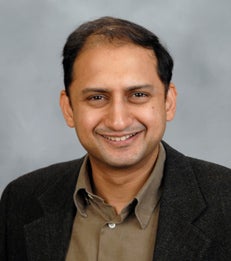
Viral V. Acharya is the C.V. Starr Professor of Economics in the Department of Finance at New York University Stern School of Business. He is a Research Associate at the National Bureau of Economic Research (NBER), a Research Affiliate at the Center for Economic Policy Research (CEPR), and a Research Associate at the European Corporate Governance Institute (ECGI). He previously served as Deputy Governor of the Reserve Bank of India (2017–2019), with responsibilities in monetary policy, financial markets, and financial stability. He is currently Director of Doctoral Education at NYU Stern (2025–), Advisor to the NYU Stern Henry Kaufman Initiative on Financial History (2023–2026), and a Scientific Advisor to the Sveriges Riksbank (2024–). He is also a member of the Climate-related Financial Risk Advisory Committee (CFRAC) of the Financial Stability Oversight Council (2023–2026), the Bellagio Group, and the Financial Advisory Roundtable of the Federal Reserve Bank of New York. Education: B.Tech. in Computer Science and Engineering, Indian Institute of Technology, Mumbai (1995) Ph.D. in Finance, New York University Stern School of Business (2001) His research focuses on systemic risk, financial regulation, sovereign and financial linkages, credit and liquidity risk, and the macroeconomic implications of financial frictions. He has also recently explored risks related to pandemics and climate change. His recent publications examine commercial real estate exposure in banks, spillover risks from non-banks, U.S. Treasury market dynamics, and industrial policy in India. The body of work consistently emphasizes financial stability, regulatory design, and the interaction between public policy and financial markets. Scientific Awards: Alexandre Lamfalussy Senior Research Fellowship, Bank for International Settlements (2017) Inaugural Banque de France – Toulouse School of Economics Junior Prize (2011) Senior Houblon-Norman Research Fellowship, Bank of England (2008) Clarivate Analytics Highly Cited Researcher (2020–2022) Acharya has held numerous editorial and leadership roles, including Editor of the Journal of Law, Finance and Accounting (2014–2016, 2020–), member of the Editorial Committee of the Annual Review of Financial Economics (2022–), Board Member of the American Finance Association (2024–), and Director of the Western Finance Association (2012–2015). He has served as an Academic Advisor to multiple Federal Reserve Banks and international institutions including the IMF, World Bank, and BIS. He advises on financial policy globally and is a frequent commentator in major media outlets. He is not known to advise specific students, but his leadership in doctoral education at NYU Stern underscores his role in mentoring the next generation of finance scholars. He is affiliated with research centers and policy initiatives focused on financial history, climate risk, and financial stability.