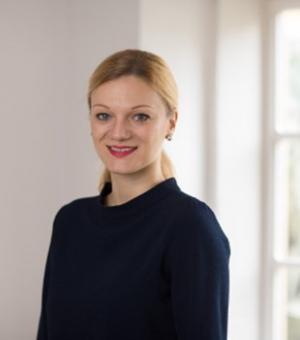
Janina Dill holds the Dame Louise Richardson Chair in Global Security at the Blavatnik School of Government, University of Oxford. She is also a Professorial Fellow at Trinity College and Co-Director of the Oxford Institute for Ethics, Law, and Armed Conflict (ELAC). Her academic work focuses on the intersection of law, morality, and international relations in the context of war. Her research spans three interconnected strands: the legal requirements for military operations under international law; theoretical frameworks for understanding how international law serves as an instrument of morality in war; and empirical investigations into how moral and legal norms affect real-world military decision-making and public opinion in conflict zones. Professor Dill's work has particular relevance to contemporary conflicts, with extensive analysis of the wars in Ukraine and Gaza. She has examined how international humanitarian law applies to these conflicts, the moral arguments employed by different parties, and the practical challenges of implementing legal constraints in complex warfare environments. Her research has been recognized with the prestigious Philip Leverhulme Prize in 2021, which she has used to advance her work on the moral psychology of decision-making in war. She is currently leading multiple significant research projects, including a three-year ESRC/NSF-funded study on "Cumulative Civilian Harm" and an expert process with the ICRC on military objectives under international humanitarian law. Professor Dill is frequently consulted by international media outlets including The Guardian, The Economist, BBC, CNN, and major European publications. Her expertise is regularly sought on matters related to the laws and ethics of war, particularly regarding the conflicts in Ukraine and Gaza. She has received recognition for her contributions to the field through numerous speaking engagements, media appearances, and her influential research that bridges theoretical legal scholarship with practical applications in contemporary conflicts.