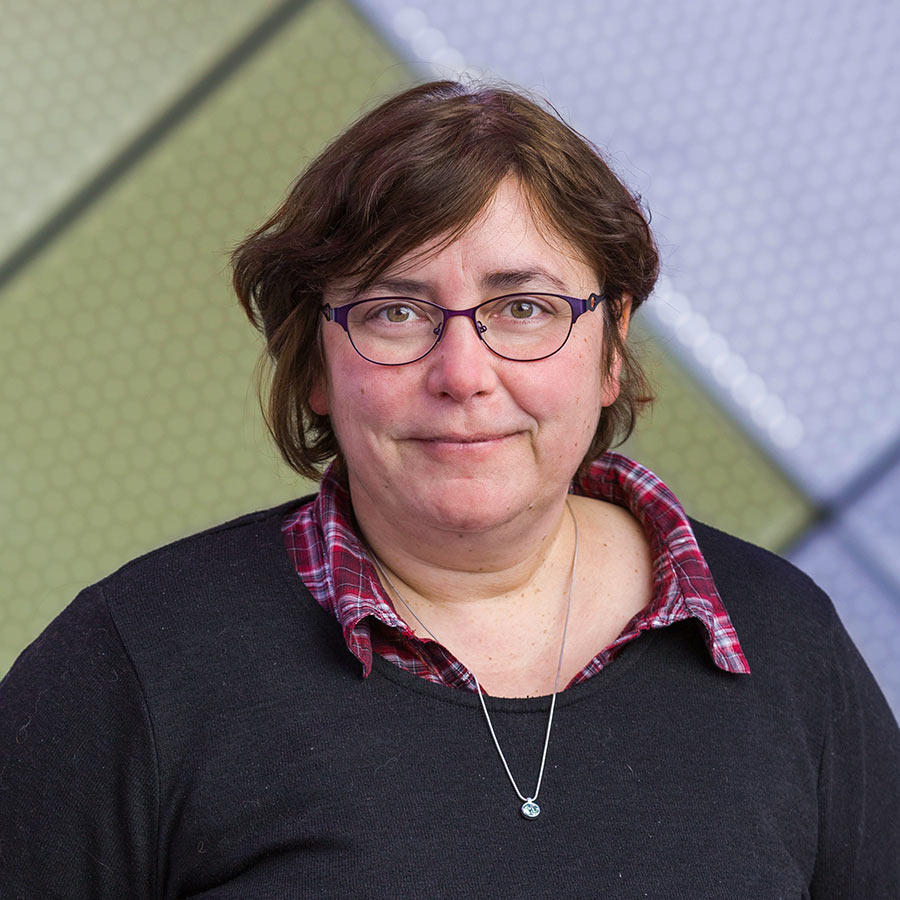
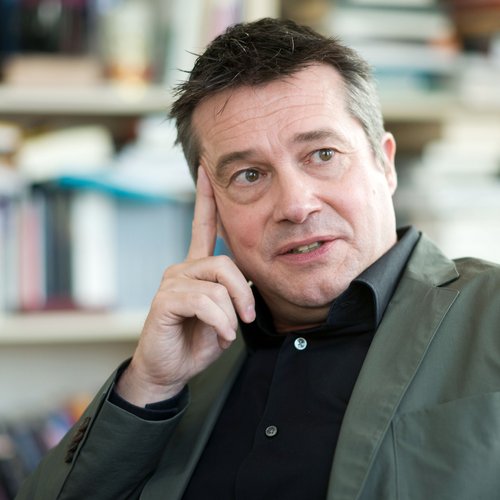
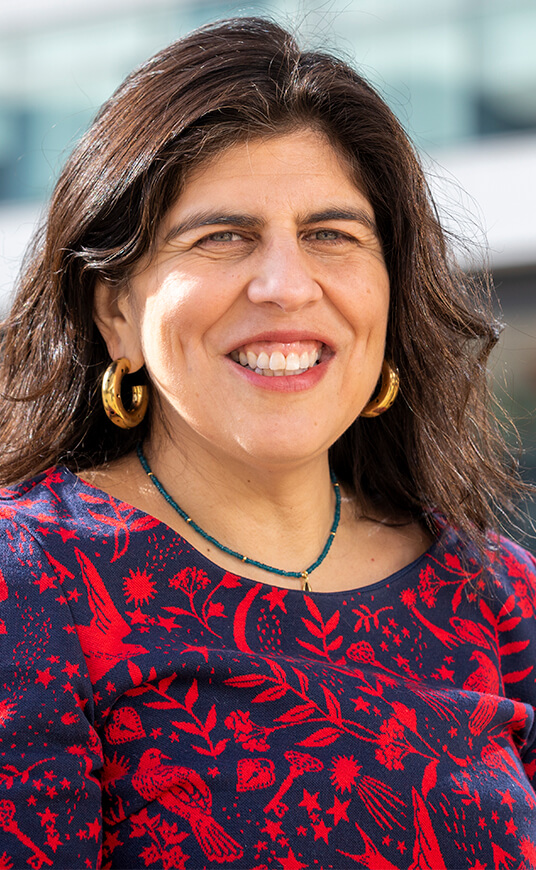
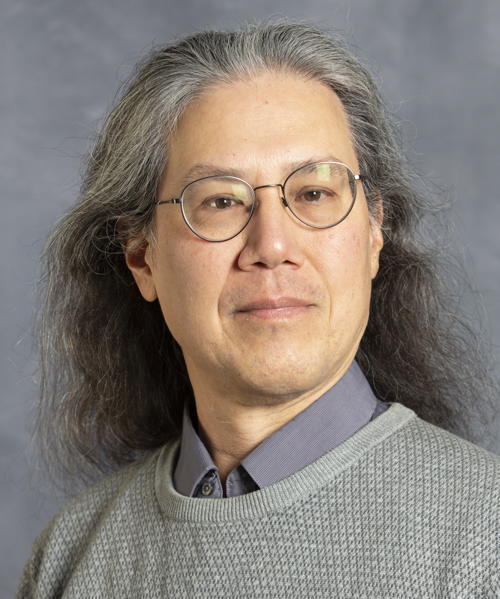
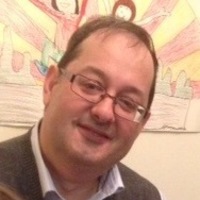
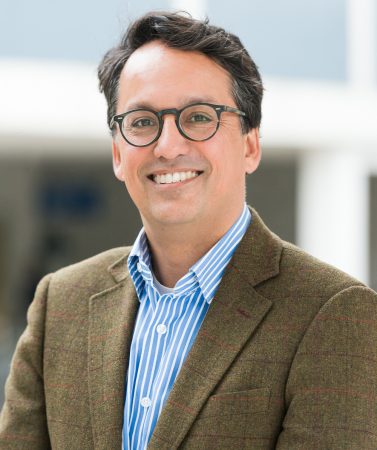
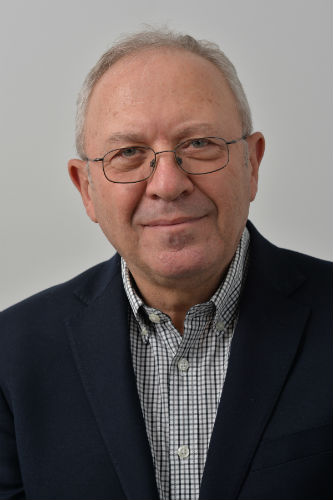
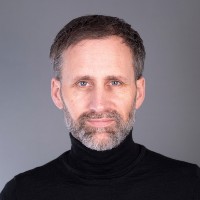
Judith SAUSSE is a Professor in the Department of Geosciences and Civil Engineering at the University of Lorraine. Her research and academic work focus on the intersection of geosciences and civil engineering, addressing foundational and applied challenges in these disciplines. Email: judith.sausse@mines-nancy.univ-lorraine.fr Contact: +33 (0)3.72.74.48.38 LinkedIn: Profile Her primary research areas include Geosciences and Civil Engineering , which form the core of her academic contributions. No scientific awards, grants, or student advising details were found in the provided information. Similarly, no recent publications or laboratory affiliations are specified in the scraped content.
Rainer Forst is Professor of Political Theory and Philosophy at Goethe University Frankfurt, where he holds positions in both the Institute of Political Science and the Institute of Philosophy. He serves as Director of the Research Center for Normative Orders, Co-speaker of the cluster initiative "ConTrust – Trust in Conflict," Spokesperson of the Leibniz Prize Research Group "Transnational Justice," and Deputy Spokesperson of the Coordinating Institute Frankfurt at the Research Institute for Social Cohesion. Additionally, he is a Permanent Fellow at the Research College for Human Sciences Bad Homburg, Director of the Justitia Center for Advanced Studies, and Head of the Master's program in Political Theory. Since 2017, he has also been a Research Professor of Political Theory at the Social Science Research Center (WZB) in Berlin. Forst received his education studying philosophy, political science, and American studies in Frankfurt/Main, New York, and at Harvard University. His academic journey includes: Ph.D. under Jürgen Habermas with thesis "Contexts of Justice: Political Philosophy Beyond Liberalism and Communitarianism" (1993) Habilitation in 2003 with "Tolerance in Conflict: History, Content, and Present of a Controversial Concept" Professor Forst's research focuses on foundational questions of political philosophy and critical theory. His work centers on justice theory, democracy, toleration, normative orders, and social cohesion. He has developed a distinctive approach he terms "critical constructivism," which builds on Kantian philosophy while engaging with the Frankfurt School tradition of critical theory. His research examines how justification processes form the basis of legitimate political orders and how concepts like solidarity and tolerance function within democratic societies. Forst's work is notable for its systematic integration of historical analysis with normative theory, creating frameworks for understanding contemporary political challenges through the lens of philosophical tradition. His recent publications reveal a growing focus on democratic regression, trust in conflictual societies, and the philosophical foundations of social cohesion. Forst has increasingly addressed the dual crises of democracy - both the political-normative justification crisis and the global structural crisis. His work connects Kantian philosophy with contemporary democratic theory, exploring concepts like the "noumenal republic" as frameworks for understanding justice and legitimacy in complex societies. A consistent thread throughout his scholarship is the examination of how power relations intersect with normative claims in political justification processes. Professor Forst has received significant recognition for his contributions to political philosophy: Gottfried Wilhelm Leibniz Prize (2012), Germany's highest research honor Member of the Berlin-Brandenburg Academy of Sciences and Humanities Corresponding Fellow of the British Academy Permanent Fellow at the Research College for Human Sciences Bad Homburg As an educator and mentor, Forst has directed numerous research initiatives and supervised many doctoral students who have gone on to prominent academic positions. He leads the international MA program in Political Theory funded by the German Academic Exchange Service and has established several significant research centers including the Research Center for Normative Orders, the Leibniz Prize Research Group "Transnational Justice," and the Center for Advanced Studies "Justitia Amplificata." His editorial work includes serving as Associate Editor of Ethics and member of editorial boards for numerous prestigious journals including Political Theory and Constellations. Forst's research infrastructure includes the Research Center for Normative Orders, which he directs, and the cluster initiative "ConTrust – Trust in Conflict," which examines political coexistence under conditions of uncertainty. His Leibniz Prize Research Group "Transnational Justice" investigates justice beyond national borders, while the Justitia Center for Advanced Studies serves as a hub for interdisciplinary research on justice-related topics. These institutions form an integrated network supporting collaborative research across philosophy, political science, and law.
Laura Ascenzi-Moreno serves as Professor of Bilingual Education and Bilingual Program Coordinator in the Childhood, Bilingual and Special Education Department at Brooklyn College, City University of New York (CUNY), School of Education. Her academic leadership focuses on developing educators capable of serving linguistically diverse student populations through equity-centered pedagogical frameworks. Her educational foundation includes a B.A. in Anthropology and Education from Swarthmore College (1994), an M.A. in Individualized Studies in Education from Harvard Graduate School of Education (1999), New York State Permanent Certification for PreK-6 (2002), a Bilingual ESL and Teacher Leadership Program from Bank Street College (2004), and a Ph.D. in Urban Education from CUNY Graduate Center (2012). Dr. Ascenzi-Moreno's research pioneers translanguaging applications across literacy instruction, assessment, and computational learning environments. She investigates how emergent bilinguals' linguistic repertoires can transform reading development, teacher knowledge construction, and multimodal assessment practices. Her work consistently centers equity through frameworks like syncretic reasoning and accompáñamiento, challenging deficit ideologies while promoting asset-based approaches to multilingual education. Analysis of her 2020-2024 publications reveals an accelerating interdisciplinary trajectory where translanguaging principles increasingly intersect with computer science education. This evolution demonstrates strategic expansion from foundational literacy research into computational literacies, with growing emphasis on co-design methodologies and teacher agency in developing multilingual CS curricula. Her scientific recognition includes the 2024 NCTE Outstanding Elementary Educator Award, Language Arts Distinguished Article Award, and major NSF grants totaling $1.3 million for computational literacy projects. Additional honors encompass Fulbright Scholarship work in Colombia, PSC-CUNY research awards, and Westinghouse Science Talent Search distinction. As Principal Investigator of NSF-funded PiLa-CS and former CUNY-NYSIEB Associate Investigator, she secures substantial grant support while mentoring teacher candidates. Her service includes NCTE Elementary Steering Committee leadership (2022-2026), journal reviewing, and Brooklyn's New York Teacher Table participation addressing educator recruitment/retention. Dr. Ascenzi-Moreno co-directs the Participating in Literacies in Computer Science project and maintains active collaboration with NYC schools through translanguaging professional development initiatives. Her work with the CUNY-NYSIEB project established foundational frameworks now implemented across New York bilingual programs.
Deen Freelon is the Allan Randall Freelon Sr. Presidential Professor at the University of Pennsylvania's Annenberg School for Communication, where he leads research in digital politics and computational methods. His work centers on identity dimensions in social media, misinformation ecosystems, and political communication. Previously, he held tenured positions at American University and the University of North Carolina at Chapel Hill. Freelon earned a B.A. with honors from Stanford University (2002), followed by an M.A. (2008) and Ph.D. (2012) from the University of Washington. His endowed chair honors his great-grandfather, Allan Randall Freelon Sr., a Penn alumnus and prominent Philadelphia artist. Freelon's research explores intersections of technology and society with emphases on: Computational analysis of social media discourse Race, gender, and ideological asymmetry in online spaces Misinformation propagation and mitigation strategies Impact of personalized information environments on democracy His publications consistently address how digital platforms reshape political engagement and identity expression. Freelon has secured over $6 million in research funding from organizations including the Knight Foundation, Hewlett Foundation, Spencer Foundation, and US Institute for Peace. As a founding member of UNC Chapel Hill's Center for Information, Technology, and Public Life, he contributes to interdisciplinary efforts examining technology's societal impacts.
Brian Swingle is an Adjunct Assistant Professor in the Department of Physics at the University of Maryland. He holds affiliations with the Condensed Matter Theory Center, Joint Center for Quantum Information and Computer Science, and Maryland Center for Fundamental Physics. His research focuses on quantum information theory, quantum gravity, and entanglement renormalization in many-body systems. Swingle earned his Ph.D. in Physics from MIT in 2011. His work explores connections between quantum entanglement and spacetime geometry, with contributions to holography, topological quantum liquids, and quantum chaos. Notable research includes demonstrating how entanglement patterns can encode gravitational dynamics, developing renormalization group approaches for topological phases, and analyzing quantum complexity in holographic systems. His teaching includes Physics 603: Methods of Statistical Physics. Key publications address holographic wormholes, entanglement renormalization techniques, and quantum many-body dynamics. Swingle collaborates with institutions like JQI and has been featured in podcasts discussing black hole physics and quantum information.
Nadia Shardt is an Associate Professor in the Department of Chemical Engineering at the Norwegian University of Science and Technology (NTNU). Her research focuses on interfacial thermodynamics, particularly in systems with nanoscale curvature, with applications spanning atmospheric science, biomedical cryopreservation, and industrial process optimization. She contributes to teaching courses such as TKP4580 - Chemical Engineering Specialization Project and KP3100 - Chemical Engineering . PhD in Chemical Engineering (University of Alberta, 2019) BSc in Chemical Engineering (University of Alberta, 2015) Postdoctoral researcher at ETH Zurich (2020-2022) Her work addresses fundamental challenges in phase behavior under curvature constraints, combining microfluidic experimentation , Gibbsian thermodynamic modeling , and machine learning techniques to study systems like CO 2 storage media, cloud microphysics, and food emulsions. Recent publications emphasize surface tension modeling for complex multi-component systems and cryoprotectant loading efficiency. Scientific awards include the ETH Postdoctoral Fellowship Natural Sciences and Engineering Research Council of Canada (NSERC) Postdoctoral Fellowship Outstanding Academic Fellows Programme 2024-2028
Kevin Crowston is a Distinguished Professor of Information Science at Syracuse University's School of Information Studies (iSchool), where he examines how information technology enables new organizational forms through empirical studies, theoretical modeling, and system design. His work focuses on coordination-intensive processes in virtual settings, with significant contributions to citizen science, data science teamwork, and journalism transformation. Education A.B. in Applied Mathematics (Computer Science), Harvard University, 1984 Ph.D. in Information Technologies, MIT Sloan School of Management, 1991 Research Focus : Crowston investigates coordination mechanisms in human-AI collaboration, particularly through projects like Gravity Spy (combining citizen scientists with machine learning for gravitational wave analysis) and journalism innovation (e.g., ReelFramer for AI-assisted news-to-video translation). His framework addresses how intelligent systems reshape work design, knowledge production, and team dynamics in scientific and media contexts. Publication Trends : Recent articles (2024-2025) reveal three dominant threads: (1) Human-AI co-creation in journalism (deskilling/upskilling dynamics, creative tool adoption), (2) Citizen science evolution with AI (co-learning systems, lexical entrainment), and (3) Socio-technical governance of intelligent machines (control-accountability alignment, project archetypes). These reflect his central inquiry into how technology reconfigures work structures. Scientific Recognition ACM Distinguished Speaker Research Leadership : Crowston currently directs two major NSF initiatives: (1) HCC grant 21-06865 on intelligent support for non-expert information navigation, and (2) FW-HTF grant 21-29047 exploring human-technology collaboration in journalism. He spearheaded a Research Coordination Network establishing socio-technical frameworks for work in the age of intelligent machines, culminating in a special issue of Information, Technology & People . Collaborative Infrastructure : He co-leads the Gravity Spy citizen science ecosystem (integrating LIGO physicists, machine learning systems, and volunteers) and serves as co-editor-in-chief of Information, Technology and People , previously editing ACM Transactions on Social Computing . His MIDST platform research advances stigmergic coordination for data science teams.
Dr. Alastair Key serves as Director of Studies in Archaeology and Official Fellow in Archaeology at Queens' College, University of Cambridge. His research bridges Paleolithic archaeology, stone tool technology, and hominin behavioral evolution through experimental and computational approaches. Director of Studies and Official Fellow at Queens' College, Cambridge Specializes in Paleolithic stone tool analysis, Acheulean technology, and hominin adaptation Conducts experimental archaeology and computational modelling to assess tool functionality Key's research focuses on Acheulean handaxe production , lithic microwear patterns , and ergonomic constraints in prehistoric tool use . He has extensively published on topics including glacial-stage hominin occupations , Oldowan toolmakers , and machine learning applications to archaeological analysis . His recent publications (2025-2023) span diverse subfields: Acheulean chronology , hominin tool use biomechanics , experimental projectile testing , and computational morphometric methods . The work often integrates multidisciplinary datasets and open-source analytical tools to address fundamental questions about human technological evolution. Current research directions include stone tool sharpness quantification , handaxe social signaling potential , and cross-species tool use comparisons through primate studies.
René Jr Landry is a full Professor in the Department of Electrical Engineering at École de technologie supérieure (ETS), Université du Québec, specializing in Global Navigation Satellite Systems (GNSS), avionics, and wireless communication technologies. His academic journey includes a B.Ing. from Polytechnique Montréal, M.Sc. from University of Surrey (UK), and Ph.D. from SupAréo in Toulouse. He maintains active research leadership through two key laboratories: LASSENA (Laboratory of Space Technologies, Embedded Systems, Navigation and Avionics) and LACIME (Communications and Microelectronic Integration Laboratory). His research spans critical aerospace navigation domains including GNSS signal processing, inertial navigation systems, software-defined radio for avionics, radio frequency interference mitigation, and indoor positioning technologies. Landry's work addresses real-world challenges in satellite navigation robustness, precision positioning in urban/denied environments, and next-generation avionic system security. His current projects focus on blockchain-enhanced IoT security, AI-driven GNSS disruption analysis, and adaptive RF front-ends for multi-band avionics applications. Analysis of his recent publications reveals strong emphasis on resilient positioning systems through multi-constellation integration (particularly Iridium-NEXT), blockchain applications for navigation security, and explainable AI techniques for GNSS signal quality assessment. His work increasingly bridges traditional navigation engineering with cutting-edge security and machine learning paradigms. 2014 Prix d'excellence du c.a. pour les services à la collectivité Landry has supervised over 100 graduate students across doctoral, master's, and research projects since 2005, with current supervision extending through Summer 2025. His research funding supports multiple industry partnerships focused on avionics certification, software-defined radio implementations, and next-generation navigation systems. The LASSENA laboratory under his leadership develops certified avionic products from open-source SDR platforms and advances multi-sensor fusion techniques for challenging navigation environments. His research infrastructure includes specialized facilities for GNSS signal simulation, avionics hardware testing, and multi-sensor integration. Current work emphasizes flight-tested validation of RF front-end technologies, blockchain-secured navigation data, and real-time interference mitigation systems for aviation applications.
Luca Somigli is a Professor at the University of Toronto, holding the Emilio Goggio Chair in Italian Studies. His research focuses on European and Italian modernism, avant-garde movements, futurism, detective fiction, genre literature, and comics. Born in Florence, he earned a Laurea from the Università degli Studi di Firenze and a PhD in Comparative Literature from SUNY Stony Brook. Educational Background: PhD, State University of New York at Stony Brook Laurea, Università degli Studi di Firenze Luca's scholarship explores tensions between modernism and postmodernism, colonial narratives in Italian crime fiction, and the intersection of visual narratives with cultural themes. His recent publications include co-edited volumes on futurism and modernism, alongside articles analyzing authors like Marinetti, Pirandello, and Camilleri. Key research trends include: Colonialism in Italian historical fiction Symbolist and avant-garde artistic movements Visual storytelling in comics and film The legacy of fascist ideology in literature Scientific awards highlight his contributions: the 2019 Visiting Scholar at Université de Haute-Alsace and the 2003 American Association for Italian Studies Book Award. Luca has co-authored works with scholars like Federico Luisetti and Eleonora Conti, and his conference presentations address neomodernist novels and modernist historiography. He serves as Chair of the Department of Italian Studies (2021-present) and previously as Associate Chair – Graduate (2020-2021).
Kylie King is a Senior Lecturer at the School of Psychological Sciences at Monash University and affiliated with the Turner Institute for Brain and Mental Health. She joined Monash University in November 2019 as an Impact Fellow and transitioned to her current Senior Lecturer role in February 2023, where she focuses on fostering research connections with industry, community, and people with lived experience. Her educational background includes a Doctor of Psychology from Deakin University (2001) and a PhD completed in early 2020 focusing on suicide prevention. Prior to joining Monash, she worked as a psychologist specializing in addictions and spent ten years (2009-2019) as a Research Fellow at the Melbourne School of Population and Global Health at the University of Melbourne. Dr. King's research primarily centers on suicide prevention, with particular emphasis on males and communities experiencing disproportionate suicide rates. Her work integrates program evaluation methodologies to develop targeted interventions and suicide prevention education. She leads research teams focused on creating evidence-based approaches to address mental health challenges in vulnerable populations. Her research aligns with UN Sustainable Development Goals related to health and wellbeing. Analysis of her recent publications reveals a strong focus on gender-specific suicide prevention, particularly for men and older males, as well as attention to culturally specific approaches for Indigenous communities. Her work bridges clinical psychology with public health interventions, examining how societal factors, occupational environments, and cultural contexts influence mental health outcomes and suicide risk. Associate Editor, Australian Psychologist Journal (2020-present) Associate Editor, Australian Psychologist Journal (2021-present) Guest Editor, Frontiers in Public Health (2020) Dr. King is actively involved in peer review responsibilities and currently leads significant research projects including "Preventing suicide in boys and men" (2020-2026), "Formative evaluation of suicide prevention gatekeeper training for aged care workers" (2023-2025), and "Zest – A personalised, digital intervention for sleep and wellbeing in Australian shift workers" (2023-2026). She is accepting PhD students for research supervision through Monash University's Supervisor Connect platform. Her research team operates at the intersection of clinical psychology and public health, developing evidence-based interventions for vulnerable populations with strong emphasis on community-centered approaches and collaboration with individuals with lived experience of mental health challenges.
Dominic McIver Lopes is the University Killam Professor in the Department of Philosophy at the University of British Columbia, part of the Faculty of Arts. He holds a D.Litt. and D.Phil. from Oxford University, and a B.A. from McGill University. His research focuses on aesthetics, including pictorial representation, the ontology of art, computer art, and the history of aesthetics in Europe and Asia. He is a core member of the UBC Aesthetics Group and actively contributes to interdisciplinary discussions at the intersection of philosophy and the human sciences. Lopes has authored or co-authored numerous influential books, including *Aesthetic Injustice* (2024), *The Geography of Taste* (2024), and *Being for Beauty* (2018). He has received prestigious awards such as the Fellow of the Royal Society of Canada, Guggenheim Fellowship, and Killam Research Prize. His work bridges theoretical aesthetics with practical applications, addressing topics like aesthetic injustice and the social dimensions of beauty. He serves on editorial boards for journals like *Ergo* and *Journal of Aesthetics and Art Criticism*, reflecting his leadership in academic governance. Past roles include chair of the APA Board of Officers and president of the American Society for Aesthetics and Canadian Philosophical Association. His current projects include a book on pluralism in aesthetics, emphasizing historical and cross-cultural perspectives.
Valentino Tosatti is a Professor of Mathematics at the Courant Institute of Mathematical Sciences, New York University. His research focuses on complex and differential geometry, geometric analysis, and partial differential equations (PDEs), with connections to algebraic geometry and dynamical systems. He explores topics such as Kähler geometry, Calabi-Yau manifolds, symplectic geometry, geometric flows, and the Monge-Ampère equations. His work often addresses the interplay between geometric structures and their analytic properties. Education: He earned his PhD in Mathematics from Harvard University in 2009 under the supervision of Shing-Tung Yau. Prior to that, he completed a Laurea (BSc) at the University of Pisa and a Minor Thesis at Harvard. Research Interests: Tosatti's work emphasizes the study of geometric flows (e.g., Kähler-Ricci flow), collapsing behavior of Calabi-Yau metrics, and canonical currents on K3 surfaces. His contributions include foundational results on the regularity of solutions to Monge-Ampère equations and the asymptotic analysis of geometric structures under degenerations. Publications and Trends: His recent articles address themes like volume regularity, collapsing metrics, and geometric flows, reflecting a deep engagement with the analytic and geometric challenges in complex geometry. He has also organized conferences and workshops on topics such as geometric analysis and complex geometry. Professional Activities: Tosatti serves on editorial boards for journals including the Canadian Journal of Mathematics and Mathematische Zeitschrift. He has contributed to organizing events like the 2026 Oberwolfach workshop on Complex Geometry and Dynamical Systems and has been involved in academic seminars at institutions like Columbia University and Northwestern University.
Michael Farber is a Professor of Mathematics at Queen Mary University of London's School of Mathematical Sciences. Previously, he held professorships at the Universities of Warwick, Durham, and Tel Aviv. His research focuses on applied and computational topology, topological robotics, stochastic topology, and their applications in distributed computing, genomics, and brain connectivity modeling. He has authored influential monographs such as Invitation to Topological Robotics and Topology of Closed One-Forms . Farber's current research includes projects funded by the Leverhulme Trust and EPSRC, addressing probabilistic and deterministic topology, automated motion planning, and topological robotics. He advises PhD students including Lewin Strauss, Gabriele Beltramo, and Lewis Mead. His work has been recognized with the Royal Society Wolfson Research Merit Award. Key research interests include parametrized topological complexity, sequential motion planning algorithms, and the intersection of topology with AI and robotics. His collaborations span interdisciplinary fields, such as using topological methods in cancer research and genomic analysis. Grants and funding include the Leverhulme Trust's 'Probabilistic and Deterministic Topology' and EPSRC's 'Topology of Automated Motion Planning.' Farber is affiliated with Queen Mary's Centre for Geometry, Analysis, and Gravitation, contributing to advancing topological methodologies in algorithmic and stochastic systems.
Dr. Philipp Rode is Executive Director of LSE Cities and Associate Professor (Education) at the London School of Economics' School of Public Policy. He leads interdisciplinary urban development research, focusing on transport, sustainability, and governance. His work spans global urban challenges, including climate policy, emergency governance, and urban transitions. Rode co-founded the Urban Age Programme and advises international organizations like UCLG and Metropolis. He holds degrees in transport systems (TU Berlin), city design (LSE), and urban governance (PhD, LSE), and has authored/co-edited influential books such as Governing Compact Cities and Shaping Cities in an Urban Age . Affiliations: LSE Cities, University of St. Gallen (Visiting Professor) Key Roles: Co-Director of LSE's MSc in Cities, Lead of Emergency Governance Initiative Global Engagement: Partnered with OECD, UNDP, World Resources Institute, and over 50 city governments Research interests center on multi-dimensional urbanization, socio-technological transitions, and governance systems. His recent work emphasizes emergency governance frameworks for cities, climate-resilient urban policies, and accessibility strategies. Rode has contributed to shaping the UN's New Urban Agenda and advised the Global Commission on the Economy and Climate. Publications span peer-reviewed journals ( Transport Policy , Environment and Planning B ) and edited volumes addressing urban sustainability, transport governance, and strategic planning. His work bridges academic insights with policy impact, emphasizing actionable frameworks for equitable and resilient cities.