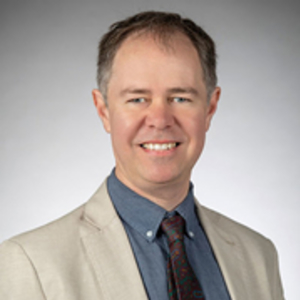
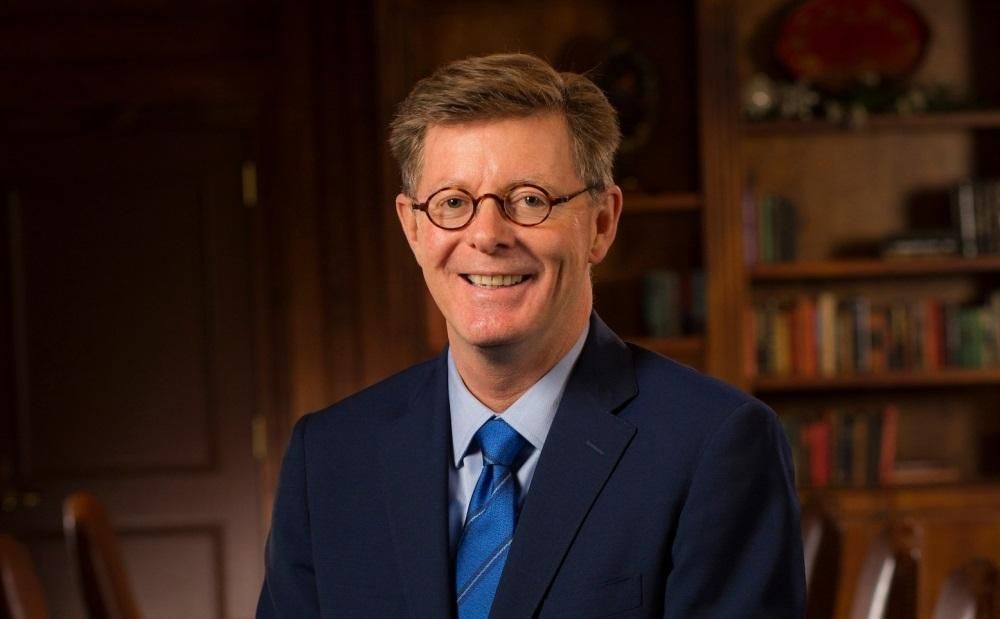
Richard Hind is a Professor in the Department of Mathematics at the University of Notre Dame, part of the College of Science. He holds a B.A. from Cambridge University (1992) and a Ph.D. from Stanford University (1997). His research focuses on differential geometry, particularly complex and symplectic geometry, with an emphasis on the interplay between Riemannian metrics and canonical geometric structures. His work explores symplectic embeddings, Lagrangian submanifolds, and geometric rigidity, utilizing pseudoholomorphic curves as a key tool. Key research areas include symplectic packing problems, Stein manifolds, and the topology of symplectic manifolds. Recent work addresses symplectic barriers, packing stability, and geometric invariants of ellipsoids. His publications span journals like Geom. Funct. Anal., Duke Math. J., and Invent. Math., often collaborating with leading researchers in the field. Teaching includes MATH 10270: Mathematics in Architecture, linking geometric principles to historic structures. Professional roles include service on editorial boards and contributions to conferences. Office: 238 Hayes-Healy Bldg, Email: rhind@nd.edu and hind.1@nd.edu.
Kazushi Ueda is an Associate Professor at the Graduate School of Mathematical Sciences, The University of Tokyo, where he has been since April 2015. His research spans algebraic geometry, symplectic geometry, and mathematical physics, with a focus on homological mirror symmetry and its applications to moduli spaces, Calabi-Yau manifolds, and singularities. He previously held academic positions at Osaka University from 2006 to 2015, including roles as Assistant Professor and Associate Professor. Ueda has also had visiting appointments at institutions such as the University of Oxford, Max Planck Institute for Mathematics, and Korea Institute for Advanced Study. Bachelor of Science, Kyoto University (1997-2001) Master of Science, Kyoto University (2001-2003) Doctor of Science, Kyoto University (2003-2006) Ueda's research explores the deep interplay between complex and symplectic geometry through mirror symmetry, particularly in the context of Calabi-Yau varieties, toric degenerations, and dimer models. His work addresses derived categories, stability conditions, and moduli problems, with recent contributions to noncommutative algebraic geometry and applications in mathematical physics. He has collaborated extensively with researchers like Akira Ishii, Masahiro Futaki, and Shinnosuke Okawa. His publications highlight homological mirror symmetry for K3 surfaces, Grassmannians, and singularities, as well as studies on modular forms, cluster transformations, and the Grothendieck ring. Ueda is a member of the Mathematical Society of Japan and has contributed to educational programs, including graduate lectures on mirror symmetry and symplectic geometry.
Professor Grahame Holmes is an Honorary Professor in the School of Engineering at RMIT University, Australia. His expertise spans electrical energy conversion, smart energy systems, renewable energy integration, power electronics, and grid infrastructure. He focuses on advancing technologies for sustainable energy storage, grid stability, and high-efficiency power conversion. Research Interests : Electrical and Electronic Engineering, Communications Technologies, Power Electronics, Renewable Energy Systems, and Grid Integration Solutions. His work emphasizes practical applications such as hydrogen energy storage systems, grid-interactive inverters, and modular multilevel converters. Recent Contributions : Prof. Holmes has published extensively on topics like advanced PWM techniques, resonant current controllers, and DC transformer designs. His research bridges theoretical advancements with real-world implementations, addressing challenges in smart grid stability and high-frequency power conversion. Advising & Grants : Supervised projects include 'Hydrogen Energy Storage System for Nanogrid' (2015) and 'Synchronised Control of Grid-Interactive Inverters' (2015). While specific grant details are not listed, his work aligns with major themes in sustainable energy research. Labs & Collaborations : Engages in collaborative research through RMIT's facilities, focusing on hardware-software co-simulation frameworks and FPGA-based real-time systems.
Dr. Galina Miazhevich is a Senior Lecturer at the School of Journalism, Media and Culture (JOMEC) at Cardiff University, UK. Previously, she served as a lecturer at the University of Leicester's School of Media, Communication and Sociology (2013-2017) and as the Gorbachev Media Research Fellow at the University of Oxford (2008-2012). Her academic career focuses on media representations in post-communist contexts, with particular expertise in Russian and Eastern European media landscapes. Dr. Miazhevich earned her PhD from the University of Manchester, where she subsequently worked for two years as a Research Associate on an AHRC-funded project examining representations of Islam as a security threat. Her educational background has informed her research trajectory, which bridges media studies, political communication, and cultural analysis of post-Soviet societies. Dr. Miazhevich's research spans several interconnected domains: media representations of Islam and multiculturalism in Europe; media and democracy in post-communist Europe; gender, media, and emergent forms of post-Soviet identity; feminism; Eurovision and popular culture; and diaspora, transnationalism, and media. Her work consistently examines how media shapes and is shaped by political transitions, identity formation, and social movements in post-Soviet contexts, with particular attention to marginalized voices and resistance practices. Analysis of Dr. Miazhevich's recent publications reveals a consistent focus on resistance, identity, and power dynamics in post-Soviet media environments. Her work increasingly examines gender and sexuality as political categories, particularly through the lens of feminist and LGBTQ+ resistance to authoritarian regimes. The Eurovision Song Contest serves as a recurring analytical framework for understanding cultural diplomacy and nation-branding strategies. More recently, her research has pivoted toward documenting anti-war resistance following Russia's invasion of Ukraine, examining how celebrities and media figures navigate political dissent under authoritarian conditions. Dr. Miazhevich has received several notable recognitions for her scholarly contributions: AHRC Leadership grant 'A Quiet Revolution: Discursive Representations of Non-heteronormative Sexuality in Russia' (2018-2020, £250,960) Visiting Fellowship at the Davis Centre for Russian and Eurasian Studies, Harvard University (Fall 2023) Fellow of the Higher Education Academy (FHEA) Associate Editor for the Oxford Encyclopedia of Race, Ethnicity, and Communication (2024) Dr. Miazhevich actively mentors the next generation of scholars, currently co-supervising PhD students Diyana Dobreva (with Professor Martin Innes) and John Tasker (with Professor Paul Bowman). She welcomes PhD proposals in areas including digital culture and resistance, media management and misinformation, media and democracy, representation of minority groups, post-communist identity politics, gender and feminism, Eurovision and popular culture, and geopolitics and nation-branding. Her grant portfolio demonstrates sustained success in securing competitive research funding, including leadership of an AHRC grant and participation in the Academy of Finland project FEMCORUS (2021-2025). Dr. Miazhevich is deeply engaged with academic communities, serving as co-convenor of the (Digital) Media and Culture group at the British Association for Slavic and East European Studies (BASEES) since 2016 and as a member of the Advisory Board of the European Communication Research and Education Association (ECREA) since 2021. Her work extends beyond academia through public engagement, including invited talks at prestigious institutions like Harvard University and participation in policy-relevant events at Chatham House addressing LGBTQ+ politics in Russia.
Anne-Lise François is an Associate Professor in the Departments of English and Comparative Literature at the University of California, Berkeley. She earned her PhD in Comparative Literature from Princeton University. Her work bridges 18th- and 19th-century British literature with contemporary environmental humanities, focusing on themes of ecological ethics, literary minimalism, and non-productive temporalities. Current research explores pastoral worldliness and commons-based economies in Romantic and modernist texts. Key scholarly contributions include her prize-winning book *Open Secrets: The Literature of Uncounted Experience* (2007), which examines 'affirmative reticence' in works by Jane Austen, Mme de Lafayette, and Emily Dickinson. Her recent projects address climate crisis narratives, food politics, and the intersection of aesthetic theory with ecological urgency. Teaching emphasizes transhistorical literary studies and environmental criticism Active in interdisciplinary collaborations across literature, philosophy, and environmental science Current book project: *Provident Improvisers: Parables of Subsistence from Wordsworth to Benjamin* Her writing synthesizes close textual analysis with broader socio-ecological frameworks, challenging Enlightenment models of productivity and advocating for 'recessive fulfillment' in both art and life.
Ralf Haefner is an Assistant Professor in the Departments of Brain & Cognitive Sciences and Physics & Astronomy at the University of Rochester, holding this joint appointment since 2014. His interdisciplinary research bridges neuroscience and physics to investigate computational principles of perception and decision-making. Education and professional background: PhD, Oxford University, 1999 Visiting Research Fellow, Department of Neurobiology, Harvard Medical School Swartz Fellow, Sloan-Swartz Center for Theoretical Neurobiology, Brandeis University Haefner's research program centers on computational neuroscience , with primary focus on how the brain forms perceptual beliefs and uses them for decisions through Bayesian modeling . He employs machine learning tools to construct mathematical models explaining neural responses and behavior, particularly in the visual domain. His work addresses neural representation of uncertainty, causal inference mechanisms, and probabilistic computation in cortical circuits. Analysis of recent publications (2023-2025) reveals three dominant trends: (1) causal inference frameworks applied to motion perception and segmentation, (2) Bayesian modeling of perceptual biases and confidence computations, and (3) integration of generative and discriminative neural computations. His work extends beyond traditional neuroscience into scientific methodology through 'Generative Adversarial Collaborations' for improving research discourse. Honors and Awards: Swartz Fellowship, Sloan-Swartz Center for Theoretical Neurobiology NSF CAREER Award (2022) for 'Approximate inference at the intersection of neuroscience and machine learning' Haefner secured significant research funding through his NSF CAREER award, which supports foundational work on probabilistic inference at the neuroscience-ML interface. While specific students aren't listed, his active publication record and lab infrastructure suggest ongoing mentorship of graduate students and postdocs. His research has clinical relevance as shown by studies on perceptual abnormalities in autism spectrum disorder, indicating translational potential for understanding neurological conditions.
Patrick Allen is an Associate Professor in the Department of Mathematics and Statistics at McGill University, where he contributes to research in number theory and related fields. He is affiliated with the Montreal Number Theory Group and the Centre Interuniversitaire en Calcul Mathématique Algébrique (CICMA), focusing on areas such as Galois representations, automorphic forms, and algebraic number theory. His work bridges algebraic geometry and arithmetic, with a particular emphasis on modularity lifting theorems and deformation theory. Allen's research interests include the study of CM fields, modular forms, and elliptic curves, alongside investigations into the Langlands program and p-adic methods. He has published extensively on topics such as potential automorphy, monodromy, and adjoint Selmer groups. His contributions address questions in arithmetic algebraic geometry and cohomological automorphic forms, often intersecting with representation theory. While his articles span over 20 years, recent work (2020–2023) emphasizes the modularity of Galois representations over CM fields and the application of automorphic techniques to solve problems in number theory. Allen’s research often involves collaboration with international experts in algebraic number theory and arithmetic geometry. Scientific Awards: None explicitly listed in the provided materials. Advising & Grants: No formal advisees or grant details are listed in the text. His affiliations with CICMA suggest participation in collaborative research initiatives, though specific grants are not mentioned. Labs/Teams: Active member of the Montreal Number Theory Group and CICMA, contributing to inter-university collaborative projects in algebraic number theory.
Aleksandar Kostic is a Lecturer in the Department of Architecture and Built Environment at South East Technological University (SETU), where he also serves as Lead Researcher. He holds a PhD from University College Dublin, awarded in 2022, and is actively contributing to the academic and professional architecture community. PhD in Design Theory, University College Dublin (2022) His research lies at the intersection of philosophy and architectural design, with a strong focus on design theory, epistemology, ethics, and aesthetics. He explores fundamental questions such as aporia (intellectual impasses) in design, the influence of Platonic philosophy, and the ethical responsibilities of architects. His work emphasizes critical thinking and philosophical inquiry in architectural practice and education. The trends in his publications reveal a consistent engagement with philosophical concepts applied to architectural problems. From examining 'aporetic' design challenges to analyzing Plato’s views on expertise, his research bridges abstract thought and practical design. Recent works continue this trajectory, addressing ethical values, non-material aspects of design, and the role of contradiction in innovation. Nomination for MIES EU Award for Architecture (2009) Aleksandar Kostic advises PhD students and is actively involved in research dissemination through publications, peer-review, and conference organization. He serves on the steering committee of the All Ireland Architecture Research Group and is a member of the Centre for Platonic Studies at Trinity College Dublin and the Royal Institute of the Architects of Ireland. His peer-review activities include journals such as She JI and Building Material . He is a key member of the Architecture Research Group at SETU and collaborates across disciplines, particularly with philosophy. His upcoming activity includes organizing the 'Ethics in Architecture' conference in 2025, highlighting his leadership in integrating ethical discourse into architectural research.
Raphaël Beuzart-Plessis is a CNRS Research Fellow affiliated with Aix-Marseille University and the Institute of Mathematics of Marseille (I2M) at Luminy Campus. He specializes in advanced areas of mathematics, including harmonic analysis, automorphic forms, representation theory, and number theory, with a focus on unitary groups and conjectures like Gan-Gross-Prasad. His work bridges algebraic geometry, differential geometry, and operator theory. Arithmetic, Geometry, Logic and Representations Group (AGLR) 2022-2027 ERC RELANTRA grant recipient Research interests span automorphic representations, L-functions, periods of automorphic forms, and harmonic analysis on real spherical spaces. He works extensively on the local and global Gan-Gross-Prasad conjectures, endoscopy, and supercuspidal representations. His recent publications analyze Plancher1el formulas, spherical characters, and congruences of automorphic forms. His 15 most recent publications (2014-2022) address topics such as the Gan-Gross-Prasad conjecture, Jacquet-Rallis's fundamental lemma, and the Asai Rankin-Selberg integrals. These works reflect his expertise in automorphic forms, representation theory, and number theory, often involving collaborations with leading mathematicians. 2016-2017 Peccot Prize for young mathematicians under 30 2022-2027 ERC RELANTRA grant for research in automorphic forms and representation theory Beuzart-Plessis has no listed students or laboratory teams but participates in the AGLR-RGR (Reduction Group Representations) team and has been an invited speaker at the 2022 International Congress of Mathematicians. His career includes guest lectures at Collège de France, including four sessions on Period factorizations and Plancherel formulas in 2017.
Marcia C. Linn is the Evelyn Lois Corey Professor of Instructional Science in the Berkeley School of Education at the University of California, Berkeley. She serves as Chair of the Graduate Group in Science and Mathematics Education (SESAME) and has made significant contributions to the field of science education for over five decades. Dr. Linn is a member of the National Academy of Education and a Fellow of multiple prestigious organizations including the American Association for the Advancement of Science (AAAS), the American Psychological Association (APA), the Association for Psychological Science (APS), the American Educational Research Association (AERA), and the International Society of the Learning Sciences (ISLS). Dr. Linn earned her B.A. in Psychology and Statistics (1965), M.A. in Educational Psychology (1967), and Ph.D. in Educational Psychology (1970) from Stanford University, where she worked under Lee Cronbach. Her early career included working with Jean Piaget at the Institute Jean Jacques Rousseau in Geneva, Switzerland (1967-68), serving as a Fulbright Professor at the Weizmann Institute of Science in Israel (1983), and conducting research at University College in London. She has been a fellow at the Center for Advanced Study in Behavioral Sciences three times and a Writing Resident at the Rockefeller Foundation Bellagio Center twice. Dr. Linn's research focuses on how students learn science and how technology can be used to improve science education. She developed the Knowledge Integration framework, which has become widely used in science education. Her work explores the intersection of cognitive science and educational practice, with particular attention to how students develop understanding of complex scientific concepts. She has pioneered the use of technology in science education, developing the Web-based Inquiry Science Environment (WISE) and directing the NSF-funded Technology-Enhanced Learning in Science (TELS) center. Dr. Linn's recent publications demonstrate a clear trajectory toward integrating artificial intelligence with science education. Her work increasingly focuses on how AI can support knowledge integration, facilitate science learning opportunities, and promote equitable educational experiences. She examines how technology can help students develop deeper understandings of scientific concepts through inquiry-based learning while addressing issues of social justice in science education. Scientific Awards and Honors National Association for Research in Science Teaching Award for Lifelong Distinguished Contributions to Science Education American Educational Research Association Willystine Goodsell Award Council of Scientific Society Presidents first award for Excellence in Educational Research Fulbright Professor (1983) Apple Wheels for the Mind grant (1985) National Institute of Education grant (1983) Throughout her career, Dr. Linn has secured significant funding for educational research, including multiple National Science Foundation grants. She directed the NSF-funded Technology-Enhanced Learning in Science (TELS) center and has led numerous projects investigating the cognitive consequences of computer environments for learning. She has advised countless students and researchers in the field of science education, shaping the next generation of educational researchers and practitioners. Dr. Linn directs the Web-based Inquiry Science Environment (WISE) project and has been instrumental in developing technology-enhanced learning environments for science education. Her laboratory has been at the forefront of creating and testing innovative learning technologies that support students in developing deep understanding of scientific concepts through inquiry-based approaches.
Sahar Pirooz Azad is an Assistant Professor in the Department of Electrical and Computer Engineering at the University of Waterloo. She holds a PEng designation and specializes in power systems engineering, particularly in HVDC systems and grid stability. Previously, she served as an Assistant Professor at the University of Alberta (2015–2017) and conducted postdoctoral research at the University of Toronto’s CAPE Centre and KU Leuven in Belgium. Her research focuses on enhancing power grid stability through advanced control schemes for HVDC grids, converter modeling, and fault protection mechanisms. Dr. Azad’s work addresses challenges in multi-terminal HVDC systems, offshore wind grid integration, and multi-vendor system compatibility. She has taught courses like Power System Protection and Relaying (ECE 765) and Electromechanical Energy Conversion (ECE 260), reflecting her expertise in both theoretical and applied electrical engineering. Her recent publications emphasize innovative protection schemes for HVDC grids, fault detection algorithms using signal processing (e.g., Hilbert-Huang Transform), and robust controller designs for multi-vendor VSC systems. These contributions aim to improve grid reliability, fault resilience, and renewable energy integration efficiency. Dr. Azad is actively recruiting graduate students and holds Sole-Supervisory Privilege Status (SSPS) at Waterloo. Her research has been supported by European Commission-funded projects like MEDOW and leverages interdisciplinary approaches to tackle modern grid challenges.
Prof. Tibor Neugebauer is a Full Professor of Finance at the University of Luxembourg’s Faculty of Law, Economics and Finance (FDEF), Department of Finance. He holds a Doctorate in Economics from the University of Valencia (2000) and professional qualifications from Hannover, with prior academic positions at institutions including York, Kiel, Hannover, and research stays at Lisbon, Bari, Valencia, and Rome. His research focuses on Experimental Finance and Economics, particularly behavioral finance, asset markets, auctions, and decision-making under uncertainty. He designs laboratory experiments to analyze markets, strategic interactions, and algorithm-human dynamics, with recent emphasis on algorithmic trading and market regulations. Education: Doctor of Economics, University of Valencia (2000) Master of Science in Economics, University of Alicante (1997) Bachelor’s in Economics, University of Bonn (1994) Professional Qualification in Economics, University of Hannover (2006) Research Interests: Prof. Neugebauer’s work examines institutional and informational structures’ impact on market outcomes, including fairness in co-determination, communication effects in asset markets, and algorithmic arbitrage. His experiments explore human behavior in complex environments, such as speculative asset trading and regulatory interventions. He has pioneered studies on algorithmic trading’s role in experimental markets, combining theoretical models with empirical behavioral insights. Key Contributions: His research addresses topics like margin trading regulations, Modigliani-Miller theorem validity in experimental settings, and the ‘greater fool’ phenomenon. Recent studies emphasize algorithmic-human interaction dynamics, market efficiency under varying mechanisms, and the implications of wash trading. Awards & Grants: No specific awards listed, but his extensive publication record reflects sustained recognition in experimental finance. Grants and collaborations likely relate to his research on market design and behavioral finance. Labs/Teams: Active in the FDEF’s finance research group, contributing to Luxembourg’s international reputation in experimental economics and finance. Collaborates with global institutions on algorithmic trading and market dynamics.
Fariya Sharmeen is an Associate Professor of Mobility and Urban Planning at KTH Royal Institute of Technology's School of Architecture and the Built Environment (ABE), affiliated with the Digital Futures Faculty. She holds a PhD from Eindhoven University of Technology and has previously served as Assistant Professor at Radboud University, Lecturer at Bangladesh University of Engineering and Technology (BUET), and research fellow at institutions including TU Delft and Imperial College London. Her research focuses on sustainable mobility transitions, social network dynamics in travel behavior, and policy responses to emerging transport technologies like MaaS and cycling innovations. Notable honors include the 2017 Piet Rietveld Award for transport research and a 2013 Royal Geographic Society award for transport geography. Sharmeen advises doctoral and master’s students on topics such as urban transformation and mobility governance. She coordinates courses like Sustainable Mobility (FAG3187) and leads projects like Bicification and ENCom. Her work integrates quantitative methods with policy analysis, addressing challenges in both global north and south contexts.
Roles & Affiliations: Associate Professor of Urban Planning at the Taubman College of Architecture + Urban Planning, University of Michigan. Senior Fellow, Michigan Society of Fellows. Director of Doctoral Studies (2004–2012, 2017–2019). Affiliated with the Weiser Center for Europe and Eurasia. Education: Ph.D. in Urban and Regional Planning (University of California, Berkeley, 1990), M.C.P. in City and Regional Planning (University of California, Berkeley, 1985). Research Interests: Focuses on urban planning theory, sustainability, complex systems governance, and the intersection of equity and environmental policy. Explores historical and contemporary planning paradigms, particularly the 'Planner’s Triangle' and 'Planner’s Pentangle' models. Engages with wicked problems in urban governance and the application of complex systems modeling. Recent Work: Recent articles emphasize reimagining planning models for the 21st century, addressing sustainability through adaptive governance, and reconciling growth with social justice. His 2016 work on sustainable urban development critiques the tensions between economic growth and environmental equity. Awards & Grants: Recognized with the Most Valuable Planner Award (2000), Rackham Faculty Research Grant (1999–2000), and multiple grants from Rutgers University and the American Planning Association. Advising & Education: Advised over 20 doctoral students on topics ranging from climate resilience to global urbanization. Co-developed curricula for planning theory, methods, and sustainable development. Active in mentoring students through comprehensive exams and dissertation research. Labs & Teams: Collaborates with interdisciplinary teams in the Urban & Regional Research Collaborative (URRC) and contributes to initiatives like the Hines Student Design Competition. Engages with global urban challenges through projects in India, Uganda, and Southeast Asia.
Vincent E. Price serves as President of Duke University and holds the Walter Hines Page Distinguished Professorship in Public Policy and Political Science. He is a Professor of Public Policy in the Sanford School of Public Policy and Professor of Political Science at Duke University. Dr. Price earned his Ph.D. from Stanford University in 1987, an M.A. from Stanford in 1985, and a B.A. from Santa Clara University in 1979. His academic background forms the foundation for his leadership in higher education policy and university administration. Price's research interests center on public policy, political science, and higher education leadership. His work examines university strategic planning, innovation policy, and the role of research universities in society. As president, he has focused on developing Duke's strategic vision for its second century, emphasizing a 'people-first' approach to institutional investment that prioritizes faculty, students, and staff over physical infrastructure. His recent publications and speeches address critical issues facing higher education, including innovation policy, research funding, university governance, and the future of academic institutions. Price has been particularly active in advocating for full funding of the CHIPS and Science Act to strengthen American leadership in critical technology fields. Member, American Academy of Arts & Sciences (2020) President Price has been actively involved in guiding Duke through significant challenges, including the pandemic, while advancing strategic initiatives in faculty recruitment, student financial aid, campus sustainability, and anti-racism efforts. He chairs the ACC Board of Directors and has overseen Duke's expansion of global partnerships, including Duke Kunshan University in China. His leadership emphasizes community building, strategic investment in people, and preparing Duke for its second century of impact.