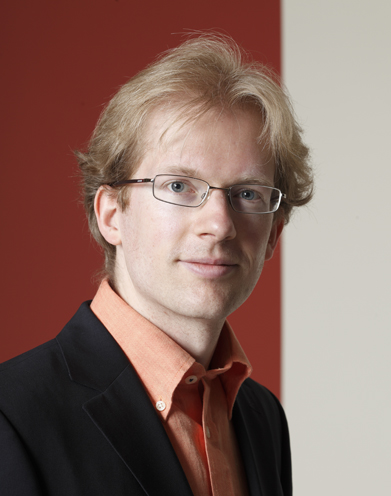
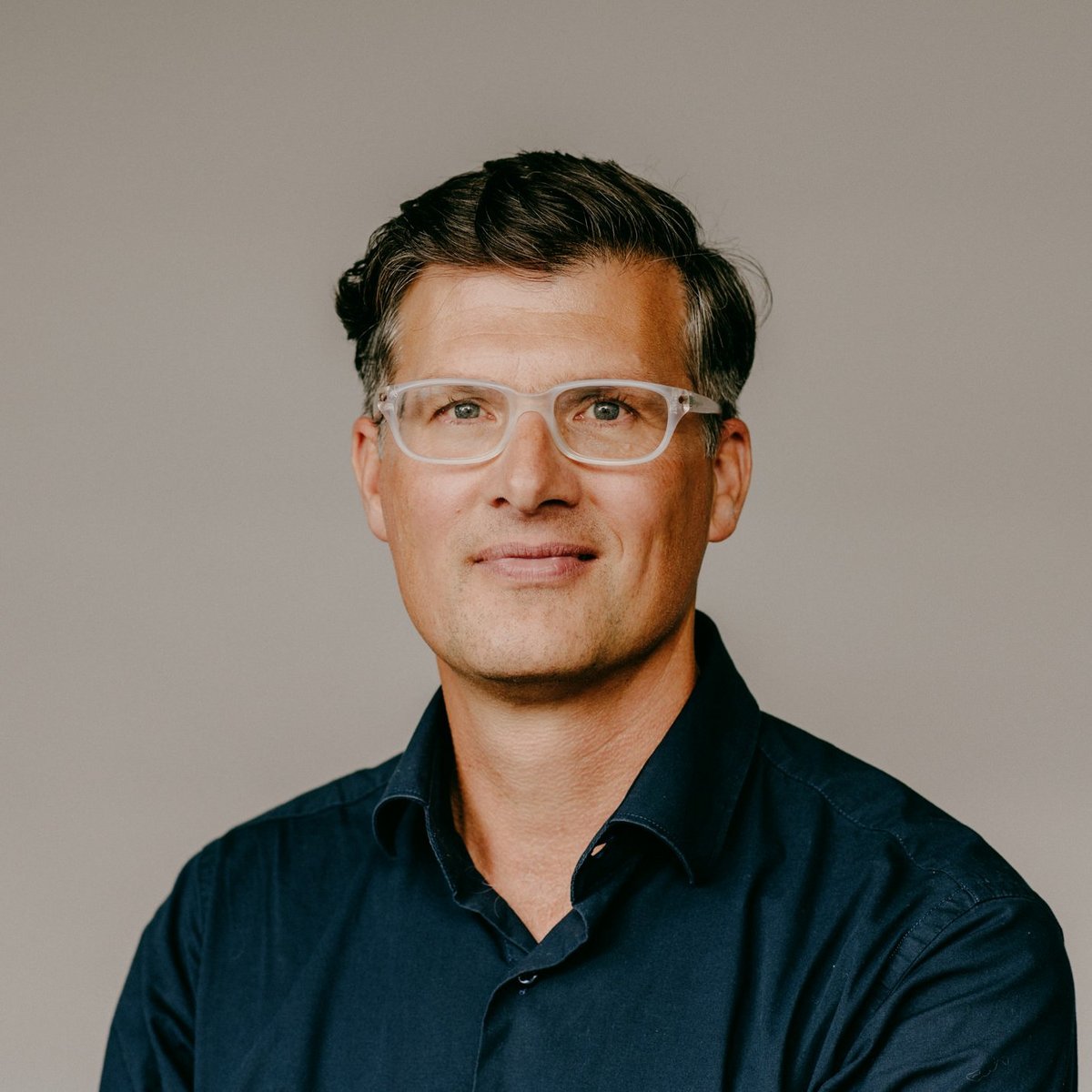
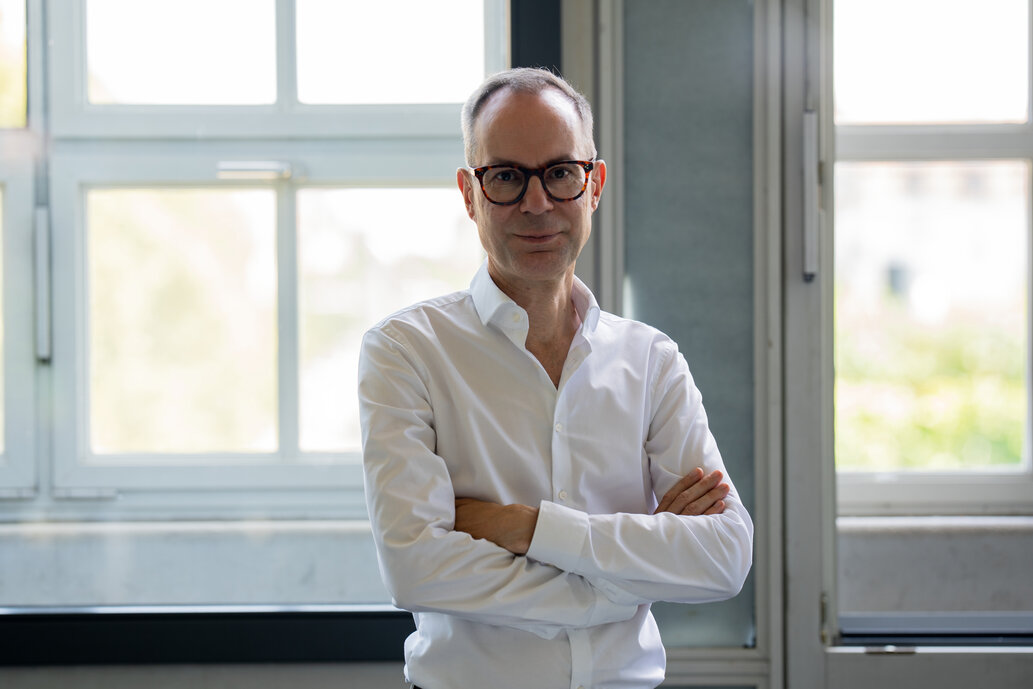
Harvey B. Meyer is a Professor of Theoretical Physics at Johannes Gutenberg University Mainz since 2014. Previously, he held positions including Junior Professor at Mainz (2010), Fellow at CERN's Theoretical Physics Division (2009), Research Scientist at MIT (2008), and postdoctoral roles at MIT (2006-2008) and DESY (2004-2006). He earned his D.Phil. in Theoretical Physics from the University of Oxford (2001-2004) and a Diplome de Physique from the University of Lausanne (1996-2001). His research focuses on lattice field theory, QCD phase diagrams, thermal field theory, and hadron structure. He leads the NEPhEuQCD collaboration and has received the ERC Consolidator Grant (2018) for the SIMDAMA project. Meyer teaches courses in theoretical physics and mathematical methods at Mainz, including 'Theoretische Physik 4' and 'Mathematische Rechenmethoden'. His work integrates advanced computational techniques to address fundamental questions in particle and nuclear physics. Key achievements include pioneering studies on the muon's anomalous magnetic moment, hadronic light-by-light scattering, and quark-gluon plasma dynamics. Collaborations include MIT, CERN, and institutions globally through lattice QCD projects. His lab and team contributions are central to the PRISMA+ Cluster of Excellence at Mainz.
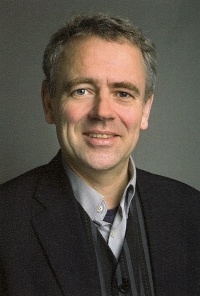
Prof. Peter Scholze is a leading mathematician at the Max Planck Institute for Mathematics in Bonn, specializing in algebraic geometry and arithmetic geometry. He holds the academic rank of Professor and is part of the Arbeitsgruppe Algebraische Geometrie und Darstellungstheorie. His research focuses on foundational questions in algebraic geometry, number theory, and representation theory, particularly through the lens of the Langlands program, p-adic Hodge theory, and perfectoid spaces. Scholze has pioneered geometric approaches to the local Langlands correspondence and introduced revolutionary concepts like prismatic cohomology and condensed mathematics. He actively contributes to academia through advanced courses on topics such as geometrization of the Langlands program, étale cohomology, and condensed mathematics. His work bridges algebraic geometry with representation theory, addressing fundamental problems in arithmetic geometry and p-adic analysis. Scholze’s research outputs include seminal papers on perfectoid spaces, prismatic cohomology, and the geometrization of local Langlands correspondence. He collaborates extensively with leading mathematicians globally, contributing to collaborative research initiatives like the ARGOS seminar and the Habiro ring project. His teaching engagements include advanced lectures on algebraic geometry, representation theory, and p-adic geometry, reflecting his commitment to training the next generation of researchers. Despite no explicitly listed awards in the provided text, Scholze is widely recognized as a Fields Medalist (2018) and a leading figure in modern mathematics.
Marina Alberti is a Professor of Urban and Environmental Planning at the University of Washington, affiliated with the Department of Urban Design and Planning. She directs the Interdisciplinary Ph.D. Program in Urban Design and Planning and leads the Urban Ecology Research Laboratory. Her expertise lies in studying the interactions between urban development patterns and ecosystem dynamics, focusing on resilience, socio-ecological innovation, and biocomplexity. Her research emphasizes interdisciplinary approaches to urban ecological problems, with a strong focus on Geographic Information Systems (GIS), land cover change, and environmental performance metrics. She has developed simulation models integrating urban development and ecological processes, supported by NSF, NOAA, and Washington state grants. NSF Biocomplexity Program Grant : Developing simulation models for urban-ecological integration. Washington State Department of Transportation Grant : Remote sensing for impervious surface estimation. NOAA/Washington Department of Ecology Grant : GIS analysis of land use and shoreline habitats. Her work spans urban planning, ecological assessment, and policy-making, with a methodological emphasis on GIS, remote sensing, and land use dynamics. She has contributed extensively to journals like International Regional Science Review , Urban Ecosystems , and BioScience , addressing topics such as urban gradients, biodiversity, and environmental sustainability. Alberti's teaching includes Urban Ecology, Environmental Planning, GIS, and advanced research design, reflecting her commitment to training the next generation of urban ecologists.
Antonia Holzapfel is a doctoral researcher at the Institute for Data Science in Mechanical Engineering (DSME) of RWTH Aachen University. Supervised by Prof. Sebastian Trimpe, her work focuses on safe and explainable machine learning (XAI) for robotics and time-series modeling, with applications in mechanical engineering and medical technology. Bachelor's in Mechanical Engineering (Design Engineering specialization) Master's in General Mechanical Engineering (Simulation Technology and Medical Technology specializations) Her research addresses safety in learning processes , including Bayesian optimization for quadcopters and concept extraction for model interpretability. Her Friedrich-Wilhelm Award -winning thesis (2024) explored safe online learning in time-varying environments, presented at the L4DC conference. She contributes to DFG-funded projects on data-driven process modeling in forming technology. Key scientific contributions include: Advancing safe Bayesian optimization for autonomous systems Developing explainable AI methods for time-series analysis Improving model robustness through internal representation patterns Scientific awards: Friedrich-Wilhelm Award for outstanding Master's thesis (2024) Antonia's work bridges machine learning safety with practical applications in robotics and industrial processes.
Carlos Cinelli is an Assistant Professor in the Department of Statistics at the University of Washington, where he conducts research at the intersection of causal inference, statistical methodology, machine learning, and artificial intelligence. He is also a data science fellow at the eScience Institute and affiliate faculty of the Center for Statistics and the Social Sciences, demonstrating his interdisciplinary approach to causal methodology. Dr. Cinelli received his Ph.D. in Statistics from the University of California, Los Angeles, advised by Chad Hazlett and Judea Pearl, two prominent figures in causal inference. His research focuses on developing new causal and statistical methods for transparent and robust causal claims in empirical sciences, with particular attention to challenges faced by social and health scientists. His work spans theoretical developments in causal identification, sensitivity analysis frameworks, and practical software implementations that enable researchers to assess the robustness of their causal conclusions. Cinelli's research program addresses fundamental questions about how unobserved confounding affects causal estimates and develops tools to quantify how sensitive findings are to potential violations of causal assumptions. His work on omitted variable bias frameworks has been particularly influential across multiple disciplines. Through his publications, Cinelli has established himself as a leading researcher in causal inference methodology, with papers appearing in top journals across statistics, machine learning, epidemiology, and social sciences. His work demonstrates both theoretical rigor and practical relevance, often accompanied by open-source software implementations that make his methods accessible to applied researchers. Best paper award at SBE 2024 in Econometrics Royalty Research Fund (RRF) Award recipient NSF/MMS research support As an advisor, Cinelli has successfully guided PhD students like Nick Irons to dissertation completion. He actively seeks new students with strong interests in causal inference. His research is supported by multiple funding sources including the National Science Foundation and the University of Washington's Royalty Research Fund. Cinelli contributes to the academic community through editorial work for the Journal of Causal Inference and by developing widely used software packages like sensemakr for sensitivity analysis.
Prof. Cornelia Richter is a Professor of Systematic Theology and Hermeneutics at the Protestant Theological Faculty of the University of Bonn since 2012. She serves as Chair of the Senate of the University of Bonn since 2024 and has held leadership roles such as Dean of the Faculty of Protestant Theology (2020–2024). Born in 1970, she earned her doctorate (summa cum laude) from the University of Marburg in 2002 and habilitation in 2010. Her research focuses on Philosophy of Religion, Hermeneutics, and Resilience in Religion and Spirituality, notably leading the DFG-funded project FOR 2686. She has held visiting professorships in Zurich and Giessen and contributed to theology through editorial roles in journals like International Journal of Philosophy and Theology . Her work bridges theology with interdisciplinary studies, addressing modern challenges like pandemic resilience and interfaith dialogue. Education: PhD (2002), Habilitation (2010) – University of Marburg Studies in Protestant Theology and Philosophy – Universities of Vienna and Munich Research Fellowship – Center for Subjectivity Research, Copenhagen (2003–2005) Research Interests: Her work explores hermeneutical approaches to religious meaning, resilience in crises, and the interplay between theology and modern challenges. Key areas include: - Critical analysis of resilience frameworks in theology and philosophy - Theological engagement with modern existential issues (e.g., hope, fear, powerlessness) - Interdisciplinary dialogue on religion’s role in human sciences. - Resilience studies in healthcare and pandemic contexts. Grants & Projects: DFG-FOR 2686 “Resilience in Religion and Spirituality” (2019–2022) Editorial leadership in multiple theological journals and book series Co-director of the Bonn Institute of Hermeneutics Labs/Teams: Department of Systematic Theology, University of Bonn; interdisciplinary research groups on resilience and theology.
Achim Menges is a Research Professor and Max Planck Fellow at the University of Stuttgart, where he directs the Institute for Computational Design and Construction (ICD). His work bridges architecture, engineering, and computational design, with a focus on developing innovative construction methods and materials. Menges leads the Cluster of Excellence IntCDC: Integrative Computational Design and Construction for Architecture, a major research initiative funded by the German Research Foundation. Menges' research centers on computational design, robotic construction, and biomimetic architecture, with particular emphasis on timber construction, adaptive building systems, and digital fabrication. His work integrates principles from bionics to create responsive, sustainable building systems that adapt to environmental conditions. Notable projects include the BUGA Wood Pavilion (2019), Urbach Tower, BUGA Fibre Pavilion, and the livMatS Biomimetic Shell, all demonstrating his commitment to material innovation and sustainable construction practices. His recent publications reveal a consistent focus on advancing timber construction techniques, developing bio-inspired responsive systems, and implementing robotic fabrication processes. The research shows a clear trajectory toward more sustainable, resource-efficient building methods that integrate digital design with physical construction processes. Menges' work increasingly addresses multi-story timber systems and circular construction principles. Bauwende Prize der Universität Stuttgart 2025 Menges leads numerous research initiatives through the Cluster of Excellence IntCDC, securing significant funding for projects exploring computational design and robotic construction. His work involves extensive collaboration with industry partners and interdisciplinary research teams. Menges directs the ICD research laboratory, which focuses on developing novel computational design methods, robotic fabrication processes, and innovative material systems for architecture. The institute maintains strong partnerships with industry leaders in construction technology and materials science, facilitating the translation of research into practical applications.
Manfred Droste is a Professor at the Institute of Computer Science of the University of Leipzig, where he leads the Research Group on Automata and Formal Languages. He serves as Director of the Graduate Centre Mathematics, Computer Science and Natural Sciences and is Vice-speaker of the DFG-Research Training Group Quantitative Logics and Automata. His academic career spans decades of research and leadership in theoretical computer science and algebra. Prof. Droste's research focuses on theoretical computer science, particularly automata theory, logic, algebraic models for concurrent systems, and domain theory. In algebra, his interests include model theory, automorphism groups, and ordered algebraic structures. His work bridges theoretical foundations with practical applications in formal language theory and quantitative systems. His extensive publication record demonstrates a consistent focus on weighted automata, formal languages, and their logical characterizations. Over the years, his research has evolved to address increasingly complex quantitative models, with recent work focusing on weighted complexity classes, weighted linear dynamic logic, and decidability boundaries for weighted automata. Prof. Droste has received significant recognition including election to Academia Europaea, an honorary doctorate from Immanuel Kant Baltic Federal University, and fellowship in the Asia-Pacific Artificial Intelligence Association. These honors reflect his substantial contributions to theoretical computer science. He has supervised numerous PhD students including Dietrich Kuske, Paolo Boldi, and Karin Quaas, many of whom have become prominent researchers. His extensive grant portfolio includes multiple DFG projects on weighted automata and international collaborations through DAAD funding. Prof. Droste leads a vibrant research team including Andrea Hesse, Karin Quaas, Erik Paul, and others. He has organized the international workshop series "Weighted Automata: Theory and Applications" since 2002, fostering global collaboration in this specialized field.
Rainer Forst is Professor of Political Theory and Philosophy at Goethe University Frankfurt, where he holds positions in both the Institute of Political Science and the Institute of Philosophy. He serves as Director of the Research Center for Normative Orders, Co-speaker of the cluster initiative "ConTrust – Trust in Conflict," Spokesperson of the Leibniz Prize Research Group "Transnational Justice," and Deputy Spokesperson of the Coordinating Institute Frankfurt at the Research Institute for Social Cohesion. Additionally, he is a Permanent Fellow at the Research College for Human Sciences Bad Homburg, Director of the Justitia Center for Advanced Studies, and Head of the Master's program in Political Theory. Since 2017, he has also been a Research Professor of Political Theory at the Social Science Research Center (WZB) in Berlin. Forst received his education studying philosophy, political science, and American studies in Frankfurt/Main, New York, and at Harvard University. His academic journey includes: Ph.D. under Jürgen Habermas with thesis "Contexts of Justice: Political Philosophy Beyond Liberalism and Communitarianism" (1993) Habilitation in 2003 with "Tolerance in Conflict: History, Content, and Present of a Controversial Concept" Professor Forst's research focuses on foundational questions of political philosophy and critical theory. His work centers on justice theory, democracy, toleration, normative orders, and social cohesion. He has developed a distinctive approach he terms "critical constructivism," which builds on Kantian philosophy while engaging with the Frankfurt School tradition of critical theory. His research examines how justification processes form the basis of legitimate political orders and how concepts like solidarity and tolerance function within democratic societies. Forst's work is notable for its systematic integration of historical analysis with normative theory, creating frameworks for understanding contemporary political challenges through the lens of philosophical tradition. His recent publications reveal a growing focus on democratic regression, trust in conflictual societies, and the philosophical foundations of social cohesion. Forst has increasingly addressed the dual crises of democracy - both the political-normative justification crisis and the global structural crisis. His work connects Kantian philosophy with contemporary democratic theory, exploring concepts like the "noumenal republic" as frameworks for understanding justice and legitimacy in complex societies. A consistent thread throughout his scholarship is the examination of how power relations intersect with normative claims in political justification processes. Professor Forst has received significant recognition for his contributions to political philosophy: Gottfried Wilhelm Leibniz Prize (2012), Germany's highest research honor Member of the Berlin-Brandenburg Academy of Sciences and Humanities Corresponding Fellow of the British Academy Permanent Fellow at the Research College for Human Sciences Bad Homburg As an educator and mentor, Forst has directed numerous research initiatives and supervised many doctoral students who have gone on to prominent academic positions. He leads the international MA program in Political Theory funded by the German Academic Exchange Service and has established several significant research centers including the Research Center for Normative Orders, the Leibniz Prize Research Group "Transnational Justice," and the Center for Advanced Studies "Justitia Amplificata." His editorial work includes serving as Associate Editor of Ethics and member of editorial boards for numerous prestigious journals including Political Theory and Constellations. Forst's research infrastructure includes the Research Center for Normative Orders, which he directs, and the cluster initiative "ConTrust – Trust in Conflict," which examines political coexistence under conditions of uncertainty. His Leibniz Prize Research Group "Transnational Justice" investigates justice beyond national borders, while the Justitia Center for Advanced Studies serves as a hub for interdisciplinary research on justice-related topics. These institutions form an integrated network supporting collaborative research across philosophy, political science, and law.
Christian Martin is a Professor of Philosophy including the History of Philosophy and Managing Director of the Institute of Philosophy at the University of Stuttgart. He holds a PhD (2010) and habilitation (2019) from LMU Munich. His research spans systematic philosophy (metaphysics, philosophy of language, philosophy of nature, ecological foundations, aesthetics) and historical philosophy (classical German, early analytic, and 20th-century continental traditions). Key focuses include Hegel's philosophy of nature, Kantian transcendental aesthetics, and Wittgenstein's language-games. He leads the 'Nature and Mind' research area addressing ecological crisis through philosophical frameworks. Recent roles include visiting professorships at the University of Chicago, Paris 1 Panthéon-Sorbonne, and Leipzig. He has organized conferences on classical German philosophy and ecological philosophy. His work bridges analytical and continental traditions, emphasizing systematic integration of philosophical problems. Education: PhD in Philosophy (2010), LMU Munich Habilitation (2019), LMU Munich M.A. in Philosophy (2006), LMU Munich Research Interests: Systematic work emphasizes metaphysical foundations of ecology, logic-nature relationships, and forms of knowledge (e.g., art, religion). Historical studies focus on Kant, Hegel, Schelling, Frege, Wittgenstein, and 20th-century continental thinkers. Current projects explore nature's philosophical conceptualization in the ecological crisis context. Professional Activities: Organized conferences like 'Conceptions of Nature in Classical German Philosophy' (2023) and 'Epistemology and Philosophy of Mind after Kant and Hegel' (2023) Editorial roles for journals and series such as Cambridge Elements: The Philosophy of Hegel Visiting fellowships at institutions including the University of Chicago and the FAGI Leipzig Research Area 'Nature and Mind': Develops critical frameworks for human-nature relationships in ecological crises, integrating philosophical analysis with contemporary environmental challenges.
Prof. Dr. Marc Nieper-Wißkirchen is a University Professor (W3) for Algebra and Number Theory at the Institute of Mathematics, University of Augsburg, since 2008. He has held visiting positions at the Max Planck Institute for Mathematics in Bonn and the University of Cambridge, and served as a Junior Professor at Johannes Gutenberg University Mainz (2004–2008). Since October 2021, he has been Vice Dean of the Faculty of Mathematics, Natural Sciences and Technology (MNTF). Education: Diploma in Mathematics (2000) from the University of Cologne, preceded by preliminary diplomas in physics (1997) and mathematics (1997). His doctoral studies (2000–2002) under Prof. Daniel Huybrechts focused on characteristic classes and Rozansky-Witten invariants of hyperkähler manifolds. His research spans algebraic geometry, differential geometry, and mathematical physics, with a focus on hyperkähler manifolds, Hilbert schemes of points, irregular singular connections, and Stokes phenomena. He has contributed to the understanding of Rozansky-Witten invariants, Chern numbers, and topological aspects of differential equations. Recent publications include works on Betti structures of hypergeometric equations (2022) and Stokes matrices for confluent hypergeometric equations (2022), reflecting his ongoing exploration of differential equations' geometric underpinnings. Earlier works address Hochschild homology, equivariant cohomology, and operads in algebraic contexts. His computational contributions include software demonstrations for elliptic curve arithmetic, Collatz sequences, and Google Matrix simulations. Technical expertise includes programming languages (TeX, PHP, HTML) and systems (Unix/Linux, Zope/Plone).
Dirk Leuffen is a Professor of International Politics at the Department of Politics and Public Administration at the University of Konstanz. Since April 2024, he has served as the University of Konstanz' Vice Rector for Research, Innovation and Impact, having previously held this position from 2015 to 2019. He is also a representative of the German Rectors' Conference (HRK) in the Committee for the selection and evaluation of International Max Planck Research Schools (IMPRS) since 2019. Leuffen directs the project 'Conditions of European Solidarity' (CONSOLI) with Sharon Baute at the Cluster of Excellence on the Politics of Inequality, and has led multiple significant research projects including 'EU3D: EU Differentiation, Dominance and Democracy' and 'EMU-SCEUS - The Choice for Europe since Maastricht.' Leuffen earned his doctoral degree from the University of Mannheim and previously worked as a Senior Researcher at ETH Zurich before joining the University of Konstanz. Professor Leuffen's research focuses on European integration, with particular emphasis on differentiated integration, decision-making processes within the European Union, and the interplay between domestic and international politics. His work examines how citizens perceive and respond to various forms of European integration, with a strong interest in the legitimacy of differentiated integration arrangements and public support for European solidarity. He investigates political preference formation, particularly how crises like the Eurozone crisis and the COVID-19 pandemic shape European policy preferences. His research combines theoretical frameworks from political science with empirical analysis of public opinion data across multiple EU member states. His recent publications reveal a strong focus on how democratic backsliding affects European solidarity, the role of fairness considerations in citizen evaluations of EU policies, and the institutional design features that foster public support for differentiated integration. Leuffen's work often employs experimental methods and comparative survey research across multiple European countries, demonstrating a methodological sophistication that bridges qualitative and quantitative approaches. His research consistently addresses the tension between national sovereignty and European integration, examining how citizens balance concerns about national autonomy with support for European cooperation. As Vice Rector for Research and a principal investigator on multiple major projects, Leuffen has secured significant research funding and leads interdisciplinary teams examining the politics of inequality and European integration. His leadership extends beyond his institution through his role in the German Rectors' Conference, where he influences national research policy and evaluation frameworks. Leuffen is an active member of the Cluster of Excellence on the Politics of Inequality at the University of Konstanz, where he contributes to the research group 'Political Science & International Politics.' His work often involves collaboration with researchers across Europe, reflecting the transnational nature of his research focus on European integration and solidarity.
Professor Lisa Regazzoni serves as Professor of Theory of History at Bielefeld University within the Faculty of History, Philosophy and Theology. She directs the Center for Theories in Historical Research and is a member of the Executive Board of the Bielefeld Graduate School in History and Sociology. Her academic leadership extends to multiple roles including Speaker for History: Politics - Image - Art and membership in Historical Cultures research groups. Regazzoni completed her academic education with a Magister Artium in Philosophy from the University of Bologna (1998), followed by doctoral studies in Philosophy at the University of Potsdam (2006), and habilitation in Modern History at Goethe University (2020). Her educational background spans philosophy and modern history across Italian and German institutions, reflecting her transnational scholarly perspective. Her research focuses on the intersection of history, temporality, and materiality, developing what she terms a 'critique of historical materiality.' Regazzoni explores how scholars construct knowledge through material and immaterial sources, particularly examining 18th and 19th century French historical research. Her concept of 'unwritten pasts' addresses methodological limitations in historical reconstruction, while her work on 'monument episteme' investigates how objects function as historical testimony. She has pioneered research on the Reinhart Koselleck Figure Collection, examining how material objects contribute to historical understanding beyond textual sources. Regazzoni's publication trajectory reveals a sophisticated evolution from literary catalog studies to contemporary investigations of historical materiality. Her recent work demonstrates increasing engagement with object-oriented ontology and the epistemic potential of material culture in historical research. The recurring themes across her publications include the relationship between visual evidence and historical knowledge, the transformation of historical methodology, and the theoretical implications of material objects in historical practice. Momentum funding from Volkswagen Foundation (2025) for 'Towards a Material-Oriented Theory of History' (€935,000 over 48 months) Nominated for the 1822 university prize for excellence in teaching at Goethe University (2014) As academic coordinator of the International Graduate School on Political Communication and director of the Center for Theories in Historical Research, Regazzoni has secured significant research funding and fostered interdisciplinary collaboration. She co-founded the Theory-Oriented Object Laboratory (TOOL) with Lara Keuck, creating innovative spaces for material-based historical inquiry. Her leadership extends to the 'Denkraum Theorie' study group, which facilitates theoretical exchange among humanities scholars. Regazzoni directs the Reinhart Koselleck Figure Collection at Bielefeld University, transforming the historian's personal artifact collection into a research laboratory for historical materiality. Through the Theory-Oriented Object Laboratory (TOOL), she has created interdisciplinary spaces where material objects become catalysts for theoretical reflection on history and medical knowledge. Her leadership in the 'Denkraum Theorie' study group fosters theoretical exchange across disciplines, while her digital humanities work maintains the online platform for Goethe University collections.
Ulisse Gomarasca is a doctoral researcher at the Max Planck Institute for Biogeochemistry's Department Biogeochemical Integration, affiliated with the International Max Planck Research School for Global Biogeochemical Cycles (IMPRS-gBGC). He works within the Global Diagnostic Modelling group and Ecosystem Function from Earth Observation project team, focusing on understanding ecosystem functioning through eddy covariance fluxes and biodiversity links. Education: Master's in Ecology and Biodiversity from University of Innsbruck Research: Spatiotemporal dynamics of ecosystem functioning, Sun-Induced Chlorophyll Fluorescence, drought legacy effects on productivity Methodologies: Remote sensing integration with eddy covariance networks, biodiversity-ecosystem function analysis His publications address terrestrial ecosystem responses to climate extremes, scaling of plant traits to ecosystem level, and development of remote sensing tools like the Biodiversity Observing System Simulation Experiment (BOSSE). This work combines satellite observations with ground-based flux measurements to understand global biogeochemical patterns. Contact: ugomar@bgc-jena.mpg.de
Prof. Dr. Matthias Bruhn is a Professor of Art History and Media Theory at the Karlsruhe University of Arts and Design (HfG Karlsruhe), where he leads the DFG priority program project "Designing Habits" (2023–2025) and its predecessor "Adaptive Images" . He is also a co-editor of the series Image Worlds of Knowledge: Art Historical Yearbook for Image Criticism and a member of the DFG Cluster of Excellence "Matters of Activity" . His academic journey began with studies in art history and philosophy in Hamburg, culminating in a 1997 doctorate on Nicolas Poussin's correspondence. Co-founded ArtHist network (2001) Directed Berlin's "The Technical Image" research unit (2005) His research spans art history, media theory, and digital humanities, focusing on the intersection of technology, visual culture, and critical theory. His recent work in The Digital Image DFG program explores adaptive images as social interfaces and their role in shaping digital interaction patterns. He also co-founded the KIM research group on AI and media philosophy (2018), addressing societal impacts of artificial intelligence. His publications include monographs like The Image: Theory - History - Practice (2008) and edited volumes such as Images of Precision: Practices of Refinement in Technology, Art, and Science (2018). He has participated in international conferences like After Memory – Recalling and Foretelling (2024) and Image Servitude: New Dependencies in the Digital Age (2019). Current affiliations include membership in the advisory board of the Stiftung Forum Recht and leadership roles in DFG-funded projects. His teaching emphasizes the relationship between traditional arts, media technology, and electronic production processes, aligning with HfG Karlsruhe's mission as a reform university.