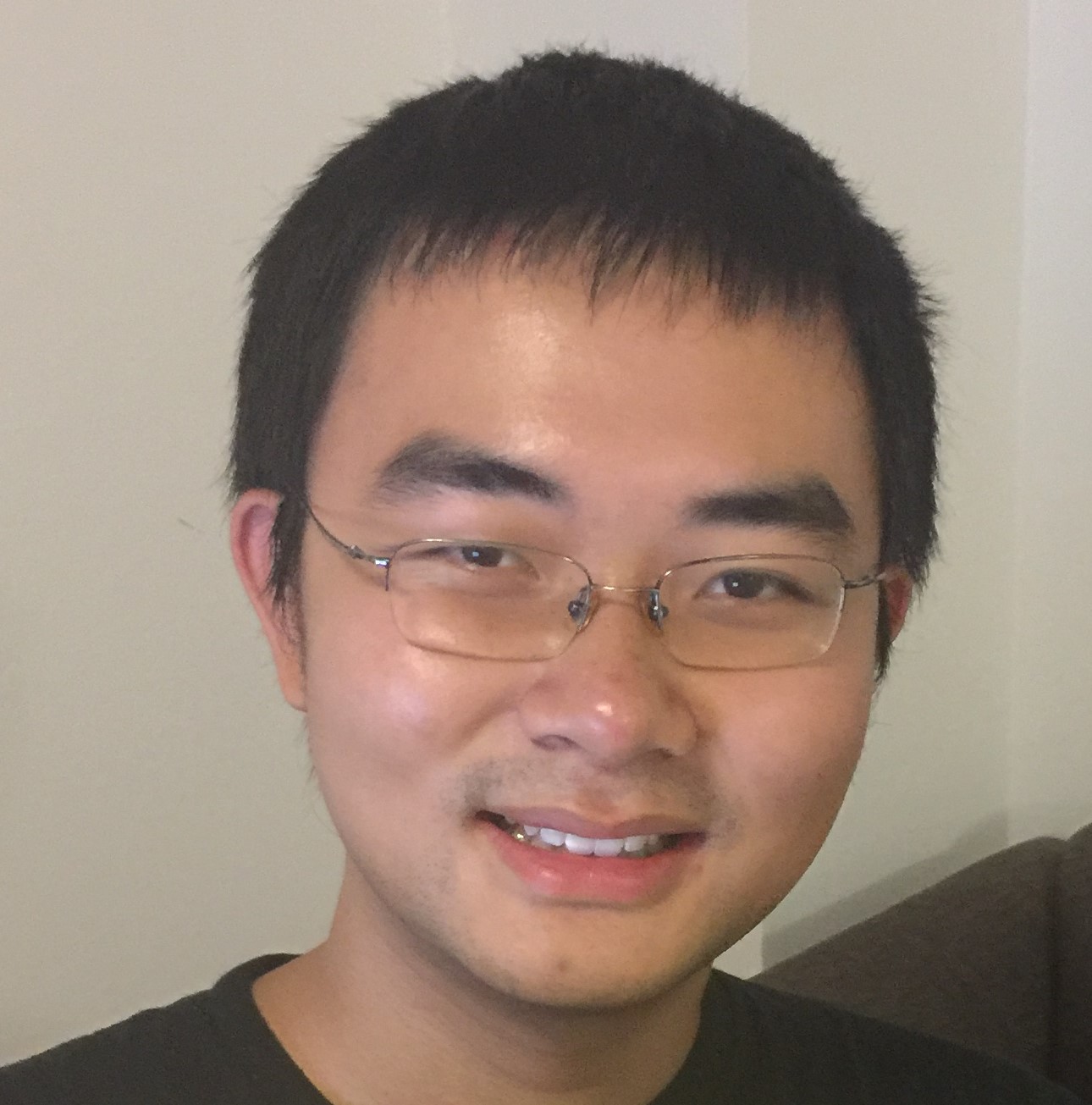
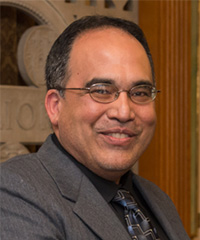
Donald Robertson is a Lecturer in Pure Mathematics at the University of Manchester, specializing in ergodic theory with applications to additive combinatorics. His work connects measurable dynamics with combinatorial number theory problems. Research explores ergodic properties of interval exchange transformations, sumset configurations in infinite sets, and equidistribution in homogeneous dynamics. Recent publications address Erdős' sumset conjecture (2022), saddle connection distributions (2023), and disjointness in measurable group actions. He teaches measure theory and ergodic theory courses, employing problem-based learning through weekly take-home tests. Coursework emphasizes Lebesgue integration, ergodic theorems, and connections between dynamics and combinatorics.
Christopher Umans is a Professor of Computer Science at the California Institute of Technology, where he serves as the William M. Coughran Jr. Leadership Chair and Executive Officer for the Department of Computing and Mathematical Sciences. He joined Caltech in 2002 as an Assistant Professor, became Associate Professor in 2008, and was promoted to Professor in 2010. He has held multiple leadership positions including Division Deputy Chair (2018-2020) and Executive Officer since 2020. His educational background includes a B.A. from Williams College (1996) and a Ph.D. in Computer Science from the University of California, Berkeley (2000), where he was advised by Christos Papadimitriou. After completing his Ph.D., he was a postdoc at Microsoft Research from 2000-2002 before joining Caltech. Professor Umans's research focuses on theoretical computer science, particularly computational complexity with an algebraic flavor. His work spans derandomization, explicit combinatorial constructions, algebraic algorithms, coding theory, and hardness of approximation. He has made significant contributions to understanding the complexity of fundamental problems like matrix multiplication through group-theoretic approaches and developing fast algorithms for generalized discrete Fourier transforms over finite groups. His recent publications reveal a strong emphasis on algebraic methods in computation, with particular focus on matrix multiplication algorithms, generalized DFTs, and polynomial factorization. His work consistently bridges theoretical computer science with deep mathematical concepts from group theory, representation theory, and algebraic combinatorics, demonstrating how these mathematical structures can yield more efficient computational methods. His scientific recognition includes the prestigious Simons Investigator in Computer Science award and the Northrop Grumman Prize for Excellence in Teaching at Caltech. Professor Umans has advised students including Chloe Ching-Yun Hsu, who received the Henry Ford II Scholar Award. His research has been supported by multiple NSF grants including 'AF: Small: Group Theory and Representation Theory in Matrix Multiplication and Generalized DFTs' and 'AF: Small: Algorithms for Matrix Multiplication, Polynomial Factorization and Generalized Fourier Transform.' He serves on numerous program committees including FOCS, STOC, and CCC, and is Vice-Chair of SIGACT (2021-24). He is an active member of Caltech's Theory Group within the Computing and Mathematical Sciences department, contributing to its research direction and mentoring junior researchers. His work often involves collaborations with researchers across institutions, as evidenced by his extensive publication record with co-authors from various universities.
Amador Martin-Pizarro is a Professor in the Department of Mathematical Logic at the Albert-Ludwigs-Universität Freiburg. His research focuses on geometric model theory and its applications to algebraic geometry, additive combinatorics, and number theory. He has contributed to foundational work on supersimplicity, stability, and definable groups in simple theories. Martin-Pizarro led the Freiburg group in the binational ANR-DFG project GeoMod. His work bridges model theory with algebraic structures, exploring connections between combinatorial patterns and logical frameworks. Recent studies include applications of model theory to arithmetic progressions, pseudofinite groups, and equational theories of fields.
Professor Petros Elia is a faculty member at EURECOM, holding the position of Professor within the Department of Communications systems. He specializes in Information Theory , Coding Theory , Caching , Distributed Computing , and Wireless Networks , with additional research in Biometrics . His work focuses on advancing theoretical foundations and practical applications in distributed systems and wireless communication efficiency. He received a prestigious ERC Consolidator Grant for his DUALITY project (2016) and a four-year Fulbright Scholarship (1993-1997). He is also a recipient of the Newcom++ Network of Excellence Distinguished Achievement Award (2008-2011) and the Best Student Paper Award at SPAWC 2011, awarded to his advisee Arun Singh. His research explores cutting-edge topics such as tessellated distributed computing , hypergraph decomposition , and topology-aware caching , with recent contributions presented at venues like the IEEE International Symposium on Information Theory (ISIT 2025). His work bridges theoretical advancements with real-world applications in wireless networks and distributed systems. Education: Supported by his Fulbright Scholarship, he pursued studies in the U.S. during 1993-1997. Grants: ERC Consolidator Grant (2016), and others. Advising: Mentor to Arun Singh , whose work earned a student paper award. He actively contributes to teaching Mobile Communications at EURECOM and remains a key figure in advancing the field through interdisciplinary collaborations and leadership in the Communication Systems department.
Isaac Goldbring is a Professor in the Department of Mathematics at the University of California, Irvine (UCI), where he is a leading member of the Logic and Foundations group. He also holds a courtesy appointment in the Department of Logic and Philosophy of Science. His research lies at the intersection of model theory, operator algebras, and nonstandard analysis, with significant contributions to combinatorial number theory and quantum complexity theory. His research interests include: Model theory, particularly continuous and metric model theory Applications of nonstandard analysis to algebra, analysis, and combinatorics Tracial von Neumann algebras and the Connes Embedding Problem Operator algebras and their logical properties Combinatorial number theory and ultrafilters Lie theory and geometric group theory Goldbring’s recent publications reflect a strong trend in applying model-theoretic tools to deep problems in operator algebras and quantum information. His work on the Connes Embedding Problem, especially in connection with the MIP*=RE result, has provided simpler, more direct model-theoretic proofs and stronger refutations. He has also contributed to the logical undecidability of operator algebraic properties and the model theory of C*-algebras and W*-probability spaces. His notable scientific contributions include editing the volume Model Theory of Operator Algebras and authoring influential books such as Ultrafilters throughout Mathematics and Nonstandard Methods in Ramsey Theory and Combinatorial Number Theory . He is the Editor-in-Chief of the Journal of Logic and Analysis . Goldbring currently holds an NSF grant on model theory, quantum complexity, and embedding problems in operator algebras. He has mentored several graduate students, including Ryan Burkhart, Alec Fox, Michael Hehmann, Jennifer Pi, and Jessica Schirle. He has organized major conferences, such as the 2023 North American Annual Meeting of the Association for Symbolic Logic at UCI, and frequently gives invited lectures worldwide. He is actively involved in collaborative research with prominent mathematicians such as Bradd Hart, Ilijas Farah, and Lou van den Dries, and has delivered lecture series at institutions like Yonsei University and the National University of Singapore.
Youness Lamzouri is a Professor of Mathematics at the Université de Lorraine, France, affiliated with the Institut Elie Cartan de Lorraine (IECL) and a Junior Member of the Institut Universitaire de France (IUF). His research focuses on analytic and probabilistic number theory, particularly character sums, L-functions, prime number distributions, and random multiplicative functions. PhD in Mathematics from Université de Montréal (2009) B.Sc. in Pure Mathematics from Université de Montréal (2004) He has contributed extensively to understanding extreme values in character sums, biases in prime number races, and statistical properties of L-functions. His recent work explores GCD graphs, random walks in number theory, and probabilistic models for prime distributions. He has received prestigious awards including the CMS Blair Spearman Doctoral Prize and NSERC Postdoctoral Fellowship. Currently, he supervises doctoral and master students and contributes to editorial boards of leading journals.
Tamás Keleti is a Professor in the Department of Analysis at Eötvös Loránd University (ELTE) in Budapest, Hungary. He has been actively teaching various mathematics courses since at least 2006, including Univariate Analysis, Multivariate Analysis, Real Function Theory, Geometric Measure Theory, and Descriptive Set Theory. His office is located at Pázmány Péter sétány 1/c, Budapest, 1117 Hungary, with contact information including phone (36-1)-209-0555 / ext. 8510. Professor Keleti's research primarily focuses on Geometric Measure Theory , with special emphasis on Hausdorff Dimension and dimensional properties of sets in Euclidean spaces. His work investigates how dimension behaves under transformations, projections, and other operations, making significant contributions to understanding sets avoiding certain patterns and structures. He has developed deep connections between geometric measure theory, combinatorial geometry, and harmonic analysis. Analysis of his recent publication record reveals a consistent research trajectory in dimensional properties, with particular attention to Fubini-type theorems for Hausdorff dimension, Kakeya-type problems, and tiling problems with connections to Diophantine approximation. His work often bridges pure mathematical theory with applications in fractal geometry and combinatorial number theory. Scientific Awards and Achievements: Led ELTE's team to win the International Mathematics Competition for University Students in 2007 Led ELTE's team to win the International Mathematics Competition for University Students in 2008 As an advisor and mentor, Keleti has cultivated exceptional mathematical talent. In the 2007 and 2008 International Mathematics Competitions, his students Endre Csóka, Demeter Kiss, Péter Pál Pach, Roland Paulin, András Béla Rácz, and Balázs Strenner won first prizes, while Márton Hablicsek won a second prize. Several achieved remarkable individual rankings, with Roland Paulin placing 3rd overall and András Béla Rácz 5th in 2008. Professor Keleti has developed extensive course materials and problem sets for his analysis courses, contributing significantly to mathematics education at ELTE. His teaching spans from introductory analysis for first-year mathematics teacher training students to advanced topics like Geometric Measure Theory and Descriptive Set Theory for specialized students, demonstrating his commitment to both research and education.
Professor Adam Harper specializes in analytic and probabilistic number theory at the University of Warwick. His research examines moments of random multiplicative functions, distribution of zeta sums, and extreme values in number theory. Teaches MA4L6 (Analytic Number Theory) and MA257 (Introduction to Number Theory). Recent publications (2019-2024) address Halász's theorem, Fyodorov-Keating conjectures, and character sum distributions. Research bridges combinatorics, probability, and statistical mechanics, with focus on multiplicative chaos and Gaussian processes.
Kyle Luh is an Assistant Professor at the University of Colorado Boulder in the Department of Mathematics, part of the College of Arts and Sciences. His research focuses on probability, random matrix theory, and randomized algorithms. Education: Ph.D. in Mathematics from Yale University (2017) His recent work explores eigenvalue gaps in random matrices, controllability of non-Hermitian systems, and applications to sparse reconstruction. Publications span topics like circular law for block band matrices, Littlewood–Offord inequalities, and stability analysis in quantum walks. Key trends in his research include spectral analysis of random graphs, robustness in learning algorithms, and combinatorial aspects of matrix theory. His articles highlight intersections between pure probability and applied computational methods.
Xiaoyu He is a tenure-track Assistant Professor at the School of Mathematics, Georgia Institute of Technology. Starting Fall 2025, he will teach Math 8803, a graduate-level topics course on Ramsey and Turán problems for graphs and hypergraphs. His research spans extremal, probabilistic, and algebraic combinatorics , focusing on Ramsey theory, graph coloring, additive combinatorics, discrete geometry, and coding theory with applications to computer science. Education: PhD in Mathematics from Stanford University (2021), advised by Jacob Fox. Prior Roles: NSF Postdoctoral Research Fellow at Princeton University (mentored by Noga Alon). Current Group: Collaborates with Visiting Assistant Professor Jiaxi Nie and PhD students Ruben Ascoli, Winston Stucki, and Logan Post. Awards: NSF Postdoctoral Research Fellowship. Contact: xhe399@gatech.edu , Office: Skiles 260.
Nikos Frantzikinakis serves as a Professor in the Department of Applied Mathematics within the Theoretical Mathematics School at the University of Crete. His office is located in room C-307 with contact number 39-3853 and email frantzikinakis@uoc.gr. His academic credentials include: Ph.D., Stanford University, 2002 Professor Frantzikinakis specializes in ergodic theory, focusing on convergence and multiple regression theorems alongside analytical methods in combinatorics and number theory. His research bridges dynamical systems with additive combinatorics, particularly investigating recurrence phenomena in multiplicative functions and polynomial sequences. He has pioneered approaches connecting Furstenberg systems to number-theoretic structures, significantly advancing understanding of multiple recurrence in non-commuting transformations and partition regularity problems. Analysis of his recent publications reveals consistent exploration of ergodic-theoretic structures applied to combinatorial number theory. Key trends include recurrence along generalized Pythagorean triples, joint ergodicity for commuting transformations, and partition regularity of quadratic forms. His work demonstrates sophisticated integration of harmonic analysis, nilsequence theory, and multiplicative function correlations, with notable emphasis on the Chowla conjecture and Erdős discrepancy problems through ergodic frameworks. He maintains active research within the Applied Mathematics Laboratory at the University of Crete, contributing to theoretical mathematics through both individual scholarship and collaborative academic infrastructure.
Jonathan Pakianathan is a Professor of Mathematics at the University of Rochester's School of Arts & Sciences, Department of Mathematics. He holds a PhD from Princeton University (1997) and a BS in Mathematics and Physics from Caltech (1992). His research focuses on algebraic topology, cohomology of groups and Lie algebras, geometric combinatorics, and finite fields. He has held leadership roles, including Director of Graduate Studies (2014–2020) and Director of Undergraduate Studies (2003–2010). Notable awards include the Goergen Award for Excellence in Teaching (2014) and the Sloan Foundation Doctoral Dissertation Fellowship (1996). His research explores applications of topology and algebra in discrete geometry, often collaborating with Alex Iosevich and students. Recent work addresses topics like Fuglede's conjecture over finite fields, geometric configurations, and probabilistic methods in combinatorics. His articles frequently intersect harmonic analysis, group theory, and number theory, reflecting interdisciplinary strengths. Education : PhD, Princeton University, 1997 BS in Mathematics and Physics, Caltech, 1992 Awards : Goergen Award for Excellence in Undergraduate Teaching, 2014 Sloan Foundation Doctoral Dissertation Fellowship, 1996 H. J. Ryser Scholarship, 1991 Grants include an NSA Mathematical Sciences Grant (2016–2017, $110,000 total) with A. Iosevich. He advises numerous PhD students, many of whom now hold academic or research positions. His teaching spans undergraduate to graduate courses, including algebra, topology, and financial mathematics. Research groups and collaborations extend to geometric combinatorics, algebraic topology, and applications in physics and data science. Ongoing projects explore topological methods in discrete geometry and probabilistic structures over finite fields.
Jop Briët is a Researcher at the Department of Algorithms and Complexity at Centrum Wiskunde & Informatica (CWI) in the Netherlands. His work focuses on theoretical computer science, quantum information theory, combinatorics, and tensor analysis. He has held grants including the Veni Innovational Research Grant from NWO and a Rubicon fellowship. He has authored over 50 publications in leading venues, exploring topics such as Grothendieck inequalities, quantum computing, and additive combinatorics. His research interests span the interplay between combinatorics and computational complexity, with particular emphasis on tensor analysis, probabilistic methods, and algorithm design. Recent work includes studies on Szemerédi’s theorem with random differences and the application of quantum query algorithms to entanglement-based problems. Awards: Outstanding paper award TQC (2020), Andreas Bonn medal (2013), Stieltjesprijs (2011). Professional Activities: Editor for ERCIM News, Board Member of Koninklijk Wiskundig Genootschap, and frequent invited speaker at workshops on quantum computing and combinatorics. Grants: Veni Grant (2014), Rubicon Fellowship (2012). Current teaching includes courses on Additive Combinatorics and Quantum Information Processing, reflecting his commitment to bridging foundational theory with advanced applications in computing and mathematics.
Zeev Rudnick is a Professor of Mathematics at Tel Aviv University, holding the Cissie and Aaron Beare Chair in Number Theory since 2012. He is affiliated with the School of Mathematical Sciences and the Department of Theoretical Mathematics. Education: Ph.D., Yale University, 1990 M.Sc. summa cum laude, The Hebrew University, 1985 B.Sc. summa cum laude, Bar-Ilan University, 1984 Research Interests: Professor Rudnick's work focuses on the interface of Number Theory and Mathematical Physics, particularly Quantum Chaos. His research includes eigenvalue distribution, zeros of L-functions, quantum unique ergodicity, arithmetic problems in function fields, lattice point counting, and spectral statistics. Recent publications explore zeros of modular forms, quantum models, sparse exponential sums, and spectral properties of geometric domains. Awards and Honors: Heilbronn Distinguished Visiting Professor (2019) David Rees Distinguished Visiting Fellowship (2017) Aisenstadt Chair (2014) Invited Speaker at ICM 2014 ERC Advanced Grants (2013–2024) Fellow of the AMS (2012–) AHP Distinguished Paper Award (2011) Erdős Prize (2001) Alon Fellowship (1995) Sloan Dissertation Fellowship (1989/90) Advising and Grants: He has supervised 28 Ph.D. and M.Sc. students in number theory and mathematical physics. His research is supported by an ERC Advanced Grant (RMAST, 2019–2024), following a previous ERC grant (2013–2018). He currently teaches graduate/undergraduate seminars and analytic number theory.
Ivan Vladimirovich Arzhantsev serves as Dean of the Faculty of Computer Science and Professor at the Department of Big Data and Information Retrieval at the National Research University Higher School of Economics (HSE University). He also heads the Research Laboratory of Algebraic Transformation Groups and is a member of the Academic Council of HSE University. Having joined HSE in 2011, he has over 20 years of scientific and teaching experience in mathematics and computer science. Dean: Faculty of Computer Science Professor: Faculty of Computer Science / Department of Big Data and Information Retrieval Leading Researcher, Head of Laboratory: Faculty of Computer Science / Research Laboratory of Algebraic Transformation Groups Member of the Academic Council of the National Research University Higher School of Economics Arzhantsev's educational background includes a Specialist degree in Mathematics and Applied Mathematics from Moscow State University (1995), a Candidate of Physical and Mathematical Sciences degree (1998), and a Doctor of Physical and Mathematical Sciences degree (2011), all from Moscow State University. He was awarded the academic title of Associate Professor in 2009 and Professor in 2020. His research focuses on Algebraic Geometry, Transformation Groups, Algebraic Groups, and Geometric Invariant Theory. Arzhantsev's work explores homogeneous spaces, flexible varieties, infinite transitivity, locally nilpotent derivations, and algebraic monoids. His research has significant implications for understanding the structure and classification of algebraic varieties and their automorphism groups. He has developed important connections between algebraic geometry and combinatorial methods, particularly in the context of toric varieties and group actions. His work on the pigeonhole principle demonstrates applications to geometric problems, bridging discrete mathematics with algebraic geometry. Arzhantsev's recent publications demonstrate a consistent focus on affine varieties, transformation groups, and geometric structures. His work shows a progression from foundational studies of homogeneous spaces to more complex structures involving flexible varieties and infinite transitivity. The research spans both theoretical developments and practical applications in algebraic geometry, with several papers exploring connections between different mathematical structures through group actions. Medal 'Recognition - 10 years of successful work' of HSE University (July 2025) Honorary Certificate of the Ministry of Science and Higher Education of the Russian Federation (December 2024) Honorary Certificate of HSE University (March 2024) Letter of Gratitude from the Rector of HSE University (February 2023) Best Teacher - 2019, 2015 Laureate of the All-Russian Prize 'Dean of the Year' in Physical and Mathematical Sciences (2024) Arzhantsev has supervised numerous PhD students, including Y. I. Zaitseva, I. S. Beldiev, and K. V. Shakhmatov, among others. He leads multiple research grants, including the Russian Science Foundation grant 'Demazure Roots and Root Subgroups' (2025-2027) and the Russian-Indian grant 'Study of Affine Spaces and Related Objects Using Algebraic Transformation Groups and Locally Nilpotent Derivations' (2022-2024). His research has been supported by various prestigious funding sources including the Russian Foundation for Basic Research and the 'Basis' Foundation. He directs the Research Laboratory of Algebraic Transformation Groups at HSE University, which organizes the annual 'Algebraic Groups: White Nights Season' conference in St. Petersburg. The laboratory focuses on advanced research in algebraic transformation groups, homogeneous spaces, and related geometric structures, fostering international collaboration and training the next generation of mathematicians.