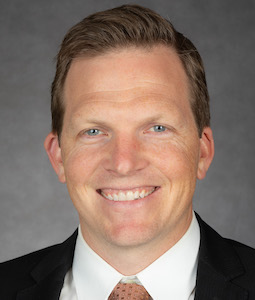
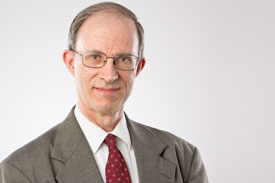
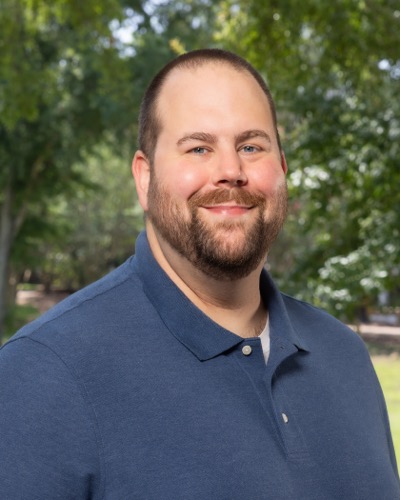
T. Kyle Petersen is Professor and Chair of the Department of Mathematical Sciences at DePaul University's College of Science and Health, where he serves as a full-time faculty member specializing in combinatorics research and education. Education history: AB, Washington University in St. Louis PhD, Brandeis University (2006), supervised by Ira Gessel Research focuses on core and specialized areas of combinatorics: Enumerative Combinatorics : Counting methods and sequence analysis Algebraic Combinatorics : Algebraic structures in discrete mathematics Topological Combinatorics : Geometric and topological approaches Recent publications (2019-2021) demonstrate broad engagement with combinatorial theory and applications—including permutation studies (Sós Permutations), probabilistic card shuffling models, geometric puzzle theory, Coxeter group analysis, and inquiry-based learning frameworks. This work consistently bridges theoretical foundations with educational innovation. Beyond research, Dr. Petersen actively contributes to pedagogical advancement through the Academy of Inquiry-Based Learning, promoting student-centered mathematics education.
Dr. Aaron Yeager serves as an Associate Professor in the Department of Mathematics at Coastal Georgia University, holding a Ph.D. from Oklahoma State University with dual master's expertise in Applied and Pure Mathematics from the University of Missouri. His educational journey includes a Ph.D. in Mathematics from Oklahoma State University, an M.S. in Applied Mathematics, and an M.S. in Pure Mathematics from the University of Missouri. Research focuses on polynomial theory (random and orthogonal), asymptotic methods , potential analysis , number theory , and mathematics education , bridging theoretical frameworks with pedagogical applications across pure and applied mathematics. Professional contact includes email ayeager@ccga.edu and phone 912-279-5967, with additional resources available on his personal website.
Daphne Der-Fen Liu is Professor and Chair of the Department of Mathematics at California State University, Los Angeles (College of Natural & Social Sciences), where she has served since 1991. Her affiliations include prior work as a Research Assistant at Academia Sinica in Taiwan. She holds a Ph.D. from the University of South Carolina and a B.S. from National Central University. Research Interests: Liu specializes in graph theory and combinatorics, with emphasis on: Graph coloring parameters (circular, fractional, list-coloring) Distance graphs and connections to number theory Radio/antimagic labeling for optimization Topological methods in graph problems Her work is funded by NSF and NASA grants. Teaching: She developed a graph theory course, employs flipped classroom strategies, and co-leads a U.S. Department of Education grant for pedagogical innovation. Awards include: 2015 MAA Distinguished Teaching Award 2018 President’s Distinguished Professor Award 2003 Outstanding Professor Award 2016 Distinguished Women Award Publications focus on graph labeling/coloring, with recent trends in antimagic labeling for tree-like structures and radio-k-labeling optimizations. She mentors student research but directs no formal lab.
Alina Ostafe is an Associate Professor in the School of Mathematics and Statistics at The University of New South Wales (UNSW) in Sydney, Australia. She joined UNSW in 2013 as a Postdoc and has steadily progressed through the academic ranks to her current position as Associate Professor since January 2023. Her research focuses on the intersection of number theory and dynamical systems, with particular emphasis on arithmetic properties of polynomial iterations and Diophantine problems. Dr. Ostafe received her PhD in 2010 from the Institute of Mathematics at the University of Zurich, Switzerland, following an MSc from the University of Bucharest, Romania in 2007. Her academic journey includes postdoctoral positions at both UNSW and Macquarie University before her appointment to the faculty. Her research interests span several interconnected areas within number theory and dynamical systems. She investigates Diophantine problems, polynomials and rational functions over local and global fields, finite fields, and arithmetic statistics of matrices. Within dynamical systems, her work focuses on the arithmetic properties of elements in orbits and algebraic properties of iterates. This research bridges classical number theory with modern dynamical systems theory, yielding insights into the distribution of special points in algebraic dynamical systems. An analysis of her recent publications reveals a strong focus on counting problems in arithmetic statistics, particularly concerning matrices with number-theoretic constraints. Her work frequently examines multiplicative dependence in various contexts, including linear recurrence sequences, rational values modulo finitely generated groups, and superelliptic equations. She also investigates the distribution of special points in dynamical systems, with applications to quantum ergodicity and character sums. Dr. Ostafe has received significant recognition through multiple competitive grants: Australian Research Council Future Fellowship (2026-2029) Multiple Australian Research Council Discovery Projects (2018-2026) UNSW Science Faculty Research Grants (2015-2025) UNSW Start-up Grant (2017) UNSW Vice-Chancellor's Postdoctoral Fellowship (2013-2016) Swiss National Science Foundation Grants (2010-2013) As an advisor, Dr. Ostafe currently supervises PhD student Muhammad Afifurrahman and has mentored several postdoctoral researchers including Subham Bhakta, Kamil Bulinski, Ali Mohammadi, Ayreena Bakhtawar, and Jorge Mello. She is actively involved in the mathematical community through her editorial role at Research in Number Theory and her organization of numerous conferences and seminars, including the Number Theory Web Seminar and the UNSW Number Theory Seminar. Dr. Ostafe is a key organizer of the UNSW Number Theory Seminar, which has been running since 2015, and has co-organized multiple international conferences including workshops at BIRS, MFO, and CIRM. Her leadership in the number theory community extends to her role as co-organizer of the Number Theory Web Seminar, which has built an international platform for researchers in the field.
Dean M. Riley serves as Professor of Library Science and director of Moody Library at Houston Christian University, a position he has held since joining HCU in 1994. His responsibilities span library administration, technical operations (including SirsiDynix systems), scholarly communications, and reference services. He actively contributes to university governance through roles on the Institutional Technology and Knowledge Committee, Safety and Crisis Committee, and several advisory groups. His educational qualifications include: MALS, University of Missouri – Columbia MARE, Southwestern Baptist Theological Seminary BME, University of Texas at San Antonio Riley's research explores the intersection of information science and Christian theology. He investigates the quality of information in digital environments, the theological implications of information theory (drawing on Shannon, Buckland, Dervin, and Gitt), and the integration of faith in library practices. His work promotes a "stewardship of mind" approach, emphasizing that information is foundational to human existence and that librarians serve as guides in navigating information spheres. He advocates for open access resources and has developed strategies for institutional repositories and OER. His publications, though limited in number, reflect a consistent theme of bridging library science with Christian faith. The 2010 refereed article "Information Apprenticeship" and non-refereed work "Wisdom and God in the Age of Information" both address theological perspectives on information. His earlier historical research on Texas Baptist associations demonstrates breadth in his scholarly interests. Riley's professional recognition includes: Nominee, Opal Goolsby Teacher Excellence, 2006 Elected in Beta Phi Mu International Library Honors Society, 1995 In addition to his administrative duties, Riley assists with grant writing for library initiatives and serves as a liaison to campus IT. While specific student advisees are not documented, his teaching philosophy emphasizes developing research strategies that seek truth beyond superficial information. He has presented extensively on library technology and faith integration, influencing both campus and professional communities. As director of Moody Library, Riley leads a team that supports HCU's academic mission through resource management, technology innovation, and user services. His leadership extends to shaping the library's role in spiritual formation, reflecting HCU's Christian identity. Current projects include piloting Cloudsource+ and advancing open access strategies.
Assistant Professor Janja Jerebic holds a dual academic appointment at the University of Maribor, primarily within the Faculty of Organizational Sciences (Department of Methodology) with additional involvement in the Faculty of Natural Sciences and Mathematics through programme group P5-0433. She earned her PhD in Mathematics from the University of Maribor's Faculty of Natural Sciences and Mathematics. Her research uniquely bridges theoretical and applied domains: Metric Graph Theory : Specializing in crossing numbers and combinatorial applications Quantitative Social Sciences : Developing statistical methodologies for education and organisational research Interdisciplinary Applications : Translating mathematical frameworks to solve real-world problems in business and social contexts She maintains active research funding through multiple national and international projects: ARRS project J1-8130: Theoretical work on crossing numbers Bilateral projects: BI-RS/18-19-054 (Slovenia-Serbia) analyzing business correspondence, BI-RU/19-20-034 (Slovenia-Russia) on biologically inspired algorithms Industry collaboration: Market project with Oncological Institute of Ljubljana and Roche as project leader Programme group P5-0433: Digital Restructuring for Society 5.0 (Industry 4.0) Academic service includes editorial leadership as Executive and Area Editor for Mathematics at Dianoia journal since 2018, plus committee roles in national academic evaluations. Her teaching integrates research methodology with practical applications, mentoring students through thesis supervision and national case study competitions.
Christoph Baxa is an Associate Professor in the Department of Mathematics at the University of Vienna, where he has been a faculty member since 2000. His academic career at the University of Vienna began in 1990 as an Assistant Professor in the Department of Statistics, then moved to the Department of Mathematics in 1992, where he was promoted to Associate Professor in 2000. He maintains an active research profile and teaching load, with courses scheduled through 2025. Dr. Baxa completed his academic training at the University of Vienna, earning his M.A. in 1990 with a thesis on prime representing functions and Hilbert's Tenth Problem, his Ph.D. in 1994 on the discrepancy of sequences (nα), and his Habilitation in 2000 on estimates for discrepancies of special uniformly distributed sequences. His research focuses on Number Theory, particularly Uniform Distribution Theory, Discrepancy Theory, Continued Fractions, and Diophantine Approximation. His work often connects number theory with mathematical logic, as evidenced by his early research on Diophantine representations. His recent scholarly activity is dominated by book reviews for Monatsh. Math., covering diverse areas including algebraic geometry, number theory, history of mathematics, and mathematical education. Dr. Baxa has received several prestigious awards including the Ph.D. sub auspiciis Praesidentis rei publicae, the Würdigungspreis from the Austrian Ministry of Science and Research, the Jubiläums-Studienpreis from the Austrian Mathematical Society, and the Edmund und Rosa Hlawka Preis from the Austrian Academy of Sciences. He has held research grants from the Austrian Science Fund and was an Erwin Schrödinger Fellow at the University of Colorado at Boulder from 2001-2003. As a professional service, he has been a regular reviewer for Mathematical Reviews since 1996 and reviews books for Monatsh. Math. He is a member of numerous mathematical societies including the AMS, DMV, EMS, LMS, ÖMG, and SMF.
Alex Rice serves as Professor of Mathematics at Millsaps College, where he has balanced advanced teaching, research, and community service since fall 2017. His roles include directing the Honors Program and hosting an annual high school math competition. Education: Ph.D. in Mathematics, University of Georgia (2012) His research spans Number Theory , Combinatorics , and Analysis , with emphasis on additive combinatorics and polynomial configurations in difference sets. He actively integrates undergraduate researchers through the Kinnaird summer program, fostering hands-on discovery in discrete mathematics. Recent publications demonstrate consistent contributions to extending classical theorems in additive combinatorics, with notable work appearing in Discrete Analysis and Acta Arithmetica . His collaborative approach has generated seven papers co-authored with 21 Millsaps undergraduates between 2019-2024. Awards: AMS-Simons Research Grant for PUI Faculty (2023-26) Halmos-Ford Award for expository writing (MAA MathFest 2023) Richard A. Smith Award for Scholarship/Creative Work (2021-22) Janet R. Langley Award for Academic Advising (2021-22) Professor Rice mentors undergraduate researchers through the Kinnaird program, securing external funding like the AMS-Simons Grant to support collaborative projects. His advising excellence was recognized with Millsaps' Janet R. Langley Award. He leads the Kinnaird summer research program, creating structured opportunities for students to contribute to publishable mathematical research in number theory and combinatorics.