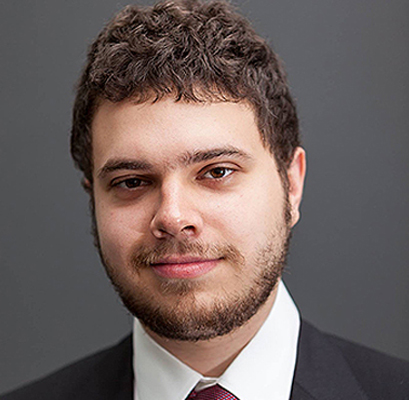
Sebastian Czerwiński is a faculty member at the University of Zielona Góra's Institute of Mathematics. He holds a doctoral degree and maintains an active research profile across theoretical and applied mathematics. His research interests include: Additive and combinatorial number theory Diophantine approximations and graph coloring Probabilistic methods and Ramsey Theory Multivariate linear models and stochastic equations Nonlinear wave propagation and Fourier series approximation Fixed point problems and combinatorial geometry Dr. Czerwiński teaches linear algebra, mathematical analysis, number theory, cryptography, and algorithmic methods while also delivering popular science lectures for school students. His work connects theoretical mathematics with practical applications through the Center for Applications of Mathematics and Computer Science (OZMI), focusing on sustainable energy, healthy society, and industrial processes. His research on iterative Gaussian algorithms and nonlinear analysis contributes to both pure mathematics and real-world problem solving across multiple disciplines.
Snow White Castro Gonzalez is a Professor at Universidad Politécnica de Madrid (UPM), specializing in Mathematics Applied to Information and Communication Technologies. Her research focuses on Algebra, Number Theory, and Computational Mathematics, with additional interests in Numerical Analysis and Discrete Mathematics. Fields of Interest Algebra and Number Theory Numerical Analysis Computational Mathematics Geometry and Topology Contact Email: nieves.castro.gonzalez@upm.es
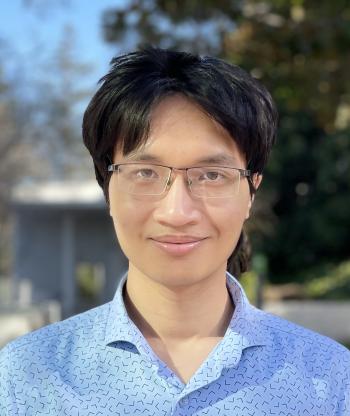
Huy Tuan Pham is a Clay Research Fellow at the Institute for Advanced Study, beginning July 2023. He received his PhD in 2023 from Stanford University, where he was advised by Jacob Fox. His research spans combinatorics, probability, number theory, and theoretical computer science. Key contributions include: With Fox and Zhao: demonstrating that Green’s popular difference theorem requires tower-type bounds, marking the first known application of Szemerédi’s regularity method that truly requires such bounds. With Park: proving the Kahn-Kalai conjecture on phase transitions and Talagrand’s conjecture on selector processes. With Conlon and Fox: solving long-standing conjectures of Erdős in additive combinatorics regarding subset sums and Ramsey complete sequences. With Cook and Dembo: developing a quantitative nonlinear large deviations theory for random hypergraphs. He has been awarded the Clay Research Fellowship, a five-year fellowship beginning July 2023, which is a significant recognition in the mathematical community. No details on academic advising, research grants, laboratories, or research teams are provided in the available text.
Wojciech Samotij is an Associate Professor at the School of Mathematical Sciences, Tel Aviv University. His research focuses on extremal and probabilistic combinatorics, Ramsey theory, large deviation theory, and additive number theory. He has held positions including Junior Research Fellow at Trinity College, University of Cambridge (2010–2014), and Post-doctoral researcher at Tel Aviv University (2010–2011, 2012–2013). PhD in Mathematics (2010), University of Illinois at Urbana-Champaign, supervised by Jozsi Balogh M.Sc. in Mathematics and Computer Science (2007), University of Wrocław His recent work explores large deviation principles in random graphs, hypergraph containers, and extremal problems in probabilistic settings. Publications span journals like Annals of Probability , Duke Mathematical Journal , and Transactions of the American Mathematical Society , with key contributions to Ramsey-type theorems and entropy-based combinatorial analysis. He has supervised graduate students in topics ranging from additive combinatorics to random graph theory, and taught courses including Probabilistic Methods in Combinatorics, Graph Theory, and Discrete Mathematics. His email contact is samotij@tauex.tau.ac.il and samotij@post.tau.ac.il .
Pascal Hémon is a CNRS Research Engineer at the Hydrodynamics Laboratory (LadHyX) within École Polytechnique in France. His academic background includes a Habilitation (HDR) from Université Pierre et Marie Curie (2013), a PhD in Mechanics from CNAM (1997), and an engineering degree in fluid mechanics from ESSTIN (1989). He specializes in experimental and theoretical aspects of flow-induced vibrations, with applications spanning civil engineering, aerospace, and environmental systems. His research focuses on aeroelastic phenomena including vortex-induced vibrations, galloping instabilities, and fluid-structure interactions. Key application areas include wind engineering for large-scale structures, energy harvesting from flow-induced oscillations, and biomechanics of wind-vegetation interactions. Experimental methodologies, particularly wind tunnel testing and field measurements, form the core of his investigative approach. Publication analysis reveals consistent focus on experimental fluid-structure interactions , with recent work emphasizing energy harvesting applications, full-scale structural monitoring, and advanced measurement techniques. Research evolves from fundamental vortex dynamics to applied solutions for industrial challenges in wind engineering and renewable energy. Research collaborations include major industrial partners (Airbus, Vinci, Bouygues) and academic institutions worldwide (University of Victoria, Bochum University). He has supervised multiple PhD candidates including work on wind effects on cables, bridge deck aerodynamics, and vortex-induced vibrations of industrial structures. At LadHyX, Hémon contributes to experimental facilities development and maintains active industry partnerships for applied research projects. Additional pursuits include polar expeditions and scientific outreach through technical books and novels.
PD Dr. Olga Shishkina is a Max Planck Research Group Leader at the Laboratory for Fluid Physics, Pattern Formation and Biocomplexity (LFPB) within the Max Planck Institute for Dynamics and Self-Organization in Göttingen, Germany. Her research focuses on turbulent thermal convection, numerical simulations, and heat/momentum transport in complex fluid systems. Fields of Interest : Turbulent Convection, Fluid Dynamics, Heat Transfer, Numerical Simulations, Thermal Boundary Layers, Scientific Computing Dr. Shishkina's work explores turbulent Rayleigh-Bénard convection, magnetoconvection, and rotating/centrifugal convection through direct numerical simulations (DNS). Key themes include scaling relations, boundary layer dynamics, and the impact of geometric constraints, magnetic fields, and buoyancy forces on flow structures. Her recent publications (2024–2025) analyze scaling laws in sheared/rotating convection, heat transport in annular/cylindrical geometries, and machine learning applications for cosmological simulations. The group also investigates liquid metal convection, subcritical chaos, and superstructures in confined turbulent flows. Contact : +49 551 5176-335 | +49 551 5176-302 | olga.shishkina@ds.mpg.de Address : Room 2.124, Max Planck Institute for Dynamics and Self-Organization, Am Faßberg 17, 37077 Göttingen, Germany
Amanda Burcroff is a mathematician specializing in algebraic combinatorics, currently serving as a President's Postdoctoral Fellow at the University of California, Davis. Starting in September 2025, she will join MIT as a School of Science Dean's and NSF Postdoctoral Fellow. Her research explores the connections between cluster algebras, scattering diagrams, and algebraic geometry, with additional contributions to number theory, graph theory, and combinatorial structures. Harvard University (Ph.D., Mathematics) University of Cambridge (M.A.St, Mathematics) Durham University (M.A.S., Pure Mathematics) University of Michigan (B.S., Mathematics) Burcroff's research focuses on: Cluster algebra positivity and expansion formulas in low-rank settings Scattering diagram combinatorics and tropical geometry Hyperbolic Coxeter polytopes and dimension bounds Ehrhart theory and Hilbert bases for convex cones Combinatorics on words and pattern avoidance Domination polynomials and graph invariants Her publications reveal interdisciplinary trends spanning algebraic combinatorics, geometric structures, and number-theoretic patterns. Recent work examines quantum cluster algebras, continued fractions, and convex geometry. Burcroff's awards include prestigious Marshall, NSF, and President's Postdoctoral Fellowships. Marshall Scholarship (UK study funding) NSF Postdoctoral Fellowship (MIT appointment) President's Postdoctoral Fellowship (UC Davis) Burcroff actively promotes STEM diversity through mentorship programs like the Math Includes Mentorship Program and Graduate Research Opportunities for Women (GROW) Conference. Her mathematical outreach extends to high school initiatives including the Oakland University Summer Mathematics Institute and FIRST Robotics.
Veronika Vladimirovna Zasypko is a Senior Lecturer at the Faculty of Economic Sciences, Department of Applied Economics, at the National Research University Higher School of Economics (HSE). She joined HSE in 2024 and specializes in probability theory and mathematical statistics. Her contact details include a phone number +7(495)771-32-32 (ext. 27503) and office G503, Pokrovsky Boulevard 11 . Education: Candidate of Physical and Mathematical Sciences (2019), HSE Specialty: Mathematical Methods in Economics (2010), Moscow State Institute of Electronics and Mathematics Research Interests: Her work centers on probability theory and mathematical statistics, with applications in economic modeling and data analysis. Teaching: She teaches courses such as Probability Theory and Statistics and Additional Chapters in Economics , focusing on foundational and advanced statistical methods for economics students.
Jérôme Leroux is a Directeur de Recherche (DR CNRS) at the Laboratoire Bordelais de Recherche en Informatique (LaBRI) , affiliated with the University of Bordeaux , France. His research focuses on formal verification of infinite-state systems, vector addition systems, Presburger arithmetic, and acceleration techniques for symbolic computation. Key research themes include: Vector Addition Systems (VASS) and Petri Nets Automata-based representations for Presburger arithmetic Abstract interpretation and CEGAR frameworks Verification of asynchronous distributed systems His recent publications highlight work on acceleration techniques for convex binary relations, serialized digit automata, and regular acceleration methods for number decision diagrams. These contributions are implemented in tools like the Talence Presburger Arithmetic Suite (TAPAS) and the FAST tool for symbolic verification. Scientific awards include a Best Paper Award at TURING'100 . He has advised several Ph.D. students and postdoctoral researchers, including Alexander Heußner and Thibault Hilaire (current Ph.D. candidate). Leroux is actively involved in organizing conferences like MFCS'23 and serving on program committees for venues such as VMCAI'26 .
Gergely Kiss is a Research Fellow at the Alfréd Rényi Institute of Mathematics, specializing in functional equations, Fourier analysis, and discrete geometry. He earned his PhD at Eötvös Loránd University under Miklós Laczkovich. Research Interests : Exponential bases, spectral theory, tiling theory, measure theory, and additive combinatorics. Teaching : Lectured at Eötvös Loránd University (2020-2023), Budapest University of Technology and Economics, and University of Luxembourg. Collaborations : Worked with researchers like Zoltán Balogh, Máté Matolcsi, and Gábor Somlai on tiling problems and functional equations. His recent publications focus on geometric rigidity, tiling conditions, and algebraic solutions to functional equations. He actively participates in workshops on additive combinatorics and Fourier analysis.
Prof. Dr. Uta Häsel-Weide is a full Professor for Special Educational Needs in Mathematics at Paderborn University's Faculty of Computer Science, Electrical Engineering and Mathematics, where she leads the Mathematics Education department and the AG Häsel-Weide research group. She holds additional leadership roles as Director at PLAZ Professional School and subject specialist for the Primary School Association. Her research focuses on: Mathematics education in inclusive classrooms Diagnosis and support for learning difficulties Classroom interaction and cooperation Teacher professional development Teaching-learning laboratories as professionalization spaces She has received significant recognition including: Tandem-Fellowship for Innovation in University Teaching (2017) Polytechnik Prize nomination (2019) She currently advises doctoral candidates and teaches courses on inclusive mathematics education, arithmetic didactics, and diversity in mathematics classrooms. Her pedagogical innovation includes developing the Lehr-Lern-Labor ZahlenRaum to bridge theory and practice in teacher education.
Joseph Kileel is an Assistant Professor in the Department of Mathematics at the University of Texas at Austin, with additional appointments as a Core Faculty Member of the Oden Institute for Computational Engineering and Sciences and as a member of the Machine Learning Laboratory. His academic journey includes a Ph.D. in Mathematics from UC Berkeley (2017) under Bernd Sturmfels and a postdoctoral fellowship at Princeton University (2017-2020) with Amit Singer. Professor Kileel's research spans applied mathematics, mathematical data science, and computational algebra, with particular expertise in inverse problems for imaging science, tensor methods, and non-convex optimization. His work has important applications in cryo-electron microscopy, 3D reconstruction, and mathematical theory for machine learning algorithms. His research program is supported by the NSF, DOE, and Sloan Foundation. His publication record demonstrates consistent high-impact contributions across multiple venues including IEEE Transactions, SIAM journals, Foundations of Computational Mathematics, and NeurIPS. His recent work shows a strong trend toward developing algebraic and geometric methods for data science problems, with increasing focus on tensor decompositions and their applications to molecular imaging. His research bridges theoretical mathematics with practical computational methods. Charles Chui Young Researcher Best Paper Award Bernard Friedman Memorial Prize for Best Thesis in Applied Mathematics Professor Kileel currently advises six doctoral students and postdocs, maintaining an active research group that combines theoretical depth with practical applications. His students work on diverse projects spanning tensor methods, optimization theory, and applications to imaging science. The group benefits from strong connections with the Oden Institute and Machine Learning Laboratory at UT Austin, providing access to interdisciplinary collaborations and resources. His research group focuses on developing mathematical foundations for data science problems, particularly those involving algebraic structure. Current projects include tensor decomposition algorithms, geometric methods for 3D reconstruction, and theoretical analysis of non-convex optimization landscapes. The group maintains active collaborations with researchers at Princeton, Berkeley, and international institutions, reflecting the interdisciplinary nature of his work.
Dr. Elahe Mehraban is a Lecturer and Researcher at Near East University's Department of Mathematics, where she has been employed since September 2023. She maintains additional academic ties as a Graduate Student Advisor at the University of Guilan in Iran. Education background: BS in Applied Mathematics, Payam Noor University, Iran (2006) MS in Mathematics (Group Theory), University of Guilan, Iran (2011) PhD in Mathematics (Algebra), University of Guilan, Iran (2021) Her mathematical research spans both theoretical and applied domains, with concentrated expertise in: Algebraic Structures : Group Theory and related abstract algebra foundations Mathematical Applications : Cryptographic systems and error-correcting codes through Coding Theory Advanced Number Theory : Investigating properties of integers and their extensions While specific publication details aren't provided, her collaborative works demonstrate consistent scholarly output in ISI-indexed mathematics journals, particularly exploring connections between abstract algebra and computational applications.
Sinan Ünver serves as Associate Professor in the Department of Mathematics at Koc University, Istanbul, Turkey. His academic appointments include: Current primary position: Associate Professor, Department of Mathematics, Koc University Past affiliation: Humboldt Research Fellow, Freie Universität Berlin (2015-) Professor Ünver's research program focuses on fundamental problems at the intersection of Algebra, Number Theory, and Algebraic Geometry. His investigations explore multi-zeta values as extensions of classical zeta functions, additive polylogarithmus in algebraic settings, Bloch groups connecting to K-theory regulators, and heights of motives for Diophantine applications. These areas collectively address deep structural questions in arithmetic geometry and special values theory. His scientific recognition includes: Humboldt Research Fellowship for Experienced Researchers (2015) awarded for outstanding research potential and international collaboration capacity. Professor Ünver maintains active research at Koc University with documented international engagement through the Humboldt Fellowship. While specific advising details aren't provided, his fellowship indicates capacity for independent research leadership and mentorship within collaborative frameworks.
Kellen Myers is an Associate Professor in the Division of Math & Science at Tusculum University, focused on mathematical modeling in epidemiology and combinatorics. He holds a Ph.D. in Mathematics from Rutgers University (2015). Current position: Associate Professor of Mathematics Affiliation: Tusculum University Education: Ph.D. in Mathematics, Rutgers University (2015) His research spans: Epidemiological modeling of multi-host disease systems and antibiotic resistance Combinatorics, particularly Rado numbers and Ramsey theory Analysis of public health risks in carceral and resource-limited settings Recent publications emphasize seasonal disease dynamics, HIV/AIDS-related resistance patterns, and mathematical approaches to social network security simulations.