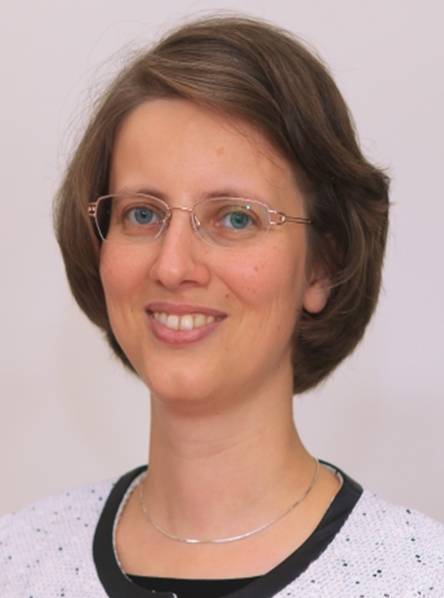
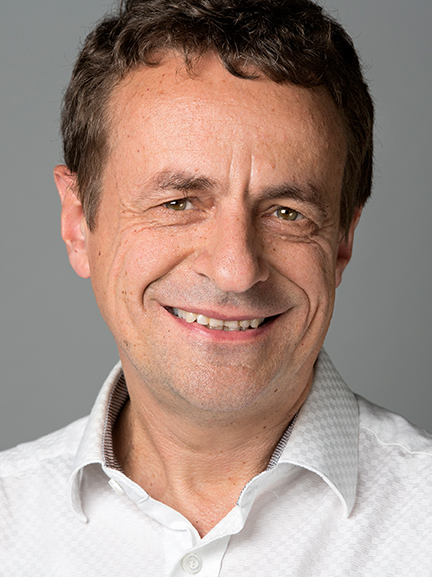
Tanja Eisner is a Professor at the University of Leipzig , affiliated with the Institute of Mathematics. Her work bridges functional analysis and operator theory with dynamical systems and ergodic theory . Research Interests : Functional analysis and operator theory Dynamical systems and ergodic theory Applications to number theory and additive combinatorics Recent Publications (15 most recent): Her articles focus on ergodic theorems, stability of operators, and connections between dynamics and number theory, with keywords spanning Mathematics , Operator Theory , Dynamical Systems , and Harmonic Analysis . Notable subfields include multiple recurrence , nilsystems , automatic sequences , and Wiener's lemma . Teaching & Collaboration : Organized miniworkshops on operator-theoretic aspects of ergodic theory in Leipzig, Wuppertal, Kiel, Feldkirch, and Tübingen Co-authored books with Bálint Farkas, Markus Haase, and Rainer Nagel Co-organized seminars like the Internet Seminar on Ergodic Theorems
Prof. Dr. Tobias Dyckerhoff is a Professor of Mathematics at the University of Hamburg , specializing in Higher Structures in Algebra and Geometry . He is affiliated with the Cluster of Excellence "Quantum Universe" and the Center for Mathematical Physics . His academic career includes positions at the University of Bonn, University of Oxford, Yale University, and the University of Pennsylvania. Research Interests : Higher category theory, homological algebra, perverse sheaves, Fukaya categories, and applications to symplectic geometry and quantum topology. Editorial Roles : Managing Editor of Abhandlungen aus dem mathematischen Seminar der Universität Hamburg (since 2023) and Editor of Applied Categorical Structures (since 2023). Publications & Articles focus on advanced topics like stable ∞-categories, spherical functors, and Calabi-Yau structures. Notable trends include interconnections between algebraic topology, category theory, and symplectic geometry. Scientific Awards : Bonn Junior Fellow (2014–2018) Titchmarsh Postdoctoral Fellow (2013–2014) Simons Postdoctoral Fellow (2010–2013) Students & Collaborations : Mentors active researchers like Angus Rush, Till Heine, and Jonte Gödicke. Collaborates with institutions such as MPI Bonn and international experts in higher structures.
Moritz Wiese is a Researcher at the Chair of Theoretical Information Technology within the Department of Electrical and Computer Engineering at Technische Universität München (TUM) . His work focuses on information-theoretic security, quantum communication, and wireless networks, with significant contributions to interference modeling and secure coding schemes. Research Interests : Information-Theoretic Security, Quantum Wiretap Channels, MIMO Systems, 5G/6G Technologies, Physical Layer Security, and Network Coding. Key Grants : Involved in DFG-funded projects (Gottfried Wilhelm Leibniz Prize, UKoloS) and BMBF initiatives (6G-life, QuaDiQua). Collaborations : Worked with Prof. Holger Boche, Christian Deppe, and Rami Ezzine on secure communication and randomness generation. Labs : Active in the ACES Lab and 6G-life research hub, focusing on joint communication/sensing and neuromorphic computing. Publications : Over 20 papers on secure estimation, wiretap channels, and quantum secrecy, including top-tier journals like IEEE Transactions on Information Theory and Journal of Mathematical Physics .
Professor Asaf Shapira is a faculty member in the Department of Theoretical Mathematics at Tel Aviv University's School of Mathematical Sciences. He has been actively contributing to combinatorics and graph theory research for over a decade, with numerous publications in top journals including Journal of the ACM, Advances in Mathematics, and Geometric and Functional Analysis. Professor Shapira's research focuses on extremal combinatorics, graph theory, and property testing. His work explores fundamental questions in Ramsey theory, hypergraph theory, and probabilistic methods in combinatorics. He has made significant contributions to the study of graph regularity, removal lemmas, and extremal problems in dense and sparse graphs. His recent publications demonstrate a consistent focus on theoretical aspects of combinatorics with connections to theoretical computer science. A notable trend is his work on developing polynomial bounds for various combinatorial theorems and exploring connections between combinatorial structures and computational complexity. His research often bridges pure mathematics with theoretical computer science applications. Professor Shapira teaches advanced courses at Tel Aviv University including Extremal Graph Theory, Basic Combinatorics, and seminars on specialized topics in combinatorics. His teaching spans undergraduate and graduate levels, reflecting his commitment to educating the next generation of mathematicians.
Tibor Szabó is a Professor in the Combinatorics and Graph Theory group at the Department of Mathematics, Freie Universität Berlin. He holds a PhD from The Ohio State University, advised by Ákos Seress. Prior to his current position, he held roles at McGill University, ETH Zürich, the Institute for Advanced Study (Princeton), and the University of Illinois (UIUC) as a J.L. Doob Research Assistant Professor. Research Interests: His work focuses on combinatorics and combinatorial optimization, including extremal problems, random structures and algorithms, pseudorandom graphs, positional games, and the combinatorics of linear programming. He explores tools from algebra, probability theory, and topology applied to combinatorics. Teaching: He teaches courses such as Algorithmic Combinatorics, Extremal Combinatorics, and runs the Combinatorics Seminar. His lecture notes include works on positional games and explicit constructions in extremal combinatorics. Students & Postdocs: Notable PhD advisees include Yamaan Attwa, Silas Rathke, Simona Boyadzhiyska, and Patrick Morris. Postdoctoral fellows include Olaf Parczyk and Anurag Bishnoi. His research has involved collaborations with over 50 co-authors. Funding & Grants: Supported by grants from the Swiss National Science Foundation (SNF) and German Research Foundation (DFG), focusing on topics like positional games and extremal graph theory.
Amador Martin-Pizarro is a Professor in the Department of Mathematical Logic at the Albert-Ludwigs-Universität Freiburg. His research focuses on geometric model theory and its applications to algebraic geometry, additive combinatorics, and number theory. He has contributed to foundational work on supersimplicity, stability, and definable groups in simple theories. Martin-Pizarro led the Freiburg group in the binational ANR-DFG project GeoMod. His work bridges model theory with algebraic structures, exploring connections between combinatorial patterns and logical frameworks. Recent studies include applications of model theory to arithmetic progressions, pseudofinite groups, and equational theories of fields.
Zeev Rudnick is a Professor of Mathematics at Tel Aviv University, holding the Cissie and Aaron Beare Chair in Number Theory since 2012. He is affiliated with the School of Mathematical Sciences and the Department of Theoretical Mathematics. Education: Ph.D., Yale University, 1990 M.Sc. summa cum laude, The Hebrew University, 1985 B.Sc. summa cum laude, Bar-Ilan University, 1984 Research Interests: Professor Rudnick's work focuses on the interface of Number Theory and Mathematical Physics, particularly Quantum Chaos. His research includes eigenvalue distribution, zeros of L-functions, quantum unique ergodicity, arithmetic problems in function fields, lattice point counting, and spectral statistics. Recent publications explore zeros of modular forms, quantum models, sparse exponential sums, and spectral properties of geometric domains. Awards and Honors: Heilbronn Distinguished Visiting Professor (2019) David Rees Distinguished Visiting Fellowship (2017) Aisenstadt Chair (2014) Invited Speaker at ICM 2014 ERC Advanced Grants (2013–2024) Fellow of the AMS (2012–) AHP Distinguished Paper Award (2011) Erdős Prize (2001) Alon Fellowship (1995) Sloan Dissertation Fellowship (1989/90) Advising and Grants: He has supervised 28 Ph.D. and M.Sc. students in number theory and mathematical physics. His research is supported by an ERC Advanced Grant (RMAST, 2019–2024), following a previous ERC grant (2013–2018). He currently teaches graduate/undergraduate seminars and analytic number theory.
Bernd Sturmfels is a leading mathematician serving as Director of the Max Planck Institute for Mathematics in the Sciences in Leipzig since 2017. He is also Professor Emeritus of Mathematics, Statistics, and Computer Science at the University of California, Berkeley, and holds honorary professorships at the Technical University of Berlin and the University of Leipzig. His research bridges pure and applied mathematics, with foundational contributions to algebraic geometry, combinatorics, and computational biology. Education: Sturmfels earned dual Ph.D. degrees in 1987 from the University of Washington and Technische Universität Darmstadt, followed by an honorary doctorate from Goethe University Frankfurt in 2015 and additional honorary doctorates from the University of Bern (2023) and the University of Chicago (2024). Research Interests: His work spans algebraic geometry , combinatorics , commutative algebra , algebraic statistics , convex optimization , and computational biology . He explores deep connections between abstract algebraic structures and practical applications in statistics, optimization, and the life sciences. Publications and Trends: With over 300 research articles and 11 books, his recent work (2022–2025) focuses on advanced topics like Grassmannian geometry, tropical implicitization, quantum chemistry applications, and algebraic statistics. His research increasingly integrates computational methods with theoretical insights, addressing problems in machine learning, phylogenetics, and optimization. Awards and Honors: Sturmfels has received numerous prestigious awards, including: George David Birkhoff Prize in Applied Mathematics (2018) SIAM von Neumann Lecturership (2010) Humboldt Senior Research Prize (2007–2008) David and Lucile Packard Fellowship (1992–1997) Fellowships of the AMS and SIAM Membership in the Berlin-Brandenburg Academy of Sciences and Humanities Mentoring and Grants: He has supervised 60 doctoral students and numerous postdocs, with many securing positions at leading institutions. His mentoring philosophy emphasizes diversity and excellence, as highlighted in his Notices of the AMS article. Funding sources include the NSF, DARPA, and the German National Science Foundation (DFG). Labs and Teams: At the Max Planck Institute, he leads the Nonlinear Algebra group, fostering interdisciplinary collaboration between mathematics and the sciences. His team focuses on developing algebraic methods for data analysis, optimization, and theoretical physics.
Wolfgang Lück is a Professor of Mathematics at the University of Bonn, affiliated with the Hausdorff Center for Mathematics (HCM) and the Hausdorff Research Institute for Mathematics (HIM). He holds a Max Planck Fellowship at the Max Planck Institute for Mathematics (MPIM) and served as HCM spokesperson from 2019–2022. His research focuses on topology, particularly topological invariants, K- and L-theory, and geometric group theory. He has pioneered work on the Farrell-Jones conjecture and L²-invariants, earning prestigious awards like the Leibniz Prize (2008) and ERC Advanced Grant (2015). Education: Studied mathematics in Göttingen (BSc 1981, PhD 1984), habilitation (1989) Prior roles: Full professor at Mainz (1991–1996), Münster (1996–2010), and spokesperson for the SFB “Geometry, Groups & Actions” His research interests span manifold classification, surgery theory, and algebraic K-theory. Over 50 publications since 2013 alone demonstrate his prolific contributions. Awards include membership in the German Academy of Sciences (2010) and North Rhine-Westphalian Academy (2013). Grants: ERC Advanced Grant (2015), Max Planck Research Prize (2003) Leadership: Directed HIM (2011–2017), led collaborative research initiatives
Alexandros Leivaditis is a researcher in the Algebra group within Ruhr-Universität Bochum's Faculty of Mathematics. His research focuses on structural graph theory and combinatorial algebra, particularly Ramanujan graphs and graph minor obstructions. Recent publications investigate connections between quaternion algebras, supersingular elliptic curves, and Ramanujan graph constructions. Additional research characterizes minor obstructions for apex graphs and pseudoforest structures. Leivaditis contributes to the Research Team Röhrle, investigating combinatorial aspects of algebraic structures. No information is available regarding teaching activities or research supervision.
Prof. Andreas Bernig is a faculty member at Goethe University Frankfurt am Main, affiliated with the Department of Computer Science and Mathematics. He has held a W3 professorship in Differential Geometry since October 2009 and served as Dean of the Faculty (2017-2019) and Director of the Institute for Mathematics (2022-2024). His research spans Integral Geometry, Finsler Geometry, Riemannian Geometry, Geometric Inequalities, and Geometric Measure Theory, with a focus on valuations, kinematic formulas, and curvature measures in singular and pseudo-Riemannian settings. His recent publications explore topics such as the Hard Lefschetz theorem in convex valuation theory Weyl principle for Kähler manifolds Kinematic formulas in pseudo-Riemannian space forms Dual area measures in Hermitian integral geometry Invariant valuations on complex and quaternionic spaces These works often involve collaborations with leading mathematicians like J.H.G. Fu, Gil Solanes, and Thomas Wannerer. Prof. Bernig has received notable scientific recognition, including First prize at the German Mathematical Olympiad (1991, 1992) DFG and SNFS funding for projects like "Invariants of Singular Spaces" and "Tensor Valuations" He has supervised doctoral and Master’s students such as Luca Iffland, Frederik Herget, and Frank Steinke, and actively participates in international conferences and workshops in integral geometry, convex geometry, and geometric analysis.
Alice Niemeyer is a Professor at the Algebra Teaching and Research Area of RWTH Aachen University , specializing in computational algebra, finite group theory, and interdisciplinary applications in civil engineering. She has co-authored over 30 publications in journals like PNAS Nexus , Linear Algebra and Its Applications , and International Journal of Solids and Structures , with recent work bridging abstract algebra and topological interlocking concrete systems. Research Interests : Finite groups, matrix decomposition algorithms, combinatorial design, and applications to sustainable construction. Key Collaborators : Cheryl Praeger, Tomasz Popiel, Wilhelm Plesken, Daniel Robertz, Reymond Akpanya. Notable Grants : Funding from the Simons Foundation for computational algebra research. Awards : No explicit awards mentioned in the provided text.
Dr. Georges Neaime is a Research Fellow at Ruhr University Bochum's Faculty of Mathematics with additional affiliations at the University of Bielefeld. He holds a Ph.D. from the University of Caen and specializes in algebraic combinatorics and geometric group theory. Research Focus: Reflection groups and their braid groups including Coxeter/Artin-Tits groups Interval Garside theory and combinatorial techniques Krammer representations and linearity of complex braid groups Representation theory of Hecke/BMW algebras His publications demonstrate consistent focus on group-theoretic structures with recent work on elliptic Artin monoids and Coxeter group applications. Research integrates combinatorial methods with geometric approaches to solve algebraic problems.
Alessio Borzì is a postdoctoral researcher in the Nonlinear Algebra Group at the Max Planck Institute for Mathematics in the Sciences (MPI MiS), led by Bernd Sturmfels. He completed his PhD at the University of Warwick under Diane Maclagan, following a Bachelor's and Master's at the University of Catania under Marco D'Anna, with additional studies at the Scuola Superiore di Catania. His research focuses on Combinatorics, Algebraic Geometry, Commutative Algebra, and Tropical Geometry, with particular interests in matroids and their interactions with toric geometry. Borzì’s work spans theoretical and computational aspects, including contributions to software development such as the TropicalToric Macaulay2 package for toric intersection theory. His recent publications address topics like matroid quotients, Lascoux polynomials, and finite graph structures, reflecting a blend of algebraic and combinatorial methodologies. Publications highlight interdisciplinary approaches, from tropical flag varieties to cyclotomic polynomials in numerical semigroups. Despite no awards listed, his active research profile includes collaborations on preprints and peer-reviewed articles in journals like Journal of Software for Algebra and Geometry and Electronic Journal of Combinatorics . As a postdoctoral researcher, Borzì contributes to the vibrant scientific community at MPI MiS, where he engages with nonlinear algebra and its applications, supported by his diverse academic background and computational expertise.
Alberto Espuny Díaz is a postdoctoral researcher at the Institute of Computer Science, Faculty of Mathematics and Computer Science, Universität Heidelberg, where he is part of the Theoretical Computer Science and Discrete Mathematics group led by Prof. Felix Joos, supported by a DFG-funded project. He previously held a postdoctoral position at TU Ilmenau in the Large Networks and Random Graphs group under Univ.-Prof. Dr. Yury Person. He completed his PhD at the University of Birmingham under the supervision of Daniela Kühn and Deryk Osthus. Starting in September, he will take up a position as professor agregat at Universitat de Barcelona. Research Interests: Alberto's research lies at the intersection of combinatorics and theoretical computer science. His primary focus is on extremal and probabilistic combinatorics , with significant work in random graphs , random geometric graphs , graph resilience , Hamiltonicity , spanning structures , and additive combinatorics . He investigates threshold phenomena, embedding problems, and structural properties of graphs under random perturbations. The most recent publications reveal a strong trend in analyzing the resilience and structural richness of random and perturbed graphs, particularly focusing on Hamilton cycles, spanning trees, and graph factors. His work frequently combines probabilistic methods with deep structural insights from extremal graph theory, often targeting sharp thresholds and robustness in discrete systems. Scientific Awards: Ramon Llull Prize (2024) for PhD thesis Best Pure Maths Poster Award, University of Birmingham (2019) Second Best Poster Award, LSE (2019) Third Best Poster Award, LSE (2018) Advising and Grants: While no formal students are listed, Alberto has supervised dissemination and editorial work through student journals. He is currently supported by a DFG-funded project at Heidelberg. He has been actively involved in organizing academic events and committees, including serving on the grants committee for BYMAT and organizing the Combinatorics Research Seminar in Heidelberg. Labs and Teams: He is a member of the Theoretical Computer Science and Discrete Mathematics group at Universität Heidelberg and previously worked in the Large Networks and Random Graphs group at TU Ilmenau. He is also affiliated with the Young Mathematicians community through the Real Sociedad Matemática Española and has coordinated national student events.