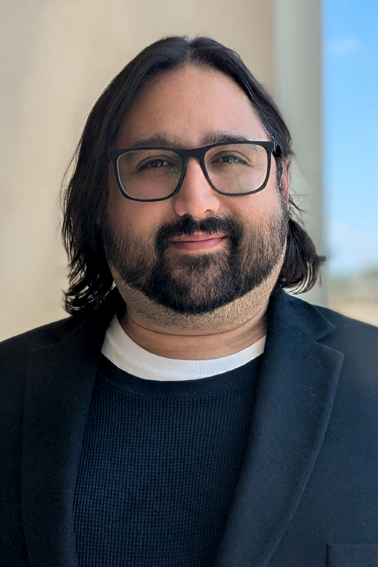
Cesare D'Amico is a Part-Time Lecturer at the University of Palermo within the School of Medicine and Surgery , specifically affiliated with the Department of Biomedicine, Neuroscience and Advanced Diagnostics . His research spans pharmacological and neurobiological domains, focusing on neuroplasticity and its modulation by cannabinoids and alcohol exposure. Email: cesare.damico@unipa.it Research Focus His work examines the impact of prenatal Δ9-tetrahydrocannabinol (THC) and cannabidiol (CBD) on hippocampal neuroplasticity, spatial memory, and mitochondrial function in adolescent rat models. Additional studies explore proteomic insights into multiple sclerosis, synthetic pyrrolomycins for cancer treatment, and neuroendocrine consequences of alcohol abuse. Publication Trends Recent publications highlight his expertise in neuropharmacology , developmental neuroscience , and molecular oncology , with a strong emphasis on Cannabinoid receptor signaling , proteomic profiling , and microwave-assisted drug synthesis .
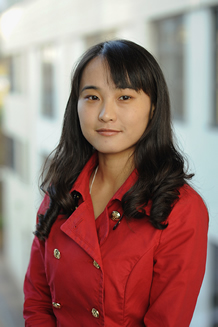
Jinshuo Li is a Research Fellow and Health Economist at the University of York's Health Sciences department. With extensive experience in health economics and public health interventions, she has established herself as a leading researcher in economic evaluation of clinical and public health programs. Her work spans multiple countries and diverse populations, addressing critical health challenges through rigorous methodological approaches. Dr. Li's educational background includes a BA in Public Health Administration and an MPhil in Health Economics, Policy and Management. She began her studies at the Department of Public Health, Fudan University in Shanghai, China, followed by professional experience at the Shanghai Huangpu Centre for Disease Control and Prevention. She furthered her training at the Department of Medicine, University of Oslo, Norway, and worked as an Analyst for the National Association Against Substance Abuse in Oslo before joining the University of York. Her primary research interests focus on the economic evaluation of public health and clinical interventions, with particular expertise in smoking cessation programs, mental health services, diabetes management, and substance abuse treatment. Dr. Li has led and contributed to numerous large-scale research projects including ADVANCE, ARROW, CASPER PLUS, SCIMITAR+, CATFISH, Y-SBNT, TEC study, PROTECT, Preloading trial, ODHIN, and web-based self-management support for diabetes. Her methodological strengths include cost-effectiveness analysis, randomized controlled trials, and implementation research across diverse settings from emergency departments to homeless support centers. Dr. Li's publication record demonstrates a strong trajectory of high-impact research, with recent work focusing on innovative approaches to smoking cessation (particularly among vulnerable populations), mental health interventions, and integrated care models. Her research frequently addresses health inequalities and seeks to develop evidence-based solutions for complex health challenges through rigorous economic evaluation. As a member of the Trials and Statistics research group at the University of York, Dr. Li collaborates extensively with multidisciplinary teams across the UK and internationally. Her work has significant policy implications, particularly in tobacco control, mental health services, and public health economics.
Simon Langener is a Researcher in the Human Media Interaction department at the University of Twente , specializing in the application of Immersive Virtual Reality (IVR) for treating Addictive Disorders in patients with Mild to Borderline Intellectual Disability (MBID). His work bridges computer science, medicine, and psychology. Research Interests: Langener focuses on developing IVR-based interventions for addiction treatment, particularly targeting Alcohol Use Disorder through alcohol refusal training and peer pressure simulations . His research integrates Cognitive Behavioral Therapy principles with IVR environments to enhance therapeutic outcomes for vulnerable populations. Immersive Virtual Reality Applications Addiction Treatment Protocols Cognitive Behavioral Therapy Adaptations Peer Pressure Simulation Design Cue Reactivity Training Expert Co-Creation in Therapy Development Collaborations & Activities: He collaborates with experts in addiction care, including co-authoring studies with researchers like J. E. L. Van Der Nagel and D. Heylen . His recent activities include oral presentations at conferences on IVR's role in addiction treatment and designing persuasive virtual agents for behavioral training.
Daniel Gutierrez is a Professor in the Counseling and Special Education Department at Virginia Commonwealth University's School of Education. As Director of the Socially Transformative Applied Research (STAR) Lab and member of the Convergence Labs, his research focuses on mental health strategies promoting resilience, well-being, and human flourishing amidst chronic stress and life challenges. His scholarship spans evidence-informed interventions for individual/community thriving and contemplative practices as pathways for personal/social transformation. Research domains include: Mental health and addiction counseling interventions Contemplative practices and spirituality in therapy Resilience and positive psychology applications Culturally responsive treatment models Dr. Gutierrez has secured significant research funding including a $449,912 grant from Virginia Foundation for Healthy Youth and $220,000 in Templeton/Mind & Life Institute grants. His honors include three Bigg-Pines Awards, the Association for Play Therapy Research Award, ACA Fellowship, and Distinguished Alumni recognition. As a licensed professional counselor and certified substance abuse counselor with over a decade of clinical experience, he currently serves as Editor-in-Chief of Counseling and Values and previously presided over the Association for Spiritual, Ethical, and Religious Values in Counseling.
Hoon Seok Choi is an Assistant Professor in the Department of Information Technology and Decision Sciences at the University of North Texas College of Business. His research focuses on digital ecosystems, consumer behavior in online platforms, and cybersecurity risks in technology adoption. He has contributed to understanding online review dynamics, big data analytics adoption, and pricing strategies in digital markets. Dr. Choi’s work spans multiple disciplines including information systems, marketing analytics, and behavioral economics. His research examines how trust cues influence online review helpfulness, the role of extrinsic factors in predicting review quality, and the interplay between user skills and technology adoption in mobile payment systems. His recent publications highlight trends in digital product pricing strategies (e.g., freemium models and SaaS pricing), cybersecurity behaviors related to public Wi-Fi use, and the psychological drivers behind video gaming addiction. These studies often utilize big data methodologies and experimental approaches. Despite his active research output, no scientific awards or grants are explicitly mentioned in the provided materials. His advising record remains undisclosed, and there is no mention of specific labs or collaborative teams associated with his work.
Dr. Salomeh Keyhani is a Professor of Medicine at the University of California, San Francisco (UCSF) and Director of the Center for Data to Discovery and Delivery Innovation, a VA-funded Center of Innovation. Her work focuses on improving health and healthcare delivery through data science and health systems research. She leads studies on cannabis use epidemiology, healthcare quality, and veteran health outcomes. Dr. Keyhani holds an MD from the University of California, Davis, and an MPH from Johns Hopkins Bloomberg School of Public Health, with additional training through the Robert Wood Johnson Clinical Scholars Program and Johns Hopkins Internal Medicine Residency. Affiliations: UCSF School of Medicine, VA Center of Innovation Education: MD - University of California, Davis (1999) MPH - Johns Hopkins Bloomberg School of Public Health (2004) Robert Wood Johnson Clinical Scholar - Johns Hopkins (2002) Internal Medicine Residency - Johns Hopkins Hospital (2002) Her research interests include cannabis use health effects, veteran healthcare disparities, opioid and cannabis co-use, and healthcare delivery innovation. She has led large-scale cohort studies on cannabis legalization impacts, opioid analgesic prescribing risks, and lung cancer screening algorithms. Her work emphasizes predictive modeling and real-world evidence to inform policy and practice. Key research trends in her articles include cannabis epidemiology, veteran health outcomes analysis, and AI-driven health informatics. Notable contributions include studies on cannabis use among older adults, opioid-cannabis interactions, and telemedicine adoption during the pandemic. Dr. Keyhani collaborates extensively with multidisciplinary teams across UCSF and VA systems. Grants & Funding: NIH and VA-funded investigator Labs/Teams: Center for Data to Discovery and Delivery Innovation, VA Health Services Research teams
Dr. Kelly E. Dunn is a Professor of Psychiatry and Neurobiology at the University of Maryland School of Medicine , and the Director of the Kahlert Institute for Addiction Medicine . With over two decades of experience, she focuses on opioid use disorder (OUD), pain management, and substance use epidemiology. Her research bridges clinical and translational studies, addressing OUD prevention, treatment innovation, and harm reduction strategies. Education: B.A. in Psychology and Philosophy, SUNY Oswego (2002) M.S. in Applied Biopsychology, University of New Orleans (2005) Ph.D. in Human Behavioral Pharmacology/Experimental Psychology, University of Vermont (2009) Postdoctoral Training in Clinical Pharmacology, Johns Hopkins University (2011) M.B.A. in Healthcare Management, Johns Hopkins Carey School of Business (2019) Research Interests: Dr. Dunn’s work emphasizes OUD mechanisms, medication development, and comorbid pain management. She explores fentanyl/xylazine interactions, withdrawal management, and policy interventions to address the opioid crisis. Her studies often integrate behavioral and pharmacological approaches, with a focus on vulnerable populations. Key Contributions: She has authored over 150 peer-reviewed publications and secured >$20M in NIH grants. Her leadership roles include editorships of journals like Experimental and Clinical Psychopharmacology and Journal of Addiction Medicine , and presidencies of professional societies like the College on Problems of Drug Dependence. Awards: Young Psychopharmacologist Award (APA Division 28) Joseph Cochin Young Investigator Award (CPDD) APA Fellow Grants & Labs: Dr. Dunn leads NIH-funded projects on OUD pharmacotherapy and pain-OUD comorbidity. Her lab collaborates with institutions like Johns Hopkins and the National Institute on Drug Abuse (NIDA), focusing on clinical trials and real-world implementation of safer treatments.
Bradley Green is a Professor of Psychology in the Psychology Counseling department at the University of Texas at Tyler. He earned his Ph.D. in Clinical Psychology from Texas A&M University (2003) and completed a pre-doctoral internship at Eastern Virginia Medical School. His research focuses on psychological construct measurement, particularly personality and psychopathology assessment using instruments like the Minnesota Multiphasic Personality Inventory. He explores hypersexual behavior correlates, genetic-psychopathology interactions, and suicide risk in military personnel. Dr. Green’s current projects investigate emotional intelligence’s role in suicide ideation, moral injury, and virtual psychological service acceptability. He supervises a lab focused on Personality and Psychopathology, offering both onsite and virtual research opportunities. His work spans disciplines, collaborating with geneticists and clinicians to advance understanding of hypersexuality and suicide prevention tools. He teaches advanced courses in psychological testing and supervision, including PSYC 5396 (Supervised Practicum) and PSYC 6301 (Advanced Tests and Measurement). His lab accepts graduate students starting Fall 2023, emphasizing individual mentorship and group collaboration.
Lisa K. Brents, Ph.D. is an Assistant Professor in the Department of Pharmacology and Toxicology at the University of Arkansas for Medical Sciences (UAMS) College of Medicine. Her research focuses on developing opioid treatments for pregnant women that minimize neonatal abstinence syndrome (NAS), particularly examining buprenorphine’s metabolite norbuprenorphine. She holds a Ph.D. from UAMS (2013) and has received grants including the UAMS Fellow-to-Faculty Award (2016-2019). Education: Ph.D. in Pharmacology, University of Arkansas for Medical Sciences, 2013 Research Interests: Dr. Brents investigates strategies to reduce NAS severity by altering buprenorphine metabolism and placental transport. Her lab studies norbuprenorphine’s role in NAS, p-glycoprotein’s role in fetal exposure, and deuterated buprenorphine’s pharmacological profile. She also explores long-term effects of prenatal opioid exposure and synthetic cannabinoid metabolism. Recent Research Support: "Maternofetal Buprenorphine Pharmacokinetics in NAS Development" (UAMS Fellow-to-Faculty Award) "The Role of Norbuprenorphine in NAS" (UAMS College of Medicine) "Deuterated Buprenorphine Metabolic Profile" (UAMS/CTSA KL2 Grant) Awards: UAMS Fellow-to-Faculty Award Labs/Teams: Dr. Brents leads a research team focused on opioid pharmacology in pregnancy, using rodent models and advanced behavioral analysis tools like Ethovision® XT software. Her work integrates clinical pharmacology, toxicology, and translational medicine.
Eric Delpire, PhD, is a Professor in the Departments of Anesthesiology and Molecular Physiology and Biophysics at Vanderbilt University School of Medicine. His primary research focuses on molecular mechanisms of cation-chloride cotransport in the nervous system and kidney, with emphasis on ion transport physiology, renal tubule function, and genetic regulation of electrolyte homeostasis. He holds dual professorial appointments reflecting his interdisciplinary work bridging neuroscience and renal physiology. Research interests include WNK kinase signaling pathways, transcriptional regulation of kidney tubule cells (particularly the distal convoluted tubule), and the role of cotransporters in neurodevelopmental disorders. His work utilizes mouse models, cryo-EM structural analysis, and genetic approaches to study NKCC1, KCC3, and NCC transporters' roles in health and disease. Recent publications highlight advancements in understanding potassium-chloride cotransporter structures, sex-dependent renal responses to dietary electrolytes, and mechanisms linking NKCC1 dysfunction to inflammation and barrier disruption. His studies also explore the role of corticotropin-releasing factor in ethanol consumption and the neurophysiological basis of hydrocephalus through choroid plexus dysfunction. Dr. Delpire's lab has identified key transcription factors (Sall3) and signaling pathways (SPAK/OSR1) regulating renal tubule differentiation, and discovered novel roles for NKCC1 in epithelial barrier maintenance. His work has implications for treating hypertension, kidney diseases, and neurological disorders involving ion transport dysregulation.
Dr. Jannike Mørch Andersen is an Associate Professor at the School of Pharmacy, University of Oslo, and a Senior Researcher at Oslo University Hospital. Her primary affiliation is within the Section for Pharmacology and Pharmaceutical Biosciences. She holds a PhD in Neurobiology (2003) and specializes in prenatal drug exposure, neurobiology, neurotoxicology, and opioid addiction mechanisms. Her research integrates pharmacological, neurobiological, and toxicological approaches to understand developmental effects of opioids and other drugs. Key research areas include: opioid-induced neurodevelopmental changes, drug metabolism in prenatal contexts, and intergenerational effects of substance exposure. She teaches courses such as FARM1110 (Pharmacology), FARM1150 (Biochemistry), and FARM3110 (Pharmacotherapy). Her work has produced over 50 peer-reviewed publications, focusing on topics like heroin metabolite analysis, opioid receptor signaling, and preclinical models of drug exposure. Notable collaborations involve institutions like Oslo University Hospital and international teams studying immunotherapeutic approaches to opioid addiction. Research groups associated include Neurobiology & Toxicology and PharmaTox. Her studies frequently use rodent and avian models to investigate drug distribution, neurobehavioral outcomes, and molecular mechanisms of addiction. Current projects emphasize neurotoxic mechanisms of environmental chemicals and opioids on brain development.
Gerry MacQuillan is a Clinical Professor at the UWA Medical School , affiliated with the Internal Medicine department of The University of Western Australia . With over 96 research outputs and 21 citations, his work focuses on liver diseases and transplantation medicine.
Lee Jollans is a Researcher at Linköping University, affiliated with the Department of Health, Medicine and Caring Sciences within the Faculty of Medicine and Health Sciences. His research focuses on applying Machine Learning and Deep Learning techniques to medical image analysis, particularly in the context of mental health, addiction, and neuroimaging. He holds a Postdoc position at LiU since 2023, following a Postdoc at the Max-Planck Institute for Psychiatry (2018–2022) and a PhD in Psychology from Trinity College Dublin (2016–2018). His work spans computational psychiatry, neuroimaging biomarkers, and predictive modeling for mental disorders. Key areas include diagnosing eating disorders, depression, and alcohol use disorders using machine learning, analyzing cortical thickness variations in depression, and exploring stress-induced neurobiological mechanisms (e.g., BDNF maturation). He collaborates with the Center for Medical Imaging and Visualization and the Circulation and Metabolic Cardiovascular Risk Factors group. His projects include WASP-DDLS (HUDI) for complex diagnostic imaging data and AIDA for whole-heart anatomy assessment from 3D CT scans. Colleagues include Professors Tino Ebbers and Petter Dyverfeldt. Lee’s articles highlight trends in integrating neuroimaging with psychometric data for predictive modeling, machine learning applications in adolescent mental health, and advancing diversity initiatives in academic neuroscience.
Anja Kräplin is a researcher at the Institute of Clinical Psychology and Psychotherapy, Technische Universität Dresden. Her work focuses on cognitive control and decision-making in substance-related and addictive disorders. She holds a habilitation (2020) and a summa cum laude PhD (2014), both from TU Dresden. Her research explores reliability of clinical measures and risk factors for addiction development. Education includes a Diploma in Psychology (2008) and advanced training via ESADD (2009-2011). Awards include the Werner-Straub-Preis (2014) and DAAD Scholarship (2017). She serves as Editor for SUCHT and Assistant Editor for Addiction , promoting open science and ethics. Key research themes involve longitudinal studies on executive functioning, impulsivity, and behavioral addictions. Recent work examines self-control mechanisms and stress reactivity in alcohol craving. Grants include funding for pilot studies on gambling behavior prediction and cognitive dysfunction roles. Professional activities include Ethics Committee membership and roles in the German Society for Psychology (DGPs). Her lab investigates neurobiological underpinnings of addictive behaviors using experimental paradigms and clinical assessments.
Max Wolff is a Researcher in the Department of Psychology at Dresden University of Technology, affiliated with the Institute of General Psychology, Biopsychology and Methods of Psychology. His work focuses on cognitive control, self-control failures, and their modulation by stress and addiction. He employs methods like ecological momentary assessment and latent-variable models to study real-life behavior across clinical and non-clinical populations. Education: 2017 – Dr. rer. nat. in Psychology (summa cum laude), TU Dresden (Thesis: Real-Life Self-Control Failures) 2013–2015 – European Graduate School in Addiction Research (ESADD) 2012 – Diploma in Psychology, Justus Liebig University Giessen Research Interests: Cognitive mechanisms underlying self-regulation Neurobiological correlates of executive functioning Stress effects on decision-making processes Professional Experience: Postdoctoral researcher (2017–present) across Psychology and Psychiatry departments at TU Dresden Research assistant (2013–2017) in TU Dresden Psychology and Psychiatry departments Lab Affiliations: Active in interdisciplinary teams combining behavioral experiments with neuroimaging and clinical research methodologies.