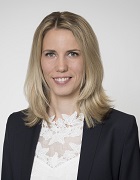
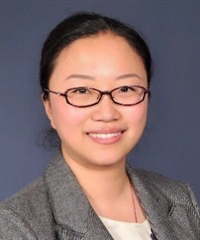
Ingrid Bouwer Utne is a Professor in the Department of Marine Technology at the Norwegian University of Science and Technology (NTNU). Her research focuses on risk assessment, autonomy, safety, and maintenance management of marine and maritime systems. She leads the Risk Group at NTNU and has been a main supervisor for numerous PhD students in areas like autonomous systems safety and risk modeling. She is actively involved in research projects such as the ERC AdG BREACH (Risk-Based Rationality in Autonomous Systems), SFI Autoship (Center for Autonomous Ships), and SAFEGUARD (Intelligent autonomous systems for safeguarding ocean infrastructure). Her work emphasizes risk-based control systems, online risk monitoring, and human-autonomy collaboration in maritime operations. Key publications include 'Risk and Interdependencies in Critical Infrastructures' (Springer) and 'Online Probabilistic Risk Assessment of Complex Marine Systems' (Springer). She has advised over 20 PhD students and contributed to industry-funded projects like UNLOCK and ORCAS, focusing on safer autonomous systems design and verification.
Prof. Elmar Rueckert is the Chair of the Cyber-Physical-Systems Institute at Montanuniversität Leoben in Austria since March 2021. He holds a PhD in Computer Science from TU Graz (2014) and previously served as a Senior Researcher at TU Darmstadt (2014–2018) and Assistant Professor at the University of Lübeck (2018–2021). His research focuses on Cyber-Physical Systems, Robotics, Machine Learning, and Human Motor Control, with applications in industrial automation, healthcare robotics, and environmental sustainability. Key research interests include stochastic machine/deep learning, reinforcement learning, brain-computer interfaces, and tactile learning. His work bridges robotics, neuroscience, and AI, emphasizing practical applications such as autonomous navigation, exoskeleton control, and sensor-based recycling technologies. Rueckert has led projects like the AI Robot Lab funded by Robert Bosch Stiftung and the KIRAMET recycling initiative. Recent publications highlight advancements in neural networks for industrial condition monitoring, multimodal robotic learning, and environmental infrastructure modeling. Awards include the German Young Researcher Award (2019) and the Advanced Robotics Best Paper Award (2018). Rueckert advises a team of researchers, including notable students like Daniel Tanneberg (PhD graduate, 2019) and Linus Nwankwo (best student paper winner, 2023). His lab develops open-source tools like ROMR and collaborates on datasets like EnvoDat for robotic spatial reasoning.
Prof. Selin Damla Ahipasaoglu is a Professor in Operational Research at the University of Southampton's School of Mathematical Sciences . She serves on the management team of the UKRI CDT SustAI (Artificial Intelligence for Sustainability) as Senior Tutor and Co-Lead for the Transportation and Logistics Theme . Her work bridges mathematical optimization with practical applications in sustainability, finance, and transportation systems. Research Interests : Convex Optimization Robust Optimization Discrete Choice Theory Experimental Design Machine Learning Current Research : Focused on robust optimization and its applications in discrete choice modeling, portfolio optimization, and transportation systems. She explores theoretical frameworks alongside real-world implementations, particularly through interdisciplinary projects like the UKRI CDT SustAI. Teaching : In the 2025/2026 academic year, she teaches MATH3017: Mathematical Programming and MATH2013: Operational Research II . She supervises PhD students in Mathematical Sciences, including Kexin Lai, Samuel Jericho Ward, and others.
Max Klimm is an Assistant Professor for Discrete Optimization at Technische Universität Berlin, affiliated with Faculty II – Mathematics and Natural Sciences and the Department of Mathematics. He leads the research group in Discrete Optimization and holds editorial roles at journals like the International Journal of Game Theory and Operations Research Forum . His academic journey includes a PhD in Mathematics from TU Berlin (2012), followed by roles as an Assistant Professor at Humboldt-Universität zu Berlin and Head of the Junior Research Group at the Einstein-Center for Mathematics. His research focuses on mathematical optimization, game theory, and mechanism design applied to multi-agent systems in traffic, telecommunications, and economics. Recent work addresses equilibrium computation in congestion games, stochastic optimization, and algorithmic challenges in network design. Key projects include Combinatorial Network Flow Methods for Gas Markets and the Math+ projects on mechanism design and evolutionary models for networks. Teaching responsibilities include courses on Discrete Optimization, Algorithmic Game Theory, and introductory mathematical courses. His research has been funded by DFG, Einstein Center, and Math+ initiatives. Notable contributions include advancements in parametric flow algorithms, impartial selection mechanisms, and reconstructing historical road networks using cost-benefit models.
Gustav Delius is a Senior Lecturer in the Department of Mathematics at the University of York. His research focuses on transferring methods from Quantum Field Theory, String Theory, and Integrable Systems to theoretical ecology and mathematical biology. He leads the York node of the MINOUW consortium, addressing unwanted catches in European fisheries, and develops size-spectrum models for marine ecosystems to inform fisheries policy. Dr. Delius holds a PhD from Stony Brook University. His work spans stochastic processes, complex networks, and ecological modeling. He has led projects such as the NERC-funded 'Pyramids of Life' initiative and the EPSRC IAA grant for sustainable fisheries policy. His research integrates mathematical rigor with real-world applications in marine ecology and conservation. Recent collaborations include interdisciplinary work on climate change impacts on coastal ecosystems and Bayesian inference for pandemic modeling. He has supervised research projects and contributed to initiatives like the MINOUW consortium, emphasizing practical policy implications of his findings.
Prof. Michael Beer is the Executive Director of the Institute for Risk and Reliability at Leibniz University Hannover. He holds a professorship in the Faculty of Civil Engineering and Geodetic Science and serves on the Faculty Council. His research focuses on structural reliability, uncertainty quantification, and risk analysis with applications in civil engineering systems. He leads the Collaborative Research Centres (CRC) 871 and 1463, addressing regeneration of complex capital goods and offshore megastructure design, respectively. His work integrates machine learning, Bayesian methods, and stochastic modeling to address challenges in seismic vulnerability, geotechnical systems, and reliability-based design optimization. Beer is also a member of the Leibniz Research Centre Energy 2050, emphasizing interdisciplinary energy systems research. Beer's research interests span probabilistic modeling of dynamic systems, uncertainty propagation in engineering systems, and data-driven methods for reliability assessment. His recent publications emphasize computational methods for reliability, machine learning applications, and seismic risk analysis. He actively contributes to academic leadership roles, including editorial boards and research center management.
Aad van der Vaart is a distinguished Professor of Statistics at Delft University of Technology (since 2021). Previously, he held Full Professorships at Leiden University (2012–2021) and Vrije Universiteit Amsterdam (1996–2012). His research focuses on foundational statistical theory and applications, including high-dimensional statistics, Bayesian methods, inverse problems, and genomics. He has made seminal contributions to nonparametric Bayesian inference, empirical processes, and semiparametric theory. Van der Vaart has authored influential textbooks such as Asymptotic Statistics (1998) and Fundamentals of Nonparametric Bayesian Inference (2017, with S. Ghosal). His work bridges theoretical rigor and practical applications, with over 34,830 citations (Google Scholar, 2023) and an H-index of 60. Key honors include the Spinoza Prize (2015, Netherlands’ highest science award), DeGroot Prize (2020), and membership in the Royal Netherlands Academy of Sciences. His academic journey includes roles such as Miller Fellow at UC Berkeley (2000), visiting positions at leading universities, and leadership in statistical societies. His research group actively explores modern challenges in statistical theory and methodology, including causal inference, adaptive estimation, and large-scale data analysis. Notable grants include an ERC Advanced Grant (2012) for Bayesian inverse problems. Collaborations span academia and industry, emphasizing interdisciplinary impact. While specific lab affiliations are not explicitly stated, his work is rooted in foundational mathematical statistics with broad applicability.
Pezhman Mardanpour is an Associate Professor in the Department of Mechanical and Materials Engineering at Florida International University (FIU), part of the College of Engineering. His research focuses on aeroelasticity, constructal theory, fluid-structure interaction, structural dynamics, and thermodynamics. He is particularly known for work on origami-inspired design applications in engineering systems. Research Interests: Aeroelasticity (both experimental and theoretical) Constructal theory-based design optimization Fluid-structure interaction phenomena Thermodynamic systems analysis Biomimetic origami structures Professional Contributions: His work bridges theoretical constructs with practical applications in aerospace engineering, structural design, and materials science. Recent research emphasizes fatigue life optimization of origami-inspired structures and evolutionary aeroelastic design methods for flying wing aircraft. Affiliations: Director of the CELL-MET ERC Pathways-UP ERC member National Industry Advisory Board (NIAB) Lab affiliations include the Mardanpour Research Group , focusing on advanced structural mechanics and smart materials.
Carsten Sørensen is the Head of Department at the Department of Finance, Copenhagen Business School (CBS), and holds a Cand.Scient.Oecon and Ph.D. His research focuses on dynamic asset allocation, portfolio theory, term structure of interest rates, derivatives, and commodity derivatives. He has contributed extensively to understanding strategic investment decisions under uncertainty, particularly in volatile financial markets. He has authored or co-authored over 29 publications, including seminal works on stochastic income modeling, interest rate dynamics, and commodity futures analysis. His work frequently explores the intersection of theoretical finance and practical investment strategies, emphasizing real-world applications of academic insights. Current Roles: Head of Department (Department of Finance), Director of Danish Finance Institute (2019–present) Outside Activities: Academic Committee Member for Danish FSA (2011–present), Teacher at Danish Society of Actuaries (2019) Key Contributions: Pioneered research on mean-reverting returns and inflation uncertainty in asset allocation models His research trends emphasize quantitative methods to address market complexities, with a focus on stochastic processes and dynamic optimization. He has consistently challenged conventional investment recommendations through rigorous empirical analysis. Awards: None explicitly listed Grants: No specific grants mentioned He is actively involved in academic leadership, directing interdisciplinary research initiatives at CBS and advising regulatory bodies on financial education standards.
Prof. Julija Zavadlav is an Assistant Professor of Multiscale Modeling of Liquid Materials at the Technische Universität München (TUM), affiliated with the TUM School of Engineering and Design. Her research integrates physical modeling with machine learning and Bayesian techniques to develop multi-scale simulation frameworks for diverse applications in bioinformatics and engineering. Education: She earned her PhD in Physics from the University of Ljubljana (2015) and conducted postdoctoral research at ETH Zurich (2016–2019), where she received an ETH Postdoctoral Fellowship. Since 2019, she has held her current position at TUM. Research Interests: Her work focuses on advancing machine learning potentials, Bayesian uncertainty quantification, and multi-scale modeling for complex systems like ionic liquids, metal-organic frameworks, and biomolecules. Her ERC Starting Grant (2022) supports the SupraModel project, emphasizing scalable and interpretable models. Awards: Golden Teaching Award 2022 (Best Lecture), ERC Starting Grant 2022, and ETH Postdoctoral Fellowship. Her recent publications emphasize neural network potentials, transfer learning, and computational tools like JaxSGMC for Bayesian analysis. Grants and Labs: While specific lab names are not mentioned, her ERC grant underscores active funding. No formal student advisee list is provided, but her collaborative work suggests involvement in training next-generation computational scientists.
Anton Westveld is a Senior Lecturer in the Department of Statistics at the Australian National University (ANU), within the Research School of Finance, Actuarial Studies & Statistics (RSFAS). He also serves as an Affiliate Associate Professor at Virginia Commonwealth University since August 2023. His research focuses on Bayesian methodology, network analysis, game theoretic data, and statistical causality, with notable contributions to ecological modeling and agent-based stochastic simulations. Westveld holds a Bachelor’s in Economics and Political Science from the University of Michigan (Ann Arbor), a Master’s in Applied Economics and Statistics from the same institution, and a PhD in Statistics from the University of Washington. His work has been published in prestigious journals like the Annals of Applied Statistics and Proceedings of the National Academy of Sciences . His research interests span Bayesian inference, relational data analysis, and causal modeling, with applications in ecological and health sciences. Recent work includes developing Bayesian methods for ecological drivers in marine viral communities and latent socioeconomic health indices for policy evaluation. Notable articles include analyses of menstrual disorder surveys using Gaussian copulas, ecological metagenomics studies, and Bayesian-optimized bootstrap techniques for uncertainty quantification. His interdisciplinary collaborations bridge statistics with environmental science, public health, and economics.
Dr. Aretha Teckentrup is a Lecturer in the Mathematics of Data Science at the University of Edinburgh's School of Mathematics. Her research focuses on integrating mathematical models with observational data, particularly in areas like uncertainty quantification, Bayesian inverse problems, and computational methods for partial differential equations (PDEs). She holds a PhD in Mathematics from the University of Bath and has held postdoctoral positions internationally, including in Florida. Her work emphasizes interdisciplinary approaches, blending statistics, numerical analysis, and applied mathematics. Notably, she has contributed to advancing Gaussian processes, multilevel Monte Carlo techniques, and sparse grid methods for high-dimensional problems. Her academic journey reflects a strong commitment to bridging theoretical foundations with practical applications. She has published extensively on topics such as probabilistic numerical methods, error estimation in Bayesian inference, and adaptive sampling strategies. Dr. Teckentrup is an active member of the SIAM community, having received the prestigious SIAG/UQ Early Career Prize in recognition of her contributions to uncertainty quantification. Her research continues to explore innovative solutions for data-driven modeling challenges in science and engineering. Dr. Teckentrup’s work often addresses the growing importance of combining data with physical models, exemplified by her development of numerical methods for weather prediction and stochastic dispersion modeling. She advocates for collaboration across disciplines and emphasizes the transformative potential of integrating computational tools with real-world data. Her career trajectory underscores the dynamic and collaborative nature of modern academic research in applied mathematics and data science.
Dr. Tingting Li is a Lecturer (Assistant Professor) in Cyber Security at Cardiff University's School of Computing and Informatics and a member of the Centre for Cyber Security Research. She also holds an Honorary Research Fellow position at Imperial College London, reflecting her ongoing research collaboration. Her work bridges artificial intelligence and cybersecurity, with a focus on protecting critical systems such as cyber-physical systems (CPS), industrial control systems (ICS/SCADA), and autonomous vehicles. BEng (Hons) in Information Security, Xidian University, China MSc in Computing, Imperial College London PhD in Artificial Intelligence, University of Bath Dr. Li’s research interests lie at the intersection of AI and cybersecurity, particularly in automated cyber defense , diversification/deception strategies , and symbolic AI for knowledge representation . She investigates how AI can enhance the resilience of critical infrastructures through intelligent, adaptive defense mechanisms. Her recent work explores quantum-inspired reinforcement learning and machine learning models for proactive threat mitigation in complex systems. Her recent publications demonstrate a strong trend in applying advanced AI techniques—especially deep reinforcement learning, LSTM networks, and Bayesian models—to cybersecurity challenges in industrial and autonomous systems. These works span domains like IoT malware suppression, network diversity for ICS resilience, and automated compliance checking, reflecting a multidisciplinary approach combining security, AI, and systems engineering. Dr. Li has secured significant research funding, including a grant from the Alan Turing Institute (2024–2025) on AI safety in autonomous cyber defense, a RITICS/NCSC-funded project on diversity-based cybersecurity (2021–2022), and an EPSRC-funded project on metric-driven cybersecurity frameworks for critical national infrastructure (2021–2023). She actively supervises PhD students in areas including cybersecurity for autonomous vehicles, moving target defense, and cyber-physical system security. Her team includes Iryna Bernyk, Sanyam Vyas, Victoria Marcinkiewicz, Ellis Doran, Stephen Morris, and Sam Braithwaite. She also leads teaching modules on databases (CM6125/CM6625) and cybersecurity (CM6224/CM6724). Dr. Li’s research is conducted within the Centre for Cyber Security Research at Cardiff University, where she collaborates with experts in AI, security, and critical infrastructure protection. Her work is highly interdisciplinary, involving partnerships with institutions like Imperial College London and funding bodies such as EPSRC, NCSC, and the Alan Turing Institute.
Javier García González is a Full Professor in the Department of Electrical Engineering at the School of Engineering, Comillas Pontifical University, Madrid. He has been a key researcher at the Technological Research Institute (IIT) since 1996 and served as Deputy Director of IIT from 2016 to 2022. He holds a Ph.D. in Industrial Engineering from Comillas, awarded the best thesis in its category by the Royal Academy of Doctors. He has held visiting positions at MIT and Lawrence Berkeley National Laboratory. Education: Ph.D. in Industrial Engineering, Comillas Pontifical University (2001) Industrial Engineering (Electricity), ETSEIB, UPC Barcelona (1996) His research focuses on decision support systems for the electricity sector , applying optimization techniques to power system modeling, energy market design, and renewable integration. He has led over 80 research projects for utilities and institutions, with expertise in hydro scheduling, energy storage, and market modeling. His recent work emphasizes microgrid optimization , deep reinforcement learning , and pumped storage hydropower . The trends in his publications reveal a strong focus on optimization under uncertainty , market participation of storage and renewables , and advanced modeling of hybrid AC/DC systems . His work bridges engineering and economics, often involving stochastic programming and real-world applications. Scientific Awards: Best doctoral thesis, Royal Academy of Doctors (2001) Outstanding reviewer, Electric Power Systems Research (2017) He has supervised six doctoral theses and currently mentors a Ph.D. student. He has been principal investigator in numerous national and EU-funded projects, including TWENTIES and OptiREC. He has also delivered training courses at MIT and for industry partners like Endesa. He is actively involved in professional service, having organized the IEEE PowerTech 2021 conference and served on thesis committees at UPC, TU Delft, and Universidad Politécnica de Madrid. He is a long-standing reviewer for top journals such as IEEE Transactions on Power Systems , Applied Energy , and Energy Policy .
Håkon Andreas Hoel serves as an Associate Professor in the Department of Mathematics at the University of Oslo, specializing in numerical methods for stochastic and partial differential equations, Monte Carlo techniques, and data assimilation. His work bridges theoretical probability with practical computational challenges in scientific modeling. His academic credentials include a PhD in Numerical Analysis from the Royal Institute of Technology (KTH) in Stockholm (2007-2012), preceded by a Master's (2006) and Bachelor's (2004) in Computational Science from the University of Oslo. Professional experience spans postdoctoral roles at KAUST, EPFL, and UiO, along with a junior professorship at RWTH Aachen (2019-2022). Research centers on developing efficient algorithms for uncertainty quantification, particularly multilevel Monte Carlo methods and ensemble Kalman filtering. His publications demonstrate consistent innovation in reducing computational costs for high-dimensional stochastic simulations while maintaining accuracy, with applications across natural sciences and engineering disciplines. Analysis of recent publications reveals a strong trajectory toward adaptive multilevel frameworks for spatio-temporal data assimilation, integrating statistical inference with numerical solution techniques for complex stochastic systems. This work emphasizes theoretical rigor alongside practical implementation challenges. No scientific awards or honors were documented in the source materials. The provided texts contain no information regarding graduate students supervised or research grants administered by Dr. Hoel. He is actively affiliated with the Computational Mathematics research group at UiO, which focuses on differential equations and computational methods within the Department of Mathematics.