
Christodoulou Chris is a Professor at the Department of Computer Science, University of Cyprus. He joined in 2005 and holds a Visiting Research Fellowship at Birkbeck College, University of London. His educational background includes a BEng in Electronic Engineering from Queen Mary and Westfield College (1991), a PhD in Neural Networks from King's College London (1997), and a BA in German from Birkbeck College (2008). His research focuses on Computational Neuroscience, Neural Networks, and Machine Learning, with specific interests in neural coding, self-control modeling, computational neuronal modeling, multi-agent reinforcement learning, and practical machine learning applications. Recent publications (2013-2025) demonstrate interdisciplinary approaches combining neuroscience, computer science, and optimization techniques, with emerging emphasis on protein structure prediction and biomedical applications. Scientific awards include: Best Paper Award, ICSR 2015 Best Paper Award, MODELS 2008 Doctoral Symposium He leads the Computational Intelligence and Neuroscience (CIN) research group and has secured funding from European projects (SocioCoast, CYberSafety, TAMIT). He mentors students through Google Summer of Code and collaborates internationally.
جستجوی استاد راهنمای دانشگاهی
برای مسیر پژوهشیتان، استاد راهنما، استاد دانشگاه و پژوهشگر مناسب را پیدا کنید و با آنها ارتباط بگیرید.
نمایش ۱-۱۵ از ۲۳ استاد راهنما
اطلاعات پروفایلها از صفحات عمومی دانشگاهها گرفته شده و ممکن است بهروز نباشد.
Prof. Dr. Osman Kukrer is a full-time faculty member at Eastern Mediterranean University (EMU), Faculty of Engineering, Department of Electrical and Electronics Engineering. He has been actively supervising graduate students in power electronics, control systems, and renewable energy integration since the 1990s. His research spans advanced power conversion topologies, including quasi-Z-source inverters multilevel converters active power filters grid-connected systems adaptive beamforming algorithms electric vehicle grid integration Notable contributions include the EMU Publication Citation Award (2017) and extensive supervision of 41 graduate theses, with research interests aligning with modern energy systems and signal processing techniques.
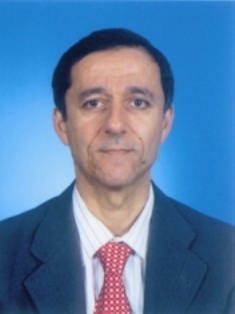
Prof. Dr. Hadi Işık Aybay is a distinguished Professor of Computer Engineering at Eastern Mediterranean University (EMU), North Cyprus. He has held academic roles including Department Chairman of Computer Engineering (1994–2004 and 2013–present) and Director of EMU's Distance Education Institute (2000–2013). He earned his PhD in Electrical and Electronic Engineering from METU (1989) and served as an Assistant/Associate Professor before becoming a full Professor in 2013. His research spans neural networks, distributed systems, and e-learning technologies. Education: PhD, Electrical and Electronic Engineering, Middle East Technical University (1989) M.Sc., Electrical and Electronic Engineering, METU B.Sc., Electrical and Electronic Engineering, METU Research Interests: Prof. Aybay's work focuses on computer engineering innovations, including neural network hardware, distributed multimedia systems, and wireless communication protocols. He pioneered EMUOnline, a blended learning platform, and contributed to science park development in North Cyprus. His research also addresses challenges in video streaming optimization and adaptive resource allocation in cellular networks. Key Achievements: He led over 15 projects, including EU-funded initiatives like 'Deep Farm' (2024–2025). His publications (80+ papers) span IEEE journals and conferences, with 281 Google Scholar citations. Awards include the 1973 National Project Contest First Prize and the 1990 Best Thesis Award (supervised). Grants and advising: Supervised 3 PhD and 28 MSc students. Current projects include AI-driven agriculture (Erasmus+). Grants include EU funding (€1M) and Turkish Republic of Northern Cyprus initiatives. Labs/Teams: Active in the EMU Computer Engineering Department's research groups, focusing on distributed systems and e-learning infrastructure.
Pattichis Marios is an Associate Professor in the Department of Electrical and Computer Engineering and Radiology at the University of New Mexico (UNM). He directs the Image and Video Processing and Communications Lab (ivPCL) and serves on the board of the FPGA Mission Assurance Center (FMAC). His research focuses on biomedical image analysis, dynamically reconfigurable architectures, and educational technology for underrepresented student groups. Education: Ph.D. in Computer Engineering (UT Austin, 1998), dual bachelor's degrees in Mathematics and Computer Sciences (UT Austin, 1991). He has taught 15 courses across multiple universities and secured $15.9M in research funding from NSF, AFRL, and NIH. Research areas include CAD systems for medical imaging, explainable AI, and large-scale video analytics in clinical and educational settings. Developed AM-FM representations for image/video features and contributed to solar image analysis methodologies. Awards: EAMBES Fellow (2022), Harrison Faculty Excellence Award (2006), Best Paper Award (AIAI06), Teacher of the Year (UNM ECE). Current projects include the AOLME educational initiative and the DRASTIC adaptive video processing platform. He edits special issues in IEEE journals and Teachers College Record.
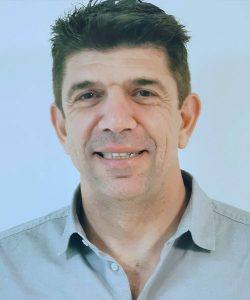
Christos Panayiotou is a Professor in the Electrical and Computer Engineering Department at the University of Cyprus (UCY) and serves as the Deputy Director of the KIOS Research and Innovation Center of Excellence. He holds a B.Sc. and Ph.D. in Electrical and Computer Engineering from the University of Massachusetts Amherst (1994 and 1999), as well as an MBA from the Isenberg School of Management. Prior to joining UCY in 2002, he was a Research Associate at Boston University's Center for Information and System Engineering. His research focuses on modeling, control, optimization, and performance evaluation of discrete event and hybrid systems, with applications in intelligent transportation systems, cyber-physical systems, machine learning, wireless networks, and smart buildings. His work has secured over €45 million in funding from national/EU agencies, governments, and private entities. He has published over 290 papers and received the 2014 Best Paper Award in Building and Environment . Editorial Roles : Associate Editor for IEEE Transactions on Intelligent Transportation Systems, IEEE Control Systems Society, and others. Leadership : General Chair of EWGT2020, Co-Chair of ECC2018, and Chair of IEEE Computational Intelligence Society subcommittees. Key projects include UAV swarm coordination for maritime surveillance, digital twin architectures for smart buildings, and resilient traffic demand management systems. His grants emphasize cyber-physical systems, energy grids, and disaster response technologies.
- Modeling
- Control Systems
- Optimization
- +۶ مورد دیگر

Andreas Spanias is a Professor in the School of Electrical, Computer, and Energy Engineering at Arizona State University (ASU). He directs the Sensor Signal and Information Processing (SenSIP) center and founded the SenSIP industry consortium (an NSF I/UCRC site). His research focuses on adaptive signal processing, speech processing, and sensor systems. He developed the Java-DSP simulation software, including award-winning mobile versions, and authored textbooks on audio processing and DSP. He has held editorial roles for IEEE Transactions on Signal Processing and served as General Co-chair for IEEE ICASSP-99 and Vice-President for Conferences in the IEEE Signal Processing Society. Research Interests: Dr. Spanias specializes in advanced signal processing techniques, including adaptive algorithms, speech enhancement, and sensor network applications. His work bridges theoretical foundations with practical implementations through software tools like Java-DSP, which has been widely adopted in academia and industry. He also contributes to audio coding standards and educational resources in DSP. Awards: 2002 IEEE Donald G. Fink Paper Prize Award IEEE Fellow (2003) IEEE Signal Processing Society Distinguished Lecturer (2004) Advising & Contributions: His student team pioneered the Java-DSP software. He has led industry collaborations through SenSIP and contributed to IEEE initiatives. No specific grants are listed in the provided text. Labs & Teams: Director of the SenSIP center, fostering interdisciplinary research with industry partners through the SenSIP consortium.
Prof. Dr. Aykut Hocanin is a faculty member in the Department of Electrical and Electronics Engineering at Eastern Mediterranean University (EMU). He holds a PhD in Electrical and Electronics Engineering from Bogazici University, an MS in Electrical Engineering from Texas A&M University, and a BS in Electrical and Computer Engineering from Rice University. PhD: 1994-2000, Bogazici University MS: 1992-1993, Texas A&M University BS: 1988-1992, Rice University Research Interests: Dr. Hocanin specializes in adaptive signal processing algorithms, wireless communication systems, and sparse system identification. His work focuses on developing efficient algorithms for impulsive noise environments and improving CDMA system performance through robust detection and interference cancellation techniques. He has contributed significantly to adaptive filtering methods, including recursive inverse algorithms and variable step-size LMS approaches. Scientific Contributions: His recent research (2020-2024) includes fast quasi-Newton adaptive algorithms and data-reuse extended NLMS techniques. Earlier work (2011-2015) explored entropy-based subspace separation, 2D recursive inverse filtering, and mobility modeling in wireless networks. He has supervised numerous graduate theses on these topics. Professional Role: As a professor at EMU, Dr. Hocanin teaches courses like INFE362 and EENG461 while maintaining active research in digital signal processing and wireless communication. He serves as an associate editor and reviewer for academic journals and conferences.
Konstantinos Katzis is an Associate Professor and Deputy Dean at the School of Sciences, Department of Computer Science and Engineering, European University Cyprus. His academic journey includes a PhD in Electronics from the University of York (2006) and prior roles as Research Associate at the University of York and Assistant Professor at European University Cyprus. Education: PhD in Electronics, University of York (2006) MSc in Radio System Engineering, University of Hull (2001) BEng in Computer Systems Engineering, University of Hull (2000) Research Interests: Dr. Katzis focuses on telecommunications, IoT applications in healthcare, medical device security, and STEM education leveraging AR/VR technologies. His work also explores wireless communication networks (e.g., HAP, TVWS), earthquake-related radio anomalies, and spectrum management for 5G and beyond. Awards: Fulbright Visiting Researcher (2018-2019) Best Paper Awards at International Conferences on Healthcare Technologies (2017) Laureate's Research Publication Award (2016) Consulting & Leadership: He serves as IEEE Standard 1900.6 Vice Chair, H2020 Programme Committee Member for Space (representing Cyprus), and advisor to the Cyprus Ministry of Transport on ESA membership. His projects include ERASMUS+ initiatives like EL-STEM and STEM-IT-UP. Labs & Collaborations: Active in the INFREP Network for studying earthquake precursors via radio signals and the MedSecurance Project for securing IoT medical devices. Collaborates with institutions like NIST (USA) and IEEE on standards development.

Theofanis Sapatinas is a Professor in the Department of Mathematics and Statistics at the University of Cyprus, within the School of Natural and Applied Sciences. He has maintained this position since 2010, following his progression from Assistant Professor (2001-2005) to Associate Professor (2005-2010) at the same institution. His educational background includes: BSc in Mathematics (1989) from the Department of Mathematics, University of Athens, Greece MSc in Statistics (1991) from the Department of Probability and Statistics, University of Sheffield, United Kingdom PhD in Statistics (1994) from the Department of Probability and Statistics, University of Sheffield, United Kingdom Professor Sapatinas has established himself as a leading researcher in several specialized areas of statistics. His primary research interests focus on Functional Data Analysis and Functional Time Series Analysis , where he has made significant contributions to methodological development and theoretical understanding. He has also conducted important work in Signal Detection and Goodness-of-Fit Checks in Ill-Positioned Inverse Problems , addressing challenging statistical problems where traditional methods fail. His research extends to Non-Parametric Regression techniques, particularly through wavelet-based approaches, and the theoretical investigation of Characteristics and Structural Properties of Probability Theoretical Distributions . Much of his work bridges theoretical statistics with practical applications, especially in signal processing and time series forecasting. Analysis of Professor Sapatinas' publication record reveals a consistent focus on functional data analysis, wavelet methods, and inverse problems. His research trajectory shows an evolution from foundational theoretical work on probability distributions to increasingly sophisticated applications in functional time series and signal detection. A notable pattern is his extensive collaboration with researchers across Europe, particularly in Greece, France, and the UK. His work frequently appears in top-tier statistics journals including Annals of Statistics, Biometrika, and Journal of the Royal Statistical Society. Over time, there's been a clear shift toward more applied problems while maintaining strong theoretical underpinnings, with recent work focusing on bootstrap methods for functional data and practical implementations in fields like power systems forecasting. Professor Sapatinas has held postdoctoral positions at the University of Exeter (1993-1996) and the University of Bristol (1996-1998), followed by a Lecturer position at the University of Kent at Canterbury (1998-2000) before joining the University of Cyprus. His research has been supported through various academic appointments and collaborations across European institutions, though specific grant information is not detailed in the available materials. As a professor, he has likely supervised numerous graduate students, though specific names are not provided in the current information.
Chris Christodoulou is a Professor in the Department of Computer Science at the University of Cyprus, where he has been working since 2005. He also maintains his position as a Visiting Research Fellow at Birkbeck College, University of London, a role he has held since 2005. His academic career spans over two decades with significant contributions to computational neuroscience and machine learning. PhD in Neural Networks/Computational Neuroscience from King's College, University of London (1997) BEng degree in Electronic Engineering from Queen Mary and Westfield College, University of London (1991) BA degree in German from Birkbeck College, University of London (2008) Christodoulou's research primarily focuses on Computational Neuroscience, Neural Networks, and Machine Learning. His work explores neural coding, the effect of high firing irregularity on learning, modeling of self-control behavior, computational neuronal modeling, and multi-agent reinforcement learning with both spiking and non-spiking agents. He applies these techniques to various domains including protein secondary structure prediction, brain MRI analysis for Alzheimer's disease detection, and computational modeling of emotional processes. Christodoulou's recent publications demonstrate a consistent focus on applying neural network techniques to biological and cognitive problems. His work spans from fundamental neural modeling (spiking neurons, neural synchrony) to practical applications in bioinformatics (protein structure prediction) and medical imaging (Alzheimer's disease detection). A notable trend is the increasing use of advanced optimization techniques like Hessian-free optimization to improve neural network performance in these domains. While specific scientific awards are not mentioned in the available information, his editorial roles for special journal issues indicate recognition within his field. Christodoulou leads the Computational Intelligence and Neuroscience research group (CIN) at the University of Cyprus. This group focuses on the intersection of computational neuroscience and artificial intelligence, particularly in developing biologically plausible neural models and applying them to real-world problems. His extensive publication record with numerous co-authors suggests active supervision of graduate students and research collaborators.
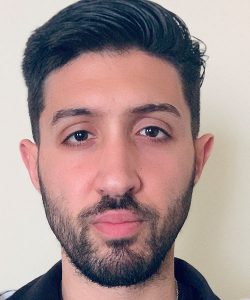
Nicolas Souliمشاهده پروفایل
پژوهشگر
Nicolas Souli serves as a Research Associate at the KIOS Research and Innovation Center of Excellence, University of Cyprus, following the completion of his doctoral studies in 2024. His academic credentials include: B.Sc. in Electrical Engineering from Cyprus University of Technology (2016) M.Sc. in Biomedical Engineering from Imperial College London (2017) Ph.D. in Electrical and Computer Engineering from University of Cyprus (2024) His research focuses on autonomous agents and software-defined radio within telecommunication networks, with significant contributions to signal processing methodologies. These areas address critical challenges in adaptive network management and intelligent spectrum utilization. As a core member of the KIOS Research and Innovation Center of Excellence, he participates in advanced research initiatives for critical infrastructure systems through interdisciplinary collaboration.
Amr Abdelbariمشاهده پروفایل
استادیار
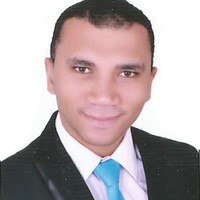
Assistant Professor Amr Abdelbari is affiliated with the Data Analytics Engineering Department at Near East University. His research focuses on wireless communication systems, signal processing, and machine learning applications in telecommunications. Academic Rank: Assistant Professor University: Near East University Department: Data Analytics Engineering Research interests include: Massive MIMO and 5G network optimization Direction-of-Arrival (DOA) estimation techniques Machine learning for wireless communication IoT applications in civil engineering Probabilistic and fuzzy logic-based signal processing Recent publications (2020-2025) demonstrate expertise in wideband signal processing, NOMA systems, and error probability modeling. Key trends in his work include integrating fuzzy logic for network optimization, improving DOA estimation for 5G systems, and applying neural networks to renewable energy modeling. Contact: amr.abdelbari@neu.edu.tr

Dr. Andreas Artemiou serves as Professor, Vice Rector for Academic Affairs and Quality Assurance, and Dean of the Technology and Innovation School at the University of Larnaca's Department of Information Technologies. His leadership spans academic administration and cutting-edge statistical research with global collaborations. His academic foundation includes: BSc in Mathematics and Statistics from University of Cyprus (2005) MSc and PhD in Statistics from Pennsylvania State University (2008, 2010) Artemiou's research pioneers statistical methods for high-dimensional datasets, specializing in dimension reduction, kernel techniques, and machine learning applications. His work bridges theoretical innovation with practical implementations across engineering, computer science, and medical sciences, particularly evident in pandemic-related mortality analysis and cytometry data processing. Recent publications (2021-2024) reveal accelerating focus on SVM-based dimension reduction, sparse modeling, and medical applications. The trajectory shows increasing interdisciplinary impact, with 2024 works emphasizing matrix data analysis and time-series dimension reduction for real-world health crises. His professional recognition includes: New Researcher Fellow at Statistics and Applied Mathematical Sciences Institute Artemiou actively contributes to major collaborative initiatives without explicit grant details. His editorial role at Computational Statistics and Data Analytics journal and board membership in the European Statistical Computing Association highlight academic leadership. Current projects drive innovation in cytometry analysis and pandemic mortality modeling. He directs CytoPy - an autonomous cytometry analysis framework - and leads pandemic mortality research through the international CMOR consortium, demonstrating commitment to translating statistical theory into public health solutions.

Hui Hong is a Professor at the School of Electronics and Information, Hangzhou Dianzi University. His research focuses on hybrid intelligence systems, bionic intelligence hardware, and mixed-signal integrated circuits (IC). Education: Ph.D. in Electronic Science and Technology (2007), Zhejiang University, China Research Interests: Explores interdisciplinary areas combining artificial intelligence with hardware design. Specializes in developing adaptive hybrid intelligence systems that integrate biological-inspired principles with electronic systems. Active in advancing mixed-signal IC technologies for efficient signal processing applications. No articles, awards, grants, or lab affiliations explicitly listed in the provided text.

Daniel Cohen-Or is a Professor at the Department of Computer Science, Tel Aviv University, and an Adjunct Professor at Simon Fraser University since 2016. He holds the Isaias Nizri Chair in Visual Computing . His academic background includes a B.Sc. and M.Sc. from Ben-Gurion University (1985-1986) and a Ph.D. from SUNY Stony Brook (1991). Research Interests: Focused on Computer Graphics, Visual Computing, and Geometric Modeling , with a current emphasis on generative models and their applications in 3D shape manipulation, image editing, and diffusion-based techniques. Scientific Awards: Eurographics Outstanding Technical Contributions Award (2005) ACM SIGGRAPH Computer Graphics Achievement Award (2018) Thomson Reuters Highly Cited Researcher (2015) Kadar Family Award (2019) Eurographics Distinguished Career Award (2020) People’s Republic of China Friendship Award (2012) Notable Contributions: Co-edited A Sampler of Useful Computational Tools for Applied Geometry, Computer Graphics, and Image Processing . His work spans 3D reconstruction, texture synthesis, shape modeling, and semantic image editing, with a focus on leveraging deep learning frameworks like StyleGAN and NeRF. Advising: Mentoring numerous students and postdocs, including Or Patashnik, Yuval Alaluf, and Ron Mokady, with a strong presence in both current and former advisees .
- Computer Graphics
- Visual Computing
- Geometric Modeling
- +۱۵ مورد دیگر