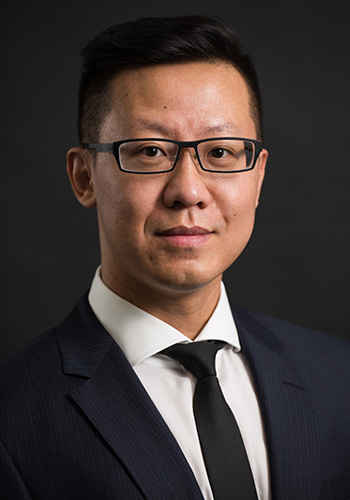
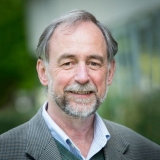
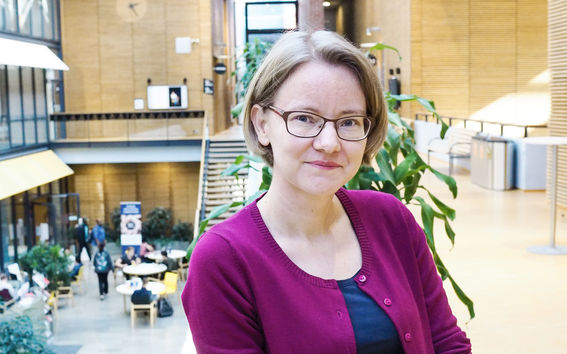
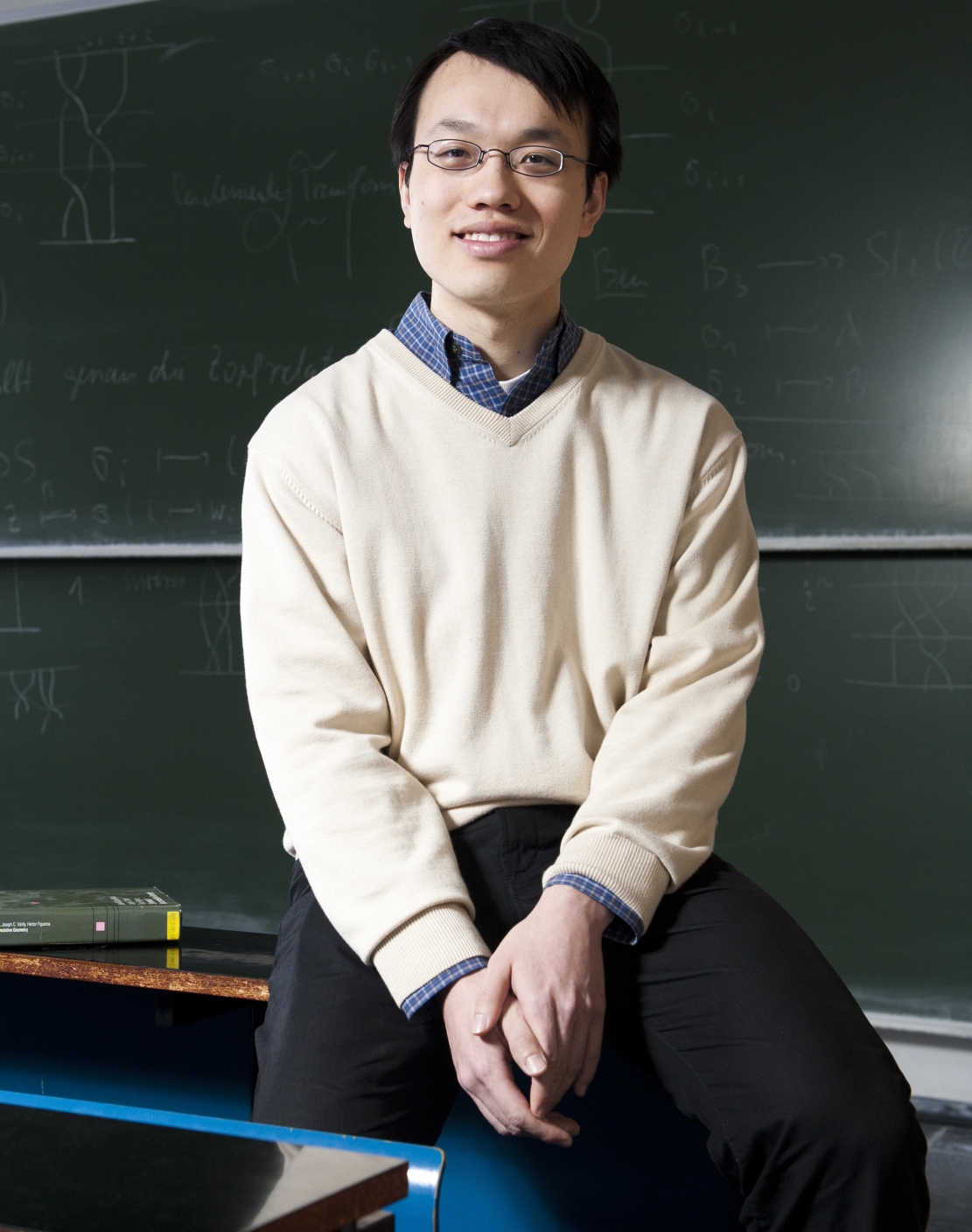
Dr. Miao Pan is an Associate Professor in the Department of Electrical and Computer Engineering at the Cullen College of Engineering, University of Houston. He directs the PAN Lab (panlab.ece.uh.edu) focusing on wireless networking, security, and IoT applications. His educational background includes a B.S. in Electrical Engineering from Dalian University of Technology (2004), M.S. from Beijing University of Posts and Telecommunications (2007), and Ph.D. from the University of Florida (2012). Dr. Pan's research spans privacy-preserving deep learning, wireless networking, machine learning applications in communications, underwater systems, and cognitive radio networks. His interdisciplinary approach combines theoretical foundations with practical implementations in emerging technologies. Recent publications demonstrate strong focus on federated learning optimizations, wireless sensing innovations, and security mechanisms for next-generation systems. Key trends include energy-efficient mobile AI, robust authentication methods, and adaptive underwater networking solutions. Honors include: NSF CAREER Award (2014) 5 IEEE Best Paper Awards (2015-2019) University of Florida Graduate Fellowship (2007) He leads multiple federally funded projects and advises graduate researchers in wireless systems and security. The PAN Lab collaborates with industry partners to translate research into practical solutions for IoT and 5G/6G networks.
Praveen Tripathi is a Research Assistant Professor in the Department of Computer Science at Stony Brook University. His research focuses on Machine Learning, Data Mining, Spatio-Temporal Data Analysis, and Time Series Data Analysis. He has contributed to trajectory analysis frameworks, recommendation systems with temporal influence, and optimization algorithms. While his biography section is not detailed here, his work emphasizes practical applications of spatio-temporal data and multi-objective optimization. Awards are listed in the menu but specific details are not provided in the text. His publications span cybersecurity, trajectory analysis, and financial market dynamics, reflecting a strong interdisciplinary approach. No advising or grant information is explicitly mentioned in the provided content.
Patrick McCormick is an Assistant Professor and Assistant Scientist in the Department of Electrical Engineering and Computer Science (EECS) and the Institute for Information Sciences (I2S) at the University of Kansas. He joined the university in 2021 after working at the Air Force Research Laboratory - Sensors Directorate (2018-2021). His research focuses on RF systems, signal processing, and waveform design for radar and communication systems. B.S. Mechanical Engineering, University of Kansas (2008) B.S. Electrical Engineering, University of Kansas (2013) Ph.D. Electrical Engineering, University of Kansas (2018) McCormick’s research areas include optimal emission design, multifunction transmissions, hardware characterization/compensation, and adaptive model-based parameter estimation. He leads the Radar Systems and Remote Sensing Laboratory (RSL) and has published extensively in radar waveform diversity, spectrum sharing, and adaptive signal processing. Recent work trends emphasize dual-function radar-communications co-design, low-cost systems, nonlinear hardware characterization, and digital array optimization. His publications span topics like waveform optimization, mutual coupling compensation, and power-efficient joint systems. IEEE Aerospace and Electronic Systems Society 2018 Robert T. Hill Best Dissertation Award He advises graduate students and collaborates with researchers at institutions like the Air Force Research Laboratory (AFRL), University of Oklahoma (OU), and international conferences. His service includes conference chairs, special session organization, and journal reviewing for IEEE Transactions on Signal Processing and Aerospace Systems. McCormick holds memberships in IEEE, Signal Processing Society, and Young Professionals. His lab seeks motivated graduate students for research in radar waveform design and RF systems.
Dr. Michael P. Barry is the Associate Director for Translational Research and a Senior Research Fellow at the Pritzker Institute of Biomedical Science and Engineering, Illinois Institute of Technology. His work focuses on neuroprosthetic design, artificial vision systems, and low-vision rehabilitation. He earned a PhD in Biomedical Engineering from Johns Hopkins University (2018) and a B.A./M.S. in Neuroscience from the same institution (2010). His research includes pioneering contributions to the Argus II retinal prosthesis and the Intracortical Visual Prosthesis (ICVP), emphasizing psychophysical evaluations and device optimization. Dr. Barry has published over 40 peer-reviewed articles and holds a patent for spatial fitting by percept location tracking (2018). He received the Envision-Atwell Award for Low Vision Research in 2017. Key projects include managing the RES-MATCH program for IIT undergraduates and advancing thermal imaging and distance-filtering systems to enhance prosthetic vision. His work integrates neurophysiological studies, clinical trials, and software development to improve visual perception for blind individuals. Collaborations span academic institutions and industry partners like Second Sight Medical Products. Professional memberships include the Association for Research in Vision and Ophthalmology (2010–2020, 2023–2024) and the Society for Neuroscience (2019, 2023). Current research emphasizes optimizing ICVP performance through EEG recordings and electrode stability analysis, while exploring applications in mobility assistance and environmental interaction.
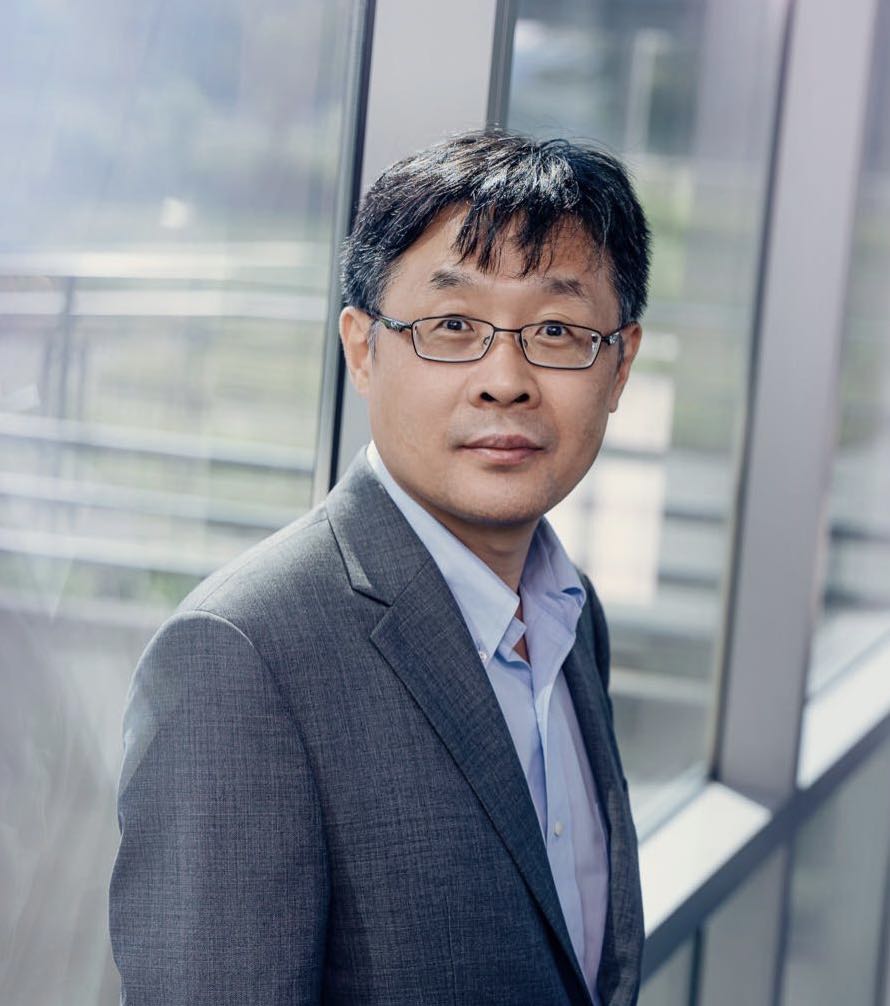
Harrison Huibin Zhou is the Henry Ford II Professor of Statistics and Data Science at Yale University. He has held leadership roles, including Department Chair of Statistics and Data Science (2018–present) and former Chair of Statistics (2012–2017). His academic career at Yale spans over two decades, with promotions from Assistant Professor (2004–2009) to Associate (2009–2010) and full Professor (2010–present). Research Interests: Dr. Zhou specializes in high-dimensional statistical theory, including nonparametric estimation, minimax theory, and applications in network analysis, machine learning, and functional data analysis. His work bridges theoretical foundations with computational methods, addressing challenges in modern statistical decision-making. Publications: His recent work focuses on spectral clustering, quantum state tomography, and optimal estimation in high-dimensional models. Notable contributions include theoretical guarantees for algorithms like the EM method in Gaussian mixtures and advancements in community detection in networks. Teaching: He teaches advanced courses such as Functional Data Analysis, Nonparametric Estimation, and Decision Theory, reflecting his expertise in statistical methodology and theory. Professional Service: Organized workshops on topics like Empirical Processes (2015) and High-Dimensional Data (2012), underscoring his role in fostering academic collaboration.
Dr. Mikael Eklund is a Professor in the Department of Electrical, Computer and Software Engineering at Ontario Tech University, within the Faculty of Engineering and Applied Science. He holds a PhD (2003), MSc (1996), and BSc (1989) in Electrical and Computer Engineering from Queen’s University. His research focuses on Autonomous Systems , Nonlinear System Identification and Control , Health Informatics , and Pervasive and Mobile Computing . He has expertise in medical image processing, robotic vehicles, and smart sensors for assisted living. Education and Work Experience : - PhD (Electrical and Computer Engineering), Queen’s University (2003) - MSc and BSc from Queen’s University (1996, 1989) - Visiting Postdoctoral Scholar at UC Berkeley (2003–2006) - Adjunct Assistant Professor at Queen’s University (2003) - Former Teaching Fellow at Queen’s University (1996–2001) - Industrial experience in flight control system engineering (CAE Inc., 1989–1996) Research Contributions : - Developed SensorNet, a wireless infrastructure for assisted living. - Advanced methods for nonlinear system identification in chemical processes and aerospace systems. - Pioneered real-time UAV safety protocols and model predictive control algorithms for aerial pursuit-evasion games. - Explored EMG signal processing for hand force estimation and MEG signal source localization in neuroscience. Teaching and Outreach : - Teaches courses like Medical Image Processing and Electric Circuits. - Active in interdisciplinary projects like the ITALH initiative for elder tech integration. - Presented at conferences such as IEEE EMBC, ACC, and CDC, emphasizing healthcare IT and autonomous systems.
H.F. Machiel Van der Loos is an Associate Professor and Associate Head – External at the Department of Mechanical Engineering, University of British Columbia. He holds a PhD from Stanford University (1992) in human-robot interaction and a Diplôme d'Ingénieur from École Polytechnique Fédérale de Lausanne (EPFL). As Director of the CARIS Lab, his research focuses on rehabilitation robotics, roboethics, design methodology, and human-robot interaction in industrial contexts. He has authored over 50 peer-reviewed journal articles and 100 conference papers, and serves as Associate Editor for the Journal of Assistive Technology . His teaching includes core design courses such as the Capstone Design Project and cross-disciplinary 'Designing for People' courses spanning Computer Science, Applied Science, and Library Science. Van der Loos organized major conferences including IEEE ICORR 2013 and ICED17 at UBC. His work includes developing assistive technologies like power-assisted wheelchairs, AR interfaces for human-robot collaboration, and rehabilitation robots. The CARIS Lab emphasizes ethical considerations in corporeal robotics and user-centered design principles. Current research projects involve multimodal robot programming through AR, gesture-based interaction, and adaptive wheelchair control systems. His lab has collaborated with industry partners like JDQ Systems Inc. and Tableau to advance practical robotics solutions.
Clayton Scott is a Professor of Electrical Engineering and Computer Science (EECS) at the University of Michigan, with a courtesy appointment in Statistics. He holds a joint appointment in the College of Engineering and is affiliated with MIDAS, AI Lab, and the Center for Computational Medicine and Bioimaging (CCMB). His research focuses on statistical machine learning theory and algorithms, with applications in medical imaging, nuclear engineering, climate science, and clinical diagnostics. He actively collaborates with researchers in psychiatry, nuclear engineering, and radiology. Education: PhD in Electrical Engineering (Rice University, 2004), MS (Rice, 2000), AB in Mathematics (Harvard, 1998). He teaches courses in machine learning (EECS 545), signal processing, and statistical methods. His work emphasizes developing scalable algorithms with theoretical guarantees, particularly in domains like functional neuroimaging, nuclear particle classification, and sepsis prediction. He advises ~1 PhD student annually and has mentored over 20 students. His grants include NSF, NIH, and DOE funding, focusing on topics like domain adaptation, label noise, and medical image registration. His lab develops open-source tools for robust kernel methods, mixture proportion estimation, and partial mixture modeling.
Dr. Yulong Gao is an Assistant Professor in the Department of Electrical and Electronic Engineering at Imperial College London, affiliated with the Control and Power Research Group. He holds a B.E. in Automation from Beijing Institute of Technology (2013), M.E. in Control Science & Engineering (2016), and a joint Ph.D. in Electrical Engineering from KTH Royal Institute of Technology and Nanyang Technological University (2021). He has held postdoctoral positions at Oxford University and KTH. His research focuses on formal verification and control, machine learning, and their applications to safety-critical systems, including autonomous systems and control synthesis under uncertainty. His work emphasizes robust control strategies, data-driven optimization, and formal methods to ensure safety in dynamic systems. Recent publications address challenges in autonomous vehicle motion planning, risk-aware Bayesian neural networks, and adaptive task planning using temporal logic. He has contributed to stochastic modeling, distributed MPC, and resilient control under cyber-physical threats. Research affiliations include the Control and Power Research Group at Imperial College London, leveraging interdisciplinary collaboration to advance theoretical and applied control systems research.
Professor Elias Aboutanios is a distinguished academic at the University of New South Wales (UNSW), serving as Professor in the School of Electrical Engineering and Telecommunications. With a career spanning over two decades in academia and research, he has established himself as a leading expert in signal processing, radar systems, satellite technology, and NMR spectroscopy. Professor Aboutanios earned his BE in Electrical Engineering from UNSW in 1997 and completed his PhD from UTS in 2002, with research focused on frequency estimation for communications with low earth orbit satellites. Following his doctoral studies, he conducted postdoctoral research at the Institute for Digital Communications at the University of Edinburgh from 2003 to 2007, specializing in space-time adaptive processing for radar target detection. He joined UNSW as a senior lecturer in 2007, was promoted to associate professor in 2019, and achieved the rank of Professor in 2022. His research interests span a broad spectrum of signal processing domains including signal and image processing, parameter estimation, array signal processing, statistical signal processing, positioning and localization, radar and sonar signal processing, NMR signal processing, and space systems. Professor Aboutanios has developed significant expertise in nuclear magnetic resonance spectroscopy, global navigation satellite systems, radar target detection, biologically inspired signal processing, power systems and smart grids, and theoretical signal processing. His work bridges theoretical foundations with practical applications across multiple engineering disciplines. Professor Aboutanios's recent publications demonstrate a strong focus on integrated sensing and communication systems, radar technology, satellite applications, and advanced signal processing techniques. His research shows a clear trajectory toward dual-function radar-communication systems, massive MIMO architectures, CubeSat technology for air traffic monitoring, and innovative approaches to NMR spectroscopy. His work consistently addresses challenging problems in signal parameter estimation, adaptive processing, and system design across multiple application domains. Professor Aboutanios has made significant contributions to engineering education, having developed new courses in electrical engineering design and established the master's program in satellite systems engineering. His educational innovations focus on teaching signal processing through frequent and diverse design experiences, enhancing student learning outcomes in technical subjects. He has led significant space projects including UNSW's involvement in the European QB50 project and the UNSW-EC0 satellite mission, which successfully launched in 2017. As a member of the Space Industry Association of Australia's Legislation Working Group, he has contributed to shaping space policy through multiple submissions to the Australian Government's review of the Space Activities Act.
Auguste Genovesio is a Research Director (DR INSERM) leading the Computational Bioimaging and Bioinformatics team at the Centre for Computational Biology within the École Normale Supérieure (ENS) in Paris. His work focuses on large-scale cellular morphology analysis, integrating machine learning, microscopy, and computational modeling to study cellular responses to perturbations. His team develops algorithms for analyzing high-dimensional biological data, with applications in drug discovery, functional genomics, and neuroscience. Education and Affiliations: Genovesio’s research is anchored at ENS and collaborates with institutions like Institut Curie, Collège de France, and ESPCI. His lab develops open-source tools such as PySpacell and ALFA , advancing spatial analysis and genomic data processing. Research Interests: His group combines deep learning, bioinformatics, and experimental biology to tackle challenges in cellular dynamics, morphological heterogeneity, and predictive modeling. Recent work includes applying diffusion models to reveal subtle phenotypes and optimizing microscopy image analysis pipelines. Key Projects: Cross-modal knowledge distillation for transcriptomics, latent diffusion models for small datasets, and super-resolution microscopy via StyleGAN regularization. Applications: Collaborations in drug screening, neurobiology (e.g., Drosophila memory studies), and cancer cell analysis. Publications: Over 50 peer-reviewed articles since 2007, including work in Nature Communications , Developmental Cell , and NeurIPS . Recent focus on generative AI for biological image analysis and self-supervised learning biases. Grants & Awards: While specific grants aren’t listed, his lab’s cutting-edge research suggests significant institutional and collaborative support. No explicit awards mentioned in texts. Labs/Teams: Director of the Computational Bioimaging group, part of the Functional Genomics section at ENS. Supervises PhD students and postdocs in AI-driven biology and computational microscopy.
Dr. Wei Dai is a Senior Lecturer (Associate Professor) in the Department of Electrical and Electronic Engineering at Imperial College London, part of the Faculty of Engineering. He holds affiliations with the EPSRC Centre for Maths of Precision Healthcare and the Communications and Signal Processing group. His research focuses on sparse signal processing, machine learning applications in signal processing, linear and bilinear inverse problems, wireless communications, and random matrix theory. Notably, he contributed to the first compressive sensing DNA microarray prototype and has a highly cited 2009 paper on compressive sensing reconstruction. Dr. Dai's educational background includes a Ph.D. in Electrical and Computer Engineering from the University of Colorado at Boulder (2007) and postdoctoral research at the University of Illinois at Urbana-Champaign (2007-2010). His work bridges theoretical signal processing with practical applications in sensing, communication systems, and biomedical signal analysis. He leads research initiatives in gridless DOA estimation, robust beamforming, and cortico-muscular coupling analysis using advanced optimization techniques. His research outputs span topics like spectral compressed sensing, Bayesian methods for integrated sensing-communication systems, and dictionary learning for causal discovery. Ongoing work emphasizes low-rank matrix recovery, distributed compressed sensing, and mathematical frameworks for super-resolution localization. Dr. Dai collaborates across disciplines, leveraging signal processing innovations for healthcare technology and next-generation wireless systems.
University Lecturer Anu Lehtovuori is affiliated with the Department of Electronics and Nanoengineering at Aalto University, where she actively bridges teaching and research. Her roles encompass academic teaching, project leadership, grant writing (e.g., Academy of Finland applications), and collaboration with doctoral students. She specializes in cutting-edge topics such as antenna design for 5G/6G systems, reconfigurable MIMO architectures, and RF technology for mobile devices. Her research focuses on optimizing antenna performance in compact environments, mitigating interference, and enhancing wireless communication efficiency. Notable areas include wideband antenna systems, decoupling techniques for multi-element arrays, and adaptive antenna-amplifier integration. Lehtovuori emphasizes practical applications, addressing challenges like user interaction effects on mobile antenna performance and minimizing electromagnetic emissions. Research Trends: Dominant themes include 6G IoT antenna solutions, mmWave component integration, and reconfigurable systems leveraging mutual coupling. Grants: Actively pursuing funding through initiatives like the Academy of Finland. Her contributions span both theoretical advancements (e.g., bandwidth optimization algorithms) and industrial applications (e.g., antenna cluster techniques for full-screen smartphones). While no specific awards are documented, her work reflects a strong focus on impactful, industry-relevant innovations.
Professor Xin Li is the Chair of Mathematical Analysis at the School of Mathematics & Statistics, University of Glasgow. His research focuses on interdisciplinary areas at the intersection of mathematical analysis, wireless communication systems, and blockchain technology. He holds a faculty position with expertise in reconfigurable intelligent surfaces (RIS), signal processing, and network optimization. Recent publications highlight his work on RIS-aided information-sensing integrated systems (ISAC), blockchain-based consensus networks in cellular environments, and adaptive beamforming techniques for multipath communication. His research emphasizes practical applications of theoretical mathematical models in telecommunications and distributed systems. Prof. Li's work demonstrates trends in integrating mathematical analysis with emerging technologies like millimeter-wave systems and Byzantine fault tolerance mechanisms. His contributions bridge pure mathematical rigor with real-world communication challenges, addressing both theoretical and applied aspects of modern wireless networks. He currently oversees academic activities within the School of Mathematics & Statistics and maintains an active research program supported by interdisciplinary collaborations. His contact information includes Xin.Li@glasgow.ac.uk and ORCID 0000-0002-2243-3742.
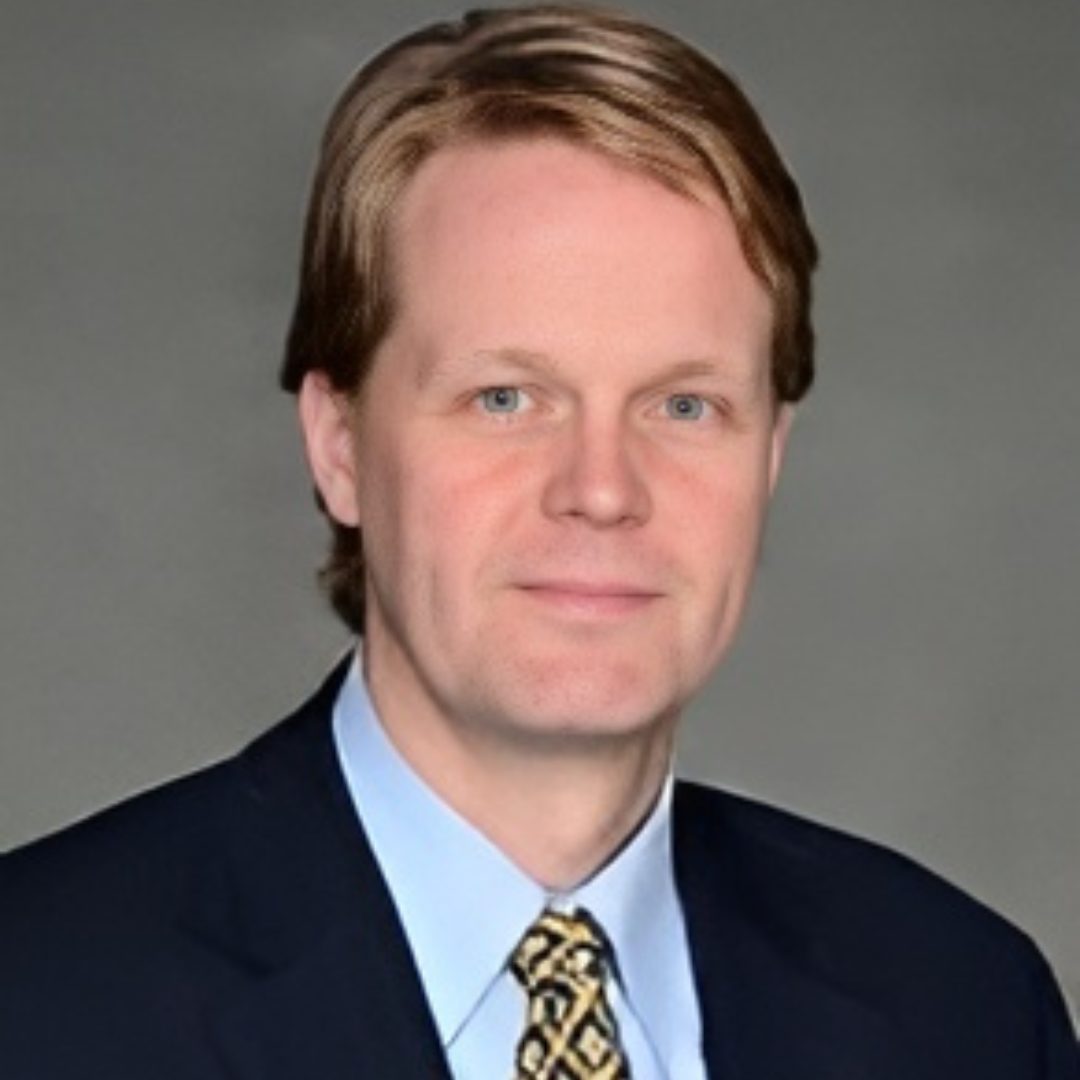
Mattias Villani is Professor of Statistics at Stockholm University, specializing in Bayesian statistics and machine learning. He obtained his PhD in Statistics from Stockholm University in 2000 and has held positions at Sveriges Riksbank and Linköping University. Villani develops computationally efficient Bayesian methods for inference, prediction and decision-making with flexible probabilistic models. Research Interests: His work spans Bayesian computation (MCMC, HMC, variational inference), machine learning (Gaussian processes, mixture models), and applications in neuroimaging, transportation, and econometrics. Research focuses on scalable Bayesian methods for large datasets and complex models. Publication Focus: Recent articles concentrate on Bayesian neuroimaging analysis, transportation network modeling, and efficient MCMC algorithms. Methodological innovations in subsampling techniques for large-scale Bayesian computation represent a significant research trend. Student Advising: Supervises PhD students in statistical methodology development and applications. Current research groups focus on spatiotemporal modeling, locally stationary processes, and neuroimaging statistics.