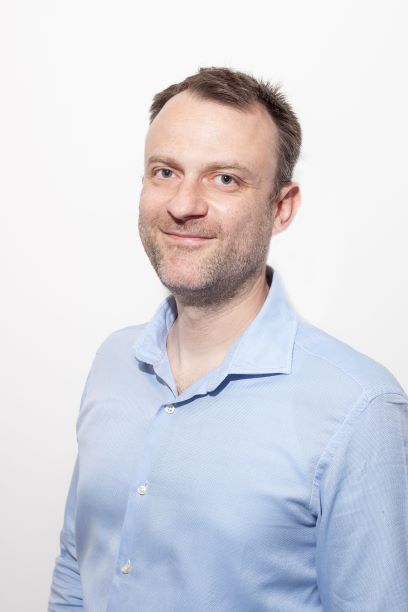
Amalia Foka is an Assistant Professor in Computer Science Applications for the Arts at the Department of Fine Arts & Art Sciences , School of Fine Arts , University of Ioannina , Greece. She has held academic positions at the University of Patras (2005-2013), University of Ioannina (2005-2008), and Computer Technology Institute & Press "Diophantus" (2014-2015). Her research bridges Artificial Intelligence with Digital Art , focusing on Generative AI , Social Media Mining , and Human-Computer Interaction within artistic contexts. Education: BEng in Computer Systems Engineering (1998) from the University of Manchester Institute of Science & Technology (UMIST) , UK MSc in Advanced Control (1999) from UMIST PhD in Robotics (2005) from the Department of Computer Science , University of Crete Her artistic research includes projects like Bushwalking (StyleGAN2 landscape generation), Breaking the Silence (NLP analysis of taboo topics), and The Invisible Structures of the Artworld (social media-driven network visualization). She leads the Multimedia Lab at the University of Ioannina, focusing on AI in Creative Processes and Digital Interaction methodologies.
Athanasios Rontogiannis is an Associate Professor at the School of Electrical and Computer Engineering of the National Technical University of Athens (NTUA). He holds a PhD in Signal Processing from the National University of Athens (1997) and has held roles including Research Director at the National Observatory of Athens (2017–2021). His research focuses on signal processing, machine learning, and hyperspectral image analysis. Education: MEng (Electrical Engineering, NTUA, 1991), M.A.Sc. (University of Victoria, Canada, 1993), PhD (Signal Processing, National University of Athens, 1997). Research interests include adaptive algorithms, sparse representations, and tensor models. He has served on editorial boards of IEEE Transactions on Signal Processing and EURASIP journals, receiving an honorary distinction in 2020. He is a Senior Member of IEEE and affiliated with EURASIP and the Technical Chamber of Greece. Key contributions span hyperspectral unmixing, Bayesian algorithms, and space data exploitation. His work integrates machine learning for applications in space science and signal processing.
Yannis Stylianou is Professor of Speech Processing at University of Crete and Senior Research Scientist at Apple. Former positions include AT&T Labs Research, Bell-Labs, and Toshiba Cambridge Research Lab. IEEE Fellow with PhD from ENST-Paris and over 200 publications. Research spans: Adaptive speech/audio modeling Neural speech synthesis/enhancement Biomedical signal processing Awards include: IEEE Fellowship French Ministry Research Fellowship ENST Graduate Scholarship Recent work focuses on neural TTS architectures, intelligibility enhancement, and multimodal synthesis. Organizes annual International Summer School on Speech Processing.
Labros Bisdounis is a Professor at the Department of Electrical and Computer Engineering, University of the Peloponnese, Greece. He previously held positions at the Technological Educational Institute of Western Greece, including Associate Professor, Full Professor, and Dean of the School of Technological Applications (2016–2018). He has extensive industry experience as a senior research engineer and project manager at Intracom S.A. (2000–2008), focusing on VLSI circuits and telecom applications. His research interests include CMOS circuit timing/power modeling, low-power/high-speed design, MOSFET modeling, and sensor applications. He has authored over 30 papers with 740+ citations and is an IEEE member. Education: Diploma in Electrical Engineering (1992), University of Patras Ph.D. in Electrical Engineering (1999), University of Patras Research Interests: CMOS circuit timing and power dissipation modeling Deep-submicron/nano-CMOS circuit design MOSFET device modeling Low-power embedded systems and SoC Sensor applications and organic electronics Leadership Roles: Dean of the School of Engineering, University of the Peloponnese (2023–present) Director of Training & Lifelong Learning Centre (2019–2019) Board Member, Hellenic NARIC (2016–2019) Collaborations: Active at the Hellenic Open University as a tutor in Computer Architecture and Digital Systems modules. Co-developed the AETHER framework for pervasive computing and contributed to energy-aware SoC designs for 5 GHz WLANs.
George N. Karystinos is currently a Professor and Dean of the School of Electrical and Computer Engineering at the Technical University of Crete , Greece. He joined TUC in 2005 and was promoted to full Professor in 2019. His academic journey began with a Ph.D. in Electrical Engineering from SUNY Buffalo (2003) and a Diploma in Computer Engineering and Science from the University of Patras (1997). Specialty: Communication theory, coding theory, adaptive signal processing Key research areas: Wireless communications, signal waveform design, L1-norm principal component analysis Leadership: Dean of School of ECE (2021–present) His work focuses on noncoherent detection for RFID/IoT systems and L1-norm PCA for robust signal processing. Recent publications explore power line communication and low-complexity sequence detection . Scientific Awards: 2003 IEEE Transactions on Neural Networks Outstanding Paper Award 2001 IEEE ICT Best Paper Award 2018 IEEE MOCAST Best Student Paper Award 2015 IEEE ICASSP Best Student Paper Award 2013 IEEE ISWCS Best Paper Award 2011 IEEE RFID-TA Second Best Student Paper Award He is affiliated with the Telecommunications Laboratory at TUC and has supervised award-winning research in wireless systems and signal processing.
Dimitris Maroulis is a Professor at the Department of Informatics and Telecommunications, University of Athens, leading the Real-Time Systems and Image Analysis Lab (RTS-image). With over 20 years of experience in data acquisition and real-time systems, and 15 years in image/signal analysis, he collaborates extensively with Greek and European hospitals in biomedical informatics. He has led 5 R&D projects and authored 150+ papers with 1400+ citations. University of Athens: Professor (2000–present) Meudon Observatory: Research Fellow (3 years) & Long-term Collaborator (10+ years) Research Interests focus on real-time systems , image/signal processing , and biomedical applications . Key areas include automated segmentation of proteomic images, noise removal methods, and stereo image coding. His 15 most recent publications (2003–2012) span 3D imaging , medical image analysis , and biomedical informatics , with sub-fields like autostereoscopic displays, wavelet-based coding, and computer-aided diagnosis. Awards : Best Paper Award (2012: Integral Image Analysis) Projects include European and national R&D initiatives in image analysis and real-time systems. Labs : RTS-image Lab develops methodologies for biomedical and proteomic applications.
Athanasios D. Panagopoulos is a Full Professor at the School of Electrical and Computer Engineering, National Technical University of Athens (NTUA), specializing in Satellite & Space Communications , Antennas and Propagation , and Quantum Communication . He leads the Division of Information Transmission Systems and Material Technology, with a focus on wireless systems, machine learning, and 5G/6G technologies. Born in Athens (1975), received summa cum laude Diploma and Dr. Engineering from NTUA (1997, 2002). Former roles: part-time Assistant Professor (2003-2007), head of Satellite Division at Hellenic Authority for Information Security (2005-2008). Research Trends emphasize Quantum Key Distribution (QKD) , Reconfigurable Intelligent Surfaces , and Deep Learning Applications in satellite networks. His work bridges atmospheric propagation effects with terrestrial-satellite convergence , including AI-driven excess attenuation prediction and UAV channel modeling. Scientific Awards include URSI General Assembly Young Scientist Award (2002, 2005) Best Paper Awards: IEEE RAWCON 2006, IEEE ISWCS 2015 Grants & Collaborations : Principal Investigator for EU/ESA R&D programs, with editorial roles at IEEE Transactions on Antennas and Propagation, and Elsevier Physical Communication. Member of ITU-R , ETSI Study Groups , and IEEE (Senior) .
George Alexandropoulos is an Associate Professor at the Department of Informatics and Telecommunications, National and Kapodistrian University of Athens. His research focuses on telecommunications, signal processing, and reconfigurable intelligent surfaces (RIS) for next-generation wireless networks. He has contributed to advancements in integrated sensing and communications (ISAC), 6G technologies, and holographic beamforming. His work includes experimental validation of RIS prototypes, optimization of RIS-assisted systems, and analysis of secure communication strategies. Research interests include RIS hardware design, channel modeling, and applications in IoT, UAV communications, and disaster recovery networks. He explores topics like energy-efficient RIS operation, multi-RIS coordination, and RIS-enabled localization. His studies often address challenges at sub-THz frequencies, mutual coupling effects, and hardware impairments. Publications emphasize practical implementations of RIS in both indoor and outdoor settings, with a focus on real-world performance evaluation. Awards and grants are not explicitly mentioned, but his extensive publication record indicates significant academic contributions. His research often integrates machine learning for RIS configuration and reinforcement learning for resource optimization in dynamic networks.
Dr. Zacharakis Giannis is a Research Professor and Research Director at the Institute of Electronic Structure and Laser (IESL) of the Foundation for Research and Technology (FORTH). He heads the Laboratory for Biophotonics and Molecular Imaging, focusing on developing advanced imaging technologies for biomedical and cultural heritage applications. He served as Vice President and President of the European Society for Molecular Imaging (ESMI) and holds leadership roles at FORTH. Education: BSc in Physics (1997), PhD in Biomedical Imaging (2002), both from the University of Crete. Postdoctoral Research Fellow at Harvard University (2003-2004). Research Interests: Biophotonics, optoacoustic imaging, biomedical optics, and non-invasive diagnostic tools. His work spans label-free imaging techniques, hybrid microscopy systems, and applications in healthcare, art conservation, and plant biology. Key Achievements: Over 60 peer-reviewed journal articles, 48 conference papers, 2 book chapters, 2 patents, and an h-index of 19 (Google Scholar). Awards include 3 first prizes at international conferences and 20+ invited talks globally. Labs & Groups: Leads the Biophotonics and Molecular Imaging Lab at FORTH-IESL, collaborating on projects like optical projection tomography, adaptive light-sheet microscopy, and optoacoustic technologies for cultural heritage diagnostics.
Christos Diou is an Associate Professor of Artificial Intelligence and Machine Learning at the Department of Informatics and Telematics, Harokopio University of Athens, Greece. His academic career spans over 15 years of participation in national and international research projects, with a focus on machine learning algorithms, domain generalization, causal inference, and bias mitigation. He earned a BSc and Ph.D. in Electrical and Computer Engineering from Aristotle University of Thessaloniki. His research emphasizes the application of machine learning to healthcare, addressing challenges such as visual bias mitigation, causal effect estimation from observational data, and fairness-aware representation learning. Notable projects include REBECCA and RELEVIUM , both EU-funded, and MELIORA , targeting lifestyle interventions for breast cancer risk reduction. He has published extensively in top-tier venues like IEEE TPAMI, CVPR, and ICCV. Christos is a leading voice in AI ethics and healthcare innovation, with over 150 publications and best paper awards at IEEE Big Data Service 2023 and AIAI 2022. His work includes developing platforms like Effector for feature effects and Beam for behavior studies. He collaborates with institutions such as Karolinska Institutet and CERTH/ITI, and his students include PhD candidates Ioannis Sarridis and Aristotelis Ballas.
Professor Dimitra Kaklamani is a distinguished faculty member at the School of Electrical and Computer Engineering at the National Technical University of Athens (NTUA), where she serves as a Professor in the Division of Information Transmission Systems and Material Technology. With over 300 publications to her name, she has established herself as a leading researcher in microwave engineering, wireless communications, and computational electromagnetics, having progressed through academic ranks from Lecturer (1995) to Professor (2009). Her research spans numerous critical areas in electrical engineering: Microwave Theory and Techniques Wireless Communications and MIMO Systems Computational Electromagnetics Object-Oriented and Distributed Computing Security & Privacy in Networked Systems Machine Learning Applications in Telecommunications Professor Kaklamani's research trajectory demonstrates a natural evolution from traditional microwave engineering toward cutting-edge areas like AI-enabled wireless communications and privacy-preserving network architectures. Her recent work (2023-2025) shows particular focus on intelligent metasurfaces for wireless communications, federated learning applications in next-generation networks, and security aspects of 5G/6G systems. This reflects both continuity with her foundational work in computational electromagnetics and adaptation to emerging technological frontiers. She serves as Editor of an international book by Springer-Verlag (2000) in applied Computational Electromagnetics and regularly reviews for IEEE journals, demonstrating her standing in the scholarly community. Her teaching portfolio is equally comprehensive, ranging from foundational courses like Linear Circuits Analysis to advanced topics such as Computational Electromagnetics and Machine Learning in Mobile Computing, reflecting her broad expertise across electrical engineering disciplines.
Georgios Keramidas is an Assistant Professor in Computer Architecture at the Department of Informatics, Aristotle University of Thessaloniki . He also holds an Adjunct Professor position at the Hellenic Open University and collaborates with institutions like the University of Peloponnese and University of Patras . Research Interests : Computer Architecture, Memory Systems, Multicore/GPU Design, Low-Power Techniques, Fault-Tolerant Systems His work focuses on cache optimization , energy-efficient computing , and security-aware memory design . Key contributions include DVFS frameworks , reuse-distance prediction , and non-deterministic cache mechanisms . Recent article trends highlight innovations in computation-in-memory , IoT platform components , and security/low-power co-design . Patents on image compression and GPU optimization reflect practical applications of his research. Academic Network : Collaborates with institutions including University of Patras , University of Manchester , and TU Dresden
Elias N. Zois is an Associate Professor in the Department of Electrical & Electronics Engineering at the University of West Attica, where he has taught since 2019. Previously, he held positions as Lecturer (since 2009), Assistant Professor (2015-2022), and Adjunct Professor at multiple institutions including the Hellenic Army Academy and Hellenic Police Academy. He received his B.Sc. (1994), M.Sc. (1997), and Ph.D. (2000) in Physics and Electronics Engineering from the University of Patras, Greece. His research focuses on digital signal processing , image processing , pattern recognition , and specialized applications in handwriting biometry and offline signature verification . Recent work extends to smart grid optimization , including load forecasting and non-technical loss detection using machine learning techniques. Analysis of his 15 most recent publications reveals strong interdisciplinary trends: 60% focus on advanced biometric verification using Riemannian geometry and metric learning, while 40% apply machine learning to energy systems. Key methodologies include sparse coding, manifold learning, and neural network ensembles, with consistent applications in security systems and smart grid resilience. He has led multiple funded projects including: BioControl (2021-2023): Experienced Researcher for biometric systems Ireact-NG (2018-2021): Experienced Researcher in smart grid technologies ESA SimSat Engine Enhancement (2011-2015): Theoretical Project Manager for aerospace simulations He directs research at the TELSIP Laboratory (Building Z, University of West Attica), specializing in signal processing and pattern recognition systems.
Stefanos Papadakis serves as a Research Staff Scientist at the Telecommunications and Networks Laboratory (TNL) of the Institute of Computer Science at Foundation for Research and Technology-Hellas (FORTH) and holds an Adjunct Lecturer position in the Department of Computer Science at the University of Crete. Since 2001, he has pioneered hardware and software prototyping at TNL-FORTH, currently leading the Software Defined Radio (SDR) group he established to drive vertical integration from physical layer design to application development. His educational foundation includes a Physics degree (2001) and M.Sc. (2004) and Ph.D. (2009) in Computer Science, all earned at the University of Crete. Teaching responsibilities encompass core courses CS-330: Introduction to Telecommunication Systems Theory and CS-435: Network Technology & Programming. Papadakis' research spans wireless innovation frontiers including software-defined/cognitive radios, spectrum sharing, heterogeneous networking, position location, radio propagation modeling, and emergency communications. His work emphasizes practical implementation, yielding functional prototypes across the entire communications stack. Notable contributions include GPU-accelerated SDR frameworks, robust spectrum virtualization techniques, and emergency response communication systems validated through international competitions. Analysis of his 15 most recent publications (2010-2016) reveals dominant themes in SDR optimization for IoT and critical communications, with significant focus on GPU parallelization, interference management in dense networks, and real-time spectrum sharing mechanisms. His experimental approach consistently bridges theoretical models with hardware validation, particularly in emergency response and heterogeneous network scenarios. Key recognitions include: Ericsson Award of Excellence in Telecommunications for position location research First place in PENED doctoral proposal competition Fourth place in IEEE DySPAN 2015 5G Spectrum Challenge Second place in Virginia Tech ShaRC 2016 with the 'Skynet' cognitive radio system Mentorship spans 16 undergraduate projects (11 completed), 8 M.Sc. students (3 completed theses), and 1 Ph.D. candidate. His research is sustained through major EU and national projects including REDComm (emergency communications), EU-MESH (metropolitan networks), RERUM (IoT security), and Heraklion smart city initiatives. The SDR group maintains critical infrastructure like the Heraklion metropolitan wireless network, FORTH campus network, and specialized mobile emergency nodes equipped with multi-radio SDR platforms, satellite transceivers, and high-performance computing resources.
Berberidis Kostas is a Professor at the University of Patras, Department of Computer Engineering and Informatics. His academic work focuses on Information Processing over Networks , Adaptive Signal Processing , and Wireless Communications . He is affiliated with the Division of Hardware and Computer Architecture. Specialized in Statistical Learning and Distributed Information Processing Contributed to advancements in Signal Processing for Communications and Array Signal Processing Notable research areas include: Adaptive and distributed learning algorithms Wireless channel equalization and relaying Hyperspectral and biomedical image processing Resource allocation with security constraints Recent publications cover topics like blind hyperspectral unmixing , secure resource allocation , and FIR filter optimization , reflecting his interdisciplinary focus on signal processing, communications, and computational imaging.