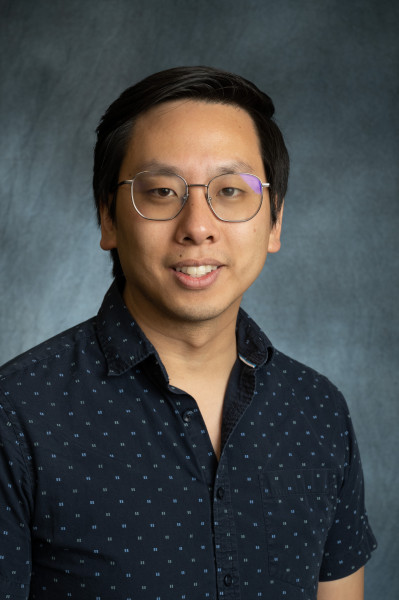
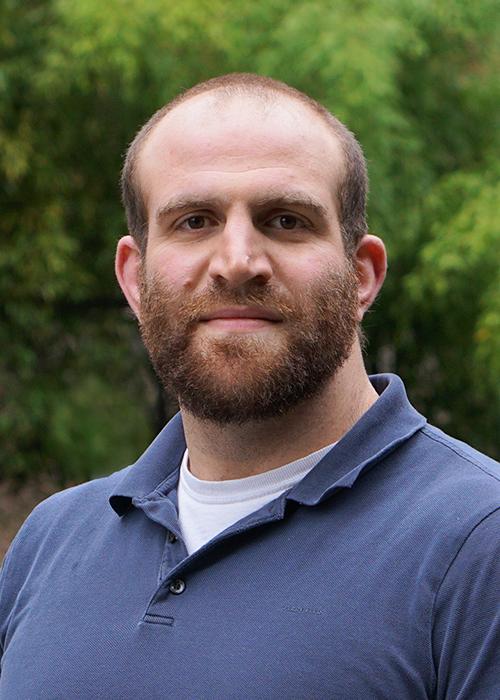
Andrew Du is an Assistant Professor in the Department of Anthropology and Geography at Colorado State University, within the College of Liberal Arts. His research focuses on the ecology of ancient hominins and the biases in the fossil record affecting paleoecological interpretations. He employs quantitative methods to analyze fossil assemblages and infer hominin spatiotemporal distributions. Education: Ph.D. and M.Phil. in Hominid Paleobiology, The George Washington University B.S. in Evolutionary Anthropology, Rutgers University Research Interests: Paleoanthropology, human evolution, paleoecology, macroecology, macroevolution, taphonomy, Plio-Pleistocene eastern Africa, and quantitative methods. Current projects include studying time-averaging effects in fossil assemblages, large mammal diversity in the Omo-Turkana Basin, and modeling hominin distributions. Teaching & Labs: Teaches courses on human origins, evolution, and data analysis. Maintains a lab with clear cultural norms and mentorship expectations outlined in accessible documents. Active in developing graduate-level R tutorials for statistical methods.
Bruno Tucunduva Ruviaro is an Associate Professor in the Department of Music within the College of Arts and Sciences at Santa Clara University, where he has taught since Fall 2012. Originally from Brazil, Ruviaro is a composer and performer with a specialization in electronic music. Prior to joining Santa Clara, he studied and worked at the Center for Computer Research in Music and Acoustics (CCRMA) at Stanford University. Ruviaro's primary research focus is Music Composition with a strong emphasis on Electronic Music. His specific interests include electronic music composition, laptop orchestras, live-electronics, acousmatic music, and sampling & musical borrowing. He also explores secondary interests spanning theater, dance, linguistics, speech, radio art, Linux, intellectual (im)property issues, and the intersection of music & politics. His work demonstrates a consistent exploration of how technology transforms musical creation and performance. Ruviaro's scholarly output reveals a strong trajectory in electronic and computer music composition, with particular attention to laptop orchestras and musical borrowing practices. His recent works like Pós-Tudos and Mozart and the Elections demonstrate his continued innovation in contemporary composition, while publications such as From Schaeffer to* lorks and Intellectual Improperty reveal his theoretical engagement with the evolving nature of musical instruments and copyright in digital contexts. His compositions frequently incorporate technology in innovative performance setups, as seen in works utilizing smartphones and unconventional sound production methods. Ruviaro is the director of SCLOrk (Santa Clara Laptop Orchestra), continuing a tradition from his time at Stanford where he was part of SLOrk (Stanford Laptop Orchestra). He teaches courses including Intro to Electronic Music (MUSC 9), SCLOrk - Santa Clara Laptop Orchestra (MUSC 157), Music Theory III (MUSC 3), Experimental Sound Design (MUSC 115), Form and Analysis (MUSC 113), and Beginning Composition (MUSC 37), along with private composition lessons. His educational contributions include A Gentle Introduction to SuperCollider , making complex music programming more accessible to students.
Dr. Nicholas Kevlahan is a Professor in the Department of Mathematics and Statistics at McMaster University. He holds a BSc in Physics from the University of British Columbia (1985–1989), a PhD in Applied Mathematics from the University of Cambridge (1990–1994), and completed a Marie Curie postdoctoral fellowship at École Normale Supérieure in Paris (1998). He has held visiting positions at institutions including Université Grenoble-Alpes, INRIA, and the University of Cambridge. His research focuses on advanced computational and mathematical methods for fluid dynamics, including the development of the WAVETRISK code for adaptive climate modelling, data assimilation techniques, fluid-structure interaction, and compressive sampling. His work integrates interdisciplinary approaches across applied mathematics, geophysics, and engineering. Key research areas include geophysical fluid dynamics, numerical analysis, partial differential equations, and wavelet-based methods. He has published extensively on topics such as ocean circulation models, turbulence simulation, and adaptive numerical methods. Dr. Kevlahan teaches courses in numerical methods, differential equations, asymptotic analysis, and mathematical physics. He mentors a diverse group of PhD, MSc, and BSc students in his active research laboratory.
Dr. Chamith Wijenayake is a Senior Lecturer - Teaching Focused at the School of Electrical Engineering and Computer Science, University of Queensland. He holds a PhD in Electrical and Computer Engineering from the University of Akron (2014) and a BSc (Hons) in Electronic and Telecommunications Engineering from the University of Moratuwa, Sri Lanka (2007). His research focuses on multidimensional signal processing, digital hardware architectures, FPGA-based systems, machine learning accelerators, and engineering education. He has received notable awards, including the 2011 Outstanding Student Research Award and the 2014 IEEE Circuits and Systems Pre-Doctoral Award. Education: BSc (First Class Honours) from University of Moratuwa (2007), PhD from University of Akron (2014). His doctoral work contributed to advancements in signal processing and hardware architectures. Research interests span multidimensional signal processing, FPGA-based system design, and engineering education innovations. He develops low-complexity algorithms for light field processing and multidimensional filters for imaging, sensing, and biomedical applications. His work emphasizes practical implementations in hardware accelerators and educational technologies. Outstanding Student Research Award, University of Akron, 2011 IEEE Circuits and Systems Pre-Doctoral Award, 2014 Teaching and Advising: Focuses on blended learning approaches and project-based instruction in electrical engineering. Prior roles include Lecturer at UNSW Sydney (2015–2019). No explicit student advisee records listed. Grants and collaborations are not detailed in provided texts. Labs/Teams: Involved in multidisciplinary projects integrating signal processing with hardware design, though specific lab affiliations are not specified.
Dr. Carola Venturini is a Lecturer at the Sydney School of Veterinary Science, University of Sydney. Her research focuses on microbiology, antimicrobial resistance (AMR), and bacteriophage therapy with a One Health perspective. She holds a BSc (Hons) from the University of Trieste and a PhD in Molecular Biology from the University of Wollongong. Her work investigates mobile genetic elements in bacterial pathogens and explores bacteriophage applications in animal and human health. Education: BSc (Hons) in Natural Sciences, University of Trieste PhD in Molecular Biology, University of Wollongong Research interests include: Evolution of drug-resistant pathogens Horizontal gene transfer mechanisms Bacteriophage-based interventions Microbiome ecology and antibiotic impacts Recent work highlights bacteriophage translocation in human colonoids, Vibrio harveyi pathogenesis in fish, and MDR Klebsiella pneumoniae clonal spread. Her studies bridge animal, human, and environmental health sectors. Grants include projects on phage formulations for animal infections, AMR surveillance in India, and collaborations with institutions in Germany, UK, USA, and Italy. Labs/Teams: Collaborates with the Westmead Institute for Medical Research and maintains international partnerships through the Sydney Southeast Asia Centre and Charles Perkins Centre.
Noah Simon is an Associate Professor in the Department of Biostatistics at the University of Washington School of Public Health. His research focuses on high-dimensional statistical methods, machine learning, and their applications in biomedicine. He develops computational tools for genomic and clinical data analysis, including penalized regression techniques and adaptive clinical trial designs. Education: B.A. Mathematics, Pomona College (2008) Ph.D. Statistics, Stanford University (2013), advised by Robert Tibshirani Research Interests: Dr. Simon specializes in high-dimensional estimation, algorithm optimization, and clinical trial methodology. His work addresses challenges in biomarker discovery, imaging-based diagnostics, and genomic data analysis. Key areas include sparse-group lasso regularization, adaptive enrichment designs for personalized medicine, and scalable computational methods for big data. Grants & Funding: NIH Director's Early Independence Award ($250k/year, 2014–2019) Amazon and Google Cloud Computing Grants for biomarker research Awards: Forbes 30 Under 30 in Science (2015) NSF Graduate Research Fellowship Honorable Mention (2010) Weiland Fellowship (2011–2013) Advising: He mentors PhD and MS students in biostatistical methodology and data science, with current advisees including Jean Feng, Brayan Ortiz, and Jeremy Roth. Notable collaborations include work on neural activity detection via calcium imaging (SCALPEL) and nonparametric variable importance assessment using neural networks. Lab & Affiliations: Based at the Hans Rosling Center for Population Health, his group develops open-source software (e.g., sgl , standGL ) and contributes to biomedical data science initiatives at UW.
Jennifer Güler is an Associate Professor in the Department of Biology at the University of Virginia. Her research focuses on understanding mechanisms of antimalarial drug resistance in Plasmodium falciparum, combining molecular, biochemical, and computational approaches. She leads the Güler Malaria Lab, which collaborates with global researchers to study parasite adaptation and clinical implications of resistance. Education: B.S. in Biology from the University of California, Santa Barbara (2000); Ph.D. in Molecular Microbiology & Immunology from Johns Hopkins Medical Institute (2007). Completed postdoctoral training at Johns Hopkins (2007-2008) and the University of Washington (2008-2013). Research interests include genetic changes driving drug resistance, metabolic adaptation pathways, and translational studies with patient-derived parasites. Her lab develops diagnostic tools like the Malaria TaqMan Array Card for simultaneous drug resistance and speciation analysis. Ongoing work integrates metabolomics and systems biology to uncover survival strategies of resistant parasites. Grants and collaborations involve partnerships with institutions in malaria-endemic countries to bridge lab-based models with clinical realities. Her team's findings contribute to understanding disease severity and informing therapeutic strategies.
Associate Professor Marcus Kitchen is affiliated with Monash University's School of Physics and Astronomy and the Victorian Heart Institute. He specializes in developing advanced X-ray imaging techniques, including Phase Contrast Imaging, Compton Scatter Imaging, and Ultra-Low Radiation Dose methods. His research focuses on enhancing diagnostic capabilities in lung and brain imaging while minimizing radiation exposure. Collaborations with institutions like the Hudson Institute aim to improve neonatal care, particularly for preterm infants with underdeveloped lungs. Key projects include translating synchrotron-based methodologies for clinical and industrial applications. Research interests span biomedical imaging, material discrimination, and radiation dose reduction. He leads or co-leads over 30 projects, including 'X-ray Scatter Imaging: Vast Information with Minimal Radiation' (2025–2028) and 'IMPACT: IMplementation of x-ray PhAse-Contrast Tomography to transform cancer diagnosis' (2022–2026). His work aligns with UN Sustainable Development Goals focused on health and innovation. Publications emphasize novel imaging modalities and their applications in respiratory and neurological disorders. Despite no explicit awards listed, his contributions to reducing radiation exposure and advancing lung mechanics research are significant. He supervises graduate students and actively seeks PhD candidates. His lab integrates theoretical, computational, and experimental approaches to bridge gaps between fundamental physics and clinical medicine.
Dr. Milos Hauskrecht is a Professor of Computer Science at the University of Pittsburgh's School of Computing and Information. He holds a PhD from MIT (1997) and an M.Sc. from Slovak Technical University (1988). His primary research focuses on Artificial Intelligence, Machine Learning, and their applications in healthcare, finance, and biomedical informatics. He leads interdisciplinary projects in clinical monitoring, anomaly detection, and predictive modeling of electronic health records (EHRs). Education: PhD in Electrical Engineering and Computer Science (MIT, 1997), M.Sc. in Electrical Engineering (Slovak Technical University, 1988) Affiliations: Department of Computer Science, University of Pittsburgh; School of Computing and Information His research integrates AI with probability theory, statistics, and operations research. Key areas include planning under uncertainty, machine learning for time-series data, and AI-driven solutions for clinical decision support. Current projects involve real-time patient monitoring, hierarchical models for EHR analysis, and control of biological processes. He has advised over 20 PhD students and holds grants from NIH, DARPA, and other agencies. Notable contributions include outlier detection in clinical actions, temporal predictive patterns, and state-space models for healthcare data. His work emphasizes translating AI advancements into practical clinical tools for improved patient care.
John J. Wiens is a Professor in the Department of Ecology and Evolutionary Biology at the University of Arizona since 2013. Previously, he held positions at Stony Brook University as an Assistant (2002–2006) and Associate Professor (2006–2012), and roles at the Carnegie Museum of Natural History as Curator (1995–2002). He earned a B.S. in Systematics and Ecology from the University of Kansas (1991) and a Ph.D. in Zoology from the University of Texas at Austin (1995). His work is distinguished by honors like the ISI Highly Cited Researcher award and editorial leadership roles at journals including Quarterly Review of Biology and Ecology Letters . Research Interests: Wiens’ lab focuses on three key areas: (1) integrative phylogenetic approaches to evolutionary and ecological questions, (2) phylogenetic theory and methods, and (3) reptile/amphibian evolution. Specific topics include species richness patterns, niche evolution, life-history traits, and climate change impacts. Methodologies combine genetic, morphological, and environmental data with computational approaches. Awards: His recognition includes the President’s Award from the American Society of Naturalists (2011) and the BIOS Distinguished Lecturer (2009). He has served on editorial boards for major journals and contributed to policy through biodiversity research. Grants and Advising: Wiens has advised numerous students (not listed here) and secured funding for projects on phylogenomics, climate change, and biodiversity. His lab collaborates globally, emphasizing open-access data sharing through tools like SuperCRUNCH. Labs/Teams: His research group integrates fieldwork and computational biology, focusing on amphibians, reptiles, and broader evolutionary patterns. Collaborations emphasize large-scale datasets and phylogenetic synthesis.
Dr. Noah Snyder-Mackler is an Associate Professor in the School of Life Sciences at Arizona State University. His research program spans aging biology, primatology, genomics, and immunology, with particular focus on non-human primate models and canine aging. His work investigates how social, environmental, and biological factors influence healthspan and aging processes across species. Recent publications demonstrate diverse methodological approaches including high-throughput DNA sequencing, transcriptomic profiling, field endocrinology, and behavioral observation. Article trends reveal strong emphasis on: 1) Socioecological influences on health in wild primates, 2) Genomic and epigenetic mechanisms of adaptation, 3) Multi-omics approaches to aging (Dog Aging Project), and 4) Host-parasite interactions in natural populations. His team frequently employs longitudinal designs in free-ranging populations to understand life history trade-offs.
Dr. Daniel Bain is a Professor in the Department of Geology and Environmental Science at the University of Pittsburgh, affiliated with the Kenneth P. Dietrich School of Arts and Sciences. He holds the role of Faculty Fellow in Sustainability, emphasizing research on human-driven environmental changes. His education includes a PhD in Geography and Environmental Engineering from Johns Hopkins University (2004), followed by postdoctoral research at the US Geological Survey. Dr. Bain’s research integrates hydrology, geomorphology, biogeochemistry, and spatial analysis to study urban and fluvial systems, with a focus on environmental contamination, climate impacts, and urban critical zone processes. Key projects include analyzing road salt effects on ecosystems, geochemical tracing in urban streams, and historical lake sediment records. His work spans interdisciplinary collaborations, including community-engaged research on environmental justice and green infrastructure performance. Dr. Bain’s lab, part of the University’s facilities, supports field and laboratory studies, with active grants addressing water quality, urbanization, and health equity. Recent projects include studies on legacy pollution in Pittsburgh’s urban soils, radioactive material exposure from oil/gas waste, and the hydrological benefits of green roofs. He maintains a research group with ongoing projects documented in over 60 peer-reviewed articles.
Jordan A.G. Wostbrock is an Assistant Professor at Yale University specializing in Stable Isotope Geochemistry. His research focuses on using triple oxygen isotope techniques to investigate interactions between land, ocean, and atmosphere, with particular emphasis on paleoclimate and paleoenvironmental reconstructions. He explores how these isotopic methods can quantify biogeochemical cycling changes and inform understanding of climate impacts on life historically and under current anthropogenic pressures. Key research themes include Marine Climate Proxies (e.g., carbonate temperature reconstructions in the Late Cretaceous Western Interior Seaway), Terrestrial Climate Proxies (e.g., grass phytoliths for paleohumidity), and Diagenetic Processes (e.g., analyzing Bahama Platform carbonates to distinguish primary signals from diagenetic overprints). His work addresses critical questions about extreme past SSTs, habitat adaptability, and the reliability of rock records amid fluid-rock interactions. Recent projects involve reconstructing temperature and preservation histories of Phanerozoic chert, Shuram carbon isotope excursions, and using bioapatite to study animal heat stress. Methodological advancements include developing triple oxygen isotope calibrations for silica-water systems and optimizing sample analysis via TILDAS instrumentation. His interdisciplinary approach bridges geochemistry, paleontology, and planetary science, with applications to Mars sample analysis and Earth's atmospheric evolution.
Dr. Caroline Muellenbroich is a Senior Lecturer at the School of Physics & Astronomy, University of Glasgow, where she develops advanced microscopy techniques for cardiac and neuro imaging. She joined the university in 2018 and is based at the Advanced Research Centre. Her work bridges physics, engineering, and biomedical sciences to create innovative imaging solutions. Dr. Muellenbroich received her physics education at the University of Heidelberg, Germany, and earned her PhD from the Institute of Photonics, University of Strathclyde, Glasgow in 2012. Her doctoral research focused on adaptive optics in advanced microscopy techniques. She then pursued postdoctoral research at the Biophotonics group at the European Laboratory for Nonlinear Spectroscopy (LENS) in Florence, Italy, where she implemented confocal light-sheet microscopy for whole mouse brain imaging and functional calcium imaging in Zebrafish. From 2016-2018, she worked as a researcher with the Italian National Institute of Optics, part of the Italian National Research Council. Dr. Muellenbroich's research focuses on developing and applying advanced optical imaging techniques, particularly light-sheet microscopy, for biomedical applications. Her work spans neuroscience and cardiology, with a strong emphasis on whole-brain imaging in model organisms and cardiac electrophysiology studies. She has made significant contributions to improving imaging fidelity, developing artifact removal techniques, and creating open-source microscope hardware. Her research bridges fundamental physics with practical biomedical applications, enabling new discoveries in brain function and cardiac physiology. Analysis of her recent publications reveals a strong focus on light-sheet microscopy applications in neuroscience and cardiology. Her work addresses technical challenges in whole-brain imaging, artifact reduction, and the development of novel optical approaches for studying brain activity and cardiac function. She has made important contributions to the field through both technical innovations in microscopy hardware and novel applications of these techniques to biological problems. Dr. Muellenbroich is actively involved in developing open-source approaches to microscope hardware, as evidenced by her 2022 Nature Methods publication "CAD we share? Publishing reproducible microscope hardware." Her research has been supported by various grants, though specific funding sources are not detailed in the available information. She leads research efforts in developing advanced microscopy techniques for cardiac and neuro imaging, working with interdisciplinary teams that include physicists, engineers, biologists, and medical researchers. Her laboratory likely focuses on pushing the boundaries of optical imaging to address challenging biomedical questions in brain function and cardiac physiology.
David Saad is a Professor at Aston University, affiliated with the College of Engineering and Physical Sciences, the School of Computer Science and Digital Technologies, and the Applied Mathematics & Data Science group. He also leads the Aston Centre for Artificial Intelligence Research and Application and holds the 50th Anniversary Chair of Complexity Physics. His academic appointments include Professor of Information Mathematics since 1999 and former Head of the Mathematics Group (2006–2012, 2015–2019). His educational background includes: PhD in Engineering, Tel Aviv University (1993) MSc in Physics, Tel Aviv University (1987) BA in Physics and BSc in Electrical Engineering, Technion, Israel (1982) David Saad's research focuses on the application of statistical physics to complex computational and engineering problems. His primary interests include statistical mechanics of disordered systems, error-correcting codes, message-passing algorithms, learning in neural networks, and distributed optimization in networks such as smart grids and optical communication systems. He combines theoretical rigor with practical applications in machine learning, communications, and energy systems. His recent publications (2024–2025) demonstrate a strong trend in interdisciplinary research, bridging physics, computer science, and engineering. Key themes include neuromorphic computing, network inference from data, viral load estimation, and cascading failure modeling, indicating a continued focus on inference, optimization, and resilience in complex systems. His scientific recognition includes: Fellow of the Institute of Mathematics and its Applications Senior Fellow of the Higher Education Academy David Saad has supervised several research students, including H. F. Po, E. Harrison, M. Sheikh, B. Li, E. Manuylovich, and R. Sadeghi, many of whom appear as co-authors on recent publications. He has also been involved in research grants and projects related to smart grids, optical networks, and neuronal network analysis. His work involves collaborations with institutions across the UK and internationally, as evidenced by his research council membership and co-authored outputs. He leads research in the Aston Centre for Artificial Intelligence, focusing on theoretical and applied aspects of machine learning and complex systems. His team applies message-passing techniques to problems in energy distribution, communication networks, and biological data analysis, contributing to both foundational theory and real-world applications.