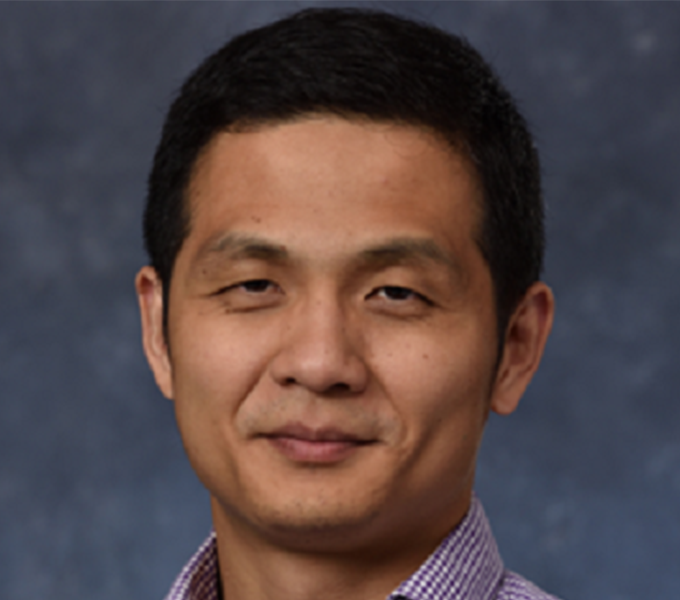
Afshin Ashari is an Assistant Professor in Landscape Architecture at the School of Environmental Design and Rural Development , University of Guelph. Prior to academia, he worked at BrookMcIlroy Inc., an interdisciplinary firm in Toronto, on architectural and landscape projects in public and private sectors. Education : Masters in Landscape Architecture, University of Toronto Bachelor of Computer Engineering, Azad University of Tehran Research Interests : Afshin explores the intersection of computational design and mixed-reality environments, focusing on: Art-Technology Unity in Public Spaces Algorithmic and Parametric Modeling Data-Driven Design Approaches Interactive Immersive Environments Biophilic Design Agricultural Urbanism Article Trends : His publications emphasize: AI tools for design processes Parametric modeling in urban rehabilitation Climate change communication via social media Drones for visual impact assessments Augmented reality in public spaces Historical and future-oriented design frameworks
Brennan Phillips is an Associate Professor in the Department of Ocean Engineering at the University of Rhode Island . His work focuses on robotics , oceanographic instrumentation , and deep-sea biological exploration , with particular emphasis on bioluminescence , chemosynthetic environments , and soft robotics for marine research. Education : PhD in Oceanography (University of Rhode Island, 2016), MS in Oceanography (University of Connecticut, 2007), BS in Ocean Engineering (University of Rhode Island, 2004) Phillips leads the Undersea Robotics & Imaging Laboratory , which develops hardware-centric solutions for deep-sea exploration. The lab specializes in soft robotics , additive manufacturing , and imaging systems for studying delicate marine organisms. His recent publications span deep-sea coral propagation , 3D printing of pressure vessels , and soft robotic sampling tools , reflecting his focus on innovative marine technology and ecosystem observation . Collaborative work explores hydrothermal vent genomics and twilight zone shark ecology .
Andrea Iannelli is a Tenure-Track Assistant Professor at the Institute for Systems Theory and Automatic Control (IST) , University of Stuttgart, Germany. He also serves as a faculty member of the International Max Planck Research School for Intelligent Systems (IMPRS-IS) and participates in the Cluster of Excellence Data-Integrated Simulation Science (SimTech) . His research focuses on reconciling model-based and data-driven approaches for robust and adaptive control of uncertain dynamical systems. Ph.D. : Control and Dynamical Systems, University of Bristol (UK), 2019 Postdoctoral Researcher : ETH Zürich (Switzerland), 2019–2022 Harnessing the intersection of control theory, optimization, and machine learning , Iannelli’s work addresses data-driven modeling, uncertainty quantification, and robust control with applications in energy systems, intelligent transportation, and industry 4.0 . His recent publications highlight trends in LPV frameworks, online convex optimization, and hybrid control systems , emphasizing safety and efficiency. He contributes to the academic community as an Associate Editor for the International Journal of Robust and Nonlinear Control and as a member of international conference IPCs. His group, Trustworthy Autonomy for Smart Adaptive Systems (TASAS) , mentors PhD students in projects spanning adaptive control, uncertainty quantification, and reinforcement learning .
Dr. Kang Liang is a Scientia Associate Professor at the University of New South Wales (UNSW Sydney), specifically within the School of Chemical Engineering. He leads the Nano-Micro-Bio Systems research group and serves as Co-Chair of the Australian Synchrotron Program Advisory Committee for SAXS/WAXS and BioSAXS. His research focuses on the intersection of nanotechnology, biocatalysis, and materials science, with particular expertise in metal-organic frameworks and their applications in biomedical and environmental contexts. Dr. Liang's research interests center around interfacial engineering of nanostructured materials, NanoBionics, biomimetics and biomineralization, and smart nano-micro-bio systems. His work explores how nanomaterials can interface with biological systems to create innovative solutions for healthcare, environmental monitoring, and energy applications. He has made significant contributions to the field of biocatalytic metal-organic frameworks, demonstrating their potential in drug delivery, cytoprotection, and cell manipulation. His publication record shows a strong focus on developing advanced nanomaterials with applications spanning from environmental remediation (water purification, contaminant removal) to biomedical applications (drug delivery, biosensing, cancer treatment). The trends in his recent publications indicate increasing sophistication in the design of nanomotors and nanoswimmers, with growing emphasis on precision targeting, multi-functionality, and integration with biological systems. Victoria Fellowship in Physical Sciences (2017) Fellow of the Australian Royal Chemical Institute (FRACI) Fellow of the Royal Society of Chemistry (FRSC, UK) NHMRC Career Development Fellow (2019-2022) ARC Future Fellow (2023-2027) Dr. Liang actively mentors PhD and MPhil students through his research group and encourages highly motivated candidates to join his team. His research is supported by significant funding including his current ARC Future Fellowship (2023-2027). His work bridges chemical engineering, materials science, and biomedical applications, creating a unique interdisciplinary approach to solving complex problems in healthcare and environmental sustainability. His laboratory focuses on developing innovative nanomaterial platforms that interface with biological systems, with particular emphasis on creating responsive and adaptive systems that can perform specific functions when triggered by environmental conditions. The group's work represents a cutting-edge intersection of nanotechnology, bioengineering, and materials science.
Dubravko Kicic is a Ph.D. Visitor (Faculty) at the Department of Neuroscience and Biomedical Engineering at Aalto University, specializing in advanced brain stimulation techniques and neuroengineering. His work primarily focuses on transcranial magnetic stimulation systems and their clinical applications. Education: Doctoral degree in Engineering and Technology from Helsinki University of Technology (awarded October 20, 2009) Master's degree in Engineering and Technology from Helsinki University of Technology (awarded June 14, 2005) Kicic's research centers on non-invasive brain stimulation technologies, particularly transcranial magnetic stimulation (TMS). His work spans neuroscience, biomedical engineering, and clinical applications for treating neurological and psychiatric conditions. He investigates how to optimize brain stimulation targeting, develop multi-locus TMS systems, and create robotic platforms for precise stimulation delivery. His fingerprint includes expertise in Transcranial Magnetic Stimulation, Behavioral Addiction, Magnetoencephalography, Neuromodulation, Pulse Rate analysis, and Signal Space engineering. Recent publications demonstrate a clear trend toward developing more precise and effective brain stimulation systems. Kicic's work focuses on multi-locus TMS for simultaneous stimulation of multiple brain areas, robotic targeting systems for improved accuracy, and real-time identification of brain states to optimize stimulation timing. His research bridges engineering innovation with clinical neuroscience applications, particularly for depression and pain treatment. Kicic has supervised at least one thesis and has been involved in media coverage regarding how magnetic brain stimulation can help patients with depression and pain. His collaborative work shows extensive international connections in the neuroscience and biomedical engineering fields. His research contributes to UN Sustainable Development Goals related to good health and well-being through developing advanced neurotechnologies for clinical applications.
Kristin Y. Pettersen is a Professor at the Norwegian University of Science and Technology (NTNU) in the Department of Engineering Cybernetics, Faculty of Information Technology and Electrical Engineering. She holds a PhD and MSc in Engineering Cybernetics from NTNU and serves as an Adjunct Professor at the Norwegian Defence Research Establishment (FFI). She co-founded and led Eelume AS as its first CEO. PhD in Engineering Cybernetics, NTNU MSc in Engineering Cybernetics, NTNU Her research focuses on nonlinear control theory, motion control of mechanical systems, and marine robotics. Key areas include autonomous vehicles, underactuated systems, and cooperative control. Her recent work involves snake robotics, vehicle-manipulator systems, and safety-critical control algorithms. Her publications demonstrate trends in marine robotics , nonlinear control systems , autonomous navigation , formation control , and adaptive algorithms . Emerging topics include energy-shaping control , extremum-seeking optimization , and task-priority frameworks for complex robotic systems. 2025: Norwegian Academy of Science and Letters (DNVA) 2020: ERC Advanced Grant 2017: IEEE Fellow 2016-2021: Board member, Eelume AS 2013-2023: Key scientist, NTNU AMOS She has supervised 30 PhD graduates and currently mentors 16 PhD candidates. Her grants include ERC PoC UR4energy (€150k), ERC AdG CRÈME (€2.5M), and CAROS (NOK 45M) for subsea autonomy. She leads teams at NTNU's Applied Underwater Robotics Laboratory and contributes to the Cluster of Excellence IntCDC.
Burak Kurkcu is an Assistant Professor in the Department of Electrical and Computer Engineering at Santa Clara University's School of Engineering. He previously served as an Assistant Professor at Hacettepe University and as a Senior Control System Design Engineer at Aselsan Inc. Education: Ph.D., TOBB University of Economics and Technology (2019) M.S., TOBB University of Economics and Technology (2015) B.S., Istanbul Technical University (2010) Research Interests: Dr. Kurkcu specializes in robust control systems, soft robotics, switched neural networks, and autonomous systems. His work focuses on disturbance estimation, simultaneous learning algorithms, and control of nonlinear systems. Recent Publication Trends: His research includes soft pneumatic actuator modeling, disturbance observer-based control methods, and evolutionary optimization for state-space models. Key themes involve soft robotics, autonomous control, and computational intelligence applications. Scientific Awards: IEEE Turkey Ph.D. Thesis Award (2020) Editorial Roles: Associate Editor for TIMC, Measurement and Control , and Turkish Journal of Electrical Engineering and Computer Science . Principal Investigator for defense-related control system projects.
Eakta Jain is an Associate Professor in the Department of Computer & Information Science & Engineering at the University of Florida's College of Engineering. Her research centers on human-computer interaction with a specialized focus on eye-tracking technologies, virtual reality, and privacy-preserving techniques in immersive environments. With over 15 years of sustained academic contributions, she has established herself as a leading researcher in gaze analysis and its applications across multiple domains. Dr. Jain's research interests span eye-tracking, virtual reality, extended reality (XR), privacy in immersive technologies, human-computer interaction, computer vision, and animation. Her work demonstrates a consistent trajectory from fundamental gaze analysis techniques to practical applications addressing critical privacy concerns in emerging technologies. She has made significant contributions to understanding how gaze data can be used to enhance user experience while simultaneously developing methods to protect user privacy in these systems. Analysis of her recent publications reveals a strong focus on privacy challenges in XR environments, with particular attention to gaze data protection, face-swapping technologies, and the psychological impacts of continuous monitoring. Her research bridges theoretical insights with practical implementations, often resulting in novel algorithms and frameworks that address real-world problems in immersive technologies. The interdisciplinary nature of her work connects computer science with cognitive psychology and human factors research. Dr. Jain has received recognition through publications in top-tier venues including IEEE Transactions on Visualization and Computer Graphics, ACM Transactions on Applied Perception, and the Symposium on Eye Tracking Research and Applications. Her work has been influential in shaping the discourse around privacy in immersive environments and has practical implications for the development of ethical XR systems. She actively mentors students and collaborators, with several junior researchers appearing as co-authors on her publications. Her research group appears to focus on the intersection of computer vision, graphics, and human-centered computing, with projects spanning from fundamental gaze analysis to applied privacy-preserving techniques in commercial VR systems. Current projects suggest strong industry connections and potential grant funding supporting her privacy-focused XR research.
Dr. Paul Levinson is a Professor at Fordham University in the Communication and Media Studies department. He holds a PhD from New York University and has taught courses such as Politics and New Media , Digital Media & Public Responsibility , and Interactive Media . His research spans media theory , social media , science fiction , and ethics of digital communication . Levinson's recent academic work focuses on robotics and AI ethics , media consolidation , and teaching methodologies during the pandemic . He is a Locus Award winner for his science fiction novel The Silk Code . His scholarship often intersects with McLuhan's media theories Alternate history frameworks Post-Covid educational models He maintains a blog, Infinite Regress , and his music career includes albums like Twice Upon a Rhyme (1972) and Welcome Up: Songs of Space and Time (2020), with remixes by QRock 639 in 2021. His work has been featured on CBS News, CNN , and NPR .
Jeeseop Kim is an Assistant Professor in the Department of Aerospace and Mechanical Engineering at The University of Texas at El Paso (UTEP), College of Engineering, specializing in robotics, autonomy, and control theory. His research focuses on safety-critical planning and control, with emphasis on bipedal/quadrupedal locomotion, hybrid dynamical system control, and whole-body planning and control. Education: B.S. in Mechanical and Aerospace Engineering, Seoul National University (2014) M.S. in Intelligence and Information (Robotics), Seoul National University (2017) Ph.D. in Mechanical Engineering, Virginia Tech (2022) Postdoctoral Scholar, Mechanical and Civil Engineering, Caltech (2022–2025) His research spans safety-critical control systems for legged robots, including obstacle-aware nonlinear model predictive control (MPC), control barrier functions, and distributed coordination algorithms. Recent work explores adaptive delay estimation, tactile sensing for robotic grasping, and hardware-software co-design for humanoid robots. Key article trends highlight advancements in autonomous inspection robotics, hybrid control architectures, and real-time planning for quadrupedal systems. His work integrates control theory with practical applications in industrial and healthcare domains. Awards: ASME DSCD Rudolf Kalman Best Paper Award (2022) IEEE ICRA Outstanding Paper Award (2023) Jeeseop teaches MECH 4332: Mechanical Computational Applications in Vision and Robotics (Fall 2025). He actively recruits Ph.D. students for Spring/Fall 2026 and seeks motivated undergraduates/MS students with skills in robotics kinematics, programming (C/C++, Python, MATLAB), and CAD design. The AIGIS Lab welcomes applicants with interests in robotics, controls, and autonomous systems.
Bo An is a President's Chair Professor and Head of the Division of Artificial Intelligence at the College of Computing and Data Science , Nanyang Technological University, Singapore . He also holds a courtesy appointment as Professor at the School of Physical & Mathematical Sciences and serves as Director of the Centre of AI-for-X. Previously, he was a Nanyang Assistant Professor (2014-2018), Associate Professor at the Chinese Academy of Sciences (2012-2013), and Postdoctoral Researcher at the University of Southern California (2010-2012). His academic journey began with B.Sc. and M.Sc. degrees from Chongqing University, followed by a Ph.D. in Computer Science from the University of Massachusetts, Amherst (advised by Victor Lesser). Research Interests : Artificial Intelligence Multiagent Systems Computational Game Theory Reinforcement Learning Automated Negotiation Optimization Research Impact : Applications in infrastructure security (deployed by US Coast Guard and Federal Air Marshals), e-commerce, sensor networks, and financial technology. Over 150 publications in top venues like AAMAS, IJCAI, AAAI, ICML, NeurIPS, KDD, and ACM/IEEE Transactions. Scientific Recognition : 2010 IFAAMAS Victor Lesser Distinguished Dissertation Award 2012 INFORMS Wagner Prize 2018 & 2022 Nanyang Research Awards 2017 Microsoft Collaborative AI Challenge IEEE Intelligent Systems 'AI's 10 to Watch' (2018) Leadership Roles : Editor-in-Chief of IEEE Intelligent Systems, Associate Editor for AIJ, JAAMAS, and ACM Transactions. Served as General Co-Chair for AAMAS'23 and Program Chair for IJCAI'27.
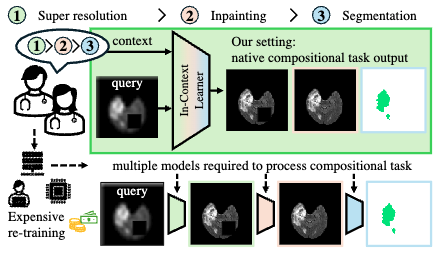
Prof. Dr. Erik Rodner is a faculty member at the University of Applied Sciences Berlin (HTW Berlin), where he serves as a Professor for Machine Learning and Data Science. He also contributes to the School of Engineering Sciences - Technology and Life. His research spans computer vision, machine learning, and biomedical applications, with a focus on learning with limited data, robust visual recognition models, and medical image analysis. He has developed innovative methods for medical diagnostics, industrial classification, and anomaly detection. Recent publications (2025-2016) highlight his expertise in visual in-context learning, semi-weakly segmentation, and active learning frameworks. He has collaborated with institutions such as ZEISS Group, Friedrich Schiller University Jena, and UC Berkeley. Scientific Awards: Award for Excellent Teaching (2023)
Armin Grunwald serves as Head of the Institute for Technology Assessment and Systems Analysis (ITAS) at Karlsruhe Institute of Technology (KIT) and Head of the Office of Technology Assessment at the German Bundestag (TAB). Since 2007, he has held the Chair of Philosophy and Ethics of Technology at KIT's Institute of Philosophy, building on his previous professorship at the University of Freiburg (1999-2007). His leadership positions include membership in the German Ethics Council, the National Advisory Board for Repository Search, and the Science-Policy Advisory Board of ETH Zürich. Grunwald's research focuses on the theory and practice of technology assessment, ethics of technology, sustainability concepts, and digital transformation. His work explores humanity's relationship with technology, particularly examining how digitalization challenges human self-understanding and autonomy. He investigates philosophical questions surrounding artificial intelligence, anthropocentrism in the Anthropocene, and the ethical dimensions of technological progress. His extensive publication record demonstrates consistent scholarly output across multiple disciplines. Recent work shows increasing focus on AI ethics, the philosophical implications of digital transformation, and technology assessment methodologies for addressing grand societal challenges. His publications span philosophical analyses, empirical studies on technology implementation, and policy-relevant assessments for governmental bodies. Grunwald has supervised numerous doctoral students across interdisciplinary fields including energy transition, AI governance, urban sustainability, and technology ethics. His leadership extends to directing major research initiatives through ITAS, which serves as Germany's parliamentary technology assessment body providing scientific advice to the Bundestag on emerging technologies and their societal implications.
Wei Gao is an Associate Professor at the Swanson School of Engineering, University of Pittsburgh. His research focuses on the design, deployment, analysis and measurement of on-device AI architectures and algorithms on mobile, embedded and networked systems. He has strong interests in unveiling analytical principles underneath practical AI deployment problems, and designing systems based on these principles. The developed AI and system solutions are widely applied to various application scenarios, including Internet of Things, edge computing and smart health. Dr. Gao received his PhD from Pennsylvania State University in 2012 and his B.E. from the University of Science and Technology of China in 2005. Dr. Gao's research spans across Cyber-Physical Systems , Infrastructure Security , High Performance Computing , and the Distributed Governance of Information . His work particularly emphasizes on-device AI architectures and algorithms for mobile and embedded systems. He explores how to deploy AI efficiently on resource-constrained devices, with applications in Internet of Things, edge computing, and smart health. His research aims to bridge theoretical principles with practical system implementations, focusing on creating efficient, secure, and reliable AI solutions for real-world deployment scenarios. His recent work has increasingly focused on bringing Large Language Models to edge devices while maintaining performance and security. Analysis of Dr. Gao's recent publications (2021-2025) reveals a strong focus on on-device AI, particularly around Large Language Models for resource-constrained environments. His work addresses critical challenges including model personalization, security against illegal adaptation, sparse activation techniques, and physics-grounded generation. Much of his research targets making AI more efficient, secure, and practical for deployment on edge devices with limited computational resources, while also exploring applications in health monitoring and power systems. Dr. Gao has received significant recognition for his research, including: NSF Faculty Early Career Development (CAREER) Award (2016) Dr. Gao mentors numerous graduate students who contribute to his research in mobile computing, embedded systems, and on-device AI. His research has been supported by various grants, most notably the NSF CAREER award, enabling his team to explore innovative approaches to mobile and embedded AI systems. His lab investigates how to optimize AI for resource-constrained environments while maintaining performance and security, with particular focus on balancing computational efficiency with model accuracy. Dr. Gao leads a research group focused on mobile and embedded AI systems, with particular emphasis on making AI practical for deployment on everyday devices. His team explores novel techniques for model compression, efficient inference, and secure deployment of AI models on edge devices, with applications ranging from health monitoring to smart infrastructure.
Dr. Anne Koelewijn is an Assistant Professor leading the Biomechanical Motion Analysis and Creation (BioMAC) group at Friedrich-Alexander-Universität Erlangen-Nürnberg (FAU) since 2019. Her research bridges biomechanics, computational modeling, and wearable technology to analyze human movement. She holds a Junior Professorship in Computational Movement Science within the Department of Electrical-Electronic-Communication Engineering. Her educational background includes a Doctor of Engineering in Mechanical Engineering from Cleveland State University (focus: prosthesis design and gait simulations), an MSc in Mechanical Engineering (BioMechanical Design specialization), and a BSc in Aerospace Engineering , both from Delft University of Technology. She completed postdoctoral work at École Polytechnique Fédérale de Lausanne on neuromuscular control. Research interests center on human movement optimization , neuromuscular control mechanisms , and in-the-wild movement analysis . Her work integrates musculoskeletal modeling, optimal control theory, and machine learning to study gait adaptations, exoskeleton design, and pathological movement patterns (e.g., Parkinson’s disease). Publications emphasize predictive simulations , wearable sensor technology , and biomechanical energy optimization , with recent advances in radar-based motion capture, inertial pose estimation, and digital twin applications for medical engineering. Promising Scientist Award , International Society of Biomechanics (2023) Best Paper Award , 5th International Symposium on Wearable Robotics (2020) She leads the BioMAC research group, focusing on computational methods for movement science and collaborating internationally on projects involving exoskeletons, injury prevention, and neuroprosthetics.