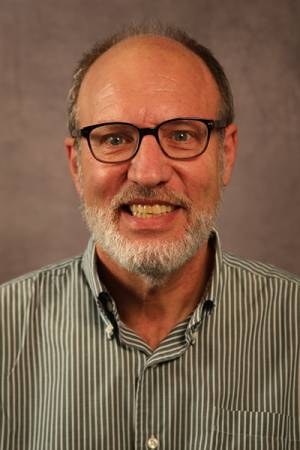
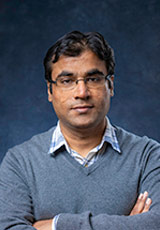
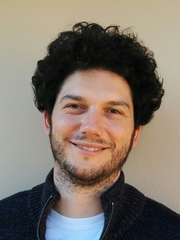
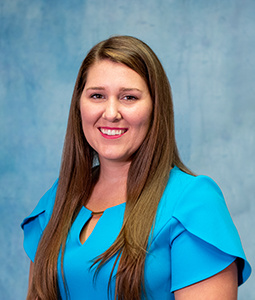
Reid Simmons is a Research Professor at the Robotics Institute , part of the School of Computer Science at Carnegie Mellon University . His work focuses on creating reliable, highly autonomous systems that operate in uncertain environments, particularly mobile robots. He leads the Reliable Autonomous Systems Lab and serves as Director of the Artificial Intelligence Major at CMU. Research Interests: Autonomy, AI reasoning, human-robot interaction, multi-robot coordination, probabilistic planning Projects: SUCCESS (proficiency metrics), Social Robot (personality-driven interaction), Data Analysts (AI for data science) Recent Publications: 15 articles (2017-2023) on topics like human-robot teaming, machine teaching, and affective computing His research emphasizes model-based reasoning , error recovery , and socially acceptable robot behavior , including projects like the Tank and Victor robots for interactive tasks. Students and affiliates span PhD/Master's programs, with past advisees now leading in robotics (e.g., Heather Knight, Christopher Urmson).
Eric Poe Xing is a Professor at Carnegie Mellon University's School of Computer Science, holding joint affiliations with the Machine Learning Department, Language Technology Institute, and Computer Science Department. He also serves as President of the Mohamed bin Zayed University of Artificial Intelligence. His research focuses on machine learning methodology, statistical systems, and large-scale computational architectures, with recent work on foundation models for biology (AIDO), world/agent models (PAN), and open-source LLM initiatives (LLM360). He advises numerous students and postdocs in areas like AI, NLP, and computational biology. He teaches graduate courses in Machine Learning and Probabilistic Graphical Models, and actively contributes to academic leadership roles, including ICML program chairs and editorial boards. Research interests span automated reasoning, AI ethics, and scalable computing. His lab, SAILING, develops cutting-edge models for vision-language tasks, bioinformatics, and multi-modal learning. Notable projects include LLM360's open-source AGI efforts and innovations in distributed ML systems. His work emphasizes interdisciplinary applications, from healthcare decision-support (PetuumMed) to climate modeling (ClimSatDiff).
Michael Terry is an Associate Professor at the Cheriton School of Computer Science, University of Waterloo. He co-directs the CS HCI Lab and Waterloo HCI consortium, and co-founded WatchPop (a smartwatch content delivery company). As of 2015, he joined Google in Cambridge, MA, while maintaining academic ties. His research focuses on interactive systems, combining HCI principles with machine learning, information retrieval, and crowdsourcing to enhance user experience in software and hardware interfaces. Academic Background: Terry holds a PhD from Georgia Tech's College of Computing (supervised by Beth Mynatt), an MSc from Florida Tech, and a BSc from Cornell University. He has taught courses such as CS 349 (User Interfaces) , CS 449 (HCI) , and specialized graduate topics like Computer-Mediated Advertising . Research Interests: Terry’s work spans HCI innovations in wearable tech (e.g., smartwatch interfaces via WatchPop), generative design systems (GEM-NI project), and tools for improving software usability through contextual memory aids (CheatSheet) and cross-application interaction (InterTwine). His projects also address challenges in web tutorials, user-generated content integration (TaggedComments), and mining online documentation for better software accessibility. Awards and Funding: He received the 2012 MathSoc Instructor of the Year award and a Leverhulme Visiting Professorship. Research funding came from NSERC, GRAND NCE, Google, EPSRC, and others. His work has been recognized by industry collaborations with companies like Microsoft Research, Autodesk, and the Natural History Museum. Students and Startups: Terry has advised numerous students, including PhD graduates now at Microsoft Research and Autodesk. Former students have launched startups, reflecting his emphasis on entrepreneurial HCI. His lab’s projects often translate into real-world applications, such as the Pebble Timeline Challenge-winning software from WatchPop. Labs and Teams: Core affiliations include the CS HCI Lab and broader Waterloo HCI network, collaborating across disciplines in design, engineering, and health sciences. His research intersects with the Games Institute and specialized labs like the Technology Usability Lab in Privacy and Security.
Sampath Bemgal is an Assistant Professor of Management Information Systems in the Faculty of Management at the University of New Brunswick. He holds a PhD from Ivey Business School (Western University) and researches complex digital transformations in organizations with particular focus on healthcare settings. His research examines technology-enabled organizational change through theoretical frameworks including critical realism, sensemaking, and socio-materiality. Current projects investigate generative mechanisms in IT transformations, technology appropriation processes, and human agency in digital transitions, primarily in hospital and laboratory environments. Methodologically, Bemgal employs qualitative and interpretive approaches to develop causal explanations of IT phenomena. His publication record demonstrates consistent application of critical realism to understand the 'why' behind digital transformations beyond descriptive 'how' accounts. Professional contributions include service on conference program committees and collaborations with healthcare institutions. Current teaching spans undergraduate and graduate courses in information systems.
Dr. Alessandro Di Stefano is a Senior Lecturer in Computer Science at Teesside University's Department of Computing & Games within the School of Computing, Engineering & Digital Technologies. He holds a PhD in Systems Engineering from the University of Catania (2015) and has held academic and research positions at King’s College London, the University of Cambridge, and the University of Catania. His research focuses on interdisciplinary methodologies combining game theory, network science, and machine learning to study socio-technological systems, human cooperation, and complex dynamics. Education: BSc (2009) and MSc (2012) in Telecommunications Engineering from the University of Catania; PhD in Systems Engineering (2015). Professional Qualifications: Postgraduate Certificates in Learning & Teaching in Higher Education (FHEA, 2022). Research Interests: Game Theory, Network Science, Machine Learning, Human Cooperation, Social Dynamics, Homophily, Epidemic Spreading. He collaborates globally, including with the University of Cambridge, Missouri S&T, and King’s College London. Grants/Projects: Lead PI on projects such as KTP - TaperedPlus (AI-driven design systems) and KTP - CSX Carbon (peatland restoration via deep learning). Active in conferences like CCS, ALIFE, and IJCAI, and serves as a reviewer for top journals (IEEE Transactions, Nature Scientific Reports). Labs/Teams: Part of the Interpretable & Beneficial AI group at Teesside, focusing on AI ethics, regulatory frameworks, and complex network modeling. Collaborates with industry partners on AI applications in construction, healthcare, and environmental monitoring.
David Levine serves as an Associate Professor in the Computer Science and Engineering Department within the College of Engineering at The University of Texas at Arlington. His academic career spans decades with continuous teaching and research contributions, evidenced by his ongoing course instruction through Fall 2025 and active grant leadership. Levine's research spans cloud and grid computing, health informatics, bioinformatics, pervasive computing, and secure programming. His work integrates computational techniques with practical applications in healthcare (Smart Hospital for Elderly Care), high-energy physics (Fermilab collaborations), and accessibility infrastructure. He has pioneered curriculum development in emerging fields including Cloud Computing, Secure Programming, Mobile Computing, and Data Mining, with courses consistently reaching maximum enrollment capacity and establishing distance learning records within the engineering college. His publication portfolio demonstrates significant interdisciplinary impact across IEEE Supercomputing, health informatics, genetics, and pervasive computing. Recent work focuses on spatial data visualization for public health (2022), hardware simulation platforms (2017), and scalable notification frameworks for healthcare systems (2011). His research has secured over $5 million in funding from NSF, NIH, DoE, and industry partners including Luminant Power. Computer Science Department Teaching Award recipient Student teams won ATT University Challenge, Nokia Symbian Challenge, and Department of Energy Challenge ($200k+ total) Levine has mentored 4 PhD students as co-supervisor, chaired 6 Master's theses, and advised numerous undergraduate researchers. His laboratory work focuses on grid computing applications for high-energy physics and bioinformatics, with current projects including the GAANN Doctoral Fellowships in IoT and Smart Hospital infrastructure development. He serves as NTT Hiring Committee Chair and Faculty Senate Chair, demonstrating significant institutional leadership.
Andreas Göbel is a Professor and Chair of Algorithm Engineering at the Hasso Plattner Institute (HPI). His research focuses on computational counting, randomness in computation, computational complexity, graph theory, and stochastic processes. He has contributed extensively to understanding diffusion processes, clique structures in networks, and algorithmic approaches to statistical physics problems. His work bridges theoretical computer science with practical algorithm design. Recent contributions include analyzing SIRS process survival times, clique dynamics in geometric random graphs, and non-linear information diffusion models. He has published widely in top-tier conferences such as IJCAI, AAAI, and SODA. Göbel teaches courses including Probability and Computing, Algorithmix, and Theoretical Foundations of Cryptography. His research group explores both foundational aspects of algorithms and real-world applications, particularly in network science and combinatorial optimization.
Kristen Booth serves as an Assistant Professor in the Department of Electrical Engineering at the University of South Carolina's Molinaroli College of Engineering and Computing, leveraging expertise in power electronics and digital twin technologies for modern power systems. Her academic foundation includes: Ph.D. in Electrical Engineering, North Carolina State University (2019) M.S. in Electrical Engineering, North Carolina State University (2017) B.S.E. in Engineering Physics, Murray State University (2015) Booth's research centers on advancing DC microgrids, transformer optimization, and electric vehicle infrastructure through AI-integrated power electronics. Her work addresses critical challenges in wide bandgap semiconductor reliability and high-frequency converter design, with applications spanning naval systems, electric aircraft, and solid-state transformers. Current projects emphasize digital twin frameworks for real-time power flow management and electro-thermal simulation. Analysis of her 2023-2025 publications reveals dominant trends in digital twin applications for naval DC microgrids, MHz-frequency power converter optimization, and battery longevity in electric aircraft. Key thematic clusters include real-time prognostics for powertrain systems, thermal management in water-cooled electronics, and pulsed load handling for military applications. No scientific awards are documented in available sources. Student advising activities and research grant details remain unspecified in current records. Booth previously contributed to The Ohio State University's Center for High Performance Power Electronics as a postdoctoral researcher, and now leads power electronics research within USC's Electrical Engineering department, focusing on next-generation semiconductor applications and grid resilience.
Susan Epstein is a Professor of Computer Science at Hunter College, CUNY, affiliated with both the CUNY Graduate School and Hunter College. She holds a Ph.D. from Rutgers University and has expertise in Artificial Intelligence, Machine Learning, Spatial Cognition, and Cognitive Modeling. Her research focuses on robot navigation, human-robot collaboration, constraint satisfaction, and spoken dialogue systems. She has collaborated with institutions like Kings College London and MIT's Center for Brains, Minds, and Machines. Epstein teaches courses on Artificial Intelligence, Machine Learning, and interdisciplinary topics like Brains, Minds, and Machines. She advises numerous graduate and undergraduate students, contributing to projects in robotics, bioinformatics, and constraint-based problem solving. Her work has been supported by grants from the National Science Foundation and PSC-CUNY. Key research initiatives include the SemaFORR framework for human-multi-robot teams, the ACE constraint solver, and FORRSooth dialogue systems. Her lab explores adaptive navigation, cognitive spatial models, and applications of machine learning to real-world problems like protein folding and game playing.
Tiziana Ligorio is a Doctoral Lecturer in the Department of Computer Science at Hunter College, City University of New York (CUNY). She holds a PhD from The Graduate Center of CUNY. Her research focuses on machine learning, spoken dialogue systems, and constraint satisfaction, with a particular interest in robust dialogue management under noisy conditions and human-machine interaction. Education: PhD in Computer Science, The Graduate Center of CUNY Research Interests: Tiziana's work explores how to improve spoken dialogue systems' resilience to speech recognition errors, leveraging cognitive science principles and machine learning. Her research integrates dialogue strategy design, data mining for autonomous agents, and contextual understanding in noisy environments. She also investigates constraint satisfaction problems and algorithmic efficiency in software systems. Teaching: She has taught courses such as Software Design and Analysis II, Deep Learning, and Introduction to Computer Science. Her courses emphasize hands-on programming, algorithmic thinking, and the application of theoretical computer science principles to real-world problems. Professional Service: Reviewer for CogSci (2009–2024) Keynote Speaker at Arrow NYC 2019 Computer Science representative at Hunter College admissions events Labs/Teams: Collaborates with interdisciplinary teams on projects involving dialogue systems and constraint-based algorithms. Active in curriculum development for introductory and advanced computer science courses.
Dr Ning Tse is a researcher at Northumbria University, London Campus, with over 30 years of experience in tertiary education. His roles span teaching, programme administration, and academic quality control. At Northumbria, he leads postgraduate courses including LD7087, LD7091, LD7092, and LD7022. Education : Doctor of Education (University of Western Australia, 2005), Master of Education in Teaching in Higher Education (Hong Kong Polytechnic University, 2000), Master of Philology in Artificial Intelligence (City University of Hong Kong, 1993), Bachelor of Science in Computer Science (Jinan University, 1990). His research focuses on blended learning, artificial intelligence, and cyber security. He has contributed to fields like online programming assessment, peer-to-peer supercomputing, and relevance-based search heuristics. Prior to Northumbria, he served as Associate Dean of the Faculty of Business at UOW College Hong Kong, launching four new bachelor programmes and coordinating offshore academic initiatives in mainland China and Taiwan.
Richard J. Radke is a Full Professor in the Department of Electrical, Computer, and Systems Engineering at Rensselaer Polytechnic Institute (RPI). He holds a B.A./M.A. in Computational and Applied Mathematics from Rice University and M.A./Ph.D. in Electrical Engineering from Princeton University. His research focuses on computer vision, human-scale occupant-aware environments, smart lighting systems, and medical imaging applications. He is affiliated with the NSF Engineering Research Center for Lighting Enabled Systems and Applications (LESA), DHS Center of Excellence ALERT, and Rensselaer's Cognitive and Immersive Systems Laboratory (CISL). Radke's work includes designing systems for group meeting facilitation, video analytics in camera networks, and LiDAR integration. He has received the NSF CAREER Award (2003) and the IEEE Signal Processing Society Regional Distinguished Teacher Award (2023). His textbook Computer Vision for Visual Effects (Cambridge University Press, 2012) bridges academic research and Hollywood visual effects. He advises numerous graduate students and collaborates on projects such as the Rensselaer Augmented and Virtual Environment (RAVE) lab. His research also involves medical applications like IMRT treatment planning optimization and robotics for manufacturing. Radke teaches courses on signal processing, image processing, and computational creativity, emphasizing video lectures and interactive learning tools. Education: B.A./M.A., Computational and Applied Mathematics, Rice University M.A./Ph.D., Electrical Engineering, Princeton University His research labs and initiatives include the Smart Conference Room for occupancy-aware lighting and the CRAIVE-Lab for immersive environments. He has authored over 100 publications and patents in vision, robotics, and medical imaging.
Gabriella Pasi is a Full Professor at the University of Milano-Bicocca's Department of Informatics, Systems, and Communication (DISCo) and currently serves as Pro-rector for International Relations. She leads the IKR3 Lab (Information and Knowledge Representation, Retrieval and Reasoning Laboratory), established in 2005. Her research focuses on contextual information access systems, user profiling via semantic networks and deep learning, and health misinformation detection through AI and knowledge graphs. Education: BSc in Computer Science from the University of Milan (Italy), PhD in Computer Sciences from the University of Rennes (France). She previously led the European Association for Fuzzy Logic and Technologies (EUSFLAT) from 2013 to 2017. Research emphasizes multidimensional relevance in legal and health domains, personalized search, and neural IR techniques. Her work bridges theoretical advancements with applications in social media analytics, clinical trial matching, and health information truthfulness evaluation. Over 150+ publications span topics like fuzzy logic reasoning, transformer-based retrieval systems, and ethical AI in healthcare. Labs/Teams: Director of the IKR3 Lab, collaborating on projects funded through national/international grants. Active in organizing conferences like CLEF eHealth and workshops on health misinformation (TrueHealth@ICWSM).
Erisa Terolli is a Teaching Assistant Professor at the Charles V. Schaefer, Jr. School of Engineering and Science at Stevens Institute of Technology , where she has been employed since September 2021. Her academic work spans Data Mining , Social Computing , and Graph Analytics . Education : PhD in Computer Science (2018) from Sapienza University of Rome Research Interests : Erisa focuses on Efficient graph mining techniques for massive datasets Understanding user behavior and entity dynamics in health forums Modeling political discourse anomalies on platforms like Reddit Computational psychology of digital shop assistants Physics-inspired optimization algorithms for terrain and supply chain problems Design of career office information systems Scientific Awards : Google Anita Borg Fellowship (2015) ICT Awards - Female in ICT (2016) Institutional Service : Erisa has contributed to various committees and initiatives at Stevens, including: Chair of the DEI Committee Advisor for the SWICS Student Club Member of the ADAPT S-STEM Program Chair of the Developing Curriculum Committee NSF BPC Plan Workshop participant Academic Ambassador and member of CS NTT/Chair Search Committees
Xiao Qin is an Alumni Professor and Director of the Computer Science and Software Engineering Graduate Programs at Auburn University's College of Engineering. He holds a Ph.D. in Computer Science from the University of Nebraska-Lincoln, and M.S. and B.S. degrees from Huazhong University of Science and Technology. His research focuses on artificial intelligence, machine learning, database systems, cybersecurity, and healthcare informatics with a particular emphasis on NL2SQL systems, key-value store optimization, graph neural networks, and edge-cloud healthcare solutions. Dr. Qin leads interdisciplinary projects in smart healthcare systems, high-performance storage architectures, and AI-driven data management. His recent work includes advancements in semantic table discovery (DiscoverGPT), intelligent cache allocation (iCache), and distributed graph neural network training. He is affiliated with the Center for Artificial Intelligence and Cybersecurity Engineering and has contributed to initiatives like the Alabama Center for Paper and Bioresource Engineering. His academic contributions span 15+ recent publications (2023-2025) addressing challenges in database optimization, machine learning algorithms, and cloud infrastructure efficiency. His advising includes Corey McDaniels, a master’s student who won the 2024 Eisenhower Transportation Fellowship.