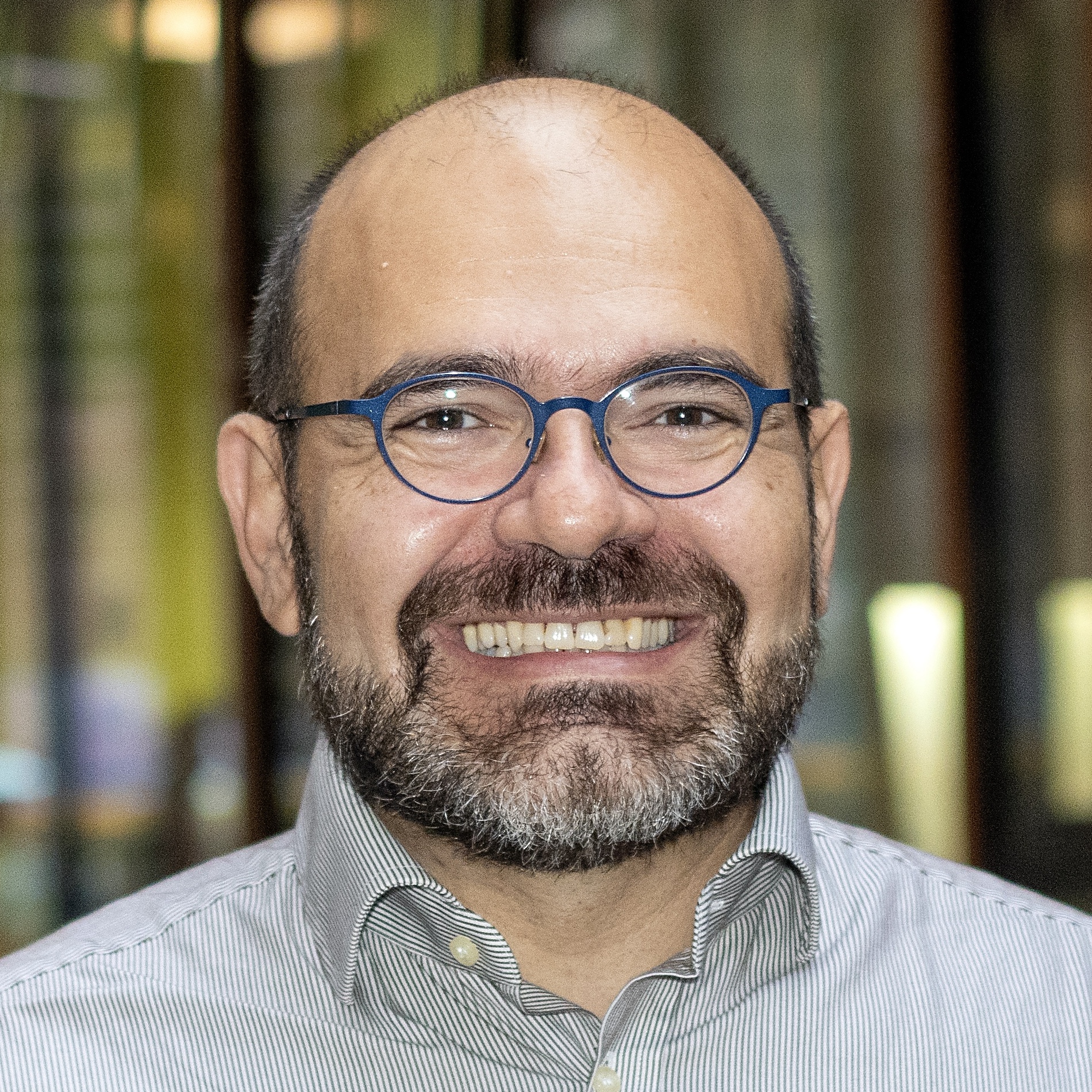
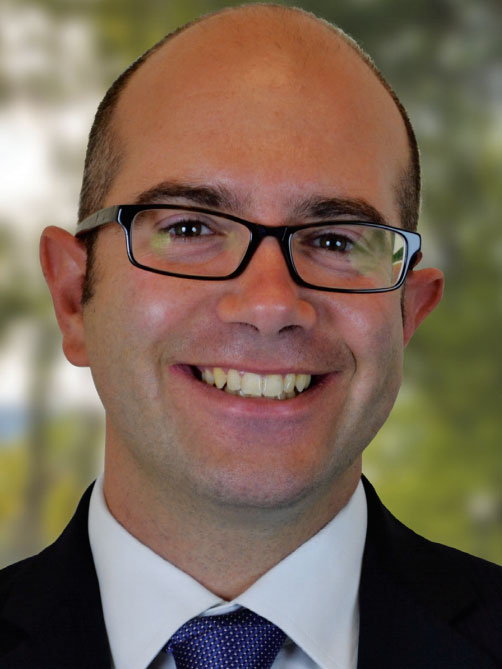
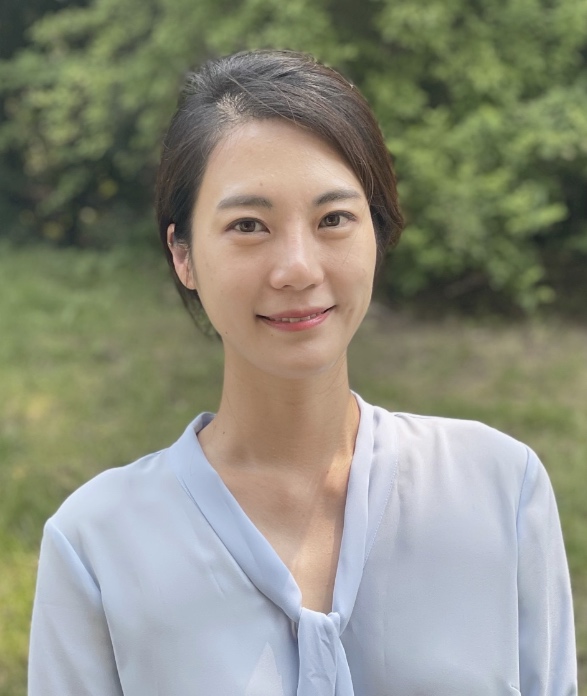
Kara Leyzac is an Associate Professor in the Department of Otolaryngology - Head and Neck Surgery at the Medical University of South Carolina . Her work focuses on cochlear implants and hearing loss, with particular emphasis on optimizing implant function and understanding cochlear health's role in auditory outcomes. She holds dual doctoral degrees (AuD/PhD) and is affiliated with the MUSC College of Medicine. Research interests include cochlear implant efficacy, neural health preservation, and patient decision-making regarding implantation. Her work spans clinical trials (e.g., phantom percept treatments) and systematic reviews of long-term outcomes. Over 37 publications highlight contributions to auditory neuroscience, implant design, and rehabilitation strategies. No scientific awards were explicitly mentioned in the provided texts. Advising and grants sections remain unspecified due to lack of detailed information. Active research areas include electrode placement effects, auditory training protocols, and patient-specific outcomes in adult cochlear implant users.
Ioannis Athanasiadis is a Full Professor and Chair of Artificial Intelligence at Wageningen University & Research (The Netherlands). He leads the Artificial Intelligence (AIN) group, focusing on advancing AI methods for global challenges in agriculture, ecology, and sustainability. Previously, he was faculty at the Dalle Molle Institute for Artificial Intelligence (IDSIA, Switzerland) and the Democritus University of Thrace (Greece). He holds a PhD (2005, cum laude) in Electrical and Computer Engineering from Aristotle University of Thessaloniki. His research integrates machine learning, knowledge engineering, and environmental modeling to address food security, climate adaptation, and ecosystem services. He leads initiatives like AgML (AgMIP's machine learning benchmarking effort) and coordinates European grants such as LTER-LIFE and CYBELE . Prof. Athanasiadis has supervised over 40 PhD/postdoc researchers and serves as Editor of Environmental Modelling and Software . He collaborates internationally on projects involving AI for crop modeling, digital twins, and sustainable agriculture. His team develops frameworks like Crop2ML and PyCrop2ML to enhance interoperability between process-based models and machine learning systems.
Ferhan Çeçen is a Professor at the Institute of Environmental Sciences, Boğaziçi University (Istanbul, Turkey). He has held academic positions since 1990, including Professor since 1999, and has conducted research in environmental engineering and biotechnology. His expertise includes water/wastewater treatment, environmental biotechnology, and adsorption processes. Education: Ph.D. in Environmental Engineering, Istanbul Technical University (1990) M.S. in Environmental Engineering, Istanbul Technical University (1993) B.S. in Chemical Engineering, Boğaziçi University (1984) Research Interests: Prof. Çeçen focuses on advanced water treatment technologies, including nanosilver effects on biological systems, biodegradation of pharmaceuticals, and adsorption using activated carbon. His work emphasizes practical solutions for hazardous pollutant mitigation in biological treatment systems. Key areas include: Environmental biotechnology applications Biodegradation kinetics and modeling Activated carbon integration in wastewater systems Toxicology of nanomaterials in water treatment Recent Projects (2015–2023): He leads projects funded by Boğaziçi University BAP and TÜBİTAK, including studies on micropollutant removal via granular activated carbon, nanosilver effects on biological systems, and biodegradation of pharmaceuticals. These projects address emerging contaminants and sustainable treatment methods. Grants and Advising: His grants include BAP-funded research on micropollutant adsorption and TÜBİTAK support for microbial product inhibition studies. He has advised numerous graduate students on environmental engineering topics, though specific student names are not listed in the provided texts. Labs and Teams: His research group collaborates on experimental and computational studies, focusing on lab/pilot-scale testing of water treatment innovations. Key facilities include Boğaziçi University's environmental engineering labs and partnerships with institutions like Munich Technical University.
Stratis Ioannidis is a Professor in the Electrical and Computer Engineering Department at Northeastern University, with a courtesy appointment in the Khoury College of Computer Sciences. His research focuses on distributed systems, networking, machine learning, big data, and privacy. He earned his B.Sc. from the National Technical University of Athens, and M.Sc. and Ph.D. from the University of Toronto. Prior to Northeastern, he worked at Technicolor and Yahoo Labs. Education: B.Sc. in Electrical and Computer Engineering (2002, National Technical University of Athens); M.Sc. and Ph.D. in Computer Science (2004, 2009, University of Toronto). Research interests span machine learning, distributed systems, optimization, and privacy. Key projects include the NSF AI Institute for Future Edge Networks and Distributed Intelligence (AI-EDGE), and work on federated learning, continual learning, and privacy-preserving algorithms. His research has been supported by NSF, Google, and Facebook grants. Recent publications emphasize federated learning, continual learning, and edge computing. Awards include the NSF CAREER Award, Søren Buus Outstanding Research Award, and multiple best paper awards. He advises numerous PhD students and collaborates across disciplines, including healthcare and wireless networks. Lab activities include SPIRAL and WIoT labs, focusing on machine learning at the edge and network optimization. Grants include the NSF AI Institute and multiple collaborative projects with industry and academia.
Toni Kotnik is an Associate Professor in the Department of Architecture at Aalto University, Finland. He holds dual expertise in mathematics and architecture, with a Ph.D. from the University of Zurich and a second degree in architecture. His roles include principal of d’HKL , a Zurich-based experimental architecture firm, and adjunct lecturer at institutions like Harvard University and the Bartlett School of Architecture. His research focuses on integrating science, engineering, and computation into architectural design, emphasizing structural innovation and sustainability. Education: Ph.D. in Mathematics (Dr. sc. Nat.), University of Zurich, 1999 Second degree in Architecture Research Interests: Computational design and generative systems Structural aesthetics and neuroaesthetics Sustainable urban and architectural solutions Parametric modeling and material systems Key Contributions: Advances in graphic statics and form-finding Design strategies for high-density urban environments Integration of AI and generative tools in architectural practice Recent Work Trends: Recent articles emphasize computational methods for industrial layout optimization, AI’s role in architecture, and embodied perception in structural design. His work bridges theoretical research with practical applications, such as the Singapore Hawker Centre redesign and experimental structures like hypar-combined shells. Awards: Aalto University Doctoral Thesis Awards (2022) Best Presentation Award (2019) Oscari-Vilamo Award (2023) Advising & Grants: Supervised 4 theses, including recipients of awards like the Metex Award shortlist. Active in international academic networks, serving on conference committees (e.g., International Association for Shell and Spatial Structures) and editorial roles (e.g., Automation in Construction journal). Labs & Teams: Leads the d’HKL studio, collaborating globally on projects like the AA/ETH Pavilion and the Hypercube for Gardens by the Bay. Research focuses on experimental design and material systems.
Roxane de la Sablonnière is a Full Professor in the Department of Psychology at the University of Montreal, affiliated with the Faculty of Arts and Sciences. She directs the CSI—Laboratory on Social Change and Identity and is a member of the CÉCD—Centre for the Study of Democratic Citizenship and the CIRCA—Interdisciplinary Research Centre on the Brain and Learning. Her research focuses on social change, cultural identities, intercultural relations, and the psychological impacts of crises like the COVID-19 pandemic. She has advised over 20 graduate students and led numerous research projects funded by agencies such as the Fonds de recherche du Québec (FRQ) and the Social Sciences and Humanities Research Council (SSHRC). Education & Research Focus : Her work examines how rapid societal changes affect individuals, particularly in contexts of immigration, policy shifts (e.g., multiculturalism, secularism), and Indigenous communities. Recent studies include longitudinal analyses of pandemic-related behaviors, identity integration processes, and the role of cognitive strategies in managing conflicting identities. Grants & Collaborations : She leads projects like "S'engager pour mieux aller!" (FRQS-funded) and contributes to strategic networks such as the Centre pour l'Étude de la Citoyenneté Démocratique (CÉCD). Her research integrates psychology with sociology, leveraging mixed methods (e.g., text mining, longitudinal tracking) to address societal challenges. Labs & Teams : As CSI director, she oversees projects on social change dynamics and identity reconstruction. Her work bridges academic and applied domains, influencing policy debates on integration, public health, and community resilience.
Xu Jinchao is a Professor of Applied Mathematics and Computational Sciences at King Abdullah University of Science and Technology (KAUST) and the Verne M. Willaman Professor of Mathematics at Penn State University. He has held distinguished roles, including Director of the Center for Computational Mathematics and Applications at Penn State since 1997 and is an Affiliated Faculty member of the College of Information Sciences and Technology at Penn State. His research focuses on numerical partial differential equations (PDEs), multigrid methods, machine learning, finite element methods, and domain decomposition methods. He is renowned for pioneering contributions such as the Bramble-Pasciak-Xu (BPX) preconditioner, Hiptmair-Xu (HX) preconditioner, Xu-Zikatanov (XZ) identity, and Morley-Wang-Xu (MWX) element. His work bridges computational mathematics and machine learning, including the development of MgNet, which unifies multigrid methods with convolutional neural networks. Xu has been recognized with numerous awards, including Fellowships from SIAM, AMS, AAAS, and the European Academy of Sciences. Notable accolades include the 2008 DOE Top 10 Breakthroughs for his HX preconditioner and the 1995 Feng Kang Prize for Scientific Computing. He has organized over 100 conferences and serves on editorial boards of top journals such as Mathematics of Computations and Numerische Mathematik . His leadership includes directing research centers and advancing computational science through collaborative efforts.
Hyun J Koo is an Assistant Professor in the Department of Civil and Environmental Engineering at Wayne State University, specializing in construction engineering and management. He focuses on defect and risk management, design management, Building Information Modeling (BIM), and adaptive reuse of buildings. Education: Ph.D. from The University of Texas at Austin M.S. from University of Illinois, Urbana-Champaign B.S. from Hanyang University Dr. Koo teaches graduate and undergraduate courses including Construction Techniques and Methods , Advanced Construction Engineering and Management , and Building Information Modeling (BIM) . His research integrates BIM methodologies with sustainable construction practices and risk mitigation strategies. Contact: hjkoo@wayne.edu | Phone: 313-577-8073 | Office: Room #0504.03, 5050 Anthony Wayne Drive
Christophe Viavattene is an Associate Professor of Environmental Sustainability at Middlesex University , specializing in flood risk management and urban resilience. He has spent 17 years at the Flood Hazard Research Centre , leading interdisciplinary research across economic and physical sciences in water and flood risk. Research Focus: Flood vulnerability (coastal, urban, fluvial), GIS tools (INDRA model), Multi-Coloured Manual (MCM) methodology, mental health impacts of flooding, groundwater flood risk in arid regions, and air quality risk assessment. Teaching: Programme Leader for the MSc Sustainability and Environmental Management , teaching problem-based sustainability, GIS, and environmental monitoring. Key Collaborations: EU FP7 RISC-KIT, EU CONHAZ, Environment Agency UK projects. Recent Publications: Bayesian flood models, coastal hotspots analysis, and groundwater flood damage methodologies. His work bridges academic research with practical applications, including flood storage compensation frameworks and vulnerability indicator libraries.
Dr. Merry Mani is an Associate Professor in Radiology and Imaging Sciences and Biomedical Engineering, specializing in biomedical imaging and signal processing. Her work focuses on advancing MRI-based imaging technologies to study neurological disorders such as Alzheimer's, Autism, and Epilepsy. She holds a Ph.D. in Electrical and Computer Engineering from the University of Rochester (2014) and completed a postdoctoral fellowship at the University of Iowa School of Medicine (2018). Her research combines biophysical modeling with machine learning to explore brain microstructures. Key achievements include the NNARSAD Young Investigator Grant and NIH-funded projects like 'Fast Multi-dimensional Diffusion MRI with Sparse Sampling'. Her lab develops cutting-edge reconstruction methods like qModeL and MUSSELS, prioritizing high spatio-temporal resolution imaging. Major contributions span diffusion MRI acquisition, model-based deep learning, and clinical applications in neurodegenerative diseases. Notable grants include NIH R01EB031169 for Alzheimer’s neurodegeneration studies and projects on rTMS for depression. Her work bridges imaging innovation with clinical impact, aiming to improve diagnosis and treatment through advanced imaging biomarkers.
Guang Tian, Ph.D. , is an Assistant Professor of City and Metropolitan Planning at the University of Utah and a faculty member at the Scientific Computing and Imaging Institute . His research bridges land use-transportation planning , travel behavior , and urban data science , with a focus on sustainability , climate adaptation , and equitable transit-oriented development . He previously founded the Center for Equitable Transit-Oriented Communities at the University of New Orleans as an Associate Professor. Education : Ph.D. in City & Metropolitan Planning (University of Utah, 2016) Professional Affiliations : Faculty, Scientific Computing and Imaging Institute (2025–present) His research leverages machine learning and GIS to analyze VMT reduction , active transportation , and the built environment’s impact on mobility . Key findings include the superior performance of random forest models over traditional methods in predicting mode choice and the role of polycentric urban structures in reducing auto dependency. Scientific Awards : Rising Scholar Award (2024, Association of Collegiate Schools of Planning) Grants include funding from the US Department of Transportation for equitable transit communities and multiple Louisiana Transportation Research Center projects on VMT modeling, rail infrastructure, and truck parking efficiency. His teaching centers on GIS applications in urban planning and transportation analysis.
Malgorzata Blicharska is a Senior Lecturer in Sustainable Development at Uppsala University, affiliated with the Department of Geosciences and the Institute for Research on Conflicts of Interest in Sustainable Social Transformation. Her work spans multiple research domains focused on sustainable natural resource management and policy implementation. Dr. Blicharska's research focuses on sustainable development with expertise in ecosystem services, biodiversity conservation, climate change governance, and the Water-Energy-Food-Ecosystem (WEFE) nexus. She integrates social science perspectives with environmental management, examining policy implementation and stakeholder engagement in conservation initiatives. Her work includes extensive research on urban ponds, recreational fisheries, and nature-based solutions, particularly focusing on ponds and wetlands as key components of sustainable landscape management. Her recent publications reveal a strong emphasis on transdisciplinary approaches to environmental challenges, with growing focus on nature-based solutions, drought vulnerability in forested regions, and governance aspects of implementing the WEFE nexus concept. Her work increasingly addresses justice dimensions in environmental management and stakeholder engagement in policy implementation. LANDPATHS: Swedish Environmental Protection Agency-funded program on multifunctional landscapes (coordinator) PONDERFUL: Horizon 2020 project on pond biodiversity and ecosystem services (WP lead) NEXOGENESIS: Horizon 2020 project on WEFE nexus policy integration (WP lead) Wet-Kit: Swedish Environmental Protection Agency project on wetland optimization PUDDLE-JUMP: Formas-funded project on small artificial waterbodies
Keigo Kobayashi is an Associate Professor at Waseda University's Faculty of Science and Engineering, School of Creative Science and Engineering, Department of Architecture. He has served in this position since 2016, previously holding the rank of Assistant Professor from 2012 to 2016. His professional journey includes significant experience at the Office for Metropolitan Architecture (OMA) in Rotterdam, where he worked as a Senior Architect and Project Architect from 2007 to 2012. His educational background includes a Master of Architecture II from Harvard University's Graduate School of Design (2005), a Master of Architecture from Waseda University's Graduate School of Science and Engineering (2003), and a Bachelor's degree in Architecture from Waseda University's School of Science and Engineering (2002). Kobayashi's research focuses on architectural planning and city planning, with particular interests in food-related architecture, spatial behavior, and sustainable design. His work explores the intersection of architecture with everyday life, examining how spatial configurations influence human behavior and community formation. Recent research has investigated food systems in urban contexts, playful approaches to spatial design, and the relationship between architectural form and environmental performance. His publications demonstrate a strong focus on practical applications of architectural theory, with projects spanning from food truck design in Shodoshima to zero-energy housing solutions and innovative approaches to architectural education. His work shows a consistent interest in how architecture can respond to contemporary social challenges while maintaining theoretical rigor. Excellence in Concrete Construction Award 2019, American Concrete Institute (ACI), Qatar National Library / OMA Kobayashi actively contributes to architectural education through various committee memberships, including serving as Chief of the Subcommittee on Strategies for International Compatibility in Architectural Education at the Architectural Institute of Japan and leading the Caberra Accord Correspondence Subcommittee at the Japan Accreditation Board for Engineering Education. His teaching portfolio at Waseda University is extensive, covering architectural design studios from undergraduate to doctoral levels. He leads several research initiatives, including the Wakusei Project in Tosa, Kochi, NPO PLAT (Platform for Architectural Thinking), and the European Thinkbelt/McDonald's Radio University project which represents an innovative approach to architectural education and community engagement, particularly in contexts of migration and cultural exchange.
Aaron Roth is the Henry Salvatori Professor of Computer and Cognitive Science at the University of Pennsylvania, affiliated with the Department of Computer and Information Science in the School of Engineering and Applied Science. He holds a secondary appointment in the Department of Statistics and Data Science at the Wharton School and is associated with several research centers including PRiML, the Warren Center for Network and Data Sciences, and the AMCS program. He received his PhD from Carnegie Mellon University under Avrim Blum and was a postdoc at Microsoft Research New England. His research focuses on algorithms and machine learning, particularly in private data analysis, fairness in machine learning, game theory, mechanism design, and learning theory. His work bridges theoretical computer science with societal concerns, advocating for ethically aware algorithm design. He co-authored the book The Ethical Algorithm with Michael Kearns, which explores how to embed social values like privacy and fairness into algorithmic systems. His recent publications show a strong trend toward uncertainty quantification, multicalibration, conformal prediction, and fairness in reinforcement learning and high-dimensional settings. He frequently publishes in top-tier venues such as STOC, FOCS, ICML, NeurIPS, and COLT, often with a focus on rigorous theoretical foundations with practical implications. Hans Sigrist Prize Presidential Early Career Award for Scientists and Engineers (PECASE) Alfred P. Sloan Research Fellowship NSF CAREER award Google Faculty Research Award Amazon Research Award Yahoo Academic Career Enhancement award Roth has advised numerous PhD students and postdocs, many of whom now hold academic or industry research positions. He is also an Amazon Scholar at AWS and has served in advisory roles for companies like Apple, Facebook, Leapyear, and Spectrum Labs. He has been active in organizing workshops and tutorials on differential privacy, fairness, and adaptive data analysis, and has given keynotes at major conferences and institutions worldwide. He leads research groups and collaborates widely across Penn, focusing on responsible AI, privacy, and algorithmic fairness. His lab produces foundational work on calibration, unlearning, privacy-preserving learning, and equitable decision-making systems.
Peter H. Verburg is a Full Professor of Environmental Spatial Analysis at the Institute for Environmental Studies (IVM) , Vrije Universiteit Amsterdam, leading the Environmental Geography group. He has held this position since 2010 and previously served as an Assistant Professor at Wageningen University (2003–2010) and Senior Researcher at Alterra (2009–2010). His research focuses on land use analysis, spatial modeling, and interdisciplinary environmental studies. Education: PhD in Land Use Modelling, Wageningen University (2000) MSc in Physical Geography, Wageningen University (1996) Key Research Interests: Dr. Verburg is renowned for developing the globally used CLUE land-use modeling framework. His work integrates methods from social sciences, econometrics, and earth sciences to analyze land-use patterns and policies. He actively contributes to EU projects on sustainable urban planning, climate adaptation, and ecosystem services. Current roles include co-Editor-in-Chief of Landscape and Urban Planning , member of the Earth Commission, and Science-Policy Interface member of UNCCD. Professional Activities: Former Chair of Global Land Programme (Future Earth) Lead researcher in multiple EU initiatives (e.g., BrightspotsCSA, TURAS) Organized workshops on land-use modeling and ecosystem services Awards: Highly Cited Researcher (2018, Web of Science top 1%) Research and Collaboration: He has published over 415 peer-reviewed articles and supervised 38 PhD theses. His projects span land-use modeling in China, Central Asia, and the Mekong region. Collaborations include UN agencies, European research networks, and global sustainability initiatives.