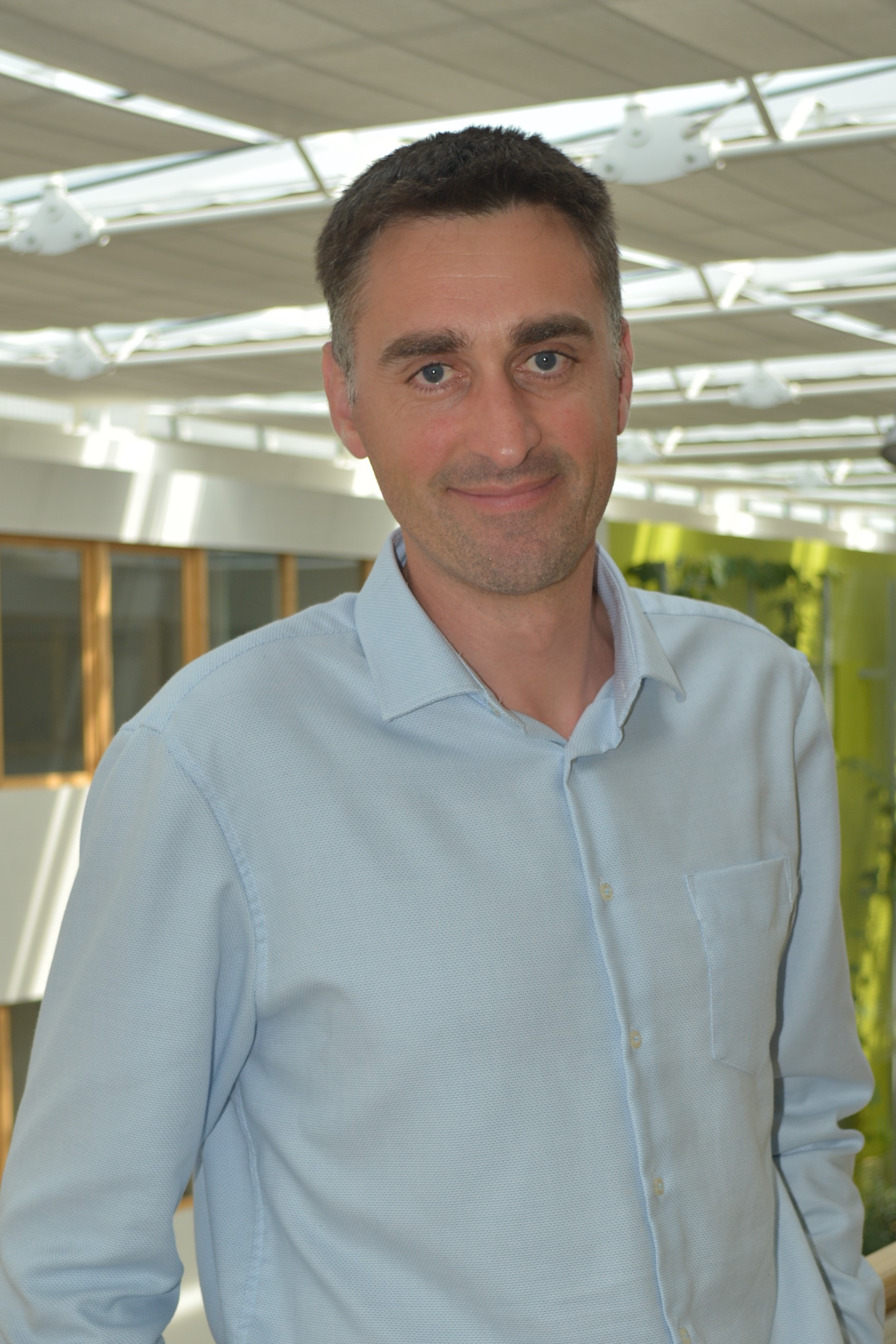
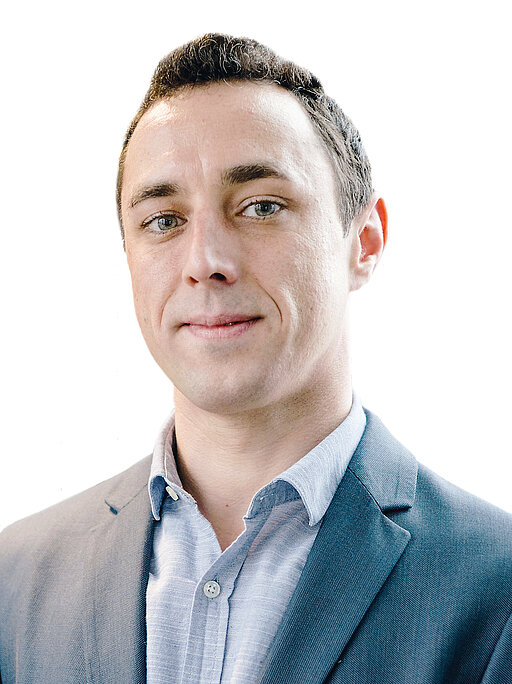
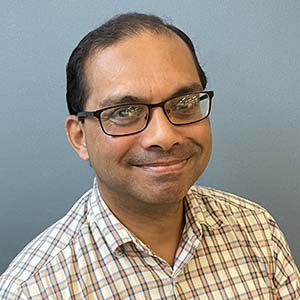
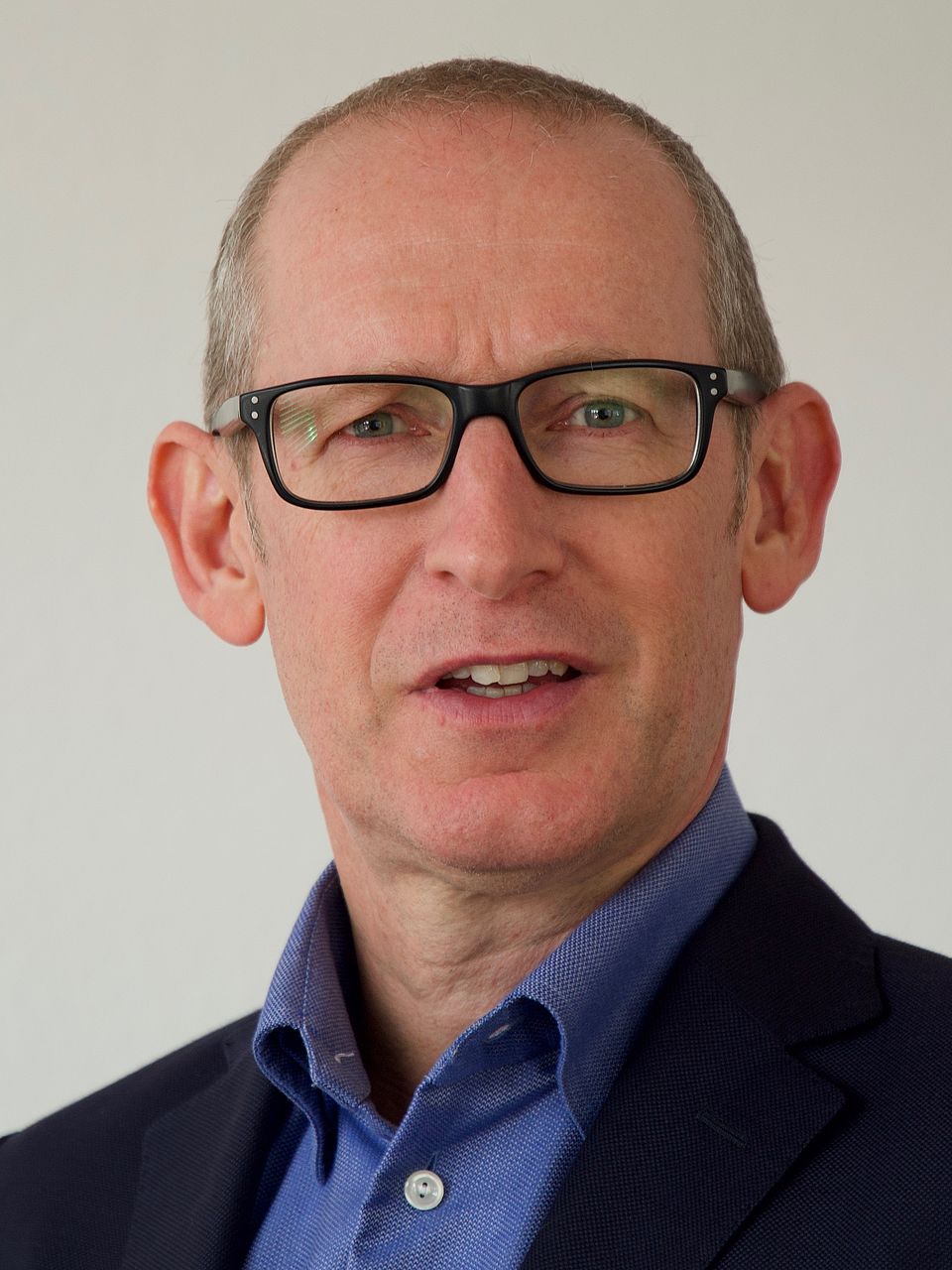
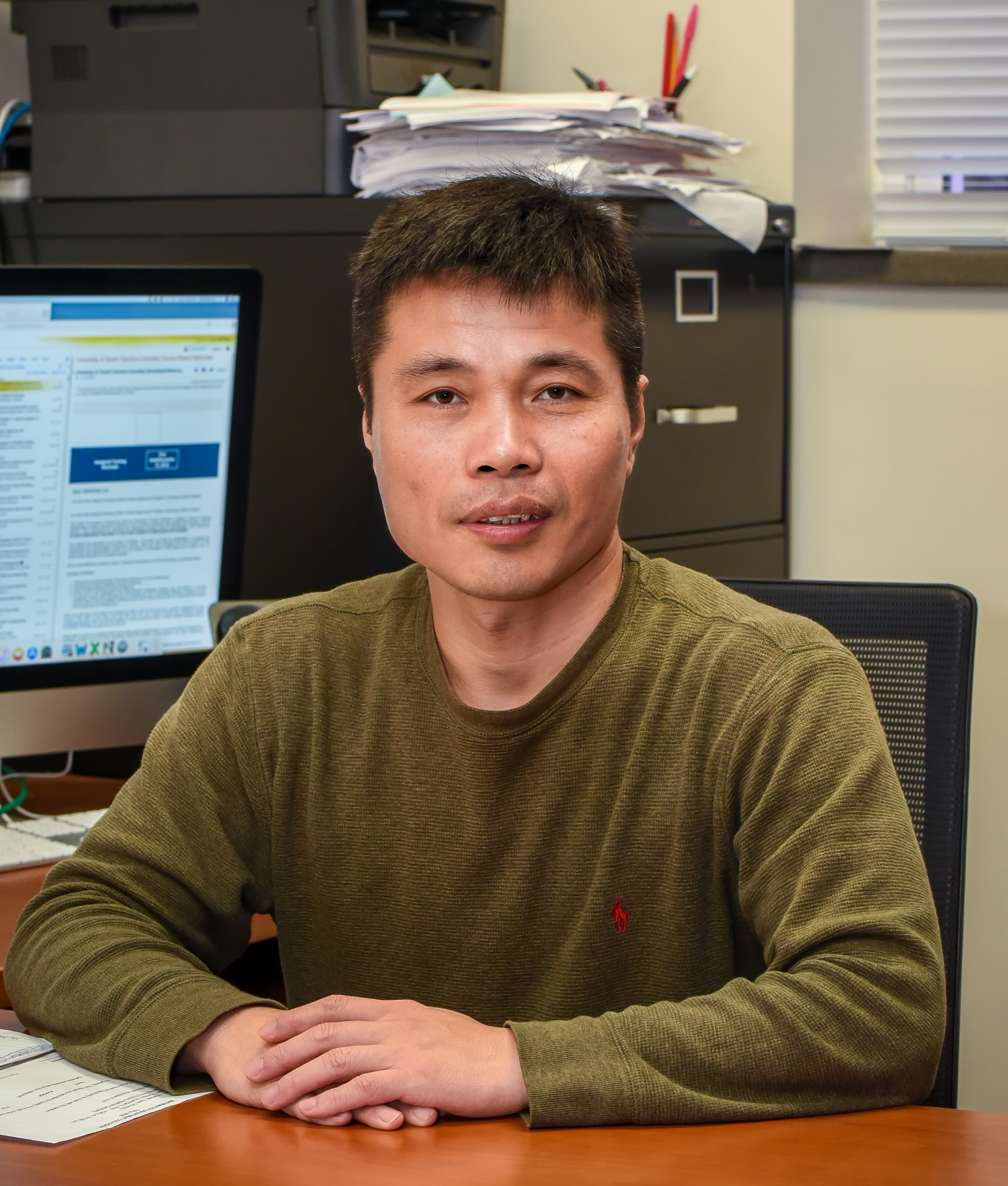
Frédéric Alauzet is Adjunct Professor in Mechanical Engineering at Mississippi State University and Senior Researcher at Inria Saclay. He holds a HDR (French tenure equivalent) in Applied Mathematics from Université Pierre et Marie Curie. His research advances: Adaptive mesh methodologies for CFD Anisotropic mesh generation techniques High-performance computing applications Transient flow simulations Technical paper awards include: International Meshing Roundtable (2015, 2013) AIAA Memorial Award (2009) He contributes to the Gamma3 project at Inria and collaborates with the Center for Advanced Vehicular Systems at MSU, developing cutting-edge computational approaches for aerospace and engineering simulations.
Dr. Jinjie Liu is a Professor in the Division of Physics, Engineering, Mathematics, and Computer Science at Delaware State University. His research focuses on numerical analysis and mathematical physics, particularly in electromagnetics, nonlinear optics, metamaterials, and semiconductor devices. He holds a B.S. from the University of Science and Technology of China (2001), an M.S. (2003), and Ph.D. (2006) from Stony Brook University, followed by postdoctoral training at Arizona State University and the University of Arizona. Research Highlights: Development of advanced FDTD methods for material interfaces and nonlinearities. Investigation of transformation optics and cloaking phenomena. Simulations of semiconductor devices and hydrodynamic electron fluid models. Awards: DSU Vice President’s Choice Awards for Research (2013). Selected Projects: Transformation Optics Based Local Mesh Refinement Subpixel Smoothing FDTD Method Invisibility Cloaking Simulation
Frank Giraldo is a Distinguished Professor of Applied Mathematics at the Naval Postgraduate School (NPS) and an Adjunct Professor of Applied Mathematics at the University of California, Santa Cruz. He leads the Scientific Computing group at NPS, focusing on numerical methods for partial differential equations (PDEs), particularly in atmospheric and oceanic systems. His research emphasizes discontinuous and continuous Galerkin methods, high-performance computing (HPC), and large-eddy simulations (LES) for modeling geophysical flows. Education: PhD in Applied Mathematics from the University of Virginia (1994), BSE from Princeton University (1987). Research Interests: Nonhydrostatic atmospheric modeling (NUMA), ocean modeling (NUMO), LES of hurricanes and fluid dynamics, scalable algorithms for supercomputers (e.g., GPU acceleration), and implicit-explicit time-integration methods. His work integrates HPC with climate science and has been applied to the U.S. Navy's NEPTUNE system. Awards: Menneken Award (2025), NPS Distinguished Professor (2020), Carl E. Menneken Award (2007), Alan Berman Research Prize (2001). Leadership: Chair of NPS Applied Mathematics Department (2021–2025), member of the U.S. Interagency Council for Advancing Meteorological Services (ICAMS), and scientific advisor to international programs like the German Research Foundation's Geophysical Fluid Dynamics initiative. Labs/Teams: Principal developer of the NUMA atmospheric model and NUMO ocean model. Collaborates with institutions like NJIT, Hampton University, and Lawrence Livermore National Lab on projects funded by ONR, DARPA, and NSF.
Markus Weimar is a Lecturer at the Chair of Mathematics IX (Scientific Computing) at the University of Würzburg. He previously held academic positions at Ruhr University Bochum (Interim Professor, Assistant Professor), University of Siegen (Senior Lecturer, Interim Professor), and Philipps-University Marburg (Postdoctoral Researcher). Education: Dipl.-Math. (2009) and Ph.D. (2013) from Friedrich-Schiller-University Jena. Honors: Summa cum laude Ph.D. thesis, German National Academic Foundation support, and election to the Early Career Researchers Board at RUB. Research Interests include regularity theory for operator equations, partial differential equations, boundary integral equations, function spaces, numerical analysis, adaptive methods, and high-dimensional problems. His work focuses on overcoming the curse of dimensionality through techniques like wavelets, quasi-Monte Carlo methods, and discrepancy theory. Recent Publications highlight breakthroughs in Besov regularity for p-Poisson equations, adaptive wavelet boundary element methods, and tractability of high-dimensional permutation-invariant integration. His 2024 papers on Sobolev spaces with mixed weights and oscillation analysis in Morrey-type spaces indicate ongoing innovation in theoretical numerical analysis. Scientific Leadership: Senior member of the GAMM Junior Research Group at RUB, active in organizing workshops, and participant in international conferences like FoCM and MCQMC.
Dr. Thomas Takacs is a Project Leader in the Geometry in Simulations research group at the RICAM (Research Institute for Symbolic Computation), part of the Austrian Academy of Sciences. His work focuses on advancing computational methods for solving partial differential equations, particularly through isogeometric analysis and spline-based numerical techniques . His research interests include smooth basis constructions, multi-patch domain coupling, and adaptive mesh refinement strategies. Key contributions involve developing C1-continuous spline spaces over planar mixed meshes and unstructured quadrilateral meshes, with applications to engineering problems like linear elasticity. He explores the integration of machine learning (e.g., CNNs) for optimizing quad meshing and employs artificial neural networks in adaptive optimization frameworks. His work bridges geometric modeling and numerical analysis, addressing challenges such as singularity treatment in isogeometric analysis and approximation properties over self-similar meshes. Dr. Takacs collaborates on multi-institutional projects, including the Geometry in Simulations group at RICAM. His publications span computational mechanics, numerical methods, and geometric algorithms, with a focus on advancing the theoretical foundations and practical implementations of isogeometric analysis.
Joachim Moortgat - Professor of Geosciences Joachim Moortgat is a Professor in the School of Earth Sciences at The Ohio State University, leading the Computational Geosciences Group. His research focuses on multiphase flow in porous and fractured subsurface media, with applications in reservoir engineering, carbon sequestration, groundwater remediation, and unconventional hydrocarbon production. He holds a Ph.D. from Radboud University (2006) and has pioneered advanced numerical methods for reservoir simulation, including higher-order finite element techniques. Education Ph.D. in Theoretical and Computational Physics, Radboud University, Netherlands (2006) Research Interests Moortgat's work spans scales from molecular-level sorption in shale nanopores to large-scale reservoir dynamics. Key areas include: Compositional reservoir simulation Fractured media modeling CO₂ sequestration and enhanced oil recovery Unconventional shale gas reservoir characterization Geomechanical interactions in subsurface systems Publications Overview His 2021–2020 publications emphasize shale gas adsorption mechanisms, fault architecture analysis, and high-fidelity simulation of multiphase systems. Earlier work includes groundbreaking studies on gravitational fingering and compositional modeling in fractured reservoirs. Awards Recipient of the Cedric K. Ferguson Medal (2014) for excellence in reservoir engineering research. His work has been recognized for bridging computational methods with practical subsurface engineering challenges. Labs & Teams Directs the Computational Geosciences Group, collaborating with industry and academic partners. Active in developing open-source simulation tools for reservoir and environmental applications.
Vincent Moureau is a CNRS Research Fellow (HDR) at the CORIA laboratory, specializing in advanced computational fluid dynamics and combustion modeling. His research focuses on Large-Eddy Simulation (LES) of turbulent flows, spray dynamics, and thermo-acoustic instabilities in complex geometries. He is a core developer of the YALES2 solver, a high-order unstructured code for multiphase reactive flows. Positions: Research Fellow at CORIA, HDR, and affiliated with INSA de Rouen for teaching. Key Expertise: LES in gas turbines, piston engines, and wind turbines; numerical methods for HPC systems. He has taught courses on numerical methods, aerodynamics, and CFD software training. His work earned awards including the 2018 Grand Prix ONERA and the Digital Simulation Collaboration Award. His research includes industrial collaborations with SAFRAN and INRIA. Labs/Teams: Leads the YALES2 development team and contributes to the SIAME project for exascale computing. Active in the SIAME and MATI projects for aero-thermal systems and combustion modeling.
Shailesh Naire is a Senior Lecturer in the School of Computer Science and Mathematics at Keele University , UK. He earned his PhD in Applied Mathematics from the University of Delaware (2000), with research on thin-film fluid dynamics in foam drainage. His career includes postdoctoral work at the University of Nottingham (2001–2004) and lectureships at Worcester Polytechnic Institute (2000–2001), Heriot-Watt University (2004–2006), and the University of Nottingham (2006). Education : PhD in Applied Mathematics (University of Delaware, 2000) His research spans fluid mechanics and biomedical engineering , focusing on fluid-structure interactions, free boundaries, and mathematical modeling. Current projects include thermocapillary and thermoviscous effects in thin-film flows, fingering instabilities in lava flows, and Computational Fluid Dynamics (CFD) simulations for mechanical thrombectomy and tissue engineering . Collaborations involve Keele's School of Pharmacy and Bioengineering and the Royal Stoke University Hospital. Recent publications highlight his work on signaling molecule-mediated cartilage regeneration, thermo-viscous instabilities in spreading liquid domes, and adaptive mesh methods for thin-film equations. He supervises PhD student Jatinder Pannu (2023) and has mentored several former students, including Kelly Campbell (2020) and Hani Alahmadi (2021). Administratively, he serves as the Health and Safety Liaison Officer in his school and has held leadership roles such as Postgraduate Research Director and Programme Director for the Data Scientist Apprenticeship. His research themes include Fluid Dynamics and Biomechanics .
Chunlei Liang is a Professor in the Department of Mechanical & Aerospace Engineering at Clarkson University, affiliated with The Center for Advanced Materials Processing (CAMP). He holds editorial roles at the ASME Journal of Fluids Engineering and Computers & Fluids. His expertise spans Computational Fluid Dynamics (CFD), Magnetohydrodynamics (MHD), and fluid-structure interaction, with a focus on high-order numerical methods for unstructured grids. Dr. Liang has led NSF/AFOSR-funded projects developing solvers like CHORUS-MHD for solar convection simulations and the Selig20 ducted turbine. Education: Ph.D., University of London, 2005 Postdoc, Stanford University, 2007–2010 Research Interests: Dr. Liang's work integrates advanced numerical techniques with engineering applications: High-order spectral difference methods Magnetohydrodynamic simulations Turbomachinery and marine propulsion Unsteady flow modeling (e.g., ducted wind turbines) Algorithm development for complex geometries Key Publications: Recent work includes high-order solvers for MHD equations, turbulence modeling in ducted systems, and astro-physical convection studies. His methods emphasize divergence cleaning and adaptive meshing for unstructured grids. Awards: Presidential Early Career Award for Scientists and Engineers (2019) NSF CAREER Award (2016) ONR Young Investigator Award (2014) Advising & Grants: Supervised 13 PhD students and 10+ master's candidates. Active grants include AFOSR support for MHD modeling and NSF funding for solar convection simulations. Collaborates with institutions like Lawrence Livermore National Lab and Dassault Systèmes. Labs & Teams: Leads the CHORUS-MHD research group, with ongoing projects on fluid-structure interaction in marine systems and high-order CFD for aerospace applications.
Caroline Lambert is the Head of the School of Future Transport Engineering at Coventry University. She holds a Senior Lecturer academic rank with extensive experience in aeronautical engineering and education leadership. Her career includes roles at BAE Systems as a Computational Aerodynamicist and academic leadership positions such as Course Director and Associate Head of Department. She is an Independent Chair for PhD vivas, External Examiner (UWE until 2023), and a Senior Fellow of the Higher Education Academy. Education: M.Eng (Hons) in Aeronautical Systems Design from University of Bath (1999), PhD in 'Fin Buffeting over Delta Wings' (2003) Research interests focus on experimental aerodynamics, flight dynamics, fluid mechanics, and engineering education innovation. Notable contributions include work on delta wing buffeting (2003–2004) and the Lanchester Aerofoil research (2014), which won the John Barnes Trophy in 2017. Recent work explores computational methods like RANS and LES for aerodynamic prediction (2023–2025). Her articles span aerodynamics, education theory, and CFD advancements, reflecting a dual focus on technical and pedagogical innovation. Awards include the John Barnes Trophy and LFHE Aurora Leadership Program recognition (2019). Advisory roles include supervising a successful PhD in 2010 and chairing over 5 PhD vivas since 2020. She supports research through grants like the Lanchester Aerofoil project and leads initiatives to address gender gaps in STEM education.
Prof. Dr. Stefan Funken serves as Professor of Numerical Analysis, Dean of the Faculty of Mathematics and Economics, and Deputy Director of the Institute for Numerical Mathematics at the University of Ulm. His distinguished academic career spans over two decades with significant contributions to numerical mathematics and computational methods. His educational journey includes: 1982-1986: Vocational training as energy plant electronics technician at RWE 1986-1988: Abitur (secondary education) at Friedrich-Spee-Kolleg in Neuss 1988-1993: Mathematics studies at University of Hannover and Brunel University, earning MSc in Numerical Analysis (1992) and Diplom (1993) 1996: PhD with dissertation 'Fast solution methods for FEM-BEM coupling equations' at University of Hannover 2002: Habilitation on 'Contributions to a posteriori error estimation in the numerical treatment of elliptic partial differential equations' at University of Kiel Prof. Funken's research focuses on developing and analyzing discretization methods for partial differential and integral equations. His work emphasizes efficient algorithm implementation in MATLAB, C++, and Python, with applications spanning engineering simulations, corrosion analysis, and fluid dynamics. He has made seminal contributions to adaptive mesh refinement techniques, a posteriori error estimation frameworks, and the coupling of finite element and boundary element methods. His recent publications reveal a consistent research trajectory focused on practical implementations of numerical methods, particularly through MATLAB-based tools. The work demonstrates evolution from theoretical foundations to robust software implementations that serve both academic research and industrial applications, with particular emphasis on computational efficiency and error control. Prof. Funken actively mentors doctoral researchers, with current students working on adaptive mesh refinement algorithms, polygonal mesh analysis for corrosion simulation, and lubrication oil validation. He has developed extensive educational resources including the 'Mathe? Logisch!' YouTube channel (launched 2018) and specialized tutorials for LaTeX and MATLAB learning. He maintains active professional engagement through memberships in the German Mathematical Society (DMV) and the Society for Applied Mathematics and Mechanics (GAMM), contributing significantly to the mathematical community through these organizations. Leading specialized research groups in numerical mathematics, Prof. Funken has developed critical software tools including epsBEM (Efficient P-Stable Boundary Element Methods) and AMESHREF (Matlab-Toolbox for Adaptive Mesh Refinement in 2D). His team bridges theoretical numerical analysis with practical computational implementations, creating accessible educational resources and open-source tools that democratize advanced numerical methods for students and researchers worldwide.
Jun.-Prof. Dr. Mira Schedensack is a faculty member at the University of Leipzig in the Faculty of Mathematics and Computer Science , specifically within the Mathematisches Institut . Her research focuses on Numerical Analysis of partial differential equations (PDEs) with emphasis on Finite Element Methods , A Posteriori Error Analysis , Adaptive Mesh Refinement , and Gradient Elasticity . She has led projects like the DFG-funded work on Robust and Efficient Discretizations in Solid Mechanics and contributes to applications in mechanics and physics. Research Interests : Numerical methods for higher-order PDEs, non-conforming finite elements, Helmholtz decompositions, and gradient elasticity. Teaching : Regularly offers courses like Numerik 1 (Fundamentals), Numerik-Praktikum (practical implementation), and specialized topics in finite element analysis. Her recent publications address challenges in discretizing Reissner-Mindlin plates, mixed formulations for gradient elasticity, and adaptive methods for Stokes and convection-diffusion equations. She co-organizes the NA-LaB Seminar (Numerical Analysis in Leipzig and Berlin) and participates in collaborative research initiatives like the DFG SPP 1748 program.
Sian Jin is an Assistant Professor in the Department of Computer & Information Sciences at Temple University. He holds a Ph.D. in Computer Engineering from Indiana University (2023) and a B.S. in Physics from Beijing Normal University (2018). His research focuses on high-performance computing (HPC), data reduction, and machine learning optimization, particularly leveraging lossy compression techniques to improve scientific data analytics and management. Key achievements include over 20 top-tier publications (SC, VLDB, EuroSys, etc.), development of frameworks like Foresight and DeepSZ, and recognition via awards such as the SC 2022 Student Grant and DGRP 2022. His work addresses challenges in parallel I/O acceleration, error-bounded compression for scientific simulations, and efficient DNN training through compression. Current research emphasizes in situ task scheduling for HPC applications and neural network-driven super-resolution techniques. He advises on Ph.D. opportunities in HPC, machine learning, and data reduction systems.
Xinfeng Liu serves as Professor and Undergraduate Director in the Department of Mathematics at the University of South Carolina. His academic journey includes progression from Assistant Professor (2009-2013) to Associate Professor (2013-2017) and finally to full Professor (2018-present), following a Visiting Assistant Professor position at UC Irvine (2006-2009). His research spans Computational Biology with focus on cancer stem cell modeling and signal transduction mechanisms, alongside Numerical PDEs specializing in front tracking methods and integration factor techniques. Liu's work bridges mathematical theory with biological applications, particularly in morphogen gradient formation and MAPK cascade regulation. His computational approaches address complex phenomena like Rayleigh-Taylor instability in fluid dynamics. Liu's recent publications demonstrate strong trends in developing numerical methods for free boundary problems in biological systems, with significant contributions to cancer stem cell modeling. His work increasingly integrates stochastic elements and time-delay systems in therapeutic response modeling. NSF Mathematical Biology Division grant DMS1853365 (2019-2022) NSF Mathematical Biology Division grant DMS1308948 (2013-2017) NSF Mathematical Biology Division grant DMS1019544 (2010-2014) University of South Carolina ASPIRE I grant (2013-2014) South Carolina EPSCoR/IDeA GEAR program (2011-2013) Liu has mentored three doctoral students to completion, all securing competitive postdoctoral positions at Los Alamos National Lab, University of Waterloo, and University of North Texas. His teaching portfolio spans computational mathematics, differential equations, and advanced analysis courses since 2009, including honors sections and specialized topics like Modeling of Complex Biological Systems.
Dave Marcum is the ExxonMobil Professor and Chief Scientist in Computational Fluid Dynamics at Mississippi State University's Center for Advanced Vehicular Systems (CAVS). With a Ph.D. from Purdue University, he leads research in unstructured mesh generation and high-performance computing. His work integrates computational methods with aerospace and automotive engineering. Research interests include adaptive mesh refinement, viscous flow simulations, and parallel algorithm design. His publications emphasize CFD optimization for industrial applications, such as missile aerodynamics and propeller design. Awards include ExxonMobil Endowed Professorship, Inria International Chair, and multiple outstanding researcher recognitions. He collaborates globally with institutions like MIT and INRIA. Key labs include CAVS and HPC², focusing on scalable CFD solutions for DoD, NASA, and aerospace partners.