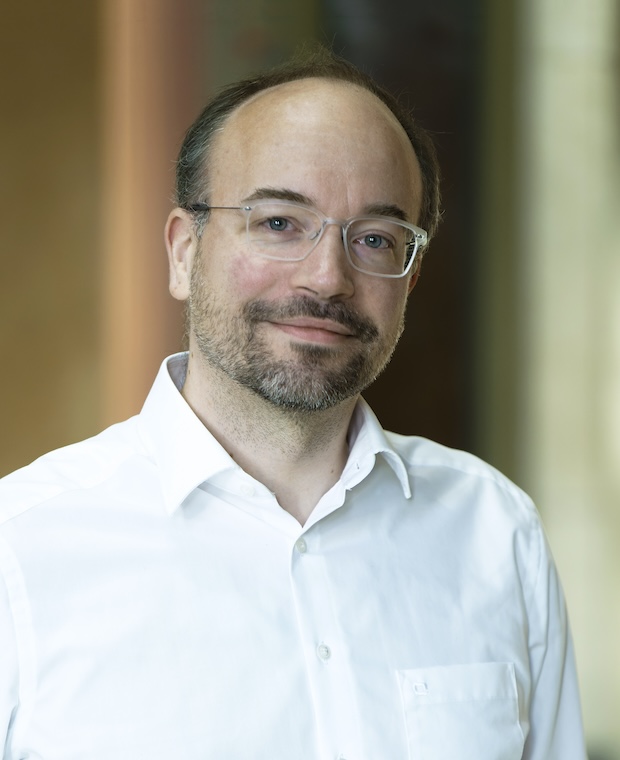
Fabian Fritz holds an M.Sc. degree and works at the Technical University of Munich (TUM) within the Chair of Aerodynamics and Fluid Mechanics . His research focuses on computational fluid dynamics (CFD) and numerical simulation of multiphase flows, particularly using Smoothed Particle Hydrodynamics (SPH) . He collaborates on projects like PBF-LB/M (additive manufacturing) and contributes to Lagrangian fluid mechanics benchmarking frameworks. Research Trends: His publications emphasize numerical methods (SPH, level-set, finite-volume), multiphase flow modeling , heat transfer , and thermoacoustic stability . Recent work includes hardware-agnostic code optimization and adaptive mesh refinement techniques. Education: Completed a master’s thesis on Diffusive-Interface Modeling of Multiphase Flows with Surface-Tension Effects , supervised by P.D. Dr.-Ing. habil. Stefan Adami.
Prof. Dr. Markus Bachmayr is a full professor at the Institute for Geometry and Practical Mathematics, RWTH Aachen University, holding the chair for Applied Mathematics. His research focuses on nonlinear approximation, high-dimensional partial differential equations (PDEs), uncertainty quantification, and numerical methods in quantum chemistry. He leads the ERC Consolidator Grant project Computational Complexity of Highly Nonlinear Approximations (COCOA) and contributes to CRC 1481 Sparsity and Singular Structures, and RTG 2326 Energy, Entropy, and Dissipative Dynamics. His recent work emphasizes adaptive low-rank and sparse approximation techniques for parametric and stochastic PDEs, including applications in radiative transfer and poroviscoelastic flow modeling. He serves as Editor-in-Chief of Foundations of Computational Mathematics and Associate Editor for multiple journals. Scientific Awards: John Todd Award 2013 Borchers Plakette 2014 Erwin Wenzl Preis 2007 He has taught courses such as Numerische Analysis I/II, Numerische Mathematik für Elektrotechniker, and seminars on numerical methods and approximation theory.
Rainald Loehner is a Distinguished Professor of Fluid Dynamics at George Mason University's Center for Computational Fluid Dynamics. Since 2003, he has led the Center for Computational Fluid Dynamics at George Mason University. He is currently a Hans Fischer Senior Fellow at the Technical University of Munich's Institute for Advanced Study (TUM-IAS) for 2023, hosted by Professors Kai-Uwe Bletzinger and Roland Wüchner in the 'Adjoint-Based System Identification of Large-Scale Structures' Focus Group. Loehner received his Diplom Ingenieur (Maschinenbau) degree from the Technical University of Braunschweig, and his PhD and a DSc in civil engineering from the University College of Swansea, Wales. After teaching at Swansea for a year, he worked at the Naval Research Laboratory in Washington, DC, followed by a research professorship at George Washington University. He joined George Mason University as an associate professor and was promoted to full professor in 1995 and distinguished professor in 2004. With over 35 years of experience, Professor Loehner's research spans the complete pipeline of numerical solvers and simulation tools. His expertise includes pre-processing, grid generation, numerical methods, field solvers, parallel computing, adaptive mesh refinement, fluid-structure interaction, shape optimization, system identification, and computational crowd dynamics. His current work focuses on developing advanced field solvers for compressible and incompressible flows, acoustics, electromagnetic wave propagation, heat and mass transfer, structural mechanics, and fluid-structure interaction. Key application areas include blast mitigation, ship hydrodynamics, blood flow, contaminant transport, and pedestrian safety. Loehner's recent research output (2020-2024) shows a strong trend toward digital twin technology and adjoint-based methods for structural analysis and optimization. His publications focus on high-fidelity digital twins for detecting structural weaknesses, risk assessment in engineering systems, and optimization of sensor placement. His work bridges computational mechanics with machine learning approaches, particularly in system identification and inverse problems, demonstrating how computational methods can solve complex real-world engineering challenges. 2020: Ranked #15119 in the Stanford List of Most Influential Scientists of the World; #8 in Aerospace and Aeronautics 2010: Distinguished International Career Award, Argentine Association of Computational Mechanics 2008: Fellow, International Association for Computational Mechanics 2006: Associate Fellow, AIAA 2005: Honorary Professor, University of Wales Swansea 2005: Advisory Professor, Shanghai Jiao Tong University 2004: Distinguished Professor of Fluid Dynamics, George Mason University 1999: Computational Mechanics Achievements Award, Japan Society of Mechanical Engineering 1993: Doctor of Science in Civil Engineering, University College of Swansea 1979-1983: Studienstiftung des Deutschen Volkes (Top 1% of German Students) Professor Loehner has mentored numerous students through his work at George Mason University and has supervised research in computational fluid dynamics, structural mechanics, and related fields. His research has been supported by various grants from government agencies and industry partners, enabling the development of advanced simulation tools applied in aerodynamics, hydrodynamics, shock-structure interaction, and medical applications. His codes and methods have been widely adopted in industry and academia for applications ranging from aircraft and ship design to medical simulations and urban pathogen transmission modeling. Loehner leads the Center for Computational Fluid Dynamics at George Mason University, which focuses on developing cutting-edge computational methods for fluid dynamics and related multiphysics problems. The center works on strategic application areas including blast mitigation, ship hydrodynamics, blood flow simulation, and pedestrian movement modeling. As a TUM-IAS Fellow, he collaborates with the Chair of Computational Modeling and Simulation at TUM on adjoint-based system identification of large-scale structures, bringing together expertise in computational mechanics and digital twin technology to address complex engineering challenges.
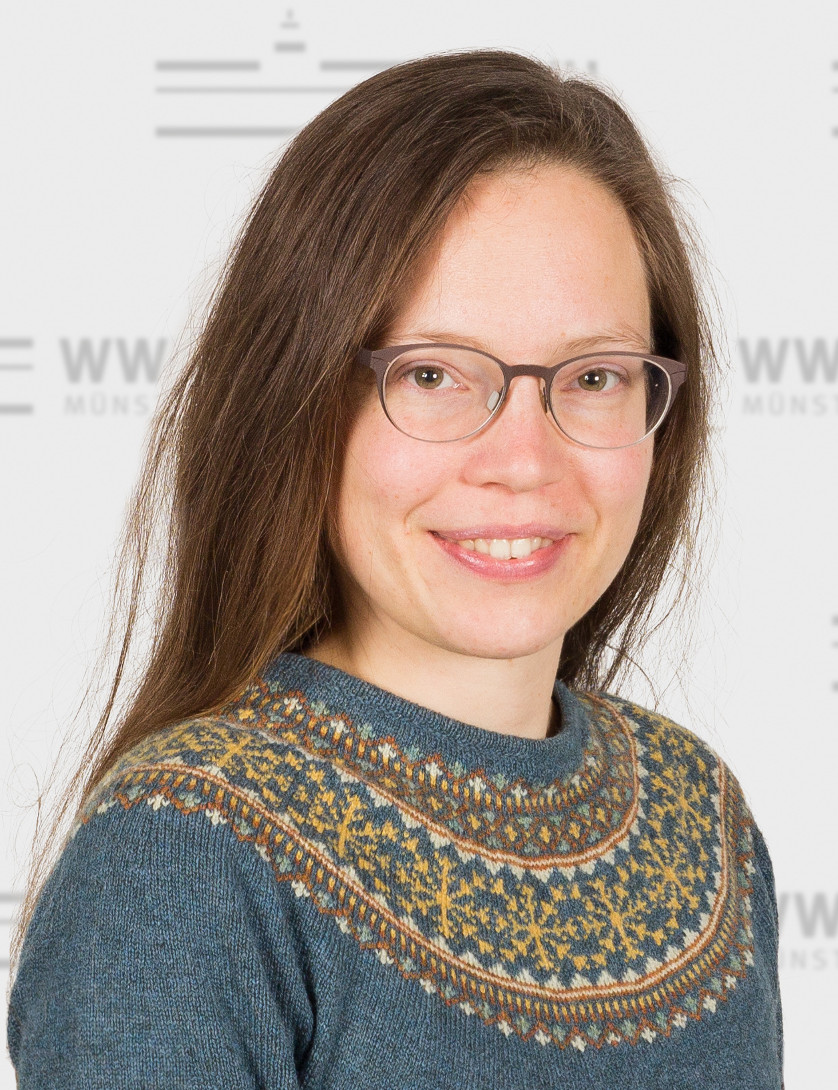
JProf. Dr. Mira Schedensack is a faculty member at the Institute for Analysis and Numerics within the Department of Mathematics and Computer Science , University of Münster. Her expertise lies in Numerical Analysis, Machine Learning, and Scientific Computing , with a focus on finite element methods and numerical solutions for partial differential equations. Research Interests: Numerical methods for PDEs, mixed finite element formulations, adaptive algorithms, and thermo-optical interactions in computational physics. Teaching: Offers courses in Numerical Partial Differential Equations and Adaptive Finite Element Methods. Students: Mentors doctoral student Jonas Ketteler . Publications: Key contributions to non-conforming FEM, Stokes equations, and gradient elasticity.
Joscha Gedicke is a Professor at the Institute for Numerical Simulation (University of Bonn), specializing in Numerical Analysis , Finite Element Methods , and Scientific Computing . His research focuses on adaptive algorithms, error estimation, and computational methods for partial differential equations (PDEs) and optimal control problems. Contact: gedicke@ins.uni-bonn.de | +49 228 73-69835 Teaching: Lectures on Hybrid High-Order Methods (V5E1), Adaptive Finite Element Methods (S4E1), and Discontinuous Galerkin Methods (V5E5). Research Trends: Gedicke's work spans Numerical Methods for PDEs , Adaptive Finite Element Analysis , Mixed and Discontinuous Galerkin Formulations , and Error Estimation . His recent publications emphasize Virtual Element Methods and Robust Discretizations for magnetostatic and optimal control problems. Collaborative Networks: He collaborates with researchers in computational mathematics, including institutions like TU Munich, University of Milano-Bicocca, and the University of Bonn's research seminar on Mathematics of Computation .
Oliver G. Ernst is a Professor of Numerical Analysis at Technische Universität Chemnitz . His research focuses on Numerical Analysis , Uncertainty Quantification , and Inverse Problems , with applications in Thermo-Hydro-Mechanical (THM) processes , Electromagnetics , and Stochastic Partial Differential Equations . He is associated with the Numerical Analysis group at TU Chemnitz. Key Research Areas : Efficient numerical methods for PDEs Krylov subspace techniques Stochastic finite element methods Multi-physics modeling Geoscientific applications Recent Publications (2025-2010): THM simulations under uncertainty Neural network PDE solvers Bayesian inversion frameworks Rational Krylov algorithms Deflated restarting strategies Collaborations : TU Bergakademie Freiberg University of Manchester Technical University of Munich University of Maryland University of Geneva Software Development : Contributor to OpenGeoSys platform Developer of FEMALY MATLAB library Academic Recognition : h-index 32, i10-index 66, with over 4423 citations since 2020.
Benjamin Uekermann is a Jun.-Prof. (Assistant Professor) at the University of Stuttgart's Institute for Parallel and Distributed Systems (IPVS), part of the Faculty of Computer Science, Electrical Engineering, and Information Technology. His work focuses on sustainable simulation software ecosystems , particularly advancing the preCICE coupling library for multi-physics and multi-scale simulations. He leads research in partitioned simulation coupling , reproducible software practices, and high-performance computing tools. His research interests include Parallel computing and distributed systems Numerical methods for coupled PDE-based simulations Scientific software sustainability and open-source frameworks Data-driven adaptive algorithms Validation and testing of simulation ecosystems Recent work emphasizes reproducibility via NixOS integration, user-friendly tools like MetaConfigurator and ASTE, and multi-X coupling across scales and physics domains. His preCICE library enables seamless integration of solvers like OpenFOAM and FEniCS for fluid-structure interaction, CFD/CSD, and thermohydraulics. Key contributions include scalable radial-basis interpolation methods, quasi-Newton acceleration schemes, and geometric multi-scale coupling frameworks. He actively develops educational materials on open-source scientific computing and advocates for sustainable research software practices.
Michael Bader is a Professor in the Department of Computer Science at the Technical University of Munich (TUM), part of the TUM School of CIT. He leads the research group on hardware-aware algorithms and software for high-performance computing at the Leibniz Supercomputing Center. His work focuses on developing efficient algorithms and software for supercomputing platforms, particularly in geosciences and simulation of earthquakes and tsunamis. His research interests include high-performance computing, simulation software development (e.g., SeisSol and ExaHyPE), parallel numerical algorithms, adaptive mesh refinement, and large-scale geophysical simulations such as earthquake dynamics and tsunami modeling. He emphasizes optimizing algorithms for modern supercomputing architectures to handle complex computational challenges. Professor Bader has supervised numerous PhD students, including Lukas Krenz, Ravil Dorozhinskii, and Sebastian Wolf, among others. His research has been supported by grants from the EuroHPC JU, BMBF, DFG, and other institutions. Notable projects include ChEESE-2P for exascale computing in solid earth sciences and the targetDART project for adaptive task distribution on exascale systems. He is actively involved in teaching, offering courses such as Numerical Algorithms for High Performance Computing and Scientific Computing 1 . His group collaborates extensively with institutions like the Leibniz Supercomputing Center to advance computational methods for simulating natural disasters and geophysical phenomena.
Harald Köstler is an Associate Professor and Head of Research at the Erlangen National High Performance Computing Center (NHR@FAU) within the Department of Computer Science at Friedrich-Alexander-Universität Erlangen-Nürnberg (FAU). He leads the research group on HPC Software Design at the Chair of Computer Science 10 (System Simulation), focusing on software engineering for high-performance computing and data analytics. His research interests include: Software Engineering for HPC Code Generation for Numerical Solvers Performance Engineering on Hybrid Architectures Discontinuous Galerkin and Lattice Boltzmann Methods Multigrid Solvers and Parallel Algorithms Performance Portability across CPUs, GPUs, and FPGAs The recent publications highlight a strong trend in developing efficient, scalable, and portable simulation frameworks for complex physical systems. His work emphasizes code generation, performance optimization, and the integration of classical model-driven and data-driven approaches. Key application areas include computational fluid dynamics, geotechnical engineering, and climate modeling, often leveraging the waLBerla and ExaStencils frameworks. Harald Köstler has no listed scientific awards in the provided text. He advises students in the areas of high-performance computing, numerical methods, and software engineering for scientific applications. His research is supported by collaborations within the FAU HPC ecosystem and likely involves grants related to national high-performance computing initiatives. He is a key contributor to the waLBerla framework, a block-structured, high-performance software for multiphysics simulations, and is involved with the ExaStencils project, which focuses on advanced multigrid solver generation. These frameworks form the core of his research team's efforts in scalable scientific computing.
Hamdullah Yuecel is a Professor at the Max Planck Institute for Dynamics of Complex Technical Systems in Magdeburg, Germany, where he leads the research group 'Computational Methods in Systems and Control Theory'. His work focuses on developing advanced computational techniques for complex technical systems. Research Focus: His primary research interests include numerical methods for partial differential equations with specific expertise in: PDE-constrained optimization techniques Discontinuous Galerkin formulations Adaptive mesh refinement methodologies
Affiliations & Roles Prof. Dr. Stefan Alexander Schneider holds a professorship in Autonomous Driving and Driver Assistance Systems at the Faculty of Electrical Engineering of Kempten University of Applied Sciences. He also serves as Program Coordinator and Academic Advisor for the Master's program in Driver Assistance Systems. Additionally, he is a Visiting Professor at Shibaura Institute of Technology (Tokyo, Japan) . Education & Academic Background He completed his doctoral thesis "Adaptive Solution of Elliptic Partial Differential Equations by Hierarchical Tensor Product Finite Elements" in 2000, laying groundwork for his later research in computational methods. Research Focus His work centers on autonomous driving technologies , including: Simulation methodologies for vehicle systems Safety validation of driver assistance systems Human-machine interface design for elderly mobility solutions Standardization of testing frameworks (e.g., Open Simulation Interface) Key Contributions Recent projects include: ZuMoBe: Exploring autonomous electric vehicles in mountain valleys Development of Virtual Systems Prototyping frameworks for automotive innovation Cross-border collaboration via the VIVID German-Japanese initiative Teaching & Mentorship As a leader in one of the world's few Master's programs dedicated to ADAS/AV technologies, he mentors students in cutting-edge topics like monocular depth estimation, trajectory modeling, and interface design. His advisees have produced impactful works on autonomous scooter usability, localization algorithms, and motion planning validation.
Prof. Dr. Armin Iske is a Full Professor of Numerical Approximation at the University of Hamburg's Department of Mathematics, within the Faculty of Mathematics, Computer Science and Natural Sciences. He holds a PhD from the University of Göttingen (1994) and habilitation from TU Munich (2002). His research focuses on numerical approximation, kernel-based methods, computational fluid dynamics, and medical imaging. He has held academic positions globally, including visiting roles at ANU (Australia) and the University of Leicester (UK). Research interests include scattered data approximation, adaptive particle methods for flow simulation, and high-dimensional data analysis. He has authored 118+ publications, including works on kernel interpolation, medical imaging reconstruction, and machine learning applications. He serves on editorial boards for journals like Advances in Computational Mathematics and Sampling Theory . His contributions span interdisciplinary projects, such as SFB/TRR 181 on energy transfer in atmosphere and ocean, and collaborations in nanotechnology for brain interfaces. His work bridges theoretical mathematics with practical applications in engineering and biosciences.
Prof. Dr. Dietmar Gallistl is a faculty member at Friedrich-Schiller-Universität Jena, holding the Professorship for Numerical Mathematics within the Faculty of Mathematics and Computer Science. His research focuses on numerical methods for partial differential equations, including mixed finite elements, multiscale methods, adaptive algorithms, and computational homogenization. He teaches courses such as Theory and Numerics of Partial Differential Equations and Iterative Solvers for Partial Differential Equations . His research interests span various areas including discretization techniques for nonlinear PDEs, error analysis, and computational methods for wave propagation. He has contributed to software tools for finite element mesh refinement and numerical simulations. Recent work includes publications on the Gross-Pitaevskii eigenvalue problem, Monge-Ampère equations, and time-harmonic Maxwell equations. Prof. Gallistl's academic work emphasizes rigorous mathematical analysis alongside practical numerical implementation. His teaching materials include lecture notes on computational PDEs and finite element methods available on his university webpage.
Paul Manns is an Assistant Professor of Optimization at TU Dortmund University's Department of Mathematics, appointed in 2021. His research specializes in mathematical optimization involving partial differential equations and integer constraints, with emphasis on regularization techniques and trust-region algorithms. Education includes: Ph.D. in Mathematics, TU Braunschweig (2019) Computational Engineering studies, TU Darmstadt Prior research experience includes positions at Heidelberg University, TU Braunschweig, and Argonne National Laboratory (USA), including a James H Wilkinson Fellowship. Recent publications develop novel methods for mixed-integer control problems, domain decomposition, and convergence analysis in non-convex optimization spaces.
Claus-Justus Heine is affiliated with the Department of Mathematics at the University of Stuttgart, part of Faculty 8 (Mathematics and Physics). He holds a Ph.D. from RWTH Aachen University (2003), where his dissertation focused on computational methods for rotating drops using finite elements. His research interests span numerical analysis, finite element methods, and their applications in materials science and computational engineering. He has contributed to adaptive mesh refinement techniques, multi-scale simulations of concrete carbonation, and the development of numerical methods for elliptic equations on implicit surfaces. While no academic awards are explicitly mentioned, his work emphasizes rigorous mathematical approaches to complex physical phenomena. He has taught courses such as the 2017 Summer term Blockkurs on finite element implementation with Dune::Fem.