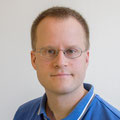
Joscha Gedicke is a Professor at the Institute for Numerical Simulation (University of Bonn), specializing in Numerical Analysis , Finite Element Methods , and Scientific Computing . His research focuses on adaptive algorithms, error estimation, and computational methods for partial differential equations (PDEs) and optimal control problems. Contact: gedicke@ins.uni-bonn.de | +49 228 73-69835 Teaching: Lectures on Hybrid High-Order Methods (V5E1), Adaptive Finite Element Methods (S4E1), and Discontinuous Galerkin Methods (V5E5). Research Trends: Gedicke's work spans Numerical Methods for PDEs , Adaptive Finite Element Analysis , Mixed and Discontinuous Galerkin Formulations , and Error Estimation . His recent publications emphasize Virtual Element Methods and Robust Discretizations for magnetostatic and optimal control problems. Collaborative Networks: He collaborates with researchers in computational mathematics, including institutions like TU Munich, University of Milano-Bicocca, and the University of Bonn's research seminar on Mathematics of Computation .
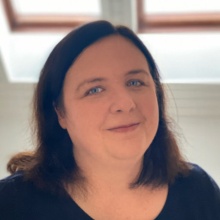
Prof. Dr.-Ing. Andrea Beck is a faculty member and Managing Director of the Institute of Aerodynamics and Gas Dynamics (IAG) at the University of Stuttgart. She leads the Numerical Methods in Fluid Mechanics working group, focusing on high-precision numerical methods for supercomputers, particularly discontinuous Galerkin (DG) methods. Her research spans fluid mechanics, aeroacoustics, plasma physics, and multiphase flows, with applications in wind energy, helicopter systems, and environmental aerodynamics. Role: Professor and Managing Director, IAG Committees: Member of the DFG Review Board, Strategy Committee for National HPC, and steering committee of High Performance Center Stuttgart. Her research emphasizes high-order methods, turbulence modeling, and data-driven approaches. She teaches courses such as 'Numerical Methods in Fluid Mechanics' and 'CFD Programming Projects', and has developed open-source software like FLEXI and HOPR for high-performance computing. Recent articles highlight advancements in entropy-stable DG methods, turbulence simulation using graph neural networks, and multiphase flow modeling. Her work integrates machine learning with CFD to enhance simulation accuracy and efficiency.
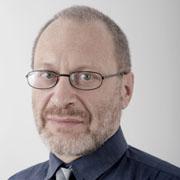
Prof. Arie Levant is a Professor in the Department of Applied Mathematics at Tel Aviv University's School of Mathematical Sciences, actively teaching Spring 2025 courses with Monday reception hours via Zoom (17:10-18:00). His foundational work established High-Order and Homogeneous Sliding Mode Control theories alongside Robust Exact Differentiation. His educational background includes: Ph.D. (1987) from USSR Academy of Sciences, Moscow: Thesis "Higher-order sliding modes and their application in control of uncertain processes" supervised by Prof. S.V. Emelyanov Postgraduate studies (1983-1987) in mathematical control theory at same institute B.Sc./M.Sc. (1980) from Moscow State University under Prof. V.I. Arnold in Theory of Differential Equations Levant's research centers on Nonlinear Control Theory with specialization in Sliding Mode Control , Homogeneous Discontinuous Control , and Robust Exact High-Order Differentiation . His methodologies enable finite-time-exact tracking in uncertain systems and real-time noise-robust signal differentiation, addressing fundamental challenges in control system resilience. Analysis of his 15 most recent publications (2016-2023) reveals concentrated advancements in chattering reduction, discretization for digital implementation, and noise filtering within sliding mode frameworks. These works demonstrate consistent focus on bridging theoretical control principles with practical engineering applications, particularly in real-time signal processing and robust controller design.
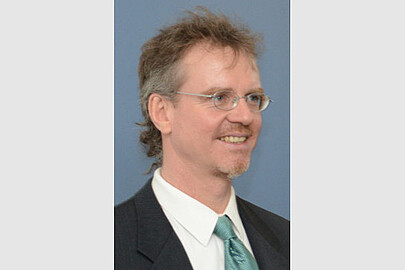
Thorsten Koch is a Professor for Software and Algorithms for Discrete Optimization at Technische Universität Berlin , with multiple leadership roles including Head of the Applied Algorithmic Intelligence Methods (A²IM) , Digital Data and Information for Society, Science, and Culture (D²IS²C) , Kooperativer Bibliotheksverbund Berlin-Brandenburg (KOBV) , and Forschungs- und Kompetenzzentrum Digitalisierung Berlin (digiS) . Based at Zuse Institute Berlin and affiliated with TU Berlin's Institute for Mathematics, he focuses on integrating mathematical optimization with high-performance computing and artificial intelligence to solve complex real-world problems. Research Pillars : Mathematical optimization algorithms Quantum computing applications AI/ML integration in decision systems Energy systems optimization Scientific software development Leadership Roles : Head of Applied Algorithmic Intelligence Methods (A²IM) Head of Digital Data & Information for Society, Science, and Culture (D²IS²C) Head of Kooperativer Bibliotheksverbund Berlin-Brandenburg (KOBV) Head of Forschungs- und Kompetenzzentrum Digitalisierung Berlin (digiS) Key Collaborations : Working with IBM Quantum on quantum optimization Collaborating across institutions for energy system modeling Developing open-source optimization tools like SCIP Contributing to digital library infrastructure Recent Research Trends : Quantum optimization benchmarking Machine learning-aided optimization Multi-objective decision frameworks Energy infrastructure optimization Adaptive algorithm design CO2 network modeling Impact : Advancing hybrid optimization methods Developing open-source tools for scientific computing Building digital infrastructures for libraries and research Exploring quantum-classical algorithm synergies
Prof. Thomas Weiland is a Full Professor of Computational Electromagnetics at the Technische Universität Darmstadt since 1989. His research focuses on numerical methods, computational engineering, and multiphysics simulation techniques, particularly in accelerator physics and beam dynamics. He holds a Dr.-Ing. from TU Darmstadt and has held postdoctoral and research positions at CERN and TU Darmstadt. His work includes pioneering contributions to electromagnetic field simulations, including advanced finite element methods, discontinuous Galerkin techniques, and boundary element approaches. Education highlights include his Diplom in Electrical Engineering from TU Darmstadt (1975) and a Habilitation in Experimental Physics from the University of Hamburg (1984). His research spans computational electromagnetics, accelerator physics, and numerical methods for electromagnetic field problems. Notable areas of innovation include transparent boundary conditions, eigenmode calculations, and high-performance simulation frameworks for rotating systems and particle accelerators. His publications emphasize advancements in electromagnetic simulation tools, such as the MagPEEC method and Trefftz-discontinuous Galerkin approaches. Collaborative projects include modeling RF photoinjectors for light sources and electrohydrodynamic droplet dynamics. Technical contributions also extend to wake field analysis in particle accelerators and SAR distribution studies in bioelectromagnetics. Research interests further include multiphysics coupling (thermal-electromagnetic effects in surge arresters), stochastic modeling of electromagnetic systems, and field-circuit co-simulation techniques. His work addresses challenges in large-scale eigenvalue problems, adaptive mesh optimization, and high-precision numerical methods for complex geometries.
Matthias Becker is a Professor at the Institute for Practical Computer Science within the Faculty of Electrical Engineering and Computer Science at Leibniz University Hannover, where he has been a core member of the Human-Computer Interaction group since 2019. He serves as Internship Coordinator for Computer Science and Computer Engineering and holds key roles in the Computer Science Examination Board and Selection Committee, actively shaping academic governance and student development. His academic journey began with PhD studies at the University of Bremen (1996-2000) supported by a DFG grant, followed by a postdoctoral permanent position at Leibniz University Hannover (2000-2019), an Associated Assistant Professor role at École des Mines de Nantes (2000), and a Habilitation in Computer Science in 2013. This foundation enabled his transition to a full professorship in 2019. Becker's research spans Human-Computer Interaction, Simulation and Modeling, and Bio-inspired Computing, with applications in agriculture, renewable energy, and manufacturing. His work integrates distributed systems, optimization algorithms, and wireless sensor networks to solve complex real-world problems, such as greenhouse monitoring, wind farm logistics, and tire noise reduction. Recent publications reveal a strategic focus on practical validation of simulation models and cross-domain applications of nature-inspired algorithms. His 15 most recent publications (2018-2024) demonstrate consistent innovation in applying simulation techniques to offshore wind farm installation, agricultural pest management, and sports science. These works emphasize real-world validation, collaborative problem-solving, and the development of domain-specific optimization frameworks that bridge theoretical algorithms and industrial implementation. As Internship Coordinator, Becker facilitates critical industry-academia connections for students, while his examination board responsibilities ensure rigorous academic standards. His leadership in the Human-Computer Interaction group drives research on interactive systems for agriculture, energy, and health, with particular emphasis on user-centered design in complex operational environments like wind farm logistics and greenhouse automation.
Dr. Simone Schieskow (née Kreimeier) is a researcher at Bielefeld University's Faculty of Health Sciences, working in Working Group 5 Health Economics and Health Management since October 2010. She holds a B.Sc. in Health Communication and M.Sc. in Public Health from Bielefeld University, and completed her doctorate in November 2020 with a thesis titled "Conceptual and Methodological Development of Quality of Life Assessment in Children and Adolescents Using the EQ-5D-Y as an Example." Education : B.Sc. Health Communication (Bielefeld University), M.Sc. Public Health (Bielefeld University) Her research focuses on health-related quality of life (HRQoL) in children and adolescents, specializing in patient-reported outcomes and EQ-5D-Y instrument development. She has contributed to international collaborations through the EuroQol Group, particularly its Youth Working Group where she serves as deputy chair since 2025. Recent publications highlight methodological advancements in EQ-TIPS (EuroQol Toddler and Infant Populations) preference elicitation (2025), molecular risk scoring for childhood asthma (2024), and comparative studies on adult-vs-adolescent health state preferences (2021). Her work spans from psychometric testing to policy-oriented stakeholder engagement. Key Affiliations : EuroQol Group (since 2016), Youth Working Group (deputy chair since 2025) Contact : simone.schieskow@uni-bielefeld.de | Office: UHG S5-227
Oliver G. Ernst is a Professor of Numerical Analysis at Technische Universität Chemnitz . His research focuses on Numerical Analysis , Uncertainty Quantification , and Inverse Problems , with applications in Thermo-Hydro-Mechanical (THM) processes , Electromagnetics , and Stochastic Partial Differential Equations . He is associated with the Numerical Analysis group at TU Chemnitz. Key Research Areas : Efficient numerical methods for PDEs Krylov subspace techniques Stochastic finite element methods Multi-physics modeling Geoscientific applications Recent Publications (2025-2010): THM simulations under uncertainty Neural network PDE solvers Bayesian inversion frameworks Rational Krylov algorithms Deflated restarting strategies Collaborations : TU Bergakademie Freiberg University of Manchester Technical University of Munich University of Maryland University of Geneva Software Development : Contributor to OpenGeoSys platform Developer of FEMALY MATLAB library Academic Recognition : h-index 32, i10-index 66, with over 4423 citations since 2020.
Mitra Baratchi is an Associate Professor at the Leiden Institute of Advanced Computer Science (LIACS) , Leiden University. She leads the Spatio-temporal data Analysis and Reasoning (STAR) research group, co-leads the Automated Design of Algorithms (ADA) group, and founded the Special Interest Group on Spatio-Temporal Data Mining (SIG-SDTM) . PhD from University of Twente (Mobility Data) Master’s/Bachelor’s in Computer Engineering, Iran Research Interests focus on automated pattern extraction from spatio-temporal data across urban, environmental, and industrial domains. Key applications include: Automated Machine Learning (AutoML) for Earth Observations Time-Series Forecasting for public health (e.g., pandemic modeling) Urban Mobility Optimization with ESA, Honda, and municipalities Reliable Vehicular Communication Systems Smart Garments for Health Risk Detection Geocast Protocols for Internet-wide Communication Grant Highlights include €120K NWO-Aspasia, €2.9M Marie Skłodowska-Curie, €350K NWO-KLEIN, and €135K Center for BOLD Cities funding. She has supervised 12 PhD students and 4 current Master’s students since 2011, with notable best paper award at WWIC'16. Teaching includes Machine Learning (2020-present) and Urban Computing (2018-present) at Leiden, plus past courses in Data Visualization, Software Engineering, and Research Methods.
André Nichterlein is a Permanent Research Associate at the Technical University of Berlin, specializing in Algorithmics and Complexity Theory. He completed his PhD at TU Berlin (2014) and holds a Diploma from Friedrich Schiller University Jena (2010). His career includes postdoctoral research at Durham University (UK) under a DAAD fellowship and extensive work as a research assistant at TU Berlin. Research Focus: Nichterlein's work centers on parameterized algorithms , kernelization techniques , graph problem optimization , and algorithm engineering . His research addresses fundamental challenges in computational complexity through practical algorithmic solutions, particularly in graph theory and network optimization. Publication Trends: His recent articles (2020-2023) demonstrate a strong focus on parameterized complexity frontiers, efficient data reduction methods for NP-hard problems, and applications in network design. Recurring themes include kernelization innovations, graph modification problems, and experimental algorithmics, with consistent contributions to theoretical foundations of computer science.
Prof. Philip Lederer is a Professor of Numerical Analysis at the University of Hamburg’s Department of Mathematics. He holds a position within the Applied Mathematics (AM) group under the Faculty of Mathematics, Computer Science, and Natural Sciences. His research focuses on advanced numerical methods for partial differential equations, particularly finite element methods for fluid dynamics and elasticity problems. His work emphasizes pressure-robust discretizations, divergence-free schemes, and high-order methods for incompressible flows. Key contributions include hybrid discontinuous Galerkin methods, stress-based formulations for Stokes equations, and error estimation techniques. He collaborates on projects like the FWF-funded initiative P35931, exploring computational methods for poroelasticity and biomechanics. Prof. Lederer frequently presents at international conferences such as ENUMATH, ICIAM, and the European Finite Element Fair. His publications span topics from turbulence simulation to multiphase flow dynamics and photonic crystal modeling. Despite no explicitly listed awards, his active research and peer-reviewed contributions highlight his expertise in computational mathematics. He advises on FWF-funded projects and collaborates with institutions like Aalto University, TU Wien, and the Weierstrass Institute. His teaching includes advanced numerical analysis courses, and his lab focuses on developing robust, high-fidelity computational tools for engineering and scientific applications.
Univ.-Prof. Dr.-Ing. habil. Peter Mark is the Chair Holder of Concrete Structures at Ruhr-Universität Bochum (RUB). His research focuses on advancing concrete technology through sustainable and innovative methods, including modular construction, fiber-reinforced materials, structural health monitoring, and tunneling. He leads interdisciplinary projects such as DFG SPP 2187 (adaptive modular construction) and collaborates extensively on industrial applications. Research interests span concrete optimization , structural resilience , and automated manufacturing . Key areas include thermal prestressing, fatigue analysis, and resource-efficient design. Recent work emphasizes digital twins for production systems and ultrasonic monitoring of infrastructure. Publications demonstrate a strong focus on experimental validation and computational modeling, with trends toward sustainability and Industry 4.0 integration. No awards are listed in the provided text. He directs the Experimental Laboratory KIBKON, supporting large-scale testing of concrete components. Collaborative projects include tunnel lining optimization and solar concrete structures.
Michael Bader is a Professor in the Department of Computer Science at the Technical University of Munich (TUM), part of the TUM School of CIT. He leads the research group on hardware-aware algorithms and software for high-performance computing at the Leibniz Supercomputing Center. His work focuses on developing efficient algorithms and software for supercomputing platforms, particularly in geosciences and simulation of earthquakes and tsunamis. His research interests include high-performance computing, simulation software development (e.g., SeisSol and ExaHyPE), parallel numerical algorithms, adaptive mesh refinement, and large-scale geophysical simulations such as earthquake dynamics and tsunami modeling. He emphasizes optimizing algorithms for modern supercomputing architectures to handle complex computational challenges. Professor Bader has supervised numerous PhD students, including Lukas Krenz, Ravil Dorozhinskii, and Sebastian Wolf, among others. His research has been supported by grants from the EuroHPC JU, BMBF, DFG, and other institutions. Notable projects include ChEESE-2P for exascale computing in solid earth sciences and the targetDART project for adaptive task distribution on exascale systems. He is actively involved in teaching, offering courses such as Numerical Algorithms for High Performance Computing and Scientific Computing 1 . His group collaborates extensively with institutions like the Leibniz Supercomputing Center to advance computational methods for simulating natural disasters and geophysical phenomena.
Ngoc Tien Tran is a Junior Professor for Numerical Simulation at the Institute of Mathematics, Faculty of Mathematics, Natural Sciences and Technology, University of Augsburg since 2023. Previously, he was a Research Associate at Friedrich Schiller University Jena (2021-2023) and Humboldt University of Berlin (2018-2021). Dr. Tran's educational background includes: Doctorate in Mathematics, Humboldt University of Berlin (2021) Master of Mathematics, Humboldt University of Berlin (2018) Bachelor of Mathematics, Humboldt University of Berlin (2016) Dr. Tran's research focuses on advanced numerical methods for complex mathematical problems. His primary areas of interest include numerical methods for completely non-linear second-order PDEs , the convergence behavior of adaptive methods , nonstandard discretizations and hybridizable methods , and convex minimization and eigenvalue problems . His work bridges theoretical mathematics with practical computational techniques, developing innovative approaches to solve challenging problems in numerical analysis. Dr. Tran's publication record demonstrates a consistent focus on hybrid high-order methods and their applications to various mathematical problems. His recent work shows a progression from foundational methods to specialized applications in areas like the Monge-Ampère equation, eigenvalue problems, and convex minimization. A notable trend is his emphasis on guaranteed error control and stability analysis, reflecting a commitment to robust and reliable numerical methods. Dr. Tran is involved in research supported by the ERC Consolidator Grant and participates in the GAMM Workshop on Numerical Analysis and the One World Numerical Analysis Seminar. As a Junior Professor at the University of Augsburg, Dr. Tran advises students and contributes to the Numerical Mathematics research team. His teaching includes courses such as 'Finite elements in the calculus of variations' and a 'Seminar on Numerics' for Summer semester 2025. He is part of a vibrant research community that includes colleagues like Daniel Peterseim and Tatjana Stykel, as well as numerous research associates.
Prof. Simon Adrian holds the Chair of Theoretical Electrical Engineering at the Institute of General Electrical Engineering, University of Rostock, Germany. His research focuses on computational electromagnetics with critical applications in antenna design, electromagnetic compatibility, and medical technology. He serves as Associate Editor for the IEEE Transactions on Antennas and Propagation and contributes to the IEEE Antennas and Propagation Society Education Committee, demonstrating significant academic leadership in the global electromagnetics community. His primary research addresses low-frequency instability challenges in electromagnetic integral equations through innovative numerical techniques. Key areas include Calderón preconditioners, quasi-Helmholtz projectors, B-spline discretizations, and adaptive cross approximation methods. These approaches enable robust simulations across diverse applications from radar systems and antenna design to biomedical problems like deep brain stimulation and electroencephalography. Recent work emphasizes broadband stability and efficient solvers for multiply-connected geometries. Analysis of Prof. Adrian's publication trends (2023-2025) reveals a concentrated effort on overcoming fundamental limitations in electromagnetic modeling. His work consistently targets low-frequency regimes where traditional methods fail, developing mathematically rigorous stabilization techniques while expanding into biomedical applications. The integration of isogeometric analysis with specialized discretization strategies represents a cutting-edge direction in computational electromagnetics. Professional engagement includes active membership in the Institute of Electrical and Electronics Engineers (IEEE), IEEE Antennas and Propagation Society, and Union Radio-Scientifique Internationale (URSI), reflecting his commitment to advancing the field through collaborative research and scholarly communication.