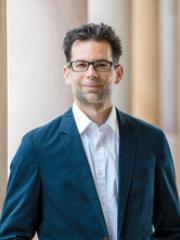
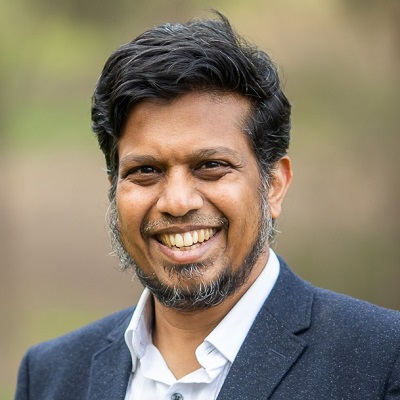
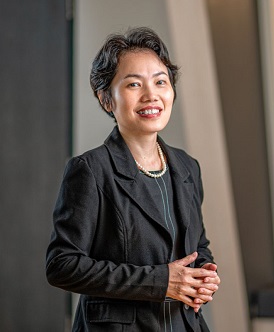
Michael Small is a Professor and the CSIRO-UWA Chair of Complex Systems at the University of Western Australia (UWA), holding dual appointments with UWA’s Faculty of Engineering and Mathematical Sciences and CSIRO’s Mineral Resources division. As Director of the UWA Data Institute, he leads research in complex systems theory and dynamical systems, with applications to health, mining, and energy infrastructure. His academic roles include Deputy Editor-in-Chief of Chaos and Editor of Physica A . He holds a PhD in Applied Mathematics (UWA, 1998) and a BSc(Hons) in Pure Mathematics (UWA, 1994). His research focuses on mathematical modeling of complex systems, including disease transmission networks, mental health dynamics, and industrial process optimization. Notable projects include the Transforming Indigenous Mental Health & Wellbeing initiative and collaborations with mining giants like BHP and Rio Tinto. His awards include the V. Afraimovich Award (2022) and UWA Senior Research Award (2016). Recent work spans reservoir computing, network science, and epidemic modeling, with 354 publications and leadership in 18 grants. His interdisciplinary approach bridges academia and industry, addressing challenges in data-driven decision-making and sustainability.
David McAlpine is a Professor and Academic Director of Macquarie University Hearing at the Department of Linguistics Hearing CRC Hearing Research Centre, Macquarie University. His research focuses on auditory neuroscience, cochlear implants, and the neural mechanisms underlying hearing and perception. Research Interests : McAlpine’s work explores auditory spatial processing, cochlear implant technology, hidden hearing loss, and the interplay between auditory perception and neurodevelopmental disorders like autism. He investigates how the brain adapts to acoustic environments and processes interaural cues for spatial localization. Recent Research Trends : Recent articles highlight advancements in cochlear implant electroporation, neural coding of auditory cues, and the impact of auditory environments on quality of life in autism. McAlpine’s projects often involve interdisciplinary collaborations, such as the PRISM initiative for sensor-based interaction difficulty analysis and studies on cortico-subcortical feedback circuits. Grants & Collaborations : McAlpine leads projects funded by Hearing CRC and other bodies, including studies on central gain mechanisms, transcranial magnetic stimulation, and translational outcomes for balance function. His work bridges basic neuroscience with clinical applications, particularly in hearing restoration and rehabilitation. Labs & Teams : As Academic Director, he oversees the Hearing Research Centre, fostering innovation in auditory neuroscience and biomedical engineering. His team collaborates internationally, addressing challenges in hearing loss and sensory perception.
Associate Professor Paul Spee holds a dual role as Associate Professor and Research Hub Leader (Practice and Process Studies) at the UQ Business School, School of Business. His research focuses on strategy-as-practice, qualitative methodologies, and organizational ethnography with applications in industries like reinsurance, healthcare, and telecommunication. He leads research teams and has published influential works such as the book Making a Market for Acts of God , which explores global reinsurance practices. His editorial roles include Senior Editor at Organization Studies and editorial board membership at Long Range Planning and Organizational Research Methods . Research Interests: Paul’s work bridges theoretical and practical domains, emphasizing how organizational practices inform strategy and vice versa. Key themes include routine dynamics, institutional ambidexterity, and the materiality of strategic tools. His recent focus on disaster governance and community resilience reflects expanding interests in societal challenges. Professional Contributions: Paul chairs the SAP interest group within the Academy of Management and organizes academic streams at international conferences. He actively contributes to practitioner communities through webinars on qualitative methods and career development for early-career researchers. His work has been featured in The Economist , Financial Times , and ABC News . Awards: His research has received multiple accolades including the Emerald Citation Award, best paper awards from the Academy of Management and EGOS, and supervision excellence via student awards like the Carolyn Dexter Award. Teaching & Leadership: Delivers strategy courses in the Master of Business and the Medical Leadership Program. Supervises students whose work has achieved notable recognition, fostering the next generation of strategy scholars. Research Teams: Leads projects on crisis governance, venture emergence, and telemedicine routines. Collaborates internationally through initiatives like the ‘Black Summer’ bushfire analysis and interdisciplinary work on corporate tax legitimacy.
Allen Zhong is a Lecturer in the Department of Data Science & AI at Monash University. His research focuses on combinatorial optimization, constraint programming, and machine learning. He has contributed to advancements in dominance breaking techniques for constraint optimization problems and explores the integration of machine learning with optimization frameworks like Predict+Optimize. Zhong is an Associate Investigator on the NLCG: Huub project (2025-2026), focusing on Next-Gen Lazy Clause Generation. His work spans theoretical contributions (e.g., functional constraints exploitation) and applied domains such as network coding and computer vision. Collaborations include international researchers in AI and information theory. Zhong’s publications appear in top venues like Artificial Intelligence, Journal of Artificial Intelligence Research, and NeurIPS.
Arnt Maasø is an Associate Professor at the Department of Media and Communication, University of Oslo. He holds a PhD from the University of Oslo (2002) and has been a Visiting Fellow at the Digital Media Research Centre (DMRC) at Queensland University of Technology (June 2019 - January 2020). His research focuses on media and music culture, particularly digital transformation in the cultural sector, music streaming economics, and sound design in television. He has led major projects like Music on demand: Economy and copyright in a digitised cultural sector (MUSEC) and Streaming the culture industries (STREAM) . Maasø is also an award-winning educator, recognized as Teacher of the Year at the University of Oslo (2011). He has supervised 4 PhD and 50 MA candidates, emphasizing peer mentorship and organizational learning in higher education. His work bridges academic research with practical applications in media innovation and policy.
Zahidul Islam is a Professor of Computer Science and Associate Dean (Research) at Charles Sturt University's Faculty of Business, Justice and Behavioural Sciences (FOBJBS). With a PhD in Computer Science from the University of Newcastle and over 150 peer-reviewed publications, his research focuses on data mining, cybersecurity, and AI applications across health, agriculture, and social systems. BSc in Civil Engineering (RUET, Bangladesh) Graduate Diploma in Information Science (UNSW, Australia) PhD in Computer Science (University of Newcastle, Australia) His research spans advanced domains like privacy-preserving data mining , federated learning , and cross-domain security threats . Recent work addresses AI applications in agri-food supply chains, malware detection across platforms, and collaborative learning frameworks for medical data. Key scientific achievements include: Cyber Security Researcher of the Year 2021 (AISA) Innovation Award 2017 (NSW Agency for Clinical Innovation) 2024 Excellence Award (CSU) Stanford University - Elsevier World Top 2% Scientists (2024) $11M+ in competitive research funding
Felicity Bell is a Senior Lecturer and Deputy Director of the Centre for the Future of the Legal Profession at UNSW Law & Justice. She holds a Bachelor of Laws (Hons I) from the University of Melbourne and a PhD from the University of Sydney. Previously, she served as a Senior Research Fellow at UNSW’s Future of Law and Innovation in the Profession (FLIP) research stream and a Lecturer at the University of Wollongong. Her work focuses on family law, legal professionalism, and the impact of new technologies on legal practice and regulation. Her research combines empirical methods with interdisciplinary insights, particularly in areas like artificial intelligence (AI) in legal practice, lawyer wellbeing, and judicial decision-making. Notably, she co-authored Artificial Intelligence and the Legal Profession (2020). Her work also addresses challenges in family law access to justice, legal ethics, and innovation in legal service delivery. She has contributed to policy reports on AI adoption in courts and regulatory frameworks for technology-driven legal services. Her academic leadership includes roles in the Centre for the Future of the Legal Profession and the FLIP stream. She has advised on judicial practices during the pandemic, law firm retention strategies, and ethical AI use in legal contexts. Her research frequently bridges theory and practice, aiming to future-proof the legal profession through evidence-based reforms.
Professor Genevieve Pepin is an accomplished academic and mental health occupational therapist serving as Professor and Higher Degree Research Director in the School of Health and Social Development within Deakin University's Faculty of Health. With nearly two decades of experience, she has established herself as a significant contributor to eating disorders research and occupational therapy practice. Education: Doctor of Philosophy from Laval University Graduate Certificate of Higher Education from Deakin University Professor Pepin's research focuses at the intersection of eating disorders, mental health, carers research, and occupational therapy. Her work is characterized by multidisciplinary approaches with strong occupational therapy foundations, emphasizing co-produced research and interventions. She investigates the impact of eating disorders on daily functioning, sensory processing in eating disorder treatment, and mental illness on occupational engagement. Her research has global reach through national and international partnerships, influencing practice and services as evidenced by her invitation to join the Advisory Committee for the Development of the Australian Eating Disorders Research & Translation Strategy 2021-2031. Analysis of Professor Pepin's recent publications reveals a strong emphasis on eating disorders research, mental health service innovation, and occupational therapy practice. Her work spans clinical interventions, service models, caregiver support, and the application of innovative methodologies including co-design and AI-augmented analysis. A notable trend is her commitment to translational research that bridges academic findings with practical applications in healthcare settings, particularly through co-produced approaches that incorporate lived experience perspectives. Professor Pepin holds leadership positions in multiple national initiatives including serving as co-lead of the Lived-Experience and Co-Production stream of the Australian Eating Disorder Research and Translation Centre and membership in the National Eating Disorders Research Consortium. She also directs the Research Committee at Eating Disorders Families Australia and serves on the Occupational Therapy Council of Australia. As an educator and supervisor, Professor Pepin has guided numerous doctoral and masters students through completion of their research in areas including eating disorders, mental health, occupational therapy practice, and health service evaluation. Her current grant portfolio includes significant funding from Department of Health & Aged Care, Western Alliance, and other organizations supporting research on eating disorders treatment models, mental health service development, and Long COVID care. Professor Pepin's work is conducted through strategic partnerships with the Australian Eating Disorders Research and Translation Centre and collaborations with healthcare organizations including Barwon Health and Western Health, creating an integrated research environment focused on translating findings into improved clinical practice.
Su Sueh Ing is a full-time Senior Lecturer in Accounting at Swinburne University of Technology Sarawak Campus, serving within the Faculty of Business, Design and Arts. With over 20 years of teaching experience across Malaysian higher education institutions, she specializes in Accounting, Cost and Management Accounting for diploma through professional qualification levels (AAT, LCCI, CPA). Her educational background includes: MBA (Accounting) from University of Southern Queensland (USQ) BBus (Accounting) from Queensland University of Technology (QUT) Fellow Member of CPA Australia Dr. Su's research critically examines Social and Environmental Responsibilities , Accounting education , and Education Leadership through lenses of sustainability reporting, emotional intelligence in digital learning, and socioeconomic inclusion. Her work bridges theoretical frameworks with community impact, particularly through STEAM/STREAM education initiatives targeting rural communities and digital literacy programs for seniors. Recent publications reveal strong trends in post-pandemic educational adaptation (2023), sustainability reporting evolution (2024), and qualitative investigations into sustainable work practices (2025). Her scholarly output spans business intelligence applications, organizational development, and inclusive assessment design across diverse contexts from oil palm plantations to Malaysian civil service. Her scientific recognition includes: Vice-Chancellor’s 2024 Future Focused Award (Highly Commended) Gold Award at InTEX 2022 for Digital Technologies Seniors Program Top 3 finalist for Sarawak's Digital Inclusivity Award (2023) Fellow Member status with CPA Australia Dr. Su maintains active grant leadership including MEITD-funded STREAM workshops (2023-2025) and Swinburne Micro Fund projects on design thinking and digital game-based learning. She supervises Master's students as an Associate Supervisor and mentors through the Swinburne Accounting Club, which won 'Most Active Club' (2014) under her guidance. Her supervision philosophy emphasizes compassionate advising and real-world application through competitions like CIMA Global Business Challenge. Current initiatives focus on the STREAM project (Sarawak Ministry-funded), Digital Technologies Seniors Program, and Hult Prize social entrepreneurship challenges aligned with UN Sustainable Development Goals. These projects integrate student teams, industry partners, and community stakeholders to address digital inclusion and sustainable development in Sarawak.
Associate Professor Biplob Ray serves as Head of Course for Postgraduate ICT Courses at the School of Engineering and Technology, Central Queensland University. With over 15 years of academic experience, he has progressed from ICT Lecturer (2015-2019) to Senior Lecturer (2020-2022) and currently holds the position of Associate Professor (2023-Present). His research is centered at the Centre for Intelligent Systems within the Institute for Future Farming Systems, where he leads multidisciplinary projects with significant industry and government funding. Dr. Ray holds a PhD from Deakin University (2015), Master of Information Technology from University of Ballarat (2008), and Graduate Certificate in Education Tertiary Teaching (2013). His academic journey began with a BSEng in Computer Engineering, followed by professional experience as Analyst Programmer at Telstra and Systems Programmer in the Philippines. His research focuses on the intersection of Artificial Intelligence, Internet of Things, and Cybersecurity, with practical applications spanning smart farming, environmental monitoring, and energy systems. His multidisciplinary approach has secured over $3 million in research funding from Australian federal government and industry sources since 2016, including significant projects like the $1.28 million 'Intelligent, Adaptable, and User-Friendly Weed Management system' and the $513,268 'AI-SSPCAS' project with CSIRO Data61. Dr. Ray's publication record shows consistent high-quality output with approximately 15-20 papers annually, primarily in IEEE and Elsevier journals. His work demonstrates strong translational impact, with multiple projects featured in media outlets including ABC News, Channel 7, and Australian Tree Crop magazine. His research has directly contributed to practical implementations such as smart irrigation systems for Cairns Regional Council and cybersecurity solutions for small businesses. 2025 Australian Awards for University Teaching (AAUT) 2024 Vice-Chancellor's Award of Commendation for Outstanding Researcher (Mid-Career) 2023 Vice-Chancellor's Award for Exemplary Practice in Learning and Teaching 2021 Vice-Chancellor's Award for Exemplary Practice in Learning and Teaching (Tier 1) 2019 Vice-Chancellor's Award for Exemplary Practice in Learning and Teaching 2016 'RISING STAR of 2016' award from CQUniversity Dr. Ray currently supervises fifteen research students across PhD and Master's programs, with active grants supporting multiple research positions. His leadership extends to professional service as Vice-Chair of IEEE Victorian Section (2024-2025), former Chair of IEEE Victoria IoT Community, and member of the Engineering Institute of Technology Course Advisory Committee. The Centre for Intelligent Systems fosters interdisciplinary collaboration with regular seminars, industry partnerships, and international research connections, providing students with rich opportunities for professional development.