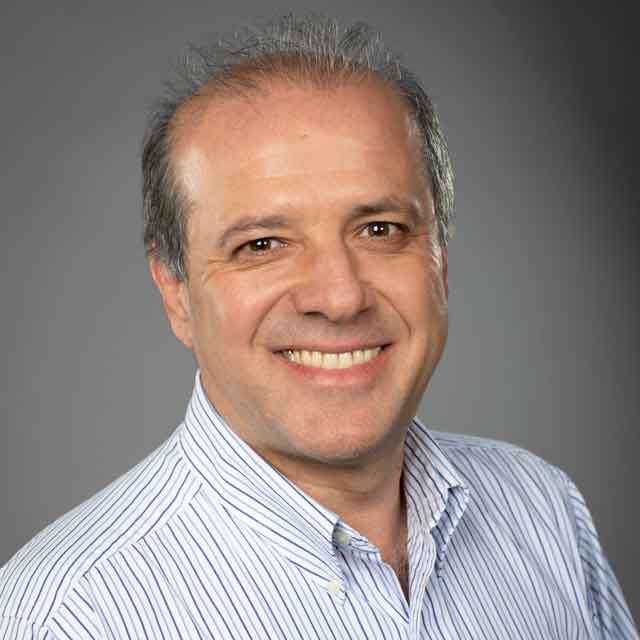
Gokhan Pekcan is a Professor at the University of Nevada, Reno, serving as Graduate Program Director and Associate Chair for Graduate Affairs. His research focuses on earthquake engineering, structural dynamics, seismic hazard mitigation, and structural health monitoring. Key research areas include: Seismic response of bridges and buildings under torsional ground motions Development of active and adaptive control systems for seismic resilience Integration of machine learning and compressive sensing for structural health monitoring Experimental validation of seismic retrofit techniques Analysis of structural and nonstructural systems' vulnerability Design of energy dissipation systems for civil infrastructure Recent publications highlight his work on torsional ground motion effects, hybrid simulation methodologies, and smart material applications in bridge systems. He employs deep learning for damage detection and data compression in monitoring frameworks.
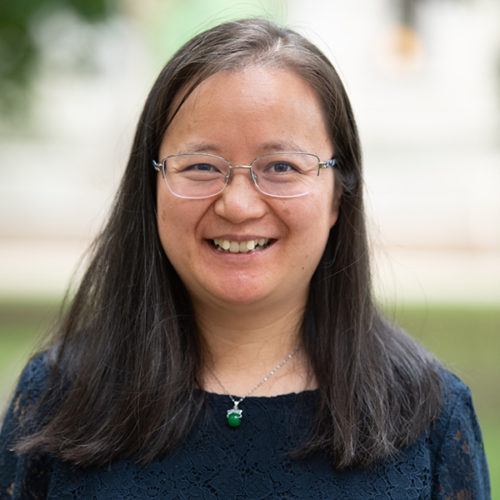
Inga N. Laurent is a Professor of Law at Gonzaga University School of Law, where she teaches criminal law and procedure, evidence, and dispute resolution. She is a Fulbright Scholar with a deep commitment to restorative, transitional, and transformative justice, applying her expertise both locally and globally through research, training, and generative design. Her research centers on the human capacity for goodness and the role of truth in fostering wellness and wholeness. She explores how confronting difficult truths can catalyze personal and communal transformation, advocating for legal systems that nurture responsive and sustained action. Laurent's recent publications focus on restorative justice in education, truth-telling processes, and comparative justice models, particularly in post-retributive contexts. Her work spans law, education, and social justice, emphasizing measurable cultural change and inclusive legal practices. Scientific Awards: Fulbright Scholar Laurent actively contributes to legal scholarship and justice reform initiatives. She has collaborated on projects assessing restorative culture in schools and expanding the definition of restorative justice in policy. While no formal advising or grant information is provided, her collaborative publications suggest engagement with interdisciplinary teams and community-based research.
Melissa Clark is a Professor at Coastal Carolina University's E. Craig Wall Sr. College of Business Administration, specializing in the Department of Marketing and Hospitality, Resort and Tourism Management. Her career spans roles as Professor, Associate Professor, and Assistant Professor at Coastal Carolina University and the University of North Alabama, alongside her Graduate Teaching Assistantship at the University of Mississippi. Education: Ph.D. in Business Administration (Marketing) from the University of Mississippi MBA from the University of North Alabama Bachelor of Business Administration in Finance from the University of North Alabama Dr. Clark's research focuses on Business Sustainability, Marketing, and Hospitality/Tourism Management , with a strong emphasis on integrating Environmental Sustainability and Relationship Marketing into sector-specific practices. Her work bridges Consumer Behavior and Social Media Marketing , analyzing trends in sustainable tourism, green energy adoption, and digital engagement. The 15 most recent articles highlight her exploration of topics such as Green Energy Purchase Intentions , Social Media's Role in Tourism Promotion , and Pharmaceutical Market Segmentation , reflecting a multidisciplinary approach to sustainable business practices. Teaching Interests: Business Sustainability, Principles of Marketing, and Sustainability and Social Responsibility.
Professor Philip Davies serves as Professor of Intelligence Studies and Director of the Brunel Centre for Intelligence and Security Studies (BCISS) at Brunel University London's Department of Politics and History within the College of Business, Arts and Social Sciences. A political sociologist specializing in intelligence institution-building, he co-founded BCISS and developed the MA in Intelligence and Security Studies program. His academic journey includes a PhD in Sociology from the University of Reading (1997), MA in Social and Political Thought from York University Canada (1987), and BA (Hons) in Sociology from Trent University Canada (1984). PhD Sociology, University of Reading (1997) MA Social and Political Thought, York University Canada (1987) BA (Hons) Sociology, Trent University Canada (1984) Postgraduate Certificate in Teaching and Learning in Higher Education, Brunel (2006) Davies' research focuses on the organization and governance of intelligence agencies, national intelligence cultures, intelligence professionalization, and doctrine development. His work bridges practical intelligence operations with academic theory, examining how intelligence institutions interact with government machinery, international allies, and defense structures. A pioneer in comparative intelligence studies beyond the Anglosphere, he developed the theory of 'intelligence culture' and has conducted extensive research on UK, US, Indian, and Malaysian intelligence systems. His current work centers on defense and military intelligence concepts, doctrine evolution, and cyber-security policy. Analysis of his 15 most recent publications reveals a dominant trend in comparative intelligence studies with strong emphasis on British and US intelligence systems, expanding to include Malaysia and India. His work consistently examines intelligence politicization, accountability mechanisms, and the practical implementation of intelligence doctrine. The publications demonstrate increasing focus on military intelligence integration (evident in ISTAR/ISR debates) and historical case studies of intelligence failures/successes. Davies has made significant impact through practical applications of his research: Provided foundational input for UK Joint Intelligence Doctrine (JDP 2-00) and JDP 04 Understanding Advised on 2016 Investigatory Powers Act as Home Office consultative panel member Led EU INTCEN's Basic Intelligence Assessment course (2013-2019) Contributed to UK military Joint Intelligence Doctrine development (2010-2012) Delivered impact case studies for REF 2014 and REF 2021 through BCISS As an educator, Davies convenes postgraduate modules on Intelligence Concepts and Counterintelligence, while directing BCISS as a University Interdepartmental Research Centre. His media presence includes regular commentary on intelligence matters for outlets like LBC, particularly regarding the ISC Russia Report and Edward Snowden disclosures. He serves on editorial boards for Intelligence and National Security and International Journal of Intelligence and CounterIntelligence, and chairs the UK Political Studies Association/BISA Security and Intelligence Studies Group.
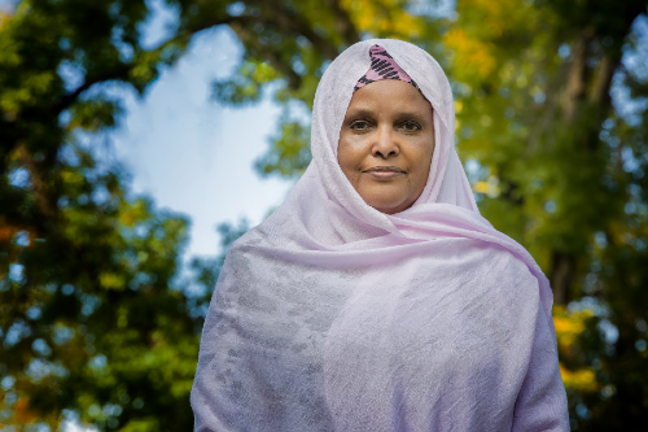
Saida Abdi is an Assistant Professor at the School of Social Work within the University of Minnesota , specializing in refugee trauma and resilience. Her work focuses on enhancing systems of care for refugee and immigrant communities through culturally responsive interventions. Education: PhD in Social Work/Sociology, Boston University MSW, Boston University MA, University of Ottawa BA, Carleton University Dr. Abdi’s research centers on refugee youth and families, trauma systems therapy, and culturally adapted mental health services. She has developed trauma-informed frameworks co-led by community members to improve care ownership and engagement. Her recent publications emphasize scalable interventions for refugee mental health disparities, integrating socioecological perspectives and community-driven solutions. Key contributions include adaptations of Trauma Systems Therapy for Refugees (TST-R) and guidelines for culturally sensitive mental health interpretation. Dr. Abdi actively trains organizations globally on refugee mental health and collaborates with the National Child Traumatic Stress Network (NCTSN) . She received a grant to study virtual healthcare accessibility for African immigrants. She contributes to crisis response initiatives, including the University of Minnesota’s Disparities in COVID Response Task Force , and co-founded the TST-R model at Boston Children’s Hospital.
Dusan Licina is an Associate Professor at the École polytechnique fédérale de Lausanne (EPFL) and director of the Human-Oriented Built Environment Laboratory (HOBEL) within the Smart Living Lab initiative. His research bridges building science, environmental engineering, and human health. Education: BSc/MSc in Mechanical Engineering (University of Belgrade), joint PhD (National University of Singapore & Technical University of Denmark), postdoc (University of California Berkeley) Key research areas: Indoor air quality, human exposure science, building ventilation, IoT sensing, energy-efficient housing His 15 most cited works focus on particle dynamics, ozone chemistry, and occupant-driven building systems. Notable trends include human-clothing interactions in pollution transport, nanocluster aerosol formation, and real-time CO2 monitoring behavior. Awarded Yaglou award (ISIAQ) for sustainable healthy buildings research Ralph G. Nevin’s award (ASHRAE) for human exposure studies and serving on the Indoor Air editorial board. Current PhD students Dong Hui, Liu Tianqi, Loizou Maria, Medina Taylor Oran explore: Occupant behavior in energy systems Smart sensor networks Radon measurement technologies Work-from-home environmental quality His laboratory develops Human-Centric Sensing Platforms and Occupant-Centric Building Design methodologies through experimental chambers and computational models.
Jiao Luo is an Associate Professor and Andrew Van de Ven Faculty Fellow in the Strategic Management & Entrepreneurship department at the University of Minnesota's Carlson School of Management. She holds a Ph.D. in Management from Columbia Business School (2012), an MPA in Public and Economic Policy from London School of Economics/Columbia University (2005), and a B.S. in Economics from Renmin University of China (2002). Education Ph.D., Management (Columbia Business School, 2012) MPA, Public & Economic Policy (London School of Economics & Columbia University, 2005) BS, Economics (Renmin University of China, 2002) Her research sits at the intersection of organization theory and non-market strategy, focusing on how corporate social responsibility (CSR) activities and collective governance arrangements impact firm performance and societal outcomes. She examines questions about the strategic value of non-market actions, the comparative efficiency of organizational forms in social goods provision, and the institutional dynamics of market governance. Recent publications in Strategic Management Journal and Administrative Science Quarterly explore topics like philanthropy's role in reputation insurance, CSR in employee governance, comparative governance models for public services, and institutional failures in financial systems. Her work combines theoretical rigor with empirical analysis across diverse contexts including petroleum industries, internet provision, and banking sectors. Scientific Awards Strategic Management Society (SMS) Best Conference Paper Prize (Honorable Mention) Academy of Management Meeting STR Division Distinguished Paper Award (Winner) Alliance of Research in Corporate Sustainability Outstanding Paper Award (Winner) Carlson School of Business Awards (Research, Teaching, Service) As Associate Editor of Strategic Management Journal and editorial board member at multiple top-tier outlets, she plays significant leadership roles in academic governance. Her teaching includes MBA and PhD courses on sustainability strategy and non-market strategy.
Ziying You serves as Associate Professor and Department Chair of Chinese Studies and East Asian Studies at The College of Wooster where she teaches courses spanning Chinese language advanced literature and cultural studies including specialized topics like Anti-Asian Racism Women and Gender in China and Food and Religion in China. Her educational background includes a Ph.D. in East Asian Languages and Literatures from The Ohio State University (2015) an M.A. in Interdisciplinary Studies: Folklore from University of Oregon (2009) an M.A. in Modern and Contemporary Chinese Literature from Peking University (2005) and a B.A. in Chinese Language and Literature Education from Henan Normal University (2002). Professor You’s research bridges Chinese oral traditions contemporary folklore and public health with a focus on grassroots responses to cultural heritage preservation. Her work examines how communities navigate state-led intangible cultural heritage initiatives particularly in rural Shanxi Province where she documents flood narratives ritual practices and mythological adaptations. She actively explores intersections between digital media ethnographic filmmaking and folk performance while addressing gender dynamics through Women’s Gender and Sexuality Studies frameworks. Recent scholarship analyzes memorialization practices during the COVID-19 pandemic examining virtual tributes to Dr. Li Wenliang and community resilience among Chinese immigrant groups. Her publication trends reveal consistent engagement with contested cultural narratives shifting from classical myth analysis (e.g. Yao and Shun stories) toward urgent contemporary issues including pandemic responses online activism and heritage politics. This evolution demonstrates her commitment to applying folklore methodologies to rapidly changing social landscapes while maintaining deep roots in Chinese ethnographic traditions. College Citizen Award The College of Wooster (2022) Faculty Connection of the Year Division of Student Affairs (2018-2019) Tien-Yi Li Award for Outstanding Academic Performance The Ohio State University (2014) Dan Crowley Memorial Student Essay Prize American Folklore Society (2010) Archie Green Student Travel Award American Folklore Society (2009) Professor You has advised numerous independent studies on topics ranging from China’s three-child policy impacts to Indigenous activism in Taiwan and expatriate experiences during the pandemic. Her mentorship extends beyond traditional academic supervision into fostering cross-cultural understanding as evidenced by her New Books Network interviews promoting scholarly dialogue. While not leading formal laboratories her ethnographic approach involves immersive fieldwork and digital documentation techniques that function as dynamic research teams engaging community participants as co-creators of knowledge.
Dr. Joachim Wöhrle is a Researcher at the FernUniversität in Hagen, working within the CATALPA Research Center. He currently serves as a research associate in the IMPACT project (since 2025), implementing AI-based feedback and assessment with Trusted Learning Analytics in higher education institutions. Previously, he worked on the LAMASS@DiLea project (2021-2025) investigating reasons for student success and dropout in digital distance learning. Dr. Wöhrle earned his PhD in Psychology (2019), MSc in Social Psychology (2009), and BSc in Psychology (2007), all from the University of Groningen. His academic career includes research positions at the University of Siegen (2013-2020) and the University of Groningen (2009-2012). His primary research focuses on Attachment theory, mindfulness and positive psychology , along with Developing typologies for theory building and person-centered interventions . Through the IMPACT and LAMASS@DiLea projects, he explores how personal development, life circumstances, and personality affect student outcomes in distance learning, and how AI-driven feedback can enhance learning success. Dr. Wöhrle's publications reveal an interdisciplinary approach bridging psychology, educational technology, and artificial intelligence. His work spans theoretical explorations of academic career challenges to practical implementations of AI-based learning systems. 2025: LAMASS-Studie examining student success and dropout in digital study formats 2023: AI-based quiz system for personalised learning focusing on adaptive assessment tools 2021: Snails on the chase addressing anxiety in academic careers As part of the CATALPA Research Center, Dr. Wöhrle collaborates across disciplines to advance understanding of how AI and learning analytics can support student success. His office is located in Building 5 (PRG), Room A 106 at the FernUniversität in Hagen.
Arrasy Rahman is a Postdoctoral Research Fellow at Professor Peter Stone’s Learning Agents Research Group (LARG) in the College of Natural Sciences at The University of Texas at Austin. His research focuses on creating adaptive autonomous agents for collaborative tasks, with expertise in game theory, reinforcement learning, and graph neural networks, particularly applied to the ad hoc teamwork (AHT) problem. Education: PhD and MSc from the University of Edinburgh, BSc from Universitas Indonesia His work explores methods to generate diverse teammate policies for training robust agents capable of collaborating with unseen teammates. Recent projects include partnerships with Lockheed Martin Corporation and organizing a workshop at AAAI-24. Arrasy’s research aims to build intelligent agents that assist humans in real-world collaborative decision-making challenges. Research trends in his publications include ad hoc teamwork, reinforcement learning, graph-based policy learning, and multi-agent systems. He has contributed to advancing techniques for best-response diversity and sub-task curriculum frameworks in autonomous agent collaboration. Labs and teams: Arrasy collaborates with the Autonomous Agents Research Group at the University of Edinburgh and the Learning Agents Research Group (LARG) at UT Austin. He is also involved in organizing the Ad-Hoc Teamwork Seminar Series and a AAAI-24 workshop.
Christian Koch is a Professor and Head of Section at the University of Southern Denmark (SDU) Civil and Architectural Engineering, Department of Technology and Innovation, where he leads research on construction industry dynamics, climate change mitigation, and digital transformation. His work bridges institutional theory with practical challenges in sustainable development and organizational innovation. SDU Climate Cluster EU SAND Project Participant Creative Construction Conference Chair Research interests include circular economy implementation, blockchain in construction logistics, lean construction methodologies, and AI applications for safety analysis. His studies focus on institutional entrepreneurship, interorganizational networks, and policy impacts on construction practices, particularly in Denmark and Sweden. Recent article trends analyze machine learning for accident report analysis, blockchain-enabled resource marketization, and climate-resilient infrastructure. Notable awards include the Taylor and Francis Best Theoretical Paper (2025), SCC Fast Track Award (2024), and CME Best Paper on Societal Challenges (2022). Scientific awards include: Taylor and Francis Best Theoretical Paper (2025) SCC Fast Track November 2024 CME Best Paper Transformative Impact (2022) Best Paper Creative Construction Conference (2025) He actively participates in public discourse through media engagements on construction safety, climate adaptation, and sustainable sand extraction for green transitions.
Agneszka Kiełkiewicz-Janowiak is a University Professor at Adam Mickiewicz University's Faculty of English in Poznań, Poland, with over 40 years of academic leadership. Holding a D.Litt. in English linguistics (2002), she directs research at the intersection of sociolinguistics, healthcare communication, and language policy reform. Educational Background: MA in English, Adam Mickiewicz University (1984) Ph.D. in English, Adam Mickiewicz University (1990) D.Litt. in English linguistics, Adam Mickiewicz University (2002) Research Focus: Her work critically examines language variation across social strata , specializing in gender dynamics in Polish , age-related communication patterns , and cross-cultural healthcare discourse . Recent projects analyze euphemisms in aging narratives, linguistic adaptation of Polish migrants in the UK, and feminist language reforms. She employs discourse analysis to expose power structures in medical consultations and public debates. Scholarly Evolution: Publications from 2015-2024 reveal a strategic pivot toward medical sociolinguistics (doctor-patient communication in migration contexts) and language policy activism (gender-neutral language advocacy). This trajectory demonstrates applied linguistics addressing healthcare disparities and sociopolitical change, particularly through analysis of online medical forums and institutional communication. Honors: National Ministerial Research Award (1997) Dual Rector's Prizes for Administrative Leadership (2010, 2012) National Board of Education Medal (2013) University Gold Service Medal (2017) Project Leadership: She secured €500k+ in international funding (Norwegian Financial Instrument) for the ADOPOLNOR Media project studying adolescent health communication. As principal organizer of the Erasmus Summer School (2014) and COMET 2025 conference, she builds global networks bridging linguistics and medical humanities. Academic Citizenship: Serving on editorial boards of Poznań Studies in Contemporary Linguistics and Advances in Historical Sociolinguistics since 2005/2013, she has shaped discourse through guest-edited special issues (2012) and co-organization of 12+ Poznań Linguistic Meetings. Her conference leadership creates platforms for emerging scholars in medical communication research.
Dr. Caroline Paquette is an Associate Professor in the Department of Kinesiology & Physical Education at McGill University's Faculty of Education, where she serves as Associate Dean, Administration. She directs the Human Brain Control of Locomotion (HBCL) Laboratory, focusing on the neural mechanisms of balance and locomotion using biomechanics, neuroimaging, and non-invasive brain stimulation. Her research aims to improve mobility in older adults and neurological patients, particularly those with Parkinson's disease and post-stroke impairments. PhD, Rehabilitation Science, McGill University MSc, Kinesiology, Laval University BSc, Kinesiology, Laval University Postdoctoral Fellowships: Neurology (Lady Davis Institute) and Neuroscience (Oregon Health and Science University) Her research spans motor control, neuroimaging, and non-invasive brain stimulation, with applications in Parkinson's disease, stroke rehabilitation, aging, and locomotor adaptation. She has published in high-impact journals like Neuroimage, Parkinsonism & Related Disorders, and Neurorehabilitation and Neural Repair. Dr. Paquette's Google Scholar publications reveal expertise in: Freezing of gait in Parkinson's disease Neuroplasticity in stroke and aging Functional connectivity analysis Exercise interventions for neurodegenerative disorders Robotic compensation in PET imaging Non-invasive brain stimulation applications She supervises graduate students at the HBCL Laboratory, located at the Education Building and Currie Gymnasium, Montreal, Canada.
Dr. Uma Pradhan is an Associate Professor at UCL's Institute of Education (IOE), Faculty of Education and Society, and serves as Deputy Programme Leader for BA Education, Culture, and Society. She also holds the position of Inclusion Co-Lead for the Department of Education, Practice and Society (EPS). At UCL, she is actively involved with the Centre for Education and International Development (CEID) and the Centre for the Study of South Asia and the Indian Ocean World. Prior to her current position, Dr. Pradhan was a Lecturer and Leverhulme Early Career Fellow at the University of Oxford from 2018 to 2022, and then a Lecturer at University College London from 2022 to 2024 before her promotion to Associate Professor in 2024. Dr. Pradhan's research spans multiple interconnected fields including Anthropology, Development Studies, Applied Linguistics, Humanitarian Disasters, Conflict and Peacebuilding, and Educational Technology. Her work particularly focuses on South Asian educational contexts, with extensive research on Nepal's educational landscape. She examines how educational policies intersect with social structures, linguistic diversity, and political transformations, with special attention to marginalized communities and post-disaster educational reconstruction. Her research demonstrates a consistent commitment to addressing educational inequality and exploring how education can serve as a vehicle for social justice. Dr. Pradhan's scholarly output reveals a strong focus on the intersections between language, technology, and education in South Asia. Her recent publications examine how artificial intelligence is being used for indigenous language preservation, the impact of the pandemic on educational systems across South Asia, and the bureaucratic mechanisms that can inadvertently reproduce social inequality through scholarship programs. Her work consistently connects theoretical frameworks with practical implications for educational policy and practice. Leverhulme Early Career Fellow Fellow of Higher Education Academy (FHEA) As an academic leader, Dr. Pradhan supervises research degrees and engages in collaborative projects and consultancy work. Her research aligns with several United Nations Sustainable Development Goals, particularly Quality Education (SDG 4), Reduced Inequalities (SDG 10), Peace, Justice and Strong Institutions (SDG 16), and Partnerships for the Goals (SDG 17). Her position at the intersection of multiple research centers at UCL enables her to foster interdisciplinary collaborations that address complex educational challenges in global contexts.
Holly McIlwee Golecki serves as a Teaching Assistant Professor in the Department of Bioengineering at the University of Illinois Urbana-Champaign . With advanced degrees in Materials Science and Engineering (BS, MS - Drexel University) and a PhD in Engineering Sciences from Harvard University, she specializes in Soft Robotics , Mechanics of Biomaterials , and Engineering Education . Education: BS, Materials Science and Engineering, Drexel University MS, Materials Science and Engineering, Drexel University PhD, Engineering Sciences, Harvard University Her research focuses on soft robotics education and medical device design , with particular emphasis on making human-centered design accessible through hands-on prototyping and interdisciplinary collaboration . She maintains active research groups that explore biomaterials in robotic systems , soft robotics education , and innovative engineering pedagogy . Recent publications highlight her work in soft robotics education with applications in pressure ulcer prevention , biofabrication , and soft underwater robotics . The ASEE and Soft Robotics journals feature her team's research on soft robotics curriculum development and medical device innovation . Scientific Awards: NSF funding as co-PI for Southern and Central Illinois Louis Stokes Alliance for Minority Participation Jump Arches Program funding for active wheelchair seat cushion development Clare Booth Luce Scholar Program mentorship Innovate & Iterate Prototyping Microgrant recipient As an advisor, Golecki mentors students in soft robotics , medical device design , and bioengineering education , with former students like Omolola Okesanjo and Cornell Horne pursuing graduate studies at Carnegie Mellon and UIUC. She co-organizes professional development workshops and maintains active collaborations with Conor Walsh's Harvard Biodesign Lab and Sandia National Labs .