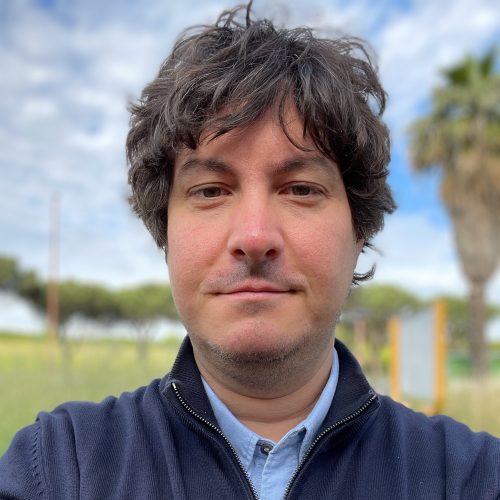
Navid Bayati is an Associate Professor at the University of Southern Denmark, affiliated with the Institute of Mechanical and Electrical Engineering and the Centre for Industrial Electronics. He leads the Control and Protection of Smart Grids (CAP-SG) group and focuses on renewable/hybrid power systems, microgrid protection, and grid code compliance. Education: Ph.D. in Power Systems & Microgrid Protection (2020, Aalborg University); M.Sc. in Power Systems (2017, Amirkabir University of Technology) His research spans renewable energy integration , transient analysis , grid interconnection , and digital twin applications . Recent work includes machine learning for carbon emission prediction, fault localization in DC microgrids, and supercapacitor resilience in hybrid systems. Collaborations include projects like IEA Wind Task 50 and RePoSys , addressing grid renovation, life cycle assessment, and digital twin resilience. His teaching portfolio covers power electronics , energy management , and microgrid control .
Yanbo Wang is an Associate Professor and Vice Head of the Wind Power Research Programme at AAU Energy, part of Aalborg University's Faculty of Engineering and Science. He leads research in Electric Power Systems and Microgrids, focusing on intelligent energy systems and flexible markets. His work emphasizes stability analysis, control strategies for hybrid AC/DC systems, and renewable energy integration. He supervises multiple PhD projects on topics like multi-port energy routers and wind power converter optimization. Research interests include power electronics, microgrid stability, and energy storage systems. Key projects include the EU-funded 'S3SF: Smart Energy Solutions for Sustainable Future' and machine learning-based control strategies for multi-energy systems. He has authored over 176 publications, with recent work on DC microgrid reliability, converter design, and offshore wind energy systems. His team collaborates internationally to advance grid-friendly technologies and smart energy solutions. Notable contributions include advanced control schemes for retired batteries in DC microgrids and stability assessment methodologies for offshore wind inverters. He advises on six PhD projects and maintains a lab focused on renewable energy systems and power electronics innovation.
Pooya Davari is a Professor and Head of the Section for Applied Power Electronic Systems at Aalborg University , Denmark. He leads the EMI/EMC in Power Electronics Research Group and serves as Vice Chair of the Energy Efficiency Mission. His research focuses on electromagnetic interference (EMI) and harmonic mitigation in power electronic systems, with over 200 publications and significant contributions to renewable energy integration. Education: B.Sc. and M.Sc. in Electronic Engineering (2004, 2008), Ph.D. in Power Electronics from Queensland University of Technology (2013) Prior Roles: Lecturer at QUT (2013–2014), Postdoc at AAU (2014) Research Interests: Harmonic and EMI analysis in grid-tied converters High power density converter design Signal processing for converter modeling Reliability of power electronic systems Article Trends: Recent work emphasizes EMI/EMC in renewable energy systems, wide bandgap semiconductors (SiC/GaN), and reliability modeling for EVs and hydrogen production via electrolysis. Sub-fields include converter topologies, grid integration challenges, and AI-driven diagnostics. Scientific Awards: Equinor 2022 Prize (Denmark’s oldest engineering award) IEEE EMC Society Young Professional Award (2020) World’s Top 2% Highly Cited Scientist (Stanford, 2021–2025) Multiple best paper awards (IEEE, Applied Sciences, etc.) Grants & Editorial Roles: Recipient of grants from Innovation Fund Denmark (Supra-EMC project), Horizon Europe (SOLARIS), and industry partnerships. Serves as Area Editor for IEEE Transactions on Transportation Electrification , Associate Editor for IEEE Transactions on Power Electronics , and Editor-in-Chief of Circuit World Journal (2020–2025). Labs & Standards: Coordinator of the EMC Laboratory at Aalborg University. Member of IEC standardization Working Groups 6 and 8 (TC77A), focusing on EMC strategies for power grids.
Giulio Cimini is Associate Professor of Theoretical Physics in the Department of Physics at the University of Rome Tor Vergata and a Research Associate at the 'Enrico Fermi' Research Center. He is a statistical physicist with a strong interdisciplinary focus on complex networks and their applications in socio-economic systems. His research interests include: Statistical Physics of Complex Networks Reconstruction and Validation of Economic Networks Social Network Interactions and Financial Markets Systemic Risk and Financial Contagion Scientific Success, Fitness, and Complexity Adaptive Social Recommendation Codon Usage Bias and Protein Interaction Networks His recent publications reveal a strong trend in applying statistical physics to real-world networks, particularly in finance and social systems. Key themes include the modeling of systemic risk in supply chains and financial networks, the dynamics of collective action on platforms like Reddit (e.g., the GameStop short squeeze), and the development of network reconstruction methods using maximum entropy and optimal transport frameworks. His work often combines empirical analysis with theoretical modeling. Scientific awards and recognitions include: Associate Editor, Frontiers in Physics – Interdisciplinary Physics Board Member, Network Science Society Member, Council of the Complex Systems Society Steering Committee, CCS/Italy He has advised or collaborated with numerous researchers, particularly in projects related to economic networks and complex systems. His work has been supported by Italian national grants such as PRIN and PNRR. He leads or co-leads research projects including RENet and C2T. His research is conducted within interdisciplinary teams involving physicists, economists, and computer scientists, often in collaboration with institutions like ISC-CNR, IMT Lucca, and the Network Science community.
Elena Irene Zavala serves as an Assistant Professor in the Section of Forensic Genetics and Guest Researcher at the Globe Institute, Section for Geogenetics at the University of Copenhagen's Faculty of Health and Medical Sciences. Her work bridges forensic science with paleogenetic research, focusing on ancient human DNA analysis and population genetics. Dr. Zavala's research interests span ancient DNA analysis, paleogenetics, forensic genetics, human evolution, population genetics, archaeogenetics, and anthropological genetics. Her work demonstrates a consistent focus on understanding human evolutionary history through genetic analysis, with particular emphasis on migration patterns, adaptation to diverse environments, and the development of methodological approaches for analyzing degraded DNA samples. She has made significant contributions to understanding Neanderthal admixture timing and early human dispersal into Europe. Her publication record shows a strong trend toward high-impact interdisciplinary research, with numerous publications in Nature and other top-tier journals. Her work frequently involves international collaborations across multiple institutions, reflecting the global nature of paleogenetic research. A notable pattern in her recent publications is the integration of multiple analytical approaches (genomic, isotopic, archaeological) to reconstruct human history. Young Investigator Award (2019) Miller Postdoctoral Fellowship (2022) Peter M. Schneider ISFG Fellowship (2023) Novo Nordisk Hallas-Møller Emerging Investigator Grant (2024) Dr. Zavala has secured significant research funding including the prestigious Novo Nordisk Hallas-Møller Emerging Investigator Grant in 2024, indicating strong institutional support for her research program. Her work has garnered substantial attention with multiple publications being picked up by hundreds of news outlets and referenced across social media platforms and academic networks. As a Guest Researcher at the Globe Institute's Section for Geogenetics, Dr. Zavala collaborates with interdisciplinary teams focused on ancient DNA and human evolutionary history. Her research often involves large international collaborations, as evidenced by the extensive author lists on her publications, suggesting she works within substantial research networks dedicated to paleogenetic investigations.
Rob Gleasure is a Professor in the Department of Digitalization at Copenhagen Business School (CBS), Denmark. His research focuses on the intersection of information systems, digital technologies, and human behavior, with particular expertise in blockchain technology, crowdfunding, AI applications, and technology adaptation. Based at Solbjerg Square 3 in Frederiksberg, he contributes to CBS's mission of advancing knowledge in business and society through digital transformation. Professor Gleasure's research spans several key areas within information systems and digital innovation: Digital finance and blockchain technologies, including cryptocurrency and financial applications Crowdfunding platforms and digital fundraising mechanisms Artificial intelligence applications in various domains including healthcare and banking Human-computer interaction and the psychological aspects of technology adoption Digital collaboration and the affective dimensions of online work Quantum computing infrastructure and emerging technologies His recent publications reveal an evolving research trajectory that increasingly addresses the societal implications of digital technologies. Gleasure has moved from foundational work on crowdfunding and blockchain to more complex examinations of AI ethics, gender bias in technological systems, and the psychological impacts of digital media. His research demonstrates growing attention to sustainable development goals, particularly those related to responsible consumption and production, reduced inequalities, and climate action. The interdisciplinary nature of his work bridges business, technology, and social sciences, often employing both qualitative and experimental methodologies. Professor Gleasure has served as a supervisor for numerous students (21 supervisor tasks mentioned) and has been active in academic service including co-chairing the ACM Collective Intelligence Conference in 2021. His research has attracted media attention, with contributions to discussions on cryptocurrency, carbon offsetting in aviation, and AI applications.
Wiebke Meesenburg is an Assistant Professor in the Department of Civil and Mechanical Engineering at the Technical University of Denmark (DTU), specializing in Thermal Energy. She is actively involved in research on large-scale heat pump systems, district heating integration, and digital twin applications for energy optimization. Her research focuses on sustainable thermal energy systems, particularly the design, monitoring, and optimization of heat pumps in district heating networks. Key areas include dynamic modeling, real-time adaptation, fouling mitigation, and the integration of renewable energy sources. She contributes to advancing energy efficiency and sustainability in urban infrastructure. The recent publications highlight a strong trend toward digitalization and optimization of thermal systems, with an emphasis on model-based monitoring, digital twins, and operation scheduling using advanced algorithms. Her work bridges mechanical engineering, energy systems, and computational modeling to improve system performance and reliability. She has supervised PhD research and contributed to major projects such as the implementation of digital twins for heat pump systems and EnergyLab Nordhavn. Collaborations involve key figures in energy research at DTU, including Professor Brian Elmegaard. While no formal awards are listed, her active participation in conferences and project leadership demonstrates recognition in her field. Wiebke Meesenburg has been involved in organizing and presenting at international events, including the 35th International Conference on Efficiency, Cost, Optimization, Simulation and Environmental Impact of Energy Systems and workshops on Modelica and flexible heat supply. Her work is embedded in interdisciplinary teams focused on future energy infrastructures and smart urban energy systems.
Márton Karsai is an Associate Professor and Head of the Department of Network and Data Science at the Central European University in Vienna, and a Research Professor at the HUN-REN Alfréd Rényi Institute of Mathematics in Budapest. He leads the Computational Human Dynamics Lab, focusing on data-driven modeling of social and biological systems. He is also the Editor-in-Chief of the journal Advances in Complex Systems . His research interests lie at the intersection of network science, human dynamics, and socioeconomic systems. He specializes in temporal and spatial networks, modeling contagion processes (both social and biological), and analyzing large-scale human behavioral datasets. His work integrates computational methods with real-world data to understand complex social phenomena such as mobility patterns, migration, segregation, and epidemic spread. He is particularly known for using remote sensing and digital trace data to infer poverty and socioeconomic conditions in urban areas. The recent publications highlight a strong trend in applying network science and machine learning to societal challenges. His work spans high-impact journals in complex systems, data science, and computational social science, with recurring themes in epidemic modeling, urban analytics, socioeconomic inference, and the structure of temporal and spatial networks. The research is highly interdisciplinary, combining physics, computer science, and social science methodologies. He has been invited to speak at major events such as the Conference on Complex Systems, the Lake Como School on Complex Networks, and workshops on data for vulnerability assessment. He served as general co-chair of CCS 2021 in Lyon, demonstrating leadership in the complexity science community. General Co-Chair, Conference on Complex Systems (CCS) 2021, Lyon Invited speaker, 4th Workshop on Data for the Wellbeing of the Most Vulnerable @ ICWSM'23 Invited speaker, Complexity72h Workshop Invited lecturer, Lake Como School on Complex Networks Invited talk, Hungarian Academy of Sciences on COVID-19 modeling While specific grant details are not listed, his coordination of projects on segregation, migration, and poverty inference—often in collaboration with the Complexity Science Hub—suggests active involvement in externally funded interdisciplinary research. He advises students through the Department of Network and Data Science at CEU, though specific advisees are not named. His lab, the Computational Human Dynamics Lab, serves as a hub for data-driven research on social systems.
Janine Leschke is Professor in Political Economy of Labour Markets at Copenhagen Business School's Department of Management, Society and Communication and a member of CBS Sustainability's Sustainability Governance Group. Her work centers on European labour markets, welfare states, and social policy through institutional and micro-data analysis. Her research focuses on comparative European labour market and welfare state analysis, emphasizing flexibility-security dynamics. Key areas include non-standard employment, job quality, gender disparities, platform work, and social sustainability. She investigates big data and algorithmic impacts on public employment services using institutional frameworks and micro-data. Recent publications (2023-2025) highlight platform work regulation, job quality measurement in digital markets, and intra-EU migration effects on wage structures. Her work consistently examines technological change, social protection, and flexicurity models within European governance. Leschke supervises projects on labour market inequality, digital transformation, migration, and social policy using diverse methodologies. She led the EU Horizon 2020 HECAT project (2020-2023) on disruptive labour market technologies and participates in EUSOCIALCIT, ReNEW, and STYLE through ESPAnet networks. She contributes to CBS's Sustainability Governance Group and European research networks including ESPAnet and Nordic ESPAnet to advance comparative social policy analysis.
Lars G. Johansen is an Associate Professor at Aarhus University, affiliated with the Department of Electrical and Computer Engineering. His work bridges interdisciplinary domains, with a focus on signal processing and machine learning. Research interests include Audio engineering and acoustic signal analysis Biomedical signal processing Neuroscience applications in Parkinson's disease studies Recent publications highlight trends in audio engineering (e.g., loudspeaker distortion analysis) and biomedical signal processing (e.g., ECG-derived respiration techniques). Collaborative work spans neuroscience, Parkinson's disease treatment evaluation, and noise reduction systems. Contact: Email: lgj@ece.au.dk Phone: +45 41 89 32 74 Labs/Teams: Signal Processing and Machine Learning Laboratory at Aarhus University.
Jeppe Rich is a Professor at the Department of Technology, Management and Economics at the Technical University of Denmark (DTU). His primary research focuses on statistical and mathematical modeling applied to transport-related challenges, including transport demand modeling, discrete choice models, freight transport, cost-benefit assessments, and strategic long-term demand models. Rich holds a Mathematical Planning qualification from the University of Aarhus (1989–1995). He has held external positions as a Senior Consultant at Atkins A/S (2001–2002) and as a Researcher at the National Environmental Research Institute (1995–1998). His work aligns with UN Sustainable Development Goals related to sustainable cities and communities (SDG 11) and climate action (SDG 13). His research interests span transport policy, transportation science, and the application of advanced modeling techniques to address urban mobility challenges. Notable areas include EV infrastructure planning, bicycle network optimization, and cost-benefit analysis of transport projects. He supervises several PhD students in topics like electric freight transport, micromobility safety, and urban charging infrastructure. Rich has published extensively on transport policy, demand modeling, and sustainable mobility solutions. His work emphasizes interdisciplinary approaches to solving complex transport challenges, combining engineering, economics, and data science methodologies.
Christian Koch is a Professor and Head of Section at the University of Southern Denmark (SDU) Civil and Architectural Engineering, Department of Technology and Innovation, where he leads research on construction industry dynamics, climate change mitigation, and digital transformation. His work bridges institutional theory with practical challenges in sustainable development and organizational innovation. SDU Climate Cluster EU SAND Project Participant Creative Construction Conference Chair Research interests include circular economy implementation, blockchain in construction logistics, lean construction methodologies, and AI applications for safety analysis. His studies focus on institutional entrepreneurship, interorganizational networks, and policy impacts on construction practices, particularly in Denmark and Sweden. Recent article trends analyze machine learning for accident report analysis, blockchain-enabled resource marketization, and climate-resilient infrastructure. Notable awards include the Taylor and Francis Best Theoretical Paper (2025), SCC Fast Track Award (2024), and CME Best Paper on Societal Challenges (2022). Scientific awards include: Taylor and Francis Best Theoretical Paper (2025) SCC Fast Track November 2024 CME Best Paper Transformative Impact (2022) Best Paper Creative Construction Conference (2025) He actively participates in public discourse through media engagements on construction safety, climate adaptation, and sustainable sand extraction for green transitions.
Luka Radic is a Researcher in the Machine Learning Section at the Department of Computer Science, University of Copenhagen. His work bridges theoretical and applied research in machine learning, with a focus on quantum machine learning , large language models , and fairness in AI systems.
Jakob Eg Larsen is an Associate Professor at the Technical University of Denmark (DTU), affiliated with the Department of Applied Mathematics and Computer Science (DTU Compute) within the Cognitive Systems Section. He leads the Mobile Informatics and Personal Data Laboratory (MILAB). His research focuses on Human-Computer Interaction (HCI), Personal Informatics, Quantified Self, and Information Visualization, with applications in wearable technology, mental health, and healthcare. He teaches courses in Digital Media Engineering, including user experience, mobile application prototyping, and personal informatics. Education: PhD (2005) and MSc in Computer Science (1999) from the University of Copenhagen, with additional studies in cognitive psychology. Research emphasizes wearable devices for mental health interventions (e.g., PTSD treatment), physical activity tracking in pregnancy, and personalized hearing aid systems. Over 98 publications and 12 supervised PhD projects highlight his contributions to HCI, mHealth, and data-driven healthcare solutions. Labs/Teams: MILAB focuses on mobile informatics and personal data interaction. Collaborations span interdisciplinary fields like audiology, clinical psychology, and public health.
Tuukka Ruotsalo serves as Associate Professor in the Machine Learning Section at the Department of Computer Science, University of Copenhagen. His research bridges human cognition with computational systems through brain-computer interfaces and physiological computing. As Academy Research Fellow at University of Helsinki (2019-2024), he maintained dual institutional affiliations while leading cutting-edge work in neuro-linguistic modeling and affective relevance. His research focuses on brain-computer interfaces for information retrieval , where he pioneers methods to decode cognitive states from neural signals to improve search systems. Key areas include affective relevance modeling that integrates emotional states into search algorithms, and neuro-linguistic reconstruction that translates brain activity into language. His work on fairness-relevance tradeoffs in recommender systems established Pareto frontier evaluation frameworks now widely adopted in ethical AI research. Recent publications demonstrate how physiological signals like EEG and galvanic skin response can create more adaptive human-information interaction systems. Ruotsalo's scientific recognition includes the prestigious Academy Research Fellow position. His publications in IEEE Transactions on Human-Machine Systems , Journal of the Association for Information Science and Technology , and Communications Biology reveal growing interdisciplinary impact. His advising spans cognitive neuroscience and machine learning students, with notable collaborations across the SCIENCE AI Centre. Current projects include the TreeSense initiative for remote sensing of global tree resources and development of quantum-inspired neural architectures. His lab leverages the department's powerful compute cluster for large-scale physiological data analysis.