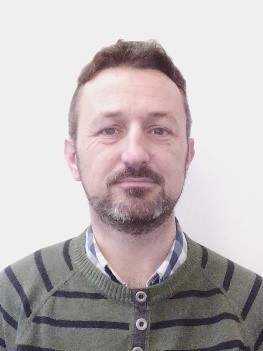
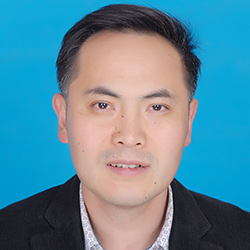
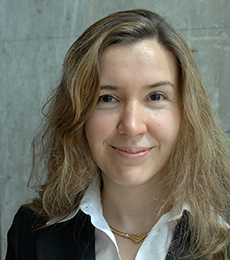
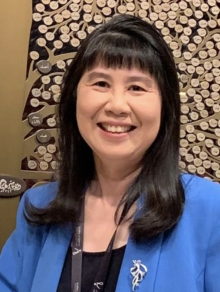
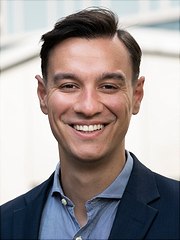
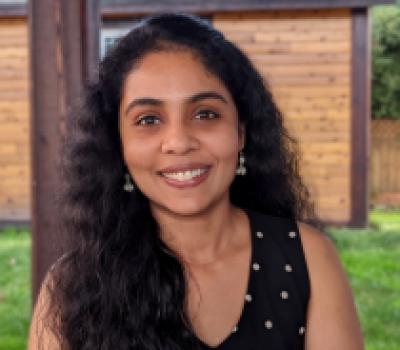
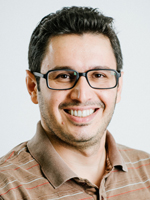
Professor Eric Morgan at Queen's University Belfast leads parasitology research in the School of Biological Sciences , focusing on climate-driven epidemiology of parasitic infections in animals. His work integrates predictive modeling, parasite transmission dynamics at the wild-domestic interface, and sustainable livestock health solutions. Veterinary parasitology and climate change impact Anthelmintic resistance mitigation strategies AI-enhanced diagnostic systems for animal health Current research students include Anthony George, who investigates Combining alternative approaches for helminth control in grazing livestock . Public engagement initiatives like the BUG Consortium and Poo Patrol translate findings into practical parasite management. His recent publications in 2025 address topics like flood reactors, zoonotic toxocariasis, and precision agriculture tools for parasite risk assessment.
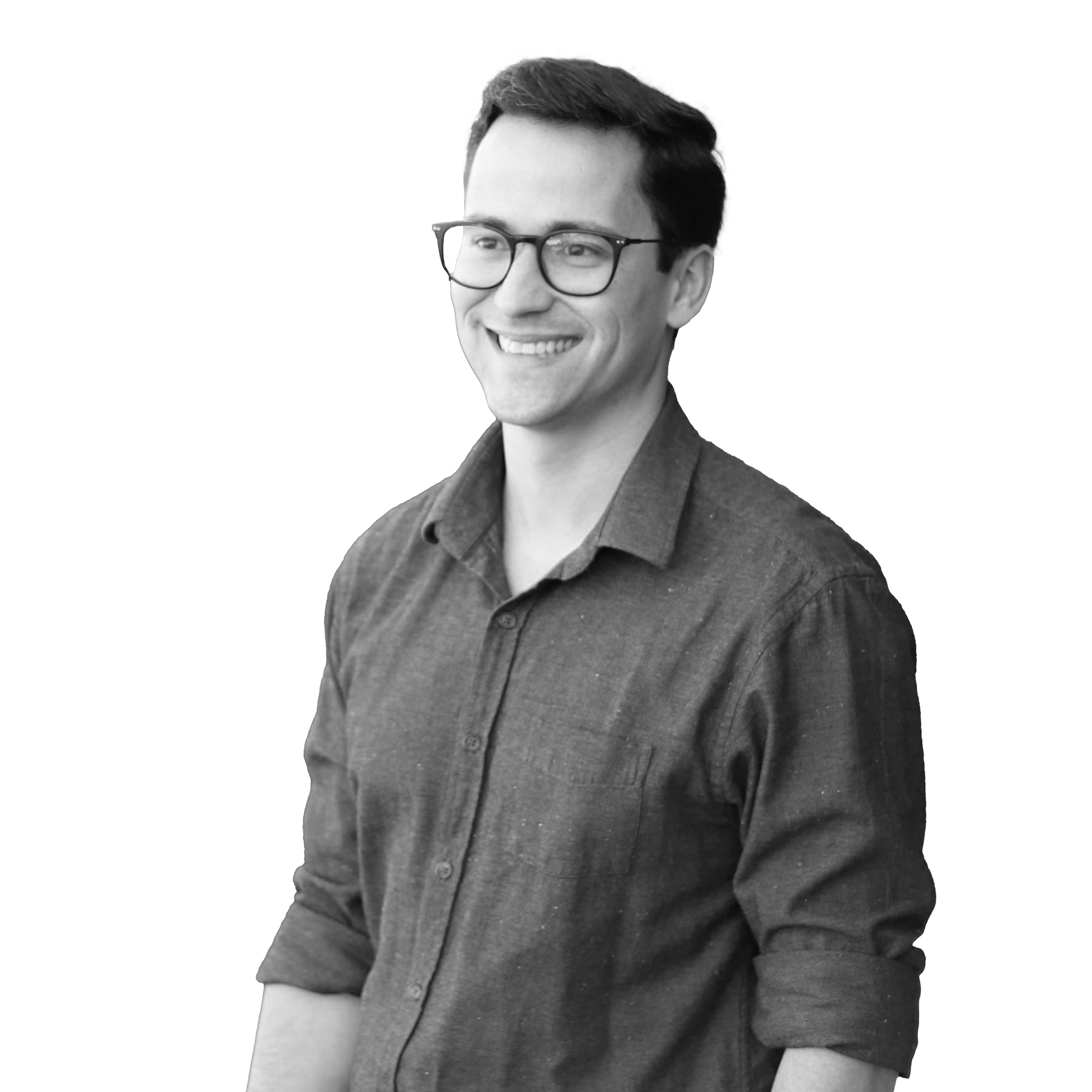
Eduardo Velloso is a Professor of Computer Science at the University of Sydney , focusing on interaction design for emerging technologies . His work explores novel user experiences through input modalities, interaction devices, and AI/ML integration in systems. Education: PhD in Computer Science (Lancaster University, UK), Bachelor in Computer Engineering (Pontifical Catholic University of Rio de Janeiro, Brazil) Research Interests: Interdisciplinary work combining Human-Computer Interaction , Augmented/Virtual Reality , Eye Tracking , Wearable Computing , and Machine Learning . Publication Trends: Recent work addresses methodology in HCI , AR/VR applications , AI integration , and sensor-based interaction . Scientific Awards: Best Paper Award at CHI Best Paper Award at UIST Best Paper Award at TOCHI Best Paper Award at TEI Supervision: Actively supervises PhD students and collaborates with companies/government on projects like VR training systems and AI mediation tools . Labs/Teams: Affiliated with institutions in Australia (University of Sydney) and Brazil (PUC-Rio), with global co-authors in projects involving mixed reality , wearables , and AI ethics .
Federico Miretti is an Assistant Professor at the Polytechnic University of Turin, affiliated with the Department of Energy and the interdepartmental center Cars@PoliTo. His research focuses on hybrid and electric vehicles, with emphasis on energy management strategies, battery state estimation, and sustainable transport solutions. PhD in Energetics from Polytechnic University of Turin Research areas include: Optimization-based Energy Management Strategies for hybrid propulsion systems Simulation and digital twinning of hybrid systems Thermal management for electrified vehicles Techno-economic assessment of mobility solutions Recent publications highlight advancements in battery temperature anomaly detection, wireless power transfer feasibility, and control algorithms for energy efficiency. His work aligns with SDGs 7 (Clean Energy) and 9 (Innovation). Teaching roles include: Fluid Machinery (2019-2025) Energy Management in Hybrid/Electric Vehicles (2021-2025) Projects: PRoSIT (2025): Predictive thermal management demonstrator Consulting contract with MIDAC SpA (2025): Battery Digital Twin development EBOAT project (2025-2026): Technical support for Vulkan
Remus Teodorescu is a Professor at AAU Energy , Aalborg University , specializing in Power Electronics System Integration and Materials . His work bridges Lithium-Ion Batteries , Modular Multilevel Converters , and Smart Battery Systems . Education : Not explicitly mentioned in the text. Research Interests focus on Battery Management Systems , AI-Driven Energy Optimization , and Power Electronics for renewable energy integration. Key projects include Digital Twin for Lithium-Ion Batteries and BMS-DC for Data Centers . Recent Publications (2025) emphasize Finite Set MPC , Gradient Descent Optimization , and AI in Battery Parameter Estimation . His 2024 work explores Physics-Informed Neural Networks and Fault-Tolerant Converters . Scientific Awards : Villum Foundation Grant (313 million kroner, 2021) Named world's best in electrical engineering (2023) Advising includes supervising PhD projects on AI-Accelerated Battery Twins and Data-Driven SOH Estimation . Collaborations span Energy Cluster Denmark and Villum Fonden .
Prof. Dr. Janick Edinger is a Professor of Distributed Operating Systems at the Department of Informatics, Faculty of Mathematics, Informatics and Natural Sciences, University of Hamburg, Germany. He leads a research group focused on distributed, context-aware, and adaptive computing systems, with a strong emphasis on edge computing, computation offloading, and assistive technologies. Education: PhD in Computer Science, University of Mannheim Studies at National Taiwan University Studies at University of Alberta, Canada Research stays at University of British Columbia, Hong Kong Polytechnic University, and Georgia State University, USA His research explores how edge computing and computation offloading can enable efficient, privacy-preserving processing of sensor and video data close to their sources, particularly in dynamic environments. He investigates the integration of autonomous and heterogeneous systems—such as drone fleets and mobile devices—into scalable middleware platforms for real-time monitoring and decision-making in logistics and industrial operations. His work also emphasizes societal impact, contributing to accessible routing, adaptive interfaces, and crowd-sourced mapping. The recent publications reflect a strong trend in edge computing, federated learning, privacy-preserving analytics, and assistive technologies. Topics include WebAssembly-based offloading, emotion prediction via eye tracking, real-time traffic detection, and predictive maintenance in Industry 4.0, showcasing a blend of foundational systems research and applied human-centered computing. Scientific Awards: PerCom 2021 Mark Weiser Best Paper Award Best Paper Award at IEEE PerCom 2021 for 'Voltaire: Precise Energy-Aware Code Offloading Decisions with Machine Learning' Prof. Edinger actively advises students and leads research projects involving grants and collaborations. His team includes PhD candidates and researchers working on middleware, edge systems, and context-aware applications. He has served on conference program committees, such as shadow PC member for EuroSys 2021, and publishes in top venues including IPDPS, PerCom, CHIIR, and COMPSAC. Labs and Teams: He leads the Distributed Operating Systems research group at the University of Hamburg, where he mentors students and collaborates on projects involving edge computing, IoT, and adaptive systems.
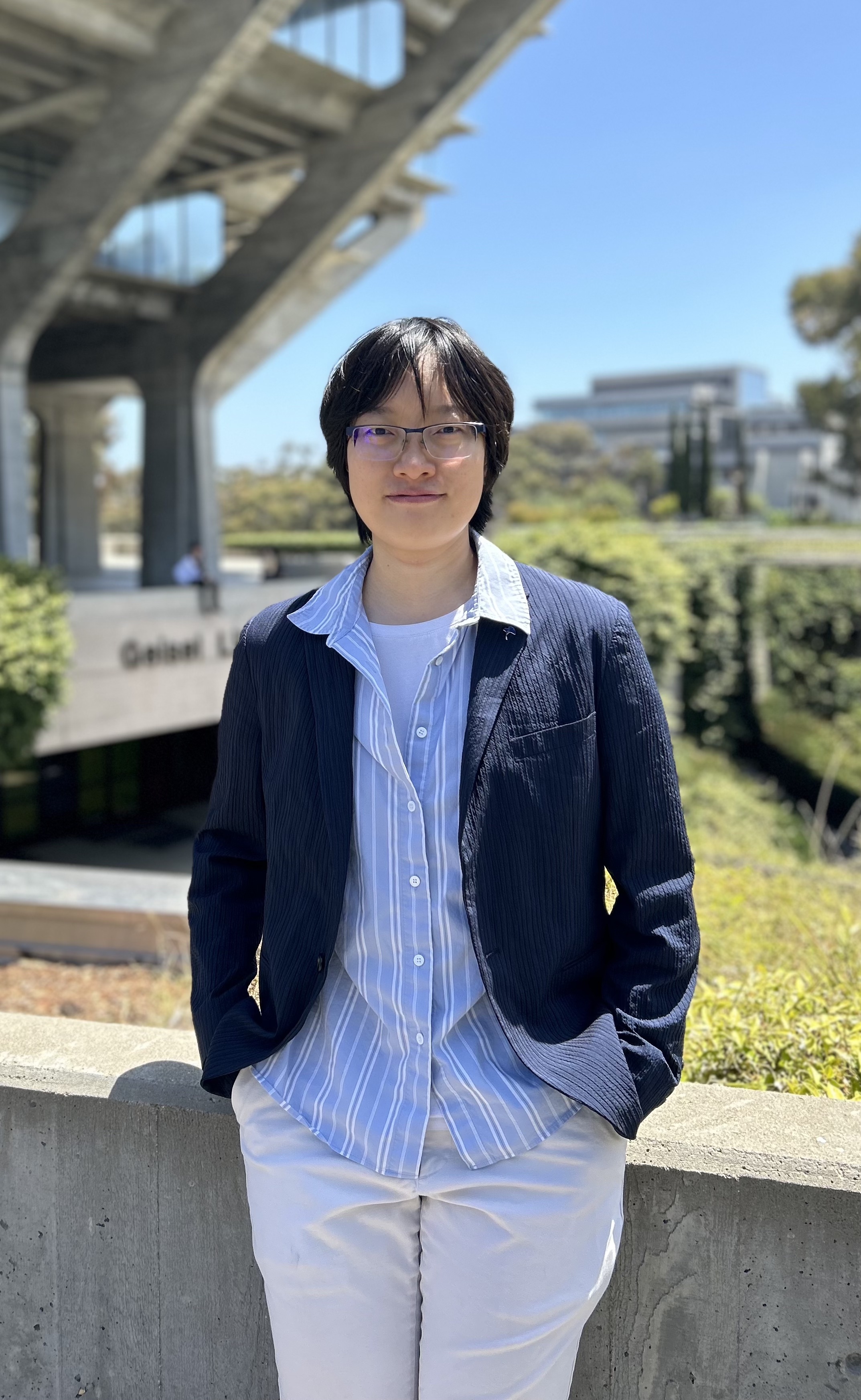
Xiaofan Yu is an Assistant Professor in the Department of Electrical Engineering at the University of California, Merced. He holds a Ph.D. (2025), M.S. (2020), and B.S. (2018) from the University of California, San Diego and Peking University, respectively. His research focuses on embedded systems , edge AI , and neuromorphic computing , with applications in IoT, federated learning, and hyperdimensional computing. ML&Systems Rising Star (2024) CPS Rising Star (2023) EECS Rising Star (2022) His work addresses on-device AI for real-world IoT deployments, reliability-driven sensor networks , and next-generation edge intelligence . Recent publications highlight advancements in federated learning (TIOT 2025), multimodal sensor interaction (IMWUT 2025), and noise-resilient sensor systems (Sensors 2024). Key subfields include hyperdimensional computing , asynchronous distributed training , and resource-efficient edge models . Dr. Yu actively mentors students across institutions and programs, including the Early Research Scholarship Program (UCSD) and ENLACE Summer Research Program. He has advised projects on smart elderly monitoring , LLM-based sensor reasoning , and hyperdimensional algorithm optimization . Collaborations span UCSD, TUM, and Stanford, with industry partnerships in IoT design automation (RelIoT simulator) and biomedical applications (bladder fullness restoration system).
Steven F. Son is the Alfred J. McAllister Professor of Mechanical Engineering at Purdue University, affiliated with the College of Engineering. He holds joint appointments in Aeronautics and Astronautics, Materials Engineering, and Mechanical Engineering. His research focuses on energetic materials, combustion science, and propulsion systems, with emphasis on detonation physics, additive manufacturing of explosives, and novel propellant designs. Key projects include developing throttleable solid propellants, studying material-filled void effects on detonation waves, and optimizing nanomaterials for enhanced reactivity. Dr. Son’s work integrates experimental and computational methods, such as laser absorption spectroscopy and machine learning, to advance understanding of high-energy materials. His contributions span from fundamental material characterization to applied systems like Martian perchlorate-based propellants. He leads research at the Maurice J. Zucrow Laboratories, Purdue’s premier facility for propulsion and energetic materials research. His recent studies explore flexoelectricity in fluoropolymer/aluminum composites, laser ignition systems for solid propellants, and thermal decomposition mechanisms of novel energetic formulations. While no awards are explicitly listed, his prolific publication record and interdisciplinary approach highlight his influence in the field.
Yan Chen is a Professor of Computer Science at Northwestern University's Robert R. McCormick School of Engineering and Applied Science. He leads the Northwestern Lab for Internet and Security Technology (LIST) and the Center for Ultra-scale Computing and Information Security. His research focuses on cybersecurity, network measurement, and distributed systems security. Chen holds a Ph.D. from UC Berkeley (2003), M.S. from SUNY Stony Brook, and B.E. from Zhejiang University. Research interests include securing networking systems, intrusion detection, cloud-native platforms, and mobile security. Notable awards include the DOE Early CAREER Award (2005), Air Force Young Investigator Award (2007), and ACM ASPLOS'18 Most Influential Paper Award. His work has been cited over 17,000 times with an h-index of 62 (2024). Key contributions include the LIST lab's advancements in APT detection, provenance tracking in microservices, and security frameworks like FlowCog. He advises numerous Ph.D. students and has graduated over 20 researchers now in academia and industry.
Asuman Ozdaglar is the MathWorks Professor of Electrical Engineering and Computer Science and Department Head of EECS at MIT. She also serves as Deputy Dean of Academics for the MIT Stephen A. Schwarzman College of Computing. Her research focuses on large-scale networked systems, including optimization, game theory, social networks, and distributed algorithms. Education: BS in Electrical and Electronics Engineering from Middle East Technical University (1996), SM (1998) and PhD (2003) in Electrical Engineering and Computer Science from MIT. Research emphasizes nonlinear optimization, machine learning, and network economics. She leads work on robust algorithms, misinformation dynamics, and networked systems. Affiliated with the Laboratory for Information and Decision Systems (LIDS) and the Operations Research Center (ORC). Her contributions span theoretical and applied domains, including distributed optimization methods, social network analysis, and privacy-preserving data mechanisms. Active in shaping academic policy through her roles in the College of Computing.
Ming Lin is a Distinguished University Professor at the University of Maryland, College Park, holding joint appointments in Computer Science (Department of Computer Science), the Institute for Advanced Computer Studies (UMIACS), Electrical and Computer Engineering (ECE), and the Maryland Robotics Center. She holds the Dr. Barry Mersky and Capital One E-Nnovate Endowed Professorships. Her research focuses on physically-based modeling, virtual environments, haptics, robotics, and AI applications in healthcare and urban computing. Education: Ph.D., M.S., and B.S. in Electrical Engineering & Computer Sciences from UC Berkeley. She previously spent 20 years at UNC Chapel Hill before joining UMD in 2018. Research interests include collision detection algorithms (e.g., Lin-Canny algorithm), real-time physics simulation, virtual/augmented reality systems, and medical imaging applications. Her work has led to over 2 million downloads of her group's software tools and licenses with 60+ companies. Notable contributions include the Oculus Rift-related VR technologies and Amazon's virtual try-on system. Awards: IEEE Fellow (2012), ACM Fellow (2011), NAI Fellow (2022), and Washington Academy of Sciences Distinguished Career Award (2020). Active in professional service, she serves on the CRA Board and chairs the Committee on Widening Participation in Computing Research. Advising: Supervises 12+ PhD/Master's students. Her lab (GAMMA Group) focuses on AI-driven robotics, autonomous systems, and physically-based simulations. Key projects include traffic simulation frameworks, medical VR applications, and 3D garment modeling.
Ali Ghodsi is a Professor at the University of Waterloo and Director of the Data Science Lab, with affiliations at the Vector Institute. His research spans machine learning, deep learning, and artificial intelligence, with applications in natural language processing, bioinformatics, and computer vision. His group develops theoretical frameworks and algorithms for analyzing large-scale datasets, focusing on neural network architectures, knowledge distillation, and model efficiency. Current projects include deep learning for identity control, computational antibody design, and generative AI/large language models. Ghodsi has authored influential tutorials on diffusion models, graph neural networks, and large language models. Notable research contributions include computational methods for de novo peptide sequencing from mass spectrometry data, green simulation-assisted reinforcement learning, and efficient natural language processing models. His lab maintains collaborations with industry partners including Google, Amazon, and Roche.
Thomas Mayer is a Doctoral Researcher affiliated with the Professorship for Information Systems and Digital Innovation at the University of Hamburg Business School. His research focuses on Digital Transformations in industrial organizations, Scaled Agile Transformations, Enterprise Architecture Management, and Generative Artificial Intelligence (GenAI) Development. He holds an office at Von-Melle-Park 5, Room 3091, and can be contacted via thomas.mayer@uni-hamburg.de. His recent publications explore financial management challenges in agile transformations within automotive manufacturing and the application of GenAI in industrial contexts. Mayer collaborates with Prof. Dr. Recker and other researchers on case studies involving German automotive firms. His work bridges theoretical frameworks with practical implementation challenges in digital innovation and organizational change.
Melissa C. Smith is a Professor of Electrical and Computer Engineering and Associate Dean for Graduate Studies at Clemson University. She holds a Ph.D. from the University of Tennessee and degrees from Florida State University. Her research focuses on machine learning, reconfigurable computing, and high-performance systems, with applications in embedded systems and interdisciplinary scientific advancements. Before joining Clemson in 2006, she was a research associate at Oak Ridge National Laboratory (ORNL), contributing to projects like the Spallation Neutron Source and PHENIX experiments. Education: Ph.D., Electrical and Computer Engineering, University of Tennessee M.S., Electrical Engineering, Florida State University B.S., Electrical Engineering, Florida State University Research Interests: Machine Learning and AI High-Performance and Reconfigurable Computing System Performance Modeling Embedded Systems Articles Summary: Her recent work spans machine learning applications, GPU/FPGA architectures, speech enhancement, and medical systems. Key themes include optimizing heterogeneous computing for real-time and scientific workloads, and advancing interdisciplinary solutions through architecture-application co-design. Lab & Collaborations: Leads the Future Computing Technologies Lab and collaborates with ORNL and national labs on projects like GEMmaker and HPC-enabled medical systems.
Dr. Karthika Mohan is an Assistant Professor of Computer Science in the College of Engineering at Oregon State University, affiliated with the School of Electrical Engineering and Computer Science. Her research bridges artificial intelligence and causal inference, focusing on graphical models, missing data, and non-IID data challenges. Her work has been recognized with the Google Outstanding Graduate Research Award. She serves as an associate editor for the Journal of Causal Inference and has secured NSF funding for research on incomplete data. Dr. Mohan mentors students in causal inference methods and maintains collaborations with institutions like UC Berkeley and UCLA. Her laboratory develops innovative approaches for causal reasoning in AI systems.
Dr. Saman Razavi is an Associate Professor at the University of Saskatchewan, holding dual appointments in the School of Environment and Sustainability (SENS) and the Department of Civil, Geological and Environmental Engineering in the College of Engineering. He is a member of the Global Institute for Water Security and leads the Razavi EnviroFutures Lab. His research focuses on hydrological modeling, water resources management, climate change impacts, and the integration of machine learning with environmental science. Dr. Razavi has earned a PhD in Civil and Environmental Engineering from the University of Waterloo. Education: PhD in Civil and Environmental Engineering, University of Waterloo MS in Civil and Environmental Engineering, Amirkabir University, Iran BS in Civil Engineering, Iran University of Science and Technology Research interests include hydrologic model development, optimization, uncertainty quantification, climate change analysis, and socio-hydrological modeling. He emphasizes interdisciplinary approaches to address water challenges through integrated frameworks that bridge natural science, engineering, and socio-economic factors. Award: Walter L. Huber Civil Engineering Research Prize from ASCE (2024) Advising & Grants: Dr. Razavi leads the Integrated Modelling Program for Canada under Global Water Futures, focusing on transboundary water systems. His work involves developing decision-support tools for flood/drought management and climate adaptation. Labs/Teams: The Razavi EnviroFutures Lab advances research on water-human systems, leveraging AI and big data to enhance resilience against water-related hazards. Current projects include flood-prone area mapping, drought prediction, and socio-hydrological modeling in transboundary basins.