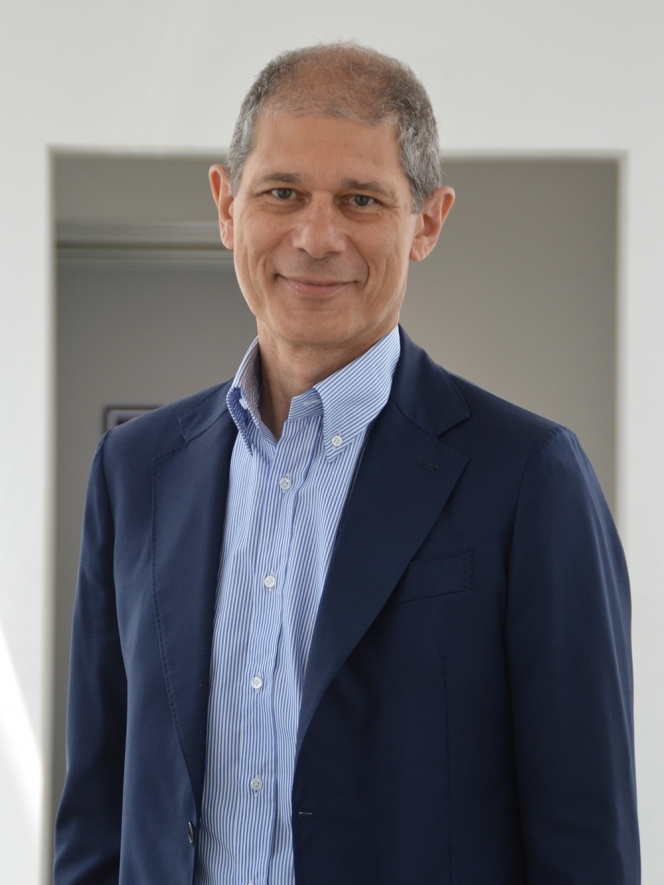
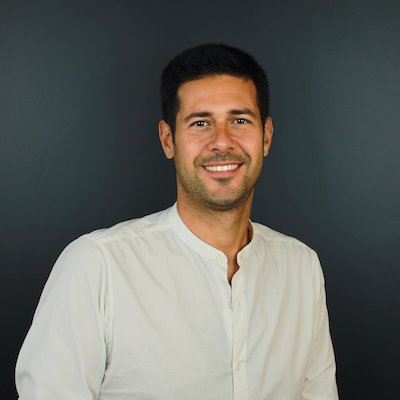
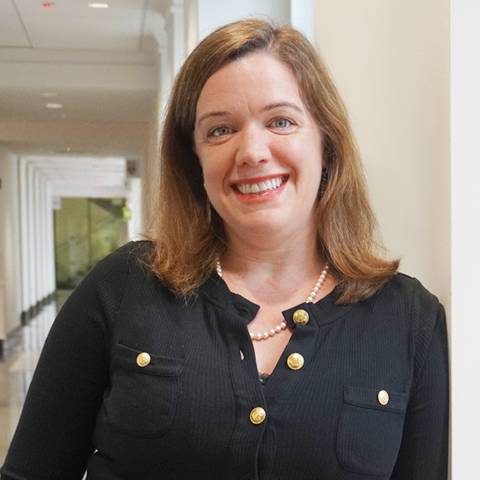
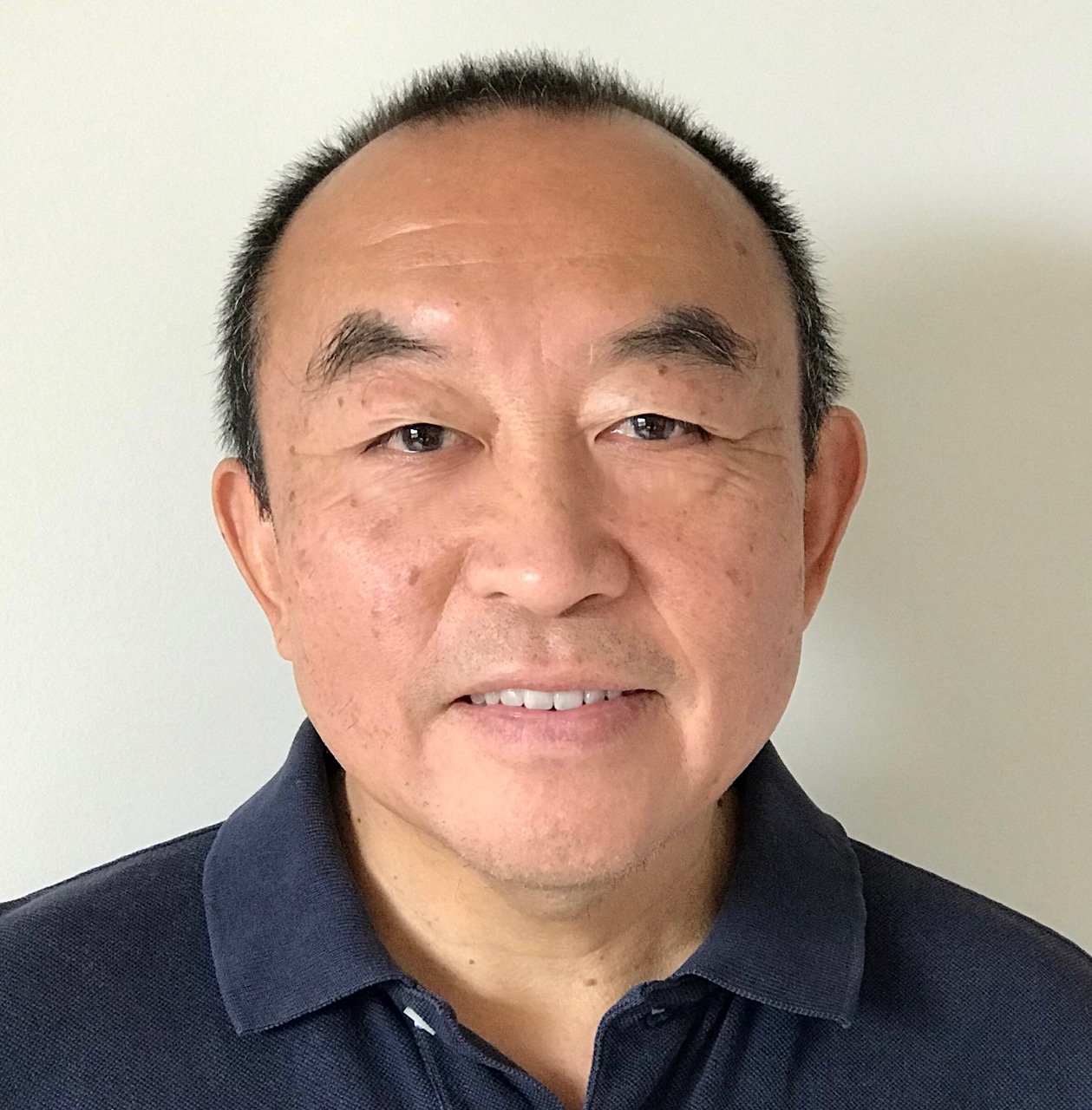
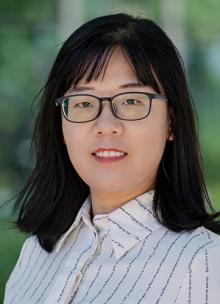
Prof. Sergio Ginebri is an Associate Professor at the Department of Jurisprudence, University of Rome Tre. He holds a PhD in Economics from Sapienza University of Rome and has extensive experience in fiscal policy, pension systems, and public finance research. His work focuses on topics like pension sustainability, social inequality, and the political economy of public debt. Education: PhD in Economics, Sapienza University of Rome (1988–1992) MA in Economics, University of Warwick (1987–1988) Laurea in Statistics and Demography, Sapienza University of Rome (1977–1984) Research Interests: Prof. Ginebri specializes in public policy, fiscal sustainability, and the social impacts of pension reforms. His research explores how demographic trends, wealth distribution, and political dynamics shape economic policies. Recent work includes analyses of longevity risks, pension equity, and fiscal policy integration in the EU. Key Projects: Coordinated studies on pension system sustainability (2002–2018) Developed models for forecasting public pension expenditure Contributed to EU tax policy observatories Awards: Recipient of the national PhD award (1994) and recognition for academic excellence in tax policy research (2001). Teaching: Teaches courses in political economy, public finance, and macroeconomics at undergraduate and graduate levels.
Demetris Christodoulou is an Associate Professor in Accounting, Governance and Regulation at the University of Sydney. He holds a BEcon from Piraeus University, an MSc(Fin) from the University of York (UK), and a PhD from Athens University of Economics and Business (AUEB). His research focuses on applying data analytics, econometrics, and visualization techniques to financial analysis, equity valuation, life insurance, and financial advice. He co-directs the PEMA research group, specializing in productivity and performance measurement analytics, and previously led the MEAFA research group (2007–2022). He has collaborated extensively with industry partners including Deloitte and Australian insurers, and developed training programs for over 1,000 executives. His work includes open-source contributions to Stata software and the Graph Workflow platform, alongside $662k in workshop-generated funds supporting academic programs. He has advised multiple PhD students and taught at leading universities globally. Education: BEcon in Economics (Econometrics), Piraeus University MSc in Finance, University of York (UK) PhD in Accounting and Financial Analysis, Athens University of Economics and Business His research interests span financial reporting models, life insurance underwriting strategies, and behavioral finance. Recent projects address dishonesty mitigation in insurance disclosures and the adviser effect on customer disclosures. He has published widely in top journals like the Review of Accounting Studies and Stata Journal , and his work was featured in The Australian for insights on insurance fraud reduction. He maintains international collaborations, including visiting roles at Columbia Business School and the University of Cyprus, and serves on advisory boards for organizations like Behaviour.ai. Publications highlight methodological innovations in econometrics and visualization, with 2025's upcoming Stata Journal paper advancing time-series analysis techniques. His grants include partnerships with industry on longitudinal studies of insured lives, aiming to improve risk modeling and public policy insights.
David Landriault is a Professor in the Department of Statistics and Actuarial Science at the University of Waterloo, Canada, and a Canada Research Chair in Risk Theory. His research focuses on Actuarial Science, Quantitative Risk Management, Applied Probability, and Stochastic Processes, particularly in ruin theory, drawdown analysis, and stochastic control for insurance and finance applications. Education: PhD in Mathematics (2005), MSc in Mathematics (2003), BSc in Actuarial Science (2002) from Laval University. Affiliations: University of Waterloo (postdoctoral fellowship, 2006); Canada Research Chair in Risk Theory. Research Interests Risk and Ruin Theory Stochastic Control in Insurance and Finance Drawdown and Occupation Time Analysis Regime-Switching Models Reinsurance Design and Optimization Time-Dependent Risk Models Scientific Awards Fellow of the Canadian Institute of Actuaries (F.C.I.A.), 2009 Fellow of the Society of Actuaries (F.S.A.), 2006
Richard J. Cook is a University Professor and Mathematics Faculty Research Chair in the Department of Statistics and Actuarial Science at the University of Waterloo. He holds cross-appointments at the School of Public Health and Health Systems at the University of Waterloo and the Faculty of Health Sciences at McMaster University. Previously, he held a Tier I Canada Research Chair in Statistical Methods for Health Research from 2005 to 2019. His educational background includes: BSc in Statistics from McMaster University MMath in Mathematics from University of Waterloo PhD in Statistics from University of Waterloo Professor Cook's research focuses on developing and applying statistical methods for public health research. His primary areas of interest include the analysis of life history data, longitudinal data analysis, methods for incomplete data, clinical trial design, and multivariate analysis. His work provides critical methodological frameworks for understanding disease progression and evaluating interventions in complex health settings. He has made significant contributions to the development of multistate models for disease processes and methods for handling interval-censored data. His extensive publication record demonstrates consistent focus on methodological innovations addressing real-world health research challenges. Recent work emphasizes estimand specification in clinical trials, transportability of research findings, and causal inference methods. His research bridges theoretical statistics with practical applications in autoimmune diseases, transfusion medicine, and public health. Professor Cook has received significant professional recognition: Tier I Canada Research Chair in Statistical Methods for Health Research (2005-2019) Mathematics Faculty Research Chair at University of Waterloo His students have earned prestigious awards including multiple Pierre-Robillard Awards, ISCB Student Conference Awards, and ENAR Distinguished Student Paper Awards, with notable achievements like Dr. Shu (Joy) Jiang being named in the Forbes Top 30 Under 30 North America (2023) for Healthcare. Professor Cook has advised numerous graduate students throughout his career, with many going on to successful academic and industry positions. His research has been supported by various grants, and he collaborates extensively with researchers in rheumatology, transfusion medicine, and public health through affiliations with the Centre for Prognosis Studies in Rheumatic Diseases, the International Psoriasis and Arthritis Research Team, and the McMaster Centre for Transfusion Research. He leads a vibrant research team that includes research associates, post-doctoral fellows, and graduate students working on cutting-edge statistical methodology. His research group maintains strong connections with multiple institutions and research centers focused on health outcomes and disease progression.
Prof Terry O'Neill serves as Executive Dean at the Bond Business School , Bond University, while also holding the title of Professor and Director at the Centre for Data Analytics. His research spans applied statistics , big data analytics , and financial modeling , with over 80 publications (20% in A* journals). Grants: Lead investigator on five ARC Discovery/Linkage grants totaling $2.99M, including studies on retirement savings, climate change modeling, and financial crisis resilience. Research Trends: Focus on financial literacy , retirement economics , and myelopoiesis , bridging finance with computational biology through collaborations with his spouse Helen O'Neill. Academic Leadership: Established Bond University's University Centre in Actuarial and Financial Big Data Analytics to elevate institutional research prominence in data science.
Professor Ben Goldys is a distinguished academic at The University of Sydney's School of Mathematics and Statistics, where he conducts research at the intersection of pure mathematics and applied sciences. His work spans multiple disciplines including stochastic analysis, partial differential equations, and financial mathematics, with significant contributions to both theoretical frameworks and practical applications in science and finance. Goldys' research interests center on stochastic (ordinary and partial) differential equations and their applications. His specific focus areas include stochastic partial differential equations, stochastic geometric PDEs, stochastic boundary value problems, stochastic fluid dynamics, ergodic theory of infinite-dimensional diffusions, and applications in financial mathematics such as interest rate derivatives, credit risk, and stochastic volatility. His work bridges pure mathematical theory (Functional Analysis, PDEs, Ergodic Theory) with complex real-world problems across multiple domains. His research aligns with the University of Sydney Faculty of Science Research Strengths including Understanding the Universe, Fundamental Laws of Nature, Complex Systems, and Next Generation Materials. Professor Goldys has secured multiple significant research grants from the Australian Research Council, including recent projects such as 'Mathematics for future magnetic devices' (2024), 'Mathematics for breaking limits of speed and density in magnetic memories' (2019), and 'Novel Approaches for Problems with Uncertainties' (2015). His current research projects focus on geometric stochastic partial differential equations and applications in micromagnetism, mean field games in finance, stochastic boundary value problems, and stochastic Navier-Stokes equations on the rotating sphere. He maintains extensive international collaborations with institutions in Germany (University of Tuebingen), Italy (LUISS University), Poland (Institute of Mathematics Polish Academy of Sciences), and the United Kingdom (University of York), working on projects involving optimal control, stochastic systems with memory, and geometric stochastic PDEs. Goldys is an active member of the Applied Mathematics Research Group and The University of Sydney Nano Institute, contributing to interdisciplinary research initiatives that connect mathematical theory with cutting-edge technological applications.
Olivier David Zerbib is an Assistant Professor of Sustainable Finance at CREST, ENSAE, Institut Polytechnique de Paris, and serves as an Associate Editor for the Review of Finance. His research bridges financial theory with environmental sustainability, focusing on market mechanisms for ecological challenges. His primary research areas include sustainable finance, environmental finance, and asset pricing, with specific expertise in green bonds, biodiversity valuation, and climate impact investing. He investigates how pro-environmental preferences influence pricing mechanisms, develops sustainable asset pricing models, and examines shareholder engagement strategies to curb greenwashing through quantitative methodologies. Analysis of his publications reveals a cohesive trajectory toward integrating environmental metrics into core financial frameworks, with significant contributions spanning green bond markets, sustainable CAPM development, and biodiversity economics. His work demonstrates methodological rigor through score-driven conditional betas and empirical validation across global markets. Dr. Zerbib's scientific recognition includes: #1 most cited article in the Journal of Banking and Finance over 3 and 5 years (2019) SUERF/UniCredit Research Prize (2018) Multiple Best Paper Awards at international finance conferences (2017-2020) European Investment Forum Research Prize Finalist (2021) He co-organizes the CMAP-CREST Quantitative Sustainable Economics and Finance seminar series with Patricia Crifo, Emmanuel Gobet, Peter Tankov, and Gauthier Vermandel, fostering collaboration between Ecole Polytechnique and ENSAE on quantitative approaches to sustainability challenges. His presentation record spans elite institutions including LSE, Yale, and the European Commission Joint Research Center.
Colleen Carey is an Associate Professor at the Jeb E. Brooks School of Public Policy, Cornell University. Her research focuses on the industrial organization of healthcare systems, particularly federal regulation of health insurance markets like Medicare and Medicaid. She examines topics such as reinsurance mechanisms, risk adjustment policies, and the impact of physician-industry financial relationships on prescribing behaviors. Carey is a Faculty Research Fellow at the National Bureau of Economic Research and previously held roles including Robert Wood Johnson Scholar in Health Policy Research and Staff Economist at the Council of Economic Advisers. Education: Bachelor’s Degree: Yale University Ph.D. in Economics: Johns Hopkins University Research Interests: Federal health insurance market design (e.g., ACA marketplaces) Adverse selection mitigation strategies in subsidized insurance Pharmaceutical industry practices and physician prescribing Opioid abuse policy evaluation Social Security Disability Insurance health outcomes Recent Work Trends: Her 2020-2025 publications emphasize healthcare policy evaluation, including analyses of Medicare Advantage enrollment dynamics, racial disparities in disability programs, and the effects of prescription drug marketing on clinical decisions. She consistently bridges economic theory with applied policy analysis. Scientific Awards and Roles: Editorial Board Member, American Journal of Health Economics Robert Wood Johnson Health Policy Research Scholar (2018-2020) NBER Faculty Research Fellow (ongoing) Advising and Grants: Though no formal advisees are listed, her research often involves collaborations with institutions like the Council of Economic Advisers and NBER. She contributes to policy discussions through evidence-based insights. Labs and Teams: Collaborates extensively with NBER’s Health Economics Group and maintains affiliations with Princeton’s Center for Health and Wellbeing.
Dr Yizhi Wang, FHEA, is a Lecturer (Assistant Professor) in Finance at Cardiff Business School, Cardiff University, UK. He serves as Co-Director of the Cardiff Fintech Research Group and is the Editor-in-Chief of Elsevier’s Finance Research Letters . He is also Associate Editor for International Review of Financial Analysis and Research in International Business and Finance , and Guest Editor for International Review of Economics & Finance and Journal of Chinese Economic and Business Studies . Research Interests: Financialization and Econometrics Climate finance and carbon markets Cryptocurrency and FinTech indices Energy economics and risk management Green finance and ESG investing Behavioral and institutional finance Dr Wang has published extensively in world-leading journals such as Risk Analysis , European Journal of Operational Research , Journal of Economic Behavior & Organization , Energy Economics , and Journal of International Money and Finance . His work spans theoretical modeling, empirical econometrics, and policy-oriented studies. Scientific Awards: Shanghai Institute of International Finance and Economics Best Paper Award Teaching & Supervision: As a Fellow of the UK Higher Education Academy (FHEA), Dr Wang is module leader for undergraduate BS2514: Financial Markets and Institutions and postgraduate BST158: Big Data Analytics for Finance , earning consistently high teaching evaluations (4.8–4.9/5). He is available to supervise doctoral students in Financialization and has mentored graduates now employed at the University of Oxford, Morgan Stanley, and JPMorgan Chase. Labs & Research Groups: Co-Director, Cardiff Fintech Research Group Member, Cardiff Sustainable Finance Research Group Member, Environmental, Ecological, Extinction Accounting, Governance and Economics Research Group Member, Cardiff Business School Research Committee Dr Wang also curates multiple quarterly-updated indices (UCRY, ICEA, CBDCAI, NFTsAI, ACCC, FinTech Index) publicly available at https://sites.google.com/view/cryptocurrency-indices/home .
Jin Ma is a Professor in the Department of Mathematics at the University of Southern California (USC), where he has served since 2007. He previously held professorships at Purdue University (1994–2008). His research focuses on stochastic analysis, stochastic differential equations, mathematical finance, and control theory. He directs USC's Mathematical Finance Program and serves on editorial boards for journals like Probability, Uncertainty and Quantitative Risk and SIAM Journal on Control and Optimization . Ma received his Ph.D. in Mathematics from the University of Minnesota (1992) and M.S./B.S. in Applied Mathematics from Fudan University (1985/1982). His work bridges theoretical stochastic analysis and applied domains like finance and insurance, with notable contributions to forward-backward SDEs and mean-field games. Research Highlights: Developed frameworks for stochastic control and backward SDEs in financial and insurance contexts. Advanced mean-field game models for limit order book dynamics and equilibrium analysis. Explored set-valued stochastic differential equations and their applications in risk management. Grants & Advising: Advised numerous graduate students in stochastic processes and mathematical finance. Research supported by NSF grants and industry collaborations.
Chee-Wooi Ten is a tenured Professor in the Department of Electrical and Computer Engineering at Michigan Technological University, where he has served since 2010 and achieved tenure in 2016. He concurrently holds an Affiliated Professor appointment in Applied Computing and directs both the PSERC Site and ICC CPS Center. His institutional roles emphasize cyber-physical security integration within power infrastructure. His educational background includes: PhD in Electrical Engineering from University College Dublin (2009) MSc in Electrical Engineering from Iowa State University (2001) BSc in Electrical Engineering from Iowa State University (1999) Ten's research pioneers cyber-informed security engineering strategies for bulk power systems, focusing on quantifying rare events through system risk models and data science. His work bridges power grid interactions with robotics and transportation systems to advance decarbonization and electrification. Key methodologies include validating cyber-physical security frameworks against steady-state and dynamic grid approaches, with emphasis on attack/defense combinatorics and smart home technologies. This transdisciplinary approach supports the fourth industrial revolution's resilience requirements. His publication trends reveal strong focus on risk-aggregated substation testbeds using generative adversarial networks, cyber insurance models for power systems, and cascading failure analysis from switching attacks. Recent works increasingly integrate machine learning with physics-based modeling to address cybersecurity threats in inverter-based resource integration and distribution emergency operations. Ten has secured over $6.5M in active funding including: $2M DOE grant (MTU portion $105,000) for CyDERMS Center on DERs/Microgrids cybersecurity $704,409 CyManII award for secure digitalization in smart manufacturing $1.05M DOE ARPA-E grant for decarbonized freight transportation modeling NSF CyberCorps Scholarship for Service program ($3.38M) His grants consistently address risk management through data-driven and physics-based modeling, with industry partnerships through PSERC and utility collaborations. As ICC CPS Center Director, he leads research on cyber-physical security testbeds and coordinates the PSERC Summer Transformation School. His team develops validation frameworks for NERC CIP compliance while addressing practical pain points in OT cybersecurity for grid operators.
Hau-Tieng Wu is a Professor in the Department of Mathematics at the Courant Institute of Mathematical Sciences, New York University. Originally from Kaohsiung, Taiwan, he holds an MD from National Yang-Ming University (2003) and a PhD in Mathematics from Princeton University (2011). His research focuses on developing mathematical foundations for biomedical signal analysis, particularly in high-frequency and heterogeneous physiological signals such as ECG, EEG, and PPG. He leads the MISTA Lab, which bridges theoretical advancements with clinical applications in areas like sleep dynamics, surgical monitoring, and wearable device data analysis. Key academic roles include tenured positions at Duke University (2017–2023) and the University of Toronto (2014–2017). Notable awards include the Sloan Research Fellowship (2015) and PIMS Early Career Award (2017). His lab actively collaborates with physicians and engineers to advance interpretable medical AI systems. Research interests span nonlinear time-frequency analysis, manifold learning, and spatiotemporal data processing. Over 100+ journal publications and 10 conference proceedings highlight contributions to signal processing theory and clinical applications. The lab is recruiting PhD students/postdocs with backgrounds in applied math, statistics, or biomedical engineering.
Prof. Dr. Rudi Zagst is a Professor of Mathematical Finance at the Technical University of Munich (TUM), where he serves as Head of the Department of Mathematical Finance within the TUM School of Computation, Information and Technology. He has held this position since 2001 and is actively involved in teaching, research, and academic leadership. In 2003, he was appointed as a second member of the Faculty of Economics, and since 2004, he has served as Deputy Chairman of the joint elite degree program 'Finance & Information Management' of the University of Augsburg and TUM. Prof. Zagst earned his doctorate in business mathematics from the University of Ulm, where he later completed his habilitation in 2000. His academic journey began with a professional career at HypoVereinsbank AG, where he served as Head of Product Development in Institutional Investment Management before becoming Managing Director of RiskLab GmbH in 1997. His research focuses primarily on financial engineering, risk management, and asset management, with particular emphasis on portfolio optimization, mathematical finance, and quantitative risk management. His work bridges theoretical finance with practical applications, often incorporating advanced mathematical techniques to solve complex financial problems. Recent publications demonstrate his continued interest in GARCH models, portfolio optimization under various constraints, and the application of machine learning techniques to financial problems. Analysis of his recent publications (2024-2025) reveals a strong focus on portfolio optimization under complex market conditions, particularly using GARCH models to capture volatility dynamics. His work increasingly incorporates machine learning techniques (as seen in the credit spread analysis paper) while maintaining rigorous mathematical foundations. Many papers explore the intersection of theoretical finance with practical investment strategies, reflecting his commitment to bridging academic research with real-world financial applications. Professor of the Year 2007 (awarded by Unicum Profession magazine) Prof. Zagst has supervised numerous bachelor's, master's, and doctoral theses through TUM's Finance and Actuarial Science research group. His collaborative work with industry partners through the TUM CAIR Labs and RiskFactory demonstrates strong connections between academic research and practical financial applications. He has received research funding through various industry partnerships with major financial institutions including Allianz, Munich Re, and ERGO Group AG. Prof. Zagst leads the Research Group Finance and Actuarial Science at TUM, which includes Professors Matthias Scherer, Aleksey Min, and Christoph Knochenhauer. The group maintains strong industry connections through the TUM CAIR Labs initiative, collaborating with over 25 financial institutions including Allianz, Munich Re, Deloitte, PwC, and KPMG. Their RiskFactory laboratory serves as a bridge between academic research and practical financial risk management applications in the industry.
George Yin is a Professor in the Department of Mathematics at the University of Connecticut (since 2020). Previously, he held the position of Distinguished Professor at Wayne State University (2017–2020) and has been a faculty member there since 1988. He earned his Ph.D. in Applied Mathematics from Brown University in 1987, along with M.S. degrees in Applied Mathematics and Electrical Engineering, and a B.S. in Mathematics from the University of Delaware (1983). His research focuses on stochastic optimization, control theory, stochastic systems, and numerical methods, with applications to biology, finance, and engineering. He has held editorial roles at journals such as SIAM Journal on Control and Optimization and has received prestigious awards including SIAM Fellow (2015), IEEE Fellow (2002), and IFAC Fellow (2014–2017). Key funding includes continuous NSF support since 1989, grants from the Air Force Office of Scientific Research, and others. His work spans theoretical advancements in stochastic systems and practical applications in energy systems, control engineering, and data science. He has advised numerous students and maintains active collaborations internationally. Labs/Teams: Goldenson Center for Actuarial Research, Quantitative Learning Center. Grants: NSF, AFOSR, ARO, NSA, and multiple institutional grants.
Xuan Liang is a Lecturer in Statistics at the Research School of Finance, Actuarial Studies and Statistics (RSFAS), Australian National University. With a PhD from Peking University and postdoctoral experience at Monash University, his research focuses on spatial statistics, nonparametric modeling, and environmental data analysis. Education: PhD in Statistics (Peking University, 2017), BSc in Statistics (Zhejiang University, 2012) His work addresses methodological challenges in spatial panel data analysis, network modeling, and air pollution quantification. He has developed novel techniques for meteorological confounder adjustment in air quality assessments and contributed to distributed data analysis methods. Recent research trends include: Advancing quasi-score matching for spatial econometric models Improving subbagging algorithms for big data Creating robust distributed data aggregation frameworks Refining spatial autoregressive panel data methodologies Scientific contributions include: ANU Vice-Chancellor’s Citation for Outstanding Contribution to Student Learning (Early Career), 2022 CBE Teaching Commendation for Outstanding Teaching, 2020 Co-development of the ggmatplot R package for matrix visualization Co-inventor of Chinese patent 201811183512.0 for air quality assessment He teaches advanced courses in time series analysis, regression modeling, and mathematical statistics at ANU, while maintaining active research collaborations in econometrics and environmental statistics.