Norwegian University of Science and TechnologyNorway
Yngve Karl Frøyen is a Professor at the Department of Architecture and Planning within the Faculty of Architecture and Design at the Norwegian University of Science and Technology (NTNU). Since 2010, he has taught and coordinated spatial and transport planning in the master's program in physical planning, while also leading GIS and geodata activities across academic programs. His research focuses on sustainable urban transport , emphasizing walking, cycling, and public transit as tools to enhance urban systems. He investigates how urban form —including land use, density, and functional mix—affects travel behavior, with specific projects on retail location transport impacts, cycling infrastructure modeling, and park-and-ride solutions in urban peripheries. Key trends in his recent publications include urban ecology , smart city geospatial analysis , and pedestrian/cycling mobility . His work integrates GIS, accessibility metrics, and land use-transportation interdependencies, reflecting collaborations with institutions like SINTEF and Asplan Viak. Doctoral training in transport economics and impact analysis 9-year research at the Norwegian Institute of Urban and Regional Research (NIBR) Consulting and project management in transport modeling, electronic ticketing, and GIS applications Contributions to Norwegian transport policy frameworks
Dr. Ioannis Kaparias is an Associate Professor at the University of Southampton and Honorary Lecturer at Imperial College London. His expertise spans transport engineering, Intelligent Transport Systems (ITS), and sustainable mobility solutions. He holds a MEng from Imperial College London (2004) and a PhD in reliable dynamic in-vehicle navigation (2008). His research focuses on traffic management, active travel, public transport optimization, and the integration of new technologies like CAVs and MaaS. He leads the Transportation Research Group (TRG) at Southampton and has contributed to projects funded by the EU, UK authorities, and industry partners like BMW. Key areas include network reliability, cyclist safety, and land use-transport interaction. He is Deputy Editor-in-Chief of the IET Intelligent Transport Systems journal and serves on TRB committees. Teaching includes Highway & Traffic Engineering modules at Southampton and他曾指导过多个研究生项目。他精通希腊语、英语、德语、法语和意大利语。
University of Natural Resources and Life Sciences ViennaAustria
Juliane Stark is an Associate Professor at the Institute of Transport Studies, Department of Landscape, Water and Infrastructure at the University for Natural Resources and Life Sciences Vienna (BOKU). She has been with BOKU since 2004, progressing from research assistant to her current position as Associate Professor since 2020. Her academic journey includes completing her PhD in 2010 on regional economic impacts of public transport investments and earning her habilitation in transport planning in 2019. Dr. Stark's research focuses on child and youth mobility, particularly examining how children move through urban environments via walking, cycling, and other active transportation modes. Her work investigates the relationship between active mobility, physical activity, and wellbeing, with special attention to children's perspectives on urban spaces. She leads the TRA:WELL research project which explores transport and wellbeing through participatory methods involving young people as both researchers and research subjects. Her recent publications demonstrate a clear trend toward interdisciplinary research connecting transportation, public health, and urban planning. The work increasingly emphasizes participatory approaches, with children and youth actively involved in the research process. Her studies often employ mixed methods including surveys, physiological measurements, virtual reality, and qualitative approaches to understand mobility behavior and its impacts on wellbeing. Top 5 Projekt in the category 'Generationengerechte, sozial inklusive, barrierefreie Mobilität' of VCÖ-Preises 2022 BOKU Nachhaltigkeitspreis in the category 'Bildung für Nachhaltige Entwicklung' Best Paper, 11th International Conference on Transport Survey Methods, 2017 Österreichischer Staatspreis Mobilität des Bundesministeriums für Verkehr, Innovation und Technologie FSV-Preis für Dissertationen der Forschungsgemeinschaft Straße und Verkehr Dr. Stark has been instrumental in developing educational programs that bridge academic research and practical applications, particularly through her leadership of the TRA:WELL project which engages students directly in research. Her work has received significant funding through Sparkling Science projects and other research initiatives focused on sustainable mobility. She collaborates extensively with public health professionals, urban planners, and educational institutions to advance research on child-friendly mobility. Her research group utilizes innovative methods including virtual reality mobility simulations, physiological response measurements, and participatory approaches where young people serve as co-researchers. This work is conducted in close collaboration with schools across Vienna and Lower Austria, creating a strong connection between academic research and community impact.
University of Natural Resources and Life Sciences ViennaAustria
Reinhard Hössinger is an Associate Professor at the Institute of Transport Studies, Department of Landscape, Water and Infrastructure, University of Natural Resources and Life Sciences, Vienna (BOKU). With a habilitation in Travel Behaviour Research completed in 2021, he has established himself as a leading researcher in transportation planning, active mobility, and child mobility behavior. Hössinger earned his PhD at BOKU (2004-2008) focusing on "Analysis of Attitudes towards Transport Policies and their Change in different Stakeholder Groups," following his Biology studies at the University of Vienna (1992-1999) with a focus on ecology and environmental economics. His academic journey began with a diploma thesis on "Implementation deficits in Vienna's transport policy from a social science perspective." His research interests span Travel Behaviour Research , Transportation Planning , Active Mobility (particularly children's mobility), Environmental Economics , Mobility Marketing , and Transport Policy . Hössinger employs empirical surveys and advanced statistical models including discrete choice models, structural equation models, and nonlinear equation systems to investigate travel behavior and attitudes to mobility. Hössinger's recent publications (2020-2024) reveal a strong focus on children's mobility, active transportation, and the relationship between transport and well-being. His work increasingly examines physiological responses to active travel, children's perspectives on urban mobility, and the connection between transport choices and physical/mental well-being. The TRA:WELL project represents a significant portion of his recent work, exploring transport and wellbeing through multiple methodological approaches including discrete choice experiments. Staatspreis Mobilität (Austrian State Award for Mobility) for Projekt: UNTERWEGS (2015) 1st poster award for scientific quality and innovation at the 14th Austrian Climate Day (2013) LIST Förderungspreis für Beiträge zur Verbesserung der innerstädtischen Verkehrs- und Parkraumsituation (2011) Hössinger has supervised multiple theses and has been involved in numerous research projects focusing on transport behavior, mobility marketing, and sustainable transport solutions. His work bridges academic research with practical applications in transport planning, particularly through participatory planning approaches and dialogue marketing strategies. While specific lab affiliations aren't detailed in the available information, his research appears to be conducted through the Institute of Transport Studies at BOKU, with collaborations across multiple institutions as evidenced by his extensive conference presentations.
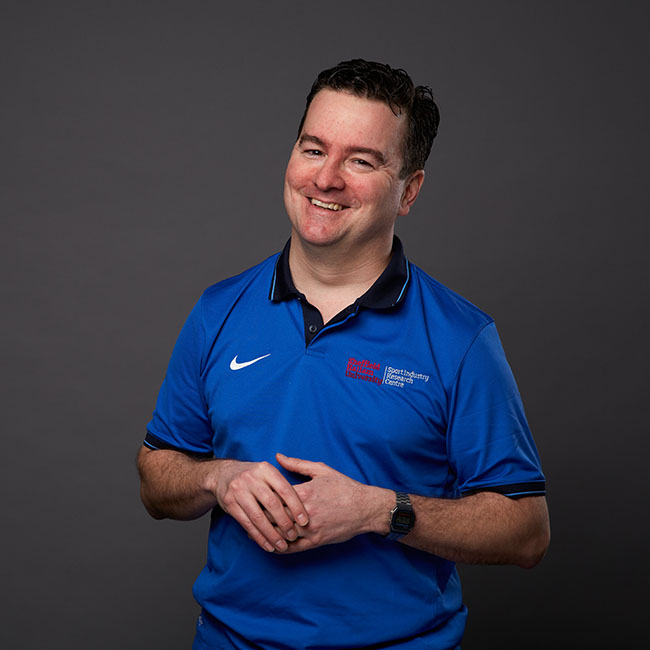
David Barrett serves as a Research Fellow at Sheffield Hallam University's School of Sport and Physical Activity within the College of Health, Wellbeing and Life Sciences, where he has contributed to the Sport Industry Research Centre (SIRC) for over 16 years. Specializing in GIS and spatial data analysis, he partners with national sport organizations across the UK and Ireland—including the Gaelic Athletic Association, Sport England, and UK rugby governing bodies—to enhance research capacity on participation trends, volunteering dynamics, talent pathways, and economic impact assessments. Barrett's research centers on the critical relationship between volunteer workforces and sport participation, particularly examining how voluntary sports clubs sustain participation opportunities amid socioeconomic pressures. His expertise in transforming organizational 'business as usual' data into strategic insights informs studies on cost-of-living impacts, pandemic recovery in grassroots sport, and the socioeconomic value of Gaelic Games. Methodologically, he integrates spatial database management, large-scale surveys, and qualitative stakeholder analysis to address complex sector challenges. Recent publication trends reveal Barrett's focus on external shock resilience (Covid-19, cost-of-living crises), talent pathway inclusion across UK/Irish nations, and the economic-social valuation of sport. His work consistently bridges academic rigor with practical application for sport governing bodies, emphasizing spatial analytics and longitudinal data to track participation shifts and organizational adaptation. Scientific recognition includes: Fellow of the Royal Geographical Society (FRGS) Barrett has led major commissioned research for Sport England, UK Sport, and the GAA—including facility audits across four UK/Irish football associations and the landmark Gaelic Games economic valuation study. His advisory role extends to local authorities and professional clubs like Celtic FC, where he translates data into strategic frameworks for sport development. As an active hockey volunteer and contributor to The Hockey Paper, he maintains direct engagement with community sport dynamics. Based at SIRC, Barrett collaborates within Sheffield Hallam's sport research ecosystem, leveraging partnerships with national governing bodies to advance evidence-based policy. His current projects examine outdoor learning infrastructure and Camogie participation baselines, continuing SIRC's tradition of impactful sport sector consultancy.
Dr. Meghan Winters is an Assistant Professor in the Faculty of Health Sciences at Simon Fraser University (SFU). She holds a Ph.D. in Population and Public Health from the University of British Columbia (2011) and completed a postdoctoral fellowship at Vancouver Coastal Health Research Institute. Her research focuses on the interplay between health, transportation systems, and urban design, with particular emphasis on cycling safety, pedestrian infrastructure, and equity in active transportation. Education: PhD in Population and Public Health (2011, UBC); Postdoctoral work at Vancouver Coastal Health Research Institute (2011–2016). Research Interests: Built environment and health outcomes Non-motorized transport modes (cycling/walking) Equity in urban mobility Public health policy interventions Age-friendly infrastructure Recent work highlights include analyzing pandemic-era street reallocations, evaluating bike theft impacts, and investigating 15-minute neighborhood models in Surrey, BC. She collaborates closely with local governments and health authorities to translate research into actionable policy. Grants and Advising: While specific funding details are not listed here, her extensive publications indicate sustained research partnerships and advisory roles in urban health initiatives. Labs/Teams: Affiliated with SFU’s Urban Studies Program and active in interdisciplinary health geography networks.
Prof Niamh Murphy is a Senior Lecturer and Researcher in the Department of Sport and Exercise Science at the School of Health Sciences, South East Technological University (SETU). She co-leads the BSc in Public Health and Health Promotion and heads the Centre for Health Behaviour Research. Education: PhD (Queen's University Belfast), MA(Ed) in Exercise and Health Science (Queen's University Belfast), BSc in Physical Education and Mathematics (University of Limerick) With 25+ years of teaching and supervision experience, her research focuses on population physical activity, community-based health promotion evaluations, active travel, and physical activity policy. She contributes to international networks like HEPA Europe and ISPAH, co-leading the Working Group on Social Disadvantage and Physical Activity. Recent research highlights include systems science applications for sustainable transport policy, mass event impacts on physical activity, and evaluations of programs like the GAA Healthy Club initiative. She has secured multiple grants including HRB Applied Partnership Awards, HEA Mobility Awards, and ERASMUS+ funding. Scientific Awards: HRB Applied Partnership Award CARDI Data Mining Award HEA Mobility Awards (2017-2021) Niamh mentors PhD students and consults for organizations including the World Health Organisation Europe. Her work aligns with UN Sustainable Development Goals 3 (Good Health) and 11 (Sustainable Cities).
Angel Mario Jordi Sánchez serves as Professor in the Department of Social Anthropology, Basic Psychology and Public Health at Pablo de Olavide University, Seville. His academic profile centers on social anthropology of sport, urban mobility systems, and physical activity research, with particular expertise in cycling culture and active transportation dynamics within urban environments. He completed his doctoral studies at the University of Seville in 2003, defending a thesis titled Ethnicity and Development in the Altiplano: Mayan Development Organizations in Guatemala under the supervision of Dr. Pablo Palenzuela Chamorro. This foundational work established his trajectory in ethnographic research of social organizations and development frameworks. Sánchez's research interests manifest across interconnected domains: the social anthropology of sport examines cultural constructions of physical practices; urban mobility studies analyze cycling as a nexus of transportation, leisure, and sport; food studies investigate urban gardens and eating habits through embodiment theory; and environmental behavior research explores consciousness-action gaps. His methodological approach emphasizes ethnographic fieldwork and participatory action research, particularly in Andalusian contexts. Recent publication trends (2022-2025) reveal three dominant trajectories: 1) Critical analysis of emerging mobility technologies (electric scooters, cycling infrastructure) within touristified urban spaces like Seville; 2) Institutional analysis of sport anthropology's development within Spanish academia; 3) Expansion into food sovereignty and environmental behavior through bibliometric and phenomenological lenses. These strands consistently address embodiment, social inequality, and public space conflicts. No scientific awards or major fellowships are documented in the available materials. His advisory activities include participation in the Doctoral Program Culture, Development, Gender and Social Intervention , where he supervises candidates exploring sport sociology, social interventions with marginalized populations (including homeless communities), and urban food systems. While specific grant funding isn't detailed, his work demonstrates sustained engagement with social intervention frameworks. Sánchez actively contributes to the ISAD (Applied Social Research in Sport) research group, focusing on sport's social dimensions. Previously, he participated in GISAP (Social Research and Participatory Action), reflecting his commitment to community-engaged scholarship. His collaborative network spans urban studies, public health, and anthropology disciplines, addressing contemporary challenges in Spanish urban environments through interdisciplinary team approaches.
Dr. Neil Ferguson is a Senior Lecturer in the Department of Civil and Environmental Engineering at the University of Strathclyde. He holds a PhD and BEng (Hons) in Civil Engineering and a LLB in Law, with over 15 years of experience in research, education, and consultancy. His work focuses on transport systems, travel behavior, accessibility, and environmental impacts of transport. Education: LLB (University of Strathclyde, 2002), PhD (University of Strathclyde, 1998), BEng (University of Strathclyde, 1989) Dr. Ferguson’s research examines the interplay between urban form and mobility patterns, statistical/econometric modeling of travel behavior, and the role of transport accessibility in health and sustainability. His innovative work includes quasi-longitudinal studies of travel behavior change and computational methods linking public transport timetables to GIS data. Recent publications highlight his contributions to understanding transport-related social inequalities, climate change adaptation, and active travel. Funded by agencies like EPSRC, MRC, and Scottish Government, his research spans Europe and Malawi, addressing global challenges in transport equity and network resilience. Scientific Awards: Cross-institution Graduate and Degree Apprenticeship Team (2017) Dr. Ferguson teaches transport engineering, planning, and sustainability courses. He collaborates with institutions like MRC Social and Public Health Research Unit (Glasgow) and MRC Epidemiology Unit (Cambridge), advising Transport Scotland and contributing to policy through organizations like the Royal Society and POST.
Thomas Christian Jensen serves as a Researcher and Special Consultant at the Department of Technology, Management and Economics, Technical University of Denmark (DTU), conducting public sector consultancy primarily for the Danish Ministry of Transport. His work integrates transport economics with energy and environmental policy analysis, contributing to UN Sustainable Development Goals for climate action and sustainable cities. His academic foundation includes an M.A. (econ) - cand. polit from the University of Copenhagen (1979–1986). University of Copenhagen: M.A. (econ) - cand. polit (1979–1986) Jensen specializes in transport economics with emphases on energy security valuation, CO 2 reduction costs, electric vehicle adoption, and behavioral analysis of walking/cycling modes. His research examines Nordic truck energy consumption, highway travel time variability, and weather impacts on traffic flow, utilizing macro-modeling techniques for policy projections. Current work increasingly addresses climate mitigation in transport infrastructure planning. Recent publications demonstrate evolving focus from traditional traffic modeling toward international road safety comparisons and sustainable mobility solutions, particularly through large-scale ESRA surveys across 39 countries and analyses of youth driver licensing policies. Active projects drive his operational impact: ESRA4: E-Survey of Road Users' Attitudes (2025–2028) Safe at 17: Accompanied driving and crash involvement (2021–2025) Transport Infrastructure Investment in Nordic Countries (2021) Evaluation of Danish Alcolock Scheme (2023–2025) Jensen updates Denmark's official Transport Unit Prices, supplies car stock data for national emission calculations at Aarhus University, and occasionally teaches at DTU Transport, bridging academic research with governmental policy implementation.
Llinos Brown is a Research Fellow at the Institute for Transport Studies , part of the Faculty of Environment at the University of Leeds. Her work focuses on sustainable and future low-carbon mobility systems, active travel, and the societal impacts of transport policies, particularly during the post-COVID-19 transition. PhD, University of Central Lancashire BSc (Hons), Geography, The University of Manchester Research interests include: Future mobility systems and low-carbon transitions Active travel (walking, cycling) and multi-modal transport Reducing car dependency and pandemic-related transport shifts Interdisciplinary links between transport, energy, and health Her current work involves the TRANSAS project , a longitudinal study on pandemic impacts on transport, and a ClimateXChange-funded study on public perceptions of Scotland’s 20% car-kilometre reduction target by 2030. Collaborations include Transport for Scotland and the Department for Transport. Key scientific awards: EPSRC CASE award PhD ClimateXChange/Scottish Government fellowship She supervises Masters dissertations and has taught modules like Social Analysis and Social Psychology for Transport, alongside prior teaching in sustainability and geography.
Dr Jonathan Flower is a Senior Research Fellow at the University of the West of England (UWE Bristol) within the College of Arts, Technology and Environment and the School of Architecture and Environment. He is affiliated with the Centre for Transport and Society and coordinates the Transport and Society research staff. His primary roles include managing large-scale evaluation contracts for the Department for Transport and Active Travel England, alongside board membership in the Transport Planning Society to bridge academic and practical transport planning. Current focus on street design, road safety, and human-scale mobility Expertise in automated vehicles, public transport ticketing, and active mobility Experience in International Development with global monitoring frameworks His research spans safer transport systems, e-scooters, disability access, and infrastructure impacts on walking/cycling. Key projects include coordination of the Human Factors VENTURER trials, CAPRI autonomous pods, and Innovate UK-funded MultiCAV. He holds a PhD from the South West Doctoral Training Partnership, MRes in Sustainable Futures (distinction), and MSc qualifications from UWE Bristol and University College London.
Jenna Panter is a Principal Research Associate at the MRC Epidemiology Unit within the University of Cambridge School of Clinical Medicine, specializing in environmental interventions for physical activity promotion through a geographical and equity lens. Her work bridges public health, urban planning, and spatial epidemiology to evaluate policy impacts on active travel behaviors. Her educational background includes a BSc in Environmental Sciences (2006) and PhD (2010) from the University of East Anglia, where her doctoral research analyzed environmental and psychosocial determinants of walking and cycling using the SPEEDY and EPIC-Norfolk studies. Panter's research centers on evaluating environmental and policy interventions through mixed-methods approaches, with emphasis on spatial analysis and health equity. She develops innovative methodologies combining GPS tracking with activity monitors to quantify travel-mode-specific activity and employs advanced statistical modeling to assess intervention effects across population subgroups. Her work addresses critical gaps in understanding behavior change mechanisms within natural experimental settings. Analysis of her recent publications reveals consistent focus on natural experimental evaluations of urban interventions (e.g., low traffic neighborhoods, school streets), integration of spatial lifecourse epidemiology, and methodological advancements in risk-of-bias assessment. Key themes include equity-focused analysis of intervention impacts and development of frameworks for active travel behavior change. Her primary scientific recognition includes: NIHR post-doctoral fellowship (2013-2015) Panter supervises PhD students including Caroline Kienast-von Einem and serves as examiner for doctoral theses internationally. Her extensive grant portfolio as Principal Investigator includes the NIHR SPHR project on school streets schemes (£280,952), Singapore HD4 project (£7.5 million), and Cambridge Clean Air Zones feasibility study. Current funding spans AI-enabled public health targeting, international transport-environment modeling, and health-driven urban design. She leads research within the Population Interventions Programme at the MRC Epidemiology Unit, collaborating on complex evaluations of population-level health interventions through interdisciplinary teams focused on environmental determinants of physical activity.
Dr. Lucy Gunn is a Senior Lecturer in Sustainability & Urban Planning at RMIT University's School of Global Urban and Social Studies (GUSS). Her research focuses on urban planning, healthy ageing, liveability, and the built environment's impact on health outcomes. She leads an ARC-funded Discovery Grant exploring liveability for healthy ageing and co-leads an Ian Potter Foundation grant investigating cycling infrastructure. Dr. Gunn collaborates with the Victorian Department of Transport and Growth Area Councils, emphasizing quantitative methods to evaluate infrastructure decisions. Her work integrates health, transport, and economic analysis to support sustainable urban development. Key areas include active transport, public health equity, and policy frameworks for liveable cities. She co-developed courses on urban planning and walkability through partnerships with EIT-Urban Mobility and FutureLearn. Dr. Gunn's research spans over 88 publications, with recent studies on cycling corridors, streetlighting effects on walking, and communal area design in apartments. She actively engages in policy advisory roles and media commentary on urban sustainability.
Prof. Werner Gronau is a Professor in the Department of Tourism, Travel and Transport at Stralsund University of Applied Sciences. His academic roles include teaching courses such as 'Basics of Research', 'Integrated Tourism Planning', and 'Transport Management'. He specializes in sustainable tourism, transport infrastructure, and destination management, with a focus on interdisciplinary research methods. His research spans topics like motorcycle tourism, cultural heritage co-creation, and public transport sustainability. He actively contributes to tourism policy discussions and has published extensively on mobility management in tourism contexts. His work emphasizes the interplay between tourism development and societal challenges, including environmental sustainability and regional economic growth. Education details are not explicitly listed in the text, but his academic profile suggests a strong background in tourism and geography. His research interests are reflected in his course offerings, including 'Research Methods' and 'Scientific Circle for Bachelor’s Thesis', indicating a commitment to academic rigor and student mentorship. Prof. Gronau has collaborated on projects addressing transport sustainability, such as the Active Access initiative promoting walking and cycling benefits. His publications highlight innovative methodologies like sentiment analysis for tourism blogs and typologies of tourism stakeholders. Awards and grants are not mentioned, but his prolific publication record underscores his academic influence.