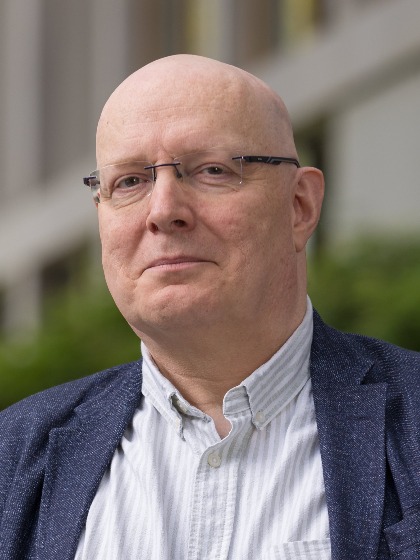
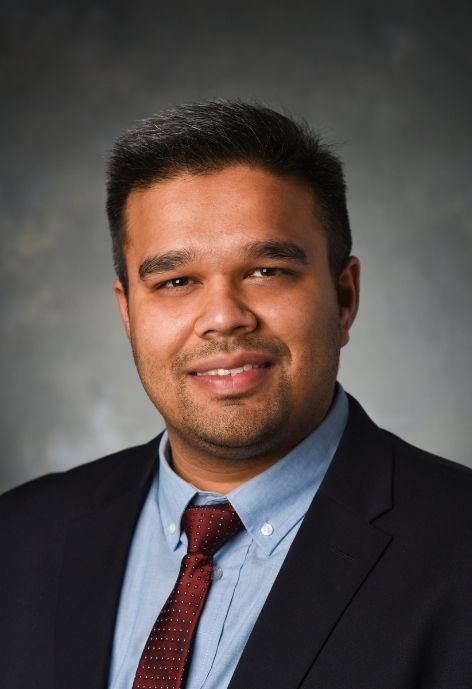
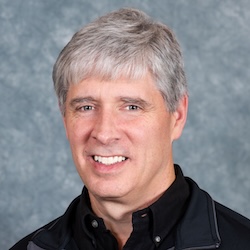
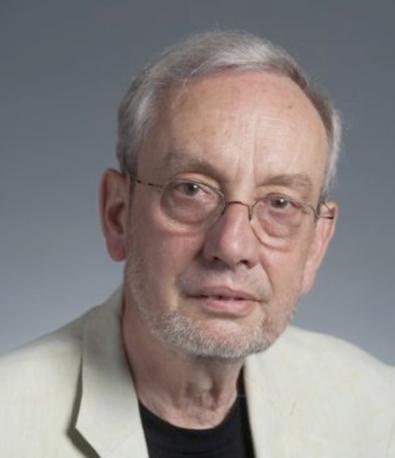
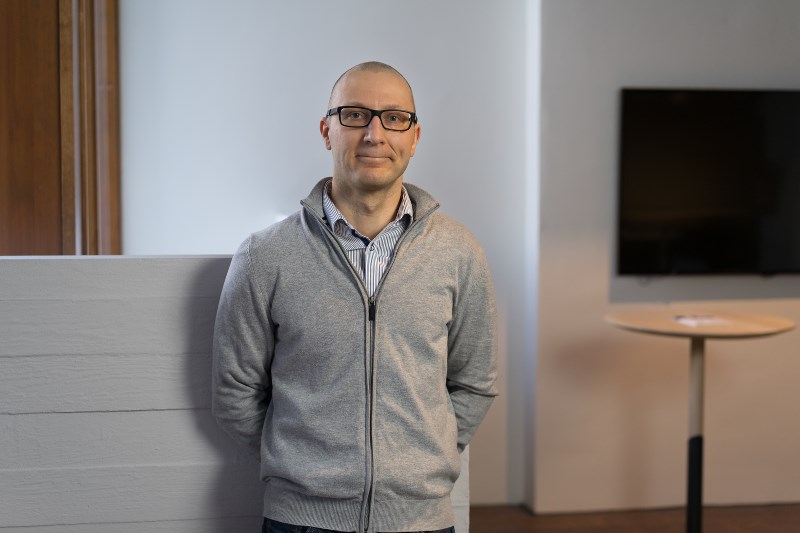
Prof. Rob Timmermans is a Professor of Theoretical Physics and Vice-Dean for Education at the University of Groningen (UG). He is affiliated with the Faculty of Science and Engineering and the Precision Frontier — Van Swinderen Institute for Particle Physics and Gravity. His research focuses on theoretical particle physics, quantum mechanics, and precision measurements, particularly in electric dipole moment (EDM) searches using molecules like BaF. His work includes developing methods for molecular beam manipulation, phase-space analysis, and symmetry violation studies. He has contributed to collaborations such as NL-eEDM, advancing techniques for EDM detection and precision physics. Prof. Timmermans has received nominations for teaching awards, reflecting his commitment to education. Research highlights include studies on nucleon decay, antinucleon-nucleon interactions, and chiral effective field theory. His lab activities involve collaborations on laser-cooled molecules and trapping techniques. Prof. Timmermans’ articles often address fundamental physics questions, such as Lorentz violation in beta decay and parity violation in molecular systems. Awards: Nominated for Faculty Teaching Award 2014, Teacher of the Year 2014-15. Grants/Advising: Leads projects on EDM searches and particle physics, with active roles in international collaborations. Labs/Teams: Van Swinderen Institute, Precision Frontier group.
Professor Thomas Bein is affiliated with the Department of Chemistry at Ludwig-Maximilians-Universität München (LMU) , where he leads the Functional Nanosystems research group. His work focuses on synthesizing and characterizing nanostructured materials with applications in energy, catalysis, and biomedical delivery. Mesoporous nanoparticles for drug delivery Semiconductor nano-morphologies for photovoltaics Photoelectrochemical water splitting Metal-organic frameworks (MOFs) Electroactive networks His research emphasizes atomic-scale control of material architectures using self-assembly, hydrogen bonding, and covalent interactions, enabling precise tuning of electronic, optical, and catalytic properties. A review of his recent publications reveals cutting-edge investigations into covalent organic frameworks (COFs), perovskite-inspired solar materials, and functional nanoparticle systems. Key trends include optimizing energy conversion efficiency, enhancing stability in optoelectronic devices, and exploring bio-compatible nanocarriers for targeted therapies. Professor Bein’s group actively contributes to interdisciplinary projects at the intersection of chemistry, physics, and biomedical engineering, with ongoing collaborations in solar energy, sustainable materials, and nanomedicine.
Gary Fedder is the Howard M. Wilkoff Professor of Electrical and Computer Engineering at Carnegie Mellon University (CMU), with courtesy appointments in Biomedical Engineering, Mechanical Engineering, and Robotics. He serves as Faculty Director of the Manufacturing Futures Institute (MFI) and previously held roles such as Vice Provost for Research and Interim CEO of the Advanced Robotics for Manufacturing (ARM) Institute. Fedder’s research focuses on MEMS, advanced manufacturing, and implantable microsystems. He earned his B.S., M.S., and Ph.D. in EECS from MIT and UC Berkeley, respectively. Education: Ph.D., Electrical Engineering and Computer Science, UC Berkeley (1994) M.S., Electrical Engineering and Computer Science, MIT (1984) B.S., Electrical Engineering and Computer Science, MIT (1982) Research Interests: Microelectromechanical systems (MEMS), digital twins, aerosol jet printing, stretchable electronics, and manufacturing innovation. His work integrates MEMS with CMOS processes, emphasizing low-cost, high-performance systems. Key Contributions: Co-founded the ARM Institute; developed MEMS-based sensors and actuators; pioneered methods for manufacturing innovation through projects like America Makes. His research spans over 300 publications and 21 patents. Awards: IEEE Fellow (2007), Ross Tucker Award (1993), NSF CAREER Award (1996), and leadership roles in Manufacturing USA initiatives. Leadership & Outreach: Directed the Institute for Complex Engineered Systems and led national initiatives to advance U.S. manufacturing competitiveness. Active in editorial roles for journals like IoP Journal of Micromechanics .
Professor Mohammad FARD is a faculty member at RMIT University's School of Engineering, specializing in Mechanical Engineering and Intelligent Systems. He leads research in autonomous vehicles, crash safety, and driver monitoring using AI. His industry experience includes six years at Nissan Technical Centre, focusing on vehicle body design. He holds a PhD from Tohoku University and has collaborated across Engineering, Health, and Science disciplines, achieving international media coverage for work on driver drowsiness and road safety. Research Interests: Autonomous Vehicles Advanced Crash Safety Driver State Monitoring AI in Noise/Vibration Human Factors/Ergonomics Teaching & Projects: Teaches Advanced CAE, Vehicle NVH, and research supervision in areas like crash simulation and vibration control. Current projects include Formula One safety barriers and driver education for autonomous vehicles. Awards & Labs: No awards listed. Active in cross-disciplinary teams and labs addressing automotive innovation and safety.
WANG Ye is an Associate Professor in the Department of Computer Science at the School of Computing, National University of Singapore (NUS). He holds a PhD in Information Technology from Tampere University of Technology, Finland, and has been a tenured faculty member at NUS since 2002, following his industry research role at Nokia Research Center. He is the director of the Sound and Music Computing Lab at NUS, leading cutting-edge research in AI-driven music and health technologies. PhD, Information Technology, Tampere University of Technology, Finland (2002) MSc, Telecommunications, Braunschweig University of Technology, Germany (1993) BSc, Telecommunications, South China University of Technology, China (1983) His research is centered on Sound and Music Computing for Human Health and Potential (SMC4HHP) , with a focus on eHealth, eLearning, mobile/wearable computing, and music information retrieval. His work spans AI for stroke rehabilitation, language learning through singing, singing voice synthesis, and automatic music transcription. He has pioneered systems like SLIONS (language learning via karaoke), CocoLyricist (AI co-creation for stroke recovery), and SinTechSVS (expressive singing voice synthesis). The latest articles highlight a strong trend in AI-driven music and health technologies , particularly in controllable lyric generation, singing voice synthesis, automatic pronunciation assessment, and multimodal music transcription. The research increasingly integrates large language models, explainable AI, fairness, and real-world deployment, reflecting a shift from theoretical exploration to practical, human-centered applications in healthcare and education. Dr. Wang has received numerous scientific honors, including: Best Paper Awards at ACM MM, ISMIR, IEEE ISM, and CHI First Prize, Asia Pacific Assistive, Rehabilitative, and Therapeutic Technologies Challenge (2015) Faculty Teaching Excellence Award, NUS School of Computing (2024) Top Paper Award, ACM Multimedia 2022 AI in Medicine Collaborative Grant for CocoLyricist project He has supervised over 11 PhD and 20 MComp students and is currently guiding six PhD candidates. His grants come from MOE, NRF, A*STAR, Nokia, and Smule. He has served as General Chair of ISMIR2017 and TPC Co-Chair of ICOT2017, and is on the editorial boards of IEEE Transactions on Multimedia and Journal of New Music Research. He has also developed and taught the first course on Sound and Music Computing in Singapore. Dr. Wang leads the Sound and Music Computing Lab (SMC Lab) , a multidisciplinary team exploring the synergy of music computing, AI, mobile technology, and cloud systems for health and education. The lab actively collaborates with medical institutions such as NUS Yong Loo Lin School of Medicine, Singapore General Hospital, and Harvard Medical School, and is currently working on projects in AI-supported language learning, stroke rehabilitation, and intelligent music interfaces.
Matthew O'Toole is an Associate Professor at Carnegie Mellon University's School of Computer Science, holding joint appointments in the Robotics Institute and Computer Science Department. His research focuses on computational imaging, integrating optics, electronics, and computational processing to innovate visual information capture and display. Education: PhD (Computer Science, University of Toronto, 2016), MSc (2009), BSc (Honors Computer Science and Mathematics, University of British Columbia, 2007). Prior roles include Banting Postdoctoral Fellow at Stanford University and visiting scholar at MIT Media Lab's Camera Culture group. Research interests emphasize programmable imaging systems, transient imaging, non-line-of-sight sensing, and holographic displays. Key innovations include vibration sensing via dual-shutter optics and radar super-resolution for autonomous vehicles. Awards include runner-up best paper recognitions at ICCV 2007, CVPR 2014, and SIGGRAPH 2017 dissertation honors. Advisees include Dorian Chan and Arjun Teh. Grants supported by Canadian Banting Fellowships. Active in workshop organization (CVPR Computational Cameras 2016-2017) and course development on computational imaging at SIGGRAPH 2014. Labs/Teams: Leads research in computational imaging and robotics at CMU, collaborating with industry partners like NVIDIA and MDA. Current projects explore LiDAR-radar fusion, holographic projection systems, and dynamic scene reconstruction.
Pasquale Bottalico serves as Associate Professor in the Department of Speech and Hearing Science at the University of Illinois, with dual appointments as Associate Professor at the Center for Latin American and Caribbean Studies and Affiliate Faculty in the School of Music. His unique interdisciplinary profile bridges engineering, music performance, and speech science, reflecting his dual academic training and professional artistry. His educational foundation includes: Bachelor's in Telecommunications Engineering from Univeristà Mediterranea di Reggio Calabria, Italy Concurrent Opera Singing degree from F. Cilea Music Academy, Reggio Calabria Master's in Telecommunications Engineering from Politecnico di Torino, Italy Ph.D. in Metrology specializing in acoustics measurement uncertainty and classroom acoustics Dr. Bottalico's research centers on vocal load quantification and professional voice techniques , with significant contributions to understanding vocal fatigue in teachers and singers. His work spans Speech Intelligibility in educational environments, Room Acoustics for performance and learning spaces, and Musical Acoustics of historical vocal styles. A distinctive thread throughout his research examines how acoustic conditions modulate voice production and perception, increasingly incorporating virtual reality and bone conduction technologies for innovative assessment and intervention approaches. His Colombian vocal health study demonstrates cross-cultural applications of his work. Analysis of his 2023-2025 publications reveals three dominant research trajectories: (1) The impact of noise and dysphonia on children's speech processing in educational settings, using multimodal assessment including EEG; (2) Virtual reality applications for voice production research and therapeutic intervention; (3) Cross-cultural validation of vocal fatigue metrics and development of biofeedback systems. His work consistently bridges engineering precision with clinical applicability, particularly for professional voice users in challenging acoustic environments. No scientific awards were documented in the available information. While specific advising relationships aren't detailed, his research collaborations span international institutions including Colombian and Italian universities, suggesting graduate mentorship in interdisciplinary projects. No grant information was provided, though his systematic reviews and cross-cultural studies imply externally funded research activities. Though no dedicated laboratory is specified, his virtual reality voice studies and acoustic parameter assessments suggest affiliations with audio engineering facilities and voice clinics, likely through the Speech and Hearing Science department's research infrastructure.
Ankit Saxena serves as Assistant Professor in the Department of Mechanical Engineering at the University of Wyoming since 2024, focusing on innovative applications of additive manufacturing in structural engineering and materials science. His work bridges theoretical design with practical implementations in energy, aerospace, and robotics systems. Education: Ph.D. in Mechanical Engineering, Penn State University (2024) M.S. in Mechanical Engineering, Penn State University (2020) B.S. in Mechanical and Automotive Engineering, Delhi Technological University (2016) Dr. Saxena's research centers on developing adaptive stiffness structures , meta-materials , and functionally graded systems through advanced additive manufacturing techniques. His work specifically targets energy applications (nuclear, wind, hydrogen, oil/gas) and aerospace challenges, with emphasis on structural health monitoring and vibration damping. The SUMMIT Lab under his direction creates multi-functional materials enabling shape morphing and self-strengthening properties for next-generation engineering solutions. His publication record (2020-2024) reveals a consistent trajectory toward multi-physics meta-material design , with dominant themes in TPMS lattice optimization, fluid-structure interaction systems, and medical robotics applications. Key methodological contributions include novel fluid accumulator integration, laser powder bed fusion parameterization, and non-pneumatic tire architectures. Scientific Recognition: ASME Graduate Teaching Fellow (2022-2024) Harold F. Martin Graduate Assistant Outstanding Teaching Assistant Award (Penn State, 2023) Dr. Saxena teaches core materials courses (ME 3450: Properties of Materials; ME 4150: Mechanical Behavior of Materials) while expanding his research group through active recruitment of PhD candidates for 2026. His teaching philosophy emphasizes practical applications of theoretical concepts, recognized through multiple Penn State teaching fellowships. The SUMMIT Lab operates at the intersection of Wyoming's energy priorities and cutting-edge manufacturing research, maintaining strategic focus on renewable energy infrastructure and aerospace applications through metal additive manufacturing innovations.
Kevin M. Lynch is a Professor of Mechanical Engineering at Northwestern University's McCormick School of Engineering, where he also serves as Director of the Center for Robotics and Biosystems. His research spans multiple domains of robotics, with particular expertise in dynamics, motion planning, and feedback control of mechanical systems. Dr. Lynch received his Ph.D. in Robotics from Carnegie Mellon University in 1996, with a thesis on "Nonprehensile Robotic Manipulation: Controllability and Planning" under advisor Prof. Matthew T. Mason. He earned his B.S.E. with honors in Electrical Engineering from Princeton University in 1989. His research interests focus on robotics, particularly dynamics, motion planning, and feedback control of mechanical systems. He investigates mechanics, planning, and control of robotic manipulation (juggling, throwing, pushing, rolling, vibration, etc.) and locomotion. His work also explores self-organizing systems, particularly decentralized control of mobile sensor networks and swarm robotics, underactuated dynamic systems, and physical human-robot interaction with industrial applications. Recent research has expanded into bio-inspired active electrosense, underwater robotics, control and optimization for robot swarms, swarm shape control, and functional electric stimulation. Dr. Lynch's recent publications demonstrate a strong trend toward rehabilitation robotics and human-robot interaction, particularly in lower-limb exoskeletons for gait training and rehabilitation. His work bridges fundamental robotics research with practical applications in healthcare, showing increasing integration of swarm robotics principles with human-centered design. The publications also reveal continued strong contributions to fundamental robotics theory, particularly in swarm formation control and manipulation dynamics. George Saridis Leadership Award in Robotics and Automation (2022) Harashima Award for Innovative Technologies (2017) IEEE Fellow (2010) Charles Deering McCormick Professor of Teaching Excellence (2007-10) Society of Automotive Engineers Ralph R. Teetor Educational Award (2007) Early Career Award in Robotics and Automation (2001) McCormick School of Engineering and Applied Science Teacher Of The Year Award (1998-1999) NSF Career Award (1998) As Director of the Center for Robotics and Biosystems, Dr. Lynch oversees significant research grants and initiatives in robotics. He has made substantial contributions to robotics education through his "Modern Robotics" book and associated Coursera specialization, which has reached thousands of students worldwide. His professional service includes serving as Editor-in-Chief of IEEE Transactions on Robotics, where he oversaw a 90% increase in submissions during his tenure. Dr. Lynch leads research groups focusing on swarm robotics and rehabilitation robotics, with particular emphasis on the Center for Robotics and Biosystems at Northwestern University. His teams integrate expertise from mechanical engineering, electrical engineering, computer science, and rehabilitation medicine to develop innovative robotic systems for both industrial applications and healthcare solutions.
Frank L. Hammond III serves as Assistant Professor at Georgia Tech's Woodruff School of Mechanical Engineering since April 2015, directing the Adaptation Robotic Manipulation (ARM) Laboratory. A Carnegie Mellon PhD graduate, he previously held postdoctoral positions at MIT and Harvard as a Ford Fellow. His interdisciplinary work bridges mechanical engineering, biomedical applications, and computational design. Education Ph.D. in Mechanical Engineering, Carnegie Mellon University M.S. in Mechanical Engineering, University of Pennsylvania M.S. in Electrical Engineering, University of Pennsylvania B.S. in Electrical Engineering & Biomedical Engineering, Drexel University Hammond's research pioneers adaptive robotic manipulation (ARM) systems that operate in unstructured human environments through bioinspired computational design. His lab develops xenomorphic (non-biomorphic) robots using soft pneumatic actuation, flexible electronics, and machine learning to achieve biological-level versatility. Key application domains include wearable human augmentation devices , haptic-enabled surgical teleoperation , and autonomous soft platforms for medical and industrial use. The ARM methodology integrates empirical biomechanics characterization with simulation-driven optimization and rapid prototyping. Analysis of his 15 most recent publications (2023-2025) reveals three dominant trends: (1) Medical rehabilitation breakthroughs through intention-driven exoskeletons with soft bioelectronics, (2) Novel locomotion strategies for soft robots in complex environments (sand, water, cluttered spaces), and (3) Advanced haptic feedback systems leveraging multimodal sensory substitution for proprioceptive restoration. These works consistently bridge biomechanics, control theory, and human factors. Awards Ford Postdoctoral Research Fellowship at Harvard School of Engineering Hammond actively mentors graduate researchers including PhD candidates Lucas Tiziani (soft actuators) and Bangyuan Liu (earthworm robotics), and Master's student Alex Hart (pediatric haptics). His lab secures research funding for projects like tunable mechanical interfaces for neuropathy treatment and cognition-focused wearable devices, with strong industry and clinical partnerships evident in co-authored medical device publications. The ARM Lab maintains robust collaborations across Georgia Tech's robotics, neuroscience, and biomedical engineering communities. The Adaptation Robotic Manipulation Laboratory operates from Whitaker Building Room 4102, housing specialized facilities for soft robot fabrication (3D printing, shape deposition manufacturing) and biomechanics testing. Current projects include pediatric haptic feedback displays, biomimetic swimming robots, and kirigami-skinned earthworm robots for subsurface locomotion. The lab emphasizes translational research with multiple pending medical device patents and active participation in K-12 STEM outreach programs.
Professor Kim Eun-hee is a faculty member in the Department of Defense Systems Engineering at Sejong University, specializing in advanced radar technologies and signal processing. Her work bridges theoretical research and practical applications in defense systems. Ph.D. in Mechanical Engineering (2004), KAIST M.Sc. in Engineering (1996), KAIST B.Sc. in Precision Engineering (1994), KAIST Her research focuses on radar system design, including airborne active phased array radar, automotive radar, broadband noise radar, and over-the-horizon radar. She explores waveform optimization, MIMO architectures, and signal processing algorithms to enhance radar performance in complex environments. Publications highlight her expertise in MIMO radar configurations, Doppler-insensitive waveforms, and machine learning integration for signal analysis. She leads industry-academic collaborations with organizations like Hanwha Systems and LIG Nex1. She contributes to technical committees, including the Sensor and Signal Processing Division of the Korean Society of Military Science and Technology. Her laboratory (Defense Radar Technology Laboratory) focuses on radar design, signal processing, and sensor integration.
John Baillieul is Distinguished Professor at Boston University with joint appointments in Mechanical Engineering, Systems Engineering and Electrical & Computer Engineering. He directs experimental laboratories for real-time control of lightweight robotic systems and applies nonlinear control theory to complex multi-body, networked, and bio-inspired systems. Education: Ph.D., Harvard University Research Interests: Baillieul’s work spans robotics, nonlinear control, and networked systems. Early contributions resolved motion-planning for kinematically redundant manipulators; current themes include neuromimetic learning, vision-based navigation, and resilience of infrastructure networks such as power grids. His group couples rigorous geometric control with real-time hardware to create lightweight, high-performance robots and to uncover fundamental information limits in feedback systems. Recent Publication Trends (2021-2025): Over the past five years his output has concentrated on three synergistic directions: (i) neuromimetic and Koopman-based data-driven methods for estimating and controlling nonlinear systems, (ii) vision-based guidance and sparse optical-flow primitives for agile autonomous flight, and (iii) network-theoretic decomposition and information-rate studies for resilient operation of power grids and collective dynamics. Honors & Awards: IEEE Fellow 2025 Roger W. Brockett Control Systems Award Former Editor-in-Chief, IEEE Transactions on Automatic Control Affiliations & Service: He is a member of Boston University’s Center for Information and Systems Engineering (CISE), has served as Editor-in-Chief of IEEE Transactions on Automatic Control, and remains active in editorial and organizational roles across the IEEE control systems community.
Marko Hinkkanen is a Professor at Aalto University's Department of Electrical Engineering and Automation, affiliated with the School of Electrical Engineering. His research focuses on electric drives, power electronics, and control systems, with a strong emphasis on sensorless control, grid converters, and motor drives. He has received numerous awards, including the IEEE Fellow distinction and multiple best paper awards for contributions to sensorless control and grid integration. Research interests span advanced control algorithms, power converter design, and renewable energy systems. His work addresses challenges in grid stability, motor drives under weak grid conditions, and energy-efficient control strategies. Notable achievements include innovations in bearingless motor systems and grid-forming converter control frameworks. His awards reflect impactful contributions: the Aalto ELEC Supervisor Award (2023) highlights exceptional mentorship, while the IEEE Fellow (2023) and numerous paper awards underscore technical excellence. Key publications include advancements in grid-forming control, sensorless techniques, and electromagnetic damping for aircraft systems. He has advised doctoral students such as F. M. Mahafugur Rahman and Hafiz Asad Ali Awan, whose theses won top awards. His labs and collaborations focus on cutting-edge topics like virtual air gap reactors and six-phase machine dynamics.
Mary Lanzerotti is a Collegiate Assistant Professor in the Bradley Department of Electrical and Computer Engineering at Virginia Tech. She specializes in signal processing, control systems, and medical evacuation technology. Her research focuses on hoist stabilization for MEDEVAC rescues, RF signal estimation, and material science involving liquid films. She is also deeply involved in educational initiatives, including hybrid course development and student advising strategies. Education: A.B. summa cum laude from Harvard College (1989), M. Phil. from the University of Cambridge (1991), M.S. and Ph.D. from Cornell University (1994–1997). Research Interests: Signal processing algorithms, mechanical stabilization of hoist systems, quantum computing verification, and integrated circuits design. Recent work includes gyroscopic data-driven control systems and multi-tier RF signal estimation methods. Service Roles: Member of faculty search committees, assessment committees, and the Graduate Honor System panel. Active in institutional accreditation and curriculum modernization efforts. Labs/Teams: Collaborates with interdisciplinary teams on projects involving aerospace rescue systems, laser material interaction studies, and microelectronics verification.
Professor Thomas Blumensath is a Professor of Signal and Image Processing at the University of Southampton and a Fellow at the Alan Turing Institute. He is the Academic Lead in Image Processing and Reconstruction at the University's μ-VIS X-ray Imaging Centre and Director of Research at the Institute of Sound and Vibration Research (ISVR). His research focuses on advanced algorithms for solving inverse problems in tomographic imaging, combining machine learning, optimization, and statistical methods. Key areas include X-ray tomography strategies, GPU-accelerated reconstruction, and multimodal imaging applications. Education: B.Sc. (Hons) Music Technology and Audio System Design, University of Derby (2002) PhD in Electronic Engineering (Bayesian Signal Processing), University of London (2006) Research Interests: Professor Blumensath's work spans theoretical and applied signal/image processing, with emphasis on tomographic imaging techniques. His current projects address efficient reconstruction methods, spectral X-ray CT, and applications in manufacturing and plant science. He collaborates with advanced imaging facilities like Diamond Light Source and ISIS neutron imaging beamline. Key Contributions: His research bridges computational methods (e.g., compressed sensing) with practical imaging challenges, including limited-angle tomography and stereo imaging strategies. He leads the National Research Facility for Lab X-ray CT and has developed the TIGRE reconstruction toolbox. Grants & Projects: Active funding includes EPSRC projects on tomographic sensitivity monitoring and CT-based manufacturing inspections. Completed projects cover constrained reconstruction, AM process verification, and industrial CT metrology. Awards: Alan Turing Institute Fellowship Teaching & Leadership: He teaches modules on machine learning, biomedical image processing, and robotics. Leads the BEng Control Engineering program at the Joint Education Institute with Harbin Engineering University. Labs/Teams: Active in the Signal Processing, Audio and Hearing research group (SPAH) and the Institute for Life Sciences. Oversees the μ-VIS X-ray Imaging Centre's research initiatives.