Anastasios Zafeiropoulos serves as Assistant Professor at Harokopio University of Athens, specializing in Spatial Data Management and Analysis within the Postgraduate Studies Program for “Applied Geography and Spatial Management” (Direction C: Geoinformatics). His academic role encompasses teaching “Spatial Databases” and advancing research at the intersection of geospatial technologies and distributed computing systems. His research program focuses on Spatial Databases, Internet of Things (IoT), Cloud/Edge Computing, and 6G Network Orchestration, with significant extensions into Knowledge Graph applications for Sustainable Development Goals (SDGs) and socio-emotional learning in education. Key innovations include the EduCardia methodology for student competency assessment and frameworks for climate vulnerability analysis using knowledge graphs. Analysis of his 2024-2025 publications reveals three dominant thrusts: (1) AI-driven orchestration of 6G services across the computing continuum using reinforcement learning; (2) Knowledge Graph applications for SDG interlinkage analysis and materials science; (3) EU-funded IoT/Edge Computing project ecosystems. His work consistently bridges theoretical networking concepts with practical sustainability and educational applications. Dr. Zafeiropoulos actively contributes to EU-funded initiatives in IoT and Edge Computing standardization, particularly through AIOTI WG Standardisation. His project portfolio includes NEPHELE multi-cloud ecosystem development and O-RAN slice admission control research, demonstrating strong industry-academia collaboration in next-generation networking. He leads the development of innovative tools including Palindrome.js for distributed system visualization and the EmoSocio open-access emotional intelligence model, reflecting his commitment to translating research into practical educational and environmental solutions.
Marina Danckaerts is a Professor at the Faculty of Medicine at KU Leuven, affiliated with the Department of Neuroscience and active in the field of Developmental Psychiatry and ADHD research. Her research focuses on: Behavioral and emotional responses in ADHD Sleep disorders and interventions for adolescents with ADHD Attachment theory and instrumental learning in neurodevelopmental conditions Youth mental health service design Invisible disability representation in technology Post-trauma rehabilitation for refugee youth Recent publications highlight her work on: Sleep hygiene and cognitive-behavioral interventions for ADHD adolescents Behavioral persistence and reinforcement mechanisms in ADHD Comparative analysis of youth and professional perspectives on mental health services Game design applications for ADHD teenagers Impact of dopamine pathways on ADHD-attachment controversies She serves as: Co-promotor in 8 active research projects (2024-2030) Promotor for refugee family mental health research Member of KU Leuven Brain Institute (LBI) and Institute for Child and Youth (LC&Y) Participant in criminological sciences councils and psychology program committees Teaching contributions: Course coordinator for multiple child psychiatry modules (codes E0J45A, E0CR3A, etc.) Focus on evidence-based medicine, communication skills, and clinical practice in youth psychiatry
Rainer J. Hebert is a Professor in the Department of Materials Science and Engineering at the University of Connecticut, serving as Director of the Pratt and Whitney Additive Manufacturing Center and Associate Director of the Institute of Materials Science. His research focuses on advancing additive manufacturing technologies with particular emphasis on materials development and process optimization for industrial applications. Education Ph.D., University of Wisconsin-Madison, 2003 Postdoctoral Fellow, University of Wisconsin-Madison, 2003-2005 Post Doctoral Fellow, Research Center Karlsruhe, Germany (now Karlsruhe Institute of Technology), 2003-2005 Research Interests Professor Hebert's research spans multiple areas within materials science and additive manufacturing. His primary focus is on developing new alloys specifically designed for additive manufacturing processes, with particular attention to how microstructures form during rapid solidification and laser processing. He investigates powder characteristics and their effects on the final manufactured products, aiming to improve quality and performance. His work on quasicrystal-reinforced aluminum alloys has shown promising results for high-performance applications, and he has made significant contributions to understanding the fundamental mechanisms of laser powder bed fusion. Hebert's research bridges fundamental materials science with practical industrial applications, particularly in aerospace and high-temperature environments. Publication Trends Analysis of Professor Hebert's recent publications reveals a strong focus on advancing additive manufacturing technologies, particularly laser powder bed fusion. His work spans from fundamental materials science (microstructure formation, phase transformations) to practical applications (alloy design, process optimization). A notable trend is the increasing integration of computational methods with experimental work to predict and optimize material behavior. His research shows a progression from basic microstructure characterization to more complex systems involving multi-material interactions, intelligent manufacturing systems, and the development of specialized alloys resistant to cracking and other defects. The consistent theme across his publications is improving the reliability and performance of additively manufactured components for demanding applications. Awards Materials Science and Engineering Program Teaching Award, 2010-2011 Advising and Grants As Director of the Pratt and Whitney Additive Manufacturing Center, Professor Hebert oversees significant research initiatives funded by both government agencies and industry partners, particularly in aerospace applications. His leadership in the Institute of Materials Science provides opportunities for student research and collaboration across multiple disciplines. His extensive publication record suggests active mentorship of graduate students in materials science and engineering. His research program likely involves multiple PhD and Master's students working on various aspects of additive manufacturing, from fundamental materials science to process development. Laboratories and Teams Professor Hebert directs the Pratt and Whitney Additive Manufacturing Center at UConn, which serves as a hub for collaborative research between academia and industry. The center focuses on advancing metal additive manufacturing technologies, particularly for aerospace applications. He also plays a key leadership role in the Institute of Materials Science, one of UConn's premier research centers. His research teams likely include graduate students, postdoctoral researchers, and industry collaborators working on projects related to powder characterization, laser processing, microstructure analysis, and alloy development. The collaborative nature of his work is evident from the multi-institutional authorship on many of his publications.
Laxmidhar Behera is a Professor in the Department of Electrical Engineering at the Indian Institute of Technology Kanpur, specializing in Intelligent Systems and Control. With over two decades of academic experience at IIT Kanpur and international research experience at institutions including Fraunhofer Institute of Autonomous Intelligent Systems in Germany, ETH Zurich, and University of Ulster, he has established himself as a leading researcher in cognitive robotics and intelligent control systems. Dr. Behera's research spans multiple cutting-edge domains including Cognitive Robotics, Nano-robotics, Vision based Control, Soft Computing, Information Retrieval in music and language, Semantic Information Processing, Physics of Complex Systems, Cyber Physical Systems, Formation Control of UAVs, Brain-Computer Interface (BCI), and Sanskrit Computational Linguistics. His interdisciplinary approach bridges traditional control theory with modern computational intelligence techniques, creating innovative solutions for complex real-world problems. His extensive publication record in top-tier journals like IEEE Transactions demonstrates his leadership in areas such as brain-computer interfaces, visual servoing, multi-robot systems, and music information retrieval. Notably, his work on quantum neural networks for EEG filtering and multisatellite formation control has received significant attention in the research community. UKIERI Standard Research Award 2008 Best Paper at International Conf. on Intelligent Sensors and Information Processing (ICISIP-2004) Best Paper at WoSco,02, Int. Conf. High-Performance Computing (HiPC, 2002) AICTE career award for young teacher (1997) Senior Member IEEE Multiple IEEE top accessed articles (2009-2010) As an Associate Editor for Autosoft Journal and Technical Committee Member for Intelligent Control at IEEE Control System Society, Dr. Behera actively contributes to the academic community. His laboratory in the Western Lab - 212A of the Department of Electrical Engineering serves as a hub for research in intelligent systems, where he mentors students and collaborates with researchers worldwide on cutting-edge projects in robotics, control systems, and computational intelligence.
Michale Fee is the Glen V. and Phyllis F. Dorflinger Professor of Neuroscience at the Massachusetts Institute of Technology (MIT) , where he serves as Department Head of Brain and Cognitive Sciences and Investigator at the McGovern Institute for Brain Research . His research focuses on understanding how the brain generates and learns complex sequential behaviors using songbirds as a model system. Education: B.E. in Engineering Physics, University of Michigan (1985) Ph.D. in Applied Physics, Stanford University (1992) Research Interests: Fee’s work combines advanced electrophysiological techniques , optical imaging , and computational modeling to study neuronal circuits underlying sequence learning and motor control in songbirds. His lab investigates how neural circuits support vocal learning, temporal coordination, and behavioral adaptation. Scientific Awards: MIT Fundamental Science Investigator Award (2017) MIT School of Science Teaching Prize (2016) BCS Award for Excellence in Teaching (2015) Lawrence Katz Prize (2012) Dart Scholar (2003) Advising and Grants: Fee has mentored numerous PhD students , Masters students , and postdoctoral researchers . He leads the Fee Laboratory at MIT, which develops innovative neurotechnologies and contributes to global neuroscience collaborations , including the Simons Collaboration on the Global Brain.
Margaret Floress is a Professor at Eastern Illinois University , actively contributing to the Department of Psychology . As the Psychology Program Coordinator , she leads research initiatives focused on behavioral education , teacher training , and classroom management . Education Ph.D., Indiana State University (2007) M.A., Indiana State University (2004) B.S., Central Michigan University (2003) Her research emphasizes low-cost behavior management strategies to improve teacher retention and student outcomes. Key areas include praise delivery systems , preschool interventions , and applied behavioral analysis . She mentors students in hands-on research activities like data collection and academic writing. Recent publications focus on behavioral education trends , classroom observation tools , and technology integration for special education applications. Her work addresses teacher-student dynamics , social-emotional learning , and behavioral intervention systems . Contact: mfloress@eiu.edu | Office: 1437 Physical Sciences
Dr Eral Bele serves as Associate Professor (Teaching) in the Department of Mechanical Engineering at University College London, with adjunct appointments at Vellore Institute of Technology (India) and external examiner duties at Coventry University. His research and teaching focus on mechanics of lightweight materials—composites, natural fibers, and cellular structures—aiming to develop lighter, stronger, energy-efficient solutions through experimental mechanics and finite element analysis. His research spans four core projects: (1) manufacturing mechanics of natural fiber composites and technical foams; (2) fracture toughness of metamaterials; (3) additive manufacturing of hierarchical microlattices; and (4) fatigue mechanics in natural structural materials. This work leverages UCL's Materials, Structures and Manufacturing Research group facilities, including mechanical testing labs, full-field strain mapping, and additive manufacturing equipment for metallic and fiber-reinforced components. Recent publications (2022–2025) reveal concentrated expertise in additive manufacturing applications, fracture behavior of novel materials, and sustainable material development—particularly in nacre-like composites, lunar regolith processing, and natural fiber foams. His work bridges experimental validation with computational modeling to advance sustainable materials engineering. Dr Bele holds the following recognition: Senior Fellow Advance HE (York, United Kingdom) His educational leadership includes serving as UCL's Departmental Tutor and Head of Undergraduate Education, designing the MSc in Future Manufacturing and Nanoscale Engineering (2023), and supervising MEng Capstone Design Projects. Internationally, he co-leads PhD training at CICY (Yucatan) on micro-CT characterization of composites and established VIT's Sustainable Manufacturing undergraduate program. His research group operates within UCL's Materials, Structures and Manufacturing Research ecosystem and maintains active collaborations with University of Toronto, CICY, VIT, and EU industrial partners—focusing on natural fiber composites, metamaterials, and sustainable manufacturing processes.
Dr. He Xu is a Visiting Professor in the Department of Engineering Science at the University of Oxford, with a focus on Biomaterials , Tissue Engineering , and Biomechanics . She previously worked at Shanghai Normal University, rising from lecturer (2014) to associate professor (2018) and full professor (2024). Education: BEng in Materials Science and Engineering (China University of Geosciences), DPhil in Biomedical Engineering (Shanghai Jiao Tong University, 2014) Her research explores: Biomaterials : Smart hydrogels, piezoelectric systems, and nanogenerators for therapeutic applications. Tissue Engineering : Innovations in intervertebral disc and tendon regeneration. Drug Delivery : Targeted activation, nitric oxide therapy, and bioelectronic systems. Her publications span 2021–2025 , combining Biomaterials , Nanotechnology , and Medical Imaging to address challenges in Diabetes , Cancer , and Cardiovascular Disease . Key collaborations include the 3DMed Interreg 2 Seas Consortium and work on rapid Covid-19 testing .
Fredrik Johansson is an Associate Professor in the Department of Data Science and AI at Chalmers University of Technology. His research focuses on developing machine learning methods for healthcare applications, causal inference, and handling imperfect data. He leads multiple funded projects including WASP AI/MLX and research on causal machine learning for healthcare applications. Johansson's core research interests include: Machine learning for clinical decision support and healthcare analytics Causal inference methods for observational data Handling missing values and data quality issues Interpretable and robust ML models Domain adaptation and transfer learning Reinforcement learning for treatment policies His recent publications demonstrate strong focus on clinical ML applications (dermatology, rheumatology, Alzheimer's) and methodological work on causal inference. Frequent themes include handling missing data, model interpretability, and healthcare policy optimization. Collaborative work spans multiple medical domains using registry data, proteomics, and medical imaging. He leads significant research projects including: Kausalitet och sidoinformation för effektiv maskininlärning (VR-funded) Maskininlärning för kausal inferens från observationsdata (Wallenberg) Förutsättningar för inlärning av överförbara koncept (Wallenberg) Fattigdomsfällor i Afrika (Formas-funded)
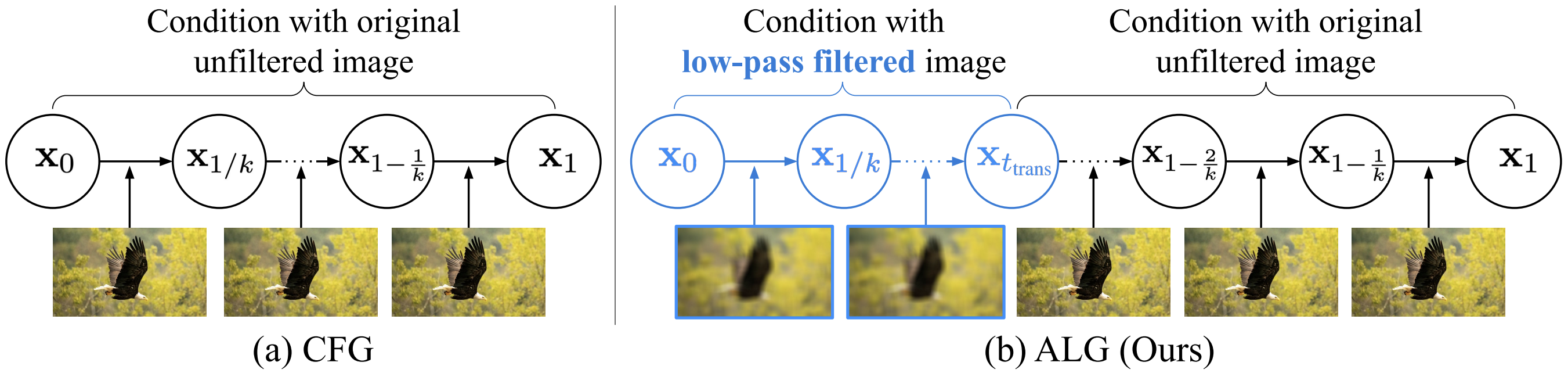
Kimin Lee is an assistant professor at the Graduate School of AI at Korea Advanced Institute of Science and Technology (KAIST), where he focuses on developing safe and capable decision-making agents. His research spans multiple aspects of artificial intelligence with a strong emphasis on safety and reliability. Dr. Lee completed his educational journey at KAIST, earning a Ph.D. in Electrical Engineering with a focus on Machine/Deep Learning (2015-2020), advised by Professor Jinwoo Shin. He also holds a Master's degree in Electrical Engineering (Wireless Communication Networks, 2013-2015) and a Bachelor's degree in Electrical Engineering (2009-2013), both from KAIST. His primary research interests include: Physical AI - developing AI systems that can interact safely and effectively with the physical world Alignment - particularly reinforcement learning from human feedback (RLHF) and scalable oversight techniques Monitoring - safety evaluation frameworks and benchmarking for AI systems LLM Agents - enhancing the capabilities and safety of large language model-based agents Dr. Lee's recent publications reveal a strong trajectory toward addressing critical challenges in AI safety. His work consistently bridges theoretical advances with practical applications, particularly in the areas of reinforcement learning, computer vision, and natural language processing. A notable trend in his research is the development of methods to evaluate and enhance the safety of AI systems, especially large language models and diffusion models, while maintaining or improving their capabilities. As an active member of the academic community, Dr. Lee serves as an area chair for major conferences including NeurIPS, ICLR, and ICML, and regularly reviews for top-tier AI venues. He has also organized workshops focused on safe and trustworthy AI agents. Dr. Lee's research group at KAIST appears to focus on AI safety and decision-making, with research projects spanning from theoretical foundations to practical implementations of safe AI systems. His collaborative work with institutions like UC Berkeley and Google Research demonstrates the interdisciplinary nature of his research approach.
Dr. Dongmei Zhao is a Professor in the Department of Electrical & Computer Engineering at McMaster University, part of the Faculty of Engineering. She specializes in wireless networking, network resource management, mobile edge computing, mobile computation offloading, and digital twins. Her research clusters focus on Digital & Smart Systems. Dr. Zhao holds a Ph.D. from the University of Waterloo. She teaches courses such as COMPENG 4DK4 (Computer Communication Networks), COMPENG 4DN4 (Advanced Internet Communications), and graduate-level courses like ECE 729 (Resource Management in Wireless Networks). Her research interests span cutting-edge topics including UAV-enabled edge computing, digital twin migration, vehicular networks, and reinforcement learning applications in resource allocation. She actively contributes to advancing 6G networks, security redundancy in autonomous systems, and decentralized manufacturing platforms. Dr. Zhao's recent publications emphasize optimization techniques for dynamic networks, platooning systems, and multi-agent learning frameworks. She has been recognized for her work in vehicular edge computing and digital twin integration, though explicit awards are not listed here. She advises on graduate studies in networking and edge computing, though no specific student names are provided in the text. Her work often intersects with practical challenges in smart infrastructure and autonomous vehicle systems.
Xiaoli Fern is an Associate Professor in the School of Electrical Engineering and Computer Science at Oregon State University. She holds a Ph.D. in Computer Engineering from Purdue University (2005) and dual degrees (B.S. and M.S.) in Automation and Computer Science from Shanghai Jiao Tong University (2000). Her research focuses on applied machine learning , graph learning , and explainability in AI systems , with applications in microbiome analysis , ecological monitoring , and human-computer interaction . Research Expertise: Unsupervised learning, clustering, correlation analysis, outlier detection, and scientific data mining. Collaborations: Active involvement in the IGERT Ecosystem Informatics program and interdisciplinary projects with ecologists, roboticists, and biologists. Awards: 2011 NSF CAREER Award for early-career excellence in research. Her recent work includes applying deep learning to microbiome data and developing interactive systems that bridge theory with real-world applications in biology and materials science. She mentors students across all academic levels and emphasizes the importance of collaborative, real-world problem-solving in her research lab.
Dr. Messaoud Saidani is an Associate Professor and Associate Director of Research and Engagement at Coventry University, with a focus on Structural Engineering and sustainable materials. He holds a PhD from the University of Nottingham and has extensive experience in pan-European and UK research projects. His research interests include steel connections, welding processes, fracture mechanics, and the use of industrial waste in construction. He has published over 150 papers and serves on editorial boards of international journals. Research Interests: Steel and metallic connections Welding and fracture mechanics Novel composite materials Industrial waste utilization Sustainable construction materials Recent Contributions: His work emphasizes sustainable engineering solutions, including geopolymer mortars, metakaolin-based binders, and lightweight concrete. He actively advises PhD students on topics like recycled aggregates and FRP composites. Awards: Emerald Group Publishing Award for Best Paper (2013) Best Overall Student Award (1986) Reinforced Aer-Tech Novel Material Award (2008) Projects & Grants: Led projects totaling over £4M, including 'CIMSTEEL: Computer-Integrated Manufacturing for Constructional Steelwork' and 'Making Engineering Fun to Learn' (2011-2012). Supervised 21 research projects, emphasizing innovation and sustainability.
Tom van Woensel is a Full Professor of Freight Transport and Logistics at Eindhoven University of Technology (Netherlands), affiliated with the School of Industrial Engineering and Innovation Sciences and the Department of Operations Planning Accounting & Control. He also holds roles as Academic Director of the Global Supply Chain Management program at Antwerp Management School and Director of the European Supply Chain Forum. His research focuses on freight transport, logistics systems, and operations research methodologies, with contributions to over 150 peer-reviewed publications in journals like Transportation Science and European Journal of Operational Research . Education: BSc/MSc in Applied Economic Sciences (Econometrics), University of Antwerp (Belgium) PhD: Queueing Theoretical Approaches for Traffic Flow Networks, University of Antwerp Research Interests: Optimization of transport and logistics networks using integer programming, metaheuristics, and reinforcement learning Urban freight systems, last-mile delivery, and sustainable logistics Supply chain resilience, collaboration in logistics networks, and industry-academia partnerships Applications of AI in solving stochastic transportation problems Awards and Recognition: Outstanding Professor in Supply Chain & Logistics (2021) European Journal of Operational Research Best Review Paper (2016) INFORMS Senior Member (2024) Collaborations and Projects: Leads initiatives like SYNERCIZE (zero-emission construction logistics) and Circulaire stromen (circular logistics) Editorial roles at Transportation Science , OR Spectrum , and Urban Science Active in industry partnerships through the European Supply Chain Forum (75+ multinationals) Labs/Teams: EAISI Mobility (Eindhoven AI Systems Institute) CIRRELT (Montreal, Canada) collaborating member
Prof. Mehdi Dastani is a Professor and chair of the Intelligent Systems group within the Department of Information and Computing Sciences at Utrecht University's Faculty of Science. He leads the Master's program in Artificial Intelligence and focuses on formal and computational models in AI, particularly multi-agent systems. His research integrates insights from philosophy, psychology, and law to develop autonomous agents that reason about social and cognitive concepts like norms, emotions, and responsibility. Dastani has held academic roles at Utrecht University since 2001, including postdoctoral research and faculty positions. Education: M.Sc. Computer Science (University of Amsterdam, 1991), M.Sc. Philosophy (University of Amsterdam, 1992), Ph.D. in Humanities (University of Amsterdam, 1998). His work spans theoretical and applied projects, including grants for initiatives like Golden Agents (simulating Golden Age creative industries) and traffic control systems using virtual organizations. He is actively involved in academic committees, editorial boards, and organizing international conferences like AAMAS and PRIMA. Research Interests: Multi-Agent Programming, Normative Systems, Autonomous Agents, Cognitive Robotics, and Human-Centered AI. His projects address challenges like norm enforcement, decision-making in complex systems, and ethical AI integration with societal needs. Advising & Grants: Supervised numerous PhD students (e.g., Birna van Riemsdijk, Bas Testerink) and secured grants for projects such as 'Controllable AI: Human-Centered Approach'. His work includes collaborations on urban governance, autonomous driving, and AI tools for literacy support in children. Labs & Teams: Leads the Intelligent Systems group, contributing to agent-based simulations, ethical AI frameworks, and interdisciplinary collaborations with social scientists and urban planners.