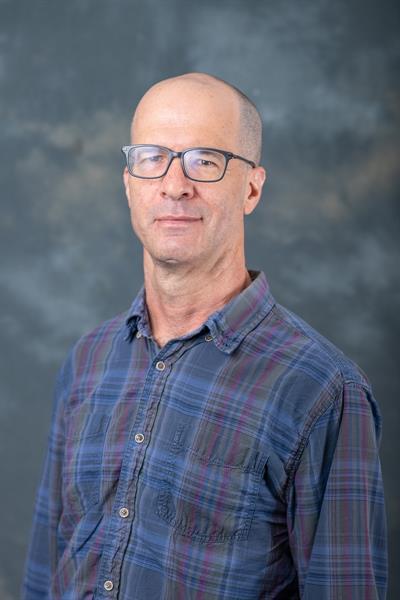
Avner Baz is a Professor of Philosophy at Tufts University’s School of Arts and Sciences. He specializes in ethics, aesthetics, epistemology, and the philosophy of Wittgenstein and Kant, with a focus on ordinary language philosophy and philosophical method. His work critiques representationalist approaches and advocates for contextualist insights from ordinary language traditions. Recent research explores aspect perception through Wittgenstein and Merleau-Ponty’s phenomenology, emphasizing the interplay between perception and language. Education: PhD from University of Illinois at Chicago (2000) and MA from Tel-Aviv University (1994). His publications include When Words are Called For (2012) and The Crisis of Method in Contemporary Analytic Philosophy (2017). Current projects address transcendental idealism’s relevance and critique of moral modals in ethics. Teaching focuses on courses like Knowing and Being , Phenomenology and Existentialism , and seminars on Wittgenstein and ordinary language philosophy. Professional activities include conference presentations and administrative roles, including chairing the Department of Philosophy (2018-2024).
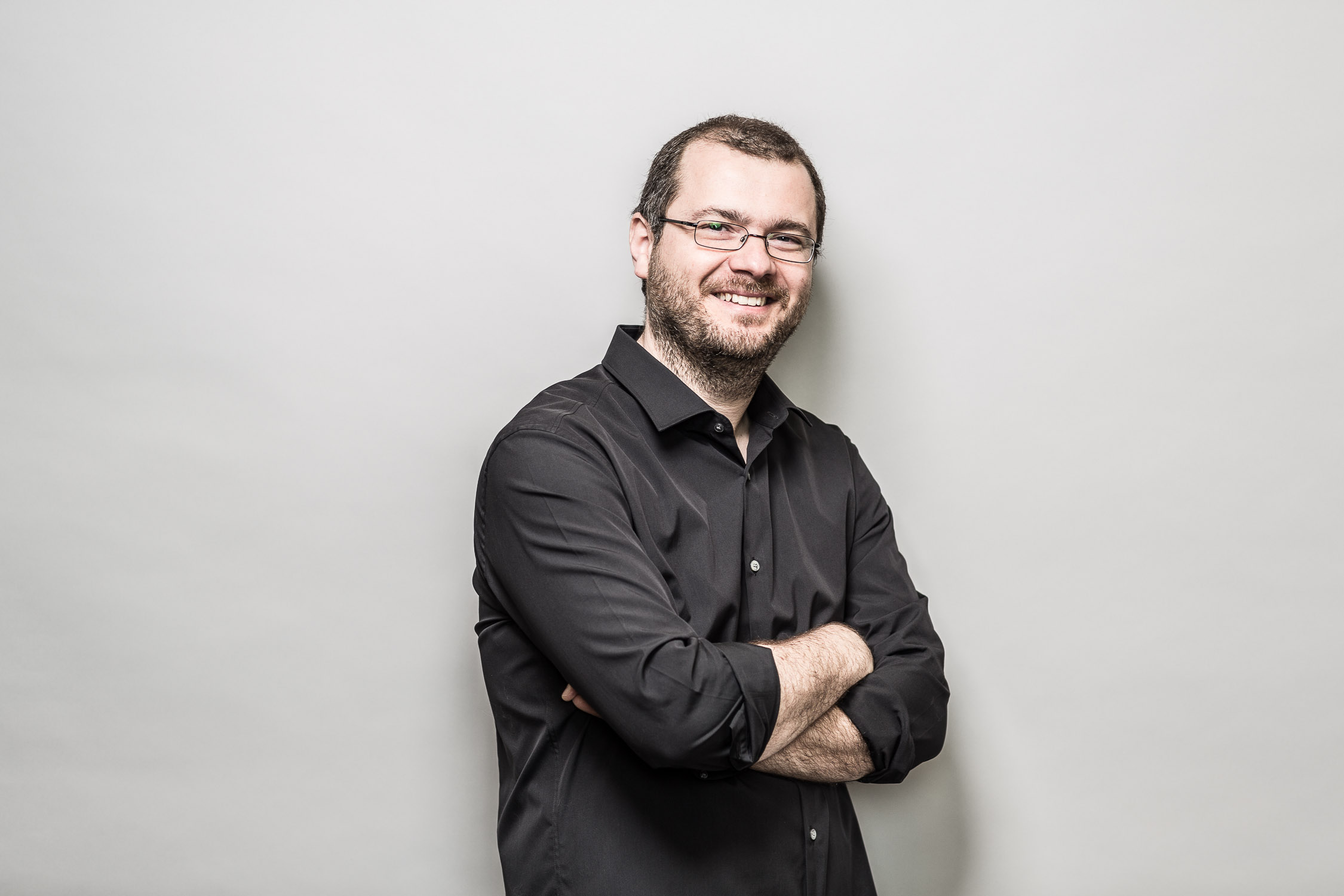
Vassilios Tzerpos is an Associate Professor at the Lassonde School of Engineering, York University, where he has been since 2001. He holds a Ph.D. in Computer Science from the University of Toronto (2001). His research focuses on audio processing for musical applications, deep learning, digital signal processing, machine listening, and software engineering education. He directs the APTLY lab exploring music-technology intersections and leads the LaSSoftE lab developing socially-oriented software solutions. Education: Ph.D. in Computer Science, University of Toronto, 2001 Research Highlights: Dr. Tzerpos' work spans music information retrieval (e.g., automatic music classification), synthetic speech detection using neural networks, and software engineering pedagogy. His recent projects include Music-STAR for audio re-instrumentation and OER-based learning path creation systems. He has pioneered methods in design pattern detection and software clustering evaluation. Grants & Labs: Leads two research groups: APTLY (music-tech) and LaSSoftE (social impact software). Active in developing adaptive cybersecurity solutions against DoS attacks and refining software architecture recovery techniques. Key Themes in Publications: Recent work emphasizes machine learning applications in music technology and cybersecurity, with foundational contributions to software clustering methodologies and design pattern detection algorithms. His work bridges theoretical computer science with practical applications in education and creative industries.
Dr. Julie Markant is an Associate Professor in the Department of Psychology at Tulane University and a Faculty Associate in the Tulane Brain Institute. Her research focuses on the interplay between selective attention and learning in infants and young children, emphasizing developmental and neurobehavioral perspectives. She uses behavioral, eye-tracking, genetic, MRI, and fNIRS methods to explore how attention control influences learning efficacy and vice versa. Education: Ph.D., 2010, University of Minnesota Her research interests include developmental attention mechanisms, perceptual learning, and how biological and contextual factors shape cognitive outcomes. Key themes involve understanding how infants and children selectively attend to information and how this attention drives learning processes. Recent work explores caregiver influence on attention, prenatal factors affecting infant attention, and the role of competing information in school-aged learning. Dr. Markant leads the Learning and Brain Development Lab , which investigates cognitive and neural mechanisms underlying attention and learning. She is actively recruiting graduate students from Tulane’s Psychology and Neuroscience Ph.D. programs. Her publications reflect a focus on attention biases, developmental learning dynamics, and methodological innovations like remote infant studies. Awards and honors are not explicitly listed in the provided text.
Dr Yanan Song serves as Senior Lecturer (Associate Professor) in Global Politics at SOAS University of London, where she also holds the position of Co-Director of Distance Learning Programmes within the Department of Politics and International Studies. Prior to her current appointment, she was a Lecturer in International Relations at the University of Exeter. PhD in Politics, Durham University MSc in International Public Policy, University College London Dr Song's research centers on US foreign policy with particular emphasis on America's commitment to NATO in the post-Cold War era. Her work examines military operations in Kosovo, Afghanistan, Libya, and Ukraine through the lens of foreign policy analysis, with special attention to intra-administration bureaucratic politics. She is currently investigating US-China relations, focusing on how misperceptions and misinterpretations of each other's policies shape bilateral strategy, with specific interest in the reconfiguration of the relationship within the context of the One Belt One Road initiative. Analysis of Dr Song's publication record reveals a consistent scholarly trajectory examining US foreign policy commitments, NATO dynamics, and evolving US-China relations. Her recent work addresses contemporary challenges including the Ukraine crisis impact on transatlantic relations, trilateral dynamics in a multipolar world, and the reconfiguration of US-China relations in the post-pandemic era. Her scholarship consistently employs foreign policy analysis methodology to investigate how strategic misperceptions influence international relations and policy formulation. Dr Song actively supervises PhD students at SOAS and contributes to academic leadership through her role as Co-Director of Distance Learning Programmes. Her research appears to be supported by academic grants focused on international relations, US foreign policy, and China studies, though specific grant details are not publicly enumerated in her profile.
Dr. Edoardo Celeste is an Associate Professor of Law, Technology and Innovation at Dublin City University's School of Law and Government. He leads the Erasmus Mundus Master in Law, Data and Artificial Intelligence (EMILDAI) and serves as Deputy Director of the Dublin European Law Institute. PhD, University College Dublin Law degrees: University of Rome 'La Sapienza', University of Paris II 'Panthéon-Assas', King’s College London His research focuses on digital rights, constitutionalism in digital contexts, and the intersection of law, technology, and sustainability. He coordinates the DCU Law and Tech Research Cluster and co-founded the Digital Constitutionalism Network. Recent publications examine digital sovereignty, AI sustainability, and constitutional responses to social media exclusion. His 2022 book Digital Constitutionalism: The Role of Internet Bills of Rights (Routledge) established him as a leading voice in the field. Irish Research Council Early Career Researcher of Year Award (2022) Principal Investigator for Cross-Border Data Protection Network (IRC/ESRC funded) Facebook Research grant for Digital Constitutionalism: Content Governance Standard project He supervises PhD students in digital rights, data protection, platform regulation, and digital sustainability while holding affiliations with the ADAPT Centre and UCD Centre for Human Rights.
Ryan Thibodeau is a Professor at St. John Fisher University and a New York State licensed psychologist with Apple Teacher certification. His research examines the history of psychiatry and mental illness stigma, with publications spanning PTSD, schizophrenia, depression, and autism stigma. Recent work explores continuum beliefs, social distance, and intervention efficacy. Community involvement includes the Mount Hope Cemetery unnamed deceased memorial project and sensory-friendly space development. His publication portfolio demonstrates extensive focus on mental health stigma mechanisms across military/civilian contexts, celebrity influences, and parent-associated stigma. Methodologies include laboratory experiments, correlational studies, and implicit/explicit measures spanning psychophysiology and social cognition.
Bryan Kian Hsiang Low serves as Associate Professor in the Department of Computer Science at the National University of Singapore's School of Computing, while simultaneously holding leadership positions as Director of AI Research at AI Singapore and Deputy Director of the NUS AI Institute. His academic journey includes a B.Sc. (2001) and M.Sc. (2002) in Computer Science from NUS, followed by a Ph.D. in Electrical & Computer Engineering from Carnegie Mellon University (2009). His research spans probabilistic machine learning, multi-agent systems, and trustworthy AI, with particular focus on Bayesian optimization , federated learning , and data-efficient methodologies . The Low Lab develops frameworks for collaborative AI, automated machine learning, and AI applications in scientific domains through the Group of Learning and Optimization Working in AI (GLOW.AI), which maintains a multi-disciplinary approach bridging computer science, mathematics, and engineering disciplines. Analysis of his recent publications reveals a consistent emphasis on data valuation , privacy-preserving collaborative learning , and robust optimization techniques , with increasing integration of large language models into his research framework. His work demonstrates strong theoretical foundations coupled with practical applications in computational sustainability and robotics. Andrew P. Sage Best Transactions Paper Award (2006) NUS Overseas Graduate Scholarship (2004-2009) Faculty Teaching Excellence Award (2017-2018) IEEE RAS Distinguished Lecturer (2019) World Economic Forum Global Future Councils Fellow (2016-2018) Dr. Low actively mentors PhD students including Rachael Sim, Quoc Phong Nguyen, and Zhongxiang Dai, while leading major initiatives like the AI Phenome Platform for plant breeding optimization. His research group GLOW.AI operates at the intersection of theory and practice, with strong industry engagement through AI Singapore. Current projects focus on scalable AI systems for scientific discovery and developing frameworks for equitable collaborative machine learning with robust privacy guarantees.
Associate Professor Mary Jeanette Ignacio is a faculty member at the Alice Lee Centre for Nursing Studies, Yong Loo Lin School of Medicine, National University of Singapore (NUS), where she has served since 2008. She currently serves as the Undergraduate Programmes Director for Year 1 and specializes in simulation-based pedagogy. Doctor of Philosophy (Health Professions Education), Maastricht University Bachelor of Science (Nursing), St Dominic Savio College, Philippines Doctor of Medicine (MD), University of Santo Tomas, Philippines Bachelor of Science (Psychology), University of the Philippines Diliman Her research focuses on stress management , cognitive integration , collaborative learning , and human factors in healthcare education. She has pioneered simulation-based teaching strategies across undergraduate and postgraduate nursing curricula and developed innovative approaches to link pathophysiology with clinical practice. Recent publications highlight her work in virtual reality simulations , systematic reviews on gender discrimination in nursing , and interprofessional educational interventions . She has received multiple teaching excellence awards and secured grants for simulation-based learning projects. NUS Teaching Excellence Award (Individual) 2023 NUS Long Service Award 2023 National University of Singapore Teaching Excellence Award 2017 Her funded projects include grants from the Centre for Development of Teaching and Learning (NUS), Singapore Millennium Foundation, and Sigma Theta Tau International Honors Society of Nursing Research. She actively contributes to advancing simulation pedagogy , virtual hospital design , and affective fidelity in simulations to improve clinical learning outcomes.
Margaret Shih is the Neil H. Jacoby Chair in Management and a professor of management and organizations at UCLA Anderson School of Management. On July 1, 2025, she was appointed the school's interim dean. She has been a faculty member at UCLA Anderson since 2008 and previously served on the faculty at the University of Michigan for eight years and worked at the RAND Corporation. Her educational background includes a Ph.D. and M.A. in Social Psychology from Harvard University and a B.A. in Psychology with honors from Stanford University. Professor Shih's research focuses on the effects of diversity in organizations, particularly examining social identity and the psychological effects of stereotypes, prejudice, discrimination, and stigma in organizational contexts. Her work spans organizational behavior, social psychology, and diversity studies, with significant contributions to understanding how identity affects workplace dynamics, leadership, and decision-making. She has recently published research on the influence of political polarization on perceptions of threats to democracy. Her scholarly work demonstrates consistent exploration of how individuals navigate multiple identities in organizational settings, with particular attention to colorblind diversity policies, stereotype activation mechanisms, and strategies for reducing stigma in workplaces. Her research has evolved from foundational work on stereotype boost effects to more complex examinations of multiracial identity and organizational inclusion strategies. 2017 La Force Award for Leadership 2017 Niedorf Decade Teaching Award 2011 Fulbright Award 2006 Literature, Sciences and Arts Class of 1934 Memorial Teaching Award, University of Michigan 2006 Literature, Sciences and Arts Award for Educational Excellence, University of Michigan 2005 Outstanding Scholar Honor, National Science Council, Taiwan 2003 Martin E.P. Seligman Award for Outstanding Dissertation Research in Positive Psychology 1998-1999 Certificate of Distinction in Teaching, Derek Bok Center for Teaching and Learning, Harvard University Professor Shih has received substantial research funding from prestigious organizations including the National Science Foundation, National Institute of Mental Health, Social Sciences and Humanities Research Council of Canada, John Templeton Foundation, and the Robert Wood Johnson Foundation. Her administrative roles have included serving as Management and Organizations department chair, deputy dean of academic affairs (where she recruited five new ladder faculty and updated Anderson bylaws), and faculty special advisor in the UCLA Office of Equity, Diversity and Inclusion. She serves on the executive committee for the International Society for Self and Identity and is a consulting editor for the Journal of Personality and Social Psychology and Personality and Social Psychology Bulletin. Her laboratory work and research teams focus on understanding how systems contribute to different types of inequities and how bureaucratic obstacles impede equity, diversity, and inclusion initiatives. She has been instrumental in developing frameworks for identity management strategies in organizational contexts and examining how political polarization affects workplace dynamics.
Yang Zhang is a Visiting Assistant Professor in the Department of Mathematics at the University of California, Irvine (UCI), working under Prof. Katya Krupchyk. His research focuses on inverse problems in imaging sciences, nonlinear hyperbolic equations, and medical imaging applications. He previously held a postdoctoral position at the University of Washington, Seattle, under Prof. Gunther Uhlmann. His work integrates microlocal analysis and partial differential equations to address challenges in wave propagation, nonlinear acoustics, and elasticity. Education & Career: PhD from Purdue University (advisor: Prof. Plamen Stefanov) Postdoc: University of Washington, Seattle (2020–2024) Research Interests: Dr. Zhang's work spans inverse problems for nonlinear hyperbolic equations, acoustic imaging, and integral transforms in medical contexts. He develops novel methodologies using multi-fold linearization, wave interactions, and advanced calculus techniques. His studies on Rayleigh and Stoneley waves in elasticity further demonstrate his expertise in microlocal analysis. Key Contributions: His research bridges theoretical mathematics and applied imaging, with notable publications on inverse scattering, damping effects in wave equations, and Compton camera imaging. He is an active member of the Inverse Problems International Association (IPIA). Grants & Collaborations: Collaborations with prominent figures like Prof. Gunther Uhlmann and Prof. Katya Krupchyk highlight his network in inverse problems. His work often involves both analytical and computational approaches, with applications in medical diagnostics and geophysics.
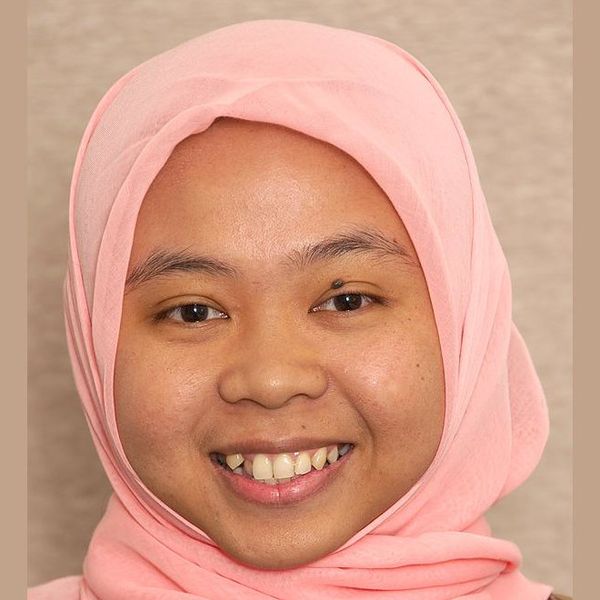
Derry Wijaya is an Associate Professor and Program Coordinator for the Data Science Program at Monash University Indonesia. She also co-directs the Monash Data and Democracy Research Hub, focusing on analyzing data's impact on democracy. Previously, she served as an Assistant Professor at Boston University's Department of Computer Science. Her research spans multilingual NLP, low-resource language technologies, and combating AI-driven misinformation. Education: PhD in Language Technologies, Carnegie Mellon University (2013) Postdoctoral Fellowship, University of Pennsylvania (2013–2015) Bachelor's & Master's in Computing, National University of Singapore Research Interests: Improving language model performance via self-consistency and reasoning Analysis of bias, toxicity, and framing in AI outputs Preservation of Indonesian indigenous scripts and languages Development of tools like OpenFraming AI for multilingual framing analysis Recent Work Trends: Her publications (2023–2025) emphasize ethical AI, low-resource language solutions, and social media analysis. Notable contributions include frameworks for metric calibration (MetaMetrics), debiasing generative models, and surveys on Indonesian language technology needs. Awards & Roles: Fulbright Scholarship recipient Serves on program committees for ACL, EMNLP, NeurIPS, and ICLR Co-created OpenFraming AI for multilingual framing analysis Grants & Labs: Leads the Monash Data and Democracy Hub, focusing on tech's societal impact. Active in grant-funded projects preserving Indonesia's linguistic heritage through digitization efforts.
Professor William Housley is a Chair in Sociology at Cardiff University’s School of Social Sciences. He holds a PhD and DSc.Econ. (2012), and is a Fellow of both the Academy of Social Sciences (FAcSS) and Learned Society of Wales (FLSW). His expertise spans qualitative research methods, sociological theory, ethnomethodology, and digital sociology. He co-founded the COSMOS social media observatory and leads the EMTEDS research group, focusing on disruptive technologies and socio-digital systems. Education: PhD; DSc.Econ. (Cardiff University, 2012) Research interests include algorithmic accountability, automation, interaction studies, and the sociological implications of digital technologies. He has held prestigious roles such as the Vincent Wright Chair at Sciences Po, Paris (2017), and serves on international panels for the Volkswagen Foundation and UK REF 2021. His work emphasizes digital sociology’s role in understanding new socio-technical systems, with recent focus on AI ethics, social media governance, and interdisciplinary collaboration. Awards: DSc.Econ. (2012), Vincent Wright Chair (2017) Professor Housley supervises research in digital societies, ethnomethodology, and collaborative interdisciplinary practice. He has led projects like the Cardiff University Research Fellowship on disruptive digital technologies and contributed to policy reviews for ESRC, British Academy, and others. Active in editorial roles (e.g., Qualitative Research co-editor, 2012–2018), his lab (EMTEDS) explores emerging tech’s societal impacts. Current projects address algorithmic transparency, digital citizenship, and governance of social media.
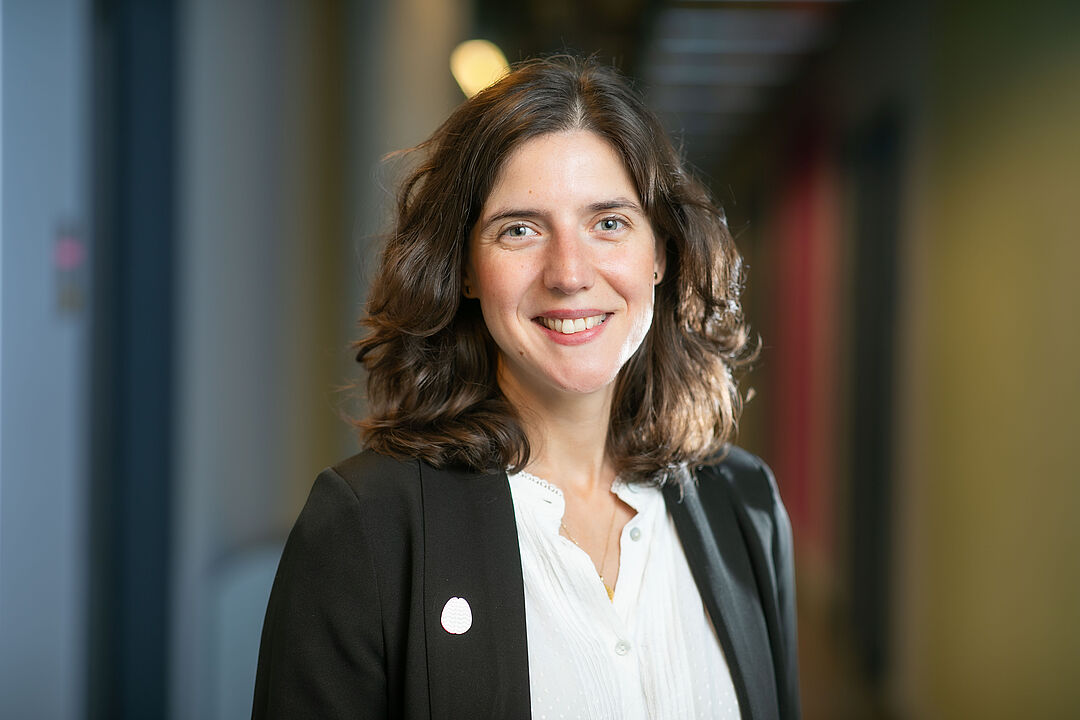
Dr. Miriam Sturdee is a Lecturer in Human-Computer Interaction (HCI) at the School of Computer Science, University of St Andrews. Her work focuses on advancing HCI through innovative methods in design, education, and interdisciplinary collaboration. She actively contributes to research areas such as visual data analysis, blended experiences, and healthcare technology, with notable expertise in sketching techniques and their applications in user-centered design. Dr. Sturdee supervises PhD candidates Jess McGowan and Junyu Zhang, guiding their research in HCI-related domains. Her research interests span HCI pedagogy, cybersecurity visualization, and sustainable design, emphasizing inclusivity and accessibility. Collaborations include workshops on digital-physical integration and participatory design for healthcare communication. She has co-authored a practical guide on sketching theory and actively participates in academic conferences, contributing to discussions on knowledge production and materiality in HCI. Dr. Sturdee’s work aligns with UN Sustainable Development Goals, particularly in advancing healthcare equity and sustainable practices. She engages in outreach activities, such as the Doors Open @ Computer Science event, fostering public engagement with technology. Her publications reflect a commitment to bridging artistic expression with computational methods, exploring topics like parasocial interactions in games and remote sketching in distributed teams.
Fatma Deniz is a Full Professor (W3) of Computer Science at Technische Universität Berlin, supported by the Berlin Equal Opportunities Program. She leads the Chair of Language and Communication in Biological and Artificial Systems, and is a member of the Berlin Bernstein Center for Computational Neuroscience. Her roles include membership in TU Berlin's Executive Board and the Berlin University Alliance Steering Committee. She holds a Ph.D. (Dr. rer. nat.) from TU Berlin and a Diploma in Computer Science from Technische Universität München, with research training at Caltech and postdoctoral work at UC Berkeley. Her research focuses on understanding neural mechanisms of language processing, integrating computational neuroscience, cognitive science, and artificial intelligence. Key areas include semantic representation dynamics, cross-modal neural alignment, and language learning in bilingual contexts. She has pioneered studies showing the brain's invariant semantic processing across reading and listening modalities. Her grants include an ERC Starting Grant (2023-2028) for studying language learning shifts and a NSF-BMBF CRCNS grant on bilingual representations. She co-edited The Practice of Reproducible Research: Case Studies in Data Science (UC Press, 2017) and contributed to foundational work on reproducible data science methodologies. She has advised projects in neuroimaging, AI ethics, and computational linguistics, and collaborates with institutions like UCSF and the German Academic Exchange Service. Her lab explores neural correlates of language through fMRI, MEG, and machine learning techniques.
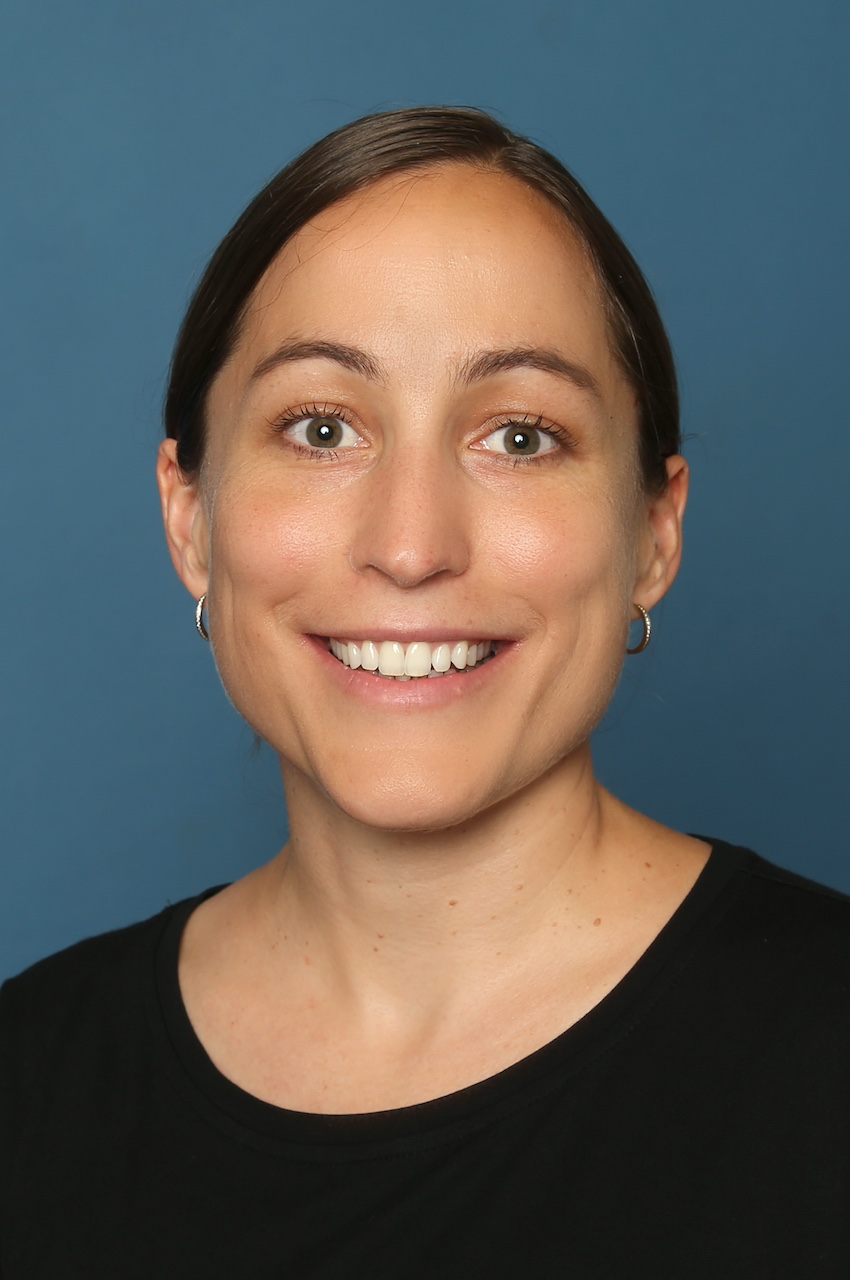
Sarah Ebling is a Full Professor of Language, Technology and Accessibility at the University of Zurich's Faculty of Arts and Social Sciences. She leads the Language, Technology and Accessibility research group within the Institute for Computational Linguistics. Her work focuses on computational linguistics applications for assistive technologies targeting disabilities such as hearing impairments, visual impairments, and cognitive disorders. Key areas include sign language technologies, automatic text simplification, and audio description systems. She directs the large-scale Swiss innovation project 'Inclusive Information and Communication Technologies' (2022-2026, CHF12 million budget) and collaborates on EU H2020 and SNSF Sinergia projects. Education: Holds a doctoral degree (summa cum laude, 2016) from the University of Zurich with research on automatic translation to Swiss German Sign Language. Completed studies in German Linguistics, Computational Linguistics, and English Linguistics at Universities of Zurich and Heidelberg, with research stays in Dublin, Chicago, and Rochester. Research emphasizes multimodal accessibility solutions, including sign language fluency assessment, gesture-based interaction, and AI-driven text adaptation. Current projects explore audio description translation systems (SwissADT), sign language corpus development (SwissSLi), and digital tools for comprehensibility assessment in simplified texts. Her work bridges computational linguistics with ethical considerations in assistive technology deployment. Grants and Leadership: Principal Investigator on major accessibility-focused grants, including the CHF12M Swiss innovation project. Supervises PhD candidates in areas like sign language assessment tools and text simplification algorithms. Active in international collaborations, publishing extensively in computational linguistics and accessibility journals/conferences. Technology Development: Created the 'DigiSpon' benchmark for language sample analysis and developed open-source tools for sign language translation baselines. Her team's innovations include the SignCLIP model connecting text and sign language via contrastive learning, and pose estimation frameworks for sign language recognition.