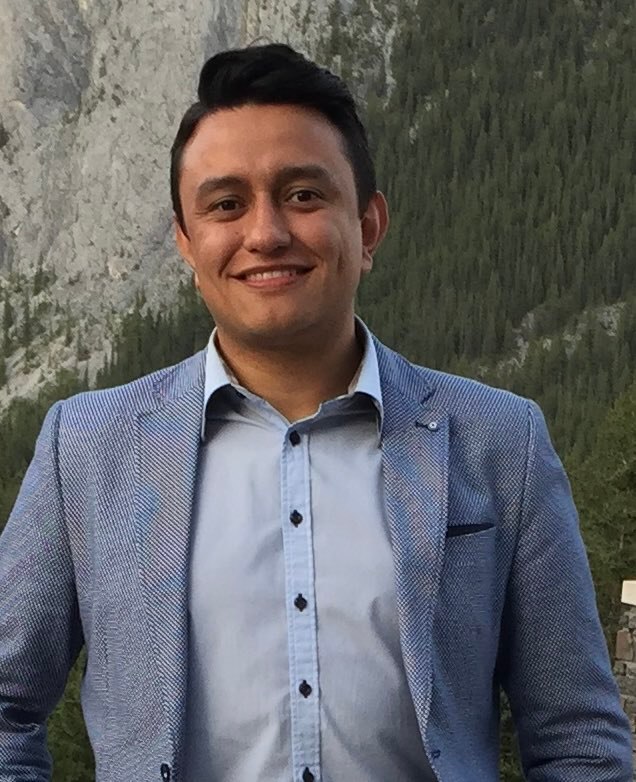
José Eduardo Villalobos Graillet is an Assistant Professor of Spanish at Idaho State University , specializing in Modern Peninsular Literature and Culture with a focus on visual culture (film and television) . He previously held a position as Spanish Instructor at Wilfrid Laurier University in the Department of Languages and Literatures. Research Areas : Spanish Film Studies, Spanish Medieval Literature, Latin American and Caribbean Studies, Teaching Spanish as a Foreign Language, Visual Culture, and Critical Pedagogy. His scholarly work examines film and television adaptations of 'La Celestina' , analyzing censorship dynamics across Francoist Spain, the Democratic Transition, and contemporary Spain. He also contributes to Spanish pedagogy , developing technological tools like Lang-8 for written expression and culturally immersive teaching units on topics such as winter festivals and Caribbean music. His publications span both critical academic analysis and methodological innovations for language instruction. Key Themes in Publications : Adaptation fidelity, political censorship, intercultural pedagogy, and the role of digital platforms in language learning.
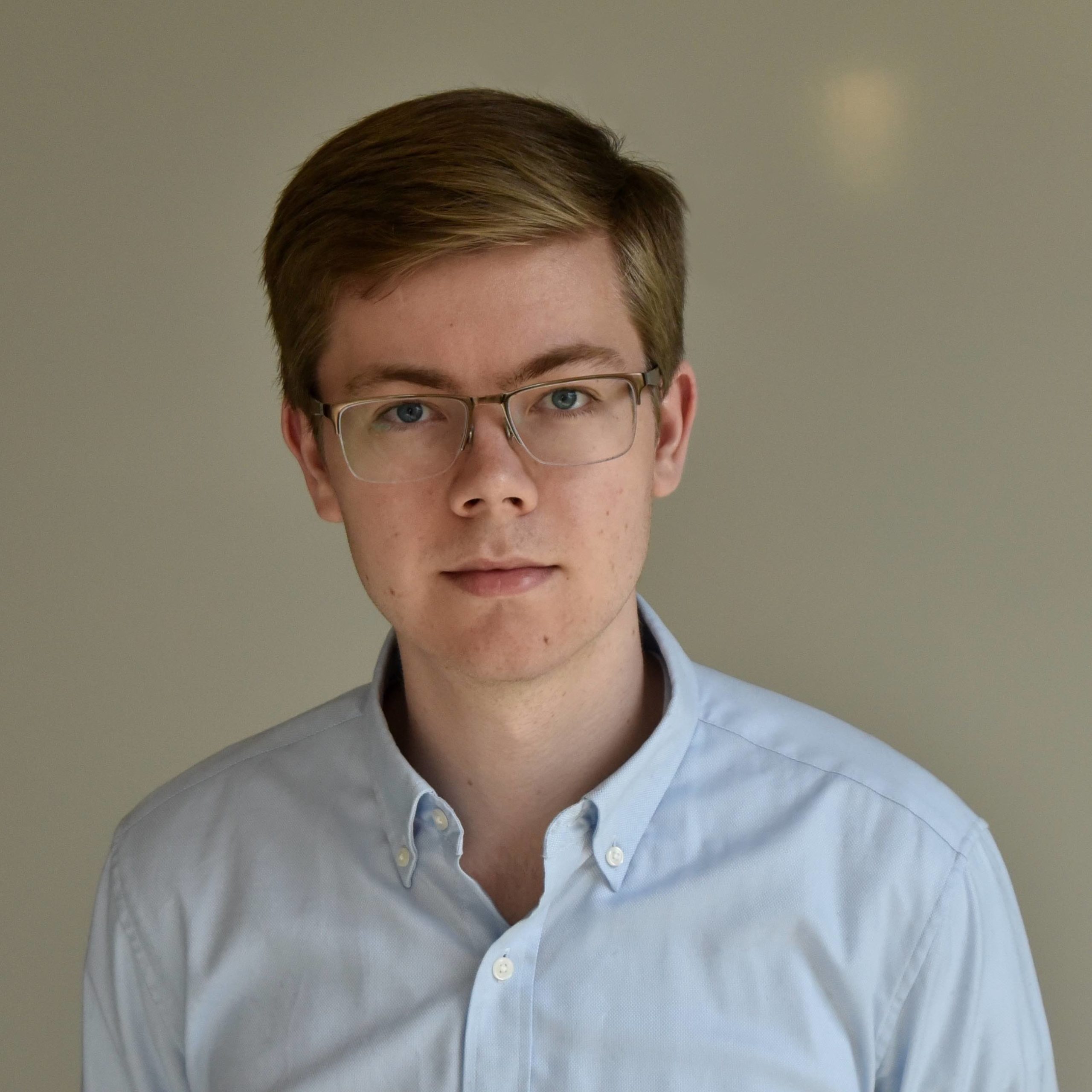
Yuriy Rogovchenko is a Professor in the Department of Mathematical Sciences at the University of Agder. His research spans differential equations, mathematical modeling, and education innovation, with applications in biology, social sciences, and engineering. Rogovchenko has contributed extensively to mathematics education through projects like PLATINUM (Erasmus+ Strategic Partnership) and CPEA-ST-2019/10067 (Eurasia project). PhD in differential equations (Institute of Mathematics, Kyiv, 1987) Regular Associate at Abdus Salam ICTP, Trieste (2004-2011) Editor for 11 international journals Referee for over 70 journals Research Interests: Qualitative theory of differential equations, perturbation methods, mathematical modeling in interdisciplinary contexts. He focuses on enhancing conceptual understanding through inquiry-based learning and nonstandard problems. Publications: Recent works include advancements in linear system observability, parameter identification methods, and educational studies on exact differential equations. His collaborations with Svitlana Rogovchenko and Matthias Pätzold highlight applications in engineering and biology. Awards: Sørlandet kompetansefonds research award (2016).
Prof. Dr.-Ing. Hakan Kayal serves as University Professor for Aerospace Engineering at the University of Würzburg, holding the Chair of Computer Science VIII (Space Technology) and chairing the Interdisciplinary Research Center for Extraterrestrial Studies (IFEX). His leadership bridges computer science and space systems engineering within the university's Institute of Computer Science. Research focuses on three synergistic domains: nanosatellite development for extraterrestrial missions (including the SONATE-2 6U platform demonstrating AI-driven onboard processing), scientific investigation of Unidentified Anomalous Phenomena (UAP) through the university's collaboration with the Federal Aviation Office, and spacecraft autonomy systems enabling higher mission independence. Current projects include the NEAlight mission (extended to develop the Apophis Interceptor concept for the 2029 asteroid flyby), VaMEx3-MarsSymphony for Mars exploration, and JMU Space Observatory initiatives. Publication trends reveal strong emphasis on asteroid defense strategies (particularly for Apophis), CubeSat-based UAP detection methodologies, and real-time AI processing in constrained space environments. His team actively engages students through ADS-B tracking, Meteosat App development, and Moon Base 2030 projects, while recent recognition includes co-authoring a landmark UAP review in Progress in Aerospace Sciences with 33 international scientists.
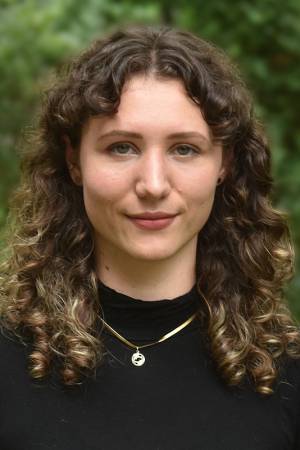
Andrea Korda, PhD (University of California, Santa Barbara), is an Associate Professor of Fine Arts & Humanities and Associate Dean (Research) at the Augustana Campus of the University of Alberta. Her academic career bridges art history, material culture studies, and pedagogical innovation. Educations: BA in Fine Arts, Queen's University MA in Art History, Concordia University PhD in Art History, University of California, Santa Barbara Research Focus: Dr. Korda specializes in 19th-century visual and material culture, with a focus on education's visual dimensions, children's literature, and community-engaged projects like the award-winning Crafting Communities initiative. She co-curated the virtual exhibition Photographies (Bruce Peel Special Collections) and explores hands-on learning through historical crafts. Teaching: Courses include modern art history (AUART 220), photography theory (AUART 225), and special topics in visual culture (AUART 382). She emphasizes experiential learning and digital humanities integration, as seen in her work with the Getty Museum Challenge and OER projects. Collaborations: Leads interdisciplinary teams on projects like Crafting Communities , blending scholarship with public engagement. Her research bridges historical methodologies with contemporary pedagogical practices, fostering connections between academia and communities.
Anna Gottard is an Associate Professor of Statistics at the University of Florence, where she leads the Department of Statistics, Computer Science, and Applications. She directs the Florence Center for Data Science (FDS) and participates in the Technical Scientific Committee of the Tuscan Center for Big Data, Data Science, and AI (CBDAI). Her research focuses on multivariate statistical models, particularly graphical models, and extends to statistical machine learning, fair models, and directional data analysis. She is an Associate Editor for the Journal of the Royal Statistical Society Series A (JRSSA) and Statistical Methods & Applications (SMA). Her recent work includes Bayesian approaches for mixed graphical models, uncertainty-aware classification trees, and methodological advancements in latent uncertainty models. Her contributions span theoretical developments and applied research in interdisciplinary areas like biostatistics and sustainability. Her research interests emphasize bridging statistical theory with practical applications, including fairness in machine learning, interpretable models, and tree-based methodologies. She has actively contributed to open-source software, notably the Mix3Trees R package for mixed-effect tree models. Her work addresses challenges in variable selection, graphical model inference, and ethical AI practices. Current projects explore Bayesian frameworks for complex data structures and methodological improvements in graphical model interpretability. Anna has advised on interdisciplinary collaborations, such as studies on GDPR compliance in biobanking and epidemiological modeling of the SARS-CoV-2 pandemic in Tuscany. She collaborates with institutions like the CBDAI to advance data science applications in regional policy and healthcare. Her research trajectory reflects a commitment to both foundational statistical theory and real-world problem-solving across diverse domains.
Steve Mussmann serves as an Assistant Professor in the School of Computer Science at the Georgia Institute of Technology, where he joined in Fall 2024. His research centers on data-centric machine learning, with emphasis on active labeling, data selection, and adaptive experimental design methodologies. He maintains active collaborations through Georgia Tech's Foundations of AI (FoAI) and ML@GT research groups. Mussmann earned his PhD in Computer Science from Stanford University in 2021 under Percy Liang's supervision, following a BS in Math, Statistics, and Computer Science from Purdue University in 2015. His professional trajectory includes a machine learning researcher role at Coactive AI and an IFDS postdoctoral fellowship at the University of Washington's Paul Allen School of Computer Science and Engineering. His research program investigates theoretical and practical aspects of data efficiency in machine learning systems, particularly focusing on active learning frameworks, statistical properties of data algorithms under concept drift, and task specification via prompts or demonstrations. Current projects address challenges in label-efficient training of large language models and multimodal dataset development. Analysis of his 15 most recent publications reveals a consistent focus on advancing data-centric methodologies, with increasing emphasis on large-scale applications like multimodal datasets and language model fine-tuning. His work bridges theoretical guarantees in experimental design with practical frameworks like LabelBench for benchmarking label efficiency. Mussmann has received recognition through the IFDS postdoctoral fellowship. His contributions to the field include foundational work on active learning theory and data selection algorithms. IFDS postdoctoral fellow He currently advises five graduate students including PhD candidates Kangping Hu (CS) and Hangyu Zhou (ML), alongside MS students Kabir Kang and Kalp Vyas, and undergraduate Saloni Bedi. Former advisee Wei-Liang (Edison) Liao completed BS research under his supervision. His teaching portfolio includes graduate courses CS 7545 (Machine Learning Theory) and CS 8803-DML (Data-centric Machine Learning). Mussmann operates within Georgia Tech's Foundations of AI initiative and ML@GT collective, which provide infrastructure for large-scale data-centric research. His lab develops open-source tools like LabelBench for reproducible evaluation of data selection techniques, with ongoing projects exploring video data exploration systems and adaptive finetuning frameworks for foundation models.
Dr. Louise Alexander is an Associate Professor in Mental Health Nursing at Deakin University's School of Nursing & Midwifery (Faculty of Health). She holds prior academic roles including Senior Lecturer (ACU, 2018–2023) and Lecturer positions (ACU and Holmesglen Institute). Her research focuses on mental health nursing workforce sustainability, stigma reduction, simulation-based education, and curriculum development. Key interests include nurse resilience, pandemic impacts on healthcare workers, and improving student attitudes towards mental illness. Education: PhD from Deakin University; GCHE qualification Certifications: University of Melbourne's Emerging Leaders & Management Program (2021–2022) Teaching: Leads courses in forensic mental health, therapeutic communication, and health promotion Research Highlights: Recent work examines pandemic trauma among nurses, alcohol consumption trends post-COVID, and leadership's role in workforce retention. Her studies emphasize qualitative methods and integrative reviews to address systemic challenges in mental health nursing education and practice. Awards/Grants: No explicit awards listed; research supported by institutional collaborations. Active in developing transition-to-practice programs and evaluating simulation-based training efficacy. Labs/Teams: Collaborates with interdisciplinary teams on mental health workforce resilience and stigma reduction initiatives. Engages in national and international nursing education networks.
Professor Sara Baker is a Professor of Developmental Psychology and Education at the University of Cambridge's Faculty of Education and a Fellow at Darwin College, where she served as Vice Master from 2021-2024. She is also a 2022 Senior Fellow in the Science of Learning with UNESCO-IBE/IBRO. Her work bridges cognitive science and educational practice, focusing on how children develop executive functions and self-regulation skills. Baker leads the Early Years Library project, co-founded the Research Centre for Play in Education, Development and Learning (PEDAL), and is a founding member of the Global Executive Functions Initiative. Sara Baker specializes in the science of learning, with research aimed at improving children's lives by identifying factors at home and school that support their agency over learning. Her work emphasizes developing executive functions and self-regulation through playful learning approaches. She uses lab-based experiments and collaborates with educators to translate cognitive science research into educational contexts. Her research spans multiple countries including the UK, USA, Mexico, Denmark, Slovakia, South Korea, Ghana, Rwanda, Nigeria, Kenya, South Africa, and more, reflecting a strong commitment to culturally relevant and globally applicable educational practices. Analysis of Professor Baker's recent publications reveals a strong focus on executive functions, self-regulation, and playful learning across diverse cultural contexts. Her work increasingly addresses cultural adaptation of assessment tools and educational practices, particularly for Global Majority countries. There's a clear trajectory from basic cognitive research toward practical applications in educational settings, with growing emphasis on teacher training, culturally relevant assessment, and the role of play in early childhood development. Her interdisciplinary approach connects developmental psychology, educational theory, and practical classroom applications. 2022 Senior Fellow in the Science of Learning with UNESCO-IBE/IBRO Professor Baker leads the doctoral program in the Faculty of Education and serves as an Academic Project Director in the School of Humanities and Social Sciences. She is the Cambridge academic lead on the Close the Gap partnership between Cambridge and Oxford, focused on postgraduate widening participation. Her research has been funded by prestigious organizations including the Newton Trust, Cambridge Humanities Research Grant, Economic and Social Research Council, LEGO Foundation, Nuffield Foundation, and Office for Students/Research England. She actively supervises doctoral students and seeks highly motivated candidates for October 2026 entry whose research aligns with her focus areas. Professor Baker co-founded and is actively involved with the Research Centre for Play in Education, Development and Learning (PEDAL), which investigates how children's play affects their development. She leads the Early Years Library project, a curated collection of evidence-based practices for early years educators, and is a founding member of the Global Executive Functions Initiative. Her work with the Connections international professional learning network focuses on self-regulation, while the Close the Gap project addresses widening participation in postgraduate education between Oxford and Cambridge.
Connor Coley is the Henri Slezynger (1957) Career Development Assistant Professor at the Massachusetts Institute of Technology (MIT) School of Engineering. His research bridges chemistry and machine learning, focusing on autonomous molecular discovery, predictive chemistry, and laboratory automation. Education: Ph.D., MIT (2019) M.S.CEP., MIT (2016) B.S., Caltech (2014) Research Interests: Dr. Coley’s work centers on domain-informed machine learning for chemistry, computer-aided molecular design, and autonomous laboratories. Key themes include predictive modeling of chemical reactivity, optimization of synthesis pathways, and integration of AI with experimental data for drug discovery and materials science. Publications: His recent articles highlight advancements in AI-driven reaction prediction, molecular representation learning, and laboratory automation. Trends include applications of Bayesian optimization, contrastive learning, and diffusion models to chemical discovery. Scientific Awards: Camille Dreyfus Teacher-Scholar Award (2025) James W. Swan Outstanding Faculty (2025) Schmidt Futures AI2050 Early Career Fellow (2022) NSF CAREER Award (2021) Forbes 30 Under 30: Healthcare (2019) Software & Tools: He leads the open-source ASKCOS software suite for synthesis planning, adopted by 35,000+ chemists and deployed at 15+ pharmaceutical companies. His team also develops tools for metabolomics and molecular representation learning.
Dr. Mihai Pop is a Professor of Computer Science and Director of the University of Maryland Institute for Advanced Computer Studies (UMIACS). He holds appointments in the Department of Computer Science, UMIACS, and the Center for Bioinformatics and Computational Biology (CBCB). His research focuses on computational biology, metagenomics, and algorithm development for genomic data analysis. He received a Ph.D. in Computer Science from Johns Hopkins University (2000), followed by work at The Institute for Genomic Research (TIGR) developing genome assembly algorithms. Education: Ph.D., Computer Science, Johns Hopkins University, 2000. Research Interests: Bioinformatics, genomics, metagenomics, computational geometry, software testing. His lab develops tools for analyzing microbial communities and has pioneered methods for metagenomic assembly and analysis. Notable tools include the AMOS genome assembly toolkit. Recent Article Trends: Recent work emphasizes long-read sequencing, metagenomic profiling (e.g., TIPP3), and strain-level analysis (e.g., Strainy). He addresses challenges in scaling sequence-based searches and improving taxonomic resolution in large datasets. Awards: ACM Fellow (2019), ISCB Fellow (2022), UMD Excellence in Teaching Award (2015). Grants & Leadership: Co-leader of the Human Microbiome Project data analysis group. Active in diversity initiatives to promote inclusivity in computational fields. Labs/Teams: Pop Lab (pop-lab.org) focuses on computational methods for microbial genomics and metagenomics.
Christopher L. Tucci is a Professor of Digital Strategy & Innovation at Imperial College London's Business School and currently serves as Interim Vice Dean of Education. He is also the Founding Dean of NEOM's College of Business & Innovation in Saudi Arabia. Previously, he held the Chair in Corporate Strategy & Innovation at École Polytechnique Fédérale de Lausanne (EPFL), where he served as Dean of the College of Management from 2013 to 2018. His academic qualifications include a PhD in Management from MIT and multiple degrees from Stanford University: an AB in Music, BS in Mathematical Sciences, and MS in Computer Science and Computer Science. His research focuses on digital strategy, innovation management, open innovation, and business model innovation, with particular emphasis on how firms transition to new technologies and organizational forms. He has pioneered work on crowdsourcing, inter-networking, and AI-driven innovation. His award-winning article 'Crowdsourcing as a Solution to Distant Search' (co-authored with Allan Afuah) has received multiple accolades, including the AMR Decade Award in 2022. Professor Tucci teaches courses such as AI Ventures, Co-Creation in AI & Robotics, and Design Thinking. He actively contributes to academic leadership roles, including serving on the Academy of Management's Board of Governors and leading initiatives like Imperial's I-X (Artificial Intelligence and Digital Innovation hub). His work integrates technology, strategy, and organizational dynamics to address modern business challenges. Educations: PhD in Management, MIT (1992–1997) SM in Technology & Policy/EECS, MIT (1989–1991) BS in Mathematical Sciences, Stanford (1978–1982) AB in Music, Stanford (1979–1983) MS in Computer Science, Stanford (1982–1984) Labs/Teams: Co-Director of Imperial's I-X initiative, focusing on AI, data science, and digital innovation.
Dr. Cassandra Sampaio Baptista is a Lecturer at the University of Glasgow's School of Psychology & Neuroscience. Her research focuses on brain plasticity in adulthood, particularly exploring how experiences like skill learning or rehabilitation influence structural and functional changes in the brain. She employs neuroimaging techniques such as fMRI neurofeedback and MRI to investigate mechanisms of myelin and white matter plasticity. Her work emphasizes translational applications, including stroke rehabilitation and promoting healthy aging. Key contributions include demonstrating myelin's role in motor learning and developing MRI protocols for white matter analysis. She collaborates on projects funded by the BIAL Foundation (2025–2026) and has supervised multiple postgraduate students. Recent publications highlight studies on oligodendrocyte dynamics, neurofeedback interventions for stroke survivors, and cross-species neuroscience approaches. While no specific awards are listed, her extensive publication record reflects her leadership in neuroplasticity research.
Peter A. Flach is Professor of Artificial Intelligence at the Intelligent Systems Laboratory, School of Computer Science, University of Bristol, where he has been faculty since 1997 and was promoted to Professor in 2003. He currently directs the UKRI AI Centre for Doctoral Training in Practice-Oriented Artificial Intelligence and serves as Vice-President of the European Association for Data Science (EuADS), having previously served as its President. His research centers on rigorous evaluation and improvement of machine learning systems, with seminal contributions to classifier calibration (including Beta Calibration and Precision-Recall-Gain curves), explainable AI frameworks, and data science methodology. He pioneered the extension of CRISP-DM to data science trajectories and developed Explainability Fact Sheets for systematic assessment of XAI approaches. His work bridges theoretical foundations with practical deployment in real-world systems. Analysis of his recent publications reveals a dominant focus on interpretable and reliable machine learning, with strong emphasis on performance evaluation metrics, model calibration techniques, and human-centered explainability. His research increasingly addresses healthcare applications through projects like SPHERE and clinical decision support systems, while maintaining core contributions to fundamental ML theory. His scientific recognition includes prestigious fellowships: Fellow of the European Lab for Learning and Intelligent Systems (ELLIS) Fellow of the European Association for Artificial Intelligence (EurAI) Professor Flach has secured major research funding including UKRI Centre for Doctoral Training grants and EU network funding (TAILOR). He leads extensive collaborations across Engineering, Population Health Science, and international institutions (Monash University, Polytechnic University of Valencia), plus over 20 industry partners in the Practice-Oriented AI CDT including LV= and QinetiQ. His work with the SPHERE project demonstrates successful translation of AI research into residential healthcare settings. He leads the Intelligent Systems Laboratory at Bristol, which develops influential open-source tools including the FAT Forensics Python toolbox for algorithmic fairness and the Explainability Fact Sheets framework. His lab maintains strong connections with the European AI community through ELLIS and EurAI, positioning Bristol as a hub for human-centered and methodologically rigorous AI research.
Andrea Bajcsy serves as an Assistant Professor in the Robotics Institute and School of Computer Science at Carnegie Mellon University, leading the Interactive and Trustworthy Robotics Lab (Intent Lab). Her work focuses on enabling robots to safely interact with open-world environments through novel algorithms in control theory and machine learning. Her educational background includes a Ph.D. in Electrical Engineering & Computer Science from UC Berkeley under Anca Dragan and Claire Tomlin, followed by a postdoctoral position with Jitendra Malik and industry experience at NVIDIA's Autonomous Vehicle Research Group. Research centers on quantifying robot confidence, computing safe interaction policies for nuanced hazards (tearing, spilling, breaking), and aligning AI with human values. Key methodologies integrate optimal control, reinforcement learning, dynamic game theory, and deep learning, applied to robotic arms, quadrotors, quadrupeds, and autonomous vehicles. Core areas include safety for physical human-robot interaction, robot learning for manipulation, and world modeling. Recent publications (2024-2025) reveal a concentrated effort on uncertainty-aware safety mechanisms, out-of-distribution adaptation, and language-based safety specification. Her work increasingly bridges conformal prediction with interactive learning while leveraging vision-language models for real-time policy steering, as evidenced by multiple CoRL, RSS, ICRA, and ICLR acceptances. Scientific Awards: NSF CAREER Award (2025) Advises four active PhD students (Kensuke Nakamura, Ravi Pandya, Junwon Seo, Yilin Wu) and leads research funded by the NSF CAREER grant. Organizes community initiatives including the Northeast Systems and Control Workshop and ICRA workshops on Safely Leveraging VLMs in Robotics and Public Trust in Autonomy. Directs the Intent Robotics Lab, which develops theoretical frameworks and practical implementations for open-world robot safety. The lab maintains strong industry ties through NVIDIA collaborations and emphasizes real-world deployment across multiple robotic platforms.
Joy Arulraj is an Associate Professor in the School of Computer Science within the College of Computing at Georgia Institute of Technology. His research focuses on data systems, machine learning, and database systems, with a particular emphasis on video analytics and adaptive query processing. He leads the Data Systems and Analytics Group and is developing the EVA AI-Relational Data System. Dr. Arulraj's research interests span data systems, machine learning, database systems, video analytics, and adaptive query processing. His work centers on developing systems that efficiently process complex queries, particularly for video analytics and machine learning workloads. He has made significant contributions to GPU database systems, non-volatile memory database management, and adaptive query processing techniques. His research often bridges the gap between theoretical database principles and practical implementations for modern hardware architectures. His recent publications show a strong trend toward video analytics systems, adaptive query processing for machine learning workloads, and GPU-accelerated database systems. The EVA system represents a major focus of his recent work, providing end-to-end exploratory video analytics capabilities. His research also addresses fundamental database concepts like buffer management, query optimization, and storage management, adapting these principles for modern hardware and application requirements. Dr. Arulraj has advised numerous graduate students including Pramod Chunduri, Gaurav Tarkok Kakkar, Jiashen Cao, and Sayan Sinha. His graduated students have gone on to work at companies like ServiceNow, Meta Research, and the Korean Army. He actively teaches database system courses at Georgia Tech, including Database System Implementation (CS 4420/6422) and Advanced Database System Implementation (CS 4423/6423), where students build database systems from scratch using C++ and the BuzzDB framework. He maintains an active research program with consistent publication output across top database and systems conferences. His work spans from theoretical database principles to practical system implementations, with a recent emphasis on video analytics, machine learning integration with database systems, and leveraging modern hardware like GPUs and non-volatile memory for database applications.