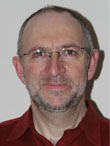
Carlo Bianco is a Fixed-term Tenure-Track Assistant Professor at Politecnico di Torino within the Department of Environment, Land and Infrastructure Engineering (DIATI) . His work spans Sanitary and Environmental Engineering with a focus on Groundwater Remediation using Nanotechnologies and Colloid Transport mechanisms. Research Highlights: Developing Nanoremediation techniques for Contaminated Aquifers Investigating Non-Exhaust Traffic Emissions in Poros Media Designing Eco-Friendly Formulations to reduce Pesticide Volatility Advancing Adsorption Models for VOC Mixtures in water treatment Scientific Contributions: Co-inventor of Advanced Oxidation-Reduction Systems for water contaminant removal Pioneering Electrochemical Remediation via Subsurface Currents Patents on Zero-Valent Metal Synthesis and Colloid Deposition Control Teaching Roles: Course Instructor for Nanotechnologies in Remediation (PhD, Civil and Environmental Engineering) Collaborator in Groundwater Engineering courses across multiple academic years Lecturer in Life Cycle Assessment for Sustainable Industry
Dr. Silvia Fiore is a Full Professor at Politecnico di Torino, Department of Environment, Land and Infrastructure Engineering (DIATI). She is an active member of the Interdepartmental Center CWC - CleanWaterCenter@PoliTo and serves on multiple PhD teaching committees for Civil and Environmental Engineering programs (2020-2025). Her academic profile spans research, teaching, and international collaborations including a Visiting Researcher position at McGill University (2016). Her research interests focus on environmental sustainability, circular economy, waste management, and water treatment. Key areas include treatment and recovery of municipal and industrial waste (e-waste, agro-industrial waste, end-of-life batteries), water potabilization, wastewater reuse, and environmental assessment of urban water systems. She employs methodologies such as Life Cycle Analysis, Carbon Footprinting, and technical-economic assessments of full-scale applications. Professor Fiore's recent publications (2024-2025) demonstrate a strong focus on circular economy applications, particularly in lithium-ion battery recycling, agricultural waste valorization, and sustainable materials management. Her work bridges theoretical research with practical applications, addressing critical environmental challenges through innovative engineering solutions. Scientific Recognition: Effective member of International Waste Working Group (IWWG), Germany (since 2010) Effective member of GEAM (Associazione Georisorse e Ambiente), Italy (since 2010) Learning to Teach (L2T) Open Badge from Politecnico di Torino (2023) Evaluator for national research programs (PRIN, FIRB, SIR, Rita Levi Montalcini) since 2012 Professor Fiore supervises multiple PhD students working on circular economy applications, battery recycling, and sustainable waste management. She teaches courses including 'Circular economy and environmental sustainability' and 'Battery systems for automotive and stationary applications' across multiple degree programs. Her research portfolio includes numerous competitive and commercial projects, including the EU-funded LEAD project (2025-2029) on anaerobic digestion and BEST4Hy on hydrogen technology recycling.
Renata Medeiros de Carvalho is an Assistant Professor at Eindhoven University of Technology (TU/e), affiliated with the Process Analytics and EAISI Health groups. She holds a PhD in Computer Science from Federal University of Pernambuco (Brazil), an MSc and BSc in Computer Engineering from University of Pernambuco, and has conducted postdoctoral research at UQAM (Canada). Her research focuses on adaptive and declarative business processes, with particular emphasis on healthcare and data privacy. Education: PhD in Computer Science, Federal University of Pernambuco (2015) MSc in Computer Engineering, University of Pernambuco BSc in Computer Engineering, University of Pernambuco Research Interests: Flexible business processes and Process Mining Declarative modeling (e.g., OCBC language) Healthcare process optimization GDPR compliance frameworks Key Projects: PATIENCE 2 : Patient-centric healthcare through nomadic sensing BPR4GDPR : GDPR compliance toolkit Awards: Xerox University Affairs Committee Grant NSERC Engage Grant Teaching & Leadership: Local coordinator for EIT Digital Data Science and Erasmus Mundus BDMA master programs Teaches courses like Advanced Process Mining and DBL Data Challenge
Sabrina Pitzalis is an Associate Professor at the University of Rome 'Foro Italico', Department of Human Motor Sciences and Health. She serves as Delegate for Gender Budget and Head of the SACS (Student Counselling and Help Desk). Her research focuses on cognitive neuroscience, functional neuroimaging, and brain mapping, with specializations in neural mechanisms of perception, sensorimotor functions, and brain plasticity induced by motor activity. She leads projects like the 2019 study on neuromuscular electrical stimulation effects. Her work integrates neuroimaging techniques to explore topics such as anticipatory brain activity and motion perception. Pitzalis teaches courses in sport psychology, neuroscience, and pedagogy, emphasizing the interplay between cognitive and motor systems. Her research highlights neural adaptations to sensory and motor interventions, including multifocal contact lenses and exoskeleton-assisted rehabilitation. Research Themes: Neural basis of perceptual and sensorimotor functions Brain plasticity and motor learning Anticipatory neural processing during action preparation Integration of visual and motor signals in spatial navigation Recent Contributions: Her articles (2022–2025) reveal insights into how brain circuits process self-motion, adapt to sensory interventions, and modulate during complex cognitive-motor tasks. These studies use advanced neuroimaging and electrophysiological methods to map functional brain dynamics. Ongoing work explores neurocognitive trade-offs in dual-task scenarios and the role of parietal cortex in visuomotor integration. Teaching and Leadership: Pitzalis contributes to degree programs in Sports Sciences (L22), Preventive Motor Activities (LM67), and Sports Technology (LM68). She promotes interdisciplinary approaches, combining neuroscience with sport pedagogy. Her leadership roles emphasize institutional quality assurance and student support initiatives. Labs/Teams: Collaborates within university labs specializing in motor neuroscience and neuroimaging, contributing to projects on neural adaptation mechanisms and clinical applications in rehabilitation.
Tyler Van Buren is an Assistant Professor in the Department of Mechanical Engineering at the University of Delaware, part of the College of Engineering. He holds a Ph.D., M.S., and B.S. in Aerospace and Mechanical Engineering from Rensselaer Polytechnic Institute (2008–2013). Previously, he served as a Research Scientist at Princeton University (2014–2019), focusing on bio-inspired propulsion, turbulence, and flow control. His research emphasizes unsteady flows and coherent structures, with a focus on fluid-structure interaction, bioinspired systems, and practical applications in energy efficiency and robotics. Key areas include vortex dynamics, synthetic jet actuation, and turbulent boundary layer control. Recent work explores optimal parameters for oscillating fins, vortex generator emulation, and eddy self-similarity in pipe flows. His studies bridge fundamental fluid mechanics with real-world impacts, such as improving vehicle design and energy-saving technologies. Lab activities concentrate on experimental methods for analyzing unsteady flows, including flapping propulsion systems and turbulence-induced phenomena. Collaborative projects address challenges in wind energy harvesting and biomedical fluid dynamics.
Francisco Santibanez is a Research Assistant Professor in the Department of Biomedical Engineering at the University of North Carolina. He holds a Ph.D. in Physics from Universidad de Santiago de Chile (2010). His research focuses on experimental physics, biomedical imaging, and non-linear wave propagation in complex media. Since joining the Pinton Lab in 2018, he has investigated ultrasound super-resolution, functional imaging, and shear wave dynamics in soft tissues. His work spans advanced ultrasound techniques, including transcranial imaging, volumetric imaging, and real-time monitoring of neurovascular responses. Key projects include developing sparse ultrasound arrays and addressing image-degrading effects in clinical settings. His contributions extend to interdisciplinary areas like granular dynamics and acoustic sensing for pest control. Notable research trends include advancing super-resolution imaging capabilities and exploring shock wave behavior in biological tissues. His publications reflect expertise in medical imaging modalities, wave propagation modeling, and hardware innovations for diagnostic applications. Labs/Teams: Active member of the Pinton Lab, collaborating on biomedical engineering and medical imaging projects. His work emphasizes translational research with potential for clinical impact in neuroimaging and oncology monitoring.
Marinko Sarunic is an Adjunct Professor at the School of Engineering Science , Simon Fraser University . He holds a PhD in Biomedical Engineering from Duke University and has been recognized as a Michael Smith Foundation for Health Research Scholar . His research focuses on biomedical imaging , particularly optical coherence tomography (OCT) , microscopy , and low-coherence interferometry , with applications in diabetic retinopathy , Alzheimer’s disease , and age-related macular degeneration . Dr. Sarunic's work spans adaptive optics , deep learning , and sensorless OCT systems , emphasizing clinical translation and open-source software development (e.g., OCTAVA ). His Google Scholar publications highlight multimodal imaging , vascular heterogeneity analysis , and AI-driven diagnostics for retinal diseases. His contributions include the Michael Smith Foundation for Health Research Scholar award. Though not currently teaching courses, his collaborations and leadership in retinal imaging and medical device innovation are pivotal for advancing non-invasive diagnostics in neurodegenerative and diabetic conditions .
Dr. Katie McConky is a Professor and Department Head of Industrial and Systems Engineering at Rochester Institute of Technology (RIT). She holds a Ph.D. in Industrial Engineering from SUNY Buffalo and prior experience as a research scientist at CUBRC Inc., where she worked on military and data mining projects. Her research focuses on operations research, machine learning, and energy systems optimization, addressing challenges in combinatorial optimization, cyberattack forecasting, and sustainable energy management. She has secured funding from agencies like ONR, AFRL, NASA, and NYSERDA. Education: BS and MS (RIT), Ph.D. (SUNY Buffalo) Key Roles: Department Head, Faculty Member, Research Scientist (CUBRC) Her work spans applications such as kidney exchange optimization, rover mission planning, and energy demand forecasting. She emphasizes interdisciplinary collaboration in her research, integrating machine learning with traditional optimization techniques. Dr. McConky’s publications highlight advancements in forecasting methodologies for cyber threats, energy systems, and transportation logistics. She teaches courses including Operations Research and Forecasting Methods, emphasizing practical software tools like Gurobi. Her contributions include patents on remote activity detection and energy storage optimization. Her research is supported by grants from federal agencies and industry partners, reflecting her expertise in both academic and applied domains.
Gertrud Haidvogl serves as Associate Professor at the University of Natural Resources and Life Sciences, Vienna (BOKU), affiliated with the Institute of Hydrobiology and Water Management (IHYAM) and Institute of Social Ecology (iISEC). Her research bridges environmental history and aquatic ecology to examine long-term socio-ecological transformations in river systems, with special focus on the Danube River Basin. She holds teaching authorization in Historical Aquatic Ecology and Environmental History and maintains active scholarly output through 2025. Her research interests encompass historical ecology of rivers, socio-ecological river dynamics, and human-river coevolution. She investigates how industrialization, urbanization, and infrastructure projects have altered river connectivity, fish migration, and floodplain ecosystems over centuries. Her interdisciplinary methodology integrates archival research, archaeological data, ecological modeling, and policy analysis to reconstruct historical baselines and inform contemporary river restoration. Key themes include longitudinal connectivity disruption, biodiversity loss in freshwater systems, and the evolution of flood control paradigms. Analysis of her 2022-2025 publications reveals increasing emphasis on policy-relevant research, particularly regarding EU Nature Restoration Law implementation and transboundary river management. Her work consistently applies historical perspectives to establish ecological reference conditions while addressing contemporary challenges like climate change adaptation and free-flowing river restoration. The interdisciplinary nature of her scholarship is evident in collaborations spanning environmental history, ecology, hydrology, and social sciences. Dr. Haidvogl actively participates in the FWF Doctoral Program "Industrialized River Landscapes" under the HR21 Doctoral School, indicating her role in supervising doctoral candidates and securing competitive research funding. Her collaborations with the International Association for Danube Research (IAD) demonstrate engagement in transnational research networks addressing basin-scale challenges. While specific grant details aren't provided, her leadership in major interdisciplinary programs reflects substantial research funding. Embedded within BOKU's Hydrobiology and Water Management group, she contributes to interdisciplinary teams developing tools like the River Network Toolkit (RivTool) and iPODfish framework for historical fish occurrence reconstruction. Her work frequently involves partnerships with historians, ecologists, and policymakers to address complex river management challenges in urbanizing landscapes.
Prof. Andreas Ulbig is a Universitätsprofessor at RWTH Aachen University's Institute of Electric Installations and Networks, Digitization and Energy Economics (IAEW), situated in Aachen, Germany. His work focuses on advancing smart grid technologies, energy transition strategies, and cybersecurity in power systems. He is affiliated with the Department of Active Energy Distribution Networks within the Faculty of Electrical Engineering and Information Technology. Ulbig's research emphasizes resilient communication protocols, grid topology identification, multi-use energy storage systems, and electrification of transportation. His contributions include co-authoring studies on adaptive protection systems, local energy markets, and cyber-physical resilience frameworks. He leads projects addressing municipal energy system transformations and grid-friendly energy sharing concepts. Ulbig holds a doctoral degree (Dr.) and has extensive experience in energy infrastructure digitization and grid stability. His recent publications span 2023–2025, focusing on technical and economic aspects of energy systems, with particular attention to cyberattack simulations, distribution grid flexibility, and hydrogen integration in gas networks. Collaborations include IEEE conferences and institutions like Westenergie AG, where he contributed to studies on grid-forming converters. His research is methodologically diverse, combining machine learning, stochastic control, and experimental validation with industry partners. In academic service, Ulbig advises on energy policy implications and co-supervises research projects at IAEW. His work bridges theoretical advancements with practical grid solutions, addressing challenges such as curative distribution measures, tariff design for local markets, and infrastructure expansion costs. Key technical interests include broadband powerline communication, digital twin applications, and optimization of DC/AC grid integration.
Zandrie Borneman is an Associate Professor at Eindhoven University of Technology's Department of Chemical Engineering and Chemistry, specializing in membrane materials and processes. His research focuses on designing sustainable polymer membranes for molecular separation and process applications, emphasizing 'recycle, reuse, reduce' principles. He holds a PhD from the University of Twente (2006) and previously worked at Wageningen University (1995–2001) and the University of Twente's Membrane Technology Group (2001–2016). Education: BSc in Laboratory Engineering, Saxion University of Applied Sciences (1991) PhD in Membrane Technology from University of Twente (2006) Research Interests: Membrane chemistry, morphology optimization, sustainable separations, and applications in energy storage (e.g., flow batteries) and waste valorization. His work aligns with UN SDGs on clean energy and sustainable consumption. Recent Trends in Articles: Focus on recyclable membranes, advanced separation technologies (e.g., organic solvent nanofiltration), and energy storage systems like acid-base flow batteries. Collaborations highlight interdisciplinary approaches in materials science and environmental engineering. Grants/Projects: Active in EU-funded projects like NEWBAT (2023–2027) for cost-effective redox flow batteries and PHA recovery initiatives (2022–2026). Manages the Membrane Materials and Processes group, contributing to 87+ research outputs. Labs/Teams: Leads the Membrane Materials and Processes research group, collaborating with EIRES (Eindhoven Research on Energy and Sustainability). Engages in cross-disciplinary teams for membrane innovation and sustainable process development.
Tao Chen is an Associate Professor in the Department of Economics at the University of Waterloo. His research focuses on environmental engineering challenges, particularly membrane fouling mechanisms in cold-climate water treatment systems, operational parameter optimization (e.g., temperature, hydraulic retention time), and sustainable wastewater management strategies. He holds cross appointments and is affiliated with groups related to interdisciplinary environmental research. Research interests include membrane technology applications in tertiary treatment, temperature effects on fouling dynamics, and process modeling for biological reactors (e.g., MBBR, IFAS). His work emphasizes practical solutions for energy-efficient and climate-adaptive water systems, particularly in cold regions. Key trends in his publications (2014-2024) highlight advancements in understanding fouling mechanisms, optimizing operational variables, and developing models for sustainable wastewater treatment. Notable topics include ultrafiltration membrane performance under low temperatures, soluble microbial products in activated sludge systems, and partial nitrification-anammox processes. No scientific awards or grants are explicitly listed in the provided text. No advisee students are mentioned, but his research likely involves graduate student collaboration. Lab or team affiliations are not detailed in the available information.
Prof. Ferdinanda Ponci is a Professor at RWTH Aachen University, leading the Department of Monitoring and Distributed Control for Energy Systems. Her work focuses on smart grid technologies, renewable energy integration, and control systems for modern power networks. She actively contributes to advancing grid resilience, EV charging infrastructure, and cybersecurity in energy systems. Key research interests include hybrid AC-DC grids, distributed energy resources coordination, and application of AI in grid management. She has pioneered frameworks like datafev for EV charging management and SMU platforms for synchronized measurements. Her interdisciplinary approach also addresses diversity in engineering and societal impacts of energy systems. Prof. Ponci’s laboratory activities involve hardware-in-the-loop testing, blockchain-based grid solutions, and development of educational toolboxes for emerging technologies. She collaborates on projects such as submarine transmission systems and grid interoperability testing, contributing to both academic and industrial advancements in power systems engineering.
Professor John Gunn is an Honorary Professor at the University of Birmingham's School of Geography, Earth and Environmental Sciences. He specializes in karst environments and limestone geology, combining scientific research with active speleology. His roles include President of the British Cave Research Association and Joint Editor of their journal, Cave and Karst Science . Gunn has explored caves in over 50 countries, contributing to global understanding of cave ecosystems and geoheritage conservation. His research interests focus on karst hydrogeology, cave climate dynamics (e.g., radon and CO₂), and the evolution of karst landforms. He emphasizes interdisciplinary approaches to address environmental challenges in karst regions, such as water resource management and biodiversity protection. Recent studies include high-resolution monitoring of karst systems and the impact of hydrological extremes on cave ecosystems. Gunn’s publications span hydrogeology, speleothem studies, and environmental toxicology, with a geographic focus on the UK and international sites like Ethiopia. He advocates for the conservation of cave resources and integrates fieldwork with advanced analytical techniques.
Georgios Portokalidis is an Associate Research Professor at IMDEA Software Institute and Visiting Research Professor at Stevens Institute of Technology. He leads research in software systems security with focus on binary analysis, software hardening, and operating system security. His research develops practical defenses against software vulnerabilities through techniques like binary debloating, system call filtering, and hardware-assisted security. Current projects explore Rust language security, processor-assisted protection mechanisms, and vulnerability mitigation through code reduction. Publication trends show evolution from foundational binary analysis to applied security hardening, with recent emphasis on Rust security, hardware-assisted defenses, and real-world system protection. Work demonstrates consistent focus on practical, deployable security solutions. He has supervised numerous PhD students and postdocs, currently mentoring researchers at IMDEA. His group investigates binary analysis, software debloating, and system hardening techniques. Major grants include DARPA YFA (2021-2023) and ONR funding (2017-2022) supporting adaptive binary debloating research. Leads the systems security research group at IMDEA Software Institute, collaborating with international partners. Maintains active research partnerships and regularly contributes to top security conferences as program committee member.