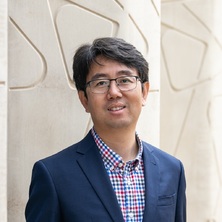
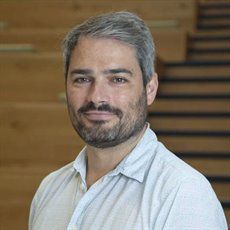
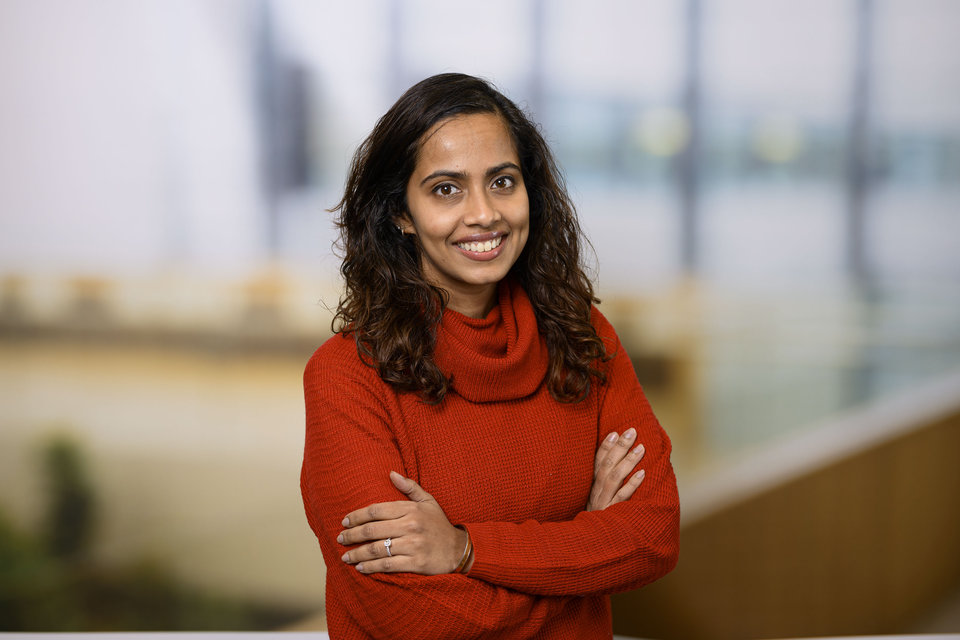
Prof. Dr. Jörg E. Drewes is a Full Professor and Chair at the Research Institute for Urban Water Management, Technical University of Munich (TUM), Germany. He also serves as Academic Program Director for Environmental Engineering at TUM and is a co-founder of Waterloop Solutions GmbH. His work spans advanced water treatment technologies, wastewater reuse, and environmental health surveillance. Affiliations : TUM, Colorado School of Mines, King Abdullah University of Science and Technology, UNSW Water Research Centre Research focuses on advanced oxidation processes , membrane fouling mitigation , micropollutant removal , and wastewater epidemiology for public health. His team develops integrated systems for water-energy-food nexus applications and graphene oxide-based treatment solutions. Recent publications address PFAS remediation , UVC-LED pre-treatment for biofouling control, and GIS-based wastewater surveillance models . Awards include the Bayerische Staatsmedaille (2023) and William Dunbar Medal (2022). 2023 : Bayerische Staatsmedaille 2022 : William Dunbar Medal 2018 : IWA Fellow He leads the Nexus@TUM initiative and contributes to EU water resilience strategies. Collaborations include projects in Germany, China, India, and Spain, focusing on climate-resilient water systems and resource recovery .
Min Hu is an Assistant Professor in the Department of Economics, Philosophy, and Political Science at the University of British Columbia, Okanagan Campus. He holds an adjunct position at Dalhousie University's School of Health Administration. His primary research focuses on Health Economics, Applied Microeconomics, and Labour Economics, with an emphasis on vulnerable populations in Canada, Indigenous health, income inequalities, and cancer economics. He teaches courses in Microeconomics, Health Economics, and Statistics. Education: PhD in Economics (2019), Dalhousie University; Postdoctoral Fellowship in Health Economics (2019–2020), Dalhousie University. Previous degrees include an M.A. (2014–2016) and B.A. in Economics from Dalhousie University. Research interests include the socio-economic determinants of health disparities, particularly among Indigenous peoples and immigrants, and the economic impacts of cancer-related policies. He employs applied econometric methods to analyze labor market outcomes and social policy effectiveness. His recent articles explore sustainable biomass utilization, energy policies, and environmental engineering innovations. Key themes include biomass supply chain optimization, CO₂ reduction strategies, and waste-to-energy technologies. Scientific Awards: Recipient of SSHRC New Frontiers Grant (2023–2026), CIHR Team Grant (2024–2026), and multiple UBC startup grants. His work is supported by SSHRC, CRDCN, and Indigenous Services Canada. He advises students in Economics and Global Studies (IGS) programs. Grants and funding span health economics, Indigenous well-being, and sustainable energy systems. Collaborations include interdisciplinary teams in health administration and environmental policy. Labs/Teams: Engaged with UBC's Okanagan Sustainability Initiatives and Dalhousie's Health Economics Research Group. Affiliated with professional organizations like the American Economic Association and Canadian Health Economics Study Group.
Professor Jianhua Guo is a faculty member at The University of Queensland (UQ), holding the position of Professor and UQ Amplify Fellow in the Australian Centre for Water and Environmental Biotechnology (ACWEB). He is also the ACWEB Deputy Director - Research. His research focuses on integrating process engineering, environmental microbiology, and biotechnology to develop sustainable solutions for contaminant removal in water and wastewater systems. He is a pioneer in studying the environmental dimension of antimicrobial resistance (AMR), particularly how non-antibiotic pharmaceuticals and chemicals contribute to AMR spread. His groundbreaking work has been featured in over 100 media outlets and has secured over $14M in research funding. He has published over 200 peer-reviewed articles in journals like Nature Microbiology , Water Research , and Environmental Science & Technology . His accolades include the 2013 DECRA and 2017 ARC Future Fellowship. He serves as an editor for Journal of Hazardous Materials and Water Science & Technology . Research Interests Environmental AMR and microbial ecology Methane-based biotechnology and bioconversion Nitrogen cycling microorganisms Bioremediation and biofilm reactors Microplastics and health risks Wastewater treatment innovations Grants & Funding $14M+ in ARC Discovery/Linkage grants and industry partnerships ARC Training Centre for Environmental and Agricultural Solutions to Antimicrobial Resistance (CEA-StAR) Dual-membrane upgrading and anaerobic alkane oxidation projects Awards 2013 DECRA 2017 ARC Future Fellowship Supervision Prof. Guo actively supervises PhD and master’s students in areas like AMR mitigation, methane-based bioreactors, and microbial ecology. Notable supervised projects include studies on antibiotic resistance in wastewater, novel disinfection processes, and microbial oxidation of gaseous alkanes. Labs & Teams He leads research teams within ACWEB and collaborates with the Queensland Alliance for Environmental Health Science. His lab focuses on cutting-edge technologies like membrane biofilm reactors and gas fermentation systems.
Professor Petri Kuosmanen is affiliated with Aalto University as a faculty member of the School of Engineering and holds a position in the Department of Energy and Mechanical Engineering and the Mechatronics unit. Doctoral Degree in Engineering and Technology, Helsinki University of Technology (2004) Licentiate Degree in Engineering and Technology, Helsinki University of Technology (1992) Master's Degree in Engineering and Technology, Helsinki University of Technology (1988) His research focuses on Industrial Internet and Rotor Dynamics , with significant contributions to elevator systems , hydraulics , and wastewater treatment plant design . Recent work includes optimizing natural frequencies in rotor systems and developing digital twins for engineering education . Key trends in his 2024 publications include: Rotor dynamics and vibration analysis Smart data validation in industrial IoT networks Cold-climate adaptations for wastewater treatment Automated fiber optics coating mechanisms Energy efficiency in aeration systems As Principal Investigator, he leads projects like DRIVE FORWARD (2024–2027) and GOOD (2021–2024), focusing on electrified mobile machinery. He actively collaborates with networks such as DAAAM International (Chair) and European CLUSTER-university network (Member).
Bruño Fraga is an Assistant Professor in the Department of Civil Engineering at the University of Birmingham, part of the School of Engineering. He specializes in Computational Fluid Dynamics (CFD) with a focus on turbulent and multiphase flows, particularly in applications like indoor air quality, water treatment, and airborne pathogen transport. His research group develops models such as Multiflow3D, addressing challenges in multiphase flow dynamics and environmental engineering. Education: MEng in Environmental Engineering (University of Santiago de Compostela, 1st class honors), MSc in Applied Math and Numerical Simulation (University of A Coruña), PhD in Civil Engineering (Universities of A Coruña and Chalmers). Research Interests: CFD modeling, bubble-induced turbulence, indoor air quality, water treatment technologies, and multiphase flow dynamics. Dr. Fraga leads major projects such as Fusion Forest (£1m, UKRI) and the IAQ-EMS initiative (£1m, Met Office), focusing on indoor air quality and pathogen transmission modeling. His work includes collaborations with organizations like Deltares Institute and Severn Trent, addressing wastewater treatment and environmental challenges. He is co-leader of the Fluids Research Group and the Water Technology stream at the University of Birmingham’s Water Centre. Scientific Awards: National Outstanding Graduate Prize (2011). Advising & Grants: Supervises graduate students in CFD and multiphase flow research. Oversees grants totaling over £2.1M, including fusion forest and buildair projects. Focuses on translating CFD expertise into real-world solutions for public health and environmental sustainability. Labs & Teams: Leads the Multiflow3D development team and collaborates with the Fluids Research Group and Water Technology stream.
Ferhan Çeçen is a Professor at the Institute of Environmental Sciences, Bogazici University, Istanbul, where she has maintained an active research and teaching role since 1999. Her career spans over three decades of contributions to environmental engineering with particular emphasis on advanced water treatment technologies and pollutant behavior in biological systems. Her academic foundation includes: B.S. in Chemical Engineering from Bogazici University (1984) M.S. in Environmental Engineering from Istanbul Technical University (1993) Ph.D. in Environmental Engineering from Istanbul Technical University (1990) Her research program centers on Water and Wastewater Treatment, Environmental Biotechnology, Adsorption Processes, and the Effects of Hazardous Substances on Biological Treatment. She has pioneered investigations into extracellular polymeric substances (EPS) dynamics, nanomaterial impacts on microbial communities, and the integration of adsorption with biological treatment for micropollutant removal. Her work bridges fundamental microbiological mechanisms with practical engineering applications for sustainable water resource management. Analysis of her publication record reveals consistent focus on pharmaceutical biodegradation mechanisms, nanosilver toxicity in activated sludge systems, and granular activated carbon applications for emerging contaminants. Her research demonstrates sophisticated integration of experimental biodegradation studies with predictive modeling frameworks, particularly BIOWIN models, to address complex challenges in modern wastewater treatment. She has secured significant research funding through Bogazici University's Scientific Research Projects Fund (BAP) and TÜBİTAK, directing projects including "Removal of Micropollutants From Drinking Water by Granular Activated Carbon" (2019-present), "Effect of nanosilver on biological treatment systems" (2015-2016), and "Microbial products and metal inhibition in biological systems" (2012-2015), demonstrating sustained leadership in addressing critical water quality challenges.
Samarpita Roy is an Assistant Professor at TU Delft's Faculty of Applied Sciences, leading the Environmental Biotechnology department's Samarpita Roy Group. Her research focuses on microbial ecology in engineered bioprocesses, integrating metagenomics and quantitative physiology to study microbial metabolisms and community interactions. Key projects include exploring phototrophic and polyphosphate-accumulating organisms in wastewater treatment for nutrient/resource recovery. She actively seeks industrial collaborations and is hiring PhD candidates in metagenomics/microbial ecology. Research emphasizes understanding microbial community dynamics under fluctuating conditions, developing sequencing/data analysis workflows, and applying findings to enhance bioprocess efficiency. Her work aims to advance circular bioeconomy solutions through innovative biotechnology approaches.
Andy Ball is a Distinguished Professor in the School of Science at RMIT University, specializing in environmental microbiology and biotechnology. He leads the ARC Training Centre for the Transformation of Australia’s Biosolids Resource and has held key roles at institutions including the University of Essex and Flinders University. His research focuses on bioremediation, organic waste treatment, and environmental pollution solutions, with over 300 peer-reviewed publications and significant industry collaboration. Andy's academic career spans 30 years, with roles such as Director of the Centre for Environment and Society at Essex and Director of Flinders Bioremediation. He has attracted >$22M in research grants, particularly in applied environmental microbiology. His awards include the Royal Society of Victoria Medal (2021) and RMIT Research Excellence Award (2018). Research interests emphasize sustainable remediation of contaminated environments, leveraging microbial ecology and biotechnology. His teaching spans environmental science and biotechnology programs at RMIT. Andy advises on projects addressing bioremediation, bioenergy, and pathogen survival, with active collaborations with industries like Shell and Melbourne Water.
Ferhan Çeçen is a Professor at the Institute of Environmental Sciences, Boğaziçi University (Istanbul, Turkey). He has held academic positions since 1990, including Professor since 1999, and has conducted research in environmental engineering and biotechnology. His expertise includes water/wastewater treatment, environmental biotechnology, and adsorption processes. Education: Ph.D. in Environmental Engineering, Istanbul Technical University (1990) M.S. in Environmental Engineering, Istanbul Technical University (1993) B.S. in Chemical Engineering, Boğaziçi University (1984) Research Interests: Prof. Çeçen focuses on advanced water treatment technologies, including nanosilver effects on biological systems, biodegradation of pharmaceuticals, and adsorption using activated carbon. His work emphasizes practical solutions for hazardous pollutant mitigation in biological treatment systems. Key areas include: Environmental biotechnology applications Biodegradation kinetics and modeling Activated carbon integration in wastewater systems Toxicology of nanomaterials in water treatment Recent Projects (2015–2023): He leads projects funded by Boğaziçi University BAP and TÜBİTAK, including studies on micropollutant removal via granular activated carbon, nanosilver effects on biological systems, and biodegradation of pharmaceuticals. These projects address emerging contaminants and sustainable treatment methods. Grants and Advising: His grants include BAP-funded research on micropollutant adsorption and TÜBİTAK support for microbial product inhibition studies. He has advised numerous graduate students on environmental engineering topics, though specific student names are not listed in the provided texts. Labs and Teams: His research group collaborates on experimental and computational studies, focusing on lab/pilot-scale testing of water treatment innovations. Key facilities include Boğaziçi University's environmental engineering labs and partnerships with institutions like Munich Technical University.
Dr. Mario Rebosura serves as a Postdoctoral Research Fellow at the Australian Centre for Water and Environmental Biotechnology (ACE), part of the Faculty of Engineering, Architecture and Information Technology at the University of Queensland. His work bridges fundamental research and practical engineering solutions for sustainable urban water systems. His academic credentials include: Bachelor of Science in Chemical Engineering (2009) from the University of the Philippines Los Banos Masters of Engineering in Environmental Engineering (2012) from the Catholic University of Korea PhD in Chemical Engineering (2020) from the University of Queensland Rebosura specializes in integrated urban water management with emphasis on anaerobic technologies and resource recovery. His research investigates iron salt applications throughout urban water cycles, contaminant fate analysis, and advanced wastewater treatment processes. He combines chemical engineering principles with environmental science to develop circular economy solutions that transform waste streams into valuable resources while improving infrastructure resilience. His publication record reveals consistent focus on optimizing iron-based interventions across the urban water system—from sewer networks to treatment plants—with recent expansion into micropollutant management and enhanced anaerobic digestion. This trajectory demonstrates increasing sophistication in addressing complex water-energy-resource nexus challenges through interdisciplinary experimentation. Rebosura actively contributes to scholarly discourse as Editor for the International Research Journal on Innovations in Engineering, Science and Technology and as a reviewer for leading water research journals. His conference presentations have generated international recognition through speaking invitations and workshop leadership. He has secured significant research funding including: Australian Research Council project 'An integrated approach to iron salt use in urban water systems' (2014–2019) Meat & Livestock Australia initiative 'Wastes to Profits: Advanced Anaerobic Digestion' (2018–2022) As a core member of ACE, Rebosura leverages world-class facilities for laboratory and pilot-scale water research, collaborating within multidisciplinary teams to advance sustainable water management solutions for global challenges.
Associate Professor Gilda Carvalho is a leading researcher at the Australian Centre for Water and Environmental Biotechnology (ACWEB) and the School of Chemical Engineering at the University of Queensland. She leads the Drinking and Recycled Water research group and specializes in Environmental Bioengineering , focusing on microbial processes for water/wastewater treatment and resource recovery. Research areas: Chemicals of Emerging Concern (CEC), Biological Nutrient Removal (BNR), biofilm systems, membrane processes, and polyhydroxyalkanoate (PHA) production Key methodologies: Molecular tools linking microbial ecology to process performance Academic output: Over 90 peer-reviewed papers and >40 multinational research projects with industrial partners Educational impact: Coordinator of Postgraduate Programs in Urban Water Engineering and supervisor of >20 PhD students Her recent research explores phage-based biofilm disruption , micropollutant removal via advanced oxidation, and resource recovery from waste streams. Current funding includes projects on biofilm solutions for drinking water and sustainable wastewater reuse. She integrates multidisciplinary approaches across biotechnology, chemical engineering, and environmental science to address global water challenges.
Professor Bing-Jie (Bruce) Ni is an Adjunct Professor at the University of Technology Sydney (UTS) within the School of Civil and Environmental Engineering and a full Professor at UNSW Sydney. He is an internationally recognised leader in environmental engineering, wastewater treatment, greenhouse-gas mitigation, microplastics fate, electrocatalysis and sustainable energy systems. Education PhD in Environmental Engineering, University of Science and Technology of China, Hefei (2005–2009) Research Interests Professor Ni’s research integrates process engineering, microbial biotechnology, materials science and mathematical modelling to develop sustainable technologies for high-efficiency pollutant removal, minimal carbon footprint and maximal energy recovery from wastewater. He is a global pioneer in: Modelling and control of nitrous oxide (N₂O) and methane (CH₄) emissions from wastewater systems, Micro- and nano-plastics ecotoxicity and mitigation in anaerobic digestion, Transforming sewage sludge into high-value liquid bio-energy (medium-chain fatty acids and long-chain alcohols), Designing cost-effective electrocatalysts from natural minerals for green hydrogen production and wastewater electrolysis. Research Output & Impact Over the last decade he has published 2 research books, 30 book chapters and >400 refereed journal papers , including 35 in Environmental Science & Technology and 85 in Water Research . His work has influenced global policy: the IPCC adopted his nitrous-oxide-emission model in 2019 to revise national greenhouse-gas inventories for the first time in 13 years. Awards & Recognition ARC Future Fellowship & ARC DECRA Fellowship Clarivate Analytics Highly Cited Researcher (Web of Science) Royal Society of Chemistry Highly Cited Researcher (2020–present) Mendeley Data Top 2 % Cited Researchers worldwide Listed among “Australia’s Most Innovative Engineers” (Engineers Australia, 2018) 50+ additional awards including Scopus Young Researcher Award, South Australian Water Awards, UQ Research Excellence Awards, and Outstanding Doctoral Dissertation Awards. Research Funding & Leadership He has secured ≈ AUD $10 million in competitive funding (six major ARC grants plus >20 government, university and industry projects). He serves as: Lead Guest Editor, Water Research Editorial Advisory Board, Environmental Science & Technology Associate Editor for Journal of Cleaner Production , Environmental Chemistry Letters , Environmental Research , Journal of Environmental Management Editorial Board member for five additional high-impact journals. Teaching & Supervision At UTS he teaches Renewable Energy Technologies , Environmental and Sanitation Engineering , Process Dynamics and Control , and Water and Wastewater Treatment . He is available to supervise Masters and PhD students in environmental biotechnology, process modelling and sustainable energy systems. Laboratory & Commercial Translation He heads active research teams at both UNSW and UTS and is the inventor of >10 granted patents , some of which are currently being commercialised to deliver real-world impacts in greenhouse-gas-neutral wastewater treatment and renewable energy production.
Katrin Schollbach is an Assistant Professor in the Building Materials department at Eindhoven University of Technology's School of Built Environment . Her research focuses on sustainable utilization of industrial by-products in construction materials, particularly steel slags from fossil-free steelmaking processes. Expertise: BOF slag activation, carbonation resistance, heavy metal immobilization, eco-friendly binders Projects: Leading the SLAK project (2023-2029) on future slags from fossil-free steelmaking Collaborations: Active international collaborations in construction materials research Schollbach's work explores the chemical and mineralogical properties of industrial waste materials, optimizing their performance in building applications. Key research themes include chemical activation techniques, carbonation processes, and material characterization using scanning electron microscopy and X-ray diffraction. Recent publications highlight her innovative approaches to BOF slag activation, sewage sludge-based sealing materials, and marine infrastructure applications. Her research output demonstrates consistent growth with 89 total publications and collaborations across multiple disciplines. She contributes to education through courses like Climate-responsive Building Design and Masterproject BPS Research , and maintains active research partnerships with institutions worldwide.
Terese Løvås serves as Vice Dean of Research and Innovation at the Faculty of Engineering, Norwegian University of Science and Technology (NTNU), where she leads strategic development of research and innovation activities. She concurrently holds the position of Professor of Combustion and Thermodynamics within the Department of Energy and Process Engineering. Her leadership responsibilities include oversight of Centers of Excellence, Horizon Europe projects, and PhD researcher training. Her research focuses on combustion engineering and alternative fuel technologies , particularly investigating ammonia and hydrogen combustion for zero-emission engines, biomass gasification processes, and reactive multiphase flow modeling. She heads the Engine Lab at NTNU and teaches Thermodynamics, Heat, and Combustion courses. Her work bridges theoretical modeling with experimental validation in sustainable energy systems. Løvås actively contributes to major research initiatives including LowEmission (SFI center), ACTIVATE (ammonia-powered agricultural vehicles), AMAZE (ammonia zero-emission), and CAHEMA (marine ammonia/hydrogen engines). Her publications reveal strong trends in ammonia combustion chemistry , emissions reduction , and advanced computational modeling for sustainable fuel systems, with increasing focus on nitrogen oxide formation mechanisms and dual-fuel strategies. Member of the Board of Directors, Combustion Institute (2022–present) Joint Editor, Proceedings of the Combustion Institute (2019–present) Alumni Fellow in Engineering, Churchill College, Cambridge University As Vice Dean, she manages NTNU's Research and Innovation Committee and represents the faculty in NTNU's Research and Innovation Committee. She supervises multiple PhD candidates and leads international collaborations through projects funded by the Norwegian Research Council, Nordic Energy Research, and EU programs. Her laboratory work focuses on optical engine diagnostics and advanced combustion testing. Løvås maintains active industry engagement through her leadership in the ComKin Research Group and membership in the Institute of Physics and Scandinavian-Nordic Section of the Combustion Institute. Her current work emphasizes practical implementation of ammonia-fueled engine technologies for marine and agricultural applications.
Christopher Lawson is an Assistant Professor in the Department of Chemical Engineering and Applied Chemistry at the University of Toronto, affiliated with the Faculty of Applied Science and Engineering. He serves as Principal Investigator of the Microbiome Engineering Lab and is part of BioZone – the Centre for Applied Bioscience and Bioengineering. His research focuses on engineering anaerobic microbiomes for resource recovery from waste streams using systems biology, synthetic biology, and machine learning approaches. B.A.Sc., M.A.Sc. (University of British Columbia) Ph.D. (University of Wisconsin-Madison) Postdoctoral Training (Berkeley Lab) Lawson's work addresses the challenge of controlling complex microbial interactions in engineered systems to enable scalable biotechnologies for renewable energy, chemicals, and materials. His lab develops high-throughput methods integrating automation and computational tools to optimize microbiome assembly and metabolic fluxes. Recent publications highlight advancements in metabolic modeling , isotope tracing , and systems-level analysis of anaerobic microbiomes, with applications in wastewater treatment , anammox granules , and bioenergy production . His research bridges fundamental microbiology with industrial-scale bioprocess engineering. Scientific Awards ISME/IWA BioCluster Rising Star Award (2022) Jacobs Engineering Group/AEESP Outstanding Doctoral Dissertation Award (2020) Wesley Eckenfelder Graduate Research Award (2019) WEF Canham Graduate Studies Scholarship (2018) NSERC Post-Graduate Scholarship – Doctoral (2014) Lawson actively mentors students and postdocs, emphasizing technical rigor, communication skills, and independence. His lab collaborates within BioZone and with industry partners to advance "team science" principles. Current projects focus on creating engineered microbiomes for commercial-scale waste valorization.