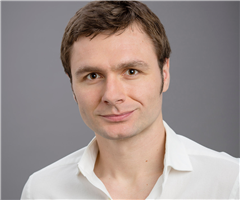
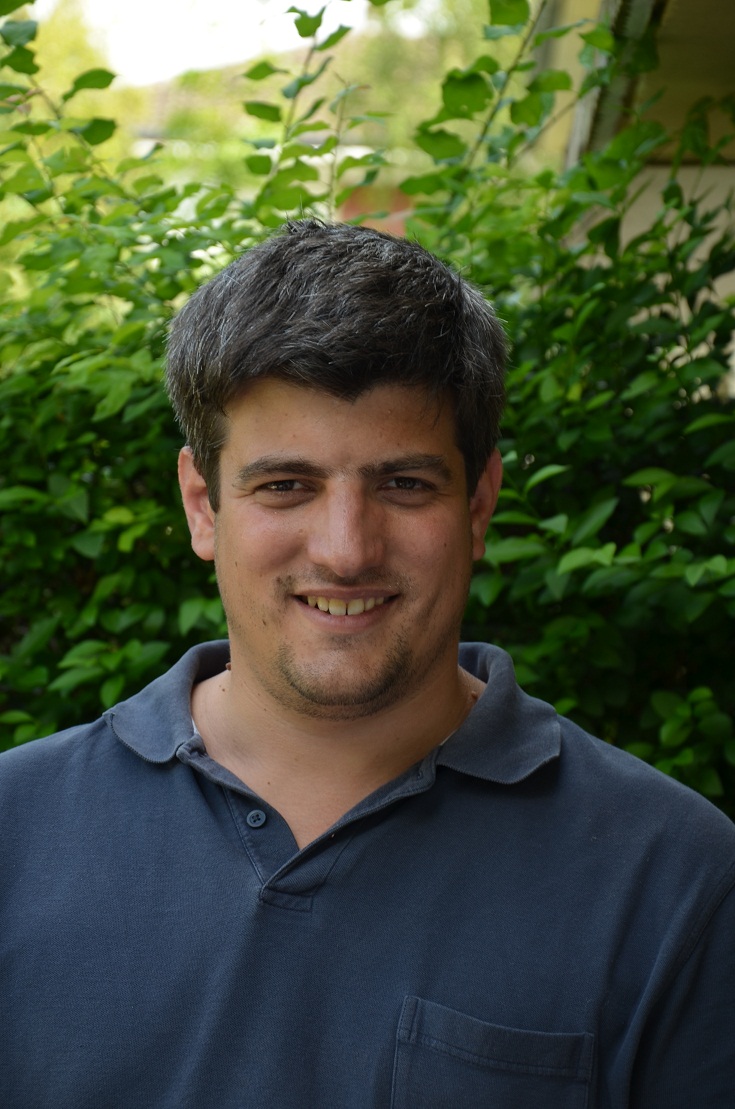
Ivan Dokmanic is an Assistant Professor at the Coordinated Science Laboratory (CSL) within the University of Illinois . His research bridges signal processing , machine learning , and applied inverse problems , with a focus on acoustics, biomedical imaging, and distance geometry. Current Role : Assistant Professor, CSL Email : dokmanic@illinois.edu Research Interests : Dokmanic explores machine learning applications in inverse problems , particularly distance geometry for molecular imaging and acoustics . His work includes unlabeled sensing , where distances between points are known but their arrangement is not. This has implications for powder diffraction , indoor localization , and echo modeling . Article Trends : His recent publications emphasize distance geometry in machine learning , acoustic signal processing , and inverse problem theory . Key areas include molecular imaging , audio encryption , and sensor positioning . Collaborative work spans medical imaging , cyberphysical systems , and geometric invariants . 2016 Google Faculty Award NSF Grant (1 year, $157,079) Students and Grants : Dokmanic mentors PhD students like Puoya, Shuai, and Anadi. His research is funded by the National Science Foundation , Google , VISA , and nVidia .
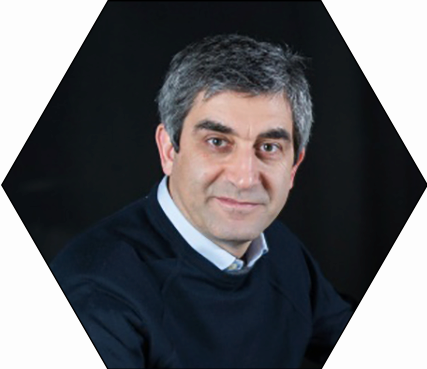
Prof. Dr. Patrick Huber is a leading physicist and Institute Director at the Hamburg University of Technology (TUHH) , heading the Institute for Materials and X-Ray Physics (M-2) . He also leads the High-Resolution X-Ray Analytics of Materials group at DESY through a cooperative professorship. His research spans condensed matter physics , nanoporous materials , and X-ray analytics , with significant contributions to molecular water science and soft matter in confinement . Education: PhD in Physics (1999, Saarland University), Diploma in Physics (1995, Saarland University) Professional Career: Full Professor at TUHH (2020-present), Member of CRC 1615 (2023-present), Spokesperson for CMWS (2024-present), Cluster of Excellence BlueMat (2025) Research Interests focus on multi-scale material behavior under extreme confinement, particularly hierarchical porous silicon and silica systems . His work examines adsorption-induced deformation , elastocapillarity , fluid transport in nanopores, and metamaterial design principles using electrolytes , polymers , and liquid crystals . Fundamental studies include fluid interface thermodynamics and microscopic hydrodynamics . Scientific Awards include the Top Reviewer Award (2018) from Applied Physics Letters and the Dr.-Eduard-Martin Award (2000) for his dissertation. He contributes to 130+ publications with an h-index of 36 (2021). Advising and Grants involve supervising 18 doctoral and master's students , including Manuel Brinker , Marc Thelen , and Stella Gries . He participates in Collaborative Research Centre CRC 1615 , Cluster of Excellence EXC 3120 BlueMat , and the United Nations University Hub on Climate Engineering . Laboratory and Teams include the Institute for Materials and X-Ray Physics (M-2) at TUHH, the High-Resolution X-Ray Analytics group at DESY, and contributions to the Centre for Hybrid Nanostructures (CHyN) .
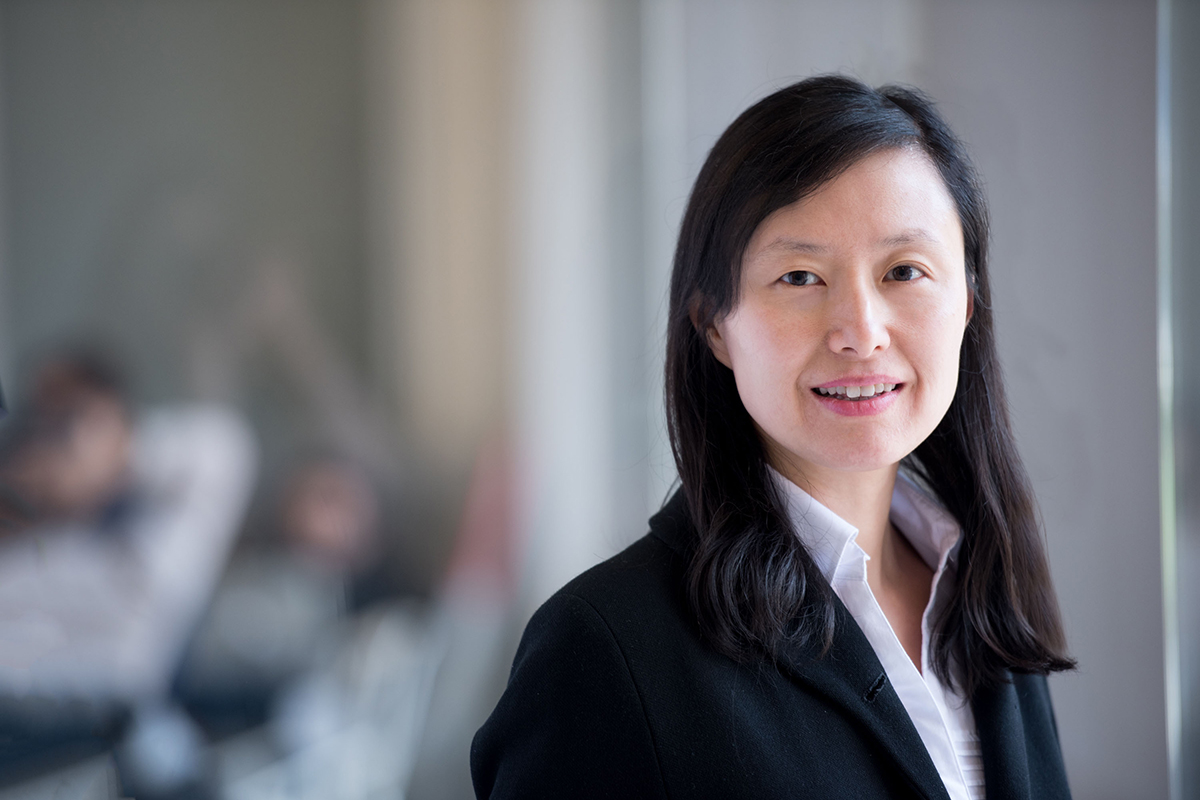
Junfei Li is an Assistant Professor in the School of Mechanical Engineering at Purdue University. His research focuses on advanced acoustic technologies, including acoustic tweezers, acoustofluidics, metamaterials, and underwater communication systems. He specializes in multiphysics wave propagation, noise control, and energy harvesting. Li's work bridges fundamental science and engineering applications in biomedical devices, sustainable energy, and advanced materials. Research Interests: Acoustic tweezers for microscale manipulation Design of metamaterials for acoustic control Ultrasound and underwater communication systems Energy-efficient noise mitigation strategies His recent publications emphasize innovations in acoustic metasurfaces, nonreciprocal sound propagation, and biomedical acoustic applications. Li’s research has implications for improving medical imaging, energy sustainability, and next-generation acoustic devices. Awards & Recognition: None explicitly listed in the provided materials. Advising & Grants: No student advisees or grant information specified in the text.
F. Levent Degertekin is a Regents' Entrepreneur and the George W. Woodruff Chair in Mechanical Systems and Professor at the George W. Woodruff School of Mechanical Engineering at Georgia Institute of Technology. His office is located in Love Building, room 311B, and his contact email is levent.degertekin@me.gatech.edu. Dr. Degertekin's academic journey includes a Ph.D. in Electrical Engineering from Stanford University (1997), an M.S. in Electrical Engineering from Bilkent University, Turkey (1991), and a B.S. in Electrical Engineering from Middle East Technical University, Turkey (1989). Dr. Degertekin's research focuses on micromachined ultrasonic devices and systems for medical applications, particularly in intravascular ultrasound imaging, therapeutic ultrasound, and acousto-optical sensors for MRI. His work spans from fundamental research on novel transduction methods to complete catheter-based imaging systems close to commercialization. He has made significant contributions to capacitive micromachined ultrasonic transducers (CMUTs), developing diffraction grating based optomechanical sensing methods now commercialized by Silicon Audio, novel atomic force microscopy imaging probes, and micromachined ultrasonic ejector structures for cell transfection commercialized by OpenCell Technologies. His research integrates acoustics, optics, and their combinations for various medical applications, utilizing conventional microfabrication (MEMS) and integrated circuit technologies. The Degertekin lab exposes students to applied physics, electrical, mechanical and biomedical engineering, biology, and biomimetic systems, providing them with thorough theoretical and experimental education in acoustics and optics while learning interdisciplinary research. Dr. Degertekin's work has received significant media attention, including coverage in IEEE Spectrum, Wired Magazine, The New York Times, and Fox Business News, highlighting innovations such as handheld ultrasound probes, MRI safety sensors, and minimally invasive cardiac imaging technologies. IEEE Fellow for 'Contributions to micromachined ultrasonic and optomechanical transducers and systems,' 2022 IEEE UFFC Society Inaugural Carl Hellmuth Hertz Ultrasonic Achievement Award, 2014 George W. Woodruff School Outstanding Achievement in Commercialization and Entrepreneurship Award, 2024 National Science Foundation CAREER Award, 2004-2009 Whitaker Foundation Biomedical Engineering Research Grant Award, 2001 66 US and 6 International Patents Dr. Degertekin has mentored numerous students who have gone on to make significant contributions in the field. Several of his students have received IEEE Ultrasonics Symposium Best Student Paper Awards, including Jeff McLean (2003), Sheng-Yu Peng (2006), Rasim O. Guldiken (2005 and 2007), and Toby Xu (2014). His research has been supported by various grants including the NSF CAREER Award and Whitaker Foundation grant. His work has led to multiple commercial ventures including Silicon Audio and OpenCell Technologies. The Degertekin Group at Georgia Tech focuses on transducers and systems for medical imaging and sensing, with current projects including capacitive parametric transducers, acousto-optic sensors for MRI, novel transducer methods for focused ultrasound in the brain, microsystems for intravascular and intracardiac ultrasound imaging, and CMUT-on-CMOS systems for IVUS imaging.
Gianmarco Pinton is an Associate Professor in the Department of Biomedical Engineering at the University of North Carolina at Chapel Hill. His research focuses on nonlinear ultrasound and mechanical wave propagation, with applications to medical imaging and therapy. He specializes in traumatic brain injury, shear shock waves, and ultrasound therapy. Ph.D., M.S., and B.S.E. in Biomedical Engineering/Physics from Duke University His lab develops physics and simulation tools for nonlinear wave propagation, aiming to create advanced diagnostic ultrasound methods. Key areas include traumatic brain injury, transcranial imaging, and therapeutic ultrasound. His recent work explores super-resolution imaging, brain motor circuits, and Alzheimer's disease vascular mapping using ultrasound. Article trends highlight innovations in transcranial ultrasound, super-resolution techniques, lung imaging, and neuromodulation. His publications address image degradation, contrast agents, and shear wave dynamics in neurological contexts.
Antonio Alguacil Cabrerizo is an Assistant Professor (starting 2025) at Université de Sherbrooke, where he currently serves as a Postdoctoral Fellow (2023-2025). His academic trajectory includes dual doctoral degrees in Mechanical Engineering from Université de Sherbrooke and École Nationale Supérieure d'Aéronautique et de l'Espace, complemented by aerospace engineering degrees from ENSEEIHT and Universidad Politécnica de Madrid. His research integrates computational fluid dynamics with machine learning, focusing on: Aeroacoustic prediction and noise source identification Deep learning surrogates for fluid and acoustic systems Turbomachinery and airfoil aerodynamics Data-driven modeling of spatiotemporal physical systems This work advances computational efficiency in simulating complex wave propagation, turbulence effects, and fluid-structure interactions. Publication analysis reveals consistent focus on developing neural network-based computational methods for aeroacoustics and fluid dynamics. His 15 most recent works demonstrate progressive refinement in applying convolutional architectures to predict acoustic scattering, refraction phenomena, and turbomachinery noise with increasing physical accuracy and computational efficiency. Awards and recognition include: Top 5 in AIAA Best Student Paper in Aeroacoustics (2024) Graduate Scholarship Award from CFD Society of Canada (2022) Eureka Scholarship from Université de Sherbrooke (2021) Best Poster Prize at CRASH Day (2021) He secured a $70,000 CAD startup grant (2025-2028) from Université de Sherbrooke for establishing his research program. No student advising relationships or laboratory affiliations are currently documented.
Prof. Dr. Ruming Zhang is a Tenure-Track Professor at TU Berlin's Faculty II - Mathematics and Natural Sciences, leading the Analysis and Applications group since May 2023. He specializes in numerical methods for partial differential equations and inverse problems, with a focus on wave scattering and periodic structures. His research bridges theoretical analysis and computational techniques, addressing challenges in areas like photonic crystals and non-destructive testing. Education & Career: PhD in Mathematics (Chinese Academy of Sciences, 2014) Postdoctoral Researcher at Michigan Technological University Marie-Curie Fellow (University of Bremen, 2015-2018) Junior Group Leader at KIT (Karlsruhe Institute of Technology, 2018-2023) Research Interests: Analysis and numerical methods for PDEs, inverse scattering problems, waveguide analysis, periodic structures, and their applications in nanotechnology and engineering. His work emphasizes high-order numerical schemes and theoretical frameworks for ill-posed problems. Key Contributions: Development of nonuniform mesh methods for periodic surface scattering, high-order numerical techniques for bi-periodic structures, and monotonicity-based shape reconstruction in waveguides. His methods address challenges in computational wave physics and mathematical modeling. Awards: Richard-von-Mises Prize (GAMM, 2023) Marie-Curie Fellowship (EU FP7-PEOPLE, 2015-2017) Teaching & Mentorship: Offers courses on inverse problems, scattering theory, boundary element methods, and applied analysis. Advises students on thesis topics in mathematical theory for photonic crystals and wave propagation. Actively promotes interdisciplinary collaboration between mathematicians and engineers. Grants & Projects: DFG Grant (2019-2024): Higher-order methods for acoustic scattering in periodic structures Marie-Curie COFUND Fellowship (Bremen TRAC, 2015-2017) Labs/Teams: Leads the Analysis and Applications research group at TU Berlin, focusing on interdisciplinary projects combining mathematical theory with computational tools for real-world applications.
Lili Qiu is a Professor in the Department of Computer Science at The University of Texas at Austin, where she has been a faculty member since January 2005. She is an active member of the Wireless Networking and Communications Group (WNCG) and has made significant contributions to the field of networking research. Dr. Qiu previously spent 2001-2004 as a researcher at Microsoft Research in Redmond, WA, before joining UT Austin. Dr. Qiu's research spans Internet and wireless networking with a current focus on wireless network management and content distribution in mobile networks. Her work extends into diverse applications including acoustic imaging, metasurface applications, healthcare sensing technologies, and AI systems. She has pioneered research in areas such as acoustic motion tracking, passive RFID sensing, and wireless network optimization. Her research demonstrates a consistent pattern of innovation that bridges theoretical networking concepts with practical real-world applications, particularly in mobile and wireless systems. Her extensive publication record shows a clear evolution from fundamental networking research to increasingly interdisciplinary work that combines wireless systems with healthcare applications, AI, and novel sensing technologies. Recent publications demonstrate growing integration of machine learning techniques with traditional networking problems, as well as expansion into healthcare applications like Parkinson's disease modeling and non-invasive glucose monitoring. ACM Fellow IEEE Fellow National Academy of Inventors (NAI) Fellow ACM Distinguished Scientist NSF CAREER award Google Faculty Research Award Best paper award at ACM MobiSys'18 Best paper award at IEEE ICNP'17 Dr. Qiu has supervised numerous students, including a PhD dissertation that won the SIGMOBILE best dissertation award in 2020. She has served in significant leadership roles including chair of ACM SIGMOBILE, General co-chair for ACM MobiCom 2025, and various conference chair positions for IEEE ICNP, ACM CoNEXT, and other major networking conferences. Her research has been supported by substantial grants from NSF, Google, and other organizations, enabling her to lead cross-disciplinary research teams. As a member of the Wireless Networking and Communications Group at UT Austin, Dr. Qiu leads research efforts that combine networking expertise with innovations in sensing technologies, metasurfaces, and AI systems. Her lab has produced numerous influential results in mobile networking, wireless sensing, and network management, with applications spanning healthcare, consumer electronics, and communication infrastructure.
Dr. Bastian Pfau serves as Department Head of the “Imaging and Coherent X-rays” (B2) division and Project Coordinator for “Transient Structures and Imaging with X-rays” at the Max Born Institute in Berlin, where he has conducted postdoctoral research since 2016. His work pioneers nanoscale magnetic imaging using coherent X-ray techniques, with significant contributions to ultrafast magnetization dynamics and topological spin structures. His academic foundation includes a Dr. rer. nat. (PhD) in Physics from Technical University Berlin (2013) with thesis “Imaging magnetic nanostructures using soft x-ray Fourier transform holography,” and a Diplom (MSc) in Physics from Technical University Dresden (2006) focused on “Combining photon correlation spectroscopy and fluctuation analysis for investigating diffusion dynamics.” Additional research experience spans Lund University (2014-2015), Technical University Berlin (2010-2013), and Helmholtz Center Berlin (2006-2010). Dr. Pfau’s research centers on developing and applying X-ray holography and coherent diffraction imaging to visualize magnetic nanostructures at nanometer-femtosecond scales. His group specializes in ultrafast magnetization dynamics , skyrmion imaging , and element-specific magnetic probing using soft X-rays. Key innovations include achieving 5 nm resolution magnetic imaging and demonstrating all-optical helicity-independent switching via plasmonic nanostructures, with applications in next-generation spintronic devices and magnetic storage technologies. Analysis of his 15 most recent publications reveals dominant themes in nanoscale magnetic imaging (particularly skyrmions and topological textures), ultrafast opto-magnetic effects using extreme ultraviolet radiation, and advanced X-ray methodologies for capturing transient magnetic states. His work consistently bridges fundamental physics with practical instrumentation development, as evidenced by contributions to laser-driven plasma sources and tabletop X-ray setups. As Department Head of B2, Dr. Pfau leads a multidisciplinary team operating cutting-edge X-ray microscopy facilities at MBI. The group maintains strong collaborations with international synchrotron facilities (including BESSY II) and free-electron laser centers, focusing on developing MHz-repetition-rate pump-probe capabilities and high-resolution magnetic imaging techniques. Current projects emphasize real-time visualization of light-induced phase transitions and magnetic switching phenomena in functional materials.
Mathias FINK is a Professor at ESPCI Paris on the Georges Charpak chair. His research focuses on fundamental wave physics in complex media with major applications in medical imaging, telecommunications, and geophysics. He pioneered time-reversal mirrors for wave focusing and co-founded 6 technology companies. Key Institutions: ESPCI Paris, Collège de France Research Themes: Wave physics, time-reversal techniques, matrix imaging, metasurface design His work spans multi-echo wave systems , ultrasonic therapeutic devices , and adaptive electromagnetic communication systems . Recent publications emphasize 3D matrix imaging in biological tissues and space-time interface dynamics . Scientific recognition includes: First academic elected at Collège de France (2008) Over 400 peer-reviewed publications 70+ patents and 6 start-ups Collaborations extend to Institut des Hautes Études Scientifiques , Langevin Institute , and Hong Kong University of Science and Technology . His team's volcanic imaging work with seismic noise has revolutionized subterranean mapping.
Danae Polsin is an Assistant Professor in the Department of Mechanical Engineering at the Hajim School of Engineering & Applied Sciences, University of Rochester. Her research focuses on high-energy-density physics, shock wave dynamics, and x-ray diffraction techniques. She investigates material behavior under extreme conditions such as laser-driven compression, inertial confinement fusion, and multimegabar pressures. Dr. Polsin’s work addresses fundamental questions in condensed matter physics, including phase transitions, metallurgical transformations, and electronic structure evolution under extreme pressures and temperatures. Her research leverages cutting-edge facilities like the National Ignition Facility (NIF) and OMEGA Laser, where she develops diagnostic tools such as time-resolved x-ray diffraction systems to study warm dense matter and shock-compressed materials. Her recent studies include isostructural phase transitions in materials under laser shock, melt dynamics in nickel and iron compounds, and the structural complexity of sodium at high pressures. She collaborates on inertial confinement fusion projects, validating implosion models and advancing fusion energy systems through experimental design and multimessenger measurements. Danae Polsin’s research emphasizes bridging experimental observations with theoretical models, contributing to our understanding of material behavior at terapascal pressures and informing applications in energy systems and advanced materials science.
Sébastien Tordeux is an Associate Professor at the University of Pau, affiliated with the Magique 3D research team in the Faculty of Sciences. His research focuses on numerical methods for wave propagation, particularly Trefftz methods, asymptotic expansions, and electromagnetic/acoustic scattering. He holds a PhD in Applied Mathematics from the University of Versailles Saint-Quentin and has held positions at INSA-Toulouse and ETH Zurich. He has advised multiple PhD students and organized conferences such as the 2017 conference in honor of Abderrahmane Bendali. His work emphasizes high-order numerical modeling and efficient solvers for wave equations in complex media. Education: PhD in Applied Mathematics (2004, Université de Versailles), DEA M2SAP (2001), ENSTA Engineer (1998-2001). Professional roles include Chair of Excellence in Numerical Analysis (INRIA-UPPA 2010-2015), and leadership in Master’s program administration and national academic committees (CNU 26). Research interests span Trefftz methods for time-harmonic models, numerical solvers reducing pollution effects, and asymptotic modeling for small obstacle scattering. Recent contributions include quasi-Trefftz methods for electromagnetic systems and iterative approaches for 3D wave simulations. He has supervised PhD students working on topics like antenna patch models, perforated plate acoustics, and multiscale electromagnetic diffraction. His collaborative projects involve institutions like ONERA and TU Berlin, focusing on high-accuracy wave modeling and computational methods.
Thomas Brunet is a researcher at the University of Bordeaux, specializing in physical acoustics and functional materials for acoustics. His work spans ultrasound physics, material characterization, and advanced modeling/simulation techniques. Key collaborations with research groups: APY (Physical Acoustics) , Functional Materials for Acoustics , and GCE (Civil and Environmental Engineering) . Focus areas: acoustic metamaterials , Anderson localization , contactless micromanipulation , and viscoelastic wave propagation . His publications (over 30 in the last decade) demonstrate expertise in ultrasonic imaging, nanophononics, and multiphysics problems involving mechanical, thermal, and fluid interactions. Collaborative projects include DuMAS (Sustainability of Materials) , IMC (Mechanical Engineering) , and MPI (Materials-Procedes-Interactions) initiatives. No formal awards or student advising details are publicly available in the provided data.
Jaafar El-Awady is a Professor in the Department of Mechanical Engineering at the Whiting School of Engineering, Johns Hopkins University (JHU). He serves as Chair of JHU’s Engineering for Professionals’ Mechanical Engineering Graduate Program, founder/director of the Computational and Experimental Materials Engineering Laboratory (CEMEL), and associate director of the Center on Artificial Intelligence for Materials in Extreme Environments (CAIMEE) and the Center for Integrated Structure-Materials Modeling and Simulations (CISMMS). His secondary appointment in the Department of Materials Science and Engineering underscores his interdisciplinary focus.
Kami Mohammadi is an Assistant Professor in the Civil & Environmental Engineering department at the University of Utah , with an adjunct appointment in Geology & Geophysics . Holding a PhD from Georgia Institute of Technology and postdoctoral experience at Caltech, Mohammadi specializes in seismic wave propagation, basin effects, and computational geotechnical modeling. Education PhD (2015), Civil and Environmental Engineering - Geotechnical Engineering, Georgia Institute of Technology MS (2012), Geotechnical Engineering with minor in Applied Mathematics, Georgia Institute of Technology MS (2006), Civil Engineering, University of Tehran BS (2003), Civil Engineering, Chamran University of Ahvaz Their research focuses on: 3D seismic wave propagation in heterogeneous media Basin effects on earthquake amplification Hybrid physics-informed machine learning models Finite element/discrete element modeling of geotechnical systems Ground motion prediction and hazard analysis Hydraulic fracturing in fractured rock Recent work integrates full-waveform inversion with neural networks for subsurface imaging. Mohammadi teaches graduate courses in geotechnical engineering, soil dynamics, and earthquake engineering, with a focus on computational methods and laboratory practices. Current grants include: EXTERNAL GRANT OR CONTRACT (2024-2030): Integration of computational and experimental analyses for earthquake amplification EXTERNAL GRANT OR CONTRACT (2024-2029): 3D site effect modeling at LANL EXTERNAL GRANT OR CONTRACT (2021-2024): Various seismic projects Professional activities include community outreach through engineering education presentations.