Dr. June Cao is an Associate Professor at the University of Southampton . Her research focuses on Environmental, Social, and Governance (ESG) Accounting , Corporate Social Responsibility (CSR) , and Sustainability Reporting , with a particular emphasis on Greenwashing , Carbon Emission Trading , and Accounting Education . Key research areas include ESG, CSR, and sustainability frameworks. Prominent publications analyze environmental regulation, green revenues, and digital transformation in sustainability. Her recent work explores greenwashing behaviors, peer benchmarking, and labor investment dynamics. Scientific Awards : None explicitly mentioned in the data. Notable collaborations include co-authoring papers with scholars from Curtin University , Satya Wacana Christian University , and Xiamen University . Her contributions to Systematic Literature Reviews and Bibliometric Analysis highlight her methodological expertise.
Sir Paul Collier is a distinguished Professor of Economics and Public Policy at the Blavatnik School of Government, University of Oxford, where he also directs the Centre for the Study of African Economies. He serves as the Oxford Academic Director of the International Growth Centre, a collaboration between the London School of Economics and Oxford University. Professor Collier has established himself as a leading authority on development economics, particularly focusing on African economies, poverty reduction, and the political economy of development. His academic journey includes significant public service, having served as Director of the World Bank Research Development Department from 1998 to 2003. He currently advises the International Monetary Fund Strategy and Policy Department and writes regularly for major publications including The Independent and The New York Times. His extensive contributions to economic thought have been recognized with numerous prestigious awards. Professor Collier's research interests span a wide range of critical development issues. He has made significant contributions to understanding the "bottom billion" - the poorest populations in the world - and has developed innovative approaches to addressing regional inequality, natural resource management, and the political barriers to development. His work consistently bridges academic rigor with practical policy applications, making complex economic theories accessible to policymakers and the general public alike. His publications reveal a consistent focus on practical solutions to development challenges. Recent works have examined urbanization in developing countries, the relationship between elections and economic performance, infrastructure investment in Africa, and the cultural foundations of economic success or failure. His research demonstrates how institutional design, cultural factors, and appropriate policy frameworks can enable neglected regions to "spiral up" toward prosperity. A.SK Social Science Award (2013) Arthur Ross Prize (for The Bottom Billion) Handesblatt Prize (for The Future of Capitalism) Adam Smith Prize by Glasgow's Philosophical Society (2023) Global Citizenship Award by Belgium's cooperative movement (2018) Professor Collier is actively engaged in advising governments on practical approaches to regional renewal. His recent work emphasizes the importance of local agency, collective learning, and moral leadership in addressing the challenges faced by neglected communities in both developed and developing countries. He challenges conventional economic orthodoxies that prioritize market forces alone and advocates for more nuanced, context-specific policy approaches that recognize the complex interplay of economic, social, and political factors in development processes.
Thomas Richter is a leading academic and Professor at the German Institute for Global and Area Studies (GIGA) , where he serves as Lead Research Fellow and Head of the Research Programme "Accountability and Participation" . His work focuses on the institutional and material determinants of authoritarian rule , executive personalization , and global political economy , particularly in the Middle East and North Africa region. Education: PhD in Political Science (summa cum laude) at the University of Bremen (2008); studies at Eberhard-Karls University Tuebingen and University of Michigan, Ann Arbor. His research explores the interplay of rentier statehood and economic reforms , civil society under authoritarian regimes , and shrinking civic spaces . Recent projects include the Merian Center for Advanced Studies in the Maghreb (MECAM) and the Monitoring System and Transfer Platform Radicalisation (MOTRA) , funded by BMBF and DFG. Richter has published extensively on topics such as anti-Semitism , executive power dynamics , and public opinion on military service in Germany. He has received notable awards, including the Lijphart/Przeworski/Verba Data Set Award (2017) and the Gero Erdmann-Preis für vergleichende Area-Forschung (2022) . His collaborative work spans institutions like the WZB Berlin and Université de Tunis . Richter is also a co-editor of the Perspectives on the Maghreb series with Amsterdam University Press.
Professor John Piggott AO FASSA is Scientia Professor of Economics at the University of New South Wales, where he serves as Director of the Australian Research Council Centre of Excellence in Population Ageing Research (CEPAR). He has held significant leadership roles at UNSW including three terms as Head of School of Economics, Associate Dean Research for the Business Faculty for 7 years, and Interim Dean of the Faculty. His expertise spans retirement economics, pension systems, and population ageing issues, with particular focus on Asia-Pacific region. His educational background includes: BA from University of Sydney MSc from London School of Economics PhD from University of London Professor Piggott's research focuses on retirement and pension economics, population ageing, and public finance. His work examines pension system designs across different countries, with particular emphasis on emerging Asian economies. He has conducted extensive research on retirement income systems, long-term care financing, and the economic implications of demographic change. His research has significant policy relevance, having informed government reviews and international organizations' work on ageing populations. He has published widely in leading international economics and actuarial academic journals, with recent work analyzing pension reforms in Indonesia, Thailand, and China. His recent publications demonstrate a strong focus on population ageing in the Asia-Pacific region, particularly examining pension systems and long-term care in emerging economies. His work bridges economics, public policy, and health services research, with increasing attention to the interconnections between demographic change, economic development, and social policy in aging societies. His research has directly influenced policy discussions through participation in the Henry Tax Review and Australian Ministerial Superannuation Advisory Committee. Professor Piggott has received numerous prestigious awards and honors: Fellow of the Academy of the Social Sciences in Australia (1992) Scientia Professor at UNSW (2011-present) ARC Australian Professorial Fellow (2011-2015) UNSW Business School's Staff Excellence Global Impact Award (2020) Officer of the Order of Australia (AO) (2020) Professor Piggott has supervised numerous PhD students including Rafal Chomik, Hoang Hoyen, and T Le Trang. He has secured substantial research funding including multiple ARC grants totaling over $27 million for the CEPAR Centre, Japan Economic and Social Research Institute projects, and Rockefeller Foundation support. His research has directly informed policy discussions through participation in the Henry Tax Review and Australian Ministerial Superannuation Advisory Committee, and he was appointed co-chair of the Think20 Task Force on Aging Population during Japan's G20 Presidency. As Director of CEPAR, Professor Piggott leads a major research center focused on population ageing research, bringing together interdisciplinary expertise to address the challenges of aging societies. The center collaborates with international partners including the US National Academy of Medicine and OECD, and has played a key role in establishing the International Pension Research Association. His work has significant real-world impact, with his research on JobKeeper transition proposals during the COVID-19 pandemic receiving widespread media attention.
Mai Hassan is an Associate Professor of Political Science at the Massachusetts Institute of Technology (MIT), where she serves as faculty co-director of MIT-Africa. Her research focuses on comparative politics, with particular emphasis on bureaucracy, public administration, the state, contentious politics, state repression, and the politics of Africa and the Middle East and North Africa region. Her academic journey includes: PhD in Government from Harvard University Previous position as Associate Professor at the University of Michigan Professor Hassan's research examines topics that span across authoritarian regimes, bureaucracy and public administration, and contentious politics. Her first book, "Regime Threats and State Solutions: Bureaucratic Loyalty and Embeddedness in Kenya," was selected as a Best Book of 2020 by Foreign Affairs, won the American Political Science Association's 2021 Robert A Dahl Award, and received the African Studies Association 2021 Bethwell A. Ogot Award. Her work has been published in prestigious journals including the American Journal of Political Science, American Political Science Review, and the Journal of Politics. Professor Hassan has been particularly active in providing expert commentary on Sudanese politics, drawing on her personal connection to the country (her family immigrated from Sudan to the United States when she was young). She has written op-eds for Foreign Affairs, The New York Times, and The Washington Post, and has been featured in media outlets including The New Yorker, NPR, and Vox. Her scientific awards include: American Political Science Association's 2021 Robert A Dahl Award African Studies Association 2021 Bethwell A. Ogot Award Foreign Affairs' Best Book of 2020 designation for "Regime Threats and State Solutions" Professor Hassan is actively involved in mentoring graduate students and has recently become a mother to her daughter Nadeen. She serves as faculty co-director of MIT-Africa, where she helps facilitate opportunities for MIT students to engage with African institutions through internships and research projects. Her current work includes a new book on mobilization under autocracy, as well as ongoing research on bureaucracy and state-society relations in Africa.
Femi Amao is a Professor of Company Law & Sustainability at University College Cork (UCC), Ireland. He previously held academic roles including Reader in Law at Sussex Law School (2019-2023) and Senior Lecturer at Brunel University (2015-2019). His research focuses on law's role in regulating emerging social phenomena, particularly in the areas of corporate sustainability, business & human rights, and African Union Law. He holds a Senior Fellowship of the Higher Education Academy (SFHEA) and won the University of Sussex Teaching Award in 2021. Education: PhD and PG Cert, University College Cork (2009) LLM, University of Warwick (2005) LLM, University of Ibadan (2003) LLB, Obafemi Awolowo University (1997) BA, University of Ilorin (1991) His research explores corporate governance, ESG frameworks, and legal mechanisms to address multinational corporations' impact in developing countries. Notable publications include African Union Law: The Emergence of a Sui Generis Legal Order (2018) and co-editing The Emergent African Union Law (2021). His articles frequently analyze comparative legal systems, corporate accountability, and human rights obligations. Research Grants: Lead Investigator for the Arts and Humanities Research Council (AHRC)-funded African Union Law Research Project (2017-2020) Awards: Senior Fellowship of the Higher Education Academy (UK) University of Sussex Teaching Award: Transformative Technology (2021) His work bridges legal theory and practice, addressing contemporary challenges in corporate law, sustainability, and African regional legal frameworks.
Stephen Weymouth is Provost's Distinguished Associate Professor and Dean’s Professor at Georgetown University’s McDonough School of Business. He holds a primary academic appointment as Associate Professor and focuses on the political economy of globalization and technological change. His research bridges international business, political science, and public policy. Weymouth earned his Ph.D. in Political Science and International Affairs from the University of California, San Diego (2010), an M.A. in Latin American Studies from the same institution (2006), and a B.S. in Economics from Arizona State University (1999). His research interests include the political environment of business, digital globalization, trade and exchange rate politics, governance of the digital economy, and the societal implications of artificial intelligence. He investigates how globalization, technological disruption, and economic change influence political behavior, voting, and policy outcomes. His work often employs quantitative methods and large-scale data to analyze firm-level and electoral dynamics. His recent publications, appearing in top journals like American Political Science Review , International Organization , and British Journal of Political Science , reveal a strong thematic focus on the intersection of economic globalization and political behavior. Trends include the impact of deindustrialization on voter backlash, the effects of inflation and pandemics on elections, and the political economy of digital trade and AI. His book Digital Globalization: Politics, Policy, and a Governance Paradox (Cambridge University Press) synthesizes these themes, emphasizing the growing tension between digital innovation and regulatory governance. Weymouth is actively engaged in policy discourse, having authored issue briefs for the Atlantic Council on digital trade policies in India and Bangladesh. He teaches core MBA courses such as Business and Policy in the Global Economy and specialized courses on AI and economic transformation. While no formal awards are listed, his named professorships reflect institutional recognition. He advises students and collaborates widely, though specific advisees are not named. His research contributes significantly to understanding how global economic forces shape political institutions and public sentiment.
Reinier H. Kraakman is the Ezra Ripley Thayer Professor of Law at Harvard Law School, where he teaches corporate law, corporate finance, and organizational law. He previously served as a professor at Yale Law School and has held visiting positions at Georgetown University Law Center and New York University School of Law. His academic and policy work has influenced corporate governance reforms in countries such as Russia and Vietnam. Education: J.D., Yale Law School, 1979 Ph.D. in Sociology, Harvard University, 1973 B.A. in History and Science, Harvard College, 1971 Fulbright Fellowship, University of Frankfurt, 1971 His research focuses on corporate law, corporate governance, comparative corporate law, and the economic foundations of organizational law. Kraakman is renowned for identifying core agency problems in corporations—between managers and shareholders, controlling and minority shareholders, and shareholders and other stakeholders. His work emphasizes the functional and comparative analysis of legal institutions across jurisdictions. The recent publications of Professor Kraakman reflect a sustained focus on the intersection of law, economics, and institutional design. His articles and books analyze corporate governance structures, market efficiency, CEO turnover, and the historical evolution of business entities. He frequently collaborates with leading scholars such as Henry Hansmann, Lucian Bebchuk, and Ronald Gilson, producing influential interdisciplinary work that shapes both academic discourse and policy debates. Scientific Awards: Elected ECGI Research Associate (2006) Fulbright Fellowship (1971) Kraakman has advised on legal reforms and contributed to major amicus briefs before the U.S. Supreme Court, particularly in cases involving corporate political speech and shareholder rights. His work on compliance, executive compensation, and board accountability has informed regulatory thinking globally. He is a key figure in the academic network promoting empirical and theoretical rigor in corporate law. He is a co-author of the seminal treatise The Anatomy of Corporate Law , now in its third edition, and has published extensively in top law journals including the Yale Law Journal , Georgetown Law Journal , and Harvard Law Review . His scholarship continues to be central to understanding the convergence and divergence of corporate legal systems worldwide.
Professor Christopher F Forsyth is the Sir David Williams Professor of Public Law at the University of Cambridge, Faculty of Law. He also holds the position of Honorary Professor of Law at the University of Stellenbosch and serves as an Honorary Member of the Advisory Board of the Faculty of Law at the Chinese University of Hong Kong. As an Academic Bencher of the Inner Temple and a practicing barrister from 4-5 Gray's Inn Square, Professor Forsyth maintains an active role in legal practice alongside his academic work. His research interests span several key areas of legal scholarship: Public law with focus on judicial review and the judiciary Administrative Law, particularly examining the legal effect of invalid acts, foundations of judicial review, and legitimate expectations Comparative public law, with special emphasis on Southeast Asia and Southern Africa Private international law, both theoretical and comparative studies Roman-Dutch law, especially regarding suretyship and private international law Professor Forsyth's scholarly work demonstrates a consistent focus on the principles of administrative justice, judicial independence, and the rule of law across various jurisdictions. His publications reveal a particular interest in the evolution of legal systems in post-colonial contexts, especially in Southern Africa and Hong Kong, where he examines how historical legal frameworks adapt to contemporary constitutional arrangements. His work on judicial review spans both theoretical foundations and practical applications across common law jurisdictions. His notable awards and honors include: Recorder of the Crown Court Academic Bencher of the Inner Temple Extraordinary Professor in Public Law, University of Stellenbosch Honorary Member of Advisory Board, School of Law, Chinese University of Hong Kong Tapp Research Student, Gonville and Caius College Professor Forsyth serves as a part-time judge, sitting as a Recorder in the Crown Court and as a Deputy High Court Judge in the Administrative Court. His significant contributions to legal scholarship include co-authoring "Administrative Law" with the late Sir William Wade QC, which has become a standard work cited by students, scholars, and judges across the common law world. He has also authored "Private International Law," a standard textbook on Roman-Dutch conflict of laws widely used in Southern Africa. Internationally, Professor Forsyth has advised governments on constitutional developments and judicial review in several Commonwealth countries. Notably, he served as Technical Adviser on Constitutional Reform to the Law Commission of Malawi, drafting constitutional reports and amendment bills. He has conducted training for civil servants in administrative law across multiple jurisdictions, including programs for the reformed South Africa.
Besa Kadriu is an Associate Professor at the Contemporary Social Sciences Faculty of South East European University in Tetovo, North Macedonia. With a Doctor of Sciences in Public Governance and Administration (2015-2019), her work focuses on policymaking in multiethnic states, public administration reforms, and governance challenges. Native Albanian, C2 Macedonian, C1 English, and A2 German speaker Her research interests span public governance frameworks, integration challenges in Western Balkans, pension system sustainability, and youth migration dynamics. She has published extensively on policy implementation in post-conflict societies and institutional development. Recent publications demonstrate expertise in multiethnic governance (2016-2021), educational reforms (2015), and social inclusion policies (2019). Her work combines theoretical analysis with practical case studies from North Macedonia's political and administrative landscape.
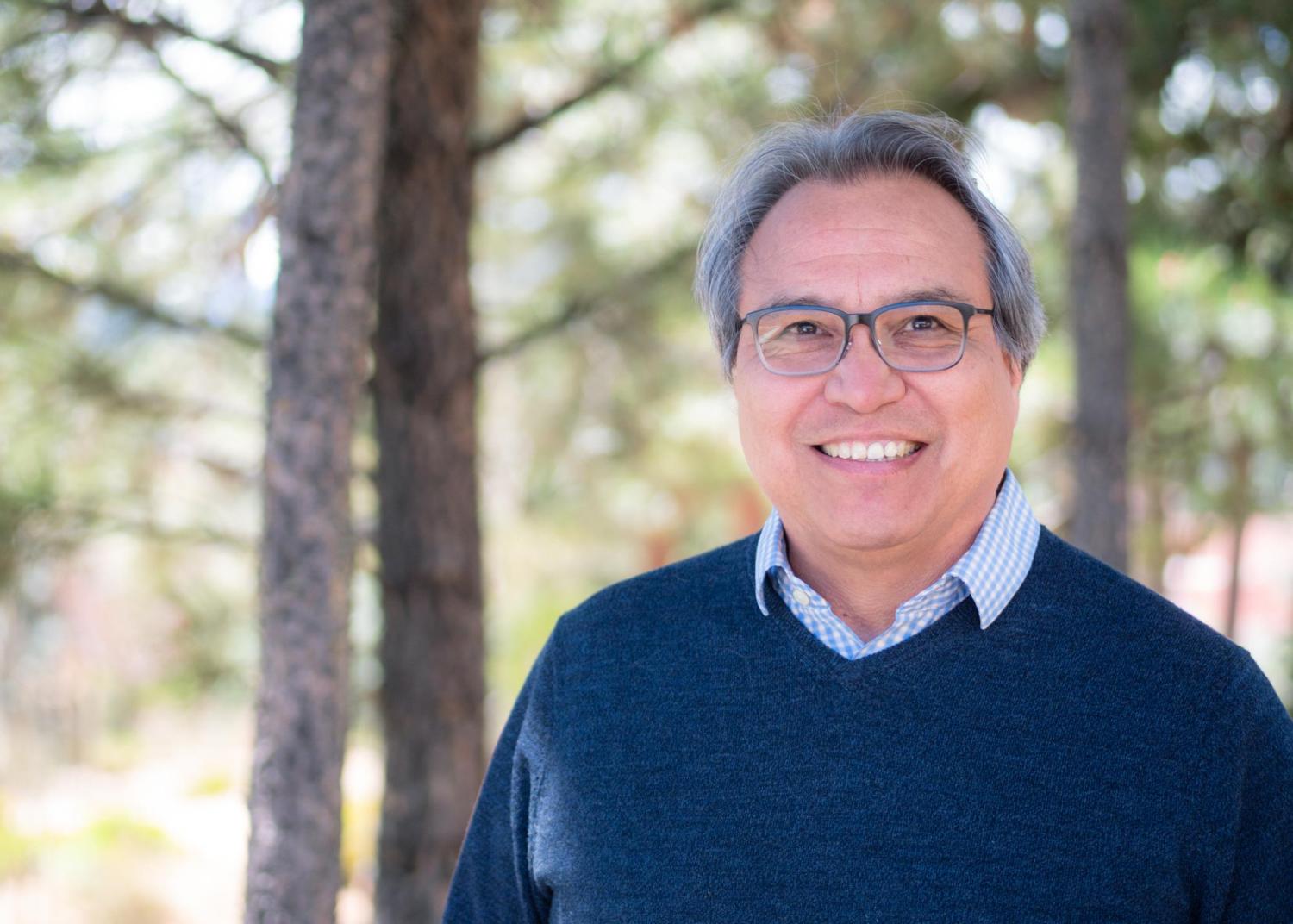
S. James Anaya serves as University Distinguished Professor and Nicholas Doman Professor of International Law at the University of Colorado Law School. Previously, he held faculty positions at the University of Arizona (1999-2016) and the University of Iowa (1988-1999), and has been a visiting professor at Harvard Law School, the University of Toronto, and the University of Tulsa. His most prominent role was as United Nations Special Rapporteur on the Rights of Indigenous Peoples from May 2008 to June 2014, during which he conducted country visits to numerous nations including Canada, Panama, Peru, and Brazil to monitor indigenous rights situations. Anaya earned his JD from Harvard Law School and his BA from the University of New Mexico. Before entering academia, he practiced law in Albuquerque, New Mexico, representing Native American peoples and other minority groups, work for which he was recognized by Barrister magazine as one of "20 young lawyers who make a difference." Professor Anaya's research focuses on the intersection of international human rights law and indigenous peoples' rights, with particular emphasis on land rights, self-determination, and cultural preservation. His scholarship examines how international legal frameworks can be leveraged to advance indigenous rights, especially regarding territorial claims and resource extraction. He has extensively analyzed the development of customary international law concerning indigenous rights and the relationship between domestic legal systems and international human rights standards as they apply to indigenous communities. Analysis of Anaya's recent publications reveals a consistent focus on practical implementation of indigenous rights through UN mechanisms, national legal systems, and international tribunals. His work shows particular attention to hydroelectric and mining projects affecting indigenous territories, the right to consultation, and the evolving standards for indigenous land rights recognition. The thematic progression demonstrates increasing emphasis on concrete implementation mechanisms rather than purely theoretical frameworks. United Nations Special Rapporteur on the Rights of Indigenous Peoples (2008-2014) Lead counsel in landmark Awas Tingni v. Nicaragua case before the Inter-American Court of Human Rights Participant in drafting the United Nations Declaration on the Rights of Indigenous Peoples As UN Special Rapporteur, Anaya actively engaged with indigenous communities worldwide, addressing situations of alleged human rights violations and promoting practical measures to secure indigenous peoples' rights. His work involved frequent travel to meet with government officials and visit indigenous communities across multiple continents. He represented indigenous groups from North and Central America in landmark cases before domestic and international tribunals, including the United States Supreme Court and the Inter-American Court of Human Rights. His advocacy extended to high-profile cases such as the Washington Redskins name controversy and the Barro Blanco hydroelectric project in Panama.
Professor Jeevan R. Sharma serves as Chair of South Asia and International Development and Co-director of the Centre of South Asian Studies at the University of Edinburgh's School of Social and Political Science. An elected General Secretary of the Britain Nepal Academic Council (BNAC), he brings extensive field research experience from Nepal, India, Sri Lanka, and Malawi to his work in development and political anthropology. His current Wellcome Trust-funded transdisciplinary project examines health and well-being of South Asian migrant workers through collaboration with medical scientists and social anthropologists at Aga Khan University and Kathmandu Medical College. Sharma's research interests span labor migration, border-crossing, Maoist conflict, humanitarianism, human rights documentation, and health policy with particular focus on gender dynamics and social transformation. His fieldwork has investigated community health volunteers, maternal and child health, and international research collaboration in South Asia. He has previously worked at Feinstein International Centre at Tufts University (2009-2011) and Save the Children UK (2007-2009), bringing practical development experience to his academic work. His publication trends reveal consistent focus on migration, health policy, and political transformation in South Asia, with increasing attention to transnational health issues and pandemic impacts on vulnerable populations. Recent work examines Covid-19's effects on migrant workers, mental health policy in Nepal, and cross-cultural health measurement tools, demonstrating his commitment to bridging academic research with practical health interventions. Elected General Secretary of the Britain Nepal Academic Council (BNAC) Co-editor of HIMALAYA Journal (2019-2025), transitioning to Editor-at-large from January 2025 Associate Editor of 'South Asia: Journal of South Asian Studies' Co-editor of Routledge Edinburgh South Asia Series Member of ESRC GAP panel C (2024-2025) Member of the commissioning panel for the ESRC Centres Competition 2018 Sharma has secured significant research funding including a Wellcome Trust grant for migrant worker health research, ESRC funding for projects examining low-income migrant workers' access to services in India, and NERC funding for flood resilience research in Nepal's Terai region. His collaborative approach is evident in projects involving multiple institutions across South Asia and the UK, with particular emphasis on transdisciplinary work that bridges social science and medical research. He has served as Principal Investigator on six completed projects and currently leads an active Wellcome Trust-funded initiative. As Co-director of the Centre for South Asian Studies in Edinburgh, Sharma contributes to one of the UK's leading institutions for South Asian research, fostering academic collaboration and knowledge exchange between scholars in the UK and South Asia. His work with the Britain Nepal Academic Council strengthens bilateral academic relations, while his editorial roles with HIMALAYA Journal and South Asia: Journal of South Asian Studies position him at the forefront of scholarly discourse on the region.
Professor Simon Deakin is a Fellow and Director of Studies in Law at Peterhouse, University of Cambridge, specializing in private law (tort and contract law) and labour law. He teaches on the undergraduate Law Tripos and the LLM programme, with research focusing on law and economics, artificial intelligence, and historical legal analysis. Current research on Is Law Computable? and AI ethics Co-editor of computational law essay collection Developed Cambridge Leximetric Database for quantitative legal analysis His research spans tort law, corporate governance, digital economy regulation, and sustainability. Recent work explores the Anthropocene's legal implications and labour law's computational approaches. Scientific awards include the Cambridge Students' Union teaching prize (2023) He supervises doctoral students annually and contributes to legal education through widely used textbooks. As a Centre for Business Research (CBR) affiliate, he advances data-driven analysis of global labour regulation.
Jiehong Lou is an Assistant Research Professor and Assistant Research Director at the Center for Global Sustainability (CGS) within the University of Maryland School of Public Policy. Her expertise spans climate finance, energy economics, environmental policy, and transportation equity. She holds a PhD in policy sciences from the University of Maryland, with additional degrees in public policy and applied economics from the same institution, and a BA in public policy from Tongji University in China. Her research focuses on mobilizing private climate finance, corporate motivations for carbon investments, evaluating co-benefits of climate projects, and analyzing disparities in transportation and energy accessibility. She previously served as a postdoctoral fellow with the Maryland Transportation Institute. Her work often integrates interdisciplinary approaches, combining economic modeling with policy analysis to address global sustainability challenges. Lou has contributed to high-ambition climate pathways for countries like Indonesia, South Korea, and China, emphasizing equitable transitions and policy reforms. She co-authored studies on EV infrastructure equity, coal phaseout strategies, and the socioeconomic impacts of energy policies. Her recent projects include analyzing renewable energy investment needs in China and Indonesia’s decarbonization pathways. Lou collaborates with international organizations and policymakers, bridging academic research with practical climate solutions. Her work is published in journals like npj Climate Action and peer-reviewed energy policy outlets, with a focus on actionable insights for policymakers and stakeholders.
Maryellen Fullerton is the Suzanne J. and Norman Miles Professor of Law at Brooklyn Law School. She served as Interim Dean from 2018 to 2019. Her expertise spans asylum/refugee law, immigration, international law, human rights, civil procedure, and federal courts. She holds a J.D. from Antioch School of Law and a B.A. from Duke University. Fullerton’s research examines comparative refugee law, EU asylum systems, and U.S. policies. She has held distinguished visiting roles at institutions like National Taiwan University and the University of Trento (via Fulbright). Her scholarship includes co-authored casebooks on immigration and refugee law, and she founded the multilingual Refugee Law Reader. She has advised Human Rights Watch on missions in Germany, consulted for UNHCR, and supports Refugee Law Clinics in Eastern Europe. Awards include the Fulbright Scholar designation and German Marshall Fund Fellowship. Affiliations: Dennis J. Block Center for International Business Law, Brooklyn Law School International Human Rights Fellowship Program. Grants/Awards: Fulbright Scholar (multiple), German Marshall Fund Fellow, Distinguished Chair at University of Trento. Labs/Teams: Leads Refugee Law Reader project; collaborates with global human rights organizations.