- Identity-inclusive computing
- Human-centered design & engineering
- Justice-centered STEM education
- +۵ مورد دیگر
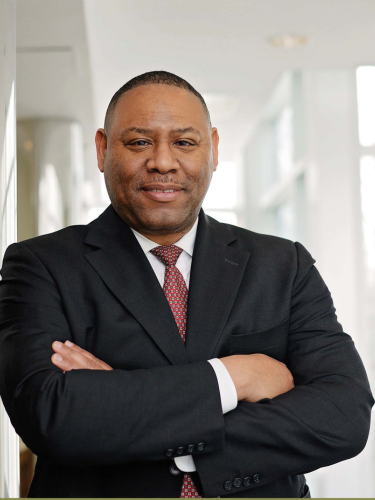
Shaundra 'Shani B' Daily serves as the Cue Family Professor of the Practice in the Department of Electrical and Computer Engineering at Duke University's Pratt School of Engineering. She also holds appointments as Professor of the Practice of Computer Science and serves as Faculty Director of the Duke Technology Scholars program. As a core faculty member in Innovation & Entrepreneurship and one of Duke's inaugural Levitan Faculty Fellows, Daily plays a pivotal role in connecting faculty with undergraduate residential life through the QuadEx initiative. Daily's educational background includes a Ph.D. from the Massachusetts Institute of Technology (2010), an S.M. from the MIT Media Lab, and B.S. and M.S. degrees in Electrical Engineering from the Florida Agricultural and Mechanical University – Florida State University College of Engineering. Her academic journey includes previous positions as an Associate Professor with tenure at the University of Florida (2015-2017) and Associate Professor in the School of Computing at Clemson University (2011-2015). Daily's research focuses on analyzing, designing, and building sociotechnical systems to support meaningful participation and success in STEM fields. Her work encompasses four interconnected strategies: understanding sociotechnical ecosystems through mixed methods approaches; employing participatory approaches that empower communities to shape technology development; designing technologies that enhance emotional development and interpersonal skills; and building supportive infrastructure through programs and curricula. Her research areas include identity-inclusive computing, human-centered design and engineering, and justice-centered STEM education, with particular emphasis on creating pathways for historically underrepresented groups in computing. Analysis of Daily's recent publications reveals a consistent focus on embodied approaches to computational thinking education, particularly through dance and movement-based learning. Her work bridges computer science education with affective computing, exploring how technologies can support emotional development while teaching technical skills. A significant thread throughout her research is the development of inclusive computing environments that address systemic barriers faced by women and underrepresented minorities in STEM fields. Educator of the Year, ACHI Magazine (2022) Program of the Year, CoNECD Conference (2022) North Carolina Black STEM Leaders, Governor Roy Cooper (2022) Capers and Marion McDonald Award for Excellence in Mentoring and Advising, Pratt School of Engineering (2021) Undergraduate Mentor of the Year, Mary Lou William Center for Black Culture (2020) Technology, Instruction, Cognition and Learning Early Career Research Award, American Education Research Association (2015) Daily has secured over $40 million in funding from public and private sources to support her collaborative research activities. Notable recent grants include the NSF INCLUDES Alliance: The Alliance for Identity-Inclusive Computing Education ($10 million), the AI Institute: Athena, and The Alliance for Interdisciplinary Innovation in Computing Education-Postdoctoral Research Fellowship. As Faculty Director of Duke Technology Scholars, she oversees a program providing comprehensive support for students from underrepresented backgrounds. Daily also serves as Education and Workforce Director for the Athena AI Institute and was appointed to develop competencies for the National Academies' Future Of Data And Computing Committee. Through her work with the Alliance for Identity-Inclusive Computing Education and the Duke Technology Scholars program, Daily has established herself as a leader in creating supportive infrastructure for learners to thrive in STEM. Her approach combines technology development with programmatic interventions to address systemic barriers in computing education. As a Levitan Faculty Fellow, she continues to bridge the gap between academic research and residential student life, creating opportunities for meaningful faculty-student connections that support intellectual and personal development.