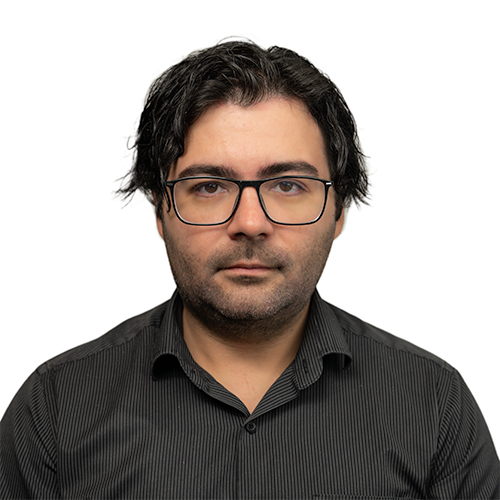
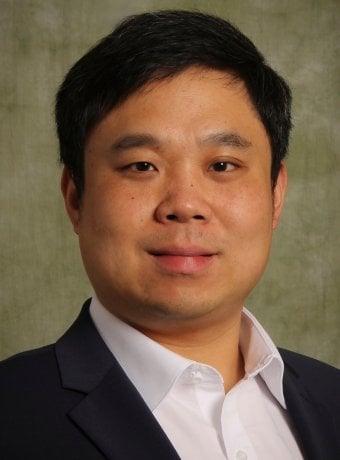
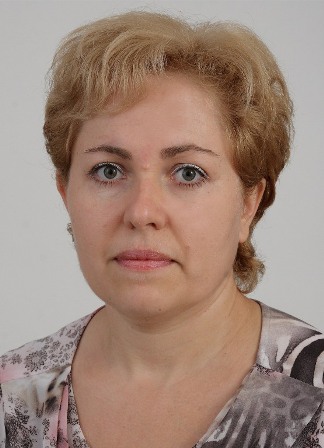
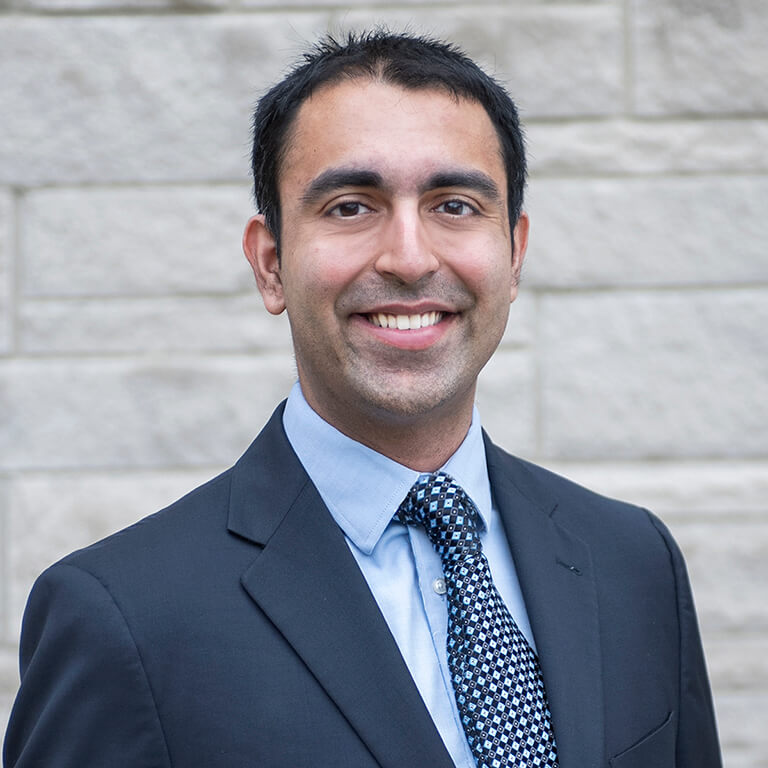
Sonia A. Fahmy is a Professor of Computer Science and Associate Department Head at Purdue University's Department of Computer Science (College of Science). She holds a PhD from The Ohio State University (1999). Her research focuses on network architectures, protocols, and security, with over 100 refereed publications. Key areas include virtual reality networking, cellular network optimization, and network experimentation tools like NFV-VITAL and ENVI. Her work is supported by NSF, DHS, industry partners, and she leads Purdue's CERIAS cybersecurity initiatives. Education: PhD in Computer and Information Science from The Ohio State University (1999). Research Interests: Network security, distributed systems, wireless sensor networks, and network function virtualization. Notable contributions include the HEED clustering algorithm and Contain-ed latency management system. Awards: NSF CAREER Award (2003), IEEE Fellow. Grants: NSF, DHS, AT&T, Cisco, Juniper, and Meta-funded projects. Professional service includes leadership roles in IEEE ICNP, INFOCOM, and editorial roles in top journals. Advising: Mentored over 20 PhD students and postdocs. Current advisees include Umakant Kulkarni and Yufeng Chen. Research teams collaborate with industry partners like Hewlett-Packard and Sandia National Labs. Labs/Teams: Active in Purdue's CERIAS, leading projects on secure network protocols and experimentation frameworks. Tools developed include EMIST, Testbed Mapping, and iHEED for sensor networks.
Kimberly Becker is Professor in the Department of Psychology at the McCausland College of Arts and Sciences, University of South Carolina. She holds a BA from College of William & Mary, PhD from University of Arizona, Clinical Respecialization Certificate from University of Hawaii, completed clinical internship at Kennedy Krieger Institute, and postdoctoral fellowship at Johns Hopkins University. Dr. Becker directs the Becker Lab focused on extending mental health service reach and effectiveness. Her research encompasses: Treatment engagement strategies for youth/families Clinical decision support tools development Workforce training through supervision/coaching Expanding mental health workforce capacity School-based intervention implementation Dr. Becker's publications demonstrate consistent focus on mental health services research. Recent work (2023-2025) examines clinical decision-making, implementation science, school-based services during COVID-19, and cross-cultural interventions. Her articles frequently address treatment engagement barriers, workforce development, and scalable service models in diverse settings. Her research has been supported by: William T. Grant Foundation Klingenstein Foundation National Institute on Drug Abuse She trains doctoral students in evidence-based psychosocial treatments and clinical decision-making. Dr. Becker mentors students in developing research programs to improve mental health services for underserved populations. She leads the Becker Lab whose mission emphasizes equity, authentic partnerships, applied science, and paradigm-shifting approaches to children's mental health services.
Reza Curtmola is a Professor in the Department of Computer Science at NJIT. His research focuses on cybersecurity, distributed systems, and network security with an emphasis on secure routing, cloud computing, and privacy-preserving technologies. He holds a Ph.D. in Computer Science from Johns Hopkins University (2007), an M.S. from the same institution (2003), and a B.S. from the Politehnica University of Bucharest (2001). Dr. Curtmola’s work addresses challenges in wireless mesh networks, vehicular communication systems, and mobile-cloud integration. His contributions include innovative solutions for secure network coding, distributed resource management (e.g., parking assignment systems), and auditable data storage mechanisms. He has developed middleware frameworks like Moitree for mobile-cloud applications and has explored defenses against side-channel attacks, cache leaks, and entropy-based network vulnerabilities. His research also extends to privacy in vehicular DSRC protocols, dynamic traffic optimization, and verifiable code review systems. He has published extensively on topics ranging from cryptographic defenses in distributed systems to practical implementations of remote data checking in untrusted clouds. Current research activities include advancing secure cloud infrastructure, improving mobile crowdsensing reliability, and mitigating threats in IoT-enabled urban environments. His work often bridges theoretical foundations with practical system implementations, emphasizing real-world applicability in smart cities and critical infrastructure systems.
Overview Amir Rahmati is an Assistant Professor in the Department of Computer Science at Stony Brook University , where he directs the Ethos Security & Privacy Lab and is a member of the National Security Institute. His work focuses on securing emerging technologies like IoT, AR, and ML systems. Education PhD in Computer Science & Engineering, University of Michigan (2017) Research Focus His research addresses security threats in emerging systems, including: Cyber-Physical System vulnerabilities Adversarial ML attacks Hardware security Privacy-preserving frameworks Notable contributions include work on cryptocurrency scam detection, neural network robustness, and AR system security. Grants & Awards Supported by the Air Force Office of Scientific Research (AFOSR), Office of Naval Research (ONR), Meta, NVIDIA, and IBM. His research has been featured in MIT Technology Review , Washington Post , and Bloomberg . Advising Seeking students with expertise in hardware, software, ML, UX, or network protocols passionate about security/privacy. Apply via the graduate program and fill out his interest form. Labs & Collaborations Leads the Ethos Lab focusing on securing IoT, AR, and ML systems. Collaborates on projects like Erebus (AR access control) and Valve (serverless computing security).
Aydin Aysu is an Associate Professor at the Department of Electrical and Computer Engineering, College of Engineering, North Carolina State University. His research focuses on hardware-based security , applied cryptography , and computer architecture , with an emphasis on secure systems to counter advanced cyber threats. Ph.D. in Computer Engineering, Virginia Tech (2016) M.S. in Electrical Engineering, Sabanci University, Turkey (2010) B.S. in Microelectronics Engineering, Sabanci University, Turkey (2008) Aysu’s work addresses hardware vulnerabilities through secure design automation, side-channel attack mitigation, and next-generation cryptographic systems. His research extends to AI/ML security , FPGA security , and quantum-resistant cryptography . Notable scientific awards include: NSF CAREER Award (2020) University Faculty Scholars (2024) Bennett Faculty Fellow Award (2020) Best Paper Awards at DATE Conference (2020), ACM GLSVLSI (2019), and others Aysu leads the Hardware Cybersecurity Research Lab (HECTOR) , focusing on pre-silicon security analysis, secure accelerator sharing, and societal impacts of cybersecurity. He actively mentors Ph.D. students and collaborates on funded research projects like the SATC: CORE: SMALL grant.
Frank Stajano is a Full Professor of Security and Privacy at the University of Cambridge, leading the Academic Centre of Excellence in Cyber Security Research. He is a Fellow of Trinity College, where he collaborates with Nobel laureates. His research focuses on security, privacy, and usability in ubiquitous computing, IoT, and digital finance. He holds a PhD from Cambridge and a Laurea in Electronic Engineering from La Sapienza University. Frank's work includes the Pico project (ERC-funded), aiming to replace passwords with secure, usable alternatives. He co-founded Cambridge Cyber, offering cybersecurity consulting. Notable achievements include the Resurrecting Duckling authentication protocol and contributions to location privacy (Mix Zones). He has authored over 50 refereed publications and a research monograph on ubiquitous computing security. His awards include the Toshiba Fellowship (2000) and an ERC Starting Grant (2017). Frank teaches cybersecurity and lectures globally via his YouTube channel. Beyond academia, he is a 5th-dan kendo practitioner and a scholar of Disney comics.
Soufiene Djahel is a Professor at the Centre for Future Transport and Cities (CFTC) at Coventry University, UK. His research focuses on connected and autonomous vehicles (CAVs), unmanned aerial vehicles (UAVs), cyber security, and smart cities. He holds a PhD in Secure Routing and Medium Access Protocols from Université des Sciences et Technologies de Lille (2010), and has held academic positions including Senior Lecturer at the University of Huddersfield and Manchester Metropolitan University. His research interests include CAV coordination protocols, cyber-physical security solutions, and intelligent transportation systems. Djahel leads projects such as the £1.2M AeroPharma Logistics initiative and has secured funding from the Newton Fund and JSPS. He is a recipient of the 2021 JSPS Invitational Fellowship and has published extensively in IEEE journals and conferences. Current projects explore UAVs-as-a-service, digital twins for CAVs, and B5G/6G for smart infrastructure. He advises PhD students on topics like AI-based threat mitigation and transport electrification. Djahel also serves as an external examiner and editorial board member for journals like IEEE Transactions on Intelligent Transportation Systems.
Ronghua Xu is an Assistant Professor at the Department of Applied Computing, Michigan Technological University, specializing in blockchain, IoT, and edge computing. He is a member of the ICC Center for Cybersecurity. Ph.D. (2023), M.S. (2018) in Electrical and Computer Engineering, Binghamton University M.S. (2010) in Mechanical and Electrical Engineering, Nanjing University of Aeronautics & Astronautics B.S. (2007) in Mechanical Engineering, Nanjing University of Science & Technology His research focuses on decentralized security networks, NextG network intelligence, and blockchain applications in IoT systems. Key themes include scalability, interoperability, and resilience in smart vehicular and urban air mobility networks. Recent publications highlight blockchain-enabled architectures for secure data access, federated learning, and edge resource management. Awards include the Graduate Student Excellence Award (2023) and ICC Rapid Seeding Awards (2024). Ronghua Xu actively seeks self-motivated Ph.D. students for his research group. He previously worked at Siemens (2010–2016) on software development and system integration.
Fatme Yuseinova Rashidova is a Senior Lecturer at the Technical University - Gabrovo , affiliated with the College of Engineering and the Department of Automation, Information and Control Technology . Her work bridges computer science , educational technology , and systems engineering . Research Focus: Automated scheduling, distance learning platforms, cybersecurity in Industry 4.0, and AI applications in education. Publications: 29 scientific works, including a 2025 textbook on internet-based systems and recent papers on timetabling optimization, SWOT analysis in education, and AI challenges. Projects: Participated in 14 research initiatives, including electronic voting systems, smart medicine dispensers, and cybersecurity frameworks for industrial environments. Contributions: Developed centralized timetabling systems, virtual admission environments, and online testing platforms. Her projects emphasize reducing administrative burdens, improving accuracy in educational processes, and enhancing student satisfaction.
Hongkai Wen is a Professor (Chair in Machine Learning Systems) in the Department of Computer Science at the University of Warwick, UK. He holds dual appointments as a Fellow of the Alan Turing Institute (serving as Independent Scientific Advisor for BridgeAI and member of Turing Research Ethics team) and previously worked as Senior Research Scientist at Samsung AI Centre Cambridge and postdoctoral researcher at Oxford University. Education: Computer Science, Keble College, University of Oxford Research Focus: Develops intelligent multi-modal perception systems for real-world deployment with extreme computational efficiency. Core expertise spans ML systems optimization, neural architecture search, and cross-disciplinary applications in robotics, urban mobility, and wearable/IoT security. Pioneered event-based vision techniques and training-free NAS frameworks. Publication Trends: Recent work (2023-2025) demonstrates accelerating innovation in diffusion model efficiency, on-device AI deployment, and sensor fusion techniques. Dominant themes include computational resource optimization for edge devices, multi-modal temporal modeling, and privacy-preserving spatial analytics, with significant contributions to NeurIPS, ICML, and CVPR venues. Scientific Recognition: Best Paper Award, AutoML Conf 2023 (T-CET) Best Paper Runner-up, SenSys 2024 (AdaFlow) Best Paper Awards: IPSN 2014 & EWSN 2013 1st/2nd Place, Zero Cost NAS Competition (AutoML'22) Mentorship & Funding: Actively supervises PhD candidates through thesis committees at Warwick, Ulster, and Queensland universities. Secured National AI Strategy Fund for Macro Neural Architecture Search research. Recruits annually for PhD positions with scholarships from UKRI, Turing Institute, and industry partnerships. Research Leadership: Heads the AI/ML Systems (AMS) Division at Warwick, directing a 15+ member team developing deployable ML frameworks for mobile/robotic platforms. Maintains active collaborations with Samsung AI Centre and Turing Institute's BridgeAI programme on ethical AI deployment.
Dana Schmalz is a Senior Research Fellow at the Max Planck Institute for Comparative Public Law and International Law in Heidelberg, Germany, and currently serves as a visiting scholar at Columbia Law School and a fellow at the Columbia Center for Contemporary Critical Thought in New York. Funded by an Alexander von Humboldt Foundation fellowship, she pursues a two-year research project examining critical dimensions of international refugee law and migration governance. Her academic profile combines rigorous legal scholarship with theoretical engagement across international law, political philosophy, and migration studies. Dr. Schmalz earned her doctorate from the University of Frankfurt in 2017 with a dissertation on democratic theoretical issues in refugee law, followed by an LL.M. in Comparative Legal Thought from Cardozo Law School, New York, in the same year. She serves as an editor for the journal Kritische Justiz (KJ), contributing to critical legal scholarship in German-speaking academic circles. Her research centers on the intersection of refugee law and democratic theory, examining how political rights are secured for those without voice in democratic processes. She critically investigates population discourse and its relationship to migration governance, exploring how demographic projections shape perceptions of 'too many' migrants. Her scholarship analyzes the language and power structures of international law, examining how legal frameworks construct hierarchies and influence global governance. She has published extensively on European border policies, refugee protection mechanisms, and the theoretical foundations of international legal order. Dr. Schmalz's recent publications reveal a sophisticated analysis of migration governance that connects historical developments with contemporary challenges. She examines how legal concepts like responsibility-sharing function in practice, investigating the role of geopolitical proximity in determining state obligations toward refugees. Her work consistently combines rigorous legal analysis with critical theoretical perspectives, often challenging conventional understandings of migration governance. She explores the internalization of borders in demographic thinking and the ways legal frameworks contribute to perceptions of migration as 'excess.' Alexander von Humboldt Foundation fellowship supporting current research As an active contributor to Völkerrechtsblog, Dr. Schmalz helps shape digital infrastructure for global legal scholarship. Her work connects with broader academic communities through collaborations with scholars across international law and refugee studies. While specific grant details beyond the Humboldt fellowship aren't provided in the source material, her extensive publication record indicates sustained research activity across multiple funding cycles. She engages with practical policy challenges through her analysis of European migration governance and refugee protection mechanisms. Dr. Schmalz's research connects with multiple academic networks through her work at the Max Planck Institute, Columbia University, and her editorial role at Kritische Justiz. Her scholarship bridges German and Anglo-American academic traditions, contributing to transnational legal discourse on migration and refugee protection. She participates in interdisciplinary conversations that connect legal scholarship with political theory, philosophy, and migration studies.
Kevin Vinsen is a Senior Research Fellow at the University of Western Australia, working in the Data Intensive Astronomy (DIA) Program of the International Centre for Radio Astronomy Research (ICRAR) since 2009. He is also affiliated with the UWA Defence and Security Institute and holds an ORCID ID of 0000-0001-5332-3784. His work focuses on translating ICRAR software capabilities into practical industry applications across diverse domains. His research interests include: Peta-scale systems High-performance Computing Machine Learning applications in multiple fields Wave and weather forecasting Digital Assistive Technologies Agricultural applications of ML Large language models Vinsen heads the Translation and Impact work of the DIA team and leads the development of Machine Learning systems. His current projects include ML for wave forecasting on the NW shelf, wind and temperature forecasting, honey traceability and provenance, and digital assistive technology for people with disabilities. His work contributes to UN Sustainable Development Goals related to industry, oceans, agriculture, food, disability, and defense. His research output demonstrates a strong trend toward applying machine learning techniques to solve real-world problems across astronomy, environmental science, agriculture, and disability support. This interdisciplinary approach showcases the versatility of his computational expertise across scientific and social domains. Vinsen has an h-index of 11 with 621 citations across 33 research outputs. As the ICRAR/UWA Summer Studentship Co-ordinator, he mentors emerging researchers and contributes to building research capacity. His collaborative network spans multiple institutions and research areas, reflecting his ability to bridge academic research with practical applications.
Sagar Samtani is an Associate Professor and Weimer Faculty Fellow at the Kelley School of Business , Indiana University. He serves as Director of the Kelley’s Data Science and Artificial Intelligence Lab (DSAIL) . His research focuses on Artificial Intelligence for Cybersecurity , including cyber threat intelligence, deep learning, and dark web analytics. He holds a PhD from the University of Arizona (2018), and has received prestigious awards such as the Indiana University Outstanding Junior Faculty Award (2023) and IEEE Big Data Security Junior Research Award (2023). Education : PhD in Information Systems, University of Arizona, 2018 MSMIS, University of Arizona, 2014 BSBA, University of Arizona, 2013 Research Interests : Samtani’s work addresses cybersecurity challenges through AI, including proactive threat detection, vulnerability assessment, and healthcare analytics. He emphasizes explainable AI (XAI) for transparency in cybersecurity systems. Grants & Awards : NSF Grant: CyberCorps SFS Program ($2.3M, 2020–2025) NSF Grant: AI4Cyber Research Education ($300K, 2020–2022) Multiple teaching awards, including the Trustees Teaching Award (2023) and recognition as one of Top 50 Undergraduate Professors (2022) Labs & Teams : Leads the DSAIL lab, focusing on AI-driven solutions for business and cybersecurity. Collaborates with NSF-funded initiatives on cyber AI education and threat intelligence.
Professor Andrew Martin is a leading academic in Systems Security at the Department of Computer Science, University of Oxford, and a Governing Body Fellow at Kellogg College. His research focuses on trusted computing, cybersecurity, and secure distributed systems, with applications in cloud computing, IoT, and smart grids. He has been instrumental in advancing secure architectures using hardware-based trust mechanisms such as Intel SGX and Trusted Platform Modules. Research Interests: His work spans Systems Security , Trusted Computing , Confidential Computing , Secure Multi-Party Computation , and Privacy in Distributed Systems . He investigates how hardware-enforced security can mitigate risks in large-scale environments, particularly where privacy and trust are paramount. Publication Trends: His recent publications reveal a strong focus on Trusted Execution Environments (TEEs), remote attestation, and secure cloud architectures. He critically examines the feasibility of using hardware enclaves for both defensive and offensive security, emphasizing architectural soundness and real-world applicability. Scientific Awards: No specific awards mentioned in the provided text. Advising and Grants: Professor Martin has supervised numerous PhD and Master’s students in cybersecurity and systems research. His projects include CRANE , Trustworthy Logging , webinos , TCLOUDS , and Secure Networking by Design (SNbD) . He has secured funding for research in trusted computing and secure distributed systems, contributing to both theoretical foundations and practical implementations. Labs and Teams: He leads a research group focused on systems security and trusted computing, collaborating with industry and academic partners on large-scale security challenges. His team works on developing secure middleware, analyzing vulnerabilities in consumer devices, and designing privacy-preserving protocols for smart infrastructure.
Professor Carsten Rudolph serves as Deputy Dean at Monash University's Faculty of Information Technology and directs the Oceania Cyber Security Centre (OCSC). He holds a PhD in Information Security from Queensland University of Technology (2002) and a Diplom in Computer Science from Goethe University Frankfurt (1997). His interdisciplinary research focuses on cybersecurity foundations, including cryptographic protocols, AI-driven security, human factors, and national cybersecurity policy. Key areas include securing smart grids, digital health systems, and transnational energy networks. Notable contributions include establishing the OCSC, leading Pacific region cybersecurity maturity reviews with Oxford University, and advancing frameworks for firmware security in virtual power plants. He chairs major projects like RAI4IoE (Responsible AI for Energy) and Post-Quantum Cryptography initiatives. Teaching responsibilities include cybersecurity modules like FIT3173 and FIT3168. Rudolph's research outputs (137+ publications) emphasize phishing detection via AI, blockchain-based energy trading, and resilient smart grid systems. He collaborates internationally on policy development and has advised 12 major research projects funded by agencies like the U.S. Bureau of East Asia and Pacific Affairs.