Dr. Bharanidharan Shanmugam is an Associate Professor in Information Technology at Charles Darwin University's Faculty of Science and Technology. He specializes in cybersecurity, IoT security, and cyber risk management in microgrids. His research focuses on addressing real-world challenges in IoT, smart grids, and medical devices to enhance community impact. **Research Interests:** - IoT Security - Cyber Risk Assessment in Microgrids - Network and Information Security - Applied Cybersecurity Solutions - Blockchain and Privacy-Preserving Technologies **Key Projects (2019–2025):** - Cyber Territory Skills Hub (2023–2025) - Renewable Energy Microgrid Hub (2021–2024) - Blockchain-Based Digital Identity (2019–2020) **Publications:** Focuses on IoT security frameworks, intrusion detection systems, and AI-driven cybersecurity solutions. Recent works include studies on smart grid load forecasting, medical IoT threat detection, and water leakage detection using machine learning. **Grants & Supervision:** Principal Investigator on multiple ARC-funded projects. Supervises PhD students in DevSecOps and IoT security. Active in organizing workshops on digital awareness for indigenous communities.
Kimberly J. Morgan is a Professor of Political Science and International Affairs, and Associate Dean for Faculty Affairs at George Washington University's Elliott School of International Affairs. She holds a Ph.D. in Political Science from Princeton University and has held postdoctoral fellowships at NYU and Yale, as well as visiting faculty roles at institutions in Europe. Her research focuses on social policy, immigration, and European politics, with notable works on work-family policies and Medicare governance. Dr. Morgan's expertise spans comparative politics of Western Europe, immigration integration, and the interplay between religion and policy. She has co-authored influential books such as *The Delegated Welfare State* (2011) and edited major handbooks like the *Oxford Handbook of the Welfare State* (2021). Her teaching includes courses on comparative politics, European policy, and immigration studies. Her recent research explores topics such as Medicare Advantage reforms, childcare policy, and the enforcement mechanisms in immigration systems. While no specific awards are listed in the provided text, her extensive publications reflect significant contributions to social policy analysis. Her work bridges academic rigor with practical policy insights, emphasizing governance, marketization, and comparative institutional frameworks.
Tim Roberton is an Associate Professor in the School of Population and Global Health at The University of Western Australia. His work focuses on global health systems, maternal and child health, and the impact of demographic transitions on healthcare systems. He holds a Doctor of Public Health from Johns Hopkins University (2015), Master of Public Health from UWA (2010), and degrees from the University of Sydney and University of Cambridge. Doctor of Public Health: Johns Hopkins University (2015) Master of Public Health: UWA (2010) Master of International Studies: University of Sydney (2003) Bachelor of Arts: University of Cambridge (2001) His research explores maternal welfare, childhood mortality, and the effects of global health crises like the early impacts of COVID-19 in Mozambique. He also investigates health expenditure trends in Latin America, emphasizing economic development's role in healthcare financing. Recent studies include community health worker assessments in Mozambique and methodological advancements in global health modeling tools. Roberton leads the WHO-funded 'Health Systems Impact Modelling Consortia' project (2024–2026), focusing on technical support for health systems analysis. He has advised on multi-country studies and collaborates internationally on SDG-aligned public health priorities. Key areas of focus include strengthening health systems in low-resource settings, evaluating service disruptions during pandemics, and leveraging data-driven tools to improve health outcomes globally.
Myropi Garri is a Senior Lecturer in Strategic Management and International Business at the University of Portsmouth's Faculty of Business & Law, within the School of Strategy, Marketing and Innovation. She serves as the Global DBA Course Director and supervises PhD students. Her research focuses on strategy and international business, with emphasis on Foreign Direct Investment (FDI), institutional influences, sustainability, and geopolitical dynamics. She has contributed to over 20 peer-reviewed publications and led projects such as the 'Dynamic Capabilities building in Ukrainian SMEs for post-war restoration' and the Portsmouth City Council-funded 'AI Leadership Skills Bootcamp.' Her work addresses UN Sustainable Development Goals (SDGs), particularly in sustainable development and global economic equity. Garri has received the Alan M. Rugman Most Promising Young Scholar Award (2016) and frequently presents at international conferences, including a 2024 invited talk at the University of Macedonia in Greece. Key research themes include configurational theorizing, institutional theory, dynamic capabilities, and resource-based strategies. Her projects often involve cross-disciplinary collaborations, such as analyzing FDI motives in South Korea and exploring SME resilience in post-war Ukraine.
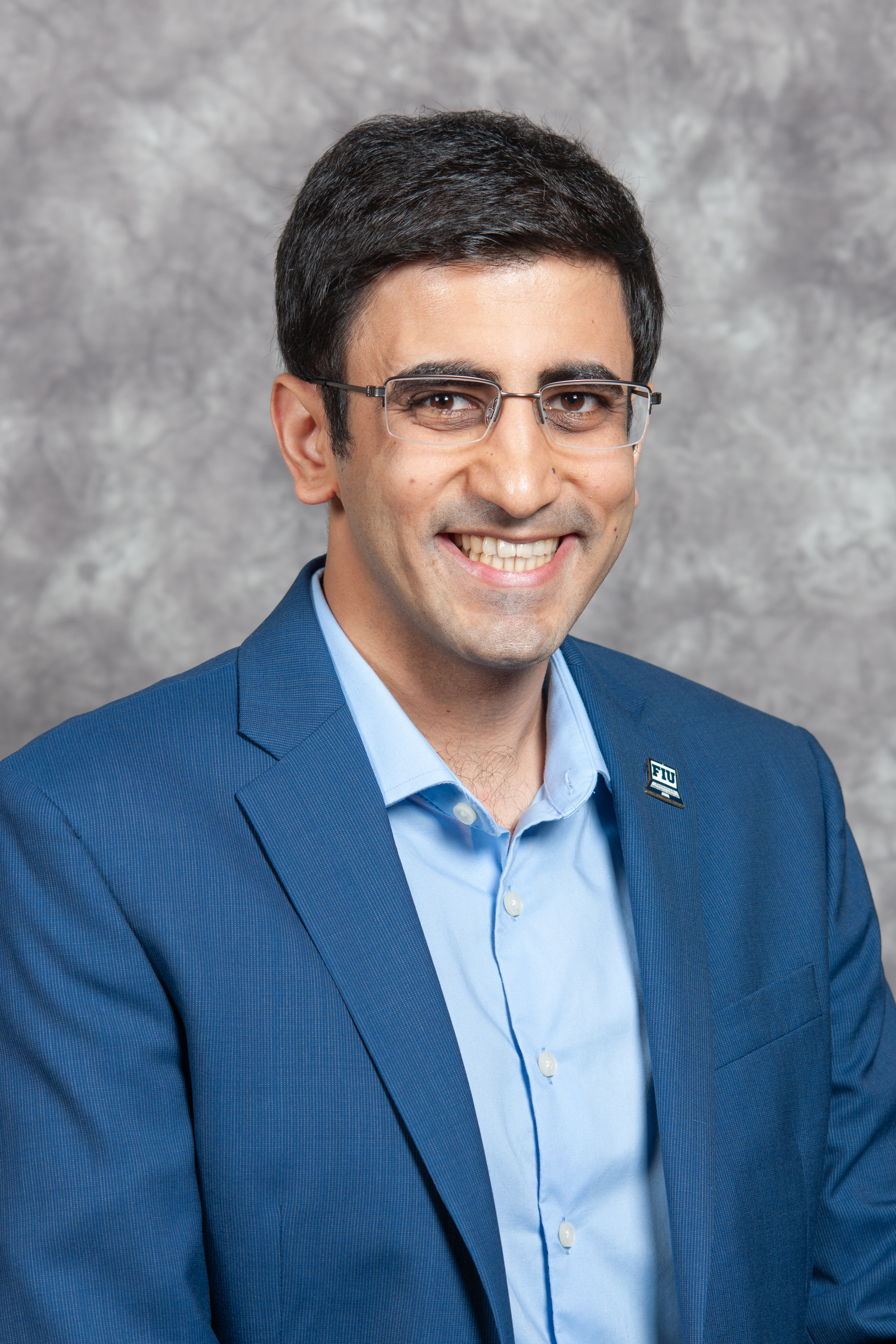
M. Hadi Amini is an Assistant Professor at Florida International University's Knight Foundation School of Computing and Information Sciences. He founded and directs the Sustainability, Optimization, and Learning for InterDependent networks (SOLID) laboratory, focusing on cyber-physical-social systems and distributed AI applications. Ph.D., Electrical and Computer Engineering (2019), Carnegie Mellon University M.Sc., Electrical and Computer Engineering (2015), Carnegie Mellon University M.Sc. (2013), Tarbiat Modares University B.Sc. (2011), Sharif University of Technology His research spans federated learning, interdependent network optimization, and AI applications in smart cities , energy systems , and healthcare . Recent work emphasizes privacy-preserving techniques, quantum encryption, and blockchain integration for secure distributed learning. The 15 most recent publications highlight trends in large language models , edge computing , medical imaging security , and infrastructure resilience , with interdisciplinary emphasis across computer science, systems engineering, and urban planning. Best Paper Award, IEEE Conference on Computational Science & Computational Intelligence (2019) Best Journal Paper Award, Springer Nature Operations Research Forum (2021) Excellence in Teaching Award, FIU (2020) Multiple Best Reviewer Awards, IEEE Transactions NSF Travel Awards (2019) As Associate Editor for Frontiers in Communications and Networks and book series editor for Sustainable Interdependent Networks , he actively shapes research discourse. His lab has secured $3.6M in federal/state funding for AI-driven infrastructure projects.
Dr. Alexander Plopski is an Assistant Professor at the Institute of Visual Computing, Technische Universität Graz. His research focuses on advancing augmented reality (AR) technologies, human-computer interaction (HCI), and optical display systems. He holds a PhD, M.Sc., and BSc in relevant fields. His work emphasizes perceptual optimization in AR displays, eye tracking integration, and accessibility solutions for color vision deficiencies. Key research areas include gaze-contingent AR interfaces, light field manipulation for extended reality, and multimodal interaction techniques. Notable contributions include the development of the 'guitARhero' interactive AR guitar tutorial system and studies on focal distance effects in optical see-through displays. His publications span topics from AR display calibration to gesture recognition using radar sensing. He has explored applications in industrial training, medical AR, and robotic telemanipulation. His work often bridges theoretical perceptual studies with practical system implementations, aiming to enhance user experience and accessibility in AR/VR environments.
He Zhu is an Assistant Professor at Rutgers, The State University of New Jersey, affiliated with the Department of Computer Science. His research focuses on programming languages, compilers, wireless communications, IoT systems, and 5G network protocols. He received the PLDI 2019 Distinguished Paper Award for his contributions to formal methods in programming systems. His work addresses challenges in vehicle-to-everything (V2X) communication, resource allocation in sidelink networks, network security, and dynamic authorization frameworks for IoT devices. Key research interests include optimizing 5G NR (New Radio) protocols for vehicular environments, developing efficient data aggregation techniques for user equipment, and enhancing service layer mechanisms for IoT systems. He leads projects funded by the NSF, such as 'Formal Symbolic Reasoning of Deep Reinforcement Learning Systems,' and has contributed to advancements in beam management, RACH protocols, and energy-efficient DRX configurations in wireless networks. His office is located in Core 315. Notable Awards: PLDI 2019 Distinguished Paper Award Grants: NSF Grant: Formal Symbolic Reasoning of Deep Reinforcement Learning Systems His research group explores intersections between compiler design, distributed systems, and network architecture, with applications in smart mobility, edge computing, and secure IoT communication. He actively contributes to standards development for 5G and future generations of wireless networks.
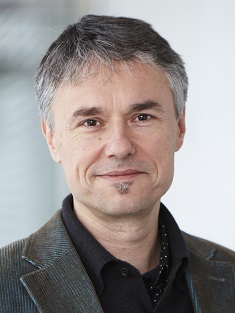
Ueli Maurer is a Full Professor of Computer Science at ETH Zurich and heads the Information Security and Cryptography research group. He received his diploma and Ph.D. in Electrical Engineering from ETH Zurich in 1985 and 1990 respectively. After a fellowship at Princeton University, his research focuses on foundational aspects of cryptography and information security. Education Diploma in Electrical Engineering, ETH Zurich (1985) Ph.D. in Electrical Engineering, ETH Zurich (1990) DIMACS Research Fellow, Princeton University (1990-1991) His research spans information security, cryptographic protocols, discrete mathematics, and theoretical computer science. Key areas include provably secure systems design, digital signatures, public-key infrastructures, and trust management. His work bridges theoretical foundations with practical applications in digital security. His publications demonstrate a consistent focus on advancing cryptographic theory and security proofs. Recent works explore anamorphic encryption, blockchain security frameworks, and composable protocol design. Primary trends include privacy-preserving communication, adaptive security models, and information-theoretic approaches to cryptography. Awards & Honors IEEE Fellow ACM Fellow IACR Fellow Member, German Academy of Sciences (Leopoldina) Rademacher Lecturer (2000) Vodafone Innovation Award (2013) RSA Mathematics Award (2016) TCC Test-of-Time Award (2016) He advises doctoral students on cryptographic protocols and security proofs. His research group works on diverse projects including secure multi-party computation and blockchain technologies. He co-founded the Zurich Symposium on Privacy and Security and serves on editorial boards of major cryptography journals.
Konstantinos Nikitopoulos is a Professor at the University of Surrey , UK, specializing in Wireless Communications and Signal Processing . His research focuses on MIMO Systems , Open-RAN , and Non-Linear Processing for next-generation wireless networks. His recent work explores Analogue Processing for Tbps Wireless Systems and Neuromorphic Computing in MU-MIMO detection. He has developed frameworks like MIMO-SoftiPHY and SACCESS for software-based radio acceleration and power-efficient network design. Key Publications : Power-Efficient RIC, NL-COMM, NeuroMIMO Collaborators : Rahim Tafazolli, George Katsaros, Marcin Filo His research impacts 6G Network Development through innovations in Beamforming , Channel Estimation , and Software-Defined Radios .
Dr. Karen Yeates is a Professor in the Division of Nephrology at Queen's University's School of Medicine. She holds cross-appointments in the Faculty of Health Sciences and is a member of Queen's Cancer Research Institute and Translational Institute of Medicine. Her work focuses on improving healthcare access through mHealth innovations in global settings, particularly sub-Saharan Africa and Indigenous communities. Education: MD (Queen's University), MPH (Harvard School of Public Health), Fellowship in Nephrology (Royal College of Physicians and Surgeons Canada). Research interests span global health equity, cardiovascular disease prevention, cervical cancer screening, and mobile health technology. Key projects include leading the PURE Study Tanzania (Prospective Urban and Rural Epidemiology) and the International Polypill Study for cardiovascular prevention. She pioneered smartphone-based interventions for hypertension management in rural communities and cervical cancer screening in Tanzania. Articles consistently address mHealth implementation, chronic disease epidemiology, and health systems strengthening. Recent work evaluates mobile health tools for malaria prevention and cervical precancer detection in resource-limited settings. Rising Stars in Global Health Award (2024) CIHR-Global Alliance grant for mHealth hypertension projects Principal Investigator for Grand Challenges Canada initiatives Advocates for equitable kidney care globally, contributing to ISN Global Kidney Health Atlas. Co-founded Queen’s University School of Medicine’s Office of Global Health to advance interdisciplinary global health training.
Grant Bollmer is an Associate Research Professor in the Department of Communication at the University of Maryland, College Park. His research focuses on digital cultures, critical theory, cultural studies, and the history of science. He holds a Ph.D. in Communication Studies from the University of North Carolina at Chapel Hill. His work examines topics such as influencer culture, emotion measurement, media materialism, and the philosophical implications of technology. Key publications include The Influencer Factory (2024), The Affect Lab (2023), and Materialist Media Theory (2019). His research has been supported by grants from the National Endowment for the Humanities and a residency at the Media Archaeology Lab. Bollmer’s recent scholarship explores AI ethics, absurd temporalities, and neo-feudal economic structures. He has received awards including the NC State CHASS Outstanding Junior Faculty Award and contributed to a magazine issue honored by the Canadian National Magazine Awards. His current projects include studies on 'bad' video games, generative AI in brain decoding, and the intersection of capitalism and billionaire behavior. Bollmer’s interdisciplinary approach synthesizes Marxist theory, media archaeology, and critical cultural analysis.
Talal Shaikh is an Associate Professor at Heriot-Watt University's School of Mathematical and Computer Sciences in Dubai. He serves as Director of Undergraduate Studies and Programme Director for BSc Computer Science, BSc CS (AI), and MSc Software Engineering. With a decade of industry experience as a Chief Information Officer and Software Engineer, he bridges practical insights with academic research. Research Interests: Pervasive Computing, IoT/M2M, AI/ML, WiFi Sensing for Healthcare, Financial Machine Learning, Educational Technology Awards: Teaching Excellence Awards (2017/18), Fellow of the Higher Education Academy (FHEA), multiple Learning and Teaching Oscars (2016, 2017, 2018) His work spans Ubiquitous Computing and IoT , focusing on sensor networks and WiFi-based sensing for healthcare. In Artificial Intelligence , he applies ML to robotics, financial analytics, and educational innovation. Recent articles analyze Reinforcement Learning , Emotion Recognition , and WiFi Sensing applications. His teaching emphasizes student-centric learning, with over 100 supervised dissertations achieving distinctions. Collaborations include international conferences and interdisciplinary research in smart environments and adaptive systems.
Adlen Ksentini is a Professor at EURECOM, a leading graduate school and research center in Sophia Antipolis, France, specializing in digital science and communication systems. His extensive research focuses on next-generation mobile networks (5G/6G), network management, and the integration of artificial intelligence with telecommunications infrastructure. Dr. Ksentini actively contributes to major EU research initiatives including 6G-BRICKS and AC3, serving as a key researcher and project leader in the development of future network architectures. Dr. Ksentini's research interests center around network slicing, intent-based networking, edge computing, and the application of machine learning to network management problems. His work bridges theoretical advancements with practical implementations in 5G/6G systems, with particular emphasis on zero-touch network management, energy efficiency optimization, quality of service assurance, and the integration of large language models with network operations. His research has significantly contributed to the development of O-RAN (Open Radio Access Network) frameworks and the evolution of network automation. His recent publication trends reveal a strategic shift toward AI-native network architectures, with increasing focus on integrating large language models (LLMs) with network management systems. His work demonstrates a clear progression from traditional network management approaches to more autonomous, AI-powered systems capable of intent-based configuration, self-optimization, and predictive maintenance. The publications show strong emphasis on practical implementations within the 6G research ecosystem, addressing critical challenges in network slicing, resource allocation, and energy efficiency. As a research supervisor, Dr. Ksentini mentors several PhD students including Abdelkader Mekrache, Karim Boutiba, Bouziane Brik, and Houda Hafi, who frequently appear as co-authors on his publications. His research is primarily funded through major EU research projects such as 6G-BRICKS (Building Reusable Testbed Infrastructures for Cloud-to-Device Breakthrough Technologies) and AC3 (which focuses on Cloud Edge Continuum). Dr. Ksentini is actively involved with the 6G-BRICKS project consortium and the AC3 project team, where he contributes to developing next-generation network architectures that integrate communication, computing, and sensing capabilities. His work within these projects focuses on creating reusable testbed infrastructures and addressing security and trust management challenges in the cloud-edge continuum.
Camila Biazus-Dalcin is a Lecturer (Teaching & Research) at the University of Dundee's School of Health Sciences, affiliated with the Mother, Infant and Child Health Research Group (MIRU). She holds a PhD in Nursing (2020) and a PhD in Philosophy (2022). Her research focuses on addressing health inequalities in marginalized communities, including Gypsy/Traveller populations, people in prison, and those experiencing homelessness. She employs qualitative methods like ethnography and creative approaches, while expanding into mixed methods. She collaborates internationally with colleagues in Brazil, Portugal, Australia, and the USA. Awards include the 2022 Sigma European Early Career Researcher award and the Dr Doris J. Froebe Leadership Education Grant. Research Interests: Health inequalities, sexual and reproductive health, perinatal mental health, and community-engaged research. Recent work includes studies on HIV outcomes, perinatal healthcare access, and disinfection protocols in pediatric units. Awards: Sigma European Early Career Researcher award (2022) Dr Doris J. Froebe Leadership Education Grant (2022) Teaching & Supervision: Teaches undergraduate/postgraduate modules like Fundamentals of Adult Health and Nursing Skills. Supervises PhD students in global health and public health topics. Nominated for multiple teaching awards (2023–2024). Projects: Leads initiatives such as the 'My Data' Project (co-producing tools with drug users) and the Gypsy/Traveller Community Health Worker evaluation. Collaborates on improving healthcare access for marginalized groups.
Dr. Liza van Lent is affiliated with the Faculty of Social and Behavioural Sciences at the University of Amsterdam, focusing on health communication and decision-making in healthcare contexts. Her work integrates patient values, communication strategies, and palliative care. Key research areas include shared decision-making in clinical trials, end-of-life care communication, and pandemic-related bereavement. Her research interests emphasize improving patient-provider communication through tools like the Online Value Clarification Tool (OnVaCT), addressing language barriers in healthcare, and understanding grief dynamics during crises. She has conducted extensive studies on decision-making processes in early-phase clinical trials and palliative care, leveraging both qualitative and quantitative methods. Her recent work explores the impact of the COVID-19 pandemic on end-of-life care, including bereaved relatives' experiences and healthcare professionals' challenges. She also investigates public health communication strategies, such as analyzing social media reactions to crises like the Ebola outbreak. Dr. van Lent collaborates with interdisciplinary teams to bridge gaps between patient values and clinical practice, aiming to enhance healthcare equity and communication efficacy.