Prof. Anya Belz is Full Professor of Computer Science at Dublin City University's School of Computing and Science Lead at ADAPT Research Centre. A leading NLP researcher with PhD-level expertise, she specializes in natural language generation, evaluation methodologies, and multimodal systems. Recipient of multiple best paper awards and NAACL Test of Time Award nomination. Research innovations include foundational work on statistical language generation (deployed in weather forecasting systems), comparative evaluation frameworks, vision-language integration, and reproducibility quantification. Current EPSRC-funded ReproHum project coordinates 20 global labs studying evaluation consistency. Achievements : Developed industry-deployed generation systems for accessibility applications Pioneered cross-modal alignment techniques for image description Authored 100+ publications spanning generation, evaluation, and reproducibility
Dimitra Psychogiou is a Full Professor of Microwave Engineering at University College Cork and Principal Investigator at Tyndall National Institute's CONNECT Centre in Cork, Ireland. She leads the Advanced RF Technology Group, driving innovation in reconfigurable RF systems for next-generation wireless networks. Her academic credentials include: Dipl.-Eng. in Electrical and Computer Engineering, University of Patras (2008) Ph.D. in Electrical Engineering, ETH Zurich (2013) Prof. Psychogiou's research pioneers reconfigurable microwave filters , non-reciprocal RF components , and additive manufacturing for antenna systems . Her work bridges theoretical microwave engineering with practical implementations in 5G/6G front-ends, emphasizing sustainability through hyperflexible filtering architectures that reduce hardware complexity and energy consumption. Key innovations include acoustic-wave resonator filters and 3D-printed RF components enabling unprecedented miniaturization. Analysis of her 2022-2025 publications reveals a strategic shift toward multifunctional RF integration , where filtering coexists with isolation, amplification, and switching in single modules. This trend addresses critical industry needs for compact, software-defined radio front-ends in satellite communications and IoT networks, with increasing emphasis on reflectionless topologies and spatiotemporal modulation techniques. Her scientific recognition includes: 2023 MTT-S Outstanding Young Engineer Award 2021 Roberto Sorrentino Prize 2021 SFI Research Professorship 2020 NSF CAREER Award 2020 URSI Young Scientist Award UC Boulder Junior Faculty Research Award Prof. Psychogiou actively shapes her field through leadership roles as Chair of IEEE MTT-13 Committee and Secretary of USNC-URSI Commission D, while serving as Associate Editor for IEEE MWCL and IJMWT. Her group collaborates extensively with semiconductor foundries and wireless infrastructure companies to transition lab innovations to commercial applications. The Advanced RF Technology Group operates state-of-the-art facilities for GaAs MMIC prototyping, 3D-printed RF component fabrication, and full-wave electromagnetic characterization, supporting Ireland's strategic position in European telecommunications research.
Arash Joorabchi is an Assistant Professor at the Department of Electronic and Computer Engineering, Faculty of Science and Engineering, University of Limerick, Ireland. His research focuses on the intersection of machine learning, educational technology, and digital library systems, with particular emphasis on automated assessment, text mining, and knowledge organization techniques. Research Trends: Analysis of his publications reveals sustained contributions to automated short-answer grading, Arabic text classification, and semantic integration of Wikipedia with academic resources. Key methodologies include sentence transformers, hybrid text representation models, and citation-based indexing techniques. Technical Domains: His work spans natural language processing, educational data mining, metadata management, and semantic web technologies. Specific applications include Q&A platform analysis, library resource discovery, and curriculum development systems.
Dr. Le-Nam Tran is a researcher at the UCD School of Electrical & Electronic Engineering , University College Dublin. His work focuses on optimizing the last hop of 5G/6G wireless networks through mathematical programming, with emphasis on energy efficiency, interference management, and security against eavesdropping. Develops low-cost, low-complexity transmission techniques Projects supported by Science Foundation Ireland Career Development Award Author of over 80 peer-reviewed publications Research Keywords: Wireless Communications Network Security Signal Processing Energy-Efficient Systems Beamforming Optimization Interference Mitigation
Ian Pitt is a Lecturer in Usability Engineering and Interactive Media at University College Cork (UCC). He leads the Interaction Design, E-Learning and Speech (IDEAS) Research Group, focusing on multimodal human-computer interaction, auditory interfaces, and accessibility solutions for visually impaired users. Pitt holds a D.Phil from the University of York, followed by research fellowships at Otto-von-Guericke University in Germany before joining UCC in 1997. His research interests include speech-based interfaces, e-learning systems, and accessibility technologies for blind users. Key projects include the EU-funded ENABLE Network (2011–2014) and prototype development for UniWink. He has secured significant grants, including €72,009 from IRCSET for voice analysis research and €19,478 from the EU for ICT-supported learning initiatives. Pitt has advised numerous PhD students, including Flaithri Neff (2011), Emma-Kate Crowley (2014), and current candidates Aine Kearns and Patrick Egan. His publications span journals like International Journal of Game-Based Learning and conferences such as ICCHP and ACM SIGACCESS. He has contributed to committees for conferences like CHI and the Irish HCI conference. Teaching modules include Usability Engineering, Human-Computer Interaction, and Digital Media Development. His work emphasizes inclusive design principles, with projects addressing navigation systems for blind students and adaptive e-learning frameworks. Recent research trends focus on ICT-delivered aphasia rehabilitation, emotional BCI interfaces, and multimodal learning systems. Collaborations include international partners through EU grants, reflecting his global impact in accessibility and educational technology.
Dr. George O'Mahony serves as Head of Department of Computer Science at Munster Technological University (MTU) and is a CONNECT Associate Investigator with Research Ireland. He leads Ireland's Cyber Range infrastructure development and acts as WorldSkills Ireland Expert for Cybersecurity Skill 54, driving national cybersecurity initiatives through academia-industry collaboration. Education: B.E. in Electrical and Electronic Engineering, University College Cork (UCC) Ph.D. in Electrical and Electronic Engineering, University College Cork (UCC), 2021 His research pioneers cyber resilience frameworks for OT/IoT systems, zero-trust architectures, and machine learning applications in anomaly detection. He develops low-complexity security solutions for resource-constrained edge devices, with emphasis on wireless sensor networks, GPS applications, and penetration testing methodologies. His work bridges theoretical innovation with practical infrastructure implementation. Recent publications reveal accelerating focus on quantum-resistant cryptography, MQTT-ZT secure brokers, and unified cyber resilience models. His scholarly output consistently addresses interference detection in wireless networks while expanding into satellite communications security and AI-driven network customization, reflecting strategic adaptation to emerging cyber threats. Research Leadership: CONNECT: Associate Investigator advancing cyber security research NCF Cyber Shock: Co-Principal Investigator Cyber Explore: Principal Investigator at MTU Cyber Range: National infrastructure lead (mobile/cloud) Horizon Telemetry: Core research team member As STEM advocate and Cyber Futures Academy contributor, O'Mahony shapes cybersecurity education through WorldSkills Ireland engagement and industry-focused cyber range deployments that serve academic, governmental, and commercial sectors.
Fiona Donson is a Lecturer in Law at the School of Law, University College Cork (UCC), Ireland. She holds a PhD from King's College London, an LLM from Queen's University Canada, and an LLB from Leicester University. Her research focuses on socio-legal issues including children's rights, parental imprisonment, administrative justice, and Traveller equality. She co-directs the Traveller Equality and Justice Project (TEJP), funded by the EU and Council of Europe, addressing discrimination and access to justice for Travellers. She also collaborates on projects related to the impact of imprisonment on families and administrative justice reforms. Education: PhD in Law, King's College London (1997) LLM, Queen's University, Canada (1989) LLB, Leicester University, UK (1988) Her research interests emphasize marginalized communities, participatory methods, and interdisciplinary approaches. Key projects include the TEJP, work on children of incarcerated parents with Dr. Aisling Parkes, and studies on administrative justice frameworks in Ireland. She has authored books like Law and Public Administration in Ireland (2015) and Legal Intimidation: A SLAPP in the Face of Democracy (2000). Teaching includes modules on Administrative Law, Penology, Traveller Rights, and Courtroom Ethnography. She supervises PhD candidates in socio-legal research. Previously, she worked in Cambodia on child rights advocacy and taught at UK institutions like Cardiff and Leicester Universities. Her grants include funding from the Irish Research Council, EU, and Council of Europe. Collaborations span international networks like Children of Prisoners Europe and interdisciplinary teams addressing family impacts of imprisonment. She co-chairs the Action for Children and Families of Prisoners with the Irish Penal Reform Trust and contributes to clinical legal education initiatives like Trauma Informed Clinical Legal Education (TiCLE) with UCL and Glasgow University.
Zubair Kabir is a Senior Lecturer in Public Health and Academic Director of the Master of Public Health (MPH) program at University College Cork (UCC). He holds dual roles in academia and global health research, serving as the country lead for Ireland in the Global Burden of Disease (GBD) Study since 2016. His work has contributed to over 70 GBD-related publications, earning him recognition as the most cited Irish researcher in his field since 2019. Dr. Kabir’s research focuses on tobacco control, alcohol policy, and non-communicable disease (NCD) epidemiology, with a particular emphasis on policy-informed research. He pioneered the Irish CHD IMPACT model, instrumental in shaping Ireland’s cardiovascular health strategy and Healthy Ireland Framework. His contributions to the GBD Study have impacted global health policy, including WHO reports and OECD publications. He leads the Irish Burden of Disease (I-BoD) Research Group, fostering capacity-building through training master’s students in BoD methodology. His recent work includes alcohol policy research (e.g., estimating alcohol-attributable deaths in Ireland), tuberculosis epidemiology in migrant populations, and mental health studies among cancer patients. He also investigates the health impacts of obesity, aging, and long-COVID in Ireland. Dr. Kabir has secured significant funding, including EU COST Action grants and HRB awards, and serves on national health committees such as the Health Research Consent Declaration Committee (HRCDC). His awards include the American College of Chest Physicians Fellowship (2014) for excellence in tobacco control advocacy. His academic career spans postdoctoral fellowships at Harvard and Trinity College Dublin, and he holds a PG Diploma in Higher Teaching & Learning. Key contributions include co-editing Tobacco Use Insights, co-authoring WHO policy reports, and advancing dental public health through GBD-linked studies on oral cancer.
Sinead O'Keeffe is a Research Fellow at the University of Limerick in the Faculty of Science and Engineering , specifically within the Department of Electronic and Computer Engineering . Her research bridges the technical domain of optical fiber sensor development with critical applications in radiation therapy and sports medicine. Primary Research Themes Medical radiation dosimetry using optical fiber sensors Brachytherapy dose monitoring systems Sports injury prevention in Gaelic football and running Mental health literacy in rural farming communities Key Technical Contributions Development of scintillation-based dosimeters Characterization of perfluorinated polymer fibers 3D printed sensor systems for clinical and rehabilitation applications Interdisciplinary Applications Prostate cancer radiotherapy dose measurement Mental health intervention programs for athletes Work-family conflict analysis in Irish farming Email: sinead.okeeffe@ul.ie
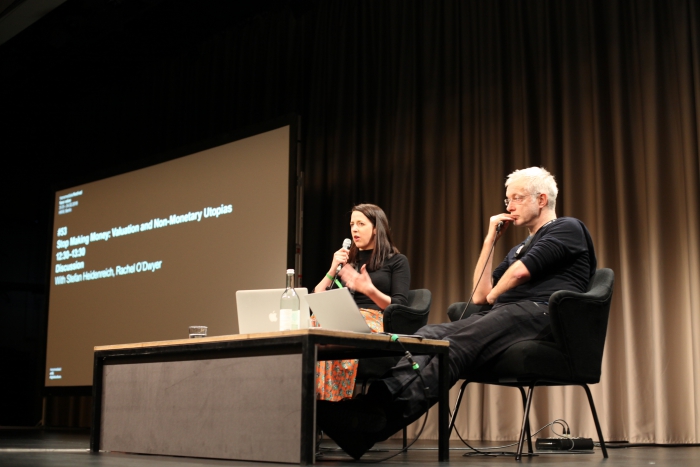
Rachel O’Dwyer is a Lecturer in Digital Cultures at the School of Visual Culture, National College of Art and Design (NCAD), Dublin. She holds a PhD from Trinity College Dublin (2014), an M.Phil. in Music and Media Technologies (2009), a B.A. Honours in Fine Art (Digital Media) from IADT Dun Laoghaire (2006), and a City & Guilds Diploma in Sound Engineering (2007). Her research explores the intersection of digital cultures and cultural economies, focusing on how digital networks transform ownership, value, and production of art, knowledge, and information. She critiques neoliberal logics in blockchain and algorithmic systems, advocating for a return to commons-based models. Education: PhD, Trinity College Dublin (2014): Spectre of the Commons: A Political Economy of Radio Spectrum M.Phil., Trinity College Dublin (2009): Music and Media Technologies B.A. Honours, IADT Dun Laoghaire (2006): Fine Art (Digital Media) City & Guilds Diploma, Sound Engineering (2007) Research Interests: Rachel’s work interrogates money, algorithms, AI, and their implications for cultural production and resistance. She investigates the role of blockchain in crypto-art, freeports, and art markets, while also examining how IoT and 5G reshape payments and surveillance. Her critical lens extends to the political economy of communications, digital value systems, and tactical media strategies like Openhere and D.A.T.A. Scientific Awards: 2018: Fulbright Scholar Award (Blockchain & Art) 2018: RIA Charlemont Scholar Award 2014: SFI Public Engagement Grant 2010-2014: Science Gallery Seed Funding Advising & Grants: Rachel has coordinated modules in the history of creative industries and designed MOOCs on technology and society. She organized the Openhere festival (2012, 2014), Data Politics conferences (2016), and Quantified Self events (2011). Her current book project with MIT Press examines radio spectrum ownership. Labs & Teams: She is a core member of the P2P Foundation’s academic research network and coordinates the Orthogonal Methods Group (OMG) at Trinity College Dublin. She advises the DECODE EU project on data sovereignty and contributes to ADAPT’s Ethics and Privacy Working Group.
Lai Ma is Associate Professor at the School of Information and Communication Studies, University College Dublin (UCD), where she also serves as Director of Research (2022–2025) and previously directed the MLIS and GradDipLIS programmes. She holds a PhD in Information Science from Indiana University Bloomington and a BSc(Econ) from The Chinese University of Hong Kong. Her work bridges philosophy, information science, and science policy. PhD, Information Science, Indiana University Bloomington MLIS, Indiana University Bloomington BSc(Econ), The Chinese University of Hong Kong Her research centers on the epistemology of information and knowledge production, with a focus on open research, scholarly communication, research evaluation, and research infrastructure. Influenced by critical social theory, philosophy of language, and STS, she investigates issues of epistemic injustice, bibliodiversity, and the political economy of academic publishing. A major theme is the critique of metrics and platformisation in research. Her recent publications reveal a strong trend toward analyzing the structural inequalities in global knowledge production, especially through the lens of open access models, citation practices, and research assessment. She critically examines how commercial interests and dominant platforms shape what counts as knowledge, often marginalizing voices from the global periphery. Best Paper Meta Reviewer Award Teaching Excellence Award Best Paper Reviewer Award Lai Ma leads the ERC Consolidator Grant project Sustainable and Collaborative Research Information for Bibliodiverse Ecosystems (SCRiBe) (2025–2030) and has secured other grants on open research culture. She actively mentors PhD students and has coordinated key modules such as Digital Libraries , Scholarly Communication , and Research and Practice in LIS . She serves on editorial boards and review panels for major journals and funding bodies, and has held leadership roles in ASIS&T and the Library Association of Ireland. She is affiliated with the UCD Geary Institute for Public Policy and contributes to policy discussions on research evaluation, ethics, and open science. Her work emphasizes the need for community-governed, equitable, and sustainable research infrastructures.
Dr. Eoin O'Connell is an Associate Professor in the Department of Electronics & Computer Engineering at the University of Limerick. He is affiliated with the Centre for Robotics and Intelligent Systems (CRIS) and the Optical Fibre Sensors Research Centre (OFSRC), actively contributing to IoT research and founding the IOT@UL seminar in 2016. Research Interests include cyber-physical modeling, digital twinning, system scalability, security vulnerabilities, edge processing techniques, and sensor development. His work intersects IoT, fiber optics, smart manufacturing, and cloud computing. Recent publications focus on interoperable IoT systems, AI-driven failure detection in additive manufacturing, and digital twin integration, reflecting his expertise in scalable, secure IoT solutions. He has supervised over 40 postgraduate students throughout his career. Teaching Hero Award (2021) Education includes a PhD in wireless integration of fiber optic sensors, an MBA, a Bachelor's in Telecommunications, and certifications in Cisco Networking and cloud computing.
Dr. Barry Hayes is a Senior Lecturer (Associate Professor) in Power Systems Engineering at University College Cork (UCC), Ireland. He leads a research team focusing on grid integration of sustainable energy technologies and future power system operation/planning. Previously held roles include Lecturer at University of Galway (2016-2018) and Marie Sklodowska-Curie Research Fellow at IMDEA Energy (2013-2016). Holds a PhD in Electrical Power Systems Engineering from University of Edinburgh (2013). Research interests include smart grids, distribution network management, demand-side flexibility, non-intrusive load monitoring, and energy communities. Active in IEEE standards development (P2030 smart grid interoperability) and serves as Associate Editor for IEEE Transactions on Energy Markets, Policy and Regulation. Has secured €1.03M SFI grant (2024-2029) for disruptive energy tech research, plus other grants including €506K from Disruptive Technologies Innovation Fund. Supervised PhD students in power systems and energy markets. Collaborates with Irish energy industry and international partners through MaREI Centre. Publications emphasize grid integration challenges, P2P energy trading, and smart meter applications. Notable recognition includes Elsevier's Most-Cited Article award (2022). Engages in public science communication via RTÉ and advises community-owned renewable energy projects.
Maria Murphy is an Associate Professor at Maynooth University’s Department of Law, Faculty of Arts and Humanities. Her work focuses on technology and human rights intersections, particularly privacy, data protection, and artificial intelligence regulation. PhD (Irish Research Council funded) – University College Cork, 2013 LLM (magna cum laude) – Temple University, Philadelphia BCL (First Class Honours) – University College Cork Her research explores: Data protection and AI governance Surveillance law and privacy rights EU-UK data transfer dynamics Citizen juries in online harms legislation Legal frameworks for digital evidence Technological solutions to privacy challenges Recent publications address: Meta’s GDPR compliance through data protection by design EU-UK adequacy decision risks Algorithmic surveillance ethics GPS tracking jurisprudence She teaches: Postgraduate: Information Privacy Law (LW647), Information Technology Law (LW685) Undergraduate: Media Law (LW360), Civil Liberties (LW455) Professional roles include: Board Member, Center for AI and Digital Policy (2020–present) Legal Working Group, National Standards Authority of Ireland AI Top Team (2021–2023) Chair, Irish Council for Civil Liberties Subcommittee on Research and Policy (2017–present)
Prof. Paul Townsend is Head of the Photonics Centre at Tyndall National Institute and Research Professor in the Department of Physics at University College Cork (UCC). He leads a research group of 130 staff and students, focusing on photonic integration and applications in telecommunications and healthcare. As Director of the SFI-funded Irish Photonic Integration Centre (IPIC), he drives advancements in medical diagnostics and optical communications. His research spans next-generation fiber networks, quantum key distribution (QKD), and energy-efficient photonic systems. Education: PhD in Physics (University of Cambridge, 1987). Career highlights include pioneering work on QKD at BT Laboratories and leadership roles in industry (Bellcore, Corning). He has authored 170+ publications, holds 16 patent families, and is a Fellow of the Institute of Physics. Research interests include photonic communications, quantum communications, and optical network design. Notable grants include €24M for IPIC and multiple SFI/EU projects. Awards include UCC's Research Professorship (2012) and Honorary Professorship at Heriot-Watt University. Advises PhD students in photonics and optical systems (e.g., burst-mode transmission, QKD on WDM-PONs). Collaborates with industry partners like BT, Intel, and Nokia Siemens Networks. Leads IPIC, a hub for photonic integration and biomedical innovation.