
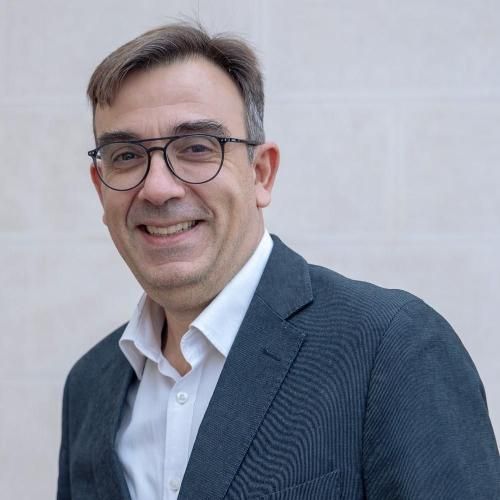
Ignacio Bravo Muñoz is a Professor at the Department of Electronics, Universidad de Alcalá (Spain), affiliated with the GEINTRA research group focusing on Electronic Engineering applications in Intelligent Spaces and Transport. He holds a PhD from Universidad de Alcalá (2007) with a thesis on FPGA-based object detection using computational vision and PCA techniques. His research spans indoor positioning systems (using LED/PSD sensors), sustainable energy frameworks for smart communities, FPGA-based hardware design , and remote laboratory platforms . Key contributions include real-time metrology for ESA's PLATO mission, cooperative demand response algorithms, and innovative pedagogical approaches integrating sustainability into digital electronics education. Recent work emphasizes edge computing for video surveillance , machine learning in human action recognition , and non-cooperative target identification using radar signatures. His interdisciplinary projects bridge electronics engineering with energy systems, biomedical applications, and educational technology. He actively collaborates with industry and academic institutions on EU-funded projects, contributing to advancements in aerospace instrumentation (PLATO FPA qualification), smart grid technologies, and STEM education innovation.
جستجوی استاد راهنمای دانشگاهی
برای مسیر پژوهشیتان، استاد راهنما، استاد دانشگاه و پژوهشگر مناسب را پیدا کنید و با آنها ارتباط بگیرید.
نمایش ۴۶-۶۰ از ۱۱۰ استاد راهنما
اطلاعات پروفایلها از صفحات عمومی دانشگاهها گرفته شده و ممکن است بهروز نباشد.
Xurxo Dopico Calvo is a Professor at the University of A Coruña's Faculty of Sport and Physical Education Sciences. He leads the Performance and Health Group research team and holds administrative roles such as Program Director for the Degree in Sports Science and Physical Activity. His research focuses on cardiovascular adaptations to strength training, neuromuscular adaptations, judo performance analysis, and physical activity in pediatric populations. Teaching responsibilities include courses like Final Year Dissertation , Performance Analysis in Sports , and Teaching Fight Skills . He has directed over 20 research theses since 2013, including studies on judo contest dynamics and strength training optimization. Dopico actively participates in institutional committees, including the Comisión de Asuntos Económicos e Infraestructuras as President since 2013. Key research interests include: cardiovascular and neuromuscular adaptations to resistance training, judo performance metrics, health-related fitness in school-age children, and high-intensity interval training efficacy. His work bridges exercise physiology with practical applications in sports and chronic disease management.
Dr. Horacio Rostro González is an Assistant Professor in the Department of Industrial Engineering at IQS School of Engineering, Ramon Llull University. His research focuses on neural network implementations using field-programmable gate arrays (FPGAs), with applications in robotics, motor imagery systems, and industrial automation. Research Focus: Development of hardware-accelerated AI systems for pattern recognition, robot locomotion control, and human-machine interfaces. Key projects include neuromorphic computing for spatio-temporal classification and AI-driven photonics parameter optimization. Projects: Member of the Industrial Engineering Research Group (GEPI), working on offshore wind farm data analysis using machine learning and renewable energy prediction systems.
Josep Altet Sanahujes is an Associate Professor in the Department of Electronic Engineering at the Polytechnic University of Catalonia (UPC). His research focuses on high-performance integrated circuits, particularly leveraging thermal measurements to characterize and optimize RF analog circuits. He leads the HIPICS (High Performance Integrated Circuits and Systems Design) group, specializing in temperature sensor development for on-chip testing and monitoring of aging effects in CMOS amplifiers. Education: M.S. in Electronic Engineering, La Salle Universitat Ramon Llull (1993) Ph.D., Electronic Engineering Department, Universitat Politècnica de Catalunya (1998) Research Interests: Dr. Altet pioneers thermal-based strategies for analog circuit testing, including the design of compact temperature sensors compatible with RF technologies. He explores thermal coupling characterization and electro-thermal interaction in integrated circuits, with applications in automotive AI, energy-efficient DNN accelerators, and astrophysical instrumentation. His work bridges fundamental physics (e.g., thermal phase lag analysis) with practical device optimization. Key Contributions: His recent articles address cutting-edge topics like energy-efficient mixed-precision DNN inference via binary segmentation, aging compensation in RF amplifiers using DC temperature measurements, and security enhancements through thermal signatures. He has published extensively on topics ranging from heterodyne infrared imaging for current tracking to BPF-based thermal sensors. Lab & Teams: Primary affiliation with the HIPICS research group at UPC, collaborating on interdisciplinary projects involving thermal-aware circuit design and embedded systems.
Manuel Fernando Soler Arnedo is a Full Professor in the Aerospace Engineering Department at Carlos III University of Madrid's College of Engineering. His research focuses on Aerospace Engineering with specialization in Optimal Control Theory , Climate Impact Mitigation , and Artificial Intelligence applications for air traffic systems. He leads the Aerospace Engineering Research Group and has contributed extensively to Flight Trajectory Optimization , Weather-Induced Uncertainty , and Network-scale Conflict Resolution . Principal Researcher on EU-funded projects like F4EClim (2024-2027) and KAIROS (2023-2026) Key international collaborations with NEXTOR (UC Berkeley) and ETH Zurich Developed tools like CLIMaCCF V1.0 and ROOST V1.0 for climate-aware flight planning His work integrates Artificial Intelligence with Climate Modeling to address 4D Trajectory Planning , Thunderstorm Avoidance , and Non-CO2 Emission Reduction in aviation. Recent publications emphasize Robust Optimization under meteorological uncertainty and Deep Learning for traffic flow management. He has supervised theses on Data Science for Weather Mitigation and Multi-objective Space Mission Design , with grants from European Commission , Boeing , and Spanish government agencies .
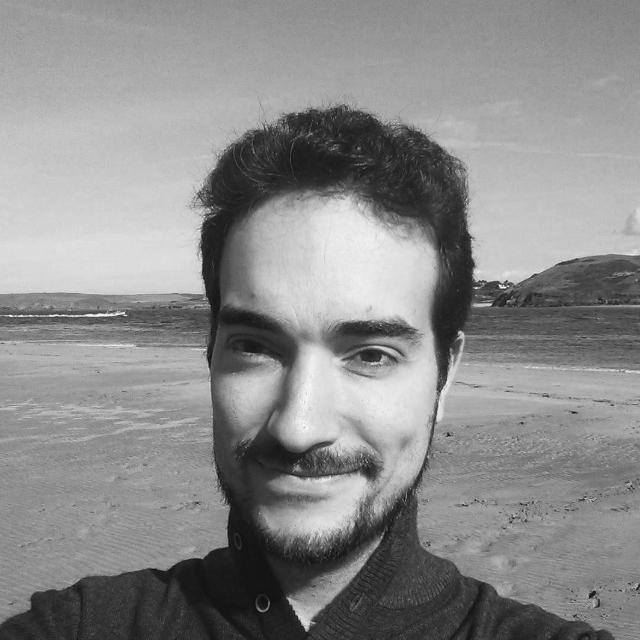
Mario Merino Martínez is a Full Professor of Aerospace Engineering at Universidad Carlos III de Madrid (UC3M), leading the Plasmas and Space Propulsion Team (EP2). His research focuses on advanced electric propulsion systems, particularly electrodeless plasma thrusters (EPTs), magnetic nozzles, and plasma modeling. He holds an ERC Starting Grant (ZARATHUSTRA) to develop next-generation space propulsion technologies and has pioneered numerical tools like PWHISTLER and EP2PLUS for plasma simulation. Merino's work integrates experimental and computational approaches, collaborating with institutions like MIT, ONERA, and Airbus. He has published over 100 peer-reviewed articles on topics such as magnetic nozzle dynamics, ECR thruster optimization, and plasma-wave interactions. His group's experimental lab includes a 1.5m-diameter vacuum chamber with advanced diagnostic systems for thruster testing. Award-winning educator, Merino teaches aerospace courses in English, including a popular edX MOOC ('The Conquest of Space'). He supervises 6 ongoing PhD theses and has advised numerous students on plasma physics and propulsion. Beyond academia, he co-founded 'La Facultad Invisible' to improve STEM education and participates in initiatives like the ST3LLAR lab with SENER Aerospace. Awards: ERC Starting Grant (ZARATHUSTRA), H2020 MINOTOR Project Lead Grants: €3.5M+ funding from EU, Spanish Ministry, and private sector Labs: EP2 Plasma Lab (UC3M), ST3LLAR Collaboration His current projects aim to revolutionize space travel via electrodeless thrusters, addressing challenges in plasma detachment, wave energy absorption, and scalability for deep-space missions.
- Aeronautics
- Biomedicine
- Electronics
- +۷ مورد دیگر
Oscar Flores Arias is a Full Professor in the Department of Aerospace Engineering at the University of Carlos III of Madrid, affiliated with the Gregorio Millán Barbany University Institute for Modeling and Simulation in Fluodynamics, Nanoscience, and Industrial Mathematics. His research spans aerodynamics, biomedical fluid dynamics, and computational modeling. Director of the Aerospace Engineering Research Group Expert in Direct Numerical Simulation (DNS) and turbulent flow analysis His recent work focuses on machine learning integration with Navier-Stokes equations for cardiac flow mapping, patient-specific simulations of thrombogenesis, and bioinspired aerodynamic designs. Collaborations include biomedical institutions and engineering firms, emphasizing interdisciplinary applications. He leads multiple funded projects from Spanish national agencies and private sector partnerships, including: AEI-funded micro-turbine design (2022-2025) Cardiac flow uncertainty quantification (AEI, 2020-2024) MINETUR-funded micro-air vehicle aerodynamics (2016-2020) Supervised theses cover topics from coagulation modeling to bioinspired fluid-structure interaction. Current projects investigate turbulence control, blood flow dynamics, and bioinspired propulsion systems.
Raúl Gómez Herrero is an Associate Professor at the Universidad de Alcalá, affiliated with the Department of Física y Matemáticas. He is a member of the Space Research Group (SRG-UAH Grupo de Investigación Espacial) and specializes in solar energetic particles and interplanetary shocks. His research focuses on analyzing data from missions like Solar Orbiter, Parker Solar Probe, and STEREO to study particle acceleration mechanisms, shock dynamics, and heliospheric processes. He holds a doctorate from Universidad de Alcalá (2003), supervised by Dr. Luis del Peral Gochicoa and Dr. María Dolores Rodríguez Frías, with a thesis on energetic particles in the inner heliosphere using SOHO observations. His work spans over two decades, with significant contributions to understanding solar eruptions, coronal mass ejections (CMEs), and their interaction with the solar wind. Key research areas include: 1) Energetic particle signatures in interplanetary shocks, 2) 3He-rich particle events, 3) stealth CME diagnostics, and 4) multi-spacecraft coordination for event analysis. He has led studies using Solar Orbiter’s Energetic Particle Detector (EPD) to measure particles at unprecedented heliocentric distances (0.3–1 AU). He co-founded the SERPENTINE project, compiling a solar cycle 25 SEP event catalog and advancing interplanetary shock lists. His work bridges in-situ measurements with remote sensing data (e.g., X-rays, radio bursts) to refine solar eruption models. Current projects emphasize longitudinal distribution of SEPs and the role of magnetic connectivity in particle transport. He collaborates internationally with institutions like NASA, ESA, and STEREO teams. His lab contributes to the design and interpretation of instruments on upcoming solar missions. Future work includes analyzing Parker Solar Probe data for inner-heliosphere particle behavior and developing machine learning tools for SEP event classification.
Alberto Regadío Carretero is a Lecturer in the Department of Automática at the University of Alcalá, affiliated with the Space Research Group (SRG-UAH). His research focuses on signal processing for particle detection, cosmic ray physics, and the integration of advanced computing techniques like neural networks and IoT technologies into experimental instrumentation. He holds a PhD in Digital Signal Processing applied to particle detection, awarded in 2014. Education: PhD in Digital Signal Processing, University of Alcalá (2014) Thesis: Procesamiento digital de señal aplicado a la detección de partículas energéticas , supervised by Dr. Sebastián Sánchez Prieto and Dr. Jesús Tabero Godino Research Interests: His work bridges particle physics, space technology, and computational methods. Key areas include: Design of radiation detectors and data acquisition systems using FPGAs and IoT Analysis of cosmic ray spectra and atmospheric effects Application of machine learning (e.g., GANs, reservoir computing) to pulse detection and unfolding Hardware optimization for precision signal processing in space and high-energy environments Key Contributions: Recent work includes: Quantum computing approaches for exoplanet discovery Development of neutron monitors and trajectory tracking systems (e.g., MITO) Unfolding techniques for particle spectra using deep learning Awards & Grants: No specific awards or grants are mentioned in the text, but his involvement in projects like ORCA and the Space Research Group suggests active grant-based research. Lab & Team: He is part of the SRG-UAH Space Research Group, collaborating on projects such as the Antarctic Cosmic Ray Observatory (ORCA) and FPGA-based instrument development.

Luis López Catalan serves as an Associate Professor in the Department of Education and Social Psychology at Pablo de Olavide University since 2006. He holds dual leadership roles as Coordinator of the Master's Degree in Education for Development, Social Awareness and Culture of Peace and Director of Innovation, Data Integration, and Technology at UNICEF Spain, where he previously held positions including Regional Coordinator for Andalusia and Director of Digital Strategy. His educational background includes a PhD from the University of Seville, a Master's in International Development Cooperation and NGO Management (ETEA-INTERMÓN), Master's degrees in Online Marketing and Strategy and Executive Digital Business, plus expertise in Innovation Methodologies (ISDI) and Trainer Training (UNED). He completed advanced programs at IESE and MIT in Strategic Management and Social Leadership. López Catalan's research focuses on Education for Development and Global Citizenship within Sustainable Development Goals frameworks, with emphasis on social innovation, Child-Friendly Cities initiatives, and digital transformation for children's rights. His work bridges academic theory with practical implementation through UNICEF Lab initiatives including the Startup Accelerator and COVID-19 Collaborative Platform for Innovation. Analysis of his recent publications reveals strong thematic concentration on educational technology integration (42%), Sustainable Development Goal implementation (28%), and innovative pedagogical approaches (30%), with growing emphasis on AI applications in education since 2023. Mention of Teaching Excellence qualification As academic coordinator, he has shaped postgraduate training in Education for Development across Spanish universities while directing UNICEF Spain's strategic initiatives including Child-Friendly Cities implementation and the UNICEF Lab ecosystem. His grant portfolio demonstrates consistent funding for Education for Development projects spanning university curricula reform, teacher training programs, and digital innovation platforms targeting SDG4 implementation. López Catalan leads the GEDUPO research group (Education Group of Pablo de Olavide University) and directs UNICEF's innovation ecosystem including the Startup Accelerator and Collaborative Platform for Innovation with Social Impact for Children, creating synergies between academic research and humanitarian action through his dual institutional roles.
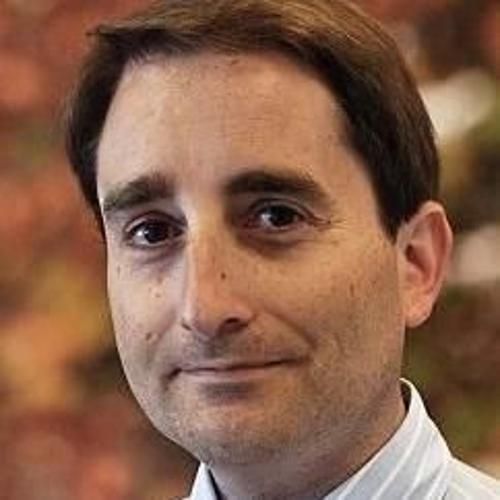
Diego Borro is a Full Professor (Catedrático) in Computer Science and Artificial Intelligence at TECNUN, Technological Campus of the University of Navarra , where he has been part of the faculty since 2004. He is a leading researcher at CEIT since 2003, focusing on Robotics, Virtual/Augmented Reality, Computer Vision, and Artificial Intelligence. His academic credentials include a PhD in Computer Science (2003) and an MS in Computer Science (2000) from the University of Navarra and University of Basque Country respectively. His research spans from 3D tracking and haptics to industry 4.0 applications and medical robotics, with over 34 journal papers and 65 conference articles. He has supervised 14 doctoral theses and participated in 55+ research projects. His leadership roles include heading CEIT's Simulation Unit (2012-2016) and Vision and Robotics (V&R) research line (2016-2022), currently serving as main researcher at Intelligent Systems for Industry 4.0 group (SS4I4). Accredited as Full Professor (Catedrático) by ANECA (3 sexenios) Member of IEEE, ACM, and Eurographics societies Key projects: STEPbySTEP exoskeleton benchmark, WARM AR maintenance systems, and inner ear drug delivery research
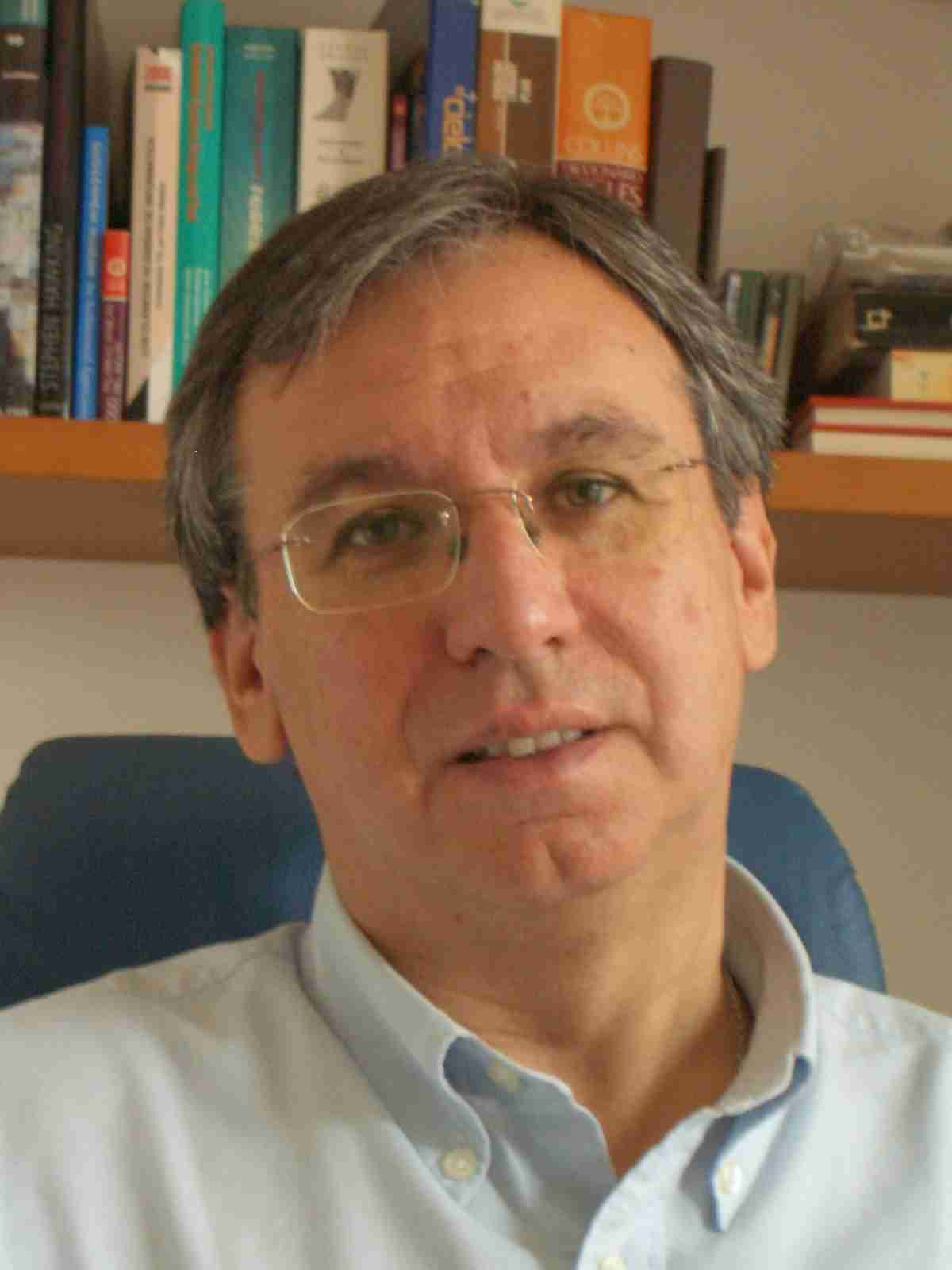
Juan Carlos López is a Professor of Computer Architecture at the University of Castilla-La Mancha (UCLM), where he has been employed since 1999. He previously served as Dean of the School of Computer Science from 2000 to 2008 and is currently the Director of the Indra Chair at UCLM. He is also Head of the ARCO (Computer Architecture and Networks) Group. Dr. López received his MS and Ph.D. degrees in Telecommunication (Electrical) Engineering from Technical University of Madrid in 1985 and 1989, respectively. From September 1990 to August 1992, he was a Visiting Scientist in the Department of Electrical and Computer Engineering at Carnegie Mellon University. From 1989 to 1999, he served as an Associate Professor of Electrical Engineering at Technical University of Madrid. His research activities center on embedded system design, distributed computing, and advanced communication services. His work spans Internet of Things (IoT), edge computing, computer vision applications, and health monitoring systems. He has co-founded a startup company focused on control and communication systems for metropolitan transportation, serving as CTO from 1992 to 1997. Analysis of his recent publications (2023-2025) reveals a strong focus on practical edge computing applications, particularly in agriculture (olive fly detection) and healthcare (fall detection for elderly). His work demonstrates expertise in FPGA-based hardware acceleration, IoT context reasoning, and astronomical instrumentation. His research bridges theoretical computer architecture with real-world applications in smart cities, precision agriculture, and assistive technologies for aging populations. Member of IEEE, ACM and ATI professional organizations Spanish Representative at IFIP TC10 (Computer Systems Technology) Dr. López has led numerous national and international projects funded by EU, NATO, and private companies including Indra and Telefónica. His Indra Chair position since 2006 demonstrates sustained industry collaboration. He has served on panels for the Spanish National Science Foundation and Ministry of Education and Science regarding Information Technologies research programs. From 2004 to 2009, he coordinated the Doctoral Education Program of the Ministry of Science and Innovation in the area of Information Technologies. He directs the ARCO Research Group, which focuses on Computer Architecture and Networks, with particular emphasis on embedded systems, energy-efficient computing, and IoT applications. His team has developed innovative solutions for smart cities, healthcare monitoring, and precision agriculture, often leveraging FPGA technology for hardware acceleration.
Dagoberto Castellanos Nieves is an Associate Professor at the University of La Laguna's Department of Computer Science and Systems Engineering. He is affiliated with the Programa Oficial de Doctorado en Ingeniería Industrial, Informática y Medioambiental and actively contributes to research groups GCI Computación Inteligente y Ciencia de Datos and GCAP Grupo de Computación de Altas Prestaciones . His work focuses on semantic web technologies, AI-driven education systems, energy-efficient machine learning, and high-performance computing. He holds a PhD from the University of Murcia (2007), with a thesis on semantic web-based evaluation systems in e-learning environments. Education: PhD in Computer Science from Universidad de Murcia (2007) Research interests span human-centered AI, automated machine learning for sustainability, generative adversarial networks in educational tech, and the socio-technical impact of digital platforms. Recent studies address migrant integration via AI, pandemic-era academic performance analysis, and green computing strategies for energy efficiency. He has pioneered semantic platforms like OntoEnrich and OeLE for knowledge management and assessment systems. Publications reflect a strong focus on applying AI to education, sustainability, and data-driven decision-making. Notable contributions include frameworks for RAG systems with LLMs, energy-optimized ML algorithms, and comparative analyses of virtual campus usage during the pandemic. Collaborative projects include MOOC development on AI in education and interdisciplinary work on open innovation platforms in financial sectors. No scientific awards are explicitly mentioned, but his prolific research output and institutional contributions highlight sustained academic excellence. Advising activities include thesis supervision in semantic web domains. He collaborates across departments through cross-disciplinary research teams focused on computational linguistics and knowledge engineering. Labs/Teams: Active membership in intelligent computing and high-performance computing research groups at ULL, with ongoing projects in AI ethics, sustainable ML, and digital transformation of educational systems.
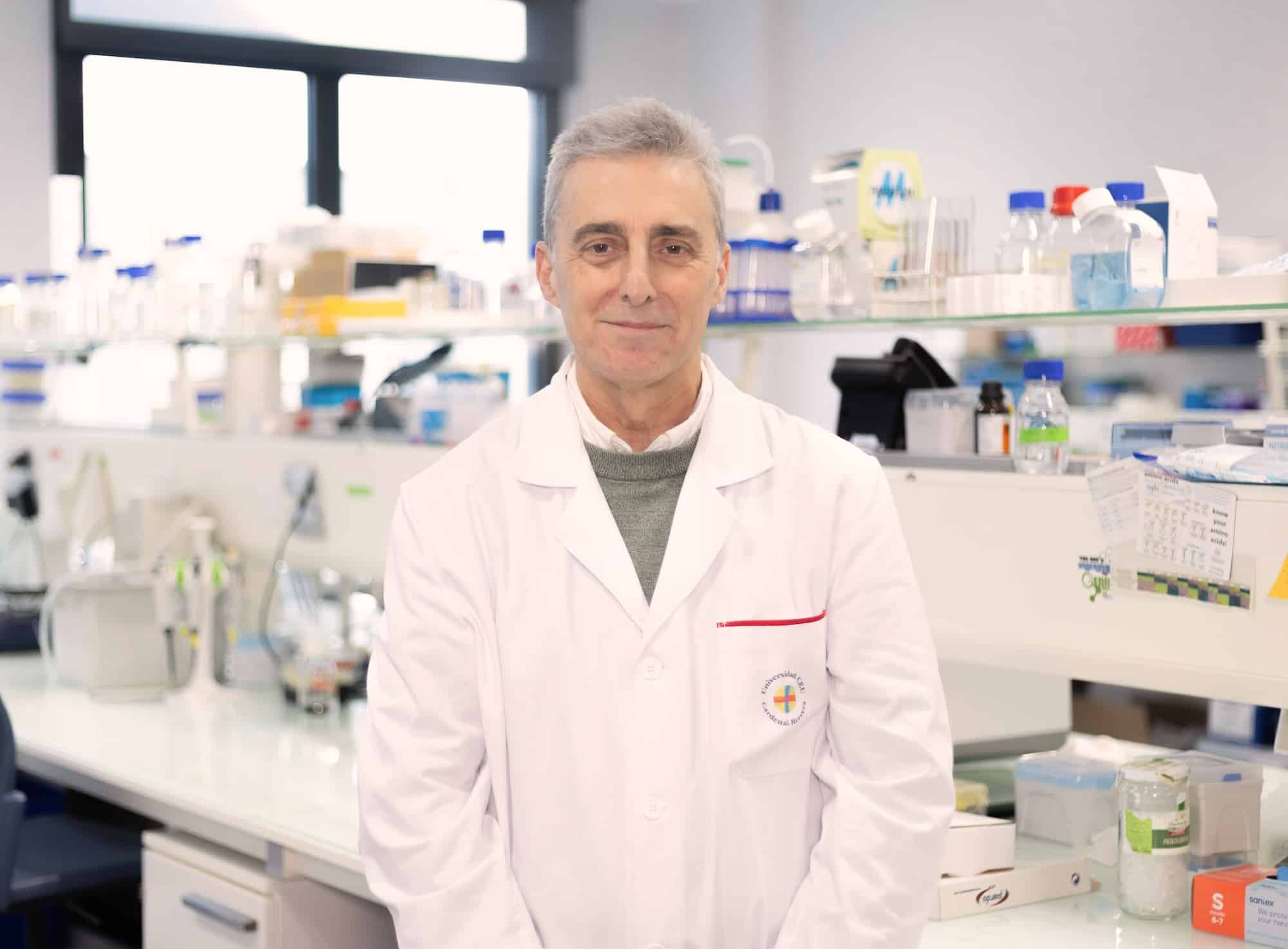
Professor José Rafael Penadés is a Professor at the Department of Infectious Disease, Imperial College London, and a Lecturer at CEU Cardenal Herrera University. His work focuses on bacterial gene transfer mechanisms, antimicrobial resistance, and leveraging AI to accelerate scientific discovery. He leads a team that tested Google’s AI co-scientist platform, which successfully generated hypotheses matching his group’s unpublished research on viral satellites and bacterial species boundaries. His research explores how satellite viruses use viral tails to infect diverse bacterial species, a mechanism critical for bacterial evolution and antibiotic resistance. Collaborations include Imperial College, CEU UCH, and the Instituto de Biomedicina de Valencia (IBV). Prof Penadés emphasizes AI’s potential to revolutionize hypothesis generation, reducing experimental timelines and addressing global healthcare challenges like antimicrobial resistance. The team’s findings on chimeric infective particles and AI-driven research were published in a high-impact pre-print study.
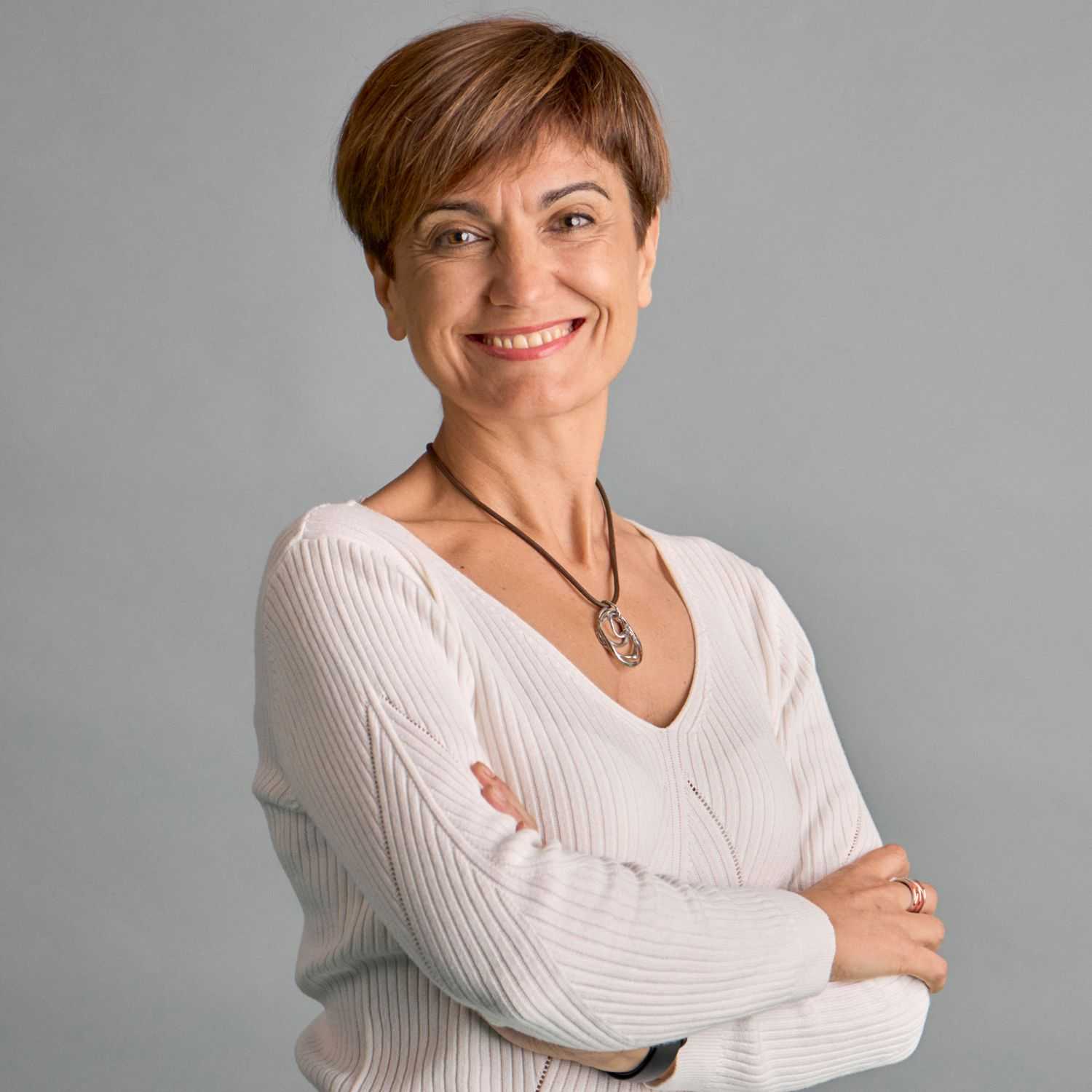
Dora Blanco Heras is a Full Professor in the Department of Electronics and Computing at the University of Santiago de Compostela (Spain). She holds a PhD in Physics (cum laude) from the same institution and has served as Head of the Sustainable Development Office (2005–2010). Her research focuses on high performance computing, parallel computing, and GPGPU techniques applied to remote sensing and medical image processing. She leads the ARQCOMP research group in Computer Architecture and is affiliated with the Center for Research in Intelligent Technologies (CITIUS). Research interests include: High-performance computing for real-time image processing GPU acceleration of hyperspectral/multispectral analysis Anomaly detection in fluvial ecosystems Domain adaptation for Earth observation Machine learning for remote sensing classification Recent work emphasizes deep learning architectures (ResNet, GANs) for land-cover prediction and multispectral anomaly detection. Over 100 peer-reviewed publications span journals like IEEE Transactions on Geoscience and Remote Sensing, with impactful contributions to GPU-optimized algorithms and open-source tools like HypeRvieW. Professional service includes organizing HDCRS Summer Schools on high-performance geospatial AI and chairing Euro-Par workshops. Her team develops cutting-edge solutions for environmental monitoring and sustainable computing.