Trine Krogh Boomsma is a Professor in the Department of Insurance and Economics at the University of Copenhagen's Department of Mathematical Sciences. Her research focuses on optimization under uncertainty with significant applications in energy systems, particularly electricity markets, renewable energy investments, and power system planning. PhD in Mathematics-Economics, Aarhus University (2003-2007) Visiting PhD at University of Duisburg-Essen (2004) Academic career includes positions at Risø National Laboratory for Renewable Energy and Imperial College London Her work spans stochastic programming, real options analysis, and dynamic programming to address energy sector challenges. Key areas include support schemes for renewables, market risk modeling, and operational optimization of hybrid conventional-renewable systems. Recent research explores policy impacts on investment decisions and advanced scenario generation techniques. Major publications (2012-2020) cover renewable energy policy frameworks, power plant valuation models, and sequential market bidding strategies. These works emphasize electricity market dynamics, investment risk quantification, and robust planning under uncertainty. She teaches linear programming, integer programming, and stochastic programming applications in operational analysis, contributing to energy economics education at the department.
Eytan Adar is a Professor of Information and Computer Science at the University of Michigan, holding dual appointments in the School of Information and the College of Engineering's Electrical Engineering and Computer Science department. His work sits at the intersection of human-computer interaction and artificial intelligence, focusing on large-scale systems analysis and novel interface design. Adar's research spans multiple domains including social media analysis (Twitter, Reddit), academic citation networks, meme propagation, information extraction, and political networks. His methodological expertise includes data mining, data visualization, and graph-based network analysis. His work often operates at internet scale, examining language, creativity, social network dynamics, and text production. His recent publications reveal a strong focus on AI-human collaboration, with particular attention to generative AI interfaces, visualization techniques for complex data, and ethical considerations in AI systems. His work shows a consistent pattern of bridging theoretical insights with practical system implementations. Best Paper Award at ProtoAI: Model-Informed Prototyping for AI-Powered Interfaces, IUI'21 Honorable Mention Award at CHI'24 for feminist interaction techniques research Best Paper Award at ICWSM'18 for Wikipedia language edition analysis Best Paper Award at ICML 2016 Workshop for neural language model visualization Best Student Paper at WSDM'09 for web dynamics research Best of CHI at CHI 2008 for web revisitation patterns analysis Adar has advised numerous PhD students who have gone on to prominent positions at organizations including Google, Apple, RAND, Northwestern University, and Stanford. His research is generously supported by the NSF, IARPA, NIH, the Education Department, and major technology companies including Adobe, Microsoft, Facebook, Google, and Yahoo. He is also a founder of the International Conference on Web and Social Media (ICWSM) and has served as Co-General Chair for WSDM and Co-Program Chair for UIST.
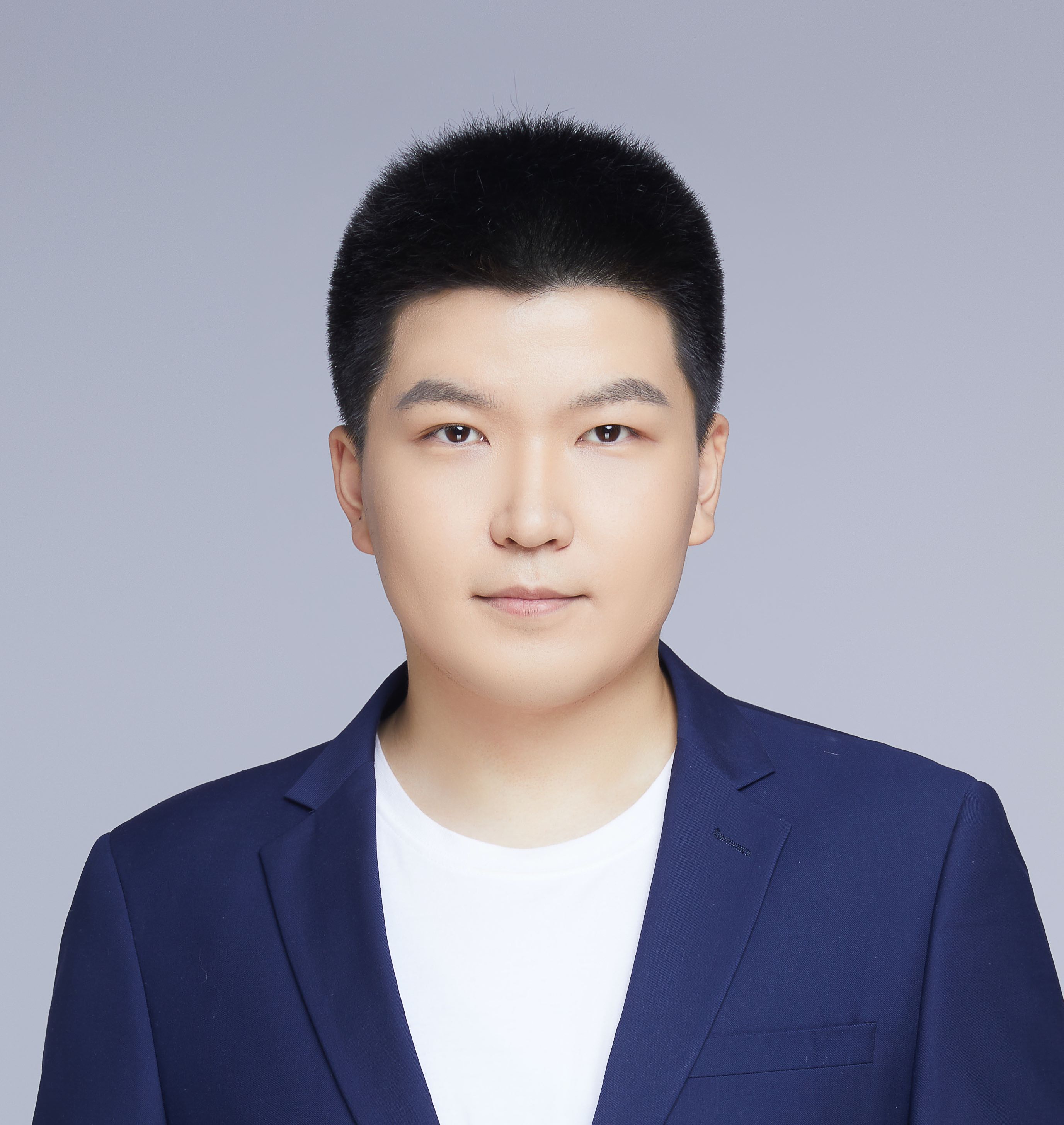
Xupeng Miao is a Visiting Assistant Professor in the Department of Computer Science at Purdue University, holding the Kevin C. and Suzanne L. Kahn New Frontiers Assistant Professorship. Previously, he was a Postdoctoral Fellow at Carnegie Mellon University's Catalyst Group under Professors Zhihao Jia and Tianqi Chen. He earned his Ph.D. in Computer Science from Peking University (2022) and a Bachelor’s degree from Northeastern University. His research focuses on machine learning systems, distributed computing, and data management, with notable contributions to systems like Hetu (a distributed deep learning framework) and innovations in large language model (LLM) serving (e.g., SpotServe, SpecInfer). He has received awards including the 2024 WAIC Yunfan Award and an Outstanding Paper Award at ACL 2024. Current projects emphasize efficient systems for generative AI, including optimizing LLM training and inference on heterogeneous hardware, fault-tolerant distributed training, and scalable graph-based machine learning. He teaches CS 59200-MLS: Machine Learning Systems at Purdue and actively mentors students in PhD/MS programs and internships. Key achievements include NVIDIA Academic Awards, IEEE Micro Top Picks recognition, and leadership in international conference roles (e.g., Artifact Evaluation Co-Chair for KDD 2025 and MLSys 2025). His work bridges system design, algorithmic innovation, and hardware-aware optimizations to advance scalable AI infrastructure.
Renate Sachse is a Researcher at the Chair of Structural Analysis, Technical University of Munich (TUM), where she has worked since May 2024. Previously, she held postdoctoral positions at Harvard University's Bertoldi Lab (2024) and TUM's Chair of Computational Mechanics (2021-2024), following academic staff roles at the University of Stuttgart (2015-2020). Her interdisciplinary work bridges civil engineering, biomechanics, and computational modeling. Her educational foundation includes a Master's in Civil Engineering from the University of Stuttgart (2014; thesis: 'Isogeometric contact analysis of thin-walled structures') and a Bachelor's from the same institution (2011; thesis: 'A Primary School Pavilion for Magagula in South Africa - Structural Analysis'). She also completed ERASMUS studies at ESTP Paris and internships at Foster + Partners and Werner Sobek AG. Dr. Sachse's research centers on biomechanics and biomimetics, with pioneering work on plant-inspired structures. She investigates snapping mechanisms in carnivorous plants (Venus flytrap, waterwheel plant) to develop bio-inspired adaptive systems, soft robotics, and metamaterials. Her expertise spans motion design for large-deformation structures, isogeometric analysis, and hygroscopic actuation in 4D-printed materials, emphasizing computational modeling of contact mechanics and structural stability. Analysis of her 15 most recent publications reveals a dominant focus on biomechanics (60% of articles), particularly plant movement mechanics translated into engineering solutions. Her work consistently integrates computational structural analysis with biological principles, showing increasing emphasis on motion design (25% of recent output) and additive manufacturing applications (15%). Key trends include translating snap-buckling phenomena into robotics and developing material design spaces for responsive structures. Her distinguished awards include the Bertha Benz Prize (2022), Klaus Tschira Boost Fund Fellowship (2022-2024), and University of Stuttgart Publication Award (2022). Additional recognition comprises GAMM Juniors Fellowship (2020-2022), AVK Innovation Award (2017), and Emil Mörsch Study Prize (2014). She has secured independent funding through the Klaus Tschira Boost Fund for high-risk interdisciplinary projects and participates in collaborative initiatives including CoDA, MistralWind, WINSENT, and FlexWing. While teaching advanced courses at TUM (Advanced Finite Element Methods, Theory of Plates), her mentorship focuses on computational mechanics and biomimetic design principles. Currently based at TUM's Chair of Structural Analysis under Prof. Bletzinger, she maintains active collaboration with Harvard University's Bertoldi Lab in developing next-generation adaptive structures.
Elena Agapie is an Assistant Professor in the Department of Informatics at the Donald Bren School of Information & Computer Sciences, University of California, Irvine. Her research lies at the intersection of human-computer interaction (HCI), health, and behavior change, focusing on designing technologies that support individuals in adopting and maintaining healthy behaviors through human-centered approaches. She is affiliated with the Connected Learning Lab and the Institute for Future Health at UCI. Her educational background includes a PhD in Human Centered Design and Engineering from the University of Washington, an MS in Computer Science from Harvard University, and a BS in Computer Science from Jacobs University Bremen in Germany. She has also conducted research at Microsoft Research, FXPAL, Intel Labs, and NASA Jet Propulsion Lab. Elena's research focuses on designing tools that integrate evidence-based behavioral interventions with user needs, particularly in mental health, chronic disease management, and social support systems. She explores how technology can support therapist-client collaboration, enable tailored health interventions, and leverage crowd expertise for personalized behavior change plans. Her work often involves participatory design, qualitative studies, and prototyping of interactive systems for diverse populations, including youth, hospitalized patients, and underserved communities. Her recent publications, primarily in top-tier venues like CHI and CSCW, reflect a strong trend toward social computing in health, longitudinal behavior support, and the design of inclusive digital health tools. Key themes include goal setting, conversational agents, social sharing in health tracking, and cross-disciplinary collaboration in health technology development. Best Paper Award (top 1%) at CHI 2017 Honorable Mention Best Paper Award (top 5%) at CHI 2016 Best Paper Award (top 1%) at HCOMP 2015 Honorable Mention Best Paper Award (top 5%) at CHI 2013 Elena has been funded by the National Science Foundation, National Institutes of Health, and UCI internal grants. She actively mentors PhD students including Bruna Oewel, Meeshu Agnihotri, and Mehreen Masood, and is currently recruiting students interested in HCI, health, and behavior change. She previously led the outreach program in the HCDE department at the University of Washington, creating workshops that introduced K–12 students to engineering and human-centered design, reaching over 2,000 students across public schools and community events. She runs initiatives to broaden participation in computing and advises undergraduate students in outreach and curriculum development. Her lab collaborates with clinical partners and interdisciplinary teams to ensure real-world impact of her research.
Martin T. Wells is the Charles A. Alexander Professor of Statistical Sciences at Cornell University, with joint appointments in the Department of Statistical Science, Department of Biological Statistics and Computational Biology, Department of Social Statistics, and as Professor of Clinical Epidemiology and Health Services Research at Weill Medical School. He serves as Editor-in-Chief of the ASA-SIAM Book Series and Co-Editor of the Journal of Empirical Legal Studies. Cornell University, Ithaca, NY Weill Cornell Medical College Research Interests span applied and theoretical statistics, Bayesian methods, biostatistics, clinical epidemiology, and computational biology. His work bridges disciplines like finance, legal studies, and health services research. Article Trends highlight advancements in Bayesian modeling, quantum cognition machine learning, tensor analysis, and misclassification correction, with applications in genomics, finance, and public health. Fellow of the American Statistical Association Fellow of the Royal Statistical Society Contributions include developing statistical software (e.g., rTensor), methodological innovations in clinical trials, and empirical legal studies on civil rights and the death penalty.
Brett Welch is an Assistant Professor and Biostatistician at the University of Houston with dual appointments in the Department of Communication Sciences and Disorders and the Department of Psychological, Health, and Learning Sciences within the College of Liberal Arts and Social Sciences. Dr. Welch's educational background includes: Ph.D. in Communication Science and Disorders from the University of Pittsburgh M.S. in Communication Sciences and Disorders from the University of Texas Rio Grande Valley B.S. in Linguistics from the University of Texas at Austin B.A. in Communication Sciences and Disorders – Speech-Language Pathology from the University of Texas at Austin Dr. Welch's research sits at the intersection of psychology and communication. He seeks to understand how psychological processes like personality and psychopathology influence communication behaviors, and conversely, how communication behaviors impact psycho-social well-being. His work leverages quantitative methods, cross-sectional studies, and intensive longitudinal designs to interrogate the dynamic interplay between psychological processes and voice and communication behaviors. This research aims to advance understanding of functional voice disorders, improve assessment of psychopathology, and promote well-being for people with and without communication disorders. Dr. Welch has received several notable awards: Honors Council of Academic Programs in Communication Sciences and Disorders PhD Scholarship (2024) New Century Scholars Doctoral Scholarship from the American Speech-Language-Hearing Foundation (2023) New Investigator Forum from The Voice Foundation (2021) As an academic, Dr. Welch serves as an ad hoc peer reviewer for various scientific journals in speech-language pathology and psychology. He is also a mentor in the Students to Empowered Professional Mentoring Program and a member of the American Speech-Language-Hearing Association. His teaching includes Special Problems: Introduction to Quantitative Modeling (COMD 8398). Dr. Welch maintains an active research program focused on the intersection of psychology and communication, with particular emphasis on voice disorders and their psychological correlates. His work combines biostatistical approaches with clinical insights to advance understanding in this specialized field.
Teo Chung Piaw is the Stephen Riady Professor and Executive Director of the Institute of Operations Research and Analytics (IORA) at the National University of Singapore (NUS). He holds a PhD in Operations Research from MIT (1996) and has held academic positions including Head of Department and Acting Deputy Dean at NUS Business School. His research focuses on optimization under uncertainty, supply chain management, and combinatorial optimization. He serves as a department editor for Management Science and has led strategic initiatives in Singapore's Smart Nation Program. Teo's educational journey includes a Bachelor of Science (Honors) in Mathematics from NUS (1990). His corporate experience spans roles at Unilever, Hewlett Packard, and PSA International. He has received prestigious awards including the NUS Faculty Outstanding Researcher Award (2003, 2006) and has been a Fellow of the Singapore-MIT Alliance Program. His research addresses operational challenges in smart cities, healthcare scheduling, and supply chain resilience. Notable contributions include work on appointment scheduling under patient no-show behavior, disruption risk mitigation in supply chains, and flexible production network design. He has authored over 100 publications and serves on editorial boards of leading journals like Operations Research and Management Science .
Jeff Alstott is a Professor of Policy Analysis at the RAND School of Public Policy, serving as the Director of RAND's Center for Technology and Security Policy (TASP) . He holds a concurrent role as a Senior Information Scientist at RAND and directs a program on technology forecasting and improving R&D investment returns at the National Science Foundation. Previously, he held leadership roles in the U.S. government, including the White House as Director for Technology and National Security at the National Security Council and Assistant Director for Technology Competition and Risks at the Office of Science and Technology Policy. Prior to that, he was a program manager at IARPA, focusing on AI, biosecurity, and science forecasting, and has held academic and research positions at MIT, Singapore University of Technology and Design, the World Bank, and the University of Chicago. Education : Doctorate in complex networks from the University of Cambridge; MBA and bachelor's degrees from Indiana University. Alstott's research spans artificial intelligence , technology forecasting , complex networks , and science and technology policy . His recent publications focus on AI security , existential risk from advanced technologies , and collaborative frameworks for AI safety , reflecting his expertise in balancing technological innovation with national and global security. He has contributed to understanding AI model weight protection , cybersecurity challenges , and policy implications of emerging technologies . Alstott has received recognition for his work, including being part of an award-winning team on technology counterintelligence . His policy recommendations and technical research have informed federal strategies for responding to advanced technologies , emphasizing the need for proactive governance and cross-sector collaboration.
Professor Siân Bayne is a leading academic in digital education at the University of Edinburgh , where she serves as Assistant Principal for Education Futures and directs the Centre for Research in Digital Education . Her work bridges critical theory and practical innovation in higher education. Interdisciplinary research on digital education and futures studies Leadership in the Edinburgh Futures Institute and Moray House School of Education and Sport Global impact through UNESCO collaborations and UKRI GCRF projects Bayne’s research explores higher education futures , utopian theory , and digital enhancement , with a focus on: AI’s role in teaching and learning Ethical implications of educational technologies Anonymous social media in academic spaces Speculative scenarios for educational systems Global South digital education models Augmented reality applications in assessment Her 15 most recent publications span 2017-2025 , covering critical perspectives on: Generative AI and educational innovation Utopian design in universities Data governance in learning analytics Augmented reality pedagogy Digital cultural heritage Scientific recognition includes: IASH Sabbatical Fellowship (2023) Bayne leads Higher Education Futures initiatives and partners with institutions worldwide, including: UNESCO Global Education and Technology Report World Bank collaborations European university leadership programs She also drives major research centers like: Centre for Research in Digital Education UKRI GCRF Urban Disaster Risk Hub
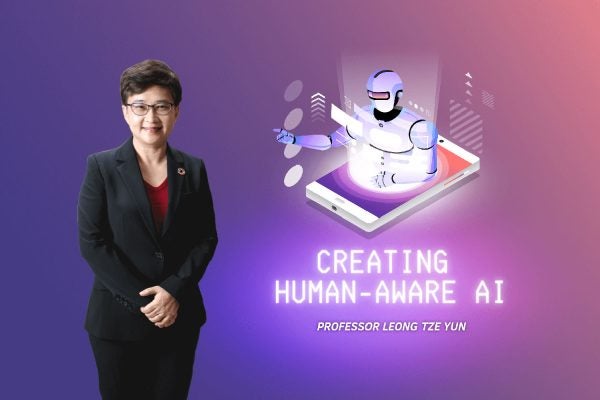
LEONG Tze Yun is a Professor in the Department of Computer Science at the School of Computing, National University of Singapore (NUS). She holds S.B., S.M., and Ph.D. degrees in Computer Science from the Massachusetts Institute of Technology (MIT). Her academic career spans both research and industry experience, with significant contributions to the fields of artificial intelligence and health informatics. Dr. Leong's educational background includes: Ph.D. in Electrical Engineering & Computer Science, Massachusetts Institute of Technology S.M. in Electrical Engineering & Computer Science, Massachusetts Institute of Technology S.B. in Computer Science & Engineering, Massachusetts Institute of Technology Her primary research interests focus on responsible AI, dynamic decision-making, neurocognitive modeling, reinforcement learning, artificial general intelligence, and biomedical and health informatics. Her work bridges the gap between theoretical AI development and practical healthcare applications, with an emphasis on ethical considerations and human-centered design. She directs the Medical Computing Laboratory at NUS, a multidisciplinary research program exploring human-aware decision modeling in complex environments. Analysis of her recent publications reveals a strong trend toward responsible AI development, with significant contributions to reinforcement learning techniques, causal inference methods, and applications of AI in healthcare. Her work increasingly integrates ethical considerations with technical AI development, particularly evident in her 2024 publications on medical AI and human values. Her scientific recognition includes: Fellow of the American College of Medical Informatics (ACMI) Founding Fellow of the International Academy of Health Sciences Informatics (IAHSI) Member of Eta Kappa Nu (Honor Society for Electrical Engineers) Dr. Leong has supervised numerous doctoral and master's students throughout her career, many of whom have gone on to prominent positions at institutions like Google, Netflix, Mayo Clinic, and academic institutions worldwide. Her advisory work extends to significant policy development, including contributions to WHO guidance on ethics and governance of AI for health. She currently serves on the World Health Organization (WHO) Expert Group on Ethics and Governance of AI for Health, the World Economic Forum (WEF) AI Governance Alliance, and the Advisory Council on AI in Uzbekistan. Her laboratory work focuses on developing adaptive systems that evolve with changing technical functionalities, system infrastructures, usage patterns, and operational contexts, with applications spanning prediction and decision analytics, human-aware robotics, game artificial intelligence, personalized education, and assistive care for elderly with neurocognitive disorders.
Liping Liu is a Professor in the Department of Management at The University of Akron's College of Business. He holds a Ph.D. in Business from the University of Kansas (1995), Master of Engineering in Systems Engineering (1991), and dual bachelor's degrees in Applied Mathematics (1986) and River Dynamics (1987). Ph.D., University of Kansas MS, Huazhong University of Science and Technology B.E., Wuhan University BS, Huazhong University of Science and Technology His research spans Artificial Intelligence , Electronic Business , Systems Analysis , Data Quality , and Belief Function Theory . He pioneered coarse utility theory and linear belief functions , now taught in top Ph.D. programs across multiple disciplines. Key trends in his publications include Belief Function Applications (2012-2024), Medical Data Systems (2003-2015), and Decision Theory (2004-2014). Recent works focus on Gamma Belief Functions (2024) and computational improvements in linear belief function operations (2019-2016). Scientific contributions recognized via: Microsoft Azure Educator Grant (2014-2016) Inclusion in Who's Who in America (2010-2013) and Who's Who in the World (2011-2013) As an editor and committee member for major conferences (INFORMS, AMCIS, Belief Functions conferences), he bridges academic research with practical systems implementation in e-business and healthcare domains.
Bradley Olsen is a Professor of Chemical Engineering at the Massachusetts Institute of Technology (MIT), holding the Alexander and I. Michael (1960) Kasser Chair in Chemical Engineering. He is affiliated with MIT's School of Engineering and directs research in the Plastics and the Environment Program. His academic career spans over two decades with numerous prestigious appointments and recognitions. Olsen earned his S.B. from MIT in 2003 followed by a Ph.D. from the University of California Berkeley in 2007. His educational background is complemented by postdoctoral fellowships including NIH and Beckman Institute Postdoctoral Fellowships (2008-2009) and the Hertz Fellowship (2003-2007). Research Interests Professor Olsen's research focuses on designing materials to address important challenges while understanding the fundamental science necessary for materials design. His primary research areas include block copolymers, soft condensed matter physics, protein-based materials, and bioelectronics. His group specializes in polymer networks, protein-polymer conjugates, self-assembly phenomena, and sustainable polymer development. The research has significant implications for biomaterials, sustainable polymers, and advanced materials design. Publication Trends Analysis of Professor Olsen's recent publications reveals a strong focus on polymer network topology, protein-polymer conjugates, and sustainable materials. His work increasingly integrates computational methods with experimental approaches, particularly in polymer characterization and data science applications to materials science. Recent publications show growing emphasis on biodegradable polymers, polymer informatics, and biomedical applications of advanced materials. Scientific Recognition Professor Olsen has received numerous prestigious awards throughout his career, including: American Physical Society (APS) Fellow (2023) Fulbright Amazonia Scholar (2023) Alexander and I. Michael Kasser Chair in Chemical Engineering (2021) ACS Macro Letters/Biomacromolecules/Macromolecules Young Investigator Award (2021) AIChE Owens Corning Early Career Award (2019) American Physical Society Dillon Medal (2018) Alfred P. Sloan Research Fellow in Chemistry (2014) Advising and Funding Professor Olsen has secured significant research funding from multiple federal agencies including NSF, NIH, AFOSR, and DOE. His group has produced numerous high-impact publications across top journals in polymer science, materials science, and chemistry. He has advised multiple graduate students and postdoctoral researchers who have gone on to successful careers in academia and industry. The MIT OGE's Committed to Caring Honor (2019) recognizes his excellence in graduate student mentoring. Research Infrastructure Professor Olsen leads a research group with capabilities spanning polymer synthesis, protein engineering, materials characterization, and computational modeling. His lab maintains strong collaborations with other MIT departments, national laboratories, and international research institutions. The group participates in several interdisciplinary initiatives including the Plastics and the Environment Program and has developed significant data infrastructure for polymer science through projects like CRIPT and BigSMARTS.
Rodney Harrison is a Reader in Archaeology, Heritage and Museum Studies at the UCL Institute of Archaeology, University College London. He serves as the founding editor of the Journal of Contemporary Archaeology and has been Vice President of the Association of Critical Heritage Studies since 2012. His research focuses on critical heritage studies, contemporary archaeology, and future-making practices in heritage contexts. Harrison's work challenges traditional boundaries between past, present, and future in heritage discourse, emphasizing how heritage functions as a future-oriented practice. His research spans cultural and natural heritage, exploring connections between heritage conservation and other material legacy management systems, including nuclear waste disposal. Harrison leads the major international 'Heritage Futures' research program funded by the UK Arts and Humanities Research Council. This project represents one of the largest critical, comparative ethnographic studies of heritage practices, examining how different forms of heritage function as distinctive future-making practices across diverse contexts. His scholarly contributions include more than a dozen books and over 60 peer-reviewed articles. Notable publications include Collecting, Ordering, Governing: Museums, Anthropology and Liberal Government (2016), Heritage: Critical Approaches (2013), Reassembling the Collection (2013), Understanding the Politics of Heritage (2011), and The Heritage Reader (2008). Harrison's work consistently engages with critical theory, challenging conventional heritage frameworks and exploring innovative approaches to understanding how material and cultural legacies shape future possibilities. His research has significant implications for heritage policy, conservation practice, and theoretical developments in critical heritage studies.
Todd Sorensen is an Associate Teaching Professor at the University of California, Merced (UC Merced), affiliated with the School of Social Sciences, Humanities & Arts and the Economics and Business Management department. He holds fellowships at IZA (Institute of Labor Economics) and GLO (Global Labor Organization). Prior to UC Merced, he served as an Associate Professor at the University of Nevada, Reno (2014–2023) and an Assistant Professor at UC Riverside (2007–2014). His professional journey includes a visiting role as Visiting Associate Professor at UC Merced before his current appointment in 2022. Education: PhD in Economics, University of Arizona, 2007 Research Interests: Todd's work focuses on labor market structures , exploring topics like monopsony power and wage-setting dynamics; immigration , including its demographic and policy implications; and discrimination , particularly in criminal sentencing and labor markets. His research has been published in journals like ILR Review , Labour Economics , and the Journal of Population Economics , with findings cited in the U.S. Economic Report of the President. Scientific Awards: Fellow at IZA (2022–present) Fellow at GLO (2022–present) Advising & Grants: Todd has advised students across various levels but no specific advisees are listed. His grants and funding sources are not detailed in the provided text. He collaborates with interdisciplinary teams and maintains affiliations across UC campuses through his and his spouse’s academic careers. Labs/Teams: Engaged with research networks at IZA and GLO, focusing on labor market policies and migration studies. Active in collaborative projects analyzing immigration trends, labor market competition, and discrimination metrics.