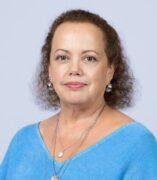
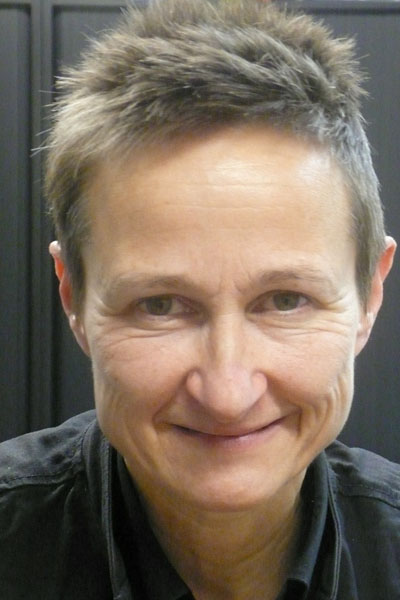
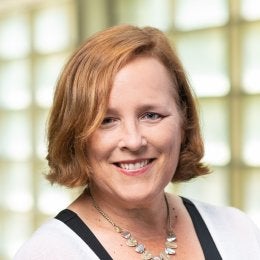
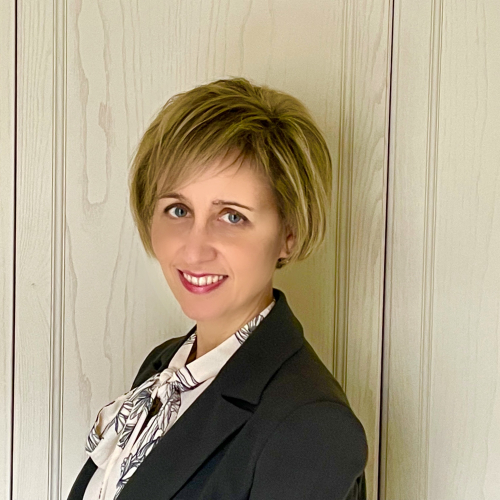
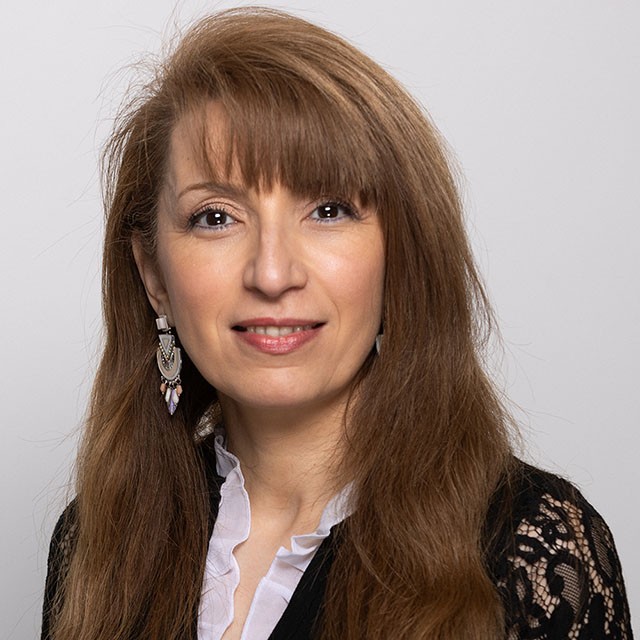
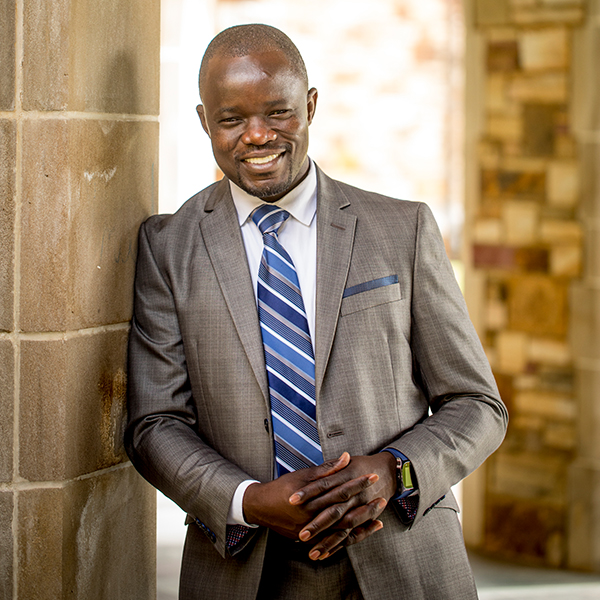
Marie Tejero Hughes is a Professor in Special Education at the University of Illinois at Chicago , focusing on graduate literacy instruction for educators in urban communities. Her work centers on comprehension strategies for culturally/linguistically diverse students and Latino family engagement . PhD in Reading and Learning Disabilities MSEd in Elementary Education BSEd in Early Childhood/Elementary Education Her research examines: Spanish literacy interventions for English learners Teacher leadership in special education MTSS/PBIS implementation in high-need schools Latinx family perspectives on autism education Coaching models for literacy development Recent publications highlight: Teacher leadership frameworks Bilingual literacy outcomes Latinx family expertise in math education Parent training programs in Colombia Technology-enhanced play interactions She has directed multiple US Department of Education grants focused on special education teacher recruitment and retention, and frequently collaborates with Colombian researchers on autism family support systems.
Dr. Vitaly Chernetsky is a Professor in the Slavic Department at the University of Kansas, specializing in Ukrainian and Russian literature/film, postcolonialism, gender studies, and cultural globalization. He holds a Ph.D. in Comparative Literature from the University of Pennsylvania (1996). His research explores modern/postmodern cultures of Ukraine, Russia, and Eastern Europe, emphasizing diasporic identities, post-Soviet transitions, and queer studies. Affiliations: Director of the Center for Russian, East European, and Eurasian Studies (2015-2020); President of ASEEES (2024); First Vice President of the Shevchenko Scientific Society. Education: Ph.D. in Comparative Literature, University of Pennsylvania, 1996. Key research interests include transnational cultural flows, postcolonial theory, and gender/queer studies in Slavic contexts. He has authored Mapping Postcommunist Cultures and co-edited volumes on Eastern European literatures. His translations include Ukrainian/Russian literary works and historical documents. Chernetsky's publications analyze topics like wartime poetry, diasporic identity, and cinematic representation. Recent articles address Ukrainian cultural resilience, post-Soviet queer narratives, and transatlantic cultural redefinitions. Professional Service: Editor of the Ukrainian Studies book series; member of multiple editorial/advisory boards. Grants/Advising: No specific grants listed; advising roles unspecified but active in academic leadership. He leads interdisciplinary initiatives bridging film, literature, and cultural theory, advocating for global engagement with Eastern European studies. His work emphasizes cultural decolonization and LGBTQ+ visibility in post-Soviet spaces.
Ineke Sluiter is a Professor of Greek Literature and Linguistics at Leiden University, holding the highest-ranking professorship (Hoogleraar 1) since 2006. She has served as Chair of the Classics Department at Leiden (2000–2004) and Academic Director of the Dutch National Graduate School in Classics (OIKOS) (2000–2011). She is a member of the Royal Dutch Academy of Arts and Sciences (KNAW) and the Royal Holland Society of Arts and Sciences (KHMW). Her research focuses on ancient language theory, rhetoric, and the intersection of classical studies with modern societal issues. She co-directed the Penn-Leiden Colloquia on Ancient Values (2000–2010), producing influential volumes on topics like aesthetic and ethical values in antiquity. Education: PhD in Classics from Vrije Universiteit Amsterdam (1990). Previous roles include Associate Professor at the University of Pennsylvania and fellowships at the Institute for Advanced Study (Princeton) and the Center for Hellenic Studies (Washington DC). Research interests emphasize ancient linguistic practices, public discourse on norms, and bridging classicism with contemporary challenges. Notable works include studies on Galen’s medical-grammatical connections and analyses of Homeric narrative techniques. She has supervised over 20 PhD students and received prestigious grants such as the Spinoza Prize (2010), the highest Dutch research award. Awards include the 2020 Honorary Doctorate from Bristol University and multiple fellowships. Her leadership roles in national and international academic bodies highlight her influence in shaping classical scholarship.
Roziana Ramli is an academic affiliated with Northumbria University, holding a PhD in Computer Science. Her research focuses on medical imaging techniques, cybersecurity in healthcare systems, and bio-inspired optimization algorithms. She has contributed to advancements in retinal fundus image registration and IoT security protocols. Her work integrates computer vision with biomedical applications, addressing challenges in healthcare monitoring and assistive technologies. Key research areas include federated learning in healthcare networks, prosodic feature analysis for language recognition, and secure communication for drone networks. Her systematic literature reviews and algorithmic innovations highlight her interdisciplinary approach to solving technical and clinical problems. Though no formal awards are listed, her active publication record from 1999 to 2024 demonstrates sustained academic engagement.
Dr. S.I. (Stella) Linn is an Assistant Professor in the Department of Linguistics at the University of Groningen's Faculty of Arts. She has held this position since 1990 and has contributed significantly to academic administration through roles such as Programme Coordinator for the MA track 'Translation in Europe' and Coordinator of the Faculty Minor in Translation Studies. Her expertise spans Translation Studies, Literary Theory, and Sociolinguistics. Linn earned her PhD in Letters from the University of Groningen (1998), following studies in translation science at the University of Amsterdam and French courses at the Sorbonne. Her research focuses on translation practices, literary sociology, and machine translation, with notable work on Turkish-Dutch literature and the sociolinguistic challenges of translating urban youth slang. Recent publications include analyses of migration narratives and the cultural dynamics of literary prizes like the Martinus Nijhoff Translation Prize. She has co-supervised PhD candidates exploring translation in diglossic contexts and intercultural medical communication in West Africa. Administrative Roles: Jury member for the Cultuurfonds Martinus Nijhoff Translation Prize, organizer of the 2004 conference 'Translation and Interculturality: Africa and the West.' Grants: Advisor to the Netherlands Literature Fund, Literature Flanders, and the Cultuurfonds Vertaalprijs. Labs/Teams: Collaborations with the Université Libre de Bruxelles and Leiden University on translation studies projects.
Laura M. Stapleton is Chair of the Department of Human Development and Quantitative Methodology and a Professor at the University of Maryland’s College of Education. She previously served as Interim Dean and Associate Dean for Research, Innovation, and Partnerships. Her academic roles include leadership in the NSF-funded Quantitative Research Methods Scholars Program (2019–2025) and membership on Maryland’s Accountability and Implementation Board for education reform. Education Background: Ph.D. in Measurement, Statistics, and Evaluation from the University of Maryland. Prior to academia, she worked as an economist at the Bureau of Labor Statistics and in educational research roles at the American Association of State Colleges and Universities and the University of Maryland’s institutional research department. Research focuses on complex survey data analysis, multilevel latent variable models, and mediation testing. Key interests include administrative data utilization, STEM education equity, and policy evaluation. Her work emphasizes bridging statistical rigor with practical educational challenges. Publications span methodological advancements in multilevel modeling, synthetic data strategies, and the integration of administrative datasets. Recent work addresses school-based prevention study attrition and the design effects of multilevel samples. Awards include AERA Fellowship (2023), election as President of the Society for Multivariate Experimental Psychology (2025), and recognition for mentoring and teaching excellence. She has led over $10M in grants, including NSF-funded initiatives to train early-career STEM equity researchers. Current projects include the BCSER Quantitative Research Methods Program (2022–2025) and collaborations on arts education impacts and intergroup relationship interventions. She advises on state-level longitudinal data systems and chairs the Maryland State Longitudinal Data System Center’s Research Branch (2013–2018).
Marek Ilnicki is a Lecturer at the University of Gdańsk , affiliated with the Faculty of Social Sciences and specifically the Department of Strategic and Security Studies . His academic focus lies at the intersection of political science, security studies, and maritime law. Fields of Interest : Political Science, Security Studies, Maritime Law, Counterterrorism, International Relations, and Crisis Management. Research Trends in his publications emphasize legal frameworks for state security, maritime governance, terrorism prevention, and international cooperation. His work often addresses Poland's strategic challenges in maritime environments and border security. Contact Information : Email: marca.ilnicki@ug.edu.pl Phone: +48 58 523 41 81
Prof. Dr.-Ing. Daniela Thrän serves as Professor of Bioenergy Systems at the University of Leipzig's Faculty of Economics and Head of the Department of Bioenergy at the Helmholtz Centre for Environmental Research (UFZ), positions she has held since 2011. She concurrently leads Germany's delegation in IEA Bioenergy Task 44 on Flexible Bioenergy and System Integration and chairs the Social Sustainability Transformations group at UFZ, bridging academic research with national climate policy through roles in the Federal Bioeconomy Council (2012-2023) and Thuringia's Climate Advisory Board. Her academic background includes: Engineering studies in Technical Environmental Protection at Technical University of Berlin (1989-1995) Doctorate at Bauhaus University Weimar (1998-2001) on material flow management in rural regional development Thrän's research centers on bioenergy's role in climate neutrality, specializing in carbon dioxide removal (CDR) via bio-based methods including BECCS, life cycle sustainability assessment, and spatial modeling of renewable energy systems. She analyzes biomass resource potentials within circular bioeconomy frameworks and investigates socio-economic drivers of energy transitions, with recent work focusing on urban-rural biomass integration and flexible bioenergy services for grid stability. Her 2023-2025 publications reveal intensifying focus on bio-CDR implementation challenges and policy frameworks, alongside systematic assessments of biomass allocation in Germany's net-zero pathways. Key trends include AI-enhanced literature mapping for climate research, municipal-scale renewable integration dynamics, and cross-national comparisons (e.g., Germany/Canada biogas systems), with growing emphasis on socio-technical trade-offs in land use and stakeholder acceptance. No scientific awards, prizes, or fellowships were documented in the provided text. Thrän actively mentors doctoral candidates as DBFZ's representative for bioenergy colloquia and leads major initiatives: IEA Bioenergy Task 44: National Team Leader for Germany (2019-present) Helmholtz Climate Initiative (HI-CAM): Co-author of spatial energy transition reports Editor-in-Chief of Springer's "energy, sustainability and society" (2017-present) She directs UFZ's Department of Bioenergy (BEN) and Models team, developing spatially resolved energy system tools like BENOPTex. Her groups focus on techno-economic analysis of biogenic resources, smart bioenergy system services, and socio-ecological impacts of renewable energy expansion, with strong links to European standardization bodies (ISO/TC 238, CEN TC 335) and Germany's aviation biofuels advisory board (aireg).
Laura Refe is a researcher and faculty member in the Department of Italian Language, Literature, and Arts in the World (LILAIM) at the University for Foreigners of Perugia, where she has been conducting research and teaching in Philology of Italian Literature since December 2021. She holds a fixed-term research position under Italian national law and is actively involved in both research projects and academic instruction, including in Digital Humanities and Italian language teaching programs. Her academic background is distinguished by numerous prestigious fellowships and research appointments, including at Villa I Tatti (Harvard University), the Warburg Institute (University of London), Ca’ Foscari University of Venice, and the Herzog August Library in Wolfenbüttel. She earned her Abilitazione Scientifica Nazionale for Associate Professor in both Italian Philology and Italian Literature. Dr. Refe's research centers on Italian Renaissance literature, with a particular focus on Francesco Petrarca, his annotations of classical texts, and the transmission of Aristotelian philosophy in the vernacular. Her work spans textual criticism, manuscript studies, paratextual analysis, and intellectual history. She has led a national PRIN PNRR research project on 'Petrarch and the Reformation' and contributed to other major initiatives, including an ERC Starting Project on Aristotle in the Italian Vernacular. Her recent publications reveal a sustained and deep engagement with Petrarchan studies, particularly his marginalia on Cicero’s De natura deorum and the complex textual history of his Ad Posteritatem . She also investigates Renaissance translators, manuscript provenance, and the intellectual networks of humanists like Poliziano and Boccaccio. Among her notable honors are the 'Young Researchers 2006' Prize from the University of Messina and the 12th 'Marino Moretti' Prize for Philology (2015) for her critical edition of Petrarch’s Epistle to Posterity . She has advised and collaborated on research projects, though specific names of students are not listed in the provided text. She is actively involved in scholarly communities, with a strong publication record in peer-reviewed journals and edited volumes. Dr. Refe is a member of academic networks and contributes to editorial and research teams, including work on the Dizionario Biografico degli Italiani and collaborative volumes on Renaissance humanism. Her work bridges traditional philology with digital and interdisciplinary approaches.
Juhani Vaivio is a Professor in the Department of Accounting at Aalto University School of Business. He has been actively contributing to the field of accounting research for over three decades, with a strong focus on qualitative and interpretive methodologies. His academic journey is deeply rooted in the traditions of the Helsinki School of Economics, now part of Aalto University. Education: Doctoral Degree in Business and Economics, Helsinki School of Economics (2001) Licentiate Degree in Business and Economics, Helsinki School of Economics (1995) Master's Degree in Business and Economics, Helsinki School of Economics (1988) His research centers on the philosophical and methodological foundations of management accounting, particularly emphasizing qualitative approaches such as case studies, discourse analysis, and method triangulation. He explores how accounting practices shape organizational identities and regulate worker behavior through discursive and normative mechanisms. His work often intersects with psychology, sociology, and public policy, especially in the context of identity regulation, legislation, and governance. The trend in his publications reflects a long-standing commitment to advancing interpretive research in accounting. From early methodological debates on qualitative versus quantitative methods to recent explorations of identity regulation through accounting, his scholarship consistently challenges positivist assumptions and advocates for deeper understanding of organizational realities. His 2023 article in the European Accounting Review exemplifies this trajectory by examining how accounting produces 'appropriate' worker identities. Scientific Contributions and Recognition: Over 26 research outputs spanning from 1992 to 2023 Significant influence in promoting qualitative research in accounting Active engagement with epistemological and methodological debates Contributions to understanding accounting's role in public sector governance and organizational change He has supervised at least two theses, indicating an ongoing role in mentoring emerging scholars. While specific grants or awards are not listed, his extensive publication record and citation impact (e.g., over 4,800 Mendeley readers for one review) suggest wide recognition. He has not been affiliated with any named research labs or teams in the provided text, but his collaborative work with scholars like Järvenpää, Rautiainen, and Sirén highlights networked research activity.
Dr. Arndt-Walter Emmerich is a Lecturer in Sociology at the University of Hertfordshire and an active researcher in the fields of religious diversity, Muslim-Jewish relations, and urban ethnography. He is currently involved in the international research project ENCOUNTERS, which investigates Jewish-Muslim encounters in urban Europe. His academic journey includes postdoctoral fellowships at Heidelberg University’s Max-Weber-Institute of Sociology and the Max Planck Institute for the Study of Religious and Ethnic Diversity (MPI-MMG). He holds a DPhil and MPhil from the University of Oxford and a BA in Sociology from the University of Essex. Education: DPhil and MPhil (Oxford), BA (Essex) Current Affiliation: University of Hertfordshire (Lecturer in Sociology) Research Projects: ENCOUNTERS, Changing Structures of Islamic Authority, Dis/trusted Partners Former Positions: Postdoctoral Research Fellow (Heidelberg), Research Fellow (MPI-MMG), Postdoctoral Research Officer (Oxford) Emmerich's research focuses on the sociology of religion, particularly how Muslim and Jewish communities interact in urban Europe. He employs ethnographic methods to study symbolic boundary work, interfaith dialogue, and grassroots integration in neighborhoods like Frankfurt’s Bahnhofsviertel. His work challenges essentialist views of religious identity by showing how shared minority experiences, local solidarity, and business networks foster coexistence beyond formal interfaith structures. His publication record includes a monograph, Islamic Movements in India: Moderation and its Discontents (Routledge, 2020), and numerous peer-reviewed articles in journals such as Comparative Studies in Society and History , Politics and Religion , Social Compass , and Journal of Ethnic and Migration Studies . His research has been featured in international media including BBC, Al Jazeera, Frankfurter Allgemeine Zeitung, and Deutsche Welle. His recent articles explore topics such as Jewish-Muslim friendship networks, language use in mosques, Salafism in Germany, and the symbolic politics of urban renewal. Key Themes: Symbolic boundaries, intergenerational solidarity, minority alliances, urban conviviality, religious governance Methodology: Ethnography, discourse analysis, comparative case studies Geographic Focus: Germany, UK, India, urban Europe Emmerich also contributes to public discourse through blogs and podcasts, writing for platforms such as LSE Religion and Global Society, SozBlog, and Qantara.de. He is a guest researcher at the Max Planck Institute and affiliated with the Jewish-Muslim educational organization Maimonides in Mainz. His work bridges academic research and societal engagement, emphasizing the importance of long-term, grassroots relationships in fostering social cohesion in diverse urban environments. Scientific and Public Engagement: Regular contributor to public debates on religious diversity and integration Podcast appearances on Bayerischer Rundfunk and hr2 Kultur Media commentary in major outlets including Süddeutsche Zeitung and Times of India Active participant in interdisciplinary research networks across Europe Dr. Emmerich advises no formal students yet but is deeply involved in mentoring through collaborative research and public scholarship. His work continues to shape understanding of how religious communities negotiate identity, difference, and belonging in contemporary multicultural societies.
Renata Deskoska is a Full-Time Professor at the Faculty of Law ‘Justinian First’ in Skopje , part of the Ss. Cyril and Methodius University in Skopje . She holds a position in the Department of Constitutional Law and Political System and teaches courses such as Constitutional Law, Human Rights, and Rights of National Minorities across undergraduate, master’s, and doctoral programs. Her research focuses on constitutionalism, human rights, and the interplay between political systems and legal frameworks in North Macedonia and beyond. Her work examines themes like populist transformations of constitutional law, sustainability in governance, and legal responses to crises such as the pandemic. She has contributed to debates on judicial independence, parliamentary dynamics, and the role of constitutional courts. Her recent publications emphasize contemporary legal challenges, including the balance between executive power and democratic legitimacy. Deskoska has been actively involved in academic and policy initiatives related to European integration, language policies, and minority rights. Her research often bridges theoretical constitutional concepts with practical legal reforms, reflecting her commitment to fostering democratic institutions and human rights protection in transitional contexts. She is based at Office 64, reachable via email at renata@pf.ukim.edu.mk , and holds office hours Tuesdays/Thursdays 12-14.
Sonia Vanier is a Professor in the Department of Computer Science at École Polytechnique, where she holds multiple leadership positions: Head of the 'Trusted and Responsible AI' Chair (X/Crédit Agricole), Head of the 'Optimization and AI for Mobility' Chair (X/SNCF), Head of 3A, and Scientific Manager of Industrial Relations for both the Department and the Computer Science Laboratory (LIX). She coordinates the GdT OR (Network Optimization) working group and leads the REST (Energy, Services and Transport Networks) research axis of the CNRS GDROD, while serving on its scientific council. Her research develops decision support tools for complex industrial problems through hybrid approaches combining Artificial Intelligence and Operations Research , with focus areas including Network Optimization, ethical AI systems, sustainable computing, and trustworthy AI frameworks. Her work bridges theoretical foundations with applications in telecommunications, transportation, and cybersecurity. Publications demonstrate strong emphasis on optimization techniques (branch-and-price, cutting planes) applied to wireless networks, AI safety, and security challenges. Recent works explore LLM memorization, signomial programming, and multi-commodity flow problems, showing consistent integration of OR with machine learning for industrial-scale problems. Awards: Research Award and Innovation Award, Telecom Valley Association ALOES Orange Innovation Project She leads major industrial-academic partnerships through the Crédit Agricole and SNCF chairs, managing research grants focused on responsible AI deployment and mobility optimization. As Scientific Manager of Industrial Relations, she oversees industry collaborations for LIX laboratory. Affiliated with the Computer Science Laboratory (LIX), she directs the 3A research group and contributes to national initiatives through CNRS GDROD, coordinating research in network optimization and sustainable systems.
Abou-Bakar Mamah is an Associate Professor of French and Francophone Studies at Rhodes College's Department of Modern Languages and Literatures. His academic work bridges Francophone literature, film analysis, and African diaspora studies. Ph.D., French and Francophone Studies, University of Minnesota Twin Cities Ph.D. Minor, Africa and the African Diaspora, University of Minnesota Twin Cities M.A., French Critical Theory and New African Literary Writings, Université de Lomé, Togo B.A., French Critical Theory and Structuralism, Université de Lomé, Togo Mamah's research focuses on socio-political transformations in Sub-Saharan Francophone Africa. He explores Afropolitanism as a cosmopolitan African identity, Afrofuturism envisioning idealized African futures, and migration dynamics within African literary and cinematic frameworks. His work engages with postdemocracy theory, institutional violence, and allegorical storytelling. His publications analyze themes like transnational sex trade in Chika Unigwe's work, diaspora identity in Alain Mabanckou's narratives, and humanist allegory in Patrice Nganang's novels. The articles span journals such as Research in African Literatures and French Review , with a 2020 book chapter examining gender and migration in artistic creations. Mamah actively contributes to academic discourse through invited lectures, including analyses of postdemocracy in Francophone Africa and healthcare challenges in migrant communities. He co-organized the 2021 International Conference on Literature and Peace at Université de Lomé.
Rico Trinidad is Associate Professor and Director of Cultural Heritage and Preservation Studies (CHAPS) at Rutgers University, affiliated with the Department of Art History in the School of Arts and Sciences. She also holds Associate Graduate Faculty status across multiple departments including Anthropology, Landscape Architecture, History, Geography, and the E.J. Bloustein School of Planning and Public Policy. Her work bridges art history and critical heritage studies, with a focus on the sociopolitical dimensions of preservation in postcolonial contexts. Education: Ph.D., Anthropology, Stanford University, 2011 M.A., Cultural and Social Anthropology, Stanford University, 2010 M.A., Principles of Conservation, University College London, 2004 B.A., Archaeology and Anthropology, University of Cambridge, 2002 Her research centers on critical heritage studies, postcolonial theory, and the role of religion and secularism in heritage formation. She investigates heritage industries in regions such as Indonesia, Qatar, and Argentina, analyzing how risk, vulnerability, and transparency shape heritage value. Her work challenges dominant narratives around Islamic heritage and explores the tension between state-led preservation and local practices. She has also examined the concept of 'anti-heritage' in the context of the Atomic Age in Argentina. The 15 most recent publications reflect a strong interdisciplinary engagement across anthropology, art history, religious studies, and conservation. They reveal a consistent focus on the politics of heritage, the role of religion, and methodological innovation in heritage studies. Key themes include UNESCO’s role in Muslim heritage, the vernacular dimensions of Islamic preservation, and the reuse of modernist architecture in Gulf cities. Her scholarship often interrogates power, representation, and decolonial epistemologies in heritage discourse. Scientific Awards and Distinctions: International Diversity Guest Professorship, Otto-Friedrich-Universität Bamberg (2023) MillerComm Lecture, University of Illinois at Urbana-Champaign (2023) Burkhardt Residential Fellowship, American Council of Learned Societies (2020) Fellow, Center for Advanced Study in the Behavioral Sciences, Stanford (2020) Senior Visiting Fellowship, University College London Qatar (2019) Rico Trinidad has been actively involved in advising and interdisciplinary collaboration, serving as Associate Graduate Faculty across several departments. She has co-edited special journal issues and volumes, demonstrating leadership in shaping the field. Her professional roles include Honorary Associate Professor at University College London and Consulting Scholar at the Penn Cultural Heritage Center. While specific grant details are not listed, her fellowships from ACLS and CASBS indicate significant external research support. She has also contributed to advancing critical heritage methodologies through editorial and collaborative projects. Labs, Teams, and Professional Affiliations: Rico Trinidad leads the Cultural Heritage and Preservation Studies (CHAPS) program at Rutgers. She is a key figure in the interdisciplinary network connecting heritage, anthropology, and planning. She collaborates with institutions such as University College London, the Penn Cultural Heritage Center, and international research centers in Germany. Her editorial work on special issues and volumes indicates leadership in global scholarly communities focused on critical heritage studies.