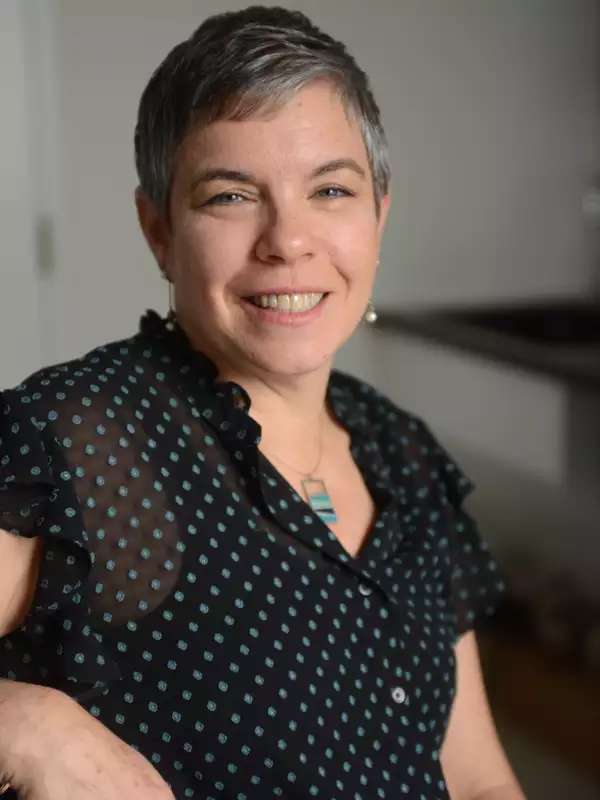
Sarah Jacoby is a Professor of Religious Studies at Northwestern University , specializing in Tibetan Buddhism with particular focus on gender and sexuality, religious autobiography, Buddhist revelation, and Tibetan literature. She holds a Ph.D. from the University of Virginia and previously held a postdoctoral fellowship at Columbia University’s Society of Fellows in the Humanities. Key academic affiliations: Northwestern University (2009–present), Columbia University (postdoc), University of Virginia (Ph.D.) Teaching areas: Introduction to Buddhism, Buddhism and Gender, Tibetan Religion and Culture, Feminist Theory, Religion and Celibacy Research Themes : Jacoby’s work centers on Tibetan Buddhist women’s voices through textual translation and analysis. Her groundbreaking study of Sera Khandro (1892–1940) explores: Autobiographical ventriloquy and spiritual legitimacy Interdependent personhood and relational ethics Translation methodology as ethical practice Gender dynamics in tantric Buddhist practices Academic Impact : 2016 E. Gene Smith Book Prize for Love and Liberation 2015 American Academy of Religion Book Award Finalist Co-organizer of 2022 Tibetan translation workshop Advocate for Tibetan script in academic publications Key Projects : Current book project on Lelung Zhepai Dorjé’s biographical texts Khyentse Foundation Buddhist Studies Lecture Series chair Collaborative translation initiatives with Tibetan writers and scholars
Dr. William Gatherer is a Lecturer in Chinese translation at the School of Languages and Cultures , The University of Queensland , and a NAATI-accredited professional translator. His academic journey includes a BA (Hons) from SOAS, University of London, and a PhD in Comparative Literature from UQ. Education: BA (Hons) in Chinese Studies, SOAS, University of London PhD in Comparative Literature, The University of Queensland His research focuses on Chinese metafiction , particularly the works of avant-garde author Ma Yuan (马原), and the translation of metafictional and self-reflexive elements from Chinese to English. Additional interests include post-postmodernism , transnational literature , and eco-conscious narratives in contemporary Chinese fiction. Recent publications explore comparative post-postmodernism and eco-anxiety in Ma Yuan’s Anthropocene-themed fiction (2023–2024), alongside foundational studies on translation fidelity in self-reflexive texts (2016–2021). His 2021 monograph Ma Yuan: The Chinese Avant-Garde, Metafiction, and Post-Postmodernism provides a comprehensive theoretical framework for analyzing metafiction in transnational contexts. Scientific awards include a 2017 Ministry of Culture of the PRC fellowship for Sinological research in China. He serves as Associate Advisor for Dr. Wendy Jiang’s 2021 PhD study on Howard Goldblatt’s translation of Mo Yan’s novels and has presented extensively on Chinese-English translation challenges at international conferences (2018–2024). As a practicing commercial translator , Gatherer specializes in translating Chinese medical research into English, bridging academic and practical applications of translation theory.
Gigi Luk is Professor and Program Director for M.Ed. Concentrations in Educational Psychology and Human Development within the Department of Educational and Counselling Psychology at McGill University's Faculty of Education. Her research program investigates the cognitive consequences of bilingualism across the lifespan, bridging scientific understanding with practical educational applications to cultivate inclusive environments for linguistically diverse learners. Her educational background includes: Ph.D. in Psychology (Developmental and Cognitive Processes) from York University M.A. in Psychology (Developmental and Cognitive Processes) from York University Specialized Honors B.A. in Psychology from York University Dr. Luk's research centers on bilingualism's cognitive and neural mechanisms, with three interconnected thrusts: (1) characterizing bilingualism beyond English proficiency in communities, (2) examining cognitive skills supporting language/literacy outcomes, and (3) establishing neural correlates of learning in diverse language learners. Her work integrates cognitive neuroscience with educational practice to address real-world challenges in multilingual classrooms, emphasizing culturally responsive pedagogy that respects linguistic diversity. This dual focus on basic science and practical implementation defines her contributions to understanding how bilingual experiences shape cognitive development and educational equity. Analysis of her 15 most recent publications (2022-2024) reveals consistent interdisciplinary investigation of bilingualism through cognitive, neural, and sociocultural lenses. Her work spans educational psychology, cognitive neuroscience, and sociolinguistics, with growing emphasis on neural correlates of language processing, methodological rigor in bilingual assessment, and equity implications of bilingual research. Key trends include examination of multilingual children's cognitive development, critical reframing of the "bilingual advantage" discourse, and innovative approaches like music-based literacy interventions. Scientific recognition includes: National Academy of Education/Spencer Postdoctoral Fellowship (2013-2014) Dr. Luk actively supervises graduate students (accepting new students for 2025-2026) and secures competitive research funding, currently supported by the Natural Sciences and Engineering Research Council of Canada (NSERC) and Fonds de recherche Société et culture (FRQSC). Her grant portfolio demonstrates sustained commitment to advancing understanding of bilingual cognition and its educational applications through rigorous empirical work. She directs the Bilingualism.Experience.Education Lab, which functions as an interdisciplinary hub for investigating how language experiences shape cognitive development and educational outcomes. The lab employs diverse methodologies including neuroimaging, behavioral experiments, and classroom-based research to address questions about bilingualism's cognitive effects and practical implications for educators.
Siraj Ahmed serves as Professor of English and Faculty Executive Officer at the Graduate Center, City University of New York (CUNY). His scholarship critically interrogates the intersections of Enlightenment thought, postcolonial theory, and comparative literature, with sustained focus on colonial India and legal discourse. Author of two influential monographs and numerous peer-reviewed essays, he examines how colonial power structures shaped intellectual frameworks while challenging Eurocentric narratives through critical methodology. His academic credentials include: Ph.D. from Columbia University B.A. from the University of Pennsylvania Ahmed's research centers on Enlightenment/postcolonial entanglements, analyzing how concepts of capital, civil society, and comparative literature emerged through colonial encounters. He investigates ambivalence in political philosophy, dispossession mechanisms, and the colonial foundations of literary methodologies, consistently foregrounding subaltern perspectives to reframe canonical discourses. Publication analysis reveals a trajectory from early work on Edmund Burke's East India Trials to contemporary explorations of comparative literature's colonial archaeology. His scholarship demonstrates methodological innovation in connecting historical Enlightenment discourse to modern liberation movements, particularly evident in recent teaching on Palestine and resistance politics. His distinguished contributions have received recognition: Modern Language Association's Aldo and Jeanne Scaglione Prize for Comparative Literary Studies (2017) for Archaeology of Babel
Oliver Li is a Researcher at Uppsala University's Center for Multidisciplinary Research on Religion and Society (CRS) and Department of Theology, Ethics and Philosophy of Religion division. His interdisciplinary work merges theological inquiry with cutting-edge artificial intelligence ethics, establishing him as a distinctive voice at the technology-religion intersection. Li's research traverses Theology , Philosophy of Religion , Ethics , and Artificial Intelligence , with specialized focus on panentheism and process theism. He critically examines how these frameworks address contemporary AI challenges including artificial suffering, moral development in human-AI systems, and consciousness implications. His investigations extend to literary analysis of AI subjectivity in works like Ishiguro's Klara and the Sun , alongside philosophical explorations of infinity and mathematical theology. Analysis of Li's 15 most recent publications reveals a pronounced trajectory toward technology-theology dialogue, particularly through 2023-2024 works interrogating AGI development ethics. Recurring themes include the morality of creating sentient machines, theological responses to AI-induced cognitive changes, and reimagining divine action in computational contexts. This cohesive body of work positions him at the vanguard of emerging academic discourse on spiritual dimensions of technological advancement. Li actively contributes to Uppsala University's interdisciplinary ecosystem through the Center for Multidisciplinary Research on Religion and Society (CRS), where he engages in cross-departmental projects examining religion's evolving societal role. His collaborative publications with scholars like Johan Eddebo demonstrate substantive engagement with research teams addressing technology's anthropological and ethical implications, particularly through media interventions like the 2023 Aftonbladet debate on AI's cognitive impacts.
Liz Harvey-Kattou is a Senior Lecturer in Spanish and Latin American Studies at the University of Westminster's School of Humanities. She teaches Spanish language, 20th-21st century culture in Spain and Latin America, film studies, and visual culture, while supervising undergraduate and postgraduate dissertations. Research focuses on gender and family dynamics in contemporary Central American cinema Previous work analyzed identity and nationhood in Costa Rican literature and film Active in film festival curation and cultural commentary Her research keywords include: Gender subversion in Central American cinema Decolonial representation Identity politics Postcolonial theory Feminist film analysis Costa Rican cultural studies Scientific contributions include: Peer reviewing for Forum for Modern Language Studies Peer reviewing for Studies in Spanish and Latin American Cinemas Editorial work for National Identities and Hispanic Research Journal As an AHRC Doctoral Studentship awardee and recipient of the AHRC Award for Outstanding Journal Reviewer, she maintains active engagement with academic communities through memberships in the Association of Hispanists, Society of Latin American Studies, and Women in Spanish and Portuguese Studies.
Mouez Khalfaoui is Professor of Islamic Law at the Center for Islamic Theology at the University of Tübingen, where he has served since 2014. He previously held the position of Junior Professor for Islamic Law (2012-2014) and served as Deputy Director of the Center for Islamic Theology from 2021-2023. His administrative roles include Head of the Examination Board, Member of the Study Commission, and Member of the Center Council. Dr. Khalfaoui earned his Doctorate in Islamic Studies from the University of Erfurt in 2008 and completed his State Examination in Islamic Studies and Arabic Studies at Manouba University of Tunis, Tunisia in 1998. Prior to his academic career, he served in the Kuwaiti Embassy in Berlin (2010-2012) and worked as an Academic lecturer for Islamic and Arabic studies at the Free University of Berlin (2009-2012). His research focuses on Islamic law, normative theory and history, Islamic theology, minority rights, Islamic education, and social ethics with particular emphasis on Islam in European contexts. Dr. Khalfaoui has led major research projects including comparative studies of work ethics across Abrahamic religions, Islamic Law and Ethics from a European perspective, Islamic family law in Europe, and the normativity of the Quran in contemporary contexts. His work addresses critical issues such as Muslim minority rights, the role of women in Islam, Islamic family law in Europe, Sharia and secular law, and Islamic work ethics in global contexts. Analysis of his recent publications reveals a consistent focus on the intersection of Islamic legal tradition with contemporary European contexts, particularly examining how Muslim minorities navigate religious obligations within secular legal frameworks. His work demonstrates a methodological approach combining historical, sociological, philosophical, legal and theological perspectives to address current challenges facing Muslim communities in Europe. Dr. Khalfaoui has been awarded research funding for projects including the comparative study of work ethics across Abrahamic religions and research on Islamic family law in Europe. His work has been supported by institutions including the Akademie für Islam in Wissenschaft und Gesellschaft (AIWG) and the Deutsche Forschungsgemeinschaft (DFG), with a recent May 2024 application for research on 'The primacy of what is right in a plural and multi-religious society'. He supervises the interdisciplinary post-doc research group 'Religion and Rationality − Faith and Reason in the Life and Thought of Muslims, Christians and Jews in the Context of Plural Societies' and serves as consultant and reviewer for European foundations including DAAD, Humboldt Foundation, and Porticus Foundation. Dr. Khalfaoui is actively involved in academic organizations as co-founder of the German International Society for Theological Studies (DIGITS), founding member of the Berlin Institute for Public Theology, and founding member of the Tübingen School of Education.
Marcus Gerhold is an Assistant Professor in the Formal Methods and Tools group at the University of Twente's Faculty of Electrical Engineering, Mathematics and Computer Science. His research focuses on model-based testing for software reliability in critical infrastructures, particularly railway systems, alongside significant contributions to game design and programming language analysis. His educational background includes: PhD in Computer Science from University of Twente (2018): Choice and Chance: Model-based Testing of Stochastic Behaviour MSc in Mathematics from Friedrich Schiller Universität Jena (2013): Embeddings of Weighted Morrey Spaces BSc in Mathematics from Friedrich Schiller Universität Jena (2011): Entropy-, Approximation- and Kolmogorov Numbers on Quasi-Banach Spaces Gerhold's research integrates theoretical model-based testing with practical critical infrastructure applications . His work on railway conformance testing addresses EULYNX controller validation, while his game design research explores affective mirroring in NPCs and procedural dungeon generation. The code modernity analysis stream leverages static analysis to quantify legacy code evolution across languages like Python and PHP, revealing version identification challenges through deep learning. Publication trends show consistent focus on model-based testing methodologies (40%), railway safety applications (25%), and innovative game design/code analysis (35%). Recent work increasingly incorporates AI/ML techniques for UML assessment and Python version identification, while maintaining rigorous formal methods foundations. He actively mentors 63 students across all academic levels and contributes to major research initiatives: STORM_SAFE (ERDF, 2024): Daily Supervisor for WP1/WP2 on software reliability for critical infrastructures ZORRO (KIC grant, 2023): Daily Supervisor for WP4 on zero downtime in cyber-physical systems MISSION (MSCA RISE, 2021-2025): Interim coordinator (early 2024) for space systems modeling As part of the Formal Methods and Tools research group, Gerhold participates in European collaborations while serving on SAC-SVT 2024 and FormaliSE 2023 program committees.
Dr. Rebecca K. Ivic is a Professor and Associate Dean of Research at the University of Alabama's College of Communication & Information Sciences. She holds a PhD and MA in Health Communication from Purdue University. Her research bridges health communication, public health, and computational social science to address global health challenges such as vaccine promotion and health equity. She currently serves as Senior Editor of the Journal of Health Communication and Co-Secretariat Lead for the Nature Medicine Commission's Quality Health Information for All initiative. Dr. Ivic has secured over $1.6M in research funding and contributed to 60+ peer-reviewed publications. She leads institutional research strategies, including a pilot funding program and strategic plans to enhance faculty and student research support. Her work emphasizes digital health directions, global partnerships, and evidence-based health information systems. She collaborates with multidisciplinary teams and international organizations to advance health equity through strategic communication frameworks. Key contributions include special journal collections, grant review roles for NIH and NSF, and partnerships with the CUNY School of Public Health. Dr. Ivic's research spans computational social science methodologies, social media discourse analysis, and health campaign effectiveness. Her recent work explores algorithmic impacts on misinformation, community support dynamics in online health spaces, and environmental health communication through social media networks.
Kyoko Iwaki is a Senior Lecturer at the Department of Literature of the University of Antwerp, with a focus on Japanese theatre, performance studies, and post-catastrophe narratives. She actively engages in collaborative research and holds internal governance roles, including membership in the Departmental Council for Literature and the Education Committee for the Educational Master in Languages. Her research explores Japanese contemporary theatre's intersections with ethics, digital performance, and nuclear trauma. Key themes include collaborative methodologies, liminality, and the philosophical implications of post-Fukushima art. Her work spans classical adaptations, avant-garde practices, and interdisciplinary approaches to performance. Recent publications analyze experimental Japanese theatre (Okada Toshiki, Sankai Juku), post-disaster memory, and the politics of digital pandemic spaces. She contributes to global discourse through interviews with practitioners and critiques of institutional frameworks in theatre and academia.
Professor Merideth Gattis is a cognitive psychologist at Cardiff University's School of Psychology, specializing in how interactions between individuals and their environments influence cognition and communication. She leads research on parenting cognitions during pregnancy and infancy, developmental cascades, and the role of natural environments in social interaction. Her work bridges developmental psychology with environmental and cross-cultural studies. Education: B.A. (Psychology, Gordon College, 1985); Ph.D. (Cognitive Psychology, UCLA, 1995). Academic roles include Professor (2014–present), Reader (2011–2014), and Senior Lecturer (2007–2011) at Cardiff University. Honors include Fellow of the Learned Society of Wales (2016) and completion of the Professorial Leadership Programme (2022). Research focuses on developmental cognition, parent-infant interactions, and environmental influences. Key projects include the Baby Care Questionnaire (BCQ) to measure parenting beliefs, studies on preterm birth effects, and collaborations with organizations like the Wildfowl and Wetlands Trust (WWT) to evaluate nature-based interventions. Her work emphasizes innovative methods like remote research tools and longitudinal studies. Teaching includes research design and methods at undergraduate and postgraduate levels, with a focus on developmental psychology and mixed methodologies. Supervises PhD students on topics like parenting knowledge, pro-environmental behavior shifts, and sensorimotor patterns in parent-child interaction. Grants and collaborations involve European Research Council (ERC) funding and partnerships with institutions globally. Active in academic service as a reviewer for major journals and committees including the Economic and Social Research Council (ESRC) Peer Review College.
Melissa J. Cuba is an Assistant Professor of Special Education at the University of Maine’s College of Education and Human Development, where she also serves as a multilingual scholar. Her work focuses on mitigating the overrepresentation of multilingual learners in special education and improving their educational outcomes through evidence-based practices. With 15 years of K-12 teaching experience, she brings expertise in supporting multilingual learners with and without disabilities and collaborating with school professionals. Education : Ph.D. in Education (Curriculum, Culture & Change), Virginia Commonwealth University (2020) M.Ed. in Curriculum & Instruction (ESOL, Special Education, Spanish), George Mason University (2012) B.A. in World Politics, Philosophy & Spanish Literature, Catholic University of America (2002) Research Interests : Special Education equity, multilingual learners’ inclusion, intersectionality in education, policy analysis, culturally responsive teaching, and technology integration in special education practices. Publications : Her research highlights themes such as multilingual learner disproportionality, undocumented student support strategies, dual language programming, and academic vocabulary instruction for English learners with disabilities. Recent work emphasizes mixed-methods research to address systemic inequities in education. Teaching : Melissa teaches courses such as Strategies for Culturally and Linguistically Diverse Students with Disabilities, Special Education Leadership, and Classroom-Based Prevention and Intervention. Her pedagogy reflects her commitment to equity and inclusive practices.
Aaron Cassidy is an American composer and conductor based in Berlin and Hannover. He serves as Professor of Composition and Director of Incontri – Institut für neue Musik at the Hochschule für Musik, Theater und Medien Hannover. His work emphasizes innovative graphical notations prioritizing physical sound production and non-geometrical rhythm theory. Cassidy’s compositions have been performed globally across 29 countries, with 12 commercial recordings on major labels like Kairos and NEOS. As a conductor, he specializes in contemporary and historical repertoire, leading over 100 world premieres with ensembles such as Ensemble Musikfabrik and ELISION. Notable engagements include the Munich Biennale and Melbourne Recital Centre. His recent research includes a 2025 reflection on non-geometrical rhythm and collaborative Erasmus+ residencies in Klagenfurt. Current projects include works for bassoon, violin-piano duet, and ANAM residency with ELISION in Melbourne (2025). Cassidy’s academic focus bridges compositional theory and performance practice. His research explores notation’s role in shaping musical interpretation, with particular attention to rhythm’s non-metric frameworks. Recent works like Reassessing Non-Geometrical Rhythm (2025) synthesize a decade of theoretical development. His teaching integrates experimental techniques and historical context, fostering innovation in Hannover’s new music institute.
Tovah Klein is an Adjunct Associate Professor of Psychology and Director of the Toddler Center at Barnard College, Columbia University. She specializes in child development, parenting strategies, and trauma resilience. Her research focuses on children’s social-emotional growth, parental influences, and family dynamics, including pandemic parenting challenges. Dr. Klein authored two books: Raising Resilience (2024) and How Toddlers Thrive (2014). She advises global children’s programs and media outlets like National Geographic and Apple TV+. Her work emphasizes play as a tool for emotional processing and has been featured widely in media, including The New York Times and CNBC.
Mary Ann Levine is a Professor of Anthropology and Department Chair at Franklin & Marshall College. Before joining F&M in 1998, she served as a Visiting Assistant Professor of Anthropology at Ithaca College from 1996 to 1998. Her research focuses on challenging assumptions about indigenous hunter-gatherer societies in the Northeast, post-contact colonial interactions, and integrating public archaeology with community service learning. Levine holds a BA in Anthropology with First Class Honours from McGill University, where she was mentored by Bruce Trigger, Fumiko-Ikawa Smith, and Michael Bisson. She earned an MA with Distinction and a PhD from the University of Massachusetts Amherst, with her doctoral research addressing native copper provenance using trace element analysis, supported by the Social Sciences and Humanities Research Council of Canada and Sigma Xi. Her research interests include redefining understandings of hunter-gatherer land use patterns, particularly in upland regions of New York’s Finger Lakes, and examining intercultural mediation through figures like Madame Montour. She has led archaeological projects at Otstonwakin—a multinational village—and the Thaddeus Stevens/Lydia Hamilton Smith site, contributing to historic preservation awards and student collaborative work. Levine’s work spans critiques of outdated ethnographic analogies, analysis of material culture in colonial contexts, and advocacy for inclusive archaeological narratives. She has emphasized the importance of marginalized landscapes and their role in indigenous lifeways, while her recent studies highlight colonial encounters and resistance to historical erasure. She has been recognized with the 2003 Historic Preservation Trust of Lancaster Elvin N. Heisey Award and the 2005 Preservation Pennsylvania Historic Preservation Award for Archaeology. Her teaching and research foster student engagement through field schools and service-learning initiatives.