Luke J Davies is a Leverhulme Early Career Fellow in the Faculty of Philosophy at the University of Oxford. His research focuses on Kant’s moral and political philosophy, particularly exploring the interplay between duties to self and the legitimate role of the state. He previously held a fellowship in the Department of Government at the London School of Economics (2018–2022). Education: PhD in Philosophy, University of Oxford (2014–2019) BPhil in Philosophy, University of Oxford (2012–2014) BA in Philosophy, University of Toronto (2006–2011) His research interests include Kantian ethics, political philosophy, rights theory, and the philosophical foundations of state legitimacy. Current work examines how duties to self shape interpersonal moral obligations within Kantian frameworks. Key Themes in Publications: Recurring topics include Kant’s theories of property, citizenship, welfare, and cosmopolitanism, with a focus on reconciling individual autonomy with collective moral obligations. Recent work extends to the state of nature, cosmopolitan law, and active citizenship in republican frameworks. Awards: Leverhulme Early Career Fellowship (2022–2025) His academic trajectory combines rigorous engagement with Kantian texts and contemporary applications of classical philosophy to political and ethical dilemmas.
Maile Arvin is a Kanaka Maoli feminist scholar and Assistant Professor at the Department of Ethnic Studies, University of Hawaiʻi at Mānoa. Her research and teaching focus on Indigenous relationships to land, histories of race and settler colonialism in Hawaiʻi, Oceania, and the United States. Previously, she was faculty in History and Gender Studies at the University of Utah and founding director of the Center for Pasifika Indigenous Knowledges. PhD in Ethnic Studies, University of California San Diego (2013) MA in Ethnic Studies, University of California San Diego (2009) BA in English, Swarthmore College (2005) Her research examines: Colonial production of racial categories, particularly Polynesians as an 'almost white race' in historical social science History of incarceration of Native Hawaiian children in government institutions (1865–1960s) Intersection of settler colonialism and Indigenous feminisms Critique of eugenics and genomic studies in the Pacific Community-engaged memorialization projects in Hawaiʻi Recent scholarly trends include analyses of Indigenous sovereignty, critiques of settler colonial whiteness, and interdisciplinary studies of race-gender dynamics. Arvin's publications explore Polynesian racialization, decolonial feminism, and the socioeconomic impacts of colonial institutions. NEH Chair's Grant for Nā Lei Poina ʻOle ACLS Digital Justice Seed Grant Arvin leads Nā Lei Poina ʻOle (Beloved Children Never Forgotten), a community history project about reformatories and industrial schools in Hawaiʻi. In collaboration with Kawela Farrant and the North Shore Community Land Trust, this project uses archival and oral histories to confront the legacy of child incarceration. She also critiques the nonprofit-industrial complex's role in limiting Indigenous sovereignty.
Professor Martin Doevenspeck is a distinguished scholar of Political Geography at the University of Bayreuth, where he holds a professorship in the Department of Political Geography within the Faculty of Biology, Chemistry & Earth Sciences. Since 2019, he has served as a Principal Investigator in the Cluster of Excellence "Africa Multiple" and as Spokesperson of the Research Section Mobilities. Previously, he was Managing Director of the Institute of Geography at the University of Bayreuth (2018-2022) and a member of the Executive Board of the Institute of African Studies Bayreuth. Professor Doevenspeck earned his "Diplom" in Geography from the University of Bonn and completed his PhD thesis entitled "Migration in rural Benin – Studies in social geography at an African border" at the University of Bayreuth in 2004. His academic journey includes positions as a Teaching and Research Assistant at the University of Bayreuth (2005-2011), Post-doc at the University of Bonn (2004), and various research and teaching roles focused on African geography and development. At the intersection of migration studies and political geography, Professor Doevenspeck's research focuses on (forced) im/mobilities, conflict, and border studies, with particular emphasis on African contexts. His current work centers on the project "Oil movements: the production and government of petro-(im)mobilities in East Africa" within the Bayreuth Cluster of Excellence "Africa Multiple," where he serves as Spokesperson of the Research Section Mobilities. His research spans West Africa (particularly Benin), Central Africa (Democratic Republic of Congo, Rwanda), and East Africa, examining how borders, conflicts, and resource extraction shape human mobility and territorial control. Analysis of Professor Doevenspeck's recent publications reveals a consistent focus on migration, borders, and conflict in African contexts, with increasing attention to environmental factors and resource extraction. His work demonstrates interdisciplinary approaches combining political geography, migration studies, and African studies. Recent publications particularly emphasize petro-mobilities, terrorism impacts on education, and migration control in West African borderlands, reflecting evolving research interests in the interplay between infrastructure development, security concerns, and human mobility. Professor Doevenspeck has supervised numerous doctoral and master's students, including Jaana M. Janßen, Fabian Liedl, Clemens Romankiewicz, Morgane Anziani-Vente, Muhire Blaise Mwanga, and Daniela Boß. His academic leadership extends to serving as Vice Dean of the Bayreuth International Graduate School of African Studies (BIGSAS) from 2012-2021, where he played a significant role in shaping graduate education in African studies. As a Principal Investigator in the Cluster of Excellence "Africa Multiple," Professor Doevenspeck leads research initiatives examining diverse manifestations of "Africa" across the continent and diaspora. His work involves collaboration with researchers from multiple disciplines and institutions, focusing particularly on mobilities as a key research section within the cluster. This collaborative research environment has produced significant insights into migration patterns, border dynamics, and conflict resolution in African contexts.
Catherine Anne Brown is a Professor at the Faculty of Law, University of Calgary with extensive international experience, having held visiting professorships at Stanford University (as a Fulbright Fellow), University of Toronto, UCLA, McGeorge School of Law, and Whittier Law School. Her expertise spans taxation, international trade law, and estate planning across multiple jurisdictions. Her research focuses on the critical intersection of tax and trade agreements, particularly how non-discrimination principles operate within services trade frameworks. Current work examines tax treaty mechanisms for addressing discriminatory practices in cross-border commerce, building on her 2017 monograph "Tax Discrimination and Trade in Services". She actively explores evolving regulatory challenges in digital services taxation and international compliance. Professor Brown's scholarship demonstrates consistent engagement with practical legal applications, bridging academic theory and professional practice through textbooks, treatises, and policy-oriented analyses. Her publications reveal progressive specialization in tax-trade interfaces while maintaining foundational contributions to estate planning education. Her distinguished career has been recognized through: Lifetime Achievement Award (Canadian Tax Foundation, 2017) Doug Sherbaniuk Award for Distinguished Writing (Canadian Tax Foundation, 2014) Award for Distinguished Service in Legal Scholarship (Law Society of Alberta/Canadian Bar Association, 2011) Widdifield Award for estate planning scholarship (2006, 2012) Induction into the International Academy of Estate and Trust Law (2012) As an educator, she directed the Business Clinical program until 2014, providing practical training in business law applications. She maintains active professional engagement through appointments to the NAFTA Chapter 19 roster (2018), STEP Canada's Public Policy Committee (2016), and the Canada Revenue Agency's Offshore Compliance Advisory Committee (2016), while serving on the Legal Education Society of Alberta's Board of Directors.
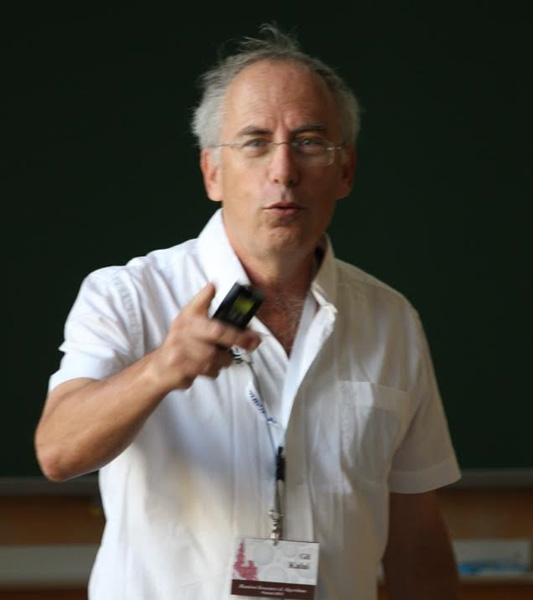
Gil Kalai is a Professor of Mathematics at the Hebrew University of Jerusalem since 1992, where he holds the Henry and Manya Noskwith Chair. He also serves as an Adjunct Professor of Mathematics and Computer Science at Yale University since 2004 in a long-term part-time visiting position. His academic career includes visiting positions at prestigious institutions including MIT, Cornell, IAS Princeton, Berkeley, Bell-labs, IBM, and Microsoft. Professor Kalai's research spans multiple areas within mathematics and theoretical computer science. His work in combinatorics encompasses geometric, probabilistic, and topological approaches. He has made significant contributions to the study of convex sets and polytopes, linear programming, and theoretical computer science. His influential 1988 paper with Kahn and Linial on Boolean functions pioneered applications of Fourier analysis in theoretical computer science. Kalai's research has evolved to include the application of Fourier analysis to thresholds, influences, symmetries, noise, percolation, and social choice. He has developed theories in algebraic shifting and studied face-numbers and other combinatorial invariants of polytopes. His work on the diameter of polytopes and randomized simplex algorithms has been influential in optimization theory. In 1993, his collaboration with Kahn produced a groundbreaking counterexample to Borsuk's Conjecture in 1325 dimensions. Professor Kalai's publications reveal a consistent focus on the intersection of combinatorics, geometry, and theoretical computer science. His work shows a progression from foundational combinatorial geometry to increasingly sophisticated applications of harmonic analysis in discrete mathematics. The recurring themes across his 30+ year career include Boolean functions, polytope theory, and probabilistic methods in combinatorics, demonstrating remarkable coherence in his research trajectory. 2016 European congress of Mathematics, plenary speaker 2013 ERC advanced grant 2012 Rothschild Prize 1994 International Congress of Mathematicians invited section talk, Zurich 1994 Fulkerson Prize 1993 Erdos Prize 1992 Polya Prize Though specific details of his advising are not provided in the source material, Kalai has written over 70 scientific papers and maintains an active research blog entitled "Combinatorics and More." His 2013 ERC advanced grant indicates significant research funding for his work. His extensive collaborations with researchers across multiple institutions suggest a robust research program with numerous PhD students and postdoctoral researchers, though specific names are not mentioned in the provided texts. Professor Kalai maintains active research connections across multiple institutions including Hebrew University, Yale, and various research centers worldwide. His work bridges pure mathematics and theoretical computer science, creating a unique interdisciplinary research environment that influences both fields.
Dinah Ribard is a Director of Studies at the École des Hautes Études en Sciences Sociales (EHESS), working within the Centre de Recherches Historiques (CRH). She serves as Center Director for the GRIHL (Groupe de recherche interdisciplinaire sur l'histoire du libéralisme) research group. Her academic career has been dedicated to the historical study of work, intellectual practices, and cultural production from the early modern period through the 19th century. Ribard completed her thesis in December 2000 at the University of Paris III - Sorbonne Nouvelle under the direction of Alain Viala, entitled "Live Tell Think. Research on the literary status of the philosopher: the Lives of philosophers in France 1650-1766." She was formerly a student at the École Normale Supérieure (Ulm) and holds a degree in Modern Literature. Prior to her position at EHESS, she served as an ATER (Attaché Temporaire d'Enseignement et de Recherche) at Paris III University from 1999 to 2001 and taught at Lycée Jacques-Feyder in Epinay sur Seine from 2001 to 2003. Ribard's research focuses on the history of work from multiple perspectives - examining both intellectual work (1600-1900) and material labor. She investigates how work has been conceptualized, narrated, and institutionalized throughout history. Her work explores the relationship between knowledge production and labor, analyzing how different professions and social statuses have shaped intellectual and cultural practices. She examines the historical construction of disciplines, professions, and social classifications, with particular attention to how writing practices intersect with work identities. Her recent publications reveal a consistent focus on the relationship between writing, work, and social identity across the early modern and modern periods. Ribard's scholarship demonstrates how textual practices were embedded in specific work contexts, from artisanal workshops to academic institutions. Her work shows how literary forms were used to construct professional identities and how writing practices served as forms of political action. She has made significant contributions to understanding the historical relationship between intellectual labor and material production. Ribard has published extensively, including the notable 2023 book "Le Menuisier de Nevers. Poésie ouvrière, fait littéraire et classes sociales (XVIIe-XIXe siècle)" which examines how working-class poetry was historically constructed and marginalized. Her scholarship challenges traditional literary classifications and reveals how social categories have been historically produced through cultural practices. As Director of Studies at EHESS, Ribard supervises doctoral students and contributes to the academic training of historians. She co-responsible for the Grihl seminar and teaches courses at EHESS on topics including "Writings of the Past. Literature and History: Methods, Theories, Fields" and "History and stories of work." Her teaching reflects her research interests in the intersection of literary practices, historical methodology, and social analysis. Within the CRH, Ribard is affiliated with the GRIHL research group, which focuses on the interdisciplinary history of liberalism. Her work bridges historical, literary, and sociological approaches to understanding the development of social and intellectual categories. Through her research, teaching, and institutional leadership, Ribard has made significant contributions to the historical understanding of work, knowledge production, and cultural classification.
Austin Zeiderman is an Associate Professor in the Department of Geography and Environment at the London School of Economics (LSE), with interdisciplinary expertise in urbanization, environmental governance, and political dynamics in Latin America and the Caribbean. His research integrates anthropology, geography, sociology, and history, focusing on Colombia, particularly the Magdalena River and Bogotá’s urban periphery. Zeiderman holds a PhD in Anthropology from Stanford University, an MA in Environmental Science from Yale, and a BA in Economics from Colgate University. He has led projects like LSE’s Urban Uncertainty initiative and remains a Research Associate at LSE Cities. His work explores how security, risk, and environmental challenges shape marginalized communities, with notable monographs including *Endangered City* (2016) and *Artery* (2025). Research interests include racial ecologies, colonial capitalism, urban futures, and the interplay of race, environment, and security. He has been recognized with fellowships from the Fulbright Program, Wenner-Gren Foundation, and others. His recent scholarship critiques infrastructure projects like Colombia’s Magdalena River logistics corridor, linking environmental crises to systemic racial inequalities. Publications span journals like *Antipode* and *Public Culture*, and he engages public discourse through media like the Guardian and podcasts. His work bridges academic rigor with societal impact, addressing urgent global issues such as climate adaptation and post-conflict urban resilience.
Douglas Abbey is a Lecturer in Finance at the Stanford Graduate School of Business since 2005, specializing in real estate investment and urban development. He co-founded IHP Capital Partners, AMB Property Corporation (now Prologis), and Swift Real Estate Partners, contributing to industrial real estate and affordable housing sectors. Abbey holds an MCP from UC Berkeley and a BA from Amherst College. His research and teaching focus on real estate investment strategies, land use policies, and their socio-economic impacts. He emphasizes how market forces, demographics, and regulations shape housing affordability and urban integration. Abbey has authored multiple case studies analyzing real estate projects and development challenges. Education: MCP, UC Berkeley, 1979 BA, Amherst College, 1971 Abbey has served on boards of prominent organizations, including the Urban Land Institute (past Global Board member, Chairman of the ULI Foundation), Bridge Housing Corporation (emeritus after 20 years), and the Nantucket Yacht Club. He supports the Abbey Master in Real Estate Development + Design at UC Berkeley. His academic service includes teaching GSBGEN 306: Real Estate Investment and advising students on career paths in real estate. His case studies explore diverse topics like hotel development, distressed asset management, and industrial REIT strategies.
Raymond Ku is the John Homer Kapp Professor of Law at Case Western Reserve University School of Law. He has served as Associate Dean for Academic Affairs and Co-Director of the Center for Law, Technology and the Art. His work focuses on Constitutional Law, Cyberlaw, Privacy, and Copyright, with an emphasis on how technology and evolving societal norms intersect with individual liberties. Education Juris Doctor (J.D.), New York University (1995) Bachelor of Arts (A.B.), Brown University (1992) Professor Ku’s research explores the tensions between free speech and copyright, the implications of digital technology on privacy, and the constitutional boundaries of surveillance. His publications span topics like peer-to-peer file sharing, reproductive rights, and data privacy, reflecting a commitment to addressing contemporary legal challenges through interdisciplinary lenses. His scholarship appears in prestigious law reviews, including Berkeley, Chicago, and Vanderbilt. He authored the first casebook on cyberspace law. Awards include the 2009 Distinguished Teacher Award and being voted Professor of the Year by the 2009 graduating class. Raymond Ku clerked for Judge Timothy K. Lewis and practiced constitutional, intellectual property, and antitrust law before transitioning to academia. He has taught at multiple institutions, contributing to legal education and research related to technology and civil liberties.
Professor Katja Vogt is a distinguished faculty member in the Department of Philosophy at Columbia University's Faculty of Arts and Sciences. She serves as Professor of Philosophy, Director of the M.A. Program in Philosophy, and Chair of the Climate Committee. Additionally, she is an Affiliate of the Data Science Institute and has affiliations with Computing Systems for Data-Driven Science, Data, Media and Society, and Health Analytics. Professor Vogt joined Columbia University in 2002 after teaching at Humboldt University Berlin, both in the Philosophy Department and at the Charité Medical School. Professor Vogt specializes in ancient philosophy, ethics, and normative epistemology, with particular expertise in Plato, Aristotle, Stoicism, and Pyrrhonian skepticism. Her research explores fundamental questions that bridge ancient and contemporary philosophical discussions: What are values? What kind of values are knowledge and truth? What does it mean to want one's life to go well? She has developed significant work on the role of knowledge in ethics, generics and generalizations, and is currently finalizing a monograph entitled The Original Stoics . Her approach combines careful historical scholarship with contemporary philosophical analysis, creating dialogues between ancient texts and modern debates in metaethics, epistemology, and philosophy of action. Professor Vogt's scholarly output reveals consistent engagement with ancient philosophical frameworks while addressing contemporary concerns. Her recent work shows a particular focus on Stoic philosophy, with multiple papers examining Stoic logic, physics, and ethics. She also maintains a strong interest in skepticism, particularly Pyrrhonian approaches, and has made significant contributions to understanding how ancient philosophical concepts can inform current debates about generics, value theory, and the relationship between knowledge and virtue. Her collaborative work with Jens Haas on topics like ignorance, love, and hatred demonstrates her interdisciplinary approach that connects ancient philosophy with contemporary philosophical issues. Columbia Distinguished Faculty Award Class of 1932 Fellow in Classical Philosophy at Princeton University Fellowships from the Templeton Foundation, Maimonides Centre in Hamburg, Center for Advanced Studies in Munich, DFG (German Research Association), and Columbia University-Paris 1 Alliance Program Professor Vogt is actively involved in mentoring students and developing innovative educational approaches. She serves as academic sponsor for "Logic Made Accessible," a project mentored with Columbia College student Jonathan Tanaka that has reached students in over 30 countries. The project makes ancient logic freely accessible to learners of all ages, backgrounds, and interests. She has also served on numerous university committees including the Provost's Faculty Committee on Educational Innovation, Policy and Planning Committee, Committee on Instruction, and as Acting Director of the Center for the Ancient Mediterranean. Her grant work includes support from major foundations that have enabled her to pursue research at the intersection of ancient philosophy and contemporary epistemology. Professor Vogt collaborates with photographer and artist Jens Haas on the "On the Road" project, which combines artistic photography with philosophical reflection. She is also involved in "Movies and Morals," a collaboration with H8URS that provides philosophical commentary on contemporary film and television. These projects demonstrate her commitment to making philosophical inquiry accessible beyond traditional academic settings.
Geertje Slingerland is an Assistant Professor of Urban Studies at the Faculty of Architecture and the Built Environment, Delft University of Technology (TU Delft). Her work focuses on developing and studying participatory and co-design methods in urban contexts, with a mission to increase awareness of excluded groups in participation processes and develop methods to involve overlooked residents. Dr. Slingerland obtained her PhD entitled 'Together we make places: Designing connections in urban spaces' at the Technology, Policy and Management Faculty of TU Delft. Prior to rejoining TU Delft as an assistant professor, she worked at Rotterdam University of Applied Sciences as a senior researcher. She was also part of TU Delft's Participatory Systems initiative. Her research interests span participatory design, community-driven research, human-computer interaction, citizen participation, and urban studies. With a background in Interaction Design, she investigates how design can contribute to positive behavioral change in people and ultimately systemic change in society. Her expertise includes co-design, participatory design, urban communities, qualitative research, research-through-design, and citizen empowerment and engagement. She focuses on the smart and social city, using participatory approaches to work with residents and local organizations to address neighborhood and city challenges through playful, creative, and digital methods. Dr. Slingerland's recent publications demonstrate a strong focus on participatory urban design, with particular attention to digital engagement, climate action, and inclusive city-making. Her work bridges urban studies, human-computer interaction, and community engagement, often examining how technology can facilitate more inclusive participation in urban planning processes. She has conducted case studies in Rotterdam, The Hague, and Cork (Ireland), developing frameworks for participatory placemaking that connect citizens with each other and their environments. Scientific Awards: Best Student Paper Award (2022) Dr. Slingerland actively engages with the public through media contributions on urban design topics, particularly focusing on gender-inclusive urban spaces. Her recent media appearances have addressed designing public spaces with women, unsafe places for women, urban safety for young women, and how streets and public spaces are typically designed according to men's preferences. She has participated in significant academic events including serving as Chair of the Programme Committee for the 182nd Dies Natalis & Delta Week in 2024, and has been involved in projects related to citizen voices in climate action.
David J. Stensrud is a Professor of Meteorology and Atmospheric Science at Pennsylvania State University, where he has been a faculty member in the Department of Meteorology and Atmospheric Science within the College of Earth and Mineral Sciences. His research focuses on advancing our understanding of severe weather phenomena and improving numerical weather prediction capabilities. Dr. Stensrud received his academic training at Penn State, earning his M.S. in Meteorology in 1985 and his Ph.D. in Meteorology in 1992. His educational background has provided the foundation for his extensive research career focused on atmospheric dynamics and prediction. Dr. Stensrud's research spans several critical areas in atmospheric science, with particular emphasis on mesoscale meteorology , numerical weather prediction , and synoptic meteorology . He is internationally recognized for his work on ensemble forecasting , where he explores how groups of numerical weather prediction models can provide probabilistic forecasts of severe weather events. His research on convective-scale data assimilation aims to improve how observations from radar and satellites are incorporated into high-resolution weather models. Additional research interests include the physical processes behind severe weather phenomena like derechos and heavy rainfall events, the predictability of convective-scale phenomena, and the dynamics of the North American monsoon system. He has made significant contributions to understanding how urban environments influence thunderstorms and how convective systems interact with their larger-scale environment. Analysis of Dr. Stensrud's recent publications reveals a consistent focus on improving severe weather prediction through advanced data assimilation techniques. His work primarily centers on integrating radar and satellite observations into convection-allowing models to enhance forecasting capabilities for thunderstorms and other severe weather phenomena. A notable trend in his research is the increasing sophistication of ensemble approaches to address uncertainties in both initial conditions and model physics. His publications demonstrate a progression from fundamental studies of mesoscale phenomena to increasingly operational applications with potential for real-world forecasting improvements. Dr. Stensrud has served in several important professional capacities that highlight his standing in the meteorological community: Chair, Storm-scale Radar Data Assimilation Workshop, Norman, Oklahoma, October 2011 Member, NOAA/NWS Functional Weather Radar Requirements Integrated Working Team, 2012-2013 Guest Editor, Advances in Meteorology, Special Issue on "Storm-scale data assimilation and NWP", 2013 Commissioner, Scientific and Technological Activities Commission, American Meteorological Society, 2016-2017 Dr. Stensrud has authored more than 150 peer-reviewed publications and a textbook entitled "Parameterization Schemes: Keys to Understanding Numerical Weather Models." He has been actively involved in mentoring graduate students, though specific names of advisees are not provided in the available information. In collaboration with colleagues at Penn State, he helped create a 20-station environmental monitoring network across Pennsylvania with plans to expand to 50+ stations. His research has been supported by various grants that have enabled field campaigns such as the Mesoscale Predictability Experiment (MPEX) in 2013, where his team intercepted severe thunderstorms to collect critical observational data. Dr. Stensrud is involved with several research teams and facilities at Penn State, including work with the Joel N. Myers Weather Center and the Bob and Charlotte Landis Broadcast Room. His research group focuses on analyzing data from dual-polarization radar systems and developing improved techniques for assimilating these observations into convection-allowing models. He collaborates extensively with other researchers at Penn State and beyond, particularly in studies involving the interactions between urban environments and thunderstorms, and the upscale effects of deep convection on larger-scale weather patterns.
Florian Brandl is an Argelander Professor (associate professor with tenure) at the University of Bonn, holding positions in both the Department of Economics and the Hausdorff Center for Mathematics. Previously, he was a postdoctoral research scholar at Princeton University and Stanford University. His academic career demonstrates a strong foundation in mathematical economics and game theory, with affiliations spanning multiple prestigious institutions. Brandl earned his Doctoral degree in Mathematics (summa cum laude) from the Technical University of Munich in 2018, following a Master's degree (2013) and Bachelor's degree (2011) from the same institution. His doctoral work focused on "Zero-Sum Games in Social Choice and Game Theory" under the supervision of Felix Brandt, establishing the foundation for his research trajectory. Prof. Brandl's research spans microeconomic theory with a focus on social choice theory, decision theory, and game theory. He is particularly interested in decision-making under uncertainty, connections between social choice and game theory, and dynamic processes converging to equilibrium. His work employs mathematical tools to analyze interactions of multiple entities in economic contexts, often incorporating algorithmic approaches and methods from theoretical computer science. He has made significant contributions to fair division, mechanism design, and probabilistic social choice. His publication record shows consistent contributions across multiple subfields, with recent work focusing on patience effects in fair division, social learning barriers, and axiomatic characterizations of equilibrium concepts. Brandl's research demonstrates strong interdisciplinary connections between economics, mathematics, and computer science, with publications in top journals across all three disciplines. Best Student Paper Award at WINE 2021 for "Funding Public Projects: A Case for the Nash Product Rule" Associate Editor for Theoretical Economics Co-organizer of the COMSOC Video Seminar Prof. Brandl actively contributes to academic service and community building. He co-organizes the COMSOC Video Seminar and will host a Trimester Program on "Advances in Mechanism Design" in Bonn in summer 2026. He serves on program committees for major conferences including COMSOC 2023 and EC 2023. His research has been supported through his position as a Bonn Junior Fellow at the Hausdorff Center for Mathematics since 2021. Based at the Institute for Microeconomics and affiliated with the Hausdorff Center for Mathematics, Brandl collaborates with a broad network of researchers across economics and computer science. His work often involves interdisciplinary collaboration, as evidenced by his numerous co-authored publications with researchers from various institutions worldwide. He maintains strong connections with the University of Oxford's Global Priorities Institute as a Research Affiliate.
Vittoria Mollo is a Lecturer in the Department of French and Italian at Stanford University, serving as Chair of Undergraduate Studies. She has also been Executive Producer for the podcast "Entitled Opinions" with Professor Robert Harrison for seven years. Dr. Mollo's educational background includes: Ph.D. in French and Italian, Stanford University (2021) Her research specializes in Italian Renaissance literature, particularly satire and dissent in sixteenth-century Rome as explored in her dissertation "Talking Statues and Pietro Aretino: Satire and Dissent in Sixteenth Century Rome". She teaches interdisciplinary courses spanning Italian language, literature, art, film, and music, with upcoming offerings on the Italian Middle Ages, Post-War Neorealism, and Rome's historical evolution. In her leadership role as Chair of Undergraduate Studies, Dr. Mollo oversees curriculum development, course coordination, and academic advising for Italian majors while maintaining active teaching responsibilities across multiple language and cultural studies domains.
Professor Beata Zarzycka, affiliated with the John Paul II Catholic University of Lublin , serves as a leading academic in the Department of Social Psychology and Psychology of Religion under the Faculty of Social Sciences . Her research bridges psychology and religious studies, focusing on spiritual well-being, religious coping, meaning-making processes, and mental health in Polish Catholic contexts. Over her career, she has explored faith transitions, therapeutic relationships, and the psychological impact of pandemics and chronic illness. Her publications span topics like deconversion in adolescence , religiosity and life satisfaction in seniors, and spiritual struggles in healthcare workers . She has validated key psychological scales (e.g., Religious Comfort and Strain) for Polish populations and investigated MMPI-2 and 16PF-5 in predicting religious vocation outcomes. Her work often employs mediation and moderation models to uncover complex psychological-spiritual dynamics. Recent studies include 2024 articles on parental attachment and adolescent deconversion, and 2023 work on religious support networks. She has received national honors like the Bronze Medal for Long Service and KEN Medal , reflecting her contributions to psychology and religious studies. Her peer-review activities for journals like International Journal for the Psychology of Religion and Roczniki Psychologiczne further highlight her academic leadership.