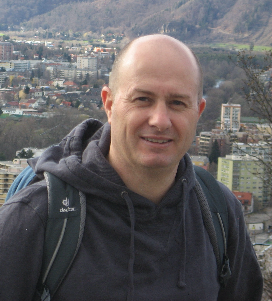
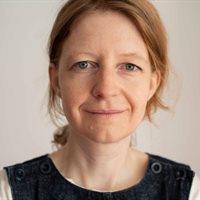
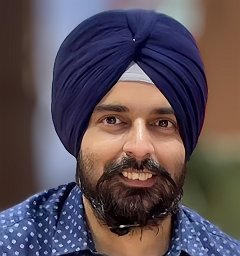
Mick Filmer is a Senior Lecturer at Curtin University's School of Earth and Planetary Sciences (EPS) within the Faculty of Science and Engineering. He serves as Curtin's representative on the Land Surveyors Licensing Board of Western Australia and holds a PhD (Curtin University) and a Bachelor of Geoinformatics and Surveying (University of South Australia). His research focuses on InSAR technology, vertical land motion, height systems, and coastal sea surface topography, with over 30 peer-reviewed publications since 2007. Teaching responsibilities include Survey Law Ethics Practice, Cadastral Surveying, and Applied Geodetic Surveying. Research contributions span geodetic datum development (e.g., AUSGeoid09), InSAR deformation analysis, and land subsidence monitoring in the Perth Basin and Latrobe Valley. He collaborates with organizations like the International Association of Geodesy and European Geosciences Union. Key projects include evaluating Australia’s AUSHYDROID vertical datum model (2024), integrating InSAR with terrestrial reference frames (2021), and analyzing ocean tide signals in coastal zones (2023). His work bridges geodesy, remote sensing, and hydrogeology, addressing challenges in vertical land motion monitoring and geodetic infrastructure planning.
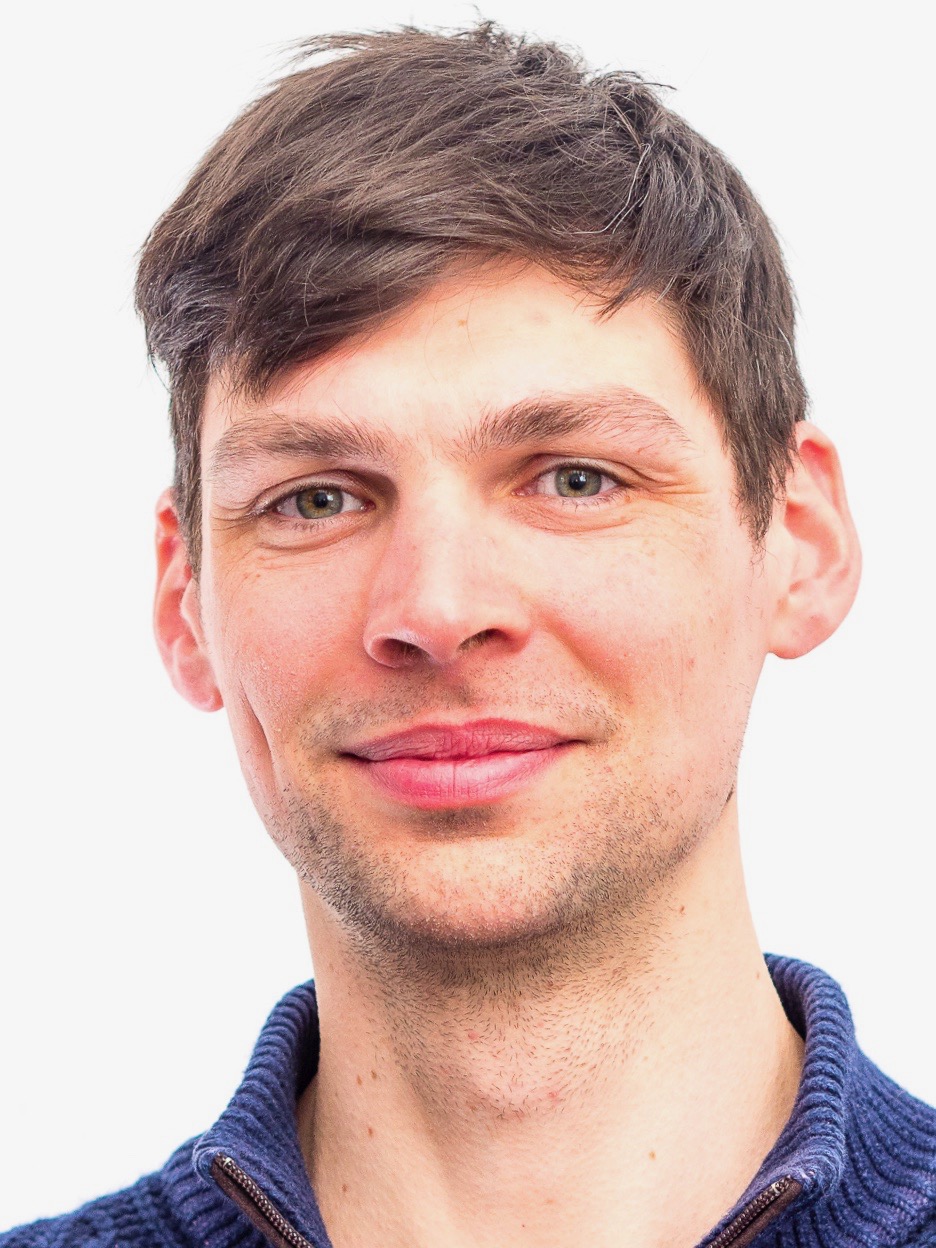
Prof. Dr. Eugen Hellmann is a full Professor at the Mathematical Institute of the University of Münster , within the Department of Mathematics and Computer Science . He is a leading researcher in arithmetic geometry and representation theory, actively contributing to the CRC 1442 Geometry: Deformations and Rigidity and Mathematics Münster excellence cluster. His work focuses on the p-adic aspects of the Langlands program, moduli spaces of Galois representations, and p-adic Hodge theory. Research Interests: His primary research areas include Arithmetic Algebraic Geometry , the Langlands Program (especially its p-adic and categorical formulations), p-adic Hodge Theory , p-adic Galois Representations , and p-adic Automorphic Forms . His work often involves the study of (phi,Gamma)-modules, eigenvarieties, and deformation spaces, aiming to understand the deep connections between automorphic forms and Galois representations in the p-adic setting. Publication Trends: His most recent publications (2022–2023) show a strong focus on the derived and categorical aspects of the p-adic Langlands program, including the derived category of Hecke algebras and a categorical framework for the entire program. Earlier works established foundational results on the smoothness of eigenvarieties, the geometry of trianguline varieties, and the structure of moduli spaces for Galois representations. His research consistently bridges abstract algebra, number theory, and algebraic geometry. Scientific Awards: No specific awards or fellowships are mentioned in the provided texts. Advising and Grants: While a list of former research group members (e.g., Dr. Claudius Heyer, Dr. Damien Junger) is provided, their exact status as PhD advisees is not explicitly confirmed. He leads significant research projects funded by the DFG, including CRC 1442 - A01: Automorphic forms and the p-adic Langlands programme and CRC 1442 - A02: Moduli spaces of p-adic Galois representations , as well as a project within the EXC 2044 - A1: Arithmetic, geometry and representations cluster. He is also a co-author on a preprint titled "Patching and multiplicities of p-adic eigenforms," indicating active collaboration on grant-funded research. Labs and Teams: He is a central figure in the arithmetic geometry group at Münster. He organizes and leads the Research Seminar "p-adic arithmetic" and the Mittagsseminar "Arithmetic" , which serve as key forums for his research group and collaborators to present and discuss current work. His research team has included several postdoctoral researchers and doctoral students, contributing to a vibrant research environment focused on cutting-edge problems in number theory.
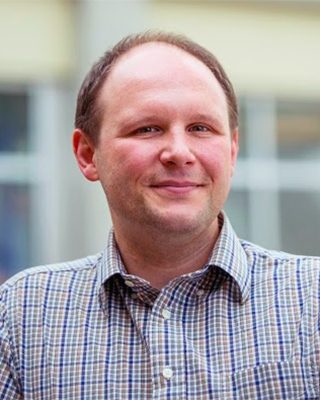
Thomas Henzinger is a Professor at the Institute of Science and Technology Austria (ISTA), where he leads the Henzinger Thomas Group focused on improving software reliability through mathematical methods. He previously served as ISTA's President (2009–2022) and held academic positions at EPFL, Max Planck Institute, UC Berkeley, and Cornell University. Education: Dipl.-Ing. in Computer Science (Johannes Kepler University, Austria), M.S. in Computer and Information Sciences (University of Delaware), PhD in Computer Science (Stanford University), and Honorary Doctorates from Fourier University (France) and Masaryk University (Czech Republic). The group's research spans concurrent systems , embedded systems , quantitative model checking , runtime monitoring , and trustworthy AI . They develop tools like HyTech and VAMOS, emphasizing predictability, robustness, and fairness in safety-critical software. Recent publications highlight trends in quantitative automata , fairness in AI , quantum algorithms , and automata theory , reflecting interdisciplinary applications from cyber-physical systems to neural networks. Collaborative projects include SPyCoDe (security foundations) and VAMOS (software monitoring). Honors & Awards: 2024 Fellow of the Royal Society 2020 Member, US National Academy of Sciences 2015 Royal Society Milner Award 2012 Wittgenstein Award 2006 ACM and IEEE Fellow 1995 NSF CAREER and ONR Young Investigator Awards Henzinger advises current and former PhD students including Mahyar Karimi, Pavol Kebis, and Mathias Lechner. His grants include ERC Advanced Grants (QUAREM, VAMOS) and FWF funding (Wittgenstein Award, NFN RISE). Labs & Teams: He leads the Henzinger Thomas Group at ISTA, collaborating with FORSYTE (TU Wien) and contributing to EU-funded initiatives. The group integrates postdocs, PhD students, and interns in formal methods and system verification.
Zachary Tatlock is an Associate Professor at the Paul G. Allen School of Computer Science & Engineering at the University of Washington, where he leads the Programming Languages & Software Engineering Group (PLSE) and the SAMPL Group. His research spans programming languages, formal verification, compilers, and computational fabrication. He is also an Amazon Scholar with AWS's Automated Reasoning Group and previously advised OctoML. Tatlock's work bridges theoretical foundations with practical systems, focusing on making it easier to write tricky code while ensuring correctness through rigorous proofs and measurements. PhD in Computer Science & Engineering, University of California, San Diego (2014) Thesis: Reducing the Costs of Proof Assistant Based Formal Verification Advisor: Sorin Lerner BS in Computer Science (Honors) and Mathematics, Purdue University (2007) Professor Tatlock's research focuses on the intersection of programming languages, formal methods, and systems. His work in compilers and formal verification aims to make it easier to write tricky code while ensuring correctness through rigorous proofs. He explores computational fabrication techniques that bridge digital design with physical manufacturing. His recent work on equality saturation (via the egg framework) has transformed program optimization and synthesis. Tatlock also investigates floating-point numerics, distributed systems verification, and hardware/software co-design, always seeking to balance theoretical rigor with practical implementation. Tatlock's recent publications demonstrate a strong focus on equality saturation techniques (egg framework), computational fabrication, and verified systems. His work increasingly integrates machine learning with program analysis and synthesis. There's a clear trajectory toward more practical applications of formal methods in real-world systems, particularly in numerical computing and fabrication. His research group has made significant contributions to e-graph technology, floating-point accuracy, and the verification of distributed systems. Distinguished Paper Award for Rewrite Rule Inference Using Equality Saturation (OOPSLA 2021) Spotlight Paper Award for Dynamic Tensor Rematerialization (ICLR 2021) Distinguished Paper Award for egg: Fast and Extensible Equality Saturation (POPL 2021) Faculty Appreciation for Career Education & Training (FACET) Award (2020) NSF CAREER Award: Verifying Distributed System Implementations (2017) Distinguished Paper Award for Automatically Improving Accuracy for Floating Point Expressions (PLDI 2015) Distinguished Teaching Award Nomination (2015) Professor Tatlock has advised numerous doctoral, master's, and undergraduate students who have gone on to prominent positions in academia and industry, including faculty positions at the University of Utah and Brown University, and leadership roles at companies like OctoML and Certora. His research is supported by significant funding from NSF, DARPA, DOE, and industry partners, totaling millions of dollars. Current grants include projects on computer-aided reasoning, formal verification, computational fabrication, and machine learning systems. He has served on numerous program committees and organized workshops including FPTalks, EGRAPHS, and PNW PLSE. As co-leader of the Programming Languages & Software Engineering (PLSE) research group and affiliate of the SAMPL Group at the University of Washington, Tatlock has developed influential tools including egg (an equality saturation toolkit), Carpentry Compiler, and Odyssey. His group actively collaborates with industry partners including Amazon Web Services, where he serves as an Amazon Scholar. The group has made significant contributions to equality saturation, floating-point accuracy, program synthesis, and computational fabrication, with applications ranging from compiler optimization to 3D printing.
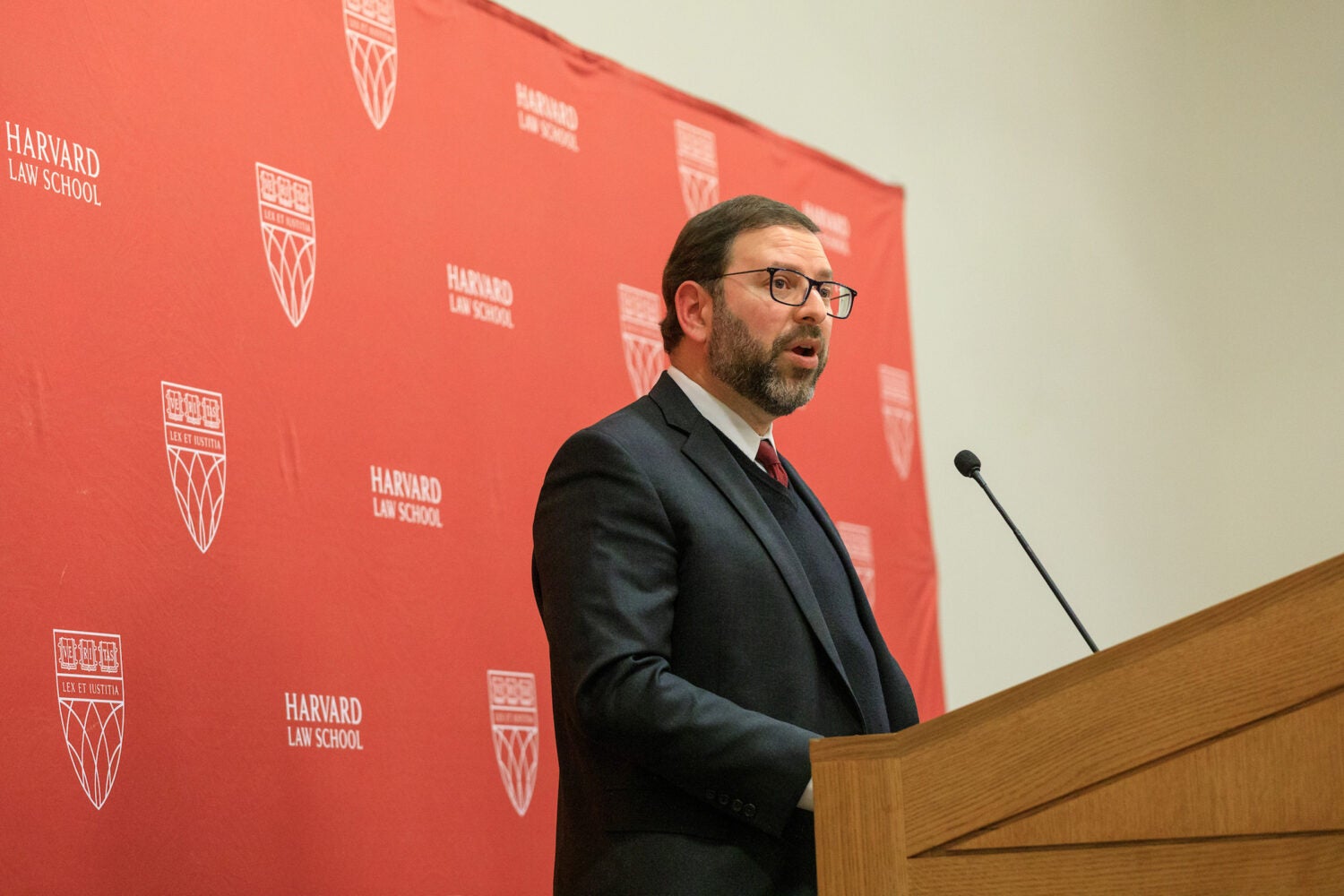
Stephen E. Sachs is the Antonin Scalia Professor of Law at Harvard Law School, teaching civil procedure, conflict of laws, and constitutional law seminars. His research focuses on constitutional interpretation, state-federal court jurisdiction, legal history, and the role of general common law in the U.S. legal system. Harvard Law School (2023–present, Antonin Scalia Professor of Law) Duke University School of Law (2011–2020, including Colin W. Brown Professor of Law 2020–2021) University of Chicago Law School (Visiting Professor) Key research areas include constitutional theory, originalism, personal jurisdiction, and the interplay between historical legal practices and modern interpretation. His work challenges the Erie Railroad Co. v. Tompkins precedent, advocating for the reinstatement of general law principles to clarify constitutional jurisprudence. Recent publications analyze the Equal Rights Amendment’s validity, originalist constitutional interpretation, and parental proxy voting reforms. Articles demonstrate recurring themes in constitutional backdrops, federal jurisdictional limits, and the philosophical foundations of legal theory. Federalist Society Joseph Story Award (2020) American Law Institute elected member (2016–) Green Bag Exemplary Legal Writing Award (2013) As faculty advisor to Harvard’s Federalist Society chapter and co-advisor to the Harvard Law School Alliance for Israel, Sachs bridges academic scholarship with practical legal engagement. His clerkships with Chief Justice Roberts and Judge Stephen F. Williams inform his judicial perspective.
Dr Matthew Shardlow is a Reader in the Department of Computing and Mathematics at Manchester Metropolitan University . His career spans teaching and research, with a focus on Natural Language Processing (NLP) and its applications in Text Mining across disciplines like Neuroscience , Chemistry , Finance , and Journalism . He leads the Natural Language Processing Lab , which explores the use of Large Language Models (LLMs) in text-based applications. Key research areas include: Text Simplification : Developing methods to make complex texts accessible. Emoji Analysis : Understanding emoji usage in language and machine interpretation. Text Mining : Applying NLP to diverse fields like healthcare and education. Matthew’s recent publications highlight advancements in LLMs , lexical simplification , biomedical text processing , and AI ethics . He actively mentors BSc , Master’s , and PhD students aligned with his interests and maintains collaborations through the OpenMinTeD project and National Centre for Text Mining . Contact: m.shardlow@mmu.ac.uk .
Daphna Buchsbaum is an Associate Professor of Cognitive and Psychological Sciences at Brown University, leading the Computational Cognitive Development Lab and Brown Dog Lab. She holds a dual background in Psychology and Statistics from UC Berkeley, a Master’s in MIT Media Lab, and a Brown undergraduate degree. Her work explores causal and social reasoning in children and non-human animals like dogs, focusing on how learners combine social and observational data. Education: A.B. in Human Biology, Brown University (2002) M.Sc. in Media Arts & Sciences, MIT Media Lab (2004) M.A. and Ph.D. in Psychology, UC Berkeley (2013) Research Focus: Investigates how children and animals form causal beliefs through social interactions and direct observation. Key topics include: Canine cognition and problem-solving Children’s causal reasoning and pretend play Computational models of belief systems Key Achievements: NSF/Office of Naval Research grants Templeton World Charity Foundation funding 2021 Society for Research in Child Development Early Career Award 2018 APS Rising Star designation Lab Activities: Conducts participatory studies with children and dogs, using eye-tracking and behavioral experiments. Recent projects include: Head-mounted eye-tracking in dogs Cross-cultural studies of causal reasoning Analysis of canine visual environments
Jack Ågren is a Professor of Criminal Law at Karlstad University, serving as Subject Representative. His work focuses on Swedish penal law, legal education, and criminal liability theories. He has authored/co-authored numerous textbooks and commentaries on straffrätt (criminal law), including foundational works like Brott och Straff and Straffansvar . His research interests span criminal law principles, penal policy debates, mental capacity defenses, and academic pedagogy. Notable contributions include critiques of social adequacy defenses ( Social adekvans - Ansvarsfrihet utan lagstöd ), analyses of penal sanctions ( 25 kap. Om böter m.m. ), and reflections on abstract/concrete legal values ( Abstrakt, konkret och fiktivt straffvärde ). Ågren collaborates extensively with legal scholars such as Mats Persson and Magdalena Giertz on foundational texts and case collections. His publications consistently engage with Swedish jurisprudence and penal code interpretation, emphasizing pedagogical clarity in legal education. Although no scientific awards are explicitly listed, his prolific output and textbook contributions indicate significant academic influence within Scandinavian legal circles.
Sara Magliacane is an Assistant Professor at the University of Amsterdam and a Research Scientist at the MIT-IBM Watson AI Lab . She leads research at the intersection of causality and machine learning , focusing on improving AI robustness, generalization, and safety through causal reasoning. Her work spans causal representation learning , causal discovery , and causality-inspired ML in domains like reinforcement learning and dynamical systems. PhD in Artificial Intelligence (2017), VU Amsterdam MSc in Computer Engineering (2011), Politecnico di Milano/Torino BSc in Computer Engineering (2008), Università degli Studi di Trieste Her research explores causal variable identification from high-dimensional data (e.g., images, sequences) and causal graph discovery for domain adaptation. Methods include CITRIS , FANS-RL , and SNAP , with applications in embodied AI and biomedical data. The group emphasizes theoretical guarantees and scalable algorithms for real-world systems. Recent work trends include temporal causal modeling , intervention-efficient learning , and nonstationary reinforcement learning . Publications cover topics like causal discovery in partially observed settings , causal graph pruning , and sample-efficient concept learning , often combining neurosymbolic approaches with deep learning. Scientific Awards : ELLIS Scholar Sara supervises PhD students across universities (UvA, University of Pisa) and collaborates with institutions like TU Delft , Harvard , and IBM Research . She co-organizes workshops at premier conferences (NeurIPS, ICML, AISTATS) and teaches causality courses at the University of Amsterdam and Harvard Data Science Initiative. Her lab, Amsterdam Machine Learning Lab (AMLab) , investigates causal structure in embodied agents , safe reinforcement learning , and hybrid dynamical system modeling . The group maintains active partnerships with institutions such as MIT-IBM Watson AI Lab , Qualcomm , and Adyen .
Shuhao Fu is a Program Postdoctoral Fellow at the Santa Fe Institute (SFI) researching the intersection of machine learning and cognitive science. He completed his Ph.D. in Psychology at UCLA under advisors Hongjing Lu and Ying Nian Wu, following a B.S. in Computer Science and Mathematics from Hong Kong University of Science and Technology. His research examines human-like relational reasoning in AI systems through cognitive modeling and computational approaches. Research focuses on: Bridging human-machine reasoning gaps via analogical mapping Developing explicit relational representations in vision models Structural cognitive modeling for compositional understanding Multimodal reasoning and scene interpretation Relational knowledge representation in biological and artificial systems Publication trends show concentrated work in computational cognitive science (2021-2025), with evolving focus from visual analogy fundamentals to applications in 3D recognition, social interaction modeling, and mental health diagnostics. Recent work demonstrates increased emphasis on transformer architectures, multimodal integration, and human-AI comparative studies. Professional experience includes research internships at Google X and Mineral.ai, with prior affiliation at Johns Hopkins University's CCVL lab under Alan Yuille. Currently serves as reviewer for ICML, ICCV, and Cognitive Science Society conferences.
Aaron Cassidy is an American composer and conductor based in Berlin and Hannover. He serves as Professor of Composition and Director of Incontri – Institut für neue Musik at the Hochschule für Musik, Theater und Medien Hannover. His work emphasizes innovative graphical notations prioritizing physical sound production and non-geometrical rhythm theory. Cassidy’s compositions have been performed globally across 29 countries, with 12 commercial recordings on major labels like Kairos and NEOS. As a conductor, he specializes in contemporary and historical repertoire, leading over 100 world premieres with ensembles such as Ensemble Musikfabrik and ELISION. Notable engagements include the Munich Biennale and Melbourne Recital Centre. His recent research includes a 2025 reflection on non-geometrical rhythm and collaborative Erasmus+ residencies in Klagenfurt. Current projects include works for bassoon, violin-piano duet, and ANAM residency with ELISION in Melbourne (2025). Cassidy’s academic focus bridges compositional theory and performance practice. His research explores notation’s role in shaping musical interpretation, with particular attention to rhythm’s non-metric frameworks. Recent works like Reassessing Non-Geometrical Rhythm (2025) synthesize a decade of theoretical development. His teaching integrates experimental techniques and historical context, fostering innovation in Hannover’s new music institute.
Prof. Dr. Martin Hils is a Professor of Mathematical Logic at the University of Münster's Faculty of Mathematics and Computer Science, affiliated with the Institut für Mathematische Logik und Grundlagenforschung. His expertise lies in model theory and set theory, focusing on geometric stability, simplicity theory, valued fields with automorphisms, and Hrushovski amalgamation. Education: Habilitation in Mathematics (2013, Université Paris Diderot) PhD in Mathematics (2006, Université Paris 7 and Lyon 1) Master (DEA) in Logic and Computer Science (2002, Paris 7) Diploma in Mathematics with Philosophy (2001, University of Bonn) Research Interests: Model theory of valued fields, geometric stability/simplicity theories, Hrushovski amalgamation techniques, and applications to algebraic geometry and differential fields. His work bridges abstract model theory with concrete mathematical structures. Recent Research Trends: Focus on non-archimedean geometry, separably closed valued fields, Lang-Weil estimates in difference fields, and definable retraction principles. His articles explore topics like Ax-Kochen-Ershov principles, domination monoids in valued fields, and beautiful pairs in unstable theories. Grants & Projects: Lead investigator in DFG Cluster of Excellence EXC 2044 (Groups, Model Theory and Sets) Principal investigator in 'Model Theory of Valued Fields with Endomorphism' (DFG 2022-2025) GeoMod project (geometric/combinatorial configurations in model theory, DFG 2020-2024) Contributor to SFB 878 (model theory of valued fields and definable groups) Teaching & Supervision: Current courses include Model Theory of Pseudofinite Fields and Logic Foundations. Supervised PhD students include Pierre Touchard (2020) and Rémi Jaoui (2017). Jointly supervises Simone Ramello and Zixuan Zhu. Editorial Work: Editor-in-chief of Model Theory journal. Authored textbook A First Journey through Logic (AMS 2019).
Michael Evans is a Senior Lecturer in Painting and Programme Leader for Fine Art Painting and Drawing at the University of Northampton, where he has been teaching since 1996. He holds a BA (Hons) in Fine Art from Coventry University and completed a practice-based PhD in 2012 on contemporary abstract painting and spiritual experience. He is an active artist and scholar, supervising PhD students and contributing to journals and edited volumes. Bachelor of Arts (Hons) in Fine Art, Coventry University (1984–1987) PhD in Fine Art (Practice-Based), University of Northampton (awarded 2012) Michael Evans' research is deeply rooted in the intersection of abstract painting, spirituality, and contemporary philosophical inquiry. His work explores apophatic modes of thought, the numinous, and transcendental abstraction within a secular context, while also examining how digital technologies influence contemporary painting practices. He investigates how painting can evoke spiritual or transcendent experiences even in non-religious settings, drawing on traditions of negative theology and Jungian psychology. His recent scholarly and artistic output demonstrates a consistent engagement with themes of emptiness, selfhood, otherness, and the metaphysical dimensions of artistic practice. Publications and exhibitions reflect a trajectory focused on the experiential and contemplative aspects of art, particularly how abstraction can serve as a conduit for spiritual or psychological insight. His work often bridges theory and practice, emphasizing process-based approaches and reflective inquiry. Michael Evans has contributed to significant publications such as the International Journal of Religion and Spirituality in Society and the International Journal of Jungian Studies , as well as edited volumes like Contemplations of the Spiritual in Art and Digital, Painting . His exhibitions, including at the Royal College of Art and Northampton Museum & Art Gallery, highlight his commitment to public engagement and artistic innovation. Contributing author to Contemplations of the Spiritual in Art and Photography Published in International Journal of Religion and Spirituality in Society Published in International Journal of Jungian Studies Exhibitions at Royal College of Art, Northampton Museum & Art Gallery, and North East Wales Institute Michael Evans supervises PhD candidates in Fine Art, including Francis Blore, Nour Zantah, and Natasha Toms, whose projects explore drawing, violence in art, and Baroque imagery. He has not received any explicitly mentioned grants, but his sustained research activity and public exhibitions indicate ongoing institutional and academic support. His leadership in the Fine Art programme underscores his role in shaping contemporary art education. He is actively involved in curatorial and collaborative projects, such as the Material Matters exhibition at Northampton Museum and Art Gallery and the Viewfinder digital art project. These initiatives reflect his engagement with interdisciplinary practices, digital media, and community outreach, positioning him at the forefront of contemporary art discourse.
Monika Krause is Professor of Sociology at the London School of Economics and Political Science (LSE), specializing in human rights, humanitarianism, knowledge, expertise, social theory, and culture. She serves as Chair of the Culture Section of the American Sociology Association and on the Council of the Section on the Sociology of Human Rights of the ASA. Her research addresses comparative questions about forms of expertise, professions, organizations and fields of practice, with particular focus on humanitarian NGOs, human rights organizations, and knowledge production in the social sciences. Her scholarly work demonstrates a consistent engagement with theoretical innovation in sociology. Her recent publications reveal a trajectory moving from empirical studies of humanitarian organizations toward more foundational questions about sociological methodology, epistemology, and theory-building. She has developed concepts for sociological analysis and seeks to apply insights from a sociology of the social sciences to sociological practice itself. Her work bridges substantive empirical research with theoretical reflection, particularly examining how fields of practice vary across contexts and how sociologists can theorize from neglected cases. Professor Krause's research has been recognized with numerous prestigious awards, including the 2019 Lewis A. Coser Award for Theoretical Agenda Setting in Sociology. Her book Model Cases: On Canonical Research Objects and Sites (2021) examines concrete material research objects behind shared conversations in social sciences and humanities, while her earlier work The Good Project: Humanitarian NGOs and the Fragmentation of Reason (2014) won multiple book prizes for its analysis of humanitarian relief organizations. She has served as an elected member on the Executive Council of the Society for the Advancement of Socio-Economics (SASE) and continues to shape theoretical debates in sociology through editorial work and professional leadership. 2019 Lewis A. Coser Award for Theoretical Agenda Setting in Sociology 2015 BSA Philip Abrams Memorial Prize 2015 Hodgkinson Book Award from Association for Research on Non-profits and the Voluntary Sector 2016 Best Book Award by an International Scholar, American Sociological Association At LSE, Professor Krause convenes courses on Key Concepts: Advanced Social Theory, Seeing like an NGO: Human Rights in Practice, Classical Social Thought, and Modern Social Thought. She is part of the Politics and Human Rights research cluster and has supervised numerous doctoral students. Her research has been supported by fellowships from the Centre for Interdisciplinary Research at the University of Bielefeld and the Helsinki Collegium for Advanced Studies, reflecting the interdisciplinary nature of her work that bridges sociology, political science, and cultural studies.
Gagandeep Singh is a tenure-track Assistant Professor in the Department of Computer Science at the University of Illinois at Urbana-Champaign (UIUC). His work focuses on creating intelligent computing systems with formal guarantees about behavior and safety, integrating Machine Learning, Formal Methods, and Systems research. Affiliation: University of Illinois at Urbana-Champaign; VMware Research Research Interests: Formal Methods, Machine Learning, Artificial Intelligence, Programming Languages, Neural Network Verification, Automatic Differentiation His research emphasizes scalable verification techniques for neural networks, abstract interpretation, and systems integration. Recent work trends include applying formal methods to ensure safety in deep learning models and optimizing numerical analysis through domain decomposition and convex hull approximations. He contributes to academic communities as a committee member in conferences like POPL, VMCAI, PLDI, and SAS, while authoring key publications in top venues such as POPL, PLDI, OOPSLA, and SAS.