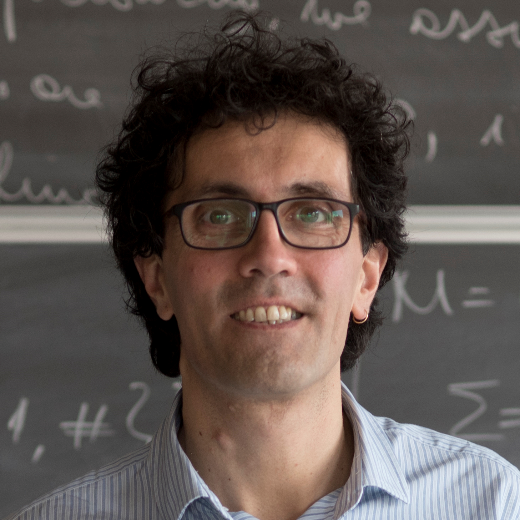
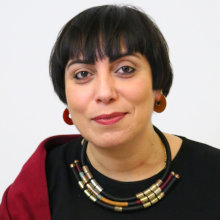
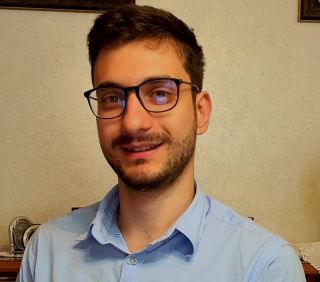
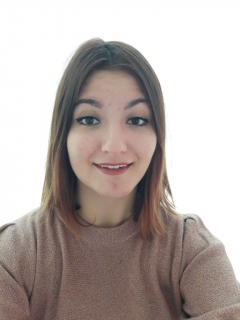
Davide Papotti is a Full Professor of Geography (M/GGR-01) at the University of Parma's Faculty of Letters and Philosophy, where he has been a faculty member since 2005 (Researcher) and 2010 (Associate Professor). He teaches Cultural Geography, Geopolitics, and Literary Geography, primarily within the Master's programs in Educational Services Planning and Modern Foreign Civilizations. PhD in 'Man and Environment' (2002, University of Padua) MA in Italian Literature (1996, University of Virginia) BA in Literature (1993, University of Parma) His research focuses on cultural geography, landscape representation, and the intersection of cartography with literature and marketing. Recent publications explore cartographic symbolism in urban literature, landscape commodification at global expositions, and the role of literary narratives in understanding small towns. Key Research Areas: Cultural Geography, Geopolitics, Landscape Analysis, Literary Geography Recent Article Trends: 2024-2025 works emphasize spatial perception in literary texts, commercial cartography, and cultural representation of landscapes. As a member of the Italian Geographical Society, Society of Geographical Studies, and other academic associations, he contributes to geographic education through teaching and curriculum development.
Diego Calvanese is a Full Professor in Computer Engineering at the Faculty of Engineering of the Free University of Bozen-Bolzano, Italy. He serves as Spokesperson of the Institute of Computer Science and Artificial Intelligence and Director of the Smart Data Factory technology transfer lab at NOI Techpark. As Coordinator of the Intelligent Integration and Access to Data (In2Data) research group, part of the Research Centre for Knowledge and Data (KRDB), he leads significant research initiatives in knowledge representation and data management. Calvanese's research focuses on virtual knowledge graphs for data access and integration, ontology-based data access, description logics, semantic web technologies, graph data management, and verification of data-aware processes. His work bridges theoretical foundations with practical applications through the Ontop framework, which enables SPARQL query answering over OWL 2 QL ontologies connected to external data sources. His research has substantial practical impact, powering the South Tyrol Open Data Hub Knowledge Graph and supporting numerous European and national research projects. With more than 400 refereed publications and over 39,000 citations (h-index 80), Calvanese's recent work demonstrates continued leadership in virtual knowledge graphs, ontology-based data federation, explainable AI through knowledge representation, and integration of complex data types including 3D city models and raster data. His publications show a clear trajectory from theoretical foundations toward increasingly practical and applied research addressing real-world data integration challenges across multiple domains. ACM Fellow (2019) EurAI Fellow (2015) AAIA Fellow Program Chair of PODS 2015 and KR 2020 General Chair of ESSLLI 2016 Calvanese has secured significant research funding through numerous competitive projects including EU H2020 INFRAEOS Project (INODE), Italian PRIN Project (HOPE), FESR Project (IDEE), and EU FP7 IP Project (Optique), totaling close to 6.4M Euro. As an originator and co-founder of Ontopic, the first spin-off of the Free University of Bozen-Bolzano, he has successfully translated research into commercial applications. He serves as Associate Editor of Artificial Intelligence (AIJ) and has participated in over 200 program committee roles for international conferences. As Director of the Smart Data Factory technology transfer lab and coordinator of the In2Data research group, Calvanese bridges academic research with industry applications, focusing on practical implementations of knowledge graph technologies. His work with the KRDB Research Center has established Bozen-Bolzano as a significant hub for knowledge representation and data management research in Europe.
Michael Gaidoschik is a tenured full professor in Mathematics Education at the Faculty of Education, Free University of Bozen-Bolzano . He teaches courses on mathematics didactics for primary education (ages 5-12) and focuses on early arithmetic instruction, part-whole number concepts, and inclusive teaching methodologies. Office hours: Tuesday 13:00-14:00 Email: Michael.Gaidoschik@unibz.it His research addresses challenges in arithmetic instruction, particularly transitions from kindergarten to primary school , inclusive education strategies , and developmental approaches to number sense . He critiques traditional diagnostics like 'dyscalculia' and promotes didactic solutions for learning difficulties. Recent publication trends show emphasis on flexible decimal place value teaching , division conceptualization , metric system instruction , and interdisciplinary frameworks for mathematical learning barriers .
Agostino Cortesi is a Full Professor at Ca' Foscari University of Venice , affiliated with the Department of Environmental Sciences, Informatics and Statistics. He serves as Rector's Delegate for Research Quality Assessment and Deputy Coordinator of the Scientific Committee for the Innovation Ecosystem Project. His academic career includes a PhD in Applied Mathematics and Informatics from the University of Padova (1992), a postdoctoral fellowship at Brown University, and visiting professor roles at institutions such as the University of Illinois and École Normale Supérieure Paris. Research interests focus on software engineering , static analysis , security applications , and abstract interpretation . He has pioneered techniques for formal verification of software systems and explored cybersecurity in e-Government and robotics. His work spans over 200 publications in top journals and conferences (e.g., ACM TOPLAS, IEEE TSE, POPL, PLDI). Key contributions include advancements in abstract domains for behavioral property verification and security-oriented analysis frameworks. He has held leadership roles including Vice-Rector at Ca' Foscari, Dean of Computer Science programs, and Chair of the Department of Computer Science. Cortesi coordinates EU Horizon 2020 projects (e.g., Families_Share €1.6M) and regional initiatives like CEVID (€360K). He founded Factors , a university spin-off focused on robotic systems verification, which won the 2020 Veneto SmartCup ICT Prize. Education: PhD in Applied Mathematics and Informatics (1992, University of Padova) Editorial Roles: Co-Editor-in-Chief of Springer’s 'Services and Business Process Reengineering', and member of editorial boards for 'Computer Languages' and others Grants: Over €3M in EU and regional funding for projects in cybersecurity, Industry 4.0, and digital innovation Teaching includes courses on Software Correctness , Data Programming , and Computer Networks across Computer Science and Management programs. His research lab actively engages in industrial partnerships with Cisco, Leonardo, and AGID (Italy’s Digital Agency).
Francesca Poggi is a Full Professor of Philosophy of Law at the Cesare Beccaria Department of Legal Sciences, University of Milan. She serves as the university's gender equality liaison and oversees the Gender Equality and Violence Against Women project at Human Hall. Her academic work bridges legal theory with moral philosophy, focusing on analytic philosophy and general legal theory. She is a member of the scientific committee for Italian legal journals and actively contributes to interdisciplinary initiatives like the Inter-University Center ‘Cultures of Gender’. Her research spans gender equality, legal interpretation methodologies, bioethics, and social sustainability. Notable projects include analyzing gender-based violence frameworks, exploring constitutional legal systems' communicative theories, and addressing linguistic inclusivity in policy-making. She critiques moral biases in legal reasoning and examines the intersection of law with human rights, migration, and multiculturalism. Her scholarship engages with contemporary debates on autonomy in healthcare decisions, xenotransplantation ethics, and the application of Robert Alexy’s correctness claims in legal contexts. She also participates in EU-funded initiatives like the MUSA project, aiming to build innovation ecosystems through territorial R&D leadership.
Ilaria Sicari is a Research Fellow at Ca' Foscari University of Venice, specializing in Slavic Studies with a focus on Soviet literature, cultural Cold War dynamics, and transnational literary circulation. She holds a PhD in Slavic Studies from Ca' Foscari University (2017) and has taught Russian literature at the Universities of Bologna, Florence, and Pisa. Her current Marie Skłodowska-Curie Global Fellowship explores Tamizdat (underground Soviet literature dissemination) through the TAMIZDAT project, collaborating with Stanford University and Leiden University. Research Institutes: Digital and Cultural Heritage, International Studies Key Projects: On the Two Sides of the Iron Curtain , Banned Books from Russia and Eastern Europe Her research emphasizes socio-cultural actors in literary circulation, including translators, editors, and dissidents. Major interests include Soviet censorship, dissident literature, and the reception of foreign literature in the USSR. She has published widely on Italo Calvino's Soviet reception, Soviet human rights movements, and Cold War cultural diplomacy. Recent articles examine Tamizdat publishing strategies in Italy, Soviet psychiatric abuse, and Cold War paratextual propaganda. She contributes to digital archives on banned Soviet texts and is affiliated with the Italian and international Slavic studies associations (AIS, ASEEES, AATSEEL).
Corrado Loglisci is an Assistant Professor at the Department of Computer Science, University of Bari Aldo Moro, Italy. His research focuses on Temporal Data Mining , Machine Learning , and Quantum Computing , with applications in bioinformatics, medical informatics, and cybersecurity. He earned his Ph.D. in Computer Science with a thesis on temporal projection in longitudinal data. Research Highlights : Temporal Learning, Textual Data Mining, Quantum-Classical Hybrid Systems Collaborations : IRSTEA Research Institute (France), Aristotle University of Thessaloniki (Greece) His publications address dynamic network analysis , emotion detection in social media , and quantum-enhanced classification . He contributes to program committees and journal editorial work, including a special issue on Mining Complex Patterns in the Journal of Intelligent Information Systems . Notable contributions include the jKarma framework for change detection and studies on concept drift robustness in intrusion detection systems. His work spans European/National research projects, leveraging machine learning for tasks like mobile crowd sensing trustworthiness prediction (2020) and investor behavior analysis (2023-2025).
Francesco Biondo serves as an Associate Professor of Jurisprudence (GIUR-17/A) at the University of Palermo's Department of Law and Politics, maintaining regular office hours on Thursdays from 2:30 PM to 5:00 PM at Piazza Bologni 8, room 13 in Palermo. His academic profile features extensive scholarly contributions across constitutional law, legal philosophy, and human rights theory, with particular emphasis on contemporary ethical-legal dilemmas. Research Focus Professor Biondo's scholarship demonstrates exceptional depth in analyzing the intersection between individual rights and collective welfare, especially regarding conscientious objection to vaccine mandates and pandemic response policies. His work on the European Court of Human Rights' Vavřička decision represents a significant contribution to understanding how constitutional systems balance religious freedom with public health imperatives. His research portfolio reveals consistent engagement with major philosophical frameworks from Rawls, Sen, and Nussbaum, applied to practical legal challenges including war crimes accountability, restorative justice mechanisms, and digital misinformation governance. The professor has developed a distinctive approach examining how abstract justice theories manifest in concrete legal decisions and policy frameworks. Scholarly Trends Analysis of Professor Biondo's recent publications (2022-2024) reveals three interconnected research trajectories: (1) the ethical-constitutional dimensions of public health policy, particularly regarding vaccine mandates and conscientious objection; (2) theoretical and practical aspects of restorative justice and war crimes accountability; and (3) the challenges of misinformation in digital environments and their implications for free speech theory. These strands collectively demonstrate his ability to connect philosophical rigor with pressing contemporary legal issues. Academic Engagement Professor Biondo maintains an active international scholarly presence through publications in Italian, Spanish, and English, reflecting engagement with multiple academic traditions. His review articles and translations of Spanish and Latin American scholars indicate commitment to cross-cultural academic dialogue. His position as Associate Professor suggests substantial contributions to legal education and scholarship within the Italian academic system.
Federica Mucci is an Associate Professor of International Law at the University of Rome Tor Vergata, affiliated with the Department of History, Humanities and Society. She specializes in international protection of cultural heritage, European Union law, and treaty law. Her teaching includes courses on cultural heritage protection and EU law for programs in Education and Tourism. Legal Expert: Italian Ministry of Foreign Affairs UNESCO Delegation Member: Contributed to the 2005 UNESCO Convention on cultural diversity and its implementation. Her research focuses on international law frameworks for cultural heritage, maritime law, treaty interpretation, and environmental protection. Key publications include monographs on cultural heritage law (2012) and a PhD thesis on EU copyright law (1998). Publications span interdisciplinary topics such as topological data analysis, though the majority of her work aligns with legal and humanities disciplines. Awards: No specific prizes are mentioned, but her scholarly output includes influential books and articles on international law. Advising/Grants: No formal student advisees or grant details provided in text. Labs/Teams: No specific lab affiliations mentioned, though her role at UNESCO implies collaboration with international bodies.
Giacomo Handjaras is an Assistant Professor at the IMT School for Advanced Studies Lucca, affiliated with the MOMILAB research group. His work focuses on neuroimaging, sleep neurophysiology, affective neuroscience, and brain structure-function relationships. He explores topics such as neural correlates of emotions, sleep dynamics, and motor control mechanisms using advanced methodologies like EEG, fMRI, and computational linguistics. Research interests include: (1) Sleep architecture and slow-wave subtypes linked to thalamic activity, (2) Multisensory integration in perception and action, (3) Neuroplasticity in sensory restoration, (4) Computational analysis of dream semantics, and (5) Telemedicine applications in cardiac rehabilitation. His studies often integrate behavioral, neuroimaging, and computational approaches. Recent publications highlight trends in sleep-brain interactions, affective processing across modalities, and neural mechanisms underlying communication deficits. He has contributed to understanding the role of thalamic regulation in sleep stages and the impact of sensory deprivation on brain organization in congenitally blind individuals. His work bridges basic neuroscience with clinical applications in rehabilitation and cardiovascular health.
Francesco Veneziano serves as an Associate Professor in the Department of Mathematics (DIMA) at the University of Genoa, Italy, holding academic rank MATH-02/B in Geometry. His teaching portfolio spans multiple engineering and mathematics programs, including Geometry for Computer Engineering and Naval Engineering undergraduates, and advanced graduate courses such as Galois Theory and Higher Geometry in Institutions for Mathematics Master's students. Office hours are maintained via the university's Aulaweb platform. His research program centers on pure mathematics with emphases on geometric structures and number-theoretic phenomena. Primary investigations explore continued fractions over algebraic number fields, rational angle classification in lattice geometries, and nonlinear recurrence relations. Recent work demonstrates interdisciplinary expansion into computational mathematics, notably applying reinforcement learning to game theory problems. The geometric perspective permeates all research strands, connecting abstract algebraic frameworks with concrete discrete structures. Analysis of his 2022-2024 publications reveals consistent focus on classical number theory problems with geometric interpretations. Key trends include periodicity properties in continued fraction expansions, Diophantine constraints in lattice configurations, and algorithmic approaches to strategic game analysis. The 2024 publication on 7 Wonders Duel represents a methodological evolution, merging dynamical systems theory with artificial intelligence techniques while maintaining core mathematical rigor. No scientific awards or honors were documented in the source material. No information regarding doctoral advisees, master's students, or externally funded research grants was provided. His academic contributions appear concentrated in theoretical research and advanced mathematical education within the university's mathematics department.
Gianluca Cima is an Assistant Professor at the Department of Computer, Control and Management Engineering of Sapienza University of Rome since April 2023, following a postdoctoral position at CNRS's LaBRI laboratory (University of Bordeaux) from February 2021 to March 2023. His educational background includes: PhD in Engineering in Computer Science from Sapienza University of Rome (2020), supervised by Prof. Maurizio Lenzerini, with a six-month visiting period at the University of Oxford Dr. Cima's research centers on Knowledge Representation and Reasoning , Description Logics and Ontologies , and Ontology-Based Data Management , with significant contributions to Controlled Query Evaluation for secure data access. His work bridges theoretical foundations in description logics with practical applications in semantic technologies, as demonstrated by co-chairing the First International Workshop on Logical Foundations of Neuro-Symbolic AI (LNSAI 2024). Analysis of his 2024-2025 publications reveals a concentrated research trajectory in controlled query evaluation mechanisms, entity resolution systems, and ontology-based data integration, increasingly incorporating epistemic reasoning and security policies while maintaining strong ties to database theory fundamentals. His scientific recognition includes: EurAI Doctoral Dissertation Award (2020) for "Abstraction in Ontology-based Data Management" (published in FAIA book series) Distinguished Paper Award at IJCAI 2024 Dr. Cima serves as Guest Editor for the "Knowledge Representation and Ontology-Based Data Management" special issue in Information journal and has held leadership roles including Program/General Co-Chair for LNSAI 2024. His academic service and editorial work indicate active grant involvement and research direction-setting within his field. He is embedded in Sapienza's Data Management and Semantic Technologies research group, contributing to the Artificial Intelligence and Knowledge Representation domain through collaborative projects in semantic web technologies and knowledge-based systems development.
Maria Giuseppina Bruno is an Associate Professor in the Department of Methods and Models for Economy, Territory, and Finance (MEMOTEF) at Sapienza University of Rome's Faculty of Economics. She has been serving in this capacity since December 29, 2003, specializing in the scientific disciplinary sector STAT-04/A (Mathematical Methods of Economics and Actuarial and Financial Sciences). Her institutional email is Giuseppina.Bruno@uniroma1.it and she maintains office hours at room 149 on the first floor, wing B of the MEMOTEF Department. Her academic background includes a PhD in 'Mathematics for Financial Market Analysis' from the University of Brescia (1995), where she defended her thesis 'Memory functions as a tool for evaluating American options,' and a first-class honors degree in Economics and Commerce from LUISS University of Rome (1990) with thesis 'Valuation of convertible bonds. An interpretation using physics models.' Professor Bruno's research spans financial and actuarial mathematics, quantitative methods for economics and finance, derivative instrument valuation, risk management models, stochastic processes, and computational methods. Her work demonstrates strong interdisciplinary connections between mathematics, finance, insurance, and even physics through her interest in econophysics and applications of physical models to financial problems. Her recent publications show a consistent focus on innovative insurance products, risk modeling, and financial engineering. From Tailor-made CDOs (2024) to Pay-as-you-drive insurance models (2023) and specialized insurance products like ALEA and MICROTAKAFUL (2021), her research addresses contemporary challenges in risk transfer mechanisms and insurance market dynamics. Her work on long-term care annuities (2020) and option pricing with stochastic volatility (2019) demonstrates expertise in both theoretical and practical aspects of financial mathematics. As a respected academic, she serves as Managing Editor of Annali MEMOTEF and referees for prestigious journals including Insurance: Mathematics and Economics. She has been actively involved in professional organizations including AMASES, AAI, and Istituto Italiano degli Attuari. Professor Bruno currently teaches Actuarial Mathematics for Private Insurance (Master's Degree in Finance and Insurance) and Basic Mathematics course (Bachelor's Degree in Economics and Finance). She has extensive experience in curriculum development, serving as reference teacher for the Master's Degree Course FINASS and as tutor for the Bachelor's Degree in Economics and Finance. Her institutional service includes membership on various committees related to quality assurance, publications, and doctoral programs. Her professional activities extend beyond academia, with participation in Bank of Italy examination boards (2016, 2019, 2023) and previous teaching roles for financial professionals at INPDAP and Banca di Roma. Her technical expertise includes programming in C++, VBA, and Python, which supports her computational research in financial mathematics.
Elena Randi is a Full Professor of History of Performing Arts at the Department of the Arts, University of Bologna. Her primary research focuses on the history of theatre and dance between the late 18th and early 20th centuries, with current work centered on developing critical editions of dance scores. She actively participates in national and international research projects, publishing widely in both Italian and international journals. Her academic contributions span monographs and articles exploring topics such as Romantic ballet adaptations, modern dance pioneers like Hanya Holm, and interdisciplinary studies on performance practices. Recent work emphasizes methodological frameworks for dance documentation and historical score reconstruction. Randi teaches courses on theatre direction practices and historical performance analysis, integrating archival research with contemporary performance theory. Office hours are held every Monday 12:00–13:00 at Via Barberia 4, Bologna, by prior email appointment (elena.randi@unibo.it). She maintains an extensive bibliography covering over 40 years of scholarly output, with a particular emphasis on French and Italian theatrical heritage, including studies on Victor Hugo’s theatrical manuscripts and the Ballets Russes.
Elena Umili is an Assistant Professor (RTD-A) at the Department of Computer, Control and Management Engineering (DIAG) of Sapienza University of Rome, specializing in Neurosymbolic AI research. Her work bridges deep learning with symbolic reasoning systems. She received her PhD in Engineering in Computer Science from Sapienza University of Rome in 2023 under the supervision of Prof. Giuseppe De Giacomo and Prof. Roberto Capobianco. Her doctoral thesis focused on 'Discovering Logical Knowledge in Non-Symbolic Domains'. Her research interests center on Neurosymbolic AI integration , particularly: Combining deep machine learning with symbolic reasoning Temporal logic specifications in neural systems Automata learning through neural relaxations Non-Markovian reinforcement learning tasks Visual grounding of logical specifications Analysis of her recent publications reveals a strong focus on neural-symbolic integration where she develops frameworks like DeepDFA and Neural Reward Machines. Her work consistently addresses the challenge of incorporating logical constraints into deep learning systems, with applications spanning robotics, sequence generation, and visual reasoning. The research demonstrates increasing sophistication in handling temporal logic specifications within neural architectures. She is an active member of research groups focused on Artificial Intelligence and Knowledge Representation, as well as Artificial Intelligence and Robotics at Sapienza University. While no formal advisees or major awards are currently documented in her public profile, her recent publications indicate significant contributions to the neurosymbolic AI field through top-tier conferences including ECAI, KR, and specialized workshops. Her work shows strong potential for future impact in bridging the gap between neural and symbolic AI paradigms.