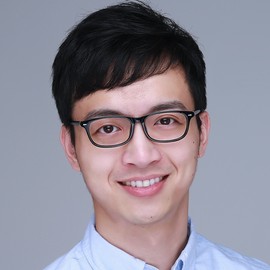
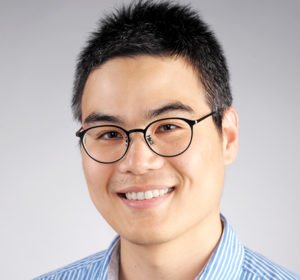
Neelakantan R. Krishnaswami is a Professor of Computer Science at the University of Cambridge's Computer Laboratory , and a Fellow of Trinity College . His research focuses on the intersection of program verification, programming language design, and foundational topics like type theory and semantics. His work spans areas such as refinement types, parser design, separation logic for systems software, and the semantics of reactive programming. Notable contributions include the Datafun language for higher-order Datalog and the λert type theory for explicit refinement types. He has also developed foundational frameworks for verifying imperative programs using advanced type systems and logical relations. Key publications include 'Explicit Refinement Types' (ICFP 2023), 'flap: A Deterministic Parser with Fused Lexing' (PLDI 2023), and 'CN: Verifying Systems C Code' (POPL 2023). His work frequently addresses challenges in efficiency, correctness, and modularity for both functional and imperative systems. His awards include Distinguished Paper Awards at PLDI 2019 and POPL 2020. His research integrates theoretical rigor with practical tooling, exemplified by contributions to languages like Coq, Lean, and Haskell.
Margaret Burnett is a Distinguished Professor at Oregon State University's School of Electrical Engineering and Computer Science (EECS). She specializes in software engineering, human-computer interaction (HCI), and inclusive design. Her research focuses on end-user programming, gender-inclusive software (via the GenderMag method), and improving accessibility in AI systems. She leads the EUSES Consortium and the AgAID Institute, fostering collaboration between academia and industry. Education: Ph.D., Computer Science (with honors), University of Kansas (1987–1991) M.S., Computer Science, University of Kansas (1979–1981) B.A. Mathematics, Cum Laude, Phi Beta Kappa, Miami University (1967–1970) Research & Awards: Recipient of the 2023 AnitaB.org Technical Leadership Abie Award, ACM Fellow, IEEE Fellow, and numerous university awards. Her work has been recognized for advancing inclusive design methodologies and mentoring students in computing. Teaching & Mentorship: Teaches courses like Inclusive Design with Personas (CS 468/568). Mentored over 50 graduate students, many of whom became professors, researchers, or UX professionals. Current students include Sadia Afroz, Alec Busteed, and Fatima Moussaoui. Labs & Collaborations: Leads the EUSES Consortium (multi-institution collaboration on end-user software engineering) and the AgAID Institute (AI for agriculture). Active in developing the GenderMag and InclusiveMag methodologies to address gender and socioeconomic biases in software.
Sriraam Natarajan is a Professor and Director of the Center for Machine Learning and StaRLing Lab at The University of Texas at Dallas (UTD), part of the Erik Jonsson School of Engineering & Computer Science. He holds additional roles as a hessian.AI Fellow at TU Darmstadt and an RBCDSAI Distinguished Faculty Fellow at IIT Madras. His expertise spans Artificial Intelligence, Machine Learning, and their applications in healthcare, with a focus on Relational Learning, Reinforcement Learning, and Graphical Models. He has been honored as an AAAI Fellow (2025), elected to the AAAI Executive Council, and recognized with the UTD Outstanding Graduate Teaching Award. Education: Completed his PhD in Computer Science at Oregon State University in 2007 under Prof. Prasad Tadepalli. Postdoctoral work at the University of Wisconsin-Madison with Professors Jude Shavlik and David Page. Previously served as faculty at Indiana University and Wake Forest School of Medicine. Research: Active in developing AI systems for healthcare, including predictive models for gestational diabetes and cardiac arrest in children. His work emphasizes integrating human knowledge into machine learning (e.g., Human-in-the-Loop systems) and advancing statistical relational AI frameworks like Markov Logic Networks and Probabilistic Circuits. Publications: Over 100 peer-reviewed articles, including notable works on causal learning, relational reinforcement learning, and knowledge graph construction. Recent focuses include explainable AI and scalable probabilistic models. Awards: AAAI Fellow, RBCDSAI Distinguished Fellowship, UTD Teaching Excellence Award. Advising and Collaboration: Mentored over 30 students, many now in academia and top institutions like IBM Research, Facebook, and Microsoft. Collaborates globally on projects like GLAD (Glocalized Anomaly Detection) and StaRLing Lab initiatives. Labs/Teams: Leads the StaRLing Lab, focusing on statistical relational AI, and directs UTD's Center for Machine Learning. Engaged in interdisciplinary projects with healthcare, robotics, and data science communities.
Hui Zhang is a Professor in the Computer Science Department at Carnegie Mellon University. His research focuses on data-driven networking systems, video streaming optimization, and network control frameworks. He has contributed to innovations in adaptive resource allocation, real-time analytics, and sustainable strategies for resource utilization. Key research themes include time-state analytics, network anomaly detection, and integrating machine learning for enhanced performance. His work addresses challenges in content delivery networks (CDNs), peer-to-peer systems, and environmental applications like waste management. Recent publications (2021–2024) highlight advancements in neural network-based prediction, timeline frameworks, and sustainable material science innovations. No scientific awards are mentioned in the provided text. His research emphasizes practical solutions for improving video quality of experience (QoE), network efficiency, and cross-disciplinary applications.
Marco Morales Aguirre is a Teaching Associate Professor in the Department of Computer Science at the University of Illinois Urbana-Champaign and an Associate Professor at Instituto Tecnológico Autónomo de México (ITAM). He directs research at the Parasol Laboratory and has held significant leadership roles including founding member and former president of the Mexican Federation of Robotics (FMR). His academic journey spans both US and Mexican institutions, reflecting his international impact in the robotics community. Dr. Morales received his educational foundation from prestigious institutions: a Ph.D. in Computer Science from Texas A&M University, an M.S. in Electrical Engineering, and a B.S. in Computer Engineering from Universidad Nacional Autónoma de México (UNAM). His academic path has included positions as Visiting Professor at Texas A&M University and Lecturer at UNAM and the System of Technological Universities in México. His research focuses on motion planning algorithms for robotics, with particular expertise in multi-robot systems where he's pioneered frameworks like Adaptive Robot Coordination (ARC). His work bridges theoretical algorithm development with practical applications in industrial settings, computational biology, and extended reality interfaces. He has made significant contributions to topological guidance methods that improve planning efficiency in complex environments with narrow passages. Analysis of his recent publications reveals a strong trajectory toward more complex multi-robot coordination problems, with increasing emphasis on integrating task and motion planning. His research group has developed innovative approaches that scale to larger robot teams while maintaining computational efficiency, particularly in congested environments where traditional methods struggle. Member of the National System of Researchers of Mexico (level II) Founding member and former president of the Mexican Federation of Robotics (FMR) Member of the Mexican Academy of Computing Editor of multiple Algorithmic Foundations of Robotics (WAFR) proceedings Dr. Morales actively mentors a diverse group of graduate students who frequently appear as co-authors on his publications. His Parasol Laboratory conducts research funded through various academic and industrial collaborations, including significant projects with manufacturing partners exploring collaborative assembly systems. The laboratory has developed several notable frameworks including ARC, K-ARC, and HAS-RRT that have advanced the state of the art in multi-robot motion planning.
Prof. Dr. Matthias Weidlich is a faculty member at Humboldt University of Berlin within the Institute of Computer Science under the Faculty of Mathematics and Natural Sciences . His research focuses on Process Mining , Complex Event Processing , and Data Privacy with applications in Business Process Management and Scientific Workflows . Research Interests: Business Process Management and Process Mining Complex Event Processing and Stream Data Analysis Data Privacy and Security in Process Systems Scientific Workflow Systems and User Behavior Heterogeneous Network Embeddings Algorithm Design and Optimization Recent Publications (2023-2025) demonstrate expertise in: Efficient stream processing techniques Privacy-preserving process mining frameworks Scientific workflow analysis tools Graph neural network applications Multi-modal data integration Adaptive querying systems Contact: Office: Unter den Linden 6, 10099 Berlin Phone: 030 2093-41277 Email: matthias.weidlich@hu-berlin.de Web: hu.berlin/data
Yongshan Ding is an Assistant Professor of Computer Science and Applied Physics at Yale University. He leads the Quantum Systems Lab (QSL) and directs Yale's Quantum Science and Engineering Certificate program. Affiliated with the Yale Quantum Institute (YQI) and Computer Systems Lab (CSL), his research focuses on quantum computing systems spanning algorithms, architecture, and hardware/software co-design. Dr. Ding earned his Ph.D. from the University of Chicago and a B.Sc. from Carnegie Mellon University. He has received prestigious awards including the Siebel Scholarship (2020) and William Rainey Harper Dissertation Fellowship (2020). Research Interests: Quantum computing architectures, noise-resilient quantum algorithms, error correction methods, quantum compilation, hardware-software co-design, and NISQ system optimization. Editorial Roles: Editor at Quantum journal and Associate Editor at ACM Transactions on Quantum Computing . Labs: Founder of Yale's Quantum Systems Lab (QSL) and contributor to the Computer Systems Lab (CSL). Awards: Siebel Scholarship (2020) William Rainey Harper Dissertation Fellowship (2020) QCE Best Paper Award (2024) IEEE Micro Top Picks Honorable Mention (2023, 2020) IBM Q Best Paper Award, First Prize (2020) Mathematics Competition Runner Up (2016)
Nina Schwarz is Assistant Professor of human-environment interactions in cities at the Department of Urban and Regional Planning and Geo-Information Management, ITC—University of Twente. Holding a Diploma in Environmental Sciences (University of Lüneburg, 2003) and a PhD in Social and Economic Sciences (University of Kassel, 2007), she spent a decade as senior scientist at the Helmholtz Centre for Environmental Research – UFZ before joining ITC. Her interdisciplinary research integrates urban land-use science, ecosystem-service evaluation and advanced modelling techniques—especially agent-based models—to explore sustainable urban development under global change. Research interests revolve around three interconnected themes: (i) urban land-use change —understanding how residential, commercial and green-space dynamics co-evolve; (ii) urban ecosystem services —quantifying both supply and demand of services such as local climate regulation, recreation and biodiversity; and (iii) behavioural modelling —formalising human decision-making to simulate policy scenarios ranging from slum-upgrading to vineyard management. She actively links these themes to UN Sustainable Development Goals, notably SDG 11 (Sustainable Cities) and SDG 15 (Life on Land). Recent publications (2022-2025) reveal a methodological breadth spanning citizen-science impact assessment in Suriname, cooling effects of urban water bodies in Chinese mega-cities, European wine-growers’ adaptive behaviour, and methodological advances in upscaling and validating agent-based land-use models. Across these studies, Schwarz consistently combines empirical field data, geospatial analytics and participatory approaches to produce policy-relevant insights for cities in both the Global North and South. She has (co-)authored >80 peer-reviewed works, accumulating c. 5 900 citations and an h-index of 28 (Scopus). While specific honours are not itemised in the supplied text, her sustained citation impact and invited contributions to major conferences (e.g., iEMSs 2020, IAHR 2025) underscore scientific recognition. Schwarz frequently engages with societal stakeholders: her projects have generated open datasets on urban green-space monitoring in Paramaribo, e-learning modules for Latin-American universities, and interactive dashboards for sustainable water management. Within ITC she contributes to capacity-building programmes for emerging economies, supervises graduate researchers and maintains active collaborations across Europe, Latin America, Africa and Asia. No explicit lists of PhD students or personal grants are provided in the current corpus, but her leadership of externally funded projects (e.g., citizen-science evaluation, vineyard decision-making database) indicates ongoing acquisition of research funding.
Scott W. Linderman is an Assistant Professor of Statistics at Stanford University and a Faculty Scholar at the Wu Tsai Neurosciences Institute. He holds courtesy appointments in Computer Science and is affiliated with Stanford Bio-X and the Stanford AI Lab. His research focuses on developing probabilistic models and statistical methods to analyze neural data, bridging computational neuroscience and machine learning. Linderman earned his PhD in Computer Science from Harvard University, with postdoctoral training at Columbia University under Liam Paninski and David Blei. He previously worked as a software engineer at Microsoft and holds an undergraduate degree in Electrical and Computer Engineering from Cornell University. Research Interests : Machine learning, computational neuroscience, state space models, neural data analysis, and probabilistic modeling. His lab develops tools like the SSM and Dynamax packages, applying methods to problems such as neural decoding, behavioral tracking, and understanding latent neural dynamics. Awards : 2023 McKnight Scholar Award, 2022 Sloan Research Fellowship, Leonard J. Savage Award (2016). Linderman has advised over 20 PhD students and postdocs, contributing to breakthroughs in neuroscience and machine learning. His work includes collaborations with experimental neuroscientists like David Anderson and Sebastian Seung. Labs & Teams : Linderman Lab focuses on advancing statistical methods for neuroscience. Key projects include state space models (e.g., rSLDS, Gaussian Process SLDS) and behavioral analysis tools like Keypoint MoSeq. The lab emphasizes open-source software and interdisciplinary collaboration.
Daehyeok Kim is an Assistant Professor in the Department of Computer Science at The University of Texas at Austin, where he co-leads the UT Networked Systems Research Group and participates in the Wireless Networking and Communications Group and 6G@UT. He serves as co-PI for the LDOS NSF Expeditions in Computing project, a major initiative rethinking operating systems through AI. His educational background includes a Ph.D. in Computer Science from Carnegie Mellon University under advisors Vyas Sekar and Srinivasan Seshan, where his dissertation introduced abstractions for elastic in-network computing. He also earned B.S. and M.S. degrees in Computer Science and Engineering from POSTECH, South Korea, followed by research scientist work at KAIST prior to his Ph.D. Kim's research centers on hardware-software co-design for cloud and edge data centers, targeting speed, efficiency, and resilience. Key projects include resource management for programmable infrastructure, robust cellular network design, end-to-end network transport frameworks, and learning-directed operating systems. His work bridges computer networks, operating systems, distributed systems, and 5G/6G technologies, with emphasis on virtualized radio access networks (vRAN) and edge computing challenges. Analysis of his recent publications reveals a dominant focus on enhancing 5G/6G infrastructure reliability—particularly in virtualized RANs—through innovations in failover mechanisms, integrity protection, and latency-sensitive resource allocation. His research consistently addresses critical industry pain points like sub-second availability requirements, fronthaul security vulnerabilities, and end-to-end service-level objective (SLO) guarantees for mobile-edge applications. Notable scientific awards include: NSF CAREER Award (2025) for advancing cloud hardware efficiency Microsoft Research PhD Fellowship (2019) Bronze Award at Samsung HumanTech Paper Awards (2018) Qualcomm Innovation Awards (2016) His grant portfolio features leadership in the $10M+ LDOS NSF Expeditions project and the NSF CAREER award, both driving transformative work in AI-integrated operating systems and resilient network infrastructure. These projects demonstrate strong industry-academia collaboration with Microsoft Research, wireless vendors, and cloud providers. Kim co-leads the UT Networked Systems Research Group, which operates within the Wireless Networking and Communications Group and 6G@UT consortium. These labs maintain a 5G/6G testbed for Open RAN validation and focus on solving real-world problems in cellular infrastructure, edge computing, and network security through close partnerships with industry leaders.
Luo Mai is an Assistant Professor at the University of Edinburgh's School of Informatics , with an upcoming promotion to Associate Professor (UK Reader) in August 2025. He leads the Large-Scale Machine Learning Systems Group and co-leads the UK EPSRC Centre for Doctoral Training in Machine Learning Systems and an ARIA Project on Scaling AI Compute by 1000X . PhD in Computer Science (Imperial College London, 2018) MRes in Advanced Computing (Imperial College London, 2012) His research focuses on the intersection of computer systems , machine learning , and data management . Key contributions include award-winning systems like WaferLLM (wafer-scale LLM inference), Tenplex (elastic ML), and ServerlessLLM (serverless LLM serving), published at top venues (OSDI, SOSP, ICML, NeurIPS, JMLR). Recent publications demonstrate trends in GPU-based distributed systems , LLM optimization , and adaptive machine learning . His team has developed groundbreaking open-source projects including TensorLayer , TorchOpt , and ServerlessLLM . Awarded Microsoft Research StarTrack Scholar (2024) , secured ARIA grant (2024) with Imperial College & Cambridge University, and received Google Fellowship during PhD (2012-2016). As an educator, he designed Edinburgh's popular Machine Learning Systems course (150+ students). His group supervises multiple PhD students including Yao Fu (recognized as 2024 Rising Star in ML & Systems) and Leyang Xue .
Janki Bhimani is a Professor and Director of the Data Management Research Lab (DaMRL) at the School of Computing and Information Science, Florida International University (FIU). Her research focuses on Memory and Storage Systems, Cloud Computing, Performance Modeling, and Applied Machine Learning. She holds a Ph.D. in Computer Engineering from Northeastern University (2019), an M.S. in Electrical and Computer Engineering (2016), and a B.S. in Electrical and Electronics Engineering from GITAM University (2013). Prior to FIU, she taught at Northeastern University and collaborated with Samsung Semiconductor Research Labs on flash-based SSDs. Her research interests include emerging memory technologies, high-performance computing, and datacenter reliability management. She leads innovative projects like Heimdall (machine learning for storage I/O optimization) and MoKE (modular key-value storage emulation). Awards include FIU Top Scholar and KFSCIS Excellence in Applied Research. Teaching highlights include CIS 3530 (Data Structures), CIS 5346 (Storage Systems), and EECE 2560 (Engineering Algorithms). Her work emphasizes bridging theory and practice, with patents on storage system optimization and machine learning integration.
Sofie Haesaert is an Assistant Professor in the Control Systems group at the Department of Electrical Engineering, Eindhoven University of Technology. Her work focuses on formal verification and control synthesis methods for cyber-physical systems, particularly through stochastic simulation relations and temporal logic specifications. Education: BSc (cum laude) and MSc (cum laude) in Mechanical Engineering and Systems & Control from Delft University of Technology; PhD from Eindhoven University of Technology (2017) Experience: Postdoctoral researcher at Caltech (2017-2018), then returned to TU/e as Assistant Professor Her research interests include: Cyber-physical systems verification Stochastic control methods Temporal logic specification Markov decision processes Formal methods in control engineering Model abstractions and simulation relations Recent publications show strong focus on: Stochastic temporal logic control Robust and risk-aware control Multi-agent system verification Formal synthesis via simulation relations AI integration in control systems Software tools for formal control Scientific achievements: Veni Grant recipient (2020) Co-developer of the SySCoRe toolset for stochastic control synthesis Contributor to formal verification benchmarks through ARCH-COMP reports She contributes to education through courses on: Control principles for engineered systems Control challenges in autonomous racing Supervisory control of cyber-physical systems Haesaert collaborates across disciplines including computer science, applied mathematics, and robotics, with over 750 citations and significant contributions to formal control theory for stochastic systems. Her work bridges theoretical developments with practical applications in autonomous systems and complex control architectures.
Bryan S. Kim is an Assistant Professor in the Department of Electrical Engineering and Computer Science at Syracuse University. His research focuses on computer systems, particularly data storage systems, emphasizing performance, reliability, and scalability in the context of heterogeneous hardware. He holds a Ph.D. and M.S. in Computer Science and Engineering from Seoul National University and a B.S. in Electrical Engineering and Computer Science from UC Berkeley. Prior to academia, he worked as a postdoctoral researcher at Seoul National University and as a manager at SK Telecom. Key research interests include SSD reliability, storage system design, and overcoming hardware limitations through innovative architectures. Notable recent work includes projects on capacity-variant storage systems, CXL-enabled SSDs, and RAID adaptations for heterogeneous SSDs. He has been awarded two NSF grants: the DESC proposal (CHIPLETS360) in 2025 and a CAREER award for bridging memory/storage gaps in 2025. Education: Ph.D. in Computer Science and Engineering, Seoul National University M.S. in Computer Science and Engineering, Seoul National University B.S. in Electrical Engineering and Computer Science, UC Berkeley Recent Awards: NSF DESC Proposal Award (2025) NSF CAREER Proposal Award (2025) Teaching: CSE486: Design of Operating Systems CIS341: Computer Organization & Programming Systems CIS700: Storage Systems for Big Data His students include Shao-Peng Yang, Xiangqun Zhang, and Omkar Desai. He advises on projects related to storage systems, and his work has been published in top-tier conferences like FAST, ATC, EuroSys, and OSDI.
Srinivas Narayana is an Assistant Professor in the Department of Computer Science at Rutgers University, specializing in programmable networking, formal verification, and systems research. He holds a PhD from Princeton University and a B.Tech from IIT Madras, with postdoctoral work at MIT. His research focuses on building safe, high-performance networks through optimizing compilers, verified programming, and distributed system monitoring. He has received NSF grants, the CGO 2022 Distinguished Paper Award, and the 2017 SIGCOMM Best Paper Award. Education: PhD and MA in Computer Science, Princeton University (2016) B.Tech in Computer Science, IIT Madras (2010) Postdoctoral Research, MIT (2018) Research Interests: His work bridges networking and systems with a focus on compilers, formal methods, and programmable hardware. Notable projects include K2 compiler for eBPF, the eBPF verifier soundness work, and congestion control mechanisms like CCP. He explores parallel packet processing, privacy-preserving analytics, and load balancing strategies. Grants & Awards: NSF Awards #2422076, #1910796, #2019302 eBPF Foundation Grant Facebook Networking Research Award Network Programming Initiative (NPI) Funding Lab & Teams: Leads the NetSys group at Rutgers, collaborating with teams on projects like the eBPF verifier, verified packet processing, and network monitoring tools like Marple. His lab emphasizes open-source contributions and industry collaboration.