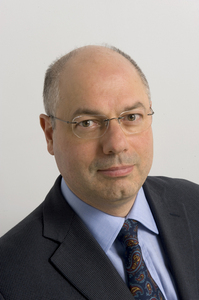
Bernard Badzioch is an Associate Professor in the Department of Mathematics at the University at Buffalo . His research focuses on Homotopy Theory and its applications to algebraic structures. He received his PhD from the University of Notre Dame and has been recognized for excellence in teaching with the SUNY Chancellor’s Award . Education : PhD in Mathematics, University of Notre Dame Research Interests Homotopy Theory Algebraic K-Theory Category Theory Parametrized Torsion Invariants Localization Techniques Selected Publications analyze topics such as algebraic theories in homotopy theory, parametrized Euler characteristic, and equivalence of torsion invariants. His work bridges abstract algebra and topology. Scientific Awards SUNY Chancellor’s Award for Excellence in Teaching Contact : 108 Mathematics Building, University at Buffalo, Buffalo NY 14260-2900 | badzioch@buffalo.edu | (716) 645-8798
Dr. David M. Sidhu is an Assistant Professor in the Department of Psychology at Carleton University, affiliated with the Faculty of Arts and Social Sciences. He holds a Ph.D. from the University of Calgary and completed a postdoctoral fellowship at University College London, funded by SSHRC. His research focuses on multimodal language processing, sound symbolism, and embodied cognition, exploring how language sounds connect to sensory and conceptual meanings. Education: Ph.D. in Psychology, University of Calgary Postdoctoral Research, University College London (SSHRC-funded) Research Interests: Sound symbolism and iconicity in language Cross-modal associations (e.g., shape-sound mappings) Embodied cognition and conceptual metaphor theory Name symbolism and social perception Language evolution and lexical development Funded by NSERC and SSHRC, his CLaSSI Lab investigates topics like the bouba/kiki effect, vowel symbolism in size perception, and the cognitive mechanisms behind name stereotypes. Recent work includes studies on temporal semantics and affective sound congruence. Lab & Collaborations: Director of the CLaSSI Lab, collaborating with institutions internationally. Research emphasizes experimental methods and large-scale language analyses.
Dr Nick Lally is Associate Professor of Geography at the University of Kentucky, with research spanning critical cartography, policing geographies, and speculative GIS. His work examines how digital technologies reshape spatial power relations, particularly in policing contexts, while developing alternative geographical imagination systems that challenge conventional GIS paradigms. Key projects include experimental cartographic tools for spatial manipulation and critical analyses of policing technologies. His publications explore how computational systems structure geographical knowledge and power. He employs mixed methods including software prototyping, critical theory, and empirical studies of police practices. Research has been supported by organizations including the Simpson Center for Humanities and Canada Research Chairs Program.
Dr. Dong-Han Ham was part of the academic staff at Middlesex University's Computer Science department. His research focuses on human factors, cognitive ergonomics, and safety-critical systems, particularly in nuclear power plant operations and decision support systems. He has contributed to frameworks for usability evaluation, human error analysis, and visual analytics. Key research interests include human-system interaction, task complexity analysis, and applying systems theory to improve safety and efficiency in complex environments. He has developed methodologies like the MaRMI-III framework for component-based software development and the TACOM extension for nuclear plant task analysis. His work often intersects with big data applications, such as extracting human reliability data from incident reports using Safety-II concepts. He has also explored usability in mobile interfaces and the design of physical controls for process systems. Ham has organized conferences like ECCE 2007 and contributed to editorial roles in journals. His research emphasizes practical applications of theoretical models, aiming to bridge gaps between cognitive science and engineering systems.
Zhoulai Fu is a tenured Associate Professor at the State University of New York (SUNY), Korea, specializing in programming languages and software security. He also holds joint appointments as a Research Associate Professor at Stony Brook University and is affiliated with the Electrical and Computer Engineering Department at Virginia Tech. His educational background includes: Ph.D., 2009-2013, INRIA – Université de Rennes 1, France M.Eng., 2008-2009, Télécom ParisTech, France M.S, B.S, and French engineer degrees (Ingénieur), 2005-2008, École Polytechnique, France Professor Fu's research focuses on the intersection of Programming Languages, Software Security, and Large Language Models, with special emphasis on improving software reliability through formal methods, numerical error analysis, and scalable verification techniques . His work spans abstract interpretation, automated testing, and verification tools development. He has made significant contributions to floating-point analysis and program verification, with publications at top-tier conferences including PLDI, POPL, OOPSLA, ICSE, and CAV. His publication record shows a consistent trajectory in programming language theory with increasing practical applications. Early work focused on foundational aspects of abstract interpretation and floating-point analysis, while recent papers address security concerns through programming language techniques and incorporate modern approaches like incorrectness logic. Key themes across his publications include formal verification of low-level code, numerical error analysis, and developing scalable analysis tools for real-world software systems. His notable achievements include: Principal Investigator for DARPA E-BOSS Program funding Sole Principal Investigator for National Research Foundation of Korea funding Program Committee membership for POPL 2026, FSE 2024, and PLDI 2023 Professor Fu actively mentors students and has taught courses including Foundations of Computer Science, Programming Abstractions, and Research in Computer Science. His research is supported by significant grants from DARPA and NRF, enabling him to lead the Data & Intelligent Computing Lab at SUNY Korea. He is currently seeking postdocs, PhD, and graduate students to join his research team. He leads the Data & Intelligent Computing Lab, which focuses on advancing programming language techniques for software reliability and security. The lab collaborates with institutions including Virginia Tech, Stony Brook University, and international partners across Europe, working on projects that bridge theoretical computer science with practical software engineering challenges.
Dr. Shri Rai is a Lecturer in the School of Information Technology at Murdoch University, affiliated with the College of Science, Technology, Engineering and Mathematics. His work bridges machine learning applications in medical diagnostics and ecological conservation, with a focus on spinal cord injury prediction and biodiversity management. Education details are not explicitly provided in the text, but his research spans interdisciplinary areas combining IT with healthcare and environmental science. He has contributed to studies on neurological deterioration prediction using machine learning, post-fire reptile succession, and habitat restoration strategies for endangered species. Key research interests include machine learning for medical imaging (e.g., MRI standardization), ecological succession patterns post-disturbance, and conservation strategies for threatened reptiles. His work often integrates technological solutions with ecological challenges, such as developing algorithms for early disease detection and habitat recovery metrics. Publications highlight a dual focus on clinical medical research (e.g., cervical myelopathy prognosis) and ecological restoration (e.g., post-mining rehabilitation). While no awards are listed, his contributions to interdisciplinary research demonstrate significant academic engagement. Advising and grants information are not detailed in the provided text, but his involvement in collaborative projects like the Canadian Spine Society and Australian conservation programs suggests active participation in academic networks. Rai’s affiliation with Murdoch University’s IT school positions him to advance computational methods for solving complex ecological and healthcare challenges, emphasizing data-driven solutions in both medical and environmental domains.
Christine Liebe is a Professor of Practice with a joint appointment in the Department of Computer Science and the University Honors and Scholars Programs at the Colorado School of Mines. She serves as Director of Teach@Mines, a pre-service teacher education program offering licensure in CS, STEM, and mathematics. Her roles include teaching introductory programming, supervising graduate students, and managing the DECtech outreach program serving 500+ K-12 students annually. Education: PhD in Education (Curriculum, Instruction, Assessment) from Walden University (2019), MS in Literacy Education (2008), and BA in Urban Policy/Psychology from Michigan State University (1989). She has founded two vocational schools and developed online curricula for STEM and education disciplines. Research focuses on K-12 CS teacher education, computational thinking, and interdisciplinary STEM projects (e.g., AI in education, additive manufacturing). Notable grants include NSF-funded initiatives like the IAM-RET program ($599K) and a Noyce Scholarship Program ($1.2M). Her work emphasizes AI-assisted learning, gamification, and broadening participation in computing through S-STEM scholarships. Grants: $3+ million in funding secured as PI/Co-PI since 2020 Outreach: DECtech program engages underserved students via after-school/summer tech camps Publications: Over 15 peer-reviewed articles since 2017, focusing on CS education pedagogy and teacher development
Isambo Karali is an Assistant Professor in the Department of Informatics and Telecommunications at the National and Kapodistrian University of Athens, a position she has held since November 2007. Prior to this, she served as a Lecturer at the same department from September 1999 to November 2007. Her academic career spans over three decades with significant contributions to knowledge representation, uncertainty reasoning, and semantic web technologies. Dr. Karali's educational background includes: PhD in Informatics (1995) from the University of Athens MSc in Computer Science (1988) from University College, University of London Bachelor of Mathematics (1986) from the Department of Mathematics, University of Athens Dr. Karali's research focuses on Knowledge Representation and Reasoning with Uncertainty, Artificial Intelligence, Logic Programming, and Object-Oriented Programming. She has made significant contributions to applying Dempster-Shafer theory for handling uncertainty in Semantic Web applications. Her work bridges theoretical foundations of logic programming with practical applications in knowledge representation, particularly in distributed and heterogeneous environments. She has supervised numerous PhD and master's theses in these areas. Her recent publications demonstrate a strong trend toward integrating uncertainty reasoning with Semantic Web technologies, particularly using Dempster-Shafer theory and fuzzy logic. Her work addresses challenges in managing imprecise and uncertain information in large-scale knowledge systems, with applications in recommendation systems, news analysis, and semantic search. The interdisciplinary nature of her research connects artificial intelligence, knowledge representation, and web technologies to solve complex information management problems. Dr. Karali has been actively involved in research funding and collaboration: Principal Investigator for "Handling uncertainty in data intensive applications on a distributed computing environment (cloud computing)" under the "Thalis" Program Scientific Responsible for "Artificial Intelligence and Logic Programming Techniques for Knowledge on the World Wide Web" at the National and Kapodistrian University of Athens Scientific Responsible for "Semantic Web and Logic Programming - Application to Guided Search" at the National and Kapodistrian University of Athens Participant in multiple EU research projects including MISSION, COSMOS, ADDSIA, PARACHUTE, APPLAUSE, and EDS As an educator, Dr. Karali has taught core undergraduate courses including Object-Oriented Programming and Logic Programming, as well as graduate courses on Knowledge Technologies and Artificial Intelligence. She has supervised numerous PhD and master's students, with a focus on uncertainty reasoning, semantic web technologies, and logic programming applications. Her mentorship extends to student competitions, including guiding the Department's team in the Microsoft ImagineCup 2009. Dr. Karali has also contributed to the academic community through service activities, including membership on program committees for conferences like IEEE ICTAI, reviewer for prestigious journals, and organizational roles in academic events. From 2000 to 2012, she was responsible for the Department's website, contributing to its architecture design and system development.
Suki Finn is a Lecturer in Philosophy and Gender Studies at Royal Holloway, University of London. She is also co-Director of the Society for Women in Philosophy UK, a Fellow of the Higher Education Academy, a Council member for the Royal Institute of Philosophy, and a Trade Union Committee member for RHUL UCU. Dr. Finn holds a PhD in Philosophy and has established herself as a prominent academic with diverse research interests spanning multiple philosophical domains. Her research focuses on metametaphysics, the philosophy of logic, feminist and queer theory, critical socio-legal theory, bioethics, epistemology of logic, philosophy of science, and science and technology studies . Most recently, she has been concentrating on social, medical, political, and legal issues of gender diversity and reproduction, leading a project on 'Trans/Forming Pregnancy'. Her work often explores the intersection of abstract philosophical concepts with concrete social issues, particularly around pregnancy, gender, and identity. Dr. Finn's publications reveal a consistent pattern of applying philosophical frameworks to everyday phenomena. Her work spans metaphysical inquiries about holes and pregnancy to analyses of love through mathematical probability. This demonstrates her ability to bridge complex theoretical concepts with accessible, real-world applications that engage both academic and public audiences. Editor of 'Women of Ideas' published with Oxford University Press Editor of a selection of interviews with women from Philosophy Bites Forthcoming book 'What's in a Doughnut Hole?' to be published by Icon in 2026 Regular contributor to Aeon magazine As an academic advisor and public intellectual, Dr. Finn actively engages with students and the broader community through her teaching, writing, and public speaking. Her interdisciplinary approach connects philosophy with gender studies, law, and social justice issues, creating opportunities for meaningful dialogue across academic boundaries. Beyond academia, she contributes to arts and culture through her musical work as Masukii and visual art exhibitions. Dr. Finn leads the 'Trans/Forming Pregnancy' research project and has exhibited artwork such as 'Forgotten Parts' at the John Hansard Gallery and the Winchester School of Art Gallery, demonstrating her commitment to exploring philosophical questions through multiple creative mediums.
Dr. Anna Borghi investigates how concepts are grounded in sensory-motor and social experiences through the lens of embodied cognition. Her Words As social Tools (WAT) theory proposes that abstract concepts rely more heavily on linguistic and social experiences than concrete concepts. Central research themes: Neural and behavioral foundations of abstract concepts Role of language and inner speech in conceptual processing Social dimensions of conceptual representation Cross-cultural differences in concept formation Development of abstract thought in children Recent work employs multimodal methodologies including thermal imaging, motion tracking, and computational modeling. Publications demonstrate growing interest in real-world applications such as autism interventions and AI communication systems. Current projects examine conceptual processing during the COVID-19 pandemic and politeness strategies in human-chatbot interactions.
Fabien Dagnat is a Lecturer and Researcher in the Computer Sciences Department at IMT Atlantique in Brest since 2002. He holds a PhD (2001) and HDR (2016), leading the P4S team at Lab-STICC. His expertise focuses on software engineering, particularly software safety and security, with emphasis on formal methods and dynamic software updating. He has supervised multiple PhD students and conducted research collaborations with institutions like Georgia Tech and Thales Alenia Space. Research interests include model federation, component-based systems, secure systems engineering, and dynamic reconfiguration. His work bridges theory and practice, addressing challenges in complex system development, such as maintaining security consistency during system evolution and managing heterogeneous IT infrastructures. He contributes to frameworks like Openflexo and tools for secure space mission engineering. Education: PhD in Programming Languages (2001) and HDR in Software Engineering (2016) from Institut National Polytechnique de Toulouse. Teaching responsibilities include software development, concurrent programming, and compilation at IMT Atlantique. Labs/Teams: P4S (Processes for Safe and Secure Software and Systems) at Lab-STICC. Active in international conferences (MODELS, ICSSP) and collaborations with industry (e.g., Airbus, Thales).
Maryam Elahi is an Associate Professor in the Department of Mathematics & Computing at Mount Royal University (MRU), part of the Faculty of Science and Technology. She holds a PhD in Computer Science from the University of Calgary (2017), an MSc in Software Engineering of Distributed Systems from KTH Royal Institute of Technology (2009), and a BSc in Computer Engineering from Azad University of Mashhad (2005). Her research focuses on networked and distributed systems, emphasizing performance analysis, dynamic bandwidth allocation, and speed-scaling systems. She has secured grants including the Petro-Canada Young Innovators Award (2022) and the Provost’s Teaching and Learning Enhancement Grant (2023). Education: PhD in Computer Science, University of Calgary (2017) MSc in Software Engineering of Distributed Systems, KTH (2009) BSc in Computer Engineering, Azad University of Mashhad (2005) Her research interests span network performance modeling, real-time systems optimization, and energy-efficient computing. She actively contributes to academic committees for major conferences and has participated in leadership programs like WISE Planet Change Leadership (2021/22). Maryam is passionate about mentoring students, particularly through Mitacs Globalink Internships, fostering their growth in academic and professional careers. Her articles explore topics such as frequency scaling in multilevel queues, fair dynamic bandwidth allocation, and turbocharged speed-scaling mechanisms. These contributions reflect her expertise in optimizing resource allocation in distributed environments while balancing fairness and efficiency.
ZOU Liujun is an Assistant Professor at the National University of Singapore (NUS) under the NUS Presidential Young Professorship (PYP). He earned his PhD from Harvard University in 2019. His research spans quantum phases of matter, quantum field theory, and quantum information, with a focus on uncovering the fundamental truths and beauty of nature through theoretical physics. Education: PhD in Physics from Harvard University (2019) Affiliation: National University of Singapore Email: lzou@nus.edu.sg Research Interests ZOU Liujun explores quantum phases of matter and their transitions, symmetry constraints in topological systems, and connections between quantum field theory and quantum information. His work bridges abstract theoretical frameworks with practical applications in exotic quantum materials. Selected Publications (Trends) His publications highlight advancements in understanding quantum criticality, topological order, and symmetry-enforced exotic phases. Key areas include twisted bilayer graphene, Stiefel liquids, and ultraviolet-infrared mixing in quantum systems. Scientific Awards NUS Presidential Young Professorship (PYP)
Tom Melham is Professor of Computer Science at the University of Oxford, Tutorial Fellow at Balliol College, and Fellow of the Royal Society of Edinburgh. His research develops formal methods for hardware and software verification, with recent focus on security applications and neural network verification. Research interests include automated theorem proving, symbolic trajectory evaluation, hardware/software co-verification, and security assurance methods. Recent work applies formal verification to processor security, vulnerability management, and deep learning systems. Publications demonstrate foundational contributions to hardware verification methodologies, with increasing focus on security engineering and machine learning verification in recent years. Research integrates theoretical advances with practical industrial applications. Melham directs projects on processor security verification, automated exploit generation, and hybrid approaches to memory safety. He teaches computer science and law courses while advising graduate students in formal methods research.
Matthew Baerman is a Professorial Research Fellow at the University of Surrey's Surrey Morphology Group. He holds a PhD from the University of California, Berkeley, an MArch from Harvard University, and a BA from Yale University. His research focuses on inflectional morphology, particularly the autonomy of morphological systems and their diachronic evolution. He has contributed to studies on case syncretism, inflectional class complexity, and the loss of inflectional morphology across languages. Baerman has received prestigious awards including membership in the Academia Europaea and grants from the Leverhulme Trust and ERC Synergy. His work spans theoretical linguistics, typology, and computational modeling. His research projects include the Nuer literacy initiative and collaborations on morphological complexity databases. He supervises PhD students exploring topics such as Kadu agreement systems, Nuer verb morphophonology, and morphological typology. Baerman’s publications include books like Understanding and Measuring Morphological Complexity and numerous papers on linguistic typology, historical morphology, and morphosyntactic interfaces. His recent work emphasizes analogical processes in morphological change and the role of system complexity in language evolution. He is a key figure in the Surrey Morphology Group, contributing to interdisciplinary projects and international collaborations in linguistic research.