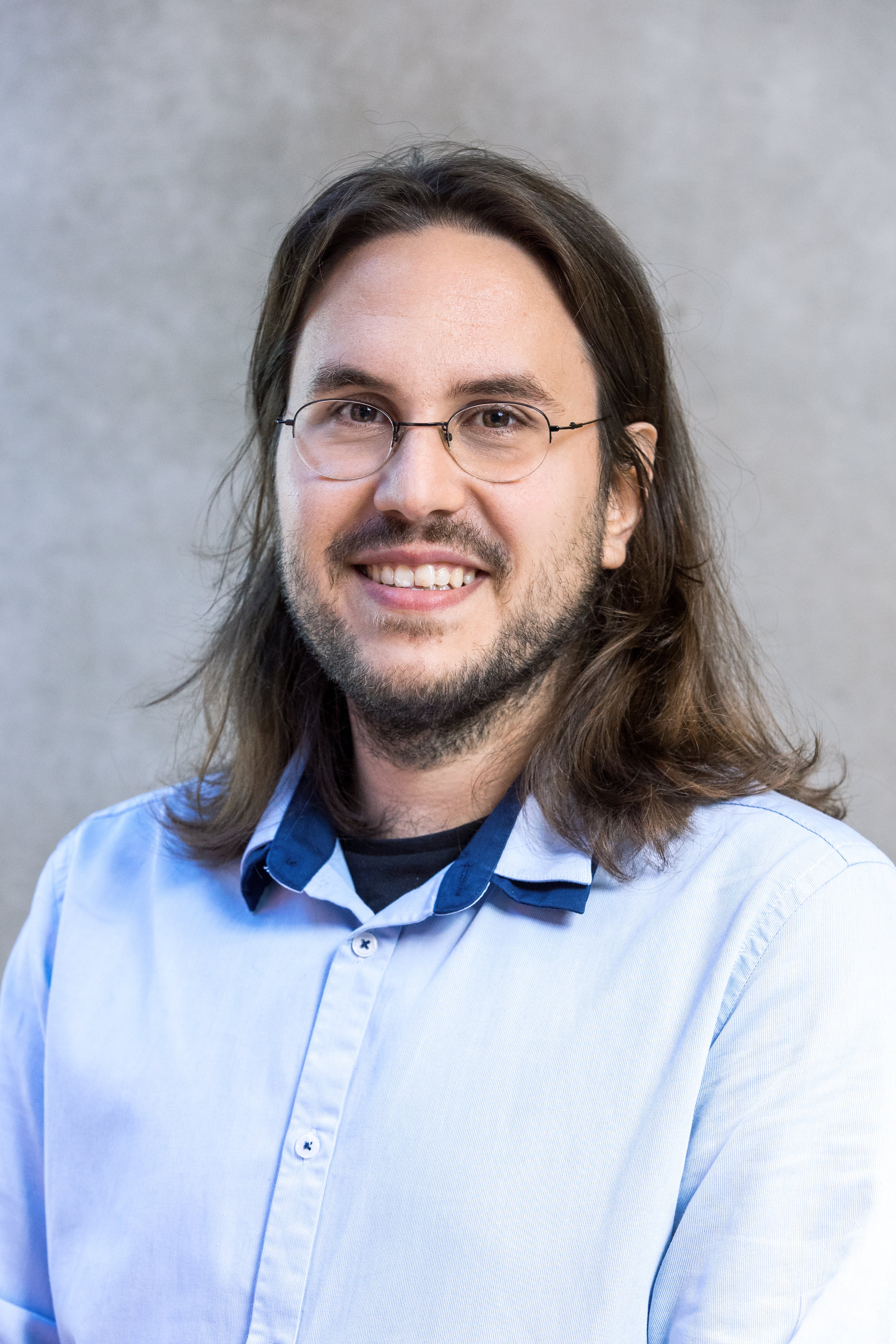
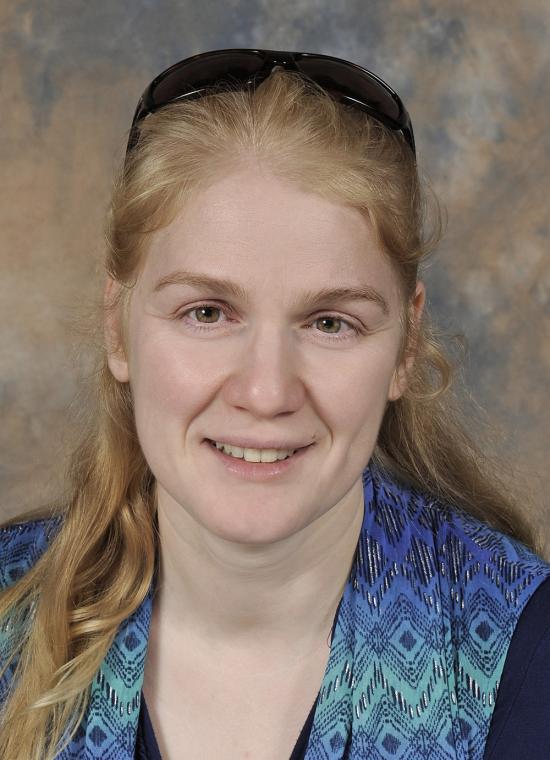
Prof. David Ham is a Professor of Computational Mathematics at the Department of Mathematics, Faculty of Natural Sciences, Imperial College London. His research focuses on high-level abstractions for scientific computation, particularly in geophysical fluids and numerical software. He leads the Firedrake project and co-developed the dolfin-adjoint framework, which received the 2015 Wilkinson Prize for Numerical Software. Ham holds a BSc (Mathematics) and LLB from The Australian National University, and a PhD from TU Delft. His career includes roles as a NERC Independent Research Fellow and Grantham Research Fellow at Imperial College. He is affiliated with the Grantham Institute, Mathematics of Planet Earth, and Software Performance Optimisation groups. His research spans computational science, including finite element methods, adjoint-based inversion, and parallel computing. Recent work emphasizes differentiable programming integration with machine learning and geophysical modeling. Ham has contributed to numerous grants and projects, including EPSRC and NERC-funded initiatives. He leads development of software tools like Firedrake and Thetis, advancing computational methods for oceanography and geodynamics.
Gerry Brady is a Clinical Professor in the Masters Program in Computer Science at the University of Chicago. He holds a Ph.D. in Mathematical Logic from the University of Oslo (1997), an M.A. in Mathematical Logic from the University of Chicago, and a B.A. in Mathematics with honors from the same institution. His research focuses on the history and foundations of mathematical logic, particularly the contributions of figures like C.S. Peirce and Thoralf Skolem. Notably, his doctoral thesis was expanded into the 2000 book From Peirce to Skolem , published by Elsevier. Brady has authored or co-authored works on categorical logic, relational calculus, and the philosophical underpinnings of symbolic logic. He contributed to pioneering efforts in computerizing academic journal production at the University of Chicago Press in the 1990s. His teaching emphasizes problem-solving skills, which he links to workplace success for MPCS graduates. He currently holds an office in Crerar Library and can be reached at brady@cs.uchicago.edu.
Zachary Kincaid is an Associate Professor in the Department of Computer Science at Princeton University's School of Engineering and Applied Science. His research focuses on program analysis, logic, and programming languages, with an emphasis on making program analysis compositional and robust. He received his PhD from the University of Toronto under the supervision of Azadeh Farzan. His work has been implemented in the Duet program analyzer, and he has an Erdős number of 3. Dr. Kincaid's research interests include: Compositional program analysis techniques Algebraic approaches to program analysis Termination analysis and ranking function synthesis Verification of concurrent and parallel programs Automated reasoning and decision procedures Analysis of numerical programs and loops His recent publications show a strong focus on developing novel techniques for program analysis that bridge theoretical computer science with practical verification tools, particularly in nonlinear analysis, quantified reasoning, and compositional verification. Dr. Kincaid has received research support from ONR grant N00014-19-1-2318 for his work on robust program analysis. He has advised graduate students including: Current: Jake Silverman, Nicolas Koh, Nikhil Pimpalkhare Graduated: Shaowei Zhu (PhD 2024, Researcher at Amazon), Charlie Murphy (PhD 2023, Postdoc at University of Wisconsin–Madison) Dr. Kincaid teaches courses including: COS 320 – Compiling Techniques (Spring 2024, 2022, 2020, 2019) COS 516 / ELE 516 – Automated Reasoning about Software (Fall 2025, 2022, 2018) COS 217 – Introduction to Programming Systems (Fall 2024) COS IW – Practical Solutions to Intractable Problems (Fall 2023, Spring 2023, 2018, 2017) COS IW – Little Languages (Spring 2018) COS 597D – Reasoning about concurrent systems (Fall 2016)
Sebastijan Dumancic is an Assistant Professor at Delft University of Technology, focusing on neuro-symbolic AI through program synthesis and probabilistic programming. He leads the RAIL lab and collaborates with institutions like Harvard, MIT, and CNRS. His research bridges symbolic AI and machine learning, applying program synthesis to scientific discovery, transportation, and robotics. He holds an FWO-funded PhD from KU Leuven and has participated in initiatives like ELLIS and the Symbolic Computation and Machine Learning Initiative. Program synthesis Probabilistic programming Neuro-symbolic AI Constraint-based learning His recent articles highlight advancements in program synthesis, neuro-symbolic integration, and constraint satisfaction. Projects like Find2Fix and Intelligent Greenhouse Horticulture (funded by NWO) demonstrate practical applications. ELLIS Membership University Teaching Qualification He supervises numerous MSc and PhD students in projects involving logic programming, program synthesis, and probabilistic modeling. Active in workshops and symposia, he contributes to neuro-symbolic AI and scientific discovery.
Uri Onn is a Professor at the Mathematical Sciences Institute of the Australian National University (ANU). His research focuses on advanced algebraic structures, including zeta functions, arithmetic groups, and representation theory. He contributes to the understanding of nilpotent groups, valuation rings, and Lie algebras through rigorous mathematical frameworks. Research Interests: Dr. Onn’s work spans number theory, group theory, and algebraic geometry, with a particular emphasis on zeta functions, arithmetic groups, and representation growth. His studies explore the interplay between algebraic structures and their applications in modern mathematics. Key Research Trends: His articles address topics like zeta functions in nilpotent groups, representation theory over finite rings, and the behavior of arithmetic groups under base change. These contributions advance foundational knowledge in abstract algebra and number theory. Grants and Projects: He leads projects such as the Geometry of Character Varieties (2025–2028) and Representations of Arithmetic Groups (2017–2023), focusing on algebraic and geometric representations.
Anne J. Shiu is a Professor in the Department of Mathematics at Texas A&M University. She holds a Ph.D. in Mathematics (2010) from the University of California Berkeley with advisors Bernd Sturmfels and Lior Pachter. Her career includes postdoctoral positions at Duke University (2010-2011) and the University of Chicago (2011-2014), followed by a faculty role at Texas A&M since 2014. Research Focus: Algebraic, geometric, and combinatorial approaches to mathematical biology, specializing in biochemical dynamical systems, neural coding, parameter identifiability, algebraic statistics, and genomics. Academic Contributions: Over 15 recent publications spanning identifiability in compartmental models, multistationarity in reaction networks, convexity analysis of neural codes, and algebraic robustness in biochemical systems. Scientific Recognition: Association of Former Students Distinguished Achievement College-Level Award in Teaching (2019) Invited speaker for Ethel Ashworth-Tsutsui Memorial Lecture (2018-2019) Current Research: Investigates structural identifiability in biological models, focusing on compartmental systems, reaction networks, and neural codes through algebraic methods and computational tools. Her work bridges abstract algebra with practical biological applications, including parameter estimation and robustness analysis. Grant Support: Recipient of NSF CAREER award (2018-2023), prior NSF grants (2010-2017), and Simons Foundation Collaboration Grant (#521874, 2017-2018). Academic Leadership: Organized multiple international workshops/conferences including SIAM conferences and Banff workshop. Currently an Associate Editor for SIAM Journal on Applied Mathematics and serves on the AIM Scientific Research Board.
Charles W Rezk is a Professor of Mathematics at the University of Illinois Urbana-Champaign. His work centers on algebraic topology, with expertise in homotopy theory, model categories, and higher category theory. He has authored numerous influential publications in top-tier mathematical journals. Rezk's research delves into the intricacies of homotopy theory and higher categories. Key areas include (∞,n)-categories, homotopy type theory, and their applications. His contributions have shaped modern approaches to algebraic topology, particularly in developing frameworks for higher categorical structures. Recent articles (2020-2025) highlight his focus on ∞-categories, colimit completion, and elliptic cohomology. His work consistently bridges abstract category theory with homotopy-theoretic methods, advancing foundational aspects of the field and influencing related mathematical disciplines. He was named an AMS Fellow in 2015 for his distinguished contributions to mathematics. AMS Fellow (2015) Although specific details on grants and advising are not provided, Rezk's active research program and recognition by the American Mathematical Society underscore his significant impact in the mathematical community.
Danel Ahman is an Associate Professor at the Institute of Computer Science , University of Tartu , Estonia, specializing in programming language theory . His research focuses on dependent/refinement types , computational effects , and verified software . Education PhD in Theoretical Computer Science (University of Edinburgh, 2017) MPhil in Advanced Computer Science (University of Cambridge, 2012) BSc in Informatics (Tallinn University of Technology, 2010) Research Interests : Danel investigates programming languages with algebraic effects and effect handlers for verified software, exploring denotational/operational semantics and fibrational approaches to effects. His work bridges theoretical computer science with practical formal verification. Scientific Awards : Estonian Research Council grant (2025) Marie Skłodowska-Curie Fellowship (2019) PhD dissertation prize (2018) Google/Citrix dissertation awards (2012) Teaching & Supervision : He teaches courses like Logic in Computer Science and Functional Programming at the University of Tartu, and supervised BSc/MSc theses on topics including asynchronous effects and formal verification. Danel also organizes research seminars and guest lectures on F*.
Gizem Karaali is a Professor of Mathematics and Statistics and Chair of the Mathematics Department at Pomona College, part of The Claremont Colleges. She holds a Ph.D. in Mathematics from UC Berkeley (2004) and a B.S. in Electrical Engineering and Mathematics from Boğaziçi University. Her research spans algebraic structures like Lie algebras, representation theory, and humanistic mathematics, with a focus on integrating social justice into mathematics education. She co-founded the Journal of Humanistic Mathematics and created innovative courses such as the first-year seminar Can Zombies Do Math? to explore mathematics’ humanistic dimensions. Research Interests: Representation Theory, Algebraic Combinatorics, Quantitative Literacy, Mathematics Education, and the intersection of math with social justice. She has published widely in journals like Advances in Mathematics , Ramanujan Journal , and Journal of Humanistic Mathematics . Awards: NSA Young Investigator Award (2011-2013), NEH Enduring Questions Grant (2014-2016), AMS Project NExT Fellow. Active in editorial roles for Journal of Humanistic Mathematics and Numeracy . Teaching: Courses include Calculus, Linear Algebra, Abstract Algebra, and interdisciplinary topics like Mathematics, Philosophy, and the Real World. Advised senior theses in diverse areas including ethnomathematics and quantitative literacy.
Professor Catharina Stroppel is a distinguished researcher and educator in the Department of Mathematics at the University of Bonn, Germany. She maintains an active research program in representation theory and related fields, with significant contributions to categorification, knot theory, and higher category theory. Her office is located at Endenicher Allee 60, Room 4.007, Bonn, and she is supported by secretary Alev Erisöz-Reinke. Stroppel's research primarily focuses on representation theory of Lie algebras, connections to topology (particularly knot and manifold invariants), categorification, and diagram algebras. Her work bridges abstract algebra with topological applications, exploring combinatorial aspects of representation theory including Schubert calculus, Kazhdan-Lusztig theory, and canonical bases. She has made substantial contributions to understanding Hecke algebras and their representation theory, as well as developing connections between categorification and topological quantum field theories. Her recent publications demonstrate a consistent research trajectory advancing semi-infinite highest weight categories, geometric categorifications, and the interplay between quantum algebra and topology. The work shows increasing sophistication in handling higher categorical structures while maintaining concrete connections to classical representation theory problems. Her research has evolved from foundational work in categorification to more complex structures involving higher categories, quantum groups, and geometric interpretations. Indagationes Mathematicae Best Paper Prize (2022) Honorary Doctorate from Uppsala University Invited Plenary Speaker at the International Congress of Mathematicians (2022) Professor Stroppel has supervised numerous doctoral students, including current PhD candidates Jonas Nehme, Liao Wang, Lukas Bonfert, and Daniel Bermudez Montana. Her former PhD students include Till Wehrhan, Anna Mkrtchyan, Tashi Walde, Tomasz Przezdziecki, Arik Wilbert, Joanna Meinel, Hanno Becker, Antonio Sartori, Hoel Queffelec, Gisa Schaefer, and Sebastian Holzmann. She actively participates in the academic community through the Oberseminar Representation Theory (Darstellungstheorieseminar DAS), which she co-organizes with Johannes Flake, held Fridays 2:15-4pm in Endenicher Allee 60 - SR 1.008. Stroppel leads the Algebra and Representation Theory working group in Bonn and maintains strong connections with the Hausdorff Center for Mathematics, which recently received seven additional years of funding. Her research program continues to expand, with upcoming teaching responsibilities including V4A3 Representation Theory II for the WS25/26 semester.
Nathan van de Wouw is a Full Professor at the Mechanical Engineering Department of Eindhoven University of Technology (TU/e), affiliated with ICMS, EAISI Mobility, EAISI High Tech Systems, EAISI Foundational, and EIRES. He also holds an adjunct Full Professor position at the University of Minnesota and a part-time Full Professorship at Delft University of Technology. His research focuses on dynamics and control of mechanical systems, including mechatronics, robotics, smart manufacturing, energy systems, and networked control. He has supervised over 150 students and led numerous projects funded by industry partners like ASML, Philips, and Shell. Education: M.Sc. (with Honors) in Mechanical Engineering, TU/e (1994) Ph.D. in Mechanical Engineering, TU/e (1999) Research Interests: Nonlinear systems and control Model reduction and complexity analysis Data-driven and networked control strategies Applications in high-tech systems, autonomous vehicles, and energy systems Awards: IEEE Control Systems Technology Award (2015) for variable-gain control in motion systems Grants & Projects: Lead projects on mechatronic design, lithography systems, and thermodynamic optimization Collaborations with TNO, ASML, and industrial partners Labs & Teams: Member of TU/e’s Dynamics and Control group Affiliated with EAISI (Eindhoven AI Systems Institute)
Neelakantan R. Krishnaswami is a Professor of Computer Science at the University of Cambridge's Computer Laboratory , and a Fellow of Trinity College . His research focuses on the intersection of program verification, programming language design, and foundational topics like type theory and semantics. His work spans areas such as refinement types, parser design, separation logic for systems software, and the semantics of reactive programming. Notable contributions include the Datafun language for higher-order Datalog and the λert type theory for explicit refinement types. He has also developed foundational frameworks for verifying imperative programs using advanced type systems and logical relations. Key publications include 'Explicit Refinement Types' (ICFP 2023), 'flap: A Deterministic Parser with Fused Lexing' (PLDI 2023), and 'CN: Verifying Systems C Code' (POPL 2023). His work frequently addresses challenges in efficiency, correctness, and modularity for both functional and imperative systems. His awards include Distinguished Paper Awards at PLDI 2019 and POPL 2020. His research integrates theoretical rigor with practical tooling, exemplified by contributions to languages like Coq, Lean, and Haskell.
Vitaly Bergelson is a Professor of Mathematics and Physical Sciences at The Ohio State University, affiliated with the Department of Mathematics within the College of Arts and Sciences. His work focuses on Ergodic Theory , Combinatorics , Ergodic Ramsey Theory , Polynomial Szemerédi Theorems , and Number Theory . He holds a PhD from the Hebrew University of Jerusalem (1984). His research explores the interplay between ergodic systems, combinatorial structures, and number-theoretic phenomena. Notable contributions include polynomial extensions of Szemerédi's theorem and foundational work on ergodic Ramsey theory. Recent articles address topics like multiplicative functions, Diophantine approximations, and quasirandom group structures. His work often bridges abstract mathematical frameworks with concrete combinatorial problems, yielding applications in additive combinatorics and symbolic dynamics. Publications highlight advancements in recurrence properties, uniform distribution, and the structure of algebraic dynamical systems. Collaborations with scholars like A. Leibman, N. Hindman, and J. Moreira underscore his interdisciplinary approach. His research is disseminated through top-tier journals such as Inventiones Mathematicae and Journal d'Analyse Mathématique .
Robert G. Bland is a Professor at Cornell University's School of Operations Research and Information Engineering (ORIE). He joined Cornell in 1978 after roles at SUNY Binghamton and research fellowships in Belgium. He is affiliated with the Center for Applied Mathematics and specializes in linear programming, combinatorial optimization, and network flow theory. His research emphasizes algorithmic efficiency, duality theory, and applications in scheduling and resource allocation. Education: B.S. (1969), Cornell University M.S. (1972), Cornell University Ph.D. (1974), Cornell University Research Interests: Focuses on linear programming duality, combinatorial abstractions, computational methods for optimization, and applications in logistics, scheduling, and scientific computing. Notable work includes the development of new pivoting rules for the simplex method and empirical studies of network flow algorithms. Publications Insight: His work spans foundational LP theory, combinatorial optimization, and algorithmic analysis. Key themes include duality frameworks, Camion bases, and large-scale TSP applications in crystallography. Recent publications address abstract dualities and historical perspectives on pioneers like D. Ray Fulkerson. Awards: Recipient of Cornell's prestigious Merrill Outstanding Educator Award (3 times) and twice recognized as ORIE's best teacher. Member of the Mathematical Optimization Society and American Society for Engineering Education. Grants & Projects: Conducted service projects on vehicle routing and examination scheduling. Collaborated on computational studies of min cost flow algorithms and network flow performance. Labs/Teams: Active in ORIE's research groups, particularly those focused on optimization theory and computational methods.
Peter Johnstone is Professor of Foundations of Mathematics at the University of Cambridge, affiliated with the Department of Pure Mathematics and Mathematical Statistics within the Faculty of Mathematics. His academic profile shows consistent contributions to foundational mathematical research over several decades, with current contact information indicating active engagement in his position. Johnstone's primary research focus lies in category theory, specifically topos theory and its connections with mathematical logic. His work explores the deep structural relationships between algebraic structures, logical systems, and geometric interpretations within categorical frameworks. His research has significantly advanced our understanding of locales, realizability toposes, and the categorical foundations of mathematical logic. Analysis of his recent publications reveals a consistent trajectory in topos theory with emphasis on geometric morphisms, realizability structures, and categorical logic. His work demonstrates sophisticated interplay between abstract category theory and concrete mathematical structures, particularly in how logical systems can be represented and manipulated within topos-theoretic frameworks. Johnstone maintains an active academic presence with a personal homepage at the University of Cambridge and standard university contact information including email (P.T.Johnstone@dpmms.cam.ac.uk), office location (Room C0.01), and telephone number (01223 337985). His extensive publication record spanning from the 1980s through the 2010s indicates sustained scholarly activity in his specialized field.